
Enterprise Networks पर Rogue Access Points के प्रभाव को कम करना
यह तकनीकी संदर्भ मार्गदर्शिका Wireless Intrusion Prevention Systems (WIPS) और Wireless Intrusion Detection Systems (WIDS) का उपयोग करके enterprise networks पर rogue access points के प्रभाव को कम करने के लिए आर्किटेक्चर, परिनियोजन और परिचालन प्रक्रियाओं का विवरण देती है। यह IT सुरक्षा प्रशासकों के लिए hospitality, रिटेल, healthcare और सार्वजनिक क्षेत्र के स्थानों सहित जटिल भौतिक वातावरणों में अनधिकृत APs का पता लगाने, वर्गीकृत करने और उन्हें निष्क्रिय करने के लिए कार्रवाई योग्य रूपरेखा प्रदान करती है। यह मार्गदर्शिका खतरे के वर्गीकरण, स्वचालित नियंत्रण तंत्र, अनुपालन निहितार्थ (PCI DSS, GDPR, HIPAA), और मापने योग्य व्यावसायिक परिणामों को कवर करती है।
इस गाइड को सुनें
पॉडकास्ट ट्रांसक्रिप्ट देखें
हमारी मुख्य श्रृंखला का हिस्सा: Enterprise WiFi Security Guide →
कार्यकारी सारांश (Executive Summary)
वितरित वातावरणों में फैले उद्यम नेटवर्कों के लिए - जिसमें retail आउटलेट्स, hospitality स्थल, healthcare सुविधाएं और transport हब शामिल हैं - एक अनधिकृत (rogue) एक्सेस पॉइंट डेटा उल्लंघनों, अनुपालन उल्लंघनों और नेटवर्क व्यवधान के लिए सबसे कम आंके जाने वाले खतरों में से एक है। एक रॉग (rogue) AP कोई भी ऐसा वायरलेस एक्सेस पॉइंट है जो बिना किसी प्राधिकरण के कॉर्पोरेट नेटवर्क से जुड़ा होता है, जो प्रभावी रूप से एज सुरक्षा नियंत्रणों को बायपास करता है और आंतरिक LAN में एक अप्रबंधित ब्रिज बनाता है।
इस खतरे को कम करने के लिए प्रतिक्रियाशील, समय-समय पर की जाने वाली स्कैनिंग के बजाय एक निरंतर, स्वचालित Wireless Intrusion Prevention System (WIPS) को अपनाने की आवश्यकता होती है। यह गाइड अनधिकृत APs का पता लगाने, उन्हें वर्गीकृत करने और उन्हें बेअसर करने के लिए आवश्यक तकनीकी आर्किटेक्चर का विवरण देती है, जिसमें मौजूदा स्विचिंग इंफ्रास्ट्रक्चर और guest WiFi डिप्लॉयमेंट के साथ WIPS को एकीकृत करने पर ध्यान केंद्रित किया गया है। हम डिप्लॉयमेंट टोपोलॉजी, स्वचालित रोकथाम तंत्र - जिसमें लक्षित डी-ऑथेंटिकेशन (deauthentication) और वायर्ड पोर्ट दमन शामिल हैं - और एक परिपक्व वायरलेस सुरक्षा स्थिति के सीधे व्यावसायिक प्रभाव को कवर करते हैं।
तकनीकी विश्लेषण: WIPS आर्किटेक्चर और थ्रेट वेक्टर्स
रॉग AP खतरे की रूपरेखा
सभी अनधिकृत वायरलेस डिवाइस एक समान जोखिम पैदा नहीं करते हैं। अलर्ट की अत्यधिक संख्या से बचने और वैध पड़ोसी नेटवर्कों की अनजाने में स्वचालित रोकथाम (जो अधिकांश न्यायक्षेत्रों में एक कानूनी जोखिम है) को रोकने के लिए IT टीमों को हानिरहित व्यवधानों और सक्रिय खतरों के बीच अंतर करना चाहिए।
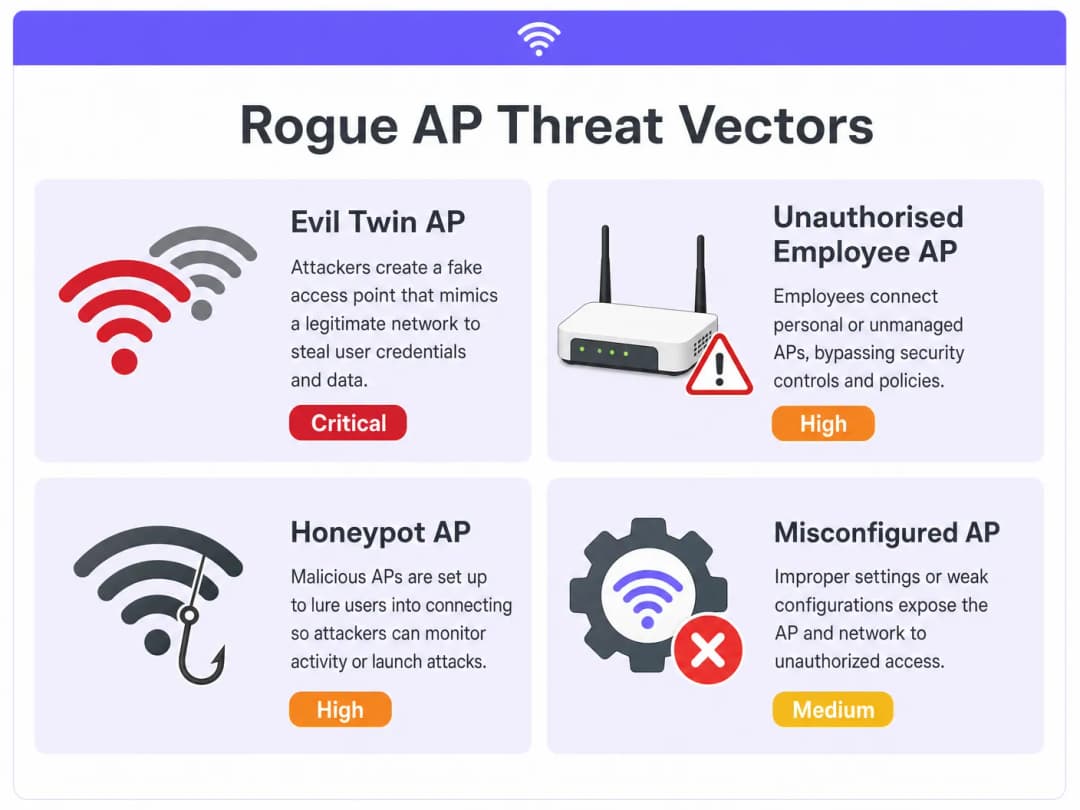
असली रॉग AP (आंतरिक ब्रिज): कॉर्पोरेट LAN से भौतिक रूप से जुड़ा एक अनधिकृत AP। यह आमतौर पर बेहतर कवरेज या प्रतिबंधात्मक प्रॉक्सी सेटिंग्स से बचने का रास्ता तलाशने वाला कोई कर्मचारी होता है, जो अनजाने में RF रेंज के भीतर किसी भी व्यक्ति के लिए आंतरिक नेटवर्क को उजागर कर देता है। यह डिवाइस वायरलेस ट्रैफ़िक को सीधे वायर्ड LAN पर ब्रिज करता है, जिससे फ़ायरवॉल पूरी तरह से बायपास हो जाता है।
ईविल ट्विन (बाहरी स्पूफिंग): एक हमलावर भौतिक सुरक्षा घेरे के बाहर एक AP स्थापित करता है लेकिन कॉर्पोरेट SSID (जैसे, "Corp-WiFi") को अधिक सिग्नल क्षमता पर ब्रॉडकास्ट करता है, जिससे क्लाइंट डिवाइस दुर्भावनापूर्ण AP से जुड़ने के लिए मजबूर हो जाते हैं और मैन-इन-द-मिडल (MitM) हमलों का मार्ग प्रशस्त होता है। इससे क्रेडेंशियल्स, सेशन टोकन और अनएन्क्रिप्टेड डेटा सभी उजागर हो जाते हैं। हनीपॉट AP: Evil Twin के समान, लेकिन यह "Free Public WiFi" जैसे सामान्य ओपन SSID या वेन्यू के गेस्ट नेटवर्क की नकल करने वाले SSID को ब्रॉडकास्ट करके guest WiFi यूजर्स को निशाना बनाता है। यह विशेष रूप से hospitality और रिटेल परिवेशों में प्रचलित है।
गलत कॉन्फ़िगर किया गया कॉर्पोरेट AP: एक वैध कॉर्पोरेट AP जो विफल कॉन्फ़िगरेशन पुश, फ़र्मवेयर रोलबैक या अनधिकृत स्थानीय कॉन्फ़िगरेशन परिवर्तन के कारण अपना सुरक्षा कॉन्फ़िगरेशन खो चुका है - उदाहरण के लिए, 802.1X प्रमाणीकरण वाले WPA3-Enterprise से गिरकर एक ओपन SSID पर आ जाना।
WIPS सेंसर ओवरले आर्किटेक्चर
प्रभावी शमन सभी ऑपरेटिंग बैंड्स में निरंतर स्पेक्ट्रम विश्लेषण पर निर्भर करता है। आधुनिक WIPS डिप्लॉयमेंट या तो समर्पित सेंसर APs का उपयोग करते हैं या मौजूदा इन्फ्रास्ट्रक्चर APs का उपयोग करते हैं जो एक समर्पित मॉनिटरिंग मोड या टाइम-स्लाइस्ड (बैकग्राउंड स्कैनिंग) मोड में काम करते हैं।

समर्पित सेंसर मोड ऐसे APs को डिप्लॉय करता है जिनका एकमात्र उद्देश्य 2.4 GHz, 5 GHz और 6 GHz के सभी चैनलों में RF स्पेक्ट्रम की निगरानी करना है। यह क्लाइंट डेटा थ्रूपुट को प्रभावित किए बिना उच्चतम-सटीकता वाली पहचान और निरंतर रोकथाम क्षमता प्रदान करता है। उच्च-सुरक्षा परिवेशों - PCI-अनुपालक रिटेल, healthcare या वित्तीय सेवाओं के लिए एक समर्पित सेंसर ओवरले आर्किटेक्चर की सिफारिश की जाती है।
बैकग्राउंड स्कैनिंग (टाइम-स्लाइस्ड) एक्सेस पॉइंट्स को क्लाइंट ट्रैफ़िक की सेवा करने की अनुमति देता है, जबकि वे खतरों को स्कैन करने के लिए समय-समय पर चैनल बदलते रहते हैं। हालांकि यह वितरित डिप्लॉयमेंट के लिए लागत प्रभावी है, लेकिन यह दृष्टिकोण स्कैनिंग चक्रों के दौरान क्लाइंट ट्रैफ़िक के लिए लेटेंसी पैदा करता है और रुक-रुक कर दृश्यता प्रदान करता है, जिससे संभावित रूप से स्कैन विंडो के बीच काम करने वाले अस्थायी खतरे छूट सकते हैं।
| डिप्लॉयमेंट मोड | डिटेक्शन निरंतरता | क्लाइंट थ्रूपुट प्रभाव | इसके लिए सबसे उपयुक्त |
|---|---|---|---|
| समर्पित सेंसर | निरंतर | कोई नहीं | उच्च सुरक्षा, PCI, healthcare |
| बैकग्राउंड स्कैनिंग | समय-समय पर | थोड़ा (~5%) | वितरित रिटेल, कम जोखिम वाले वेन्यू |
| हाइब्रिड (मिश्रित) | लगभग निरंतर | न्यूनतम | बड़े परिसर, मिश्रित-जोखिम वाले परिवेश |
कार्यान्वयन गाइड: डिटेक्शन, वर्गीकरण और रोकथाम
चरण 1: बेसलाइनिंग और वर्गीकरण
किसी भी WIPS कार्यान्वयन का पहला चरण एक व्यापक RF बेसलाइन स्थापित करना है। ऑटोमेटेड रोकथाम सक्षम होने से पहले सिस्टम को सभी अधिकृत APs के MAC पते (BSSIDs) सीखने चाहिए और वैध पड़ोसी नेटवर्क को रिकॉर्ड करना चाहिए।
चरण 1 — अधिकृत इन्फ्रास्ट्रक्चर आयात करें: सभी प्रबंधित APs के MAC पते, SSIDs और अपेक्षित ऑपरेटिंग चैनलों को आयात करने के लिए WIPS मैनेजमेंट कंसोल को वायरलेस LAN कंट्रोलर (WLC) के साथ सिंक्रोनाइज़ करें। यह अधिकृत व्हाइटलिस्ट बनाता है।Step 2 — वर्गीकरण नियम परिभाषित करें: स्वचालित नीतियां कॉन्फ़िगर करें जो खोजे गए APs को जोखिम स्तरों में सॉर्ट करती हैं। एक मजबूत वर्गीकरण मैट्रिक्स में निम्नलिखित शामिल होना चाहिए:
- यदि BSSID अधिकृत सूची में नहीं है और SSID कॉर्पोरेट SSID से मेल खाता है और RSSI > -65 dBm → Evil Twin (गंभीर जोखिम) के रूप में वर्गीकृत करें
- यदि BSSID अधिकृत सूची में नहीं है और WIPS MAC एड्रेस सहसंबंध के माध्यम से पुष्टि करता है कि AP वायर्ड LAN पर मौजूद है → वायर्ड रॉग (गंभीर जोखिम) के रूप में वर्गीकृत करें
- यदि BSSID अधिकृत सूची में नहीं है और RSSI -65 dBm और -75 dBm के बीच है → संदिग्ध हनीपॉट (उच्च जोखिम - मानव जांच) के रूप में वर्गीकृत करें
- यदि BSSID अधिकृत सूची में नहीं है और RSSI < -75 dBm → पड़ोसी नेटवर्क (कम जोखिम - बेसलाइन और अनदेखा करें) के रूप में वर्गीकृत करें
Step 3 — स्वचालन से पहले मान्य करें: स्वचालित नियंत्रण (containment) को सक्षम करने से पहले कम से कम 72 घंटों के लिए WIPS को केवल-डिटेक्शन मोड में चलाएं। इससे टीम को वर्गीकरण की समीक्षा करने, थ्रेशोल्ड को ट्यून करने और यह पुष्टि करने की अनुमति मिलती है कि कोई वैध डिवाइस गलत तरीके से फ़्लैग तो नहीं की जा रही है।
चरण 2: स्वचालित नियंत्रण (Automated Containment)
एक बार खतरे को सकारात्मक रूप से वर्गीकृत करने के बाद, WIPS को इसे निष्क्रिय करना होगा। नियंत्रण विधि का चयन इस बात पर निर्भर करता है कि रॉग AP भौतिक रूप से कॉर्पोरेट LAN से जुड़ा है या नहीं।
वायर्ड पोर्ट दमन (पसंदीदा): पुष्टि किए गए "वायर्ड रॉग" परिदृश्यों के लिए, WIPS SNMP या REST APIs के माध्यम से कोर स्विचिंग इंफ्रास्ट्रक्चर के साथ एकीकृत होता है। पहचान होने पर, WIPS MAC एड्रेस टेबल सहसंबंध के माध्यम से उस विशिष्ट स्विच पोर्ट की पहचान करता है जिससे रॉग AP जुड़ा हुआ है और उस पोर्ट को प्रशासनिक रूप से अक्षम कर देता है। यह निश्चित है - डिवाइस अपना नेटवर्क कनेक्टिविटी खो देता है चाहे उसका वायरलेस कॉन्फ़िगरेशन कुछ भी हो।
वायरलेस नियंत्रण (deauthentication): कॉर्पोरेट LAN से न जुड़े Evil Twin और हनीपॉट खतरों के लिए, WIPS सेंसर रॉग AP के MAC एड्रेस को स्पूफ़ करते हैं और सभी जुड़े क्लाइंट्स को लक्षित IEEE 802.11 deauthentication फ़्रेम भेजते हैं। इसके साथ ही, वे क्लाइंट MAC एड्रेस को स्पूफ़ करते हैं और रॉग AP को वापस deauthentication फ़्रेम भेजते हैं। यह लगातार एसोसिएशन को बाधित करता है, जिससे क्लाइंट वैध APs खोजने के लिए मजबूर होते हैं।
महत्वपूर्ण: स्वचालित वायरलेस नियंत्रण को सख्त RSSI सीमाओं के साथ कॉन्फ़िगर किया जाना चाहिए। किसी वैध पड़ोसी नेटवर्क को नियंत्रित करना - भले ही अनजाने में हो - जानबूझकर हस्तक्षेप माना जाता है और अधिकांश न्यायालयों में दूरसंचार नियमों का उल्लंघन करता है। केवल उन्हीं खतरों को ऑटो-नियंत्रित करें जिनकी आपके भौतिक परिसर के भीतर होने की पुष्टि हो।
चरण 3: भौतिक समाधान (Physical Remediation)
WIPS मल्टीपल सेंसर से सिग्नल स्ट्रेंथ डेटा का उपयोग करके RF ट्राइएंगुलेशन के माध्यम से रॉग APs का भौतिक स्थान प्रदान करता है। इस स्थान डेटा को आईटी या सुविधाओं के कर्मचारियों के लिए डिवाइस को भौतिक रूप से खोजने और हटाने के लिए स्वचालित रूप से एक टिकट जेनरेट करना चाहिए। भौतिक प्रतिक्रिया के लिए स्पष्ट SLAs परिभाषित करें - आमतौर पर गंभीर खतरों के लिए 30 मिनट और उच्च-जोखिम वाले खतरों के लिए 4 घंटे।
अपने विशिष्ट सेटअप को लेकर कोई सवाल हैं?
हमारी टीम 80,000 से अधिक वेन्यू में वेन्यू ऑपरेटरों, IT मैनेजरों और नेटवर्क इंजीनियरों के साथ काम करती है। 20 मिनट का कॉल बुक करें और हम आपको दिखाएंगे कि आपके जैसे अन्य लोगों ने इसे कैसे हल किया।
एंटरप्राइज परिनियोजन के लिए सर्वोत्तम अभ्यास
wired edge पर 802.1X को प्राथमिकता दें: सभी wired switch ports पर IEEE 802.1X Network Access Control (NAC) सबसे प्रभावी निवारक उपाय है। यदि कोई कर्मचारी दीवार के सॉकेट में एक उपभोक्ता-श्रेणी का राउटर प्लग करता है, तो switch port प्रमाणीकरण की मांग करता है, अप्रबंधित डिवाइस विफल हो जाता है, और पोर्ट अनधिकृत रहता है। rogue AP को कभी भी IP एड्रेस नहीं मिलता है और वह कभी भी RF खतरे के रूप में प्रकट नहीं होता है।
wired और wireless डेटा को सहसंबंधित करें: सटीक खतरे के वर्गीकरण के लिए केवल RF signatures पर भरोसा करना अपर्याप्त है। सबसे महत्वपूर्ण WIPS क्षमता आपके स्विच पर wired MAC address टेबल के साथ wireless BSSIDs को सहसंबंधित करना है ताकि यह पुष्टि की जा सके कि कोई डिवाइस शारीरिक रूप से कॉर्पोरेट LAN से जुड़ा है या नहीं।
अपने एनालिटिक्स प्लेटफॉर्म के साथ एकीकृत करें: विशिष्ट क्षेत्रों के भीतर वैध क्लाइंट एसोसिएशन में अप्रत्याशित गिरावट की निगरानी के लिए WiFi Analytics का उपयोग करें। किसी विशेष AP क्लस्टर पर क्लाइंट की संख्या में अचानक गिरावट एक Evil Twin हमले का संकेत दे सकती है जो सक्रिय रूप से क्लाइंट्स को पास के दुर्भावनापूर्ण AP पर खींच रहा है।
WPA3-Enterprise लागू करें: सभी कॉर्पोरेट SSIDs पर 802.1X प्रमाणीकरण के साथ WPA3-Enterprise को अनिवार्य करें। यह क्लाइंट्स के कॉर्पोरेट SSID को प्रसारित करने वाले ओपन या WPA2-PSK rogue APs से जुड़ने के जोखिम को समाप्त करता है, क्योंकि rogue AP पर आपसी प्रमाणीकरण प्रक्रिया विफल हो जाएगी।
नियमित भौतिक ऑडिट करें: आवधिक भौतिक वॉक-थ्रू ऑडिट के साथ WIPS को पूरक करें, विशेष रूप से उन क्षेत्रों में जहां उच्च फुट ट्रैफ़िक या सीमित CCTV कवरेज है। WIPS डिटेक्शन सटीकता का समर्थन करने के लिए व्यापक सेंसर कवरेज सुनिश्चित करने के मार्गदर्शन के लिए, how to measure WiFi signal strength and coverage पर हमारा गाइड देखें।
एक rogue AP रजिस्टर बनाए रखें: प्रत्येक खोजे गए rogue AP का दस्तावेजीकरण करें - जिसमें उसका MAC address, डिटेक्शन टाइमस्टैम्प, भौतिक स्थान, वर्गीकरण और उपचार कार्रवाई शामिल है। यह रजिस्टर PCI-DSS और GDPR अनुपालन ऑडिट के लिए आवश्यक प्रमाण है।
वास्तविक-विश्व कार्यान्वयन परिदृश्य
परिदृश्य 1: सिटी-सेंटर होटल - गेस्ट नेटवर्क को लक्षित करने वाला Evil Twin हमला
एक घने शहरी वातावरण में 400 कमरों वाले कॉर्पोरेट होटल में धीमी कनेक्टिविटी की रुक-रुक कर अतिथि शिकायतें और क्रेडेंशियल चोरी की एक रिपोर्ट की गई घटना का अनुभव हुआ। WLC ने कोई हार्डवेयर दोष नहीं दिखाया। होटल रेस्तरां और कार्यालयों से घिरा हुआ था।
समर्पित सेंसर मोड में WIPS को तैनात करने के बाद, सिस्टम ने -52 dBm सिग्नल शक्ति पर "Hotel_Guest_Free" नामक एक SSID का पता लगाया, जिसे चौथी मंजिल के गलियारे में त्रिकोणीय किया गया था। MAC address सहसंबंध ने पुष्टि की कि डिवाइस होटल के wired LAN से कनेक्ट नहीं था - यह एक सेलुलर कनेक्शन पर एक मोबाइल हॉटस्पॉट था, जो हनीपॉट के रूप में कार्य कर रहा था।स्वचालित वायरलेस नियंत्रण (containment) सक्षम किया गया था। 48 घंटों के भीतर, मेहमानों की शिकायतें बंद हो गईं। भौतिक स्थान की पहचान की गई और डिवाइस - जो कि एक हाउसकीपिंग अलमारी में छिपा हुआ एक मोबाइल हॉटस्पॉट था - उसे हटा दिया गया। इसके बाद होटल ने अपने कॉर्पोरेट SSIDs पर WPA3-Enterprise और अपने guest WiFi नेटवर्क पर captive portal प्रमाणीकरण लागू किया, जिससे हमले की संभावना काफी कम हो गई।
परिणाम: परिनियोजन (deployment) के बाद के 12 महीनों में कोई क्रेडेंशियल चोरी की घटना नहीं हुई। बिना किसी वायरलेस सुरक्षा कमियों के PCI अनुपालन ऑडिट सफलतापूर्वक पास हुआ।
परिदृश्य 2: रिटेल चेन - 500 स्थानों पर PCI DSS अनुपालन को स्वचालित करना
एक बड़ी रिटेल चेन PCI DSS आवश्यकता 11.1 को पूरा करने के लिए 500 स्टोरों में मैनुअल त्रैमासिक वायरलेस सुरक्षा आकलन पर प्रति वर्ष लगभग £180,000 खर्च कर रही थी। प्रत्येक मूल्यांकन के लिए एक विशेषज्ञ इंजीनियर को स्पेक्ट्रम विश्लेषक के साथ प्रत्येक स्थान पर जाने की आवश्यकता होती थी। इस श्रृंखला ने सभी स्थानों पर बैकग्राउंड-स्कैनिंग WIPS तैनात किया, जिसे एक एकल प्रबंधन कंसोल के तहत केंद्रीय रूप से प्रबंधित किया गया था। इसके साथ ही, प्रत्येक स्टोर में सभी वायर्ड स्विच पोर्ट पर 802.1X लागू किया गया था। WIPS प्रबंधन कंसोल को स्वचालित रूप से मासिक PCI अनुपालन रिपोर्ट तैयार करने के लिए कॉन्फ़िगर किया गया था।
परिनियोजन के बाद पहली तिमाही में, WIPS ने पूरे एस्टेट में 23 अनधिकृत APs का पता लगाया - जिनमें से 18 कर्मचारियों द्वारा कनेक्ट किए गए उपभोक्ता-श्रेणी के राउटर थे। पहचान के कुछ ही मिनटों के भीतर पोर्ट सप्रेशन के माध्यम से इन सभी 18 को नियंत्रित कर लिया गया। शेष 5 पड़ोसी रिटेल नेटवर्क थे, जिन्हें सही ढंग से कम जोखिम वाले पड़ोसियों के रूप में वर्गीकृत किया गया था।
परिणाम: वार्षिक अनुपालन मूल्यांकन लागत £180,000 से घटकर लगभग £22,000 (केंद्रीकृत WIPS लाइसेंसिंग और प्रबंधन) हो गई। ऑडिट की तैयारी के समय में 85% की कमी आई। लगातार दो वार्षिक ऑडिट में शून्य वायरलेस सुरक्षा खामियां पाई गईं।
जैसे-जैसे Purple अपनी सार्वजनिक-क्षेत्र और उद्यम क्षमताओं का विस्तार कर रहा है, इस प्रकार की बुनियादी ढांचा बुद्धिमत्ता (infrastructure intelligence) तेजी से महत्वपूर्ण होती जा रही है - जैसा कि Purple appoints Iain Fox as VP of Public Sector Growth to drive digital inclusion and smart city innovation में रेखांकित किया गया है।
समस्या निवारण और जोखिम न्यूनीकरण
स्वचालित नियंत्रण (Automated Containment) में गलत सकारात्मक (False Positives)
WIPS परिनियोजन में सबसे महत्वपूर्ण परिचालन जोखिम किसी पड़ोसी व्यवसाय के WiFi नेटवर्क का गलत-सकारात्मक नियंत्रण है। यह एक कानूनी और प्रतिष्ठा संबंधी जोखिम दोनों है।
न्यूनीकरण: स्वचालित नियंत्रण के लिए सख्त RSSI सीमाएं लागू करें - आमतौर पर -65 dBm या उससे अधिक मजबूत। बेसलाइनिंग चरण के दौरान एक विस्तृत पड़ोसी-AP सर्वेक्षण आयोजित करें और स्पष्ट रूप से सभी पहचाने गए पड़ोसी BSSIDs को श्वेतसूची (whitelist) में डालें। संचालन के पहले महीने के लिए साप्ताहिक रूप से वर्गीकरण लॉग की समीक्षा करें।
छिपे हुए SSIDs और नल बीकन्स (Null Beacons)
हमलावर अक्सर बुनियादी पहचान उपकरणों से बचने के लिए अपने SSID (null SSID beacons) को प्रसारित न करने के लिए दुष्ट APs को कॉन्फ़िगर करते हैं। Mitigation: आधुनिक WIPS केवल बीकन फ्रेम पर निर्भर नहीं करता है। यह छिपे हुए नेटवर्क की पहचान करने के लिए क्लाइंट डिवाइसों से 802.11 प्रोब अनुरोधों और APs से प्रोब प्रतिक्रियाओं की निगरानी करता है। सुनिश्चित करें कि आपकी WIPS नीति SSID दृश्यता की परवाह किए बिना किसी भी अपरिचित BSSID को फ्लैग करे।
Protected Management Frames (802.11w)
IEEE 802.11w (Protected Management Frames) इसे सपोर्ट करने वाले क्लाइंट्स के खिलाफ वायरलेस डी-ऑथेंटिकेशन हमलों को अंजाम देना कठिन बनाता है, क्योंकि मैनेजमेंट फ्रेम एन्क्रिप्टेड और प्रमाणित होते हैं।
Mitigation: हालांकि 802.11w सुरक्षित क्लाइंट्स के खिलाफ वायरलेस नियंत्रण की प्रभावशीलता को कम करता है, यह आपके वैध क्लाइंट्स को हमलावर के डी-ऑथेंटिकेशन से भी बचाता है। WIPS अभी भी दुष्ट AP की एसोसिएशन बनाए रखने की क्षमता को बाधित कर सकता है। सभी कॉर्पोरेट SSIDs पर 802.11w लागू करें - यह आपके क्लाइंट्स की सुरक्षा करता है और साथ ही दुष्ट AP की कनेक्शन आकर्षित करने और बनाए रखने की क्षमता को सीमित करता है।
सेंसर कवरेज ब्लाइंड स्पॉट्स
बड़े या वास्तुकला की दृष्टि से जटिल स्थानों - बहुमंजिला कार पार्कों, बेसमेंट कॉन्फ्रेंस सुविधाओं, मोटी दीवारों वाली विरासत इमारतों - में WIPS सेंसर कवरेज में ब्लाइंड स्पॉट हो सकते हैं।
Mitigation: सेंसर प्लेसमेंट को अंतिम रूप देने से पहले एक गहन RF सर्वेक्षण करें। कम स्थान सटीकता वाले क्षेत्रों की पहचान करने के लिए WIPS के त्रिकोणीयकरण (triangulation) कॉन्फिडेंस डेटा का उपयोग करें और उसी के अनुसार सेंसर जोड़ें। विस्तृत कार्यप्रणाली के लिए, how to measure WiFi signal strength and coverage देखें।
ROI और व्यावसायिक प्रभाव
एक मजबूत WIPS आर्किटेक्चर को तैनात करना तीन आयामों में मापने योग्य रिटर्न प्रदान करता है: अनुपालन लागत में कमी, घटना प्रतिक्रिया दक्षता और जोखिम शमन।
| व्यावसायिक प्रभाव क्षेत्र | मीट्रिक | विशिष्ट सुधार |
|---|---|---|
| PCI DSS अनुपालन | ऑडिट की तैयारी का समय | -80 से -85% |
| घटना प्रतिक्रिया | समाधान का औसत समय (MTTR) | घंटे → मिनट |
| अनुपालन मूल्यांकन लागत | मैनुअल स्कैनिंग पर वार्षिक खर्च | -70 से -90% |
| डेटा ब्रीच जोखिम | दुष्ट AP के माध्यम से क्रेडेंशियल चोरी की संभावना | WIPS + 802.1X के साथ शून्य के करीब |
अनुपालन स्वचालन: स्वचालित WIPS रिपोर्टिंग PCI DSS आवश्यकता 11.1 को संतुष्ट करती है और HIPAA वायरलेस सुरक्षा प्रावधानों का समर्थन करती है, जिससे ऑडिट की तैयारी का समय नाटकीय रूप से कम हो जाता है और नियंत्रण प्रभावशीलता का निरंतर प्रमाण मिलता है।
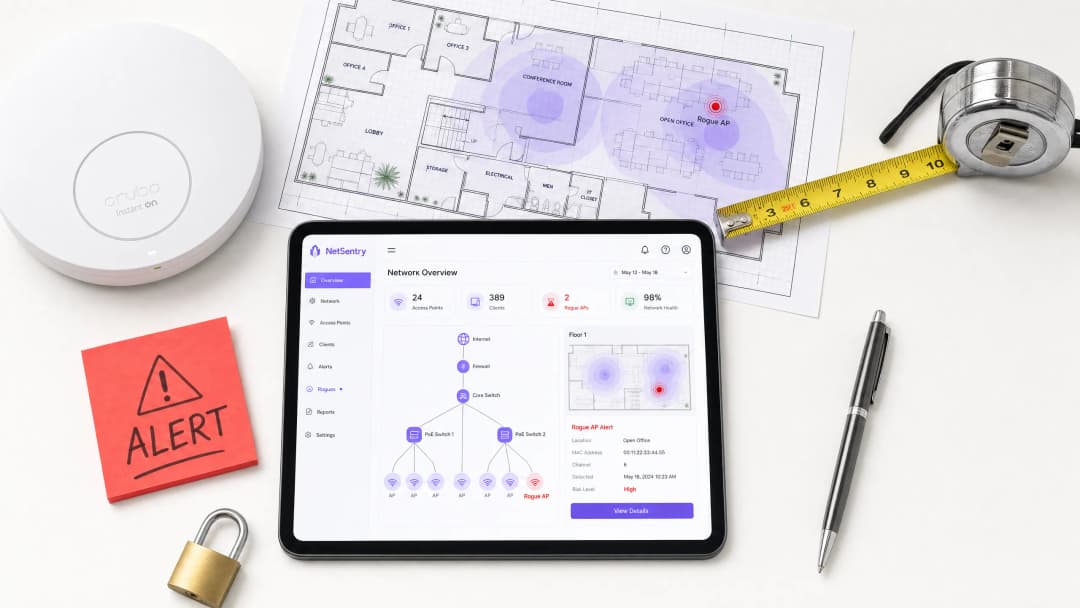
घटना प्रतिक्रिया समय: फ़्लोर प्लान पर दुष्ट APs के भौतिक स्थान को सटीक रूप से इंगित करके, IT टीमें MTTR को घंटों के मैनुअल स्पेक्ट्रम विश्लेषण से घटाकर मिनटों में ले आती हैं। यह सीधे तौर पर जोखिम की अवधि को कम करता है और संभावित डेटा हानि को सीमित करता है।
ब्रांड और नियामक सुरक्षा: Evil Twin हमलों के माध्यम से डेटा ब्रीच को रोकना संगठन को GDPR के तहत ICO प्रवर्तन कार्रवाई, PCI दंड और सार्वजनिक ब्रीच की प्रतिष्ठित क्षति से बचाता है। एक एकल महत्वपूर्ण उल्लंघन की लागत - नियामक जुर्माना, फोरेंसिक जांच, ग्राहक अधिसूचना - आमतौर पर कई गुना तक WIPS परिनियोजन की कुल लागत से अधिक हो जाती है। जैसे-जैसे एंटरप्राइज WiFi स्मार्ट, अधिक एकीकृत प्लेटफॉर्म की ओर विकसित हो रहा है - जिसमें पासवर्डलेस एक्सेस मॉडल शामिल हैं जैसे कि how WiFi assistants are enabling passwordless access in 2026 में खोजे गए हैं, और Purple's offline map mode जैसी सहज नेविगेशन सुविधाएं - बुनियादी वायरलेस इन्फ्रास्ट्रक्चर की सुरक्षा वह आधार बन जाती है जिस पर ये सभी क्षमताएं निर्भर करती हैं।
मुख्य परिभाषाएं
Rogue Access Point
नेटवर्क व्यवस्थापक की स्पष्ट अनुमति के बिना नेटवर्क से जुड़ा कोई भी वायरलेस एक्सेस पॉइंट, चाहे उसे स्थापित करने वाले व्यक्ति का इरादा कुछ भी हो।
परिधि सुरक्षा को बायपास करने और आंतरिक LAN को अनधिकृत पहुंच के दायरे में लाने के लिए प्राथमिक वायरलेस खतरा वेक्टर।
Evil Twin AP
एक धोखाधड़ी वाला एक्सेस पॉइंट जो वैध नेटवर्क के समान ही SSID प्रसारित करता है ताकि ग्राहकों को कनेक्ट करने के लिए धोखा दिया जा सके, जिससे ट्रैफ़िक के बीच में मैन-इन-द-मिडल इंटरसेप्शन सक्षम हो सके।
आमतौर पर बाहरी हमलावरों द्वारा लक्षित परिसर के पास तैनात किया जाता है। इसके लिए पोर्ट सप्रेशन के बजाय वायरलेस कंटेनमेंट (रोकथाम) की आवश्यकता होती है।
WIPS (Wireless Intrusion Prevention System)
एक नेटवर्क सुरक्षा प्रणाली जो अनधिकृत वायरलेस उपकरणों के लिए लगातार RF स्पेक्ट्रम की निगरानी करती है और डी-ऑथेंटिकेशन और पोर्ट सप्रेशन सहित स्वचालित रूप से जवाबी कार्रवाई कर सकती है।
स्वचालित रॉग AP का पता लगाने और रोकथाम के लिए एंटरप्राइज़ मानक। PCI DSS आवश्यकता 11.1 द्वारा आवश्यक निरंतर निगरानी प्रदान करता है।
WIDS (Wireless Intrusion Detection System)
WIPS का एक निष्क्रिय संस्करण जो वायरलेस खतरों का पता लगाता है और सचेत करता है लेकिन स्वचालित रोकथाम कार्रवाई नहीं करता है।
ऐसे वातावरण में उपयोग किया जाता है जहां स्वचालित रोकथाम में कानूनी या परिचालन संबंधी जोखिम होता है। प्रत्येक अलर्ट के लिए मैन्युअल प्रतिक्रिया की आवश्यकता होती है।
डी-ऑथेंटिकेशन फ़्रेम (802.11)
एक IEEE 802.11 प्रबंधन फ़्रेम जिसका उपयोग क्लाइंट और एक्सेस पॉइंट के बीच वायरलेस जुड़ाव को समाप्त करने के लिए किया जाता है। रॉग AP के कनेक्शन को बाधित करने के लिए WIPS द्वारा उपयोग किया जाता है।
वायरलेस रोकथाम के लिए प्राथमिक तंत्र। 802.11w (प्रोटेक्टेड मैनेजमेंट फ़्रेम) का समर्थन करने वाले ग्राहकों के विरुद्ध प्रभावशीलता कम हो जाती है।
BSSID (Basic Service Set Identifier)
वायरलेस एक्सेस पॉइंट के रेडियो इंटरफ़ेस का MAC पता। RF वातावरण में प्रत्येक AP की विशिष्ट रूप से पहचान करता है।
रोकथाम के लिए विशिष्ट AP को ट्रैक, वर्गीकृत और लक्षित करने के लिए WIPS द्वारा उपयोग किया जाने वाला प्राथमिक पहचानकर्ता।
पोर्ट सप्रेशन
SNMP या API के माध्यम से वायर्ड स्विच पोर्ट को प्रशासनिक रूप से अक्षम करने की क्रिया, जिससे उस पोर्ट से जुड़े किसी भी उपकरण की नेटवर्क कनेक्टिविटी समाप्त हो जाती है।
कॉर्पोरेट LAN से भौतिक रूप से जुड़े रॉग AP के लिए सबसे प्रभावी रोकथाम विधि। वायरलेस डी-ऑथेंटिकेशन पर इसे प्राथमिकता दी जाती है।
IEEE 802.1X (पोर्ट-आधारित NAC)
पोर्ट-आधारित नेटवर्क एक्सेस कंट्रोल के लिए एक IEEE मानक जिसके तहत वायर्ड या वायरलेस पोर्ट के माध्यम से नेटवर्क एक्सेस प्रदान करने से पहले उपकरणों को प्रमाणित करना आवश्यक होता है।
रॉग AP के खिलाफ मौलिक निवारक नियंत्रण। 802.1X-सक्षम पोर्ट में प्लग किए गए एक अनधिकृत उपभोक्ता राउटर को नेटवर्क एक्सेस पूरी तरह से अस्वीकार कर दिया जाएगा।
बैकग्राउंड स्कैनिंग (टाइम-स्लाइसिंग)
एक WIPS परिनियोजन मोड जहां सेवा प्रदान करने वाले AP समर्पित सेंसर हार्डवेयर का उपयोग करने के बजाय, खतरों को स्कैन करने के लिए समय-समय पर चैनल बदलते हैं।
वितरित या कम-जोखिम वाले वातावरण के लिए समर्पित सेंसर ओवरले का एक लागत प्रभावी विकल्प। निरंतर के बजाय समय-समय पर दृश्यता प्रदान करता है।
PCI DSS आवश्यकता 11.1
पेमेंट कार्ड इंडस्ट्री डेटा सुरक्षा मानक की आवश्यकता जो यह अनिवार्य करती है कि संगठन त्रैमासिक आधार पर अधिकृत और अनधिकृत वायरलेस एक्सेस पॉइंट्स का पता लगाने और उनकी पहचान करने के लिए प्रक्रियाओं को लागू करें।
रिटेल और हॉस्पिटैलिटी में WIPS अपनाने के लिए प्राथमिक अनुपालन चालक। स्वचालित WIPS रिपोर्टिंग सीधे इस आवश्यकता को पूरा करती है।
हल किए गए उदाहरण
एक घनी शहरी आबादी वाले क्षेत्र में स्थित 400 कमरों वाला कॉर्पोरेट होटल रुक-रुक कर होने वाली नेटवर्क प्रदर्शन समस्याओं और अतिथि क्रेडेंशियल चोरी की एक पुष्ट घटना का सामना कर रहा है। WLC कोई हार्डवेयर खराबी नहीं दिखाता है। होटल कैफे, रेस्तरां और कार्यालयों से घिरा हुआ है। IT टीम को इसके पता लगाने और नियंत्रण के लिए क्या रुख अपनाना चाहिए?
- 72 घंटे का RF बेसलाइन स्थापित करने के लिए सभी मंजिलों पर समर्पित मॉनिटर मोड में WIPS सेंसर तैनात करें। -75 dBm से नीचे के पड़ोसी नेटवर्क को फ़िल्टर करने के लिए RSSI थ्रेसहोल्ड को कॉन्फ़िगर करें।
- वर्गीकरण लॉग की समीक्षा करें। WIPS -52 dBm पर प्रसारित होने वाले 'Hotel_Guest_Free' नामक एक SSID का पता लगाता है, जो चौथी मंजिल के गलियारे में त्रिकोणीय (triangulated) है।
- MAC एड्रेस सहसंबंध निष्पादित करें। WIPS पुष्टि करता है कि डिवाइस होटल के वायर्ड LAN से कनेक्टेड नहीं है - यह एक सेलुलर-कनेक्टेड मोबाइल हॉटस्पॉट है। पोर्ट दमन उपलब्ध नहीं है।
- विशिष्ट BSSID को लक्षित करते हुए स्वचालित वायरलेस नियंत्रण (deauthentication frames) सक्षम करें। मेहमानों द्वारा अधिकृत APs से फिर से जुड़ने की पुष्टि करने के लिए क्लाइंट एसोसिएशन लॉग की निगरानी करें।
- सुरक्षा टीम को त्रिकोणीय स्थान पर भेजें। वह डिवाइस - एक मोबाइल हॉटस्पॉट - हाउसकीपिंग अलमारी में पाया जाता है और उसे हटा दिया जाता है।
- घटना के बाद: भविष्य के हमले की संभावना को कम करने के लिए कॉर्पोरेट SSID पर WPA3-Enterprise और अतिथि नेटवर्क पर captive portal प्रमाणीकरण लागू करें।
एक प्रमुख रिटेल श्रृंखला को 500 स्थानों पर PCI DSS आवश्यकता 11.1 को पूरा करने की आवश्यकता है। मैन्युअल त्रैमासिक वायरलेस आकलन की लागत सालाना £180,000 है और यह परिचालन में बाधा उत्पन्न करती है। अनुशंसित आर्किटेक्चर क्या है?
- निरंतर दृश्यता प्रदान करते हुए समर्पित सेंसर हार्डवेयर की पूंजीगत लागत से बचने के लिए सभी 500 स्थानों पर मौजूदा AP इन्फ्रास्ट्रक्चर पर बैकग्राउंड-स्कैनिंग WIPS तैनात करें।
- क्षेत्रीय IT प्रबंधकों के लिए भूमिका-आधारित पहुंच के साथ एकल कंसोल पर WIPS प्रबंधन को केंद्रीकृत करें।
- प्रत्येक स्टोर में सभी वायर्ड स्विच पोर्ट पर IEEE 802.1X लागू करें। यह rogue APs को LAN से कनेक्ट होने से रोकता है, जिससे WIPS प्राथमिक नहीं बल्कि द्वितीयक नियंत्रण बन जाता है।
- WIPS कंसोल से स्वचालित मासिक PCI अनुपालन रिपोर्ट कॉन्फ़िगर करें, जिसमें सभी पाए गए APs, उनके वर्गीकरण और सुधारात्मक कार्रवाइयों का दस्तावेजीकरण हो।
- एक एस्केलेशन SLA परिभाषित करें: गंभीर rogue (वायर्ड पर) -> 30 मिनट की भौतिक प्रतिक्रिया। उच्च rogue (केवल वायरलेस) -> 4 घंटे की जांच।
- नए खतरे की खुफिया जानकारी के आधार पर वर्गीकरण नियमों की त्रैमासिक समीक्षा और ट्यूनिंग करें।
अभ्यास प्रश्न
Q1. आपका WIPS आपको -52 dBm पर आपके कॉर्पोरेट SSID का प्रसारण करने वाले एक AP के बारे में सचेत करता है। WIPS, AP के MAC पते को किसी भी वायर्ड स्विच पोर्ट से सहसंबंधित नहीं कर सकता है। सही स्वचालित प्रतिक्रिया क्या है, और आपको किस कानूनी बाधा पर विचार करना चाहिए?
संकेत: वायर्ड और वायरलेस रोकथाम क्षमताओं के बीच अंतर, और सुरक्षित स्वचालित रोकथाम के लिए RSSI सीमा पर विचार करें।
मॉडल उत्तर देखें
विशिष्ट BSSID को लक्षित करते हुए स्वचालित वायरलेस रोकथाम (deauthentication frames) शुरू करें। चूंकि AP वायर्ड LAN पर नहीं है, इसलिए पोर्ट दमन (port suppression) असंभव है। मजबूत RSSI (-52 dBm) यह दर्शाता है कि डिवाइस भौतिक रूप से आपके परिसर के भीतर या उसके बिल्कुल बगल में है, और कॉर्पोरेट SSID को स्पूफ करना दुर्भावनापूर्ण इरादे (Evil Twin) को दर्शाता है, जो तत्काल वायरलेस रोकथाम को सही ठहराता है। कानूनी बाधा यह है कि रोकथाम केवल इस विशिष्ट BSSID को लक्षित करनी चाहिए - न कि ब्रॉडकास्ट deauthentication - और RSSI थ्रेशोल्ड पुष्टि करता है कि डिवाइस आपके पेरीमीटर के भीतर है, न कि किसी पड़ोसी नेटवर्क पर।
Q2. एक कर्मचारी किसी विजिटिंग वेंडर को कनेक्टिविटी प्रदान करने के लिए कॉन्फ्रेंस रूम में वॉल ईथरनेट जैक में एक उपभोक्ता WiFi राउटर प्लग करता है। WIPS -48 dBm पर AP के SSID ब्रॉडकास्टिंग का पता लगाता है। दो-स्तरीय सुरक्षा (two-layer defence) का वर्णन करें जो इसे एक गंभीर भेद्यता (critical vulnerability) बनने से रोके।
संकेत: उस नियंत्रण के बारे में सोचें जो वायर्ड एज पर खतरे को रोक दे, इससे पहले कि WIPS RF सिग्नल का पता लगाए।
मॉडल उत्तर देखें
लेयर 1 (रोकथाम): उपभोक्ता राउटर कनेक्ट होने पर कॉन्फ्रेंस रूम स्विच पोर्ट पर IEEE 802.1X को ऑथेंटिकेशन की मांग करनी चाहिए। अनमैनेज्ड राउटर ऑथेंटिकेशन में विफल हो जाएगा, और स्विच पोर्ट अनऑथराइज्ड VLAN या ब्लॉक स्थिति में रहेगा, जिससे रॉग AP को IP एड्रेस प्राप्त करने या कॉर्पोरेट LAN पर ट्रैफ़िक ब्रिज करने से रोका जा सकेगा। लेयर 2 (खोज और रोकथाम): यदि उस पोर्ट पर 802.1X तैनात नहीं है, तो WIPS -48 dBm पर ब्रॉडकास्ट करने वाले AP का पता लगाता है, स्विच MAC टेबल के माध्यम से MAC एड्रेस को वायर्ड LAN से सहसंबद्ध करता है, इसे क्रिटिकल (रॉग ऑन वायर) के रूप में वर्गीकृत करता है, और स्वचालित पोर्ट दमन को ट्रिगर करता है - SNMP या API के माध्यम से विशिष्ट स्विच पोर्ट को प्रशासनिक रूप से अक्षम करता है।
Q3. एक पड़ोसी रिटेल यूनिट अपने WiFi इंफ्रास्ट्रक्चर को अपग्रेड करती है। उनके नए AP अब आपके WIPS सेंसर को -68 dBm पर दिखाई दे रहे हैं। आपकी स्वचालित रोकथाम नीति ट्रिगर होती है और उनके क्लाइंट को डीऑथेंटिकेट करना शुरू कर देती है। क्या गलत हुआ, तत्काल जोखिम क्या है, और आप इसकी पुनरावृत्ति को कैसे रोकते हैं?
संकेत: RSSI थ्रेशोल्ड कॉन्फ़िगरेशन और तीसरे पक्ष के नेटवर्क में हस्तक्षेप के कानूनी प्रभावों पर विचार करें।
मॉडल उत्तर देखें
क्या गलत हुआ: स्वचालित रोकथाम RSSI थ्रेशोल्ड बहुत कम सेट किया गया था (या कॉन्फ़िगर नहीं किया गया था), जिसके कारण WIPS ने एक वैध पड़ोसी नेटवर्क को लक्षित किया। -68 dBm सिग्नल रोकथाम ट्रिगर रेंज के भीतर है लेकिन डिवाइस संगठन के परिसर के भीतर नहीं है। तत्काल जोखिम: यह तीसरे पक्ष के नेटवर्क के खिलाफ जानबूझकर जैमिंग और डिनायल ऑफ सर्विस (DoS) का गठन करता है, जो दूरसंचार नियमों का उल्लंघन करता है। संगठन को महत्वपूर्ण कानूनी दायित्व और संभावित नियामक प्रवर्तन का सामना करना पड़ सकता है। रोकथाम: स्वचालित रोकथाम RSSI थ्रेशोल्ड को बढ़ाकर -65 dBm या उससे अधिक मजबूत करें। एक पड़ोसी AP सर्वेक्षण करें और सभी पहचाने गए पड़ोसी BSSIDs को स्पष्ट रूप से श्वेतसूची (whitelist) में डालें। रोकथाम अधिकृत होने से पहले -65 dBm और -75 dBm के बीच किसी भी AP के लिए एक मैन्युअल समीक्षा चरण लागू करें।
इस श्रृंखला में आगे पढ़ें
Corporate WiFi पर VoIP और वीडियो कॉल के लिए Roaming अनुकूलन
यह गाइड IT मैनेजरों, नेटवर्क आर्किटेक्ट्स और CTOs को कॉर्पोरेट स्टाफ नेटवर्क पर निर्बाध VoIP और वीडियो कॉल का समर्थन करने के लिए WiFi roaming को अनुकूलित करने के लिए एक व्यापक, वेंडर-तटस्थ खाका प्रदान करती है। इसमें IEEE 802.11k/r/v प्रोटोकॉल स्टैक, WMM QoS कॉन्फ़िगरेशन, RF सेल डिज़ाइन और सब-50ms हैंडऑफ़ लेटेंसी प्राप्त करने के लिए आवश्यक एंड-टू-एंड वायर्ड QoS मैपिंग शामिल है। हॉस्पिटैलिटी, रिटेल, हेल्थकेयर और बड़े-स्थल वाले वातावरण में लागू, इस संदर्भ गाइड में वास्तविक दुनिया के कार्यान्वयन परिदृश्य, समस्या निवारण फ्रेमवर्क और एक मापने योग्य ROI विश्लेषण शामिल हैं।
कॉरपोरेट उपकरणों के लिए प्रमाणपत्र-आधारित प्रमाणीकरण (EAP-TLS)
यह आधिकारिक तकनीकी संदर्भ गाइड कॉरपोरेट उपकरणों के लिए EAP-TLS प्रमाणपत्र-आधारित प्रमाणीकरण के आर्किटेक्चर, परिनियोजन और परिचालन सर्वोत्तम प्रथाओं को कवर करती है। IT आर्किटेक्ट्स और स्थल संचालन नेताओं के लिए डिज़ाइन की गई, यह पासवर्ड-आधारित क्रेडेंशियल जोखिमों को समाप्त करने और बहु-साइट उद्यम वातावरण में मजबूत 802.1X नेटवर्क एक्सेस नियंत्रण प्राप्त करने के लिए एक व्यावहारिक रोडमैप प्रदान करती है।
स्टाफ नेटवर्क पर BYOD (Bring Your Own Device) सुरक्षा का प्रबंधन
स्टाफ नेटवर्क पर Bring Your Own Device (BYOD) एक्सेस को सुरक्षित करने पर एंटरप्राइज IT प्रबंधकों और नेटवर्क आर्किटेक्ट्स के लिए एक आधिकारिक, तकनीकी संदर्भ गाइड। यह गाइड डेटा लीक को कम करने और उच्च-फुटफॉल वाले स्थानों पर नियामक अनुपालन बनाए रखने के लिए आवश्यक सटीक नेटवर्क आर्किटेक्चर, ऑथेंटिकेशन प्रोटोकॉल और MDM इंटीग्रेशन वर्कफ़्लो को रेखांकित करती है।
अपने विशिष्ट सेटअप को लेकर कोई सवाल हैं?
हमारी टीम 80,000 से अधिक वेन्यू में वेन्यू ऑपरेटरों, IT मैनेजरों और नेटवर्क इंजीनियरों के साथ काम करती है। 20 मिनट का कॉल बुक करें और हम आपको दिखाएंगे कि आपके जैसे अन्य लोगों ने इसे कैसे हल किया।