
लेगेसी NAC से क्लाउड-नेटिव NAC में माइग्रेट करने के लिए चेकलिस्ट
यह आधिकारिक तकनीकी संदर्भ मार्गदर्शिका लेगेसी नेटवर्क एक्सेस कंट्रोल (NAC) से क्लाउड-नेटिव आर्किटेक्चर में माइग्रेट करने के लिए एक संरचित, तीन-चरणीय चेकलिस्ट प्रदान करती है। यह IT प्रबंधकों और नेटवर्क आर्किटेक्ट्स को वेन्यू संचालन को बाधित किए बिना आइडेंटिटी एकीकरण, पॉलिसी समानता और अनुपालन को संभालने के लिए कार्रवाई योग्य रणनीतियों से लैस करती है।
इस गाइड को सुनें
पॉडकास्ट ट्रांसक्रिप्ट देखें
हमारी मुख्य श्रृंखला का हिस्सा: Enterprise WiFi Security Guide →

कार्यकारी सारांश
लेगेसी नेटवर्क एक्सेस कंट्रोल (NAC) से क्लाउड-नेटिव आर्किटेक्चर में माइग्रेट करना अब कोई ऐच्छिक अपग्रेड नहीं रह गया है; आधुनिक एंटरप्राइज़ परिवेशों में सुरक्षा, स्केलेबिलिटी और अनुपालन बनाए रखने के लिए यह एक महत्वपूर्ण आवश्यकता है। पुराने सिस्टम, जो अक्सर पुराने ऑन-प्रिमाइसेस हार्डवेयर और कठोर डायरेक्टरी संरचनाओं पर निर्भर होते हैं, IoT डिवाइसों की विस्फोटक वृद्धि, गतिशील स्टाफ मोबिलिटी और आधुनिक गेस्ट एक्सेस की सख्त मांगों का समर्थन करने में संघर्ष करते हैं। हॉस्पिटैलिटी, रिटेल और सार्वजनिक क्षेत्रों में वेन्यू ऑपरेशंस डायरेक्टर्स और IT प्रबंधकों के लिए, क्लाउड-नेटिव NAC में ट्रांज़िशन हार्डवेयर विफलता और पॉलिसी विखंडन के जोखिमों को कम करता है, जबकि API-संचालित ऑटोमेशन को सक्षम करता है।
यह तकनीकी संदर्भ मार्गदर्शिका इस माइग्रेशन को निष्पादित करने के लिए एक व्यापक चेकलिस्ट प्रदान करती है। यह एक संरचित तीन-चरणीय दृष्टिकोण की रूपरेखा तैयार करती है: प्री-माइग्रेशन असेसमेंट, पैरेलल रन और वैलिडेशन, और फुल कटओवर और ऑप्टिमाइज़ेशन। हार्डवेयर से पॉलिसी एन्फोर्समेंट को अलग करके और आइडेंटिटी स्टोर्स को फ़ेडरेट करके, संगठन ज़ीरो-टच प्रोविज़निंग, मज़बूत IEEE 802.1X एन्फोर्समेंट और इकोसिस्टम टूल्स के साथ सहज एकीकरण प्राप्त कर सकते हैं। महत्वपूर्ण रूप से, यह मार्गदर्शिका विस्तार से बताती है कि गेस्ट आइडेंटिटी और नेटवर्क पॉलिसी को एकीकृत करने के लिए Purple जैसे प्लेटफ़ॉर्म का लाभ कैसे उठाया जाए, यह सुनिश्चित करते हुए कि माइग्रेशन तत्काल परिचालन ROI और उन्नत सुरक्षा स्थिति प्रदान करता है。
तकनीकी डीप-डाइव
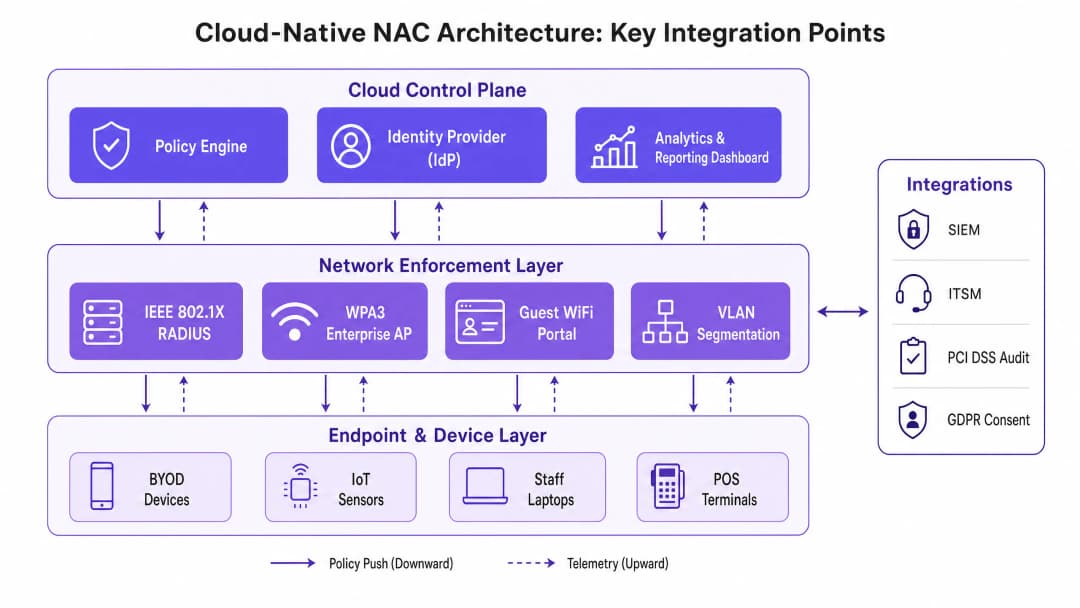
लेगेसी से क्लाउड-नेटिव NAC में जाने में मूलभूत बदलाव कंट्रोल प्लेन को डेटा प्लेन से अलग करना है। लेगेसी आर्किटेक्चर आमतौर पर मोनोलिथिक RADIUS सर्वर और एज पर तैनात या केंद्रीय डेटा सेंटर में एकत्रित भौतिक उपकरणों पर निर्भर करते हैं। यह मॉडल बॉटलनेक बनाता है, वितरित साइटों के लिए लेटेंसी बढ़ाता है, और पॉलिसी स्थिरता बनाए रखने के लिए निरंतर मैन्युअल हस्तक्षेप की मांग करता है।
क्लाउड-नेटिव NAC पॉलिसी इंजन और आइडेंटिटी प्रोवाइडर (IdP) को एक स्केलेबल क्लाउड परिवेश में एब्स्ट्रैक्ट करता है। एन्फोर्समेंट को एज पर धकेल दिया जाता है, या तो हल्के सॉफ़्टवेयर एजेंटों के माध्यम से या आधुनिक एक्सेस पॉइंट और स्विच के साथ सीधे API एकीकरण के माध्यम से। यह आर्किटेक्चर मौलिक रूप से बदल देता है कि ऑथेंटिकेशन और ऑथराइज़ेशन को कैसे प्रोसेस किया जाता है।
आइडेंटिटी फ़ेडरेशन और RADIUS
माइग्रेशन के मूल में आइडेंटिटी मैनेजमेंट का ट्रांज़िशन है। लेगेसी NAC अक्सर ऑन-प्रिमाइसेस Active Directory के लिए सीधे LDAP बाइंड पर निर्भर करता है। क्लाउड-नेटिव समाधान Azure AD या Okta जैसे क्लाउड आइडेंटिटी प्रोवाइडर्स के साथ SAML या OIDC एकीकरण का पक्ष लेते हैं। माइग्रेट करते समय, RADIUS इन्फ्रास्ट्रक्चर का आधुनिकीकरण किया जाना चाहिए। क्लाउड RADIUS सेवाएँ विश्व स्तर पर IEEE 802.1X ऑथेंटिकेशन (जैसे, EAP-TLS, PEAP-MSCHAPv2) को संभालती हैं, निकटतम भौगोलिक पॉइंट ऑफ़ प्रेजेंस पर अनुरोधों को रूट करके लेटेंसी को कम करती हैं।
वर्तमान में उपयोग में आने वाले प्रत्येक एक्सटेंसिबल ऑथेंटिकेशन प्रोटोकॉल (EAP) विधि का दस्तावेजीकरण करना महत्वपूर्ण है। नए परिवेश में मौजूदा EAP प्रकारों का समर्थन करने में विफलता के परिणामस्वरूप एंडपॉइंट्स के लिए तत्काल ऑथेंटिकेशन विफलताएँ होंगी। इसके अलावा, गेस्ट एक्सेस के लिए, Purple जैसे मज़बूत Guest WiFi प्लेटफ़ॉर्म को एकीकृत करने से क्लाउड-आधारित पॉलिसी एन्फोर्समेंट की अनुमति मिलती है, जो स्थानीय हार्डवेयर से RADIUS चेंज ऑफ़ ऑथराइज़ेशन (CoA) और VLAN असाइनमेंट की जटिलता को दूर करता है।
नेटवर्क सेगमेंटेशन और अनुपालन
आधुनिक NAC केवल एक्सेस के बारे में नहीं है; यह डायनामिक सेगमेंटेशन के बारे में है। PCI DSS या GDPR के अधीन परिवेशों में, उपयोगकर्ता की भूमिका, डिवाइस की स्थिति और स्थान के आधार पर गतिशील रूप से VLAN असाइन करने या माइक्रो-सेगमेंटेशन नीतियां लागू करने की क्षमता सर्वोपरि है। क्लाउड-नेटिव NAC एक्सेस देने से पहले संदर्भ—कौन, क्या, कहाँ और कब—का मूल्यांकन करता है।
माइग्रेशन के दौरान, मौजूदा स्टैटिक VLAN असाइनमेंट को डायनामिक नीतियों में मैप किया जाना चाहिए। उदाहरण के लिए, एक POS टर्मिनल को गेस्ट नेटवर्क और सामान्य स्टाफ नेटवर्क से अलग किया जाना चाहिए। क्लाउड पॉलिसी इंजन डिवाइस के MAC एड्रेस (या आदर्श रूप से, एक डिवाइस सर्टिफ़िकेट) का मूल्यांकन करता है और नेटवर्क इन्फ्रास्ट्रक्चर को इसे सुरक्षित PCI-अनुपालक ज़ोन में रखने का निर्देश देता है।
अपने विशिष्ट सेटअप को लेकर कोई सवाल हैं?
हमारी टीम 80,000 से अधिक वेन्यू में वेन्यू ऑपरेटरों, IT मैनेजरों और नेटवर्क इंजीनियरों के साथ काम करती है। 20 मिनट का कॉल बुक करें और हम आपको दिखाएंगे कि आपके जैसे अन्य लोगों ने इसे कैसे हल किया।
कार्यान्वयन मार्गदर्शिका
माइग्रेशन को निष्पादित करने के लिए सक्रिय वेन्यू और महत्वपूर्ण व्यावसायिक संचालन में व्यवधान को कम करने के लिए एक अनुशासित, चरणबद्ध दृष्टिकोण की आवश्यकता होती है।
चरण 1: प्री-माइग्रेशन असेसमेंट
किसी भी कॉन्फ़िगरेशन को बदलने से पहले, मौजूदा NAC इकोसिस्टम की पूरी इन्वेंट्री अनिवार्य है। इसमें सभी RADIUS सर्वर, सप्लिकेंट कॉन्फ़िगरेशन, VLAN स्कीमा और थर्ड-पार्टी एकीकरण (जैसे SIEM या ITSM प्लेटफ़ॉर्म) की मैपिंग शामिल है।
- Audit Identity Sources: ऑथेंटिकेशन के लिए उपयोग की जाने वाली सभी डायरेक्टरी और डेटाबेस की पहचान करें। पुराने खातों को साफ़ करें और विशेषाधिकार प्राप्त आइडेंटिटी पर MFA लागू करें।
- Map EAP Methods: वायर्ड और वायरलेस नेटवर्क में उपयोग में आने वाले सभी IEEE 802.1X तरीकों का दस्तावेजीकरण करें।
- Analyse Guest Flows: वर्तमान Captive Portal एकीकरण का दस्तावेजीकरण करें। मूल्यांकन करें कि एक आधुनिक Guest WiFi समाधान इस प्रक्रिया को कैसे सुव्यवस्थित कर सकता है।
- Review IoT Devices: MAC ऑथेंटिकेशन बायपास (MAB) पर निर्भर डिवाइसों की पहचान करें और जहाँ संभव हो वहाँ सर्टिफ़िकेट-आधारित ऑथेंटिकेशन की योजना बनाएँ。
चरण 2: पैरेलल रन और वैलिडेशन
सबसे प्रभावी रणनीति लेगेसी सिस्टम के साथ शैडो मोड में क्लाउड-नेटिव NAC को तैनात करना है। यह उत्पादन ट्रैफ़िक को प्रभावित किए बिना पॉलिसी वैलिडेशन की अनुमति देता है।
- Deploy Cloud RADIUS: लेगेसी सिस्टम के समानांतर ऑथेंटिकेशन अनुरोध प्राप्त करने के लिए क्लाउड NAC को कॉन्फ़िगर करें।
- Validate Policy Parity: दोनों सिस्टम द्वारा लिए गए एक्सेस निर्णयों (Role, VLAN, ACL) की तुलना करें। किसी भी भिन्नता की जांच और समाधान किया जाना चाहिए।
- Test Latency: सुनिश्चित करें कि क्लाउड ऑथेंटिकेशन अनुरोध स्वीकार्य थ्रेशोल्ड (आमतौर पर सब-100ms) के भीतर पूरे होते हैं।
- Pilot Groups: एंड-टू-एंड कार्यक्षमता को मान्य करने के लिए उपयोगकर्ताओं के एक छोटे उपसमूह (जैसे, IT कर्मचारी) या एक विशिष्ट गैर-महत्वपूर्ण SSID को नए सिस्टम में माइग्रेट करें।
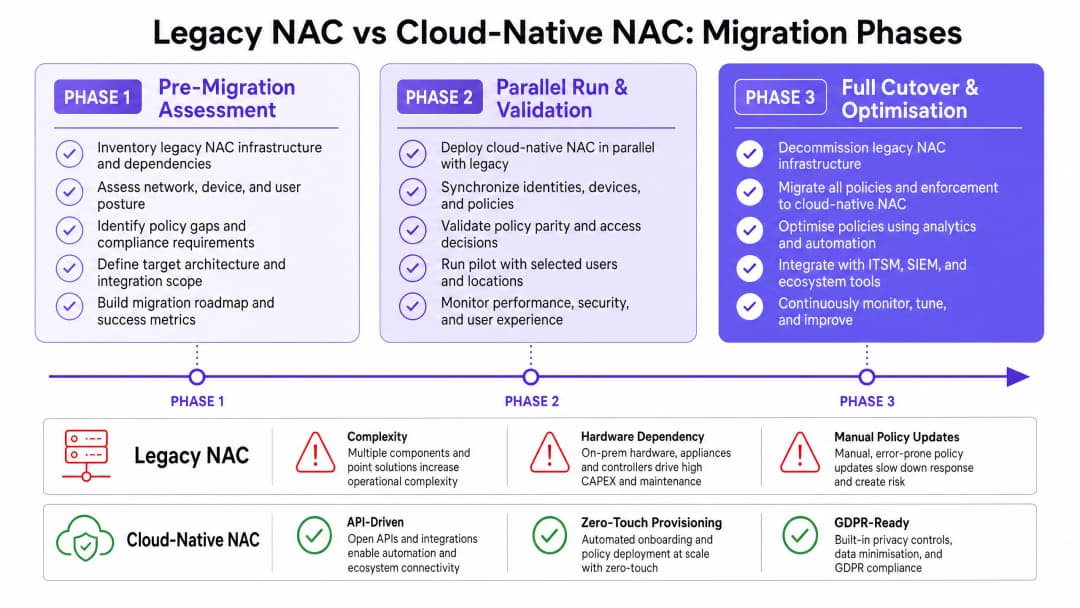
चरण 3: फुल कटओवर और ऑप्टिमाइज़ेशन
एक बार समानता की पुष्टि हो जाने के बाद, निर्धारित मेंटेनेंस विंडो के दौरान कटओवर निष्पादित करें।
- Sequence the Cutover: सबसे कम जोखिम वाले नेटवर्क से शुरुआत करें। पहले गेस्ट नेटवर्क को माइग्रेट करें, उसके बाद स्टाफ वायरलेस, वायर्ड 802.1X, और अंत में IoT/OT नेटवर्क।
- Monitor Telemetry: ऑथेंटिकेशन सफलता दर की निगरानी करने और असामान्य व्यवहार की पहचान करने के लिए क्लाउड प्लेटफ़ॉर्म की उन्नत दृश्यता का उपयोग करें।
- Integrate Analytics: डिवाइस ड्वेल टाइम, कनेक्शन पैटर्न और स्थानिक उपयोग के बारे में जानकारी प्राप्त करने के लिए टेलीमेट्री को WiFi Analytics प्लेटफ़ॉर्म में फ़ीड करें।
- Decommission Legacy Hardware: एक बार स्थिरता प्राप्त हो जाने के बाद, लेगेसी NAC उपकरणों को सुरक्षित रूप से वाइप करें और डिकमीशन करें।
सर्वोत्तम प्रथाएँ
एक लचीली और स्केलेबल तैनाती सुनिश्चित करने के लिए, निम्नलिखित उद्योग सर्वोत्तम प्रथाओं का पालन करें:
- Embrace WPA3-Enterprise: जहाँ हार्डवेयर इसका समर्थन करता है, अत्यधिक सुरक्षित नेटवर्क (जैसे, वित्त, HR) के लिए 192-बिट मोड के साथ WPA3-Enterprise अनिवार्य करें। यह नवीनतम Wi-Fi Alliance सुरक्षा मानकों के अनुरूप है। आधुनिक वायरलेस मानकों की गहरी समझ के लिए, Wi Fi Frequencies: A Guide to Wi-Fi Frequencies in 2026 पर हमारी मार्गदर्शिका देखें।
- Federate Guest Identity: कॉर्पोरेट डायरेक्टरी में गेस्ट खातों का प्रबंधन न करें। गेस्ट ऑनबोर्डिंग, सहमति प्रबंधन और डेटा रेजीडेंसी को संभालने के लिए Purple जैसे उद्देश्य-निर्मित प्लेटफ़ॉर्म का उपयोग करें, जिससे GDPR अनुपालन सुनिश्चित हो सके।
- Implement Zero Trust Principles: नेटवर्क स्थान के आधार पर निहित विश्वास से दूर जाएँ। एक्सेस देने से पहले सभी एंडपॉइंट्स के लिए निरंतर पोस्चर असेसमेंट लागू करें。
- Automate IoT Onboarding: हेडलेस डिवाइसों के लिए स्वचालित सर्टिफ़िकेट प्रोविज़निंग लागू करके MAB से दूर जाएँ。
नेटवर्क सुरक्षा के विकास के बारे में अधिक जानकारी के लिए, The Future of Wi-Fi Security: AI-Driven NAC and Threat Detection और इसके स्पेनिश समकक्ष, El Futuro de la Seguridad Wi-Fi: NAC Impulsado por IA y Detección de Amenazas की समीक्षा करें।
समस्या निवारण और जोखिम न्यूनीकरण
माइग्रेशन में स्वाभाविक रूप से जोखिम होता है। सुचारू ट्रांज़िशन के लिए सामान्य विफलता मोड का अनुमान लगाना महत्वपूर्ण है।
विफलता मोड: आइडेंटिटी सिंक्रोनाइज़ेशन समस्याएँ यदि क्लाउड IdP ऑन-प्रिमाइसेस डायरेक्टरी के साथ सिंक्रोनाइज़ करने में विफल रहता है, तो ऑथेंटिकेशन विफल हो जाएगा। न्यूनीकरण: डायरेक्टरी सिंक एजेंटों पर मज़बूत निगरानी लागू करें। विभिन्न भौतिक साइटों पर रिडंडेंट सिंक कनेक्टर्स कॉन्फ़िगर करें।
विफलता मोड: उच्च ऑथेंटिकेशन लेटेंसी RADIUS ट्रैफ़िक को दूरस्थ क्लाउड क्षेत्र में रूट करने से एंडपॉइंट सप्लिकेंट पर टाइमआउट हो सकता है। न्यूनीकरण: वेन्यू के भौगोलिक रूप से करीब एक क्लाउड क्षेत्र का चयन करें। बड़े Retail स्टोर या Healthcare सुविधाओं जैसी महत्वपूर्ण साइटों के लिए स्थानीय RADIUS प्रॉक्सी या सर्वाइवेबल ब्रांच एप्लायंसेज लागू करें।
विफलता मोड: IoT कनेक्टिविटी का नुकसान लेगेसी IoT डिवाइसों में अक्सर हार्डकोडेड नेटवर्क कॉन्फ़िगरेशन होते हैं या आधुनिक EAP तरीकों के लिए समर्थन का अभाव होता है। न्यूनीकरण: विशेष रूप से लेगेसी IoT डिवाइसों के लिए MAB फ़ॉलबैक के साथ एक समर्पित, पृथक SSID बनाए रखें जब तक कि उन्हें बदला न जा सके। सुनिश्चित करें कि इस VLAN में लेटरल मूवमेंट को सीमित करने वाले सख्त ACL हैं।
ROI और व्यावसायिक प्रभाव
क्लाउड-नेटिव NAC में ट्रांज़िशन बेहतर सुरक्षा से परे मापने योग्य व्यावसायिक मूल्य प्रदान करता है।
- Operational Efficiency: ज़ीरो-टच प्रोविज़निंग और केंद्रीकृत पॉलिसी प्रबंधन मूव्स, एड्स और चेंजेस (MACs) के लिए आवश्यक इंजीनियरिंग घंटों को काफी कम कर देते हैं।
- Hardware Savings: ऑन-प्रिमाइसेस उपकरणों को डिकमीशन करने से संबंधित बिजली, कूलिंग और रखरखाव अनुबंध लागत समाप्त हो जाती है।
- Enhanced Guest Experience: आधुनिक Guest WiFi प्लेटफ़ॉर्म के साथ NAC को एकीकृत करने से ऑनबोर्डिंग घर्षण कम होता है, जिससे Hospitality और Transport क्षेत्रों में मार्केटिंग टीमों के लिए उच्च ऑप्ट-इन दरें और समृद्ध डेटा संग्रह होता है।
- Risk Reduction: स्वचालित अनुपालन रिपोर्टिंग और डायनामिक सेगमेंटेशन डेटा ब्रीच की संभावना और संभावित प्रभाव को कम करते हैं, साइबर बीमा प्रीमियम को कम करते हैं और ब्रांड प्रतिष्ठा की रक्षा करते हैं।
मुख्य परिभाषाएं
नेटवर्क एक्सेस कंट्रोल (NAC)
एक सुरक्षा समाधान जो नेटवर्क तक पहुँचने का प्रयास करने वाले डिवाइसों और उपयोगकर्ताओं पर पॉलिसी लागू करता है।
यह सुनिश्चित करने के लिए आवश्यक है कि केवल अधिकृत, अनुपालक डिवाइस ही कॉर्पोरेट या गेस्ट नेटवर्क से कनेक्ट हों।
क्लाउड-नेटिव आर्किटेक्चर
विशेष रूप से क्लाउड कंप्यूटिंग मॉडल का लाभ उठाने के लिए एप्लिकेशन डिज़ाइन करना, आमतौर पर माइक्रोसर्विसेज और API का उपयोग करके।
NAC को असीम रूप से स्केल करने और स्थानीय हार्डवेयर बाधाओं से पॉलिसी प्रबंधन को अलग करने की अनुमति देता है।
RADIUS (रिमोट ऑथेंटिकेशन डायल-इन यूज़र सर्विस)
एक नेटवर्किंग प्रोटोकॉल जो केंद्रीकृत ऑथेंटिकेशन, ऑथराइज़ेशन और अकाउंटिंग (AAA) प्रबंधन प्रदान करता है।
नेटवर्क स्विच और AP द्वारा NAC पॉलिसी इंजन के साथ संचार करने के लिए उपयोग किया जाने वाला मुख्य प्रोटोकॉल।
IEEE 802.1X
पोर्ट-आधारित नेटवर्क एक्सेस कंट्रोल के लिए एक IEEE मानक, जो LAN या WLAN से जुड़ने के इच्छुक डिवाइसों को ऑथेंटिकेशन तंत्र प्रदान करता है।
स्टाफ डिवाइसों के लिए सुरक्षित, एंटरप्राइज़-ग्रेड नेटवर्क ऑथेंटिकेशन के लिए स्वर्ण मानक।
MAC ऑथेंटिकेशन बायपास (MAB)
उपयोगकर्ता नाम/पासवर्ड या सर्टिफ़िकेट के बजाय डिवाइस के MAC एड्रेस के आधार पर नेटवर्क एक्सेस देने की एक विधि।
आमतौर पर हेडलेस IoT डिवाइसों (प्रिंटर, कैमरे) के लिए उपयोग किया जाता है जो 802.1X का समर्थन नहीं कर सकते हैं, हालांकि यह स्वाभाविक रूप से कम सुरक्षित है।
डायनामिक सेगमेंटेशन
उपयोगकर्ता की पहचान, डिवाइस प्रकार या संदर्भ के आधार पर गतिशील रूप से नेटवर्क एक्सेस नीतियां (जैसे VLAN या ACL) असाइन करने की क्षमता।
विभिन्न प्रकार के ट्रैफ़िक को अलग करने के लिए महत्वपूर्ण (उदा., POS टर्मिनलों को गेस्ट WiFi से अलग रखना)।
आइडेंटिटी प्रोवाइडर (IdP)
एक सिस्टम इकाई जो प्रिंसिपल्स के लिए पहचान जानकारी बनाती, बनाए रखती और प्रबंधित करती है और ऑथेंटिकेशन सेवाएँ प्रदान करती है।
क्लाउड-नेटिव NAC लेगेसी ऑन-प्रिमाइसेस LDAP सर्वर के बजाय आधुनिक IdP (Azure AD, Okta) पर निर्भर करता है।
चेंज ऑफ़ ऑथराइज़ेशन (CoA)
एक RADIUS एक्सटेंशन जो NAC सर्वर को एक सक्रिय सत्र की एक्सेस अनुमतियों को गतिशील रूप से बदलने की अनुमति देता है।
गेस्ट WiFi पोर्टल्स में उपयोगकर्ताओं द्वारा शर्तें स्वीकार करने के बाद उन्हें प्रतिबंधित प्री-ऑथेंटिकेशन VLAN से फुल एक्सेस VLAN में स्विच करने के लिए बड़े पैमाने पर उपयोग किया जाता है।
हल किए गए उदाहरण
एक 500 कमरों वाला होटल क्लाउड-नेटिव NAC में माइग्रेट कर रहा है। वे वर्तमान में स्टाफ 802.1X (PEAP) के लिए एक लेगेसी ऑन-प्रिमाइसेस RADIUS सर्वर और मेहमानों के लिए एक बुनियादी Captive Portal का उपयोग करते हैं। उनके पास MAB के माध्यम से ऑथेंटिकेट करने वाले 200 IoT डिवाइस (स्मार्ट टीवी, डोर लॉक) हैं। गेस्ट व्यवधान को कम करने के लिए उन्हें माइग्रेशन को कैसे अनुक्रमित करना चाहिए?
- क्लाउड NAC तैनात करें और इसे कर्मचारियों के लिए मौजूदा IdP के साथ एकीकृत करें। 2. गेस्ट एक्सेस के लिए क्लाउड NAC के साथ Purple Guest WiFi को एकीकृत करें। 3. चरण 1 कटओवर: Guest SSID को नए Captive Portal फ़्लो में माइग्रेट करें। यह कम जोखिम वाला है और तत्काल मार्केटिंग ROI प्रदान करता है। 4. चरण 2 कटओवर: स्टाफ 802.1X को माइग्रेट करें। चेतावनियों को रोकने के लिए सुनिश्चित करें कि नया RADIUS सर्वर सर्टिफ़िकेट स्टाफ एंडपॉइंट्स द्वारा विश्वसनीय है। 5. चरण 3 कटओवर: IoT डिवाइसों को माइग्रेट करें। MAB के लिए क्लाउड NAC में एक विशिष्ट पॉलिसी बनाएँ, यह सुनिश्चित करते हुए कि इन डिवाइसों को एक पृथक VLAN में रखा गया है।
150 स्टोर वाली एक बड़ी रिटेल चेन अपने क्लाउड NAC माइग्रेशन के पैरेलल रन चरण के दौरान उच्च लेटेंसी (500ms से अधिक) का अनुभव कर रही है, जिससे ऑथेंटिकेशन के दौरान POS टर्मिनल टाइमआउट हो रहे हैं।
लेटेंसी संभवतः स्टोर और क्लाउड RADIUS क्षेत्र के बीच भौगोलिक दूरी, या अक्षम डायरेक्टरी लुकअप के कारण होती है। समाधान यह है: 1. सत्यापित करें कि क्लाउड NAC टेनेंट इष्टतम भौगोलिक क्षेत्र में होस्ट किया गया है। 2. ऑथेंटिकेशन को कैश करने और स्थानीय EAP टर्मिनेशन को संभालने के लिए क्षेत्रीय हब में एक हल्का RADIUS प्रॉक्सी या सर्वाइवेबल एज एप्लायंस तैनात करें। 3. सुनिश्चित करें कि IdP एकीकरण तेज़, अनुक्रमित लुकअप का उपयोग कर रहा है (उदा., VPN पर ऑन-प्रेम LDAP सर्वर को क्वेरी करने के बजाय नेटिव Azure AD एकीकरण)।
अभ्यास प्रश्न
Q1. आपका संगठन Cisco ISE से क्लाउड-नेटिव NAC में माइग्रेट कर रहा है। पैरेलल रन के दौरान, आप देखते हैं कि आपके वेयरहाउस में पुराने बारकोड स्कैनर का एक विशिष्ट समूह क्लाउड NAC पर ऑथेंटिकेशन में विफल हो रहा है, लेकिन ISE पर सफल हो रहा है। इसका सबसे संभावित कारण क्या है और आपको इसका समाधान कैसे करना चाहिए?
संकेत: विचार करें कि पुराने डिवाइस एन्क्रिप्शन और प्रोटोकॉल नेगोशिएशन को कैसे संभालते हैं।
मॉडल उत्तर देखें
सबसे संभावित कारण समर्थित EAP तरीकों या साइफर सूट में बेमेल होना है। क्लाउड NAC ने पुराने, कम सुरक्षित प्रोटोकॉल (जैसे TLS 1.0 या विशिष्ट कमज़ोर साइफर) को हटा दिया होगा जिन्हें लेगेसी ISE सर्वर ने अभी भी अनुमति दी थी। इसका समाधान करने के लिए, आपको आधुनिक प्रोटोकॉल का समर्थन करने के लिए बारकोड स्कैनर पर फ़र्मवेयर/सप्लिकेंट को अपडेट करना होगा, या, यदि यह संभव नहीं है, तो क्लाउड NAC में एक विशिष्ट, पृथक पॉलिसी कॉन्फ़िगर करें ताकि अस्थायी रूप से उस डिवाइस समूह के लिए पुराने प्रोटोकॉल की अनुमति दी जा सके, सख्त नेटवर्क सेगमेंटेशन के माध्यम से सुरक्षा जोखिम को कम किया जा सके।
Q2. एक विश्वविद्यालय परिसर NAC माइग्रेशन के साथ-साथ अपने स्टाफ नेटवर्क के लिए WPA3-Enterprise लागू करना चाहता है। हालाँकि, 15% स्टाफ लैपटॉप पुराने वायरलेस NIC चला रहे हैं जो WPA3 का समर्थन नहीं करते हैं। नेटवर्क आर्किटेक्ट को SSID को कैसे डिज़ाइन करना चाहिए?
संकेत: ट्रांज़िशन मोड और सुरक्षा स्थिति पर प्रभाव पर विचार करें।
मॉडल उत्तर देखें
आर्किटेक्ट को WPA3-Enterprise ट्रांज़िशन मोड का उपयोग करने के लिए स्टाफ SSID को कॉन्फ़िगर करना चाहिए। यह सक्षम डिवाइसों को WPA3-Enterprise का उपयोग करके कनेक्ट करने की अनुमति देता है, जबकि पुराने डिवाइस WPA2-Enterprise पर वापस आ जाते हैं। वैकल्पिक रूप से, यदि विशिष्ट विभागों के लिए सख्त सुरक्षा अनुपालन की आवश्यकता है, तो अनुपालक डिवाइसों के लिए एक समर्पित WPA3-ओनली SSID बनाया जा सकता है, जिससे शेष हार्डवेयर के रीफ्रेश होने तक लेगेसी SSID सक्रिय रहता है।
Q3. चरण 1 (प्री-माइग्रेशन असेसमेंट) के दौरान, आपको पता चलता है कि वर्तमान गेस्ट WiFi उपयोगकर्ताओं को वॉल्ड-गार्डन VLAN से इंटरनेट-एक्सेस VLAN में ले जाने के लिए RADIUS CoA पर बहुत अधिक निर्भर करता है। नए क्लाउड AP WAN पर CoA का मज़बूती से समर्थन नहीं करते हैं। अनुशंसित आर्किटेक्चरल परिवर्तन क्या है?
संकेत: विचार करें कि आधुनिक गेस्ट प्लेटफ़ॉर्म जटिल स्थानीय VLAN स्विचिंग पर निर्भर किए बिना पॉलिसी एन्फोर्समेंट को कैसे संभालते हैं।
मॉडल उत्तर देखें
अनुशंसित दृष्टिकोण स्थानीय VLAN स्विचिंग से दूर जाना और क्लाउड-प्रबंधित गेस्ट WiFi प्लेटफ़ॉर्म (जैसे Purple) का उपयोग करना है। इस मॉडल में, AP सभी गेस्ट ट्रैफ़िक को एक ही गेस्ट VLAN में रखता है। Captive Portal और पॉलिसी एन्फोर्समेंट (बैंडविड्थ सीमित करना, कंटेंट फ़िल्टरिंग, सत्र समय) को या तो AP के अंतर्निहित फ़ायरवॉल या क्लाउड गेटवे द्वारा नियंत्रित किया जाता है, जो RADIUS CoA की आवश्यकता को पूरी तरह से दूर करता है और एज कॉन्फ़िगरेशन को सरल बनाता है।
इस श्रृंखला में आगे पढ़ें
PPSK WPA3: सुविधाओं और परिनियोजन मॉडलों की तुलना
यह तकनीकी संदर्भ गाइड PPSK और WPA3-SAE की तुलना करती है, मल्टी-टेनेंट वातावरण के लिए उनके आर्किटेक्चरल अंतर और परिनियोजन मॉडल की व्याख्या करती है। यह IT प्रबंधकों और प्रॉपर्टी डेवलपर्स को Purple के पहचान-आधारित समाधानों का उपयोग करके सुरक्षित, पृथक WiFi नेटवर्क प्राप्त करने पर व्यावहारिक मार्गदर्शन प्रदान करती है.
Staff WiFi के लिए बैंडविड्थ प्रबंधित करना: शेपिंग, QoS और ट्रैफ़िक को कम करना
यह गाइड एंटरप्राइज़ स्थानों में staff WiFi के लिए बैंडविड्थ प्रबंधित करने के व्यावहारिक तरीकों का विवरण देती है। इसमें ट्रैफ़िक शेपिंग, QoS कार्यान्वयन, और बुनियादी ढांचे के अपग्रेड की आवश्यकता के बिना Purple Shield को तैनात करने से नेटवर्क लोड कैसे कम होता है, यह शामिल है।
प्रति-डिवाइस PSK (iPSK, DPSK, MPSK) का उपयोग करके WiFi SSID की संख्या कैसे कम करें
यह आधिकारिक तकनीकी संदर्भ गाइड बताती है कि कैसे IT टीमें प्रति-डिवाइस PSK (xPSK) का उपयोग करके कई विशिष्ट उद्देश्यों के लिए बनाए गए नेटवर्क को एक सिंगल SSID में मिलाकर SSID बीकन ओवरहेड के कारण होने वाले WiFi परफॉर्मेंस के नुकसान को समाप्त कर सकती हैं। इसमें Cisco iPSK, HPE Aruba MPSK, Ruckus DPSK, Juniper Mist PPSK और Ubiquiti UniFi PPSK के वेंडर परिदृश्य को शामिल किया गया है, जिसमें डायनेमिक VLAN असाइनमेंट, IoT ऑनबोर्डिंग और PCI DSS अनुपालन पर व्यावहारिक कार्यान्वयन मार्गदर्शन दिया गया है। हॉस्पिटैलिटी, रिटेल, स्टेडियम और सार्वजनिक क्षेत्र के संगठनों के वेन्यू ऑपरेटरों को इसमें व्यावहारिक आर्किटेक्चर मार्गदर्शन और वास्तविक दुनिया के व्यावहारिक उदाहरण मिलेंगे।
अपने विशिष्ट सेटअप को लेकर कोई सवाल हैं?
हमारी टीम 80,000 से अधिक वेन्यू में वेन्यू ऑपरेटरों, IT मैनेजरों और नेटवर्क इंजीनियरों के साथ काम करती है। 20 मिनट का कॉल बुक करें और हम आपको दिखाएंगे कि आपके जैसे अन्य लोगों ने इसे कैसे हल किया।