

পাবলিক WiFi কি নিরাপদ? চূড়ান্ত নির্দেশিকা
এই চূড়ান্ত নির্দেশিকা এন্টারপ্রাইজ আইটি নেতাদের সুরক্ষিত পাবলিক WiFi নেটওয়ার্ক তৈরির জন্য কার্যকর কৌশল সরবরাহ করে। এটি MITM আক্রমণ এবং রোগ অ্যাক্সেস পয়েন্টের মতো প্রাথমিক হুমকির প্রযুক্তিগত প্রশমন বিশদভাবে বর্ণনা করে, পাশাপাশি সম্মতি নিশ্চিত করতে, কর্পোরেট অবকাঠামো রক্ষা করতে এবং অতিথিদের সংযোগ নিরাপদে নগদীকরণ করতে Purple-এর মতো প্ল্যাটফর্মগুলি কীভাবে ব্যবহার করা যায় তার রূপরেখা দেয়।
🎧 এই গাইডটি শুনুন
ট্রান্সক্রিপ্ট দেখুন

কার্যনির্বাহী সারসংক্ষেপ
এন্টারপ্রাইজ আইটি নেতা, নেটওয়ার্ক আর্কিটেক্ট এবং ভেন্যু অপারেশনস ডিরেক্টরদের জন্য, 'পাবলিক WiFi কি নিরাপদ?' প্রশ্নটি আর গ্রাহকদের উদ্বেগের বিষয় নয়—এটি একটি গুরুত্বপূর্ণ অবকাঠামোগত আদেশ। খুচরা, স্বাস্থ্যসেবা এবং বড় আকারের ভেন্যু জুড়ে পাবলিক সংযোগ যখন একটি আতিথেয়তা সুবিধা থেকে একটি মৌলিক অপারেশনাল প্রয়োজনে রূপান্তরিত হচ্ছে, তখন হুমকির পরিস্থিতিও পরিবর্তিত হয়েছে। অরক্ষিত নেটওয়ার্কগুলি অতিথিদের ডেটা ইন্টারসেপশন এবং কর্পোরেট অবকাঠামোকে ল্যাটারাল মুভমেন্টের ঝুঁকিতে ফেলে।
এই চূড়ান্ত নির্দেশিকা সুরক্ষিত পাবলিক WiFi স্থাপনার জন্য কার্যকর, বিক্রেতা-নিরপেক্ষ কৌশল সরবরাহ করে। আমরা প্রাথমিক হুমকিগুলির প্রক্রিয়া পরীক্ষা করি—যার মধ্যে ম্যান-ইন-দ্য-মিডল (MITM) আক্রমণ এবং ইভিল টুইন অ্যাক্সেস পয়েন্ট রয়েছে—এবং সেগুলিকে প্রশমিত করার জন্য প্রয়োজনীয় প্রযুক্তিগত প্রতিরোধমূলক ব্যবস্থার রূপরেখা দিই। কঠোর VLAN সেগমেন্টেশন বাস্তবায়ন করে, WPA3 এনহ্যান্সড ওপেন এনক্রিপশন ব্যবহার করে এবং Purple-এর মতো প্ল্যাটফর্মের মাধ্যমে শক্তিশালী Captive Portal স্থাপন করে, সংস্থাগুলি দুর্বল উন্মুক্ত নেটওয়ার্কগুলিকে সুরক্ষিত, অনুগত এবং নগদীকরণযোগ্য সম্পদে রূপান্তরিত করতে পারে। এই নির্দেশিকা ব্যবহারকারীদের রক্ষা করে, নিয়ন্ত্রক সম্মতি (যেমন GDPR এবং PCI DSS) নিশ্চিত করে এবং কর্পোরেট ডেটা সুরক্ষিত করে এমন এন্টারপ্রাইজ-গ্রেড গেস্ট WiFi স্থাপনের জন্য একটি ব্যবহারিক নীলনকশা হিসাবে কাজ করে।
প্রযুক্তিগত গভীর-পর্যালোচনা: হুমকির পরিস্থিতি এবং স্থাপত্য
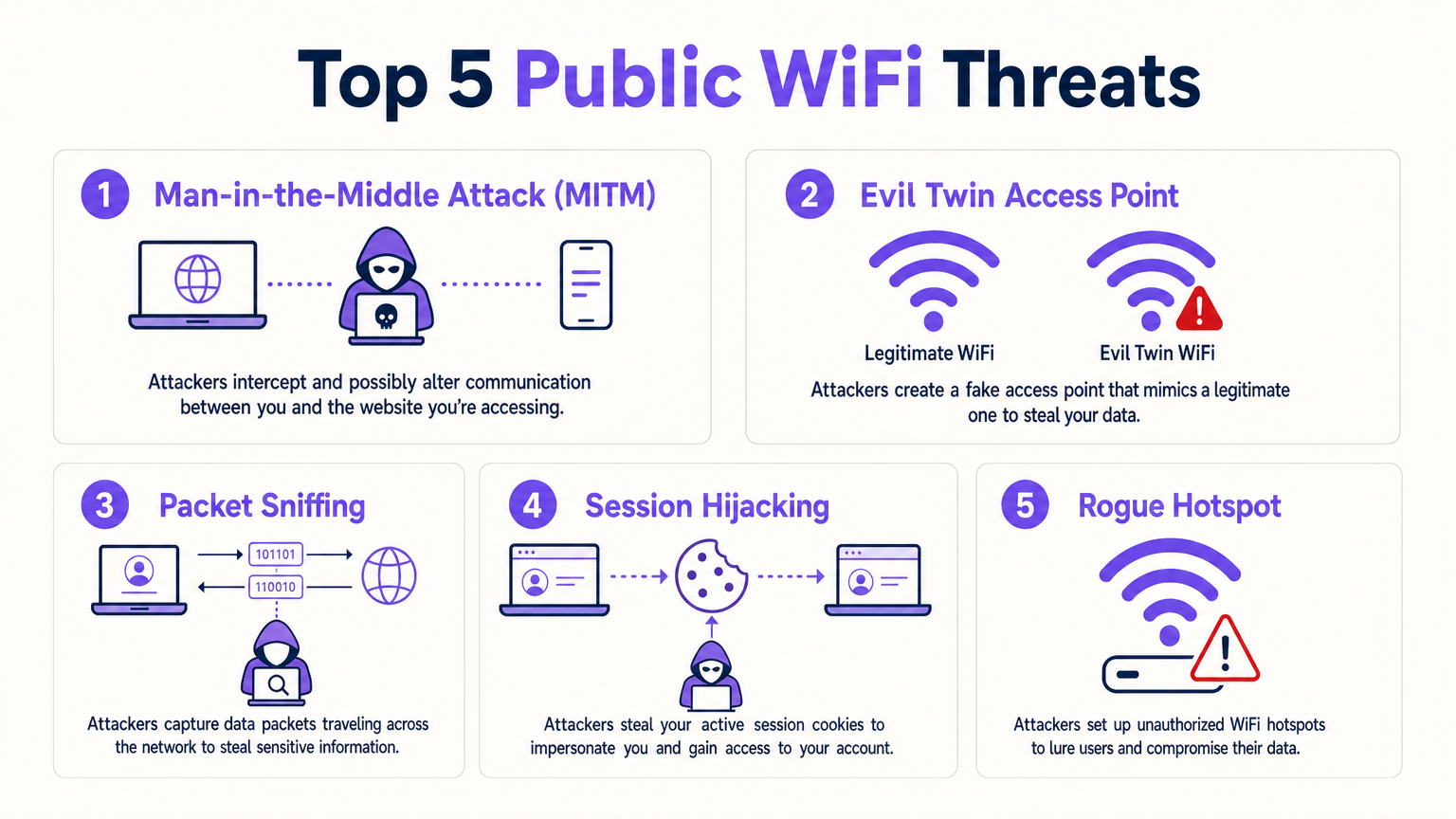
ঐতিহ্যবাহী পাবলিক WiFi-এর অন্তর্নিহিত দুর্বলতা উন্মুক্ত SSIDs-এ লিঙ্ক-লেয়ার এনক্রিপশনের অভাব থেকে উদ্ভূত হয়। যখন ডেটা পরিষ্কারভাবে প্রেরণ করা হয়, তখন রেডিও সীমার মধ্যে থাকা যেকোনো ডিভাইস যা প্যাকেট-স্নিফিং সফ্টওয়্যার দিয়ে সজ্জিত, ট্র্যাফিক ইন্টারসেপ্ট করতে পারে।
মূল দুর্বলতা
- ম্যান-ইন-দ্য-মিডল (MITM) আক্রমণ: আক্রমণকারী অতিথি ডিভাইস এবং অ্যাক্সেস পয়েন্ট (AP) বা রাউটারের মধ্যে নিজেদের অবস্থান করে। যোগাযোগ প্রবাহ ইন্টারসেপ্ট করে, আক্রমণকারী সংবেদনশীল ডেটা আড়ি পেতে পারে বা ট্রানজিটে থাকা ট্র্যাফিক পরিবর্তন করতে পারে।
- ইভিল টুইন অ্যাক্সেস পয়েন্ট: আক্রমণকারীরা একটি রোগ AP স্থাপন করে যা বৈধ ভেন্যু নেটওয়ার্কের (যেমন, "Free_Stadium_WiFi") মতো একই সার্ভিস সেট আইডেন্টিফায়ার (SSID) সম্প্রচার করে। ডিভাইসগুলি স্বয়ংক্রিয়ভাবে শক্তিশালী সিগন্যালে সংযুক্ত হয়, সমস্ত ট্র্যাফিক আক্রমণকারীর হার্ডওয়্যারের মাধ্যমে রাউট করে।
- প্যাকেট স্নিফিং: বেতার তরঙ্গ জুড়ে ভ্রমণকারী এনক্রিপ্টবিহীন ডেটা প্যাকেটগুলির প্যাসিভ ইন্টারসেপশন। যদিও HTTPS পেলোড পরিদর্শন প্রশমিত করে, মেটাডেটা এবং DNS ক্যোয়ারী প্রায়শই উন্মুক্ত থাকে।
- সেশন হাইজ্যাকিং: ইন্টারসেপ্ট করা সেশন কুকিজ ব্যবহার করে প্রমাণীকৃত প্ল্যাটফর্মে ব্যবহারকারীর ছদ্মবেশ ধারণ করা, লগইন প্রয়োজনীয়তা বাইপাস করা।
সুরক্ষিত স্থাপত্য নীতি
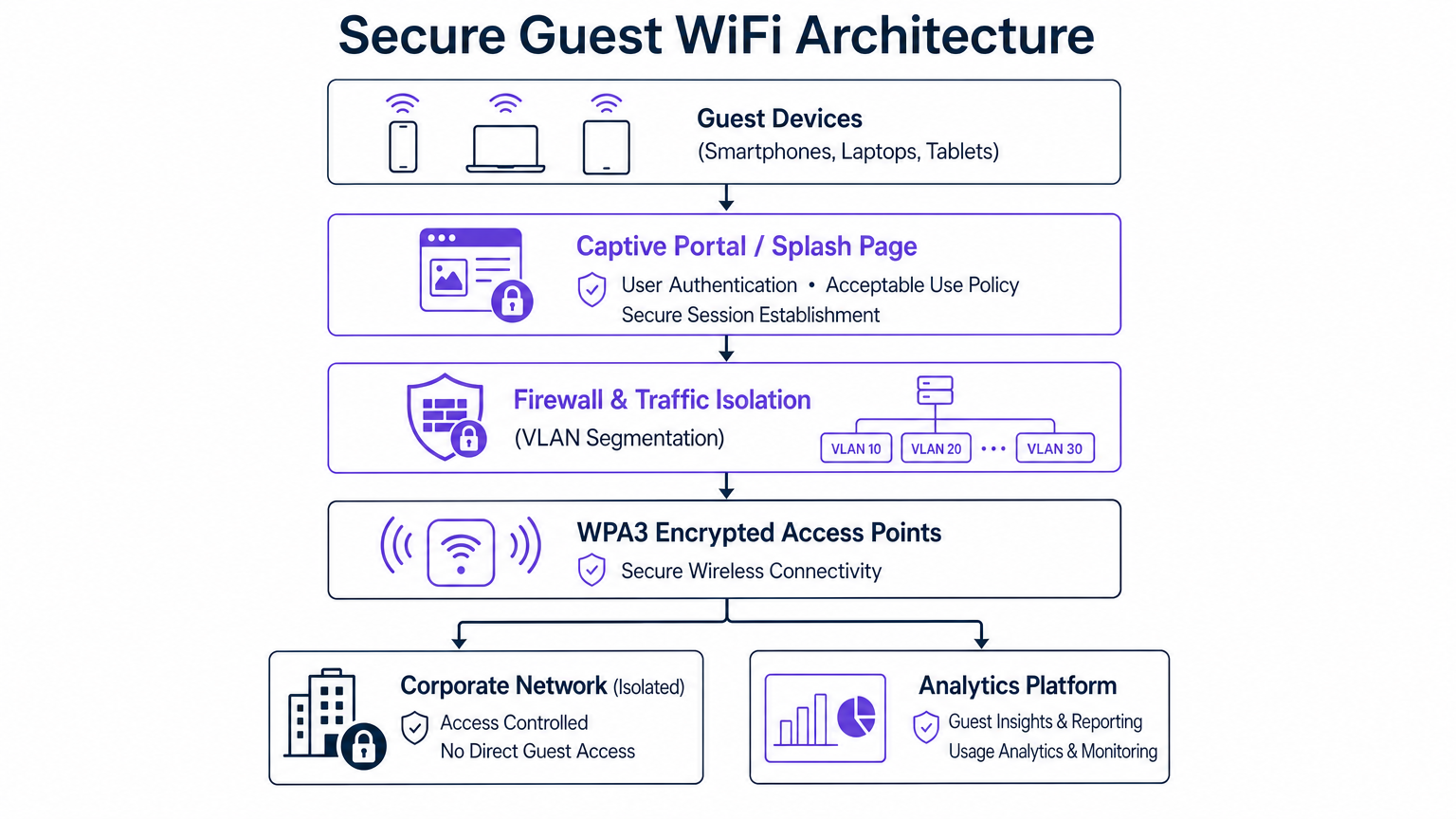
এই হুমকিগুলি মোকাবেলা করার জন্য, এন্টারপ্রাইজ স্থাপনাগুলিকে মৌলিক ফ্ল্যাট নেটওয়ার্কগুলির বাইরে যেতে হবে। একটি সুরক্ষিত স্থাপত্য গভীরতার প্রতিরক্ষা নীতির উপর নির্ভর করে:
- VLAN সেগমেন্টেশন: অতিথি ট্র্যাফিককে কর্পোরেট, পয়েন্ট-অফ-সেল (POS) এবং অপারেশনাল টেকনোলজি (OT) নেটওয়ার্কগুলি থেকে যৌক্তিকভাবে বিচ্ছিন্ন করতে হবে। একটি ডেডিকেটেড VLAN নিশ্চিত করে যে এমনকি যদি একটি অতিথি ডিভাইস আপোস করা হয়, কর্পোরেট পরিবেশে ল্যাটারাল মুভমেন্ট অবরুদ্ধ থাকে।
- ক্লায়েন্ট আইসোলেশন (লেয়ার 2 আইসোলেশন): অ্যাক্সেস পয়েন্টগুলিকে একই অতিথি SSID-এর সাথে সংযুক্ত ডিভাইসগুলির মধ্যে পিয়ার-টু-পিয়ার যোগাযোগ প্রতিরোধ করার জন্য কনফিগার করতে হবে। এটি সংক্রামিত অতিথি ডিভাইসগুলিকে অন্যান্য অতিথিদের স্ক্যান করা বা আক্রমণ করা থেকে বিরত রাখে।
- WPA3 এবং অপর্চুনিস্টিক ওয়্যারলেস এনক্রিপশন (OWE): WPA3 এনহ্যান্সড ওপেন প্রবর্তন করে, যা একটি উন্মুক্ত নেটওয়ার্কে প্রতিটি ক্লায়েন্ট সংযোগের জন্য ব্যক্তিগতকৃত এনক্রিপশন সরবরাহ করতে OWE ব্যবহার করে, একটি শেয়ার্ড পাসওয়ার্ডের প্রয়োজন ছাড়াই প্যাসিভ ইভসড্রপিং দূর করে।
- Passpoint / OpenRoaming: IEEE 802.1X ব্যবহার করে, Passpoint ডিভাইসগুলিকে একটি পরিচয় প্রদানকারী দ্বারা সরবরাহ করা শংসাপত্র ব্যবহার করে স্বয়ংক্রিয়ভাবে এবং নিরাপদে প্রমাণীকরণ করার অনুমতি দেয়। Purple কানেক্ট লাইসেন্সের অধীনে OpenRoaming-এর জন্য একটি বিনামূল্যে পরিচয় প্রদানকারী হিসাবে কাজ করে, যা নির্বিঘ্ন, এনক্রিপ্ট করা অ্যাক্সেসের সুবিধা দেয়।
বাস্তবায়ন নির্দেশিকা: সুরক্ষিত গেস্ট WiFi স্থাপন
একটি সুরক্ষিত নেটওয়ার্ক স্থাপনের জন্য ওয়্যারলেস কন্ট্রোলার, সুইচ এবং ফায়ারওয়াল জুড়ে সতর্ক কনফিগারেশন প্রয়োজন।
ধাপ 1: নেটওয়ার্ক সেগমেন্টেশন এবং ফায়ারওয়াল কনফিগারেশন
অতিথি ট্র্যাফিকের জন্য একটি ডেডিকেটেড সাবনেট এবং VLAN সংজ্ঞায়িত করে শুরু করুন। কঠোর অ্যাক্সেস কন্ট্রোল লিস্ট (ACLs) সহ এজ ফায়ারওয়াল কনফিগার করুন।
- নিয়ম 1: গেস্ট VLAN থেকে যেকোনো RFC 1918 ব্যক্তিগত IP স্পেসে (কর্পোরেট নেটওয়ার্ক) সমস্ত ট্র্যাফিক অস্বীকার করুন।
- নিয়ম 2: গেস্ট VLAN থেকে WAN (ইন্টারনেট) এ প্রয়োজনীয় পোর্টগুলিতে (যেমন, 80, 443, 53) কঠোরভাবে ট্র্যাফিক অনুমতি দিন।
- নিয়ম 3: পরিচিত দূষিত ডোমেনগুলি ব্লক করতে DNS ফিল্টারিং বাস্তবায়ন করুন, অতিথিদের ফিশিং সাইটগুলিতে অ্যাক্সেস করা বা ম্যালওয়্যার ডাউনলোড করা থেকে বিরত রাখুন।
ধাপ 2: অ্যাক্সেস পয়েন্ট কনফিগারেশন
আপনার APs প্রভিশন করার সময় (বিক্রেতা-নির্দিষ্ট বিবরণের জন্য Your Guide to a Wireless Access Point Ruckus -এর মতো সংস্থানগুলি দেখুন):
- ক্লায়েন্ট আইসোলেশন সক্ষম করুন।
- RF পরিবেশ স্ক্যান করতে এবং আপনার নেটওয়ার্ক স্পুফ করার চেষ্টা করা অননুমোদিত SSIDs দমন করতে রোগ AP সনাক্তকরণ কনফিগার করুন।
- একটি একক ব্যবহারকারী সংযোগ একচেটিয়া করার কারণে সৃষ্ট ডিনায়াল-অফ-সার্ভিস (DoS) পরিস্থিতি প্রতিরোধ করতে প্রতি ক্লায়েন্টে ব্যান্ডউইথ সীমিত করুন।
ধাপ 3: Captive Portal এবং প্রমাণীকরণ
Captive Portal নিরাপত্তা এবং সম্মতির জন্য গুরুত্বপূর্ণ গেটওয়ে। একটি সাধারণ প্রি-শেয়ার্ড কী (PSK) এর পরিবর্তে, ব্যবহারকারীদের একটি শক্তিশালী পোর্টালের মাধ্যমে রাউট করুন।
- Purple-এর Guest WiFi সমাধানের মতো একটি প্ল্যাটফর্ম ইন্টিগ্রেট করুন।
- অ্যাক্সেস দেওয়ার আগে একটি গ্রহণযোগ্য ব্যবহার নীতি (AUP) গ্রহণ বাধ্যতামূলক করুন।
- একটি যাচাইকৃত সেশন স্থাপন করতে সুরক্ষিত প্রমাণীকরণ পদ্ধতি (যেমন, সোশ্যাল লগইন বা SMS যাচাইকরণের মাধ্যমে OAuth) ব্যবহার করুন।
শিল্প উল্লম্বের জন্য সেরা অনুশীলন
নিরাপত্তা reqস্থাপনার পরিবেশের উপর নির্ভর করে প্রয়োজনীয়তাগুলি উল্লেখযোগ্যভাবে পরিবর্তিত হয়।
- Hospitality & Retail: Retail এবং Hospitality -এর মতো পরিবেশে, ঘর্ষণহীন অ্যাক্সেস এবং নিরাপত্তার মধ্যে ভারসাম্য বজায় রাখার উপর জোর দেওয়া হয়। Captive portals মোবাইল-অপ্টিমাইজড হতে হবে। ডেটা সংগ্রহকে অবশ্যই GDPR বা স্থানীয় গোপনীয়তা আইন কঠোরভাবে মেনে চলতে হবে।
- Healthcare: Healthcare পরিবেশে কঠোর নিয়ন্ত্রক প্রয়োজনীয়তা (যেমন, HIPAA) থাকে। গেস্ট নেটওয়ার্কগুলিকে ক্লিনিকাল সিস্টেম থেকে সম্পূর্ণ বিচ্ছিন্ন রাখতে হবে। গভীরতর অন্তর্দৃষ্টির জন্য, WiFi in Hospitals: A Guide to Secure Clinical Networks দেখুন।
- Transport & Public Venues: Transport হাব বা স্টেডিয়ামগুলিতে, উচ্চ-ঘনত্বের পরিবেশে প্রচুর সংখ্যক ক্ষণস্থায়ী ব্যবহারকারীর কারণে আক্রমণাত্মক ক্লায়েন্ট ব্যবস্থাপনা এবং শক্তিশালী rogue AP প্রশমন প্রয়োজন। Your Guide to Enterprise In Car Wi Fi Solutions -এর মতো উন্নত স্থাপনাগুলি বিবেচনা করুন।
এন্টারপ্রাইজ হার্ডওয়্যার এবং সফ্টওয়্যার বিবেচনার একটি বিস্তারিত ওভারভিউয়ের জন্য, Enterprise WiFi Solutions: A Buyer's Guide দেখুন।
সমস্যা সমাধান ও ঝুঁকি প্রশমন
এমনকি সু-পরিকল্পিত নেটওয়ার্কগুলিতেও অস্বাভাবিকতা দেখা যায়। অবিচ্ছিন্ন পর্যবেক্ষণ অপরিহার্য।
- ব্যর্থতার ধরণ: অসম্পূর্ণ বিভাজন।
- লক্ষণ: গেস্ট ডিভাইসগুলি অভ্যন্তরীণ সার্ভারগুলিকে পিং করতে পারে।
- প্রতিকার: নিয়মিত ফায়ারওয়াল নিয়মগুলি নিরীক্ষা করুন এবং গেস্ট নেটওয়ার্কের দৃষ্টিকোণ থেকে অনুপ্রবেশ পরীক্ষা করুন।
- ব্যর্থতার ধরণ: Rogue AP বিস্তার।
- লক্ষণ: ব্যবহারকারীরা নেটওয়ার্কে সংযোগ করার কথা জানান কিন্তু captive portal-এ পৌঁছাতে ব্যর্থ হন, অথবা IT বিভাগ নকল SSIDs সনাক্ত করে।
- প্রতিকার: নিশ্চিত করুন যে Wireless Intrusion Prevention Systems (WIPS) সক্রিয় আছে এবং deauthentication ফ্রেমের মাধ্যমে rogue APs স্বয়ংক্রিয়ভাবে ধারণ করার জন্য কনফিগার করা হয়েছে।
- ব্যর্থতার ধরণ: দূষিত বহির্গামী ট্র্যাফিক।
- লক্ষণ: একটি গেস্ট ডিভাইস কমান্ড-অ্যান্ড-কন্ট্রোল (C2) সার্ভারের সাথে যোগাযোগ করার চেষ্টা করে বা বহির্গামী স্প্যাম প্রচারাভিযান শুরু করে।
- প্রতিকার: ট্র্যাফিকের ধরণ নিরীক্ষণের জন্য WiFi Analytics ব্যবহার করুন। অস্বাভাবিক আচরণ প্রদর্শনকারী MAC অ্যাড্রেসগুলির জন্য স্বয়ংক্রিয় থ্রটলিং বা ব্ল্যাকলিস্টিং প্রয়োগ করুন।
ROI ও ব্যবসায়িক প্রভাব
সুরক্ষিত পাবলিক WiFi-এ বিনিয়োগ কেবল ঝুঁকি প্রশমনের একটি অনুশীলন নয়; এটি পরিমাপযোগ্য ব্যবসায়িক মূল্য তৈরি করে।
- ঝুঁকি এড়ানো: একটি অরক্ষিত গেস্ট নেটওয়ার্ক থেকে উদ্ভূত একটি একক ডেটা লঙ্ঘন গুরুতর নিয়ন্ত্রক জরিমানা (যেমন, GDPR জরিমানা) এবং বিপর্যয়কর ব্র্যান্ড ক্ষতির কারণ হতে পারে। সুরক্ষিত আর্কিটেকচার এই অপরিমাপযোগ্য ঝুঁকি প্রশমিত করে।
- উন্নত ডেটা সংগ্রহ: একটি সুরক্ষিত, অনুগত captive portal ব্যবহারকারীর বিশ্বাস তৈরি করে। যখন ব্যবহারকারীরা সুরক্ষিত বোধ করেন, তখন তারা আসল শংসাপত্র ব্যবহার করে প্রমাণীকরণ করার সম্ভাবনা বেশি থাকে, যা বিপণন উদ্যোগের জন্য সংগৃহীত প্রথম-পক্ষের ডেটার গুণমান উন্নত করে।
- অপারেশনাল দক্ষতা: OpenRoaming-এর মাধ্যমে স্বয়ংক্রিয় অনবোর্ডিং সংযোগ সংক্রান্ত সমস্যাগুলির সাথে সম্পর্কিত হেল্পডেস্ক টিকিট হ্রাস করে। ক্লাউড-পরিচালিত অ্যানালিটিক্স প্ল্যাটফর্মগুলি IT দলগুলিকে কেন্দ্রীভূত দৃশ্যমানতা প্রদান করে, যা নেটওয়ার্কের অস্বাভাবিকতাগুলি সমাধান করার জন্য প্রয়োজনীয় সময় হ্রাস করে।
পাবলিক WiFi-কে এন্টারপ্রাইজ নিরাপত্তা পরিধির একটি সম্প্রসারণ হিসাবে বিবেচনা করে, সংস্থাগুলি তাদের অবকাঠামোর উপর সম্পূর্ণ নিয়ন্ত্রণ বজায় রেখে একটি নির্বিঘ্ন গেস্ট অভিজ্ঞতা প্রদান করতে পারে।
মূল শব্দ ও সংজ্ঞা
VLAN Segmentation
The practice of logically dividing a physical network into multiple isolated broadcast domains.
Essential for keeping guest traffic entirely separate from corporate data and payment systems.
Client Isolation (Layer 2 Isolation)
A wireless network setting that prevents devices connected to the same access point from communicating with each other.
Critical on public networks to stop infected guest devices from spreading malware to other guests.
Man-in-the-Middle (MITM) Attack
A cyberattack where an adversary secretly intercepts and relays communications between two parties who believe they are communicating directly.
The primary threat on unencrypted public WiFi, allowing attackers to steal credentials or inject malicious code.
Evil Twin Access Point
A fraudulent Wi-Fi access point that appears to be legitimate, set up to eavesdrop on wireless communications.
Attackers use this in venues to trick users into connecting, routing all traffic through the attacker's hardware.
WPA3 Enhanced Open (OWE)
A security certification that provides unauthenticated data encryption for users connecting to open Wi-Fi networks.
Replaces the legacy open network model, ensuring that even without a password, over-the-air traffic cannot be passively sniffed.
Passpoint / OpenRoaming
A protocol based on IEEE 802.1X that allows devices to automatically and securely authenticate to Wi-Fi networks using credentials from an identity provider.
Provides cellular-like roaming capabilities on Wi-Fi, improving user experience while mandating strong encryption.
Captive Portal
A web page that users of a public-access network are obliged to view and interact with before access is granted.
The enforcement point for Acceptable Use Policies and the primary mechanism for collecting compliant first-party data.
Wireless Intrusion Prevention System (WIPS)
A network device that monitors the radio spectrum for unauthorized access points (intrusion detection) and can automatically take countermeasures.
Required in enterprise deployments to automatically detect and suppress Evil Twin attacks.
কেস স্টাডিজ
A 400-room luxury hotel is upgrading its network infrastructure. The IT Director needs to deploy a guest WiFi solution that provides seamless roaming across the property, captures guest data for marketing, but absolutely prevents guests from accessing the hotel's property management system (PMS) and point-of-sale (POS) terminals.
- Define VLAN 10 for Corporate/PMS, VLAN 20 for POS, and VLAN 30 for Guest Access. 2. Configure the edge firewall to drop all packets originating from VLAN 30 destined for VLAN 10 or 20. 3. Enable Layer 2 Client Isolation on all access points broadcasting the Guest SSID. 4. Deploy Purple's Guest WiFi captive portal to handle authentication and enforce the AUP, routing authenticated traffic directly to the WAN.
A large retail shopping centre is experiencing complaints that users are connecting to 'Free_Mall_WiFi' but receiving certificate errors when browsing, indicating a potential MITM attack via a rogue AP.
- Activate the Wireless Intrusion Prevention System (WIPS) on the enterprise wireless controller. 2. Configure the WIPS to classify any unmanaged AP broadcasting the official SSID or matching the venue's BSSID profile as 'Rogue'. 3. Enable automated containment, allowing legitimate APs to send deauthentication frames to clients attempting to connect to the rogue device. 4. Dispatch security personnel to physically locate the rogue hardware using signal strength mapping.
দৃশ্যপট বিশ্লেষণ
Q1. You are deploying a guest network in a hospital waiting area. You must provide free access while ensuring absolute compliance with patient data protection regulations. What is the most critical architectural requirement?
💡 ইঙ্গিত:Consider how traffic is routed once it leaves the access point.
প্রস্তাবিত পদ্ধতি দেখুন
Strict VLAN segmentation and firewall ACLs to physically or logically isolate the guest network from the clinical and administrative networks. A captive portal must also be used to enforce an Acceptable Use Policy.
Q2. A stadium deployment is seeing high CPU utilisation on the core router during events, and analytics show several devices performing rapid IP scans across the subnet. What configuration was likely missed?
💡 ইঙ্গিত:Think about how devices communicate with each other on the same SSID.
প্রস্তাবিত পদ্ধতি দেখুন
Client Isolation (Layer 2 Isolation) is likely disabled on the access points. Enabling this prevents peer-to-peer communication on the guest network, stopping the IP scanning behaviour.
Q3. The marketing team wants to offer 'frictionless' access without a password, but the security team mandates that over-the-air traffic cannot be passively sniffed. How do you resolve this conflict?
💡 ইঙ্গিত:Look at modern wireless encryption standards designed for open networks.
প্রস্তাবিত পদ্ধতি দেখুন
Implement WPA3 with Enhanced Open (Opportunistic Wireless Encryption). This provides individualised encryption for each connection without requiring the user to enter a pre-shared key, satisfying both marketing and security requirements.




