
কীভাবে শপিং সেন্টারগুলো রিটেইলারদের আকৃষ্ট করতে এবং ধরে রাখতে WiFi অ্যানালিটিক্স ব্যবহার করে
এই নির্ভরযোগ্য টেকনিক্যাল রেফারেন্স গাইডটি ব্যাখ্যা করে যে কীভাবে শপিং সেন্টারের IT টিম এবং প্রপার্টি ম্যানেজাররা ফুটফল ডেটা ক্যাপচার করতে, জোন অনুযায়ী ডুয়েল টাইম (dwell time) পরিমাপ করতে এবং লিজ নেগোসিয়েশন করতে, প্রিমিয়াম রিটেইলারদের ধরে রাখতে ও নতুন টেন্যান্টদের আকৃষ্ট করতে প্রয়োজনীয় অভিজ্ঞতামূলক প্রমাণের ভিত্তি তৈরি করতে WiFi অ্যানালিটিক্স ডিপ্লয় করে। এটি AP ডিপ্লয়মেন্ট এবং MAC-লেয়ার ডেটা ক্যাপচার থেকে শুরু করে GDPR-কমপ্লায়েন্ট অ্যানালিটিক্স ড্যাশবোর্ড পর্যন্ত সম্পূর্ণ টেকনিক্যাল স্ট্যাক কভার করে, যার সাথে এই কোয়ার্টারে ইমপ্লিমেন্টেশনের জন্য প্রস্তুত IT পেশাদারদের জন্য বাস্তব উদাহরণ এবং সিদ্ধান্ত গ্রহণের ফ্রেমওয়ার্ক রয়েছে।
এই গাইডটি শুনুন
পডকাস্ট ট্রান্সক্রিপ্ট দেখুন
আমাদের মূল সিরিজের অংশ: WiFi Analytics Guide →
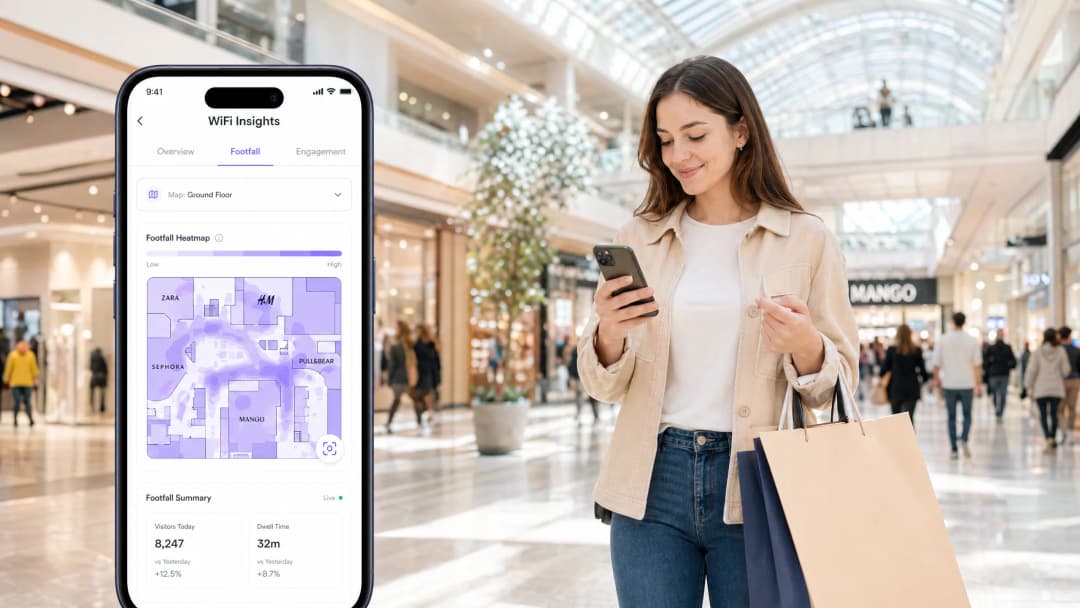
এক্সিকিউটিভ সামারি
আধুনিক শপিং সেন্টারগুলোর জন্য, ওয়্যারলেস নেটওয়ার্ক এখন আর কেবল অতিথিদের সুবিধা নয় — এটি ফিজিক্যাল ভেন্যুর প্রাথমিক টেলিমেট্রি সিস্টেম। এন্টারপ্রাইজ-গ্রেড WiFi Analytics প্ল্যাটফর্মের সাথে যুক্ত একটি শক্তিশালী Guest WiFi ইনফ্রাস্ট্রাকচার ডিপ্লয় করার মাধ্যমে, ভেন্যু অপারেটররা প্যাসিভ ওয়্যারলেস সিগন্যালগুলোকে কার্যকর বাণিজ্যিক বুদ্ধিমত্তায় (commercial intelligence) রূপান্তরিত করে।
এই গাইডে নির্ভুল ফুটফল (footfall) এবং ডুয়েল (dwell) মেট্রিক্স ক্যাপচার করার জন্য প্রয়োজনীয় টেকনিক্যাল আর্কিটেকচার, ডিপ্লয়মেন্ট স্ট্র্যাটেজি এবং ডেটা ব্যবহারের পদ্ধতিগুলো বিস্তারিতভাবে আলোচনা করা হয়েছে। আইটি ম্যানেজার, নেটওয়ার্ক আর্কিটেক্ট এবং সিটিওদের (CTO) জন্য ম্যান্ডেট স্পষ্ট: এমন একটি স্থিতিস্থাপক, হাই-ডেনসিটি নেটওয়ার্ক তৈরি করা যা কেবল উচ্চ ব্যবহারকারী থ্রুপুটকেই (throughput) সাপোর্ট করে না, অথচ লিজিং এবং কমার্শিয়াল টিমগুলোর জন্য প্রয়োজনীয় স্পেশিয়াল ডেটার নির্ভুলতাও প্রদান করে, যাতে তারা ROI প্রমাণ করতে, লিজ ভ্যালু জাস্টিফাই করতে এবং শীর্ষস্থানীয় retail টেন্যান্টদের আকৃষ্ট করতে পারে। একই নীতিগুলো hospitality, transport এবং healthcare পরিবেশেও প্রযোজ্য, যেখানে স্পেশিয়াল ইন্টেলিজেন্স অপারেশনাল এবং বাণিজ্যিক সিদ্ধান্তগুলোকে চালিত করে।
টেকনিক্যাল ডিপ-ডাইভ
WiFi ডেটা কালেকশন কীভাবে কাজ করে
শপিং সেন্টারের WiFi অ্যানালিটিক্সের ভিত্তি হলো ভেন্যুর ভেতরে ক্লায়েন্ট ডিভাইসগুলো শনাক্ত এবং ট্র্যাক করার ক্ষমতা। এটি সমান্তরালভাবে কাজ করা দুটি প্রাথমিক মেকানিজমের মাধ্যমে অর্জিত হয়。
প্রেজেন্স অ্যানালিটিক্স (আনঅথেনটিকেটেড): পরিচিত নেটওয়ার্ক অনুসন্ধানকারী স্মার্টফোনগুলো থেকে নির্গত IEEE 802.11 প্রোব রিকোয়েস্টগুলোর জন্য অ্যাক্সেস পয়েন্টগুলো (AP) ক্রমাগত মনিটর করে। MAC অ্যাড্রেস ক্যাপচার করে — যা GDPR কমপ্লায়েন্স বজায় রাখার জন্য ওয়ান-вей ক্রিপ্টোগ্রাফিক ফাংশন ব্যবহার করে তাৎক্ষণিকভাবে হ্যাশ করা হয় — এবং একই সাথে একাধিক AP থেকে রিসিভড সিগন্যাল স্ট্রেংথ ইন্ডিকেটর (RSSI) পরিমাপ করে, সিস্টেমটি ডিভাইসের নৈকট্য এবং গতিবিধি অনুমান করে। এটি মোট ফুটফলের জন্য একটি বেসলাইন মেট্রিক প্রদান করে, যার মধ্যে এমন দর্শনার্থীরাও অন্তর্ভুক্ত যারা কখনোই নেটওয়ার্কে কানেক্ট করেন না। এটি হলো সেই "পথচারী" বা পাসের-বাই (passer-by) কাউন্ট যা প্রপার্টি ম্যানেজাররা হাই-ট্রাফিক করিডোরগুলোর বাণিজ্যিক মূল্য প্রদর্শনের জন্য ব্যবহার করেন।
অথেনটিকেটেড সেশন: যখন কোনো ব্যবহারকারী ক্যাপটিভ পোর্টাল-এর মাধ্যমে সক্রিয়ভাবে কানেক্ট করেন, তখন ভেন্যুটি সুস্পষ্ট সম্মতির (explicit consent) ভিত্তিতে ফার্স্ট-পার্টি ডেটা — ডেমোগ্রাফিক্স, ইমেইল অ্যাড্রেস এবং CRM ইন্টিগ্রেশন হুক — ক্যাপচার করে। এটি ডেটা মডেলটিকে বেনামী ডিভাইস ট্র্যাকিং থেকে সমৃদ্ধ কাস্টমার প্রোফাইলিংয়ে স্থানান্তরিত করে। OpenRoaming (Hotspot 2.0 / Passpoint)-এর ইন্টিগ্রেশন, যেখানে Purple কানেক্ট লাইসেন্সের অধীনে একটি ফ্রি আইডেন্টিটি প্রোভাইডার হিসেবে কাজ করে, তা প্রথাগত স্প্ল্যাশ পেজ ছাড়াই নিরবচ্ছিন্ন ও সুরক্ষিত অনবোর্ডিং সহজতর করে। এটি অথেনটিকেটেড সেশনের পরিমাণ ব্যাপকভাবে বৃদ্ধি করে, যা বাণিজ্যিক বিশ্লেষণের জন্য আরও সমৃদ্ধ এবং পরিসংখ্যানগতভাবে শক্তিশালী ডেটাসেট প্রদান করে。
স্পেশিয়াল ট্রায়াঙ্গুলেশন এবং জোন অ্যাকুরেসি
নির্দিষ্ট রিটেইল জোনগুলোর জন্য কার্যকর ডেটা প্রদান করতে — কেবল ভেন্যু-ব্যাপী সামগ্রিক ডেটার পরিবর্তে — নেটওয়ার্কটিকে অবশ্যই একটি সংজ্ঞায়িত এলাকার মধ্যে ডিভাইসগুলোকে নির্ভুলভাবে locate করতে হবে। এর জন্য ট্রাইলাটেরেশন (trilateration) প্রয়োজন: ফ্লোর প্ল্যানে কোনো ডিভাইসের অবস্থান গণনা করার জন্য একই সাথে অন্তত তিনটি অ্যাক্সেস পয়েন্ট থেকে RSSI রিডিং ব্যবহার করার প্রক্রিয়া। এই প্রক্রিয়ার নির্ভুলতা সরাসরি AP ডেনসিটির সমানুপাতিক।
লোকেশন অ্যানালিটিক্সের জন্য একটি স্ট্যান্ডার্ড কভারেজ-মডেল ডিপ্লয়মেন্ট (প্রতি ১,০০০-১,৫০০ বর্গফুটে একটি AP) অপর্যাপ্ত। একটি লোকেশন-অপ্টিমাইজড ডিপ্লয়মেন্টের জন্য সাধারণত মূল ট্র্যাকিং জোনগুলোতে প্রতি ৫০০-৭০০ বর্গফুটে একটি AP প্রয়োজন হয়, যেখানে ট্রান্সমিট পাওয়ার সেটিংসের দিকে সতর্ক মনোযোগ দিতে হয় যাতে সেল সাইজগুলো অর্থবহ স্পেশিয়াল রেজোলিউশন প্রদানের জন্য যথেষ্ট ছোট হয়।
| ডিপ্লয়মেন্ট মডেল | AP ডেনসিটি | প্রাইমারি ইউজ কেস | লোকেশন অ্যাকুরেসি |
|---|---|---|---|
| কভারেজ | প্রতি ১,৫০০ বর্গফুটে ১টি | বেসিক কানেক্টিভিটি | নেই |
| ক্যাপাসিটি | প্রতি ৮০০ বর্গফুটে ১টি | হাই-থ্রুপুট ইভেন্ট | কম |
| লোকেশন অ্যানালিটিক্স | প্রতি ৫০০ বর্গফুটে ১টি | ফুটফল এবং ডুয়েল ট্র্যাকিং | বেশি (±৩-৫ মি) |
ইনফ্রাস্ট্রাকচার অ্যাগনোস্টিসিজম এবং ইন্টিগ্রেশন আর্কিটেকচার
Purple সহ আধুনিক অ্যানালিটিক্স প্ল্যাটফর্মগুলো বিদ্যমান এন্টারপ্রাইজ ওয়্যারলেস ইনফ্রাস্ট্রাকচারের ওপর একটি ওভারলে হিসেবে কাজ করে। এগুলো স্ট্যান্ডার্ড প্রোটোকলের মাধ্যমে Cisco, Aruba, Meraki এবং Ruckus-এর বিদ্যমান ওয়্যারলেস ল্যান কন্ট্রোলারগুলোর (WLC) সাথে ইন্টিগ্রেট করে। WLC প্রেজেন্স ডেটা — সাধারণত সিসলগ (syslog), SNMP ট্র্যাপ বা ভেন্ডর-নির্দিষ্ট API-এর মাধ্যমে — ক্লাউড অ্যানালিটিক্স ইঞ্জিনে ফরোয়ার্ড করে। এটি তাৎক্ষণিক হার্ডওয়্যার প্রতিস্থাপনের প্রয়োজনীয়তা কমিয়ে দেয়, যার ফলে ভেন্যুগুলো তাদের বিদ্যমান মূলধন বিনিয়োগকে কাজে লাগিয়ে পর্যায়ক্রমে অ্যানালিটিক্স লেয়ার যুক্ত করতে পারে।
যেসব ভেন্যু হাই-ডেনসিটি অ্যানালিটিক্স ডিপ্লয়মেন্ট থেকে বর্ধিত ডেটা থ্রুপুট সাপোর্ট করার জন্য একটি leased line আপগ্রেড করার কথা বিবেচনা করছে, তাদের রিয়েল-টাইম ড্যাশবোর্ড আপডেটের জন্য সামঞ্জস্যপূর্ণ ল্যাটেন্সি নিশ্চিত করতে একটি ডেডিকেটেড সিমেট্রিক কানেকশনের জোরালো সুপারিশ করা হয়।

আপনার নির্দিষ্ট সেটআপ নিয়ে কোনো প্রশ্ন আছে?
আমাদের টিম ৮০,০০০ ভেন্যুতে ভেন্যু অপারেটর, IT ম্যানেজার এবং নেটওয়ার্ক ইঞ্জিনিয়ারদের সাথে কাজ করে। একটি ২০ মিনিটের কল বুক করুন এবং আপনার মতো অন্যরা কীভাবে এর সমাধান করেছেন তা আমরা আপনাকে দেখাব।
ইমপ্লিমেন্টেশন গাইড
একটি লোকেশন-অ্যাওয়ার ওয়্যারলেস নেটওয়ার্ক ডিপ্লয় করার জন্য চারটি ভিন্ন ধাপে সূক্ষ্ম পরিকল্পনার প্রয়োজন।
ধাপ ১ — RF প্ল্যানিং এবং সাইট সার্ভে: কোনো হার্ডওয়্যার ইনস্টল করার আগে RF এনভায়রনমেন্ট মডেল করার জন্য Ekahau Pro বা AirMagnet-এর মতো প্রেডিক্টিভ সার্ভে টুল ব্যবহার করুন। বিল্ডিং ম্যাটেরিয়াল থেকে অ্যাটেন্যুয়েশন (attenuation) বিবেচনায় নিন — কাঁচের অ্যাট্রিয়াম ছাদ, মেটাল রিটেইল ফিক্সচার এবং কংক্রিটের স্ট্রাকচারাল কলাম সবই মাল্টিপাথ ইন্টারফারেন্স তৈরি করে যা RSSI-ভিত্তিক লোকেশন ক্যালকুলেশনকে বিকৃত করে। প্রতিটি জোনের জন্য প্রয়োজনীয় লোকেশন অ্যাকুরেসি নির্ধারণ করুন এবং AP প্লেসমেন্ট গ্রিড নির্ধারণ করতে ব্যাকওয়ার্ড কাজ করুন।
ধাপ ২ — হার্ডওয়্যার ডিপ্লয়মেন্ট এবং কনফিগারেশন: প্রেডিক্টিভ সার্ভে অনুযায়ী AP ইনস্টল করুন, তারপর মডেলের বিপরীতে রিয়েল-ওয়ার্ল্ড RSSI রিডিং যাচাই করার জন্য একটি অ্যাক্টিভ সাইট সার্ভে পরিচালনা করুন। রেডিও রিসোর্স ম্যানেজমেন্ট (RRM) কনফিগার করুন তবে ছোট সেল সাইজ বজায় রাখার জন্য কঠোর ট্রান্সমিট পাওয়ার ক্যাপ — সাধারণত ১৪-১৭ dBm — প্রয়োগ করুন। PCI DSS প্রয়োজনীয়তা মেনে, VLAN সেগমেন্টেশনের মাধ্যমে গেস্ট SSID যেন কর্পোরেট এবং POS নেটওয়ার্ক থেকে আইসোলেটেড থাকে তা নিশ্চিত করুন।
ধাপ ৩ — অ্যানালিটিক্স প্ল্যাটফর্ম ইন্টিগ্রেশন: WLC-কে Purple অ্যানালিটিক্স প্ল্যাটফর্মের সাথে কানেক্ট করুন। ড্যাশবোর্ডের মধ্যে জিওফেন্সড (geofenced) জোনগুলো সংজ্ঞায়িত করুন যা পৃথক রিটেইল ইউনিট, কমন এরিয়া, এন্ট্রান্স করিডোর এবং ফুড কোর্ট জোনগুলোর সাথে হুবহু মিলে যায়। পরিচিত রেফারেন্স পয়েন্ট ব্যবহার করে প্ল্যাটফর্মের মধ্যে ফ্লোর প্ল্যান ক্যালিব্রেট করুন।
ধাপ ৪ — ক্যাপটিভ পোর্টাল এবং কনসেন্ট কনফিগারেশন: একটি স্ট্রিমলাইনড অনবোর্ডিং ফ্লো ডিজাইন করুন। ঘর্ষণ (friction) কমিয়ে আনুন — অথেনটিকেশন প্রক্রিয়ায় প্রতিটি অতিরিক্ত ধাপ অ্যাটাচ রেট (attach rate) প্রায় ১৫-২০% কমিয়ে দেয়। API-এর মাধ্যমে CRM এবং মার্কেটিং অটোমেশন প্ল্যাটফর্মগুলো ইন্টিগ্রেট করুন। নিশ্চিত করুন যে সম্মতির ভাষা (consent language) সুস্পষ্ট, গ্র্যানুলার এবং GDPR আর্টিকেল ৭-এর প্রয়োজনীয়তার সাথে কমপ্লায়েন্ট।
বেস্ট প্র্যাকটিস
MAC র্যান্ডমাইজেশন বিবেচনায় নিন: iOS 14+ এবং Android 10+ ডিভাইসগুলো নেটওয়ার্ক প্রোব করার সময় ডিফল্টভাবে তাদের MAC অ্যাড্রেস র্যান্ডমাইজ করে। যে অ্যানালিটিক্স প্ল্যাটফর্ম এটি বিবেচনা করে না, তা স্ফীত ফুটফল ফিগার রিপোর্ট করবে — যা কখনো কখনো প্রকৃত দর্শনার্থীর সংখ্যার তিন থেকে পাঁচ গুণ হতে পারে। নিশ্চিত করুন যে আপনার প্ল্যাটফর্ম অথেনটিকেটেড সেশন ডেটাকে প্রাইমারি মেট্রিক হিসেবে ব্যবহার করে এবং প্রোব রিকোয়েস্ট ডেটাসেটে ডিডুপ্লিকেশন (deduplication) অ্যালগরিদম প্রয়োগ করে।
নেটওয়ার্ক সিকিউরিটিকে অগ্রাধিকার দিন: শক্তিশালী নেটওয়ার্ক সেগমেন্টেশন বাস্তবায়ন করুন। গেস্ট ট্রাফিককে অবশ্যই কর্পোরেট ইনফ্রাস্ট্রাকচার থেকে আলাদা রাখতে হবে। মাল্টি-টেন্যান্ট ভেন্যু এনভায়রনমেন্টের জন্য প্রযোজ্য DNS ফিল্টারিং এবং নেটওয়ার্ক সিকিউরিটি বেস্ট প্র্যাকটিসের একটি ব্যাপক গাইডের জন্য Protect Your Network with Strong DNS and Security দেখুন।
ডেটা গভর্ন্যান্স প্রয়োগ করুন: GDPR বা প্রযোজ্য স্থানীয় ডেটা প্রাইভেসি রেগুলেশন কঠোরভাবে মেনে চলুন। আনঅথেনটিকেটেড ট্র্যাকিংয়ের জন্য MAC হ্যাশিং ব্যবহার করুন, ক্যাপটিভ পোর্টাল অথেনটিকেশনের সময় সুস্পষ্ট অপ্ট-ইন সম্মতি (opt-in consent) দাবি করুন এবং একটি ডকুমেন্টেড ডেটা রিটেনশন পলিসি বাস্তবায়ন করুন। নিশ্চিত করুন যে সমস্ত থার্ড-পার্টি অ্যানালিটিক্স ভেন্ডরের সাথে ডেটা প্রসেসিং এগ্রিমেন্ট রয়েছে।
স্কেলের জন্য OpenRoaming কাজে লাগান: সেলুলার রোমিং অভিজ্ঞতার মতো নিরবচ্ছিন্ন, সুরক্ষিত কানেক্টিভিটি প্রদান করতে Passpoint/Hotspot 2.0 গ্রহণ করুন। এটি ফিরে আসা ব্যবহারকারীদের জন্য ক্যাপটিভ পোর্টাল-এর ঘর্ষণ দূর করে, অথেনটিকেটেড ডেটা ক্যাপচার রেট বাড়ায় এবং আপনার অ্যানালিটিক্সের পরিসংখ্যানগত আত্মবিশ্বাস উন্নত করে।

ট্রাবলশুটিং এবং রিস্ক মিটিগেশন
ভুল লোকেশন ডেটা: এর সবচেয়ে সাধারণ কারণ হলো অপর্যাপ্ত AP ডেনসিটি বা অতিরিক্ত ট্রান্সমিট পাওয়ার যা বড় সেল সাইজ তৈরি করে। ৮০ মিটার দূরের একটি AP-এর সাথে কানেক্ট করা ডিভাইসকে ভুল জোনে দেখা যাবে। একটি অ্যাক্টিভ সাইট সার্ভে পরিচালনা করুন, RSSI হিট ম্যাপ পর্যালোচনা করুন এবং সেল বাউন্ডারি টাইট করতে Tx পাওয়ার কমান। যাচাই করুন যে প্রতিটি ট্র্যাক করা জোনে অন্তত তিনটি AP ক্লায়েন্টদের শনাক্ত করছে।
নিম্ন অথেনটিকেশন রেট (৩০%-এর নিচে): একটি জটিল বা ধীরগতির ক্যাপটিভ পোর্টাল প্রক্রিয়াই এর প্রধান কারণ। 4G কানেকশনে (ভেন্যুর WiFi-এ নয়) একটি মোবাইল ডিভাইসে অনবোর্ডিং ফ্লো অডিট করুন। ফর্ম ফিল্ডের সংখ্যা কমান, সোশ্যাল লগইন অপশন অফার করুন এবং নিশ্চিত করুন যে পোর্টাল পেজটি দুই সেকেন্ডের মধ্যে লোড হয়। ফিরে আসা দর্শনার্থীদের জন্য পোর্টালটি সম্পূর্ণভাবে বাদ দিতে OpenRoaming ডিপ্লয় করার কথা বিবেচনা করুন।
ডেটা সাইলো (Data Silos): এমন অ্যানালিটিক্স ডেটা সংগ্রহ করা যা কমার্শিয়াল টিম অ্যাক্সেস বা ব্যাখ্যা করতে পারে না। স্বয়ংক্রিয় API ইন্টিগ্রেশন কনফিগার করে এর সমাধান করুন, যা সাপ্তাহিক ফুটফল এবং ডুয়েল রিপোর্ট সরাসরি প্রপার্টি ম্যানেজমেন্ট CRM বা BI টুলে পুশ করে। লিজিং টিমের সাথে একটি মাসিক ডেটা রিভিউ শিডিউল করুন যাতে নিশ্চিত হওয়া যায় যে ক্যাপচার করা মেট্রিক্সগুলো টেন্যান্ট নেগোসিয়েশনে তাদের প্রয়োজনীয় উত্তরগুলোর সাথে সামঞ্জস্যপূর্ণ।
GDPR কমপ্লায়েন্স গ্যাপ: অথেনটিকেটেড ইউজার প্রোফাইলের বিপরীতে সংরক্ষিত কনসেন্ট রেকর্ডগুলো নিয়মিত অডিট করুন। নিশ্চিত করুন যে অপ্ট-আউট রিকোয়েস্টগুলো ৩০ দিনের GDPR উইন্ডোর মধ্যে প্রসেস করা হয় এবং থার্ড-পার্টি CRM ইন্টিগ্রেশনসহ সমস্ত ডাউনস্ট্রিম সিস্টেম থেকে ডেটা মুছে ফেলা হয়।
ROI এবং বিজনেস ইমপ্যাক্ট
কমার্শিয়াল টিমের জন্য, সঠিকভাবে ডিপ্লয় করা একটি WiFi অ্যানালিটিক্স সলিউশনের ROI যথেষ্ট এবং এটি তিনটি প্রাথমিক ভ্যালু স্ট্রিম জুড়ে পরিমাপযোগ্য।
লিজ নেগোসিয়েশন: প্রপার্টি ম্যানেজাররা সাবজেক্টিভ যুক্তির বদলে ডেটা-ড্রিভেন নেগোসিয়েশনের দিকে অগ্রসর হন। নির্দিষ্ট রিটেইল জোনগুলোর জন্য অথেনটিকেটেড ভিজিটর কাউন্ট, ডুয়েল টাইম ডিস্ট্রিবিউশন এবং ডেমোগ্রাফিক ব্রেকডাউন উপস্থাপন করে, ভেন্যুটি একটি ডিজিটাল অ্যাডভার্টাইজিং প্ল্যাটফর্মের মতোই কঠোরতার সাথে প্রতিটি ইউনিটের বাণিজ্যিক মূল্য প্রদর্শন করতে পারে। এই ডেটা হাই-ট্রাফিক ইউনিটগুলোর জন্য প্রিমিয়াম প্রাইসিং এবং প্রমাণ-ভিত্তিক রেন্ট রিভিউ উভয়কেই সাপোর্ট করে।
টেন্যান্ট রিটেনশন: রিটেইলাররা লোকালাইজড ইনসাইট পান — কতজন মানুষ তাদের স্টোরের পাশ দিয়ে হেঁটে গেছেন বনাম কতজন প্রবেশ করেছেন এবং যারা প্রবেশ করেছেন তারা কতক্ষণ অবস্থান করেছেন। এই ডেটা রিটেইলারদের উইন্ডো ডিসপ্লে, স্টাফিং শিডিউল এবং প্রমোশনাল টাইমিং অপ্টিমাইজ করতে সাহায্য করে। একজন রিটেইলার যখন দেখতে পান যে একটি মার্কেটিং ক্যাম্পেইনের পর তাদের ইউনিটের পাশ দিয়ে ফুটফল ১৮% বৃদ্ধি পেয়েছে, তখন তাদের লিজ নবায়ন করার এবং ভেন্যুতে আরও বিনিয়োগ করার একটি জোরালো কারণ থাকে।
অপারেশনাল এফিশিয়েন্সি: ফ্লো অ্যানালিটিক্স অপারেশন টিমকে রিয়েল-টাইম এবং ঐতিহাসিক অকুপেন্সি প্যাটার্নের ওপর ভিত্তি করে ক্লিনিং শিডিউল, সিকিউরিটি প্যাট্রোল রুট এবং HVAC ব্যবহার অপ্টিমাইজ করতে সক্ষম করে। ডেটা-ড্রিভেন রিসোর্স অ্যালোকেশনের মাধ্যমে ভেন্যুগুলো সাধারণত ডিপ্লয়মেন্টের প্রথম বছরের মধ্যেই অপারেশনাল খরচ ১০-১৫% কমার রিপোর্ট করে।
অন্যান্য হাই-ফুটফল ভেন্যু ক্যাটাগরিতেও অনুরূপ ডেটা-ড্রিভেন পদ্ধতিগুলো অত্যন্ত কার্যকর প্রমাণিত হচ্ছে। Zoo and Theme Park WiFi: High-Footfall Venue Connectivity Guide লেজার এনভায়রনমেন্টে (leisure environments) অনুরূপ স্পেশিয়াল অ্যানালিটিক্স চ্যালেঞ্জগুলো কভার করে এবং একই আর্কিটেকচারাল নীতিগুলো সমস্ত বড় আকারের ফিজিক্যাল ভেন্যুগুলোতে প্রযোজ্য।
মূল সংজ্ঞাসমূহ
RSSI (Received Signal Strength Indicator)
একটি রিসিভড রেডিও সিগন্যালে উপস্থিত পাওয়ার লেভেলের পরিমাপ, যা dBm-এ প্রকাশ করা হয় (নেতিবাচক মান, যেখানে -৩০ dBm চমৎকার এবং -৯০ dBm অত্যন্ত দুর্বল)।
লোকেশন অ্যানালিটিক্স ইঞ্জিনের প্রাথমিক ইনপুট। একাধিক AP একই ক্লায়েন্ট ডিভাইসের জন্য তাদের RSSI রিডিং রিপোর্ট করে এবং ইঞ্জিন ফ্লোর প্ল্যানে ডিভাইসের অবস্থান ট্রায়াঙ্গুলেট করতে এই মানগুলো ব্যবহার করে।
Trilateration
পরস্পর ছেদকারী বৃত্তের জ্যামিতি ব্যবহার করে তিন বা ততোধিক পরিচিত রেফারেন্স পয়েন্ট থেকে দূরত্ব পরিমাপের মাধ্যমে কোনো বিন্দুর অবস্থান নির্ধারণের একটি পদ্ধতি।
কোনো ক্লায়েন্ট ডিভাইসের অবস্থান গণনা করার জন্য একই সাথে অন্তত তিনটি অ্যাক্সেস পয়েন্ট দ্বারা সেটি সনাক্ত করা প্রয়োজন। এই কারণেই লোকেশন অ্যানালিটিক্স অ্যাকুরেসির জন্য AP ডেনসিটি একটি অত্যন্ত গুরুত্বপূর্ণ ভেরিয়েবল।
MAC Randomisation
আধুনিক মোবাইল অপারেটিং সিস্টেমের (iOS 14+, Android 10+) একটি প্রাইভেসি ফিচার যা WiFi নেটওয়ার্ক অনুসন্ধান করার সময় ডিভাইসটিকে তার আসল হার্ডওয়্যার অ্যাড্রেসের পরিবর্তে একটি র্যান্ডমলি জেনারেটেড MAC অ্যাড্রেস ব্রডকাস্ট করতে বাধ্য করে।
প্রেজেন্স-ভিত্তিক অ্যানালিটিক্সের জন্য প্রাথমিক টেকনিক্যাল চ্যালেঞ্জ। দর্শনার্থীর সংখ্যা ব্যাপকভাবে বৃদ্ধি পাওয়া এড়াতে প্ল্যাটফর্মগুলোকে অবশ্যই অথেনটিকেটেড সেশন ডেটাকে প্রাথমিক মেট্রিক হিসেবে ব্যবহার করতে হবে এবং ডিডুপ্লিকেশন (deduplication) অ্যালগরিদম প্রয়োগ করতে হবে।
OpenRoaming (Hotspot 2.0 / Passpoint)
একটি WiFi রোমিং ফেডারেশন স্ট্যান্ডার্ড যা কোনো ডিভাইসকে ক্যাপটিভ পোর্টাল ইন্টারঅ্যাকশন ছাড়াই একটি প্রি-ইনস্টল করা প্রোফাইল ব্যবহার করে স্বয়ংক্রিয়ভাবে এবং সুরক্ষিতভাবে একটি অংশগ্রহণকারী নেটওয়ার্কের সাথে কানেক্ট হতে সাহায্য করে।
Purple তার Connect লাইসেন্সের অধীনে OpenRoaming-এর জন্য একটি ফ্রি আইডেন্টিটি প্রোভাইডার হিসেবে কাজ করে। OpenRoaming ডিপ্লয় করার মাধ্যমে ফিরে আসা ব্যবহারকারীদের জন্য ক্যাপটিভ পোর্টাল-এর ঘর্ষণ দূর করে অথেনটিকেটেড সেশনের পরিমাণ উল্লেখযোগ্যভাবে বৃদ্ধি করা যায়।
Dwell Time
একটি সনাক্ত করা ডিভাইস নির্দিষ্টভাবে সংজ্ঞায়িত জিওফেন্সড জোনের মধ্যে কতক্ষণ অবস্থান করে তার সময়কাল, যা সেই জোনের মধ্যে প্রথম সনাক্তকরণ থেকে শেষ সনাক্তকরণ পর্যন্ত পরিমাপ করা হয়।
রিটেইলারদের জন্য একটি গুরুত্বপূর্ণ বাণিজ্যিক মেট্রিক। উচ্চ ডুয়েল টাইম (dwell time) কোনো স্টোরফ্রন্ট বা রিটেইল পরিবেশের সাথে সম্পৃক্ততা নির্দেশ করে। উচ্চ ফুটফল থাকা জোনে কম ডুয়েল টাইম ট্রাফিক সমস্যার চেয়ে বরং কনভার্সন (conversion) সমস্যা নির্দেশ করে।
Probe Request
আশেপাশের উপলব্ধ ওয়্যারলেস নেটওয়ার্কগুলো আবিষ্কার করার জন্য একটি ক্লায়েন্ট ডিভাইস দ্বারা ব্রডকাস্ট করা একটি IEEE 802.11 ম্যানেজমেন্ট ফ্রেম।
মোট ফুটফল গণনার জন্য আনঅথেনটিকেটেড প্রেজেন্স ডেটা ক্যাপচার করতে ব্যবহৃত মেকানিজম, যার মধ্যে এমন দর্শনার্থীরাও অন্তর্ভুক্ত যারা কখনোই নেটওয়ার্কে কানেক্ট করেন না। আধুনিক ডিভাইসগুলোতে এটি MAC randomisation-এর অধীন।
Captive Portal
একটি ওয়েব পেজ যার সাথে একটি পাবলিক-অ্যাক্সেস নেটওয়ার্কের ব্যবহারকারীকে সম্পূর্ণ নেটওয়ার্ক অ্যাক্সেস পাওয়ার আগে ইন্টারঅ্যাক্ট করতে হয়, যা সাধারণত পরিষেবার শর্তাবলী উপস্থাপন করতে এবং ডেটা প্রসেসিংয়ের জন্য সম্মতি সংগ্রহ করতে ব্যবহৃত হয়।
ফার্স্ট-পার্টি ডেমোগ্রাফিক ডেটা এবং সুস্পষ্ট GDPR-কমপ্লায়েন্ট মার্কেটিং সম্মতি ক্যাপচার করার প্রাথমিক মেকানিজম। পোর্টাল ফ্লো-এর ডিজাইন এবং দৈর্ঘ্য সরাসরি অ্যাটাচ রেট (attach rate) নির্ধারণ করে।
Attach Rate
মোট সনাক্ত করা ডিভাইসের (প্রেজেন্স অ্যানালিটিক্স) শতকরা হার যা সফলভাবে ক্যাপটিভ পোর্টাল অথেনটিকেশন প্রক্রিয়া সম্পন্ন করে এবং অথেনটিকেটেড সেশনে পরিণত হয়।
আপনার অ্যানালিটিক্স ডেটার গুণমানের জন্য মূল পারফরম্যান্স ইন্ডিকেটর। কম অ্যাটাচ রেট মানে আপনার ফুটফল ডেটার বেশিরভাগই বেনামী এবং এতে ডেমোগ্রাফিক সমৃদ্ধির অভাব রয়েছে, যা এর বাণিজ্যিক মূল্যকে সীমিত করে।
Geofencing
একটি ভার্চুয়াল ভৌগোলিক সীমানা সংজ্ঞায়িত করতে GPS বা RSSI-ভিত্তিক লোকেশন ডেটার ব্যবহার, যা কোনো ডিভাইস সংজ্ঞায়িত এলাকায় প্রবেশ বা প্রস্থান করলে অ্যাকশন বা ডেটা ক্যাপচার ট্রিগার করে।
নির্দিষ্ট রিটেইল জোন, করিডোর এবং এন্ট্রান্সগুলো সংজ্ঞায়িত করতে অ্যানালিটিক্স প্ল্যাটফর্মের মধ্যে ব্যবহৃত হয়, যা ভেন্যু-ব্যাপী সামগ্রিক ডেটার পরিবর্তে জোন-স্তরের ফুটফল এবং ডুয়েল টাইম মেট্রিক্স সক্ষম করে।
সমাধানকৃত উদাহরণসমূহ
একটি ১৫০-ইউনিটের আঞ্চলিক শপিং সেন্টারের ওয়েস্ট উইং-এ (West Wing) ক্রমাগত উচ্চ শূন্যতার হার (vacancy rate) রয়েছে। কমার্শিয়াল টিমের ধারণা যে ইস্ট উইং-এর (East Wing) তুলনায় এখানে ফুটফল কম, কিন্তু এটি নিশ্চিত করার মতো কোনো ডেটা তাদের কাছে নেই। বিদ্যমান WiFi নেটওয়ার্কটি Cisco Meraki AP ব্যবহার করে বেসিক কভারেজ প্রদান করে কিন্তু এতে কোনো অ্যানালিটিক্স ইন্টিগ্রেশন নেই। ভাড়া পুনর্গঠনের প্রস্তাবকে সমর্থন করার জন্য অপারেশন ডিরেক্টরের ৬০ দিনের মধ্যে ডেটা প্রয়োজন।
ধাপ ১: বর্তমান AP ডেনসিটি এবং RSSI কভারেজ মূল্যায়ন করতে ওয়েস্ট উইং-এর একটি অ্যাক্টিভ সাইট সার্ভে পরিচালনা করুন। এমন জোনগুলো চিহ্নিত করুন যেখানে তিনটির কম AP একই সাথে একটি ক্লায়েন্ট ডিভাইস সনাক্ত করতে পারে। ধাপ ২: ট্রাইলাটেরেশন (trilateration) কভারেজ অর্জনের জন্য ওয়েস্ট উইং করিডোরে অতিরিক্ত AP যুক্ত করুন। সেল সাইজ ছোট করতে সমস্ত AP-তে ট্রান্সমিট পাওয়ার ১৫ dBm-এ কমিয়ে দিন। ধাপ ৩: Cisco Meraki লোকেশন অ্যানালিটিক্স API সক্ষম করুন এবং এটিকে Purple WiFi অ্যানালিটিক্স প্ল্যাটফর্মের সাথে কানেক্ট করুন। ধাপ ৪: প্রতিটি খালি ইউনিট, প্রধান ওয়েস্ট উইং করিডোর এবং তুলনার জন্য সমতুল্য ইস্ট উইং জোনগুলোর জন্য জিওফেন্সড (geofenced) জোন সংজ্ঞায়িত করুন। ধাপ ৫: ৩০ দিনের বেসলাইন ডেটা সংগ্রহ করুন। উভয় উইং-এর জন্য ইউনিক ডিভাইস কাউন্ট, গড় ডুয়েল টাইম এবং পিক আওয়ার ডিস্ট্রিবিউশন প্রদর্শনকারী একটি তুলনামূলক রিপোর্ট এক্সপোর্ট করুন। ধাপ ৬: সম্ভাব্য টেন্যান্টদের কাছে ডেটা উপস্থাপন করুন, যা প্রকৃত ফুটফলের পার্থক্য এবং সঠিক রিটেইল কনসেপ্টের বাণিজ্যিক সুযোগ প্রদর্শন করবে।
একটি শহরের কেন্দ্রস্থলে অবস্থিত প্রধান শপিং সেন্টারের একটি প্রিমিয়াম ফ্যাশন রিটেইলার তাদের লিজ নবায়ন নিয়ে আপত্তি জানাচ্ছে। তাদের দাবি, ১৮ মাস আগে মলের বিপরীত দিকে একটি নতুন সেকেন্ডারি এন্ট্রান্স খোলার পর থেকে তাদের ইউনিটের সামনে ফুটফল উল্লেখযোগ্যভাবে হ্রাস পেয়েছে এবং তারা ২৫% ভাড়া কমানোর দাবি করছে। প্রপার্টি ম্যানেজারের বস্তুনিষ্ঠ ডেটা ব্যবহার করে এই দাবিটি যাচাই বা খণ্ডন করা প্রয়োজন।
ধাপ ১: WiFi অ্যানালিটিক্স প্ল্যাটফর্মের হিস্টোরিকাল ডেটা আর্কাইভ অ্যাক্সেস করুন। রিটেইলারের স্টোরফ্রন্টের সাথে সম্পর্কিত জোনে যান। ধাপ ২: নতুন এন্ট্রান্স খোলার আগের ১২ মাস এবং পরের ১২ মাসের জন্য মাসিক ইউনিক ডিভাইস কাউন্ট এবং ডুয়েল টাইম ডেটা সংগ্রহ করুন। ধাপ ৩: নতুন এন্ট্রান্স খোলার পর মলের প্রধান ট্রাফিক ফ্লো পরিবর্তিত হয়েছে কিনা তা নির্ধারণ করতে প্যাথিং (pathing) ডেটা বিশ্লেষণ করুন। কোন জোনগুলোতে ফুটফল বেড়েছে এবং কোনগুলোতে কমেছে তা চিহ্নিত করুন। ধাপ ৪: কোনো হ্রাস তাদের লোকেশনের জন্য নির্দিষ্ট নাকি এটি একটি বৃহত্তর প্যাটার্নের অংশ তা নির্ধারণ করতে সামগ্রিক মল ফুটফল ট্রেন্ডের সাথে রিটেইলারের জোন ডেটা ক্রস-রেফারেন্স করুন। ধাপ ৫: টাইমস্ট্যাম্পযুক্ত, বেনামী মেট্রিক্স সহ একটি আনুষ্ঠানিক ডেটা রিপোর্ট এক্সপোর্ট করুন। লিজ নেগোসিয়েশনের জন্য বস্তুনিষ্ঠ প্রমাণের ভিত্তি হিসেবে এটি উপস্থাপন করুন।
অনুশীলনী প্রশ্নসমূহ
Q1. একজন ভেন্যু অপারেটর একটি ২০০-ইউনিটের শপিং সেন্টারের দর্শনার্থীদের গতিবিধি ট্র্যাক করতে চান কিন্তু বাজেট সীমাবদ্ধতার কারণে AP ডিপ্লয়মেন্ট কেবল প্রধান করিডোরগুলোতেই সীমাবদ্ধ রাখতে হচ্ছে, যেখানে AP-গুলো রৈখিক বিন্যাসে ৫০ মিটার দূরে দূরে স্থাপন করা হয়েছে। IT ডিরেক্টরের দাবি, এটি জোন-স্তরের অ্যানালিটিক্সের জন্য যথেষ্ট হবে। এই দাবিটি মূল্যায়ন করুন এবং প্রাথমিক টেকনিক্যাল সীমাবদ্ধতা চিহ্নিত করুন।
ইঙ্গিত: স্পেশিয়াল ট্রায়াঙ্গুলেশনের জন্য প্রয়োজনীয় অ্যাক্সেস পয়েন্টের ন্যূনতম সংখ্যা এবং সেল সাইজ ও লোকেশন অ্যাকুরেসির মধ্যকার সম্পর্ক বিবেচনা করুন।
মডেল উত্তর দেখুন
IT ডিরেক্টরের দাবিটি ভুল। নির্ভুল জোন-স্তরের লোকেশন ট্র্যাকিংয়ের জন্য ট্রাইলাটেরেশন (trilateration) প্রয়োজন - অর্থাৎ একই সাথে অন্তত তিনটি অ্যাক্সেস পয়েন্ট দ্বারা একই ক্লায়েন্ট ডিভাইস সনাক্ত করা। ৫০-মিটার ব্যবধানে একটি রৈখিক করিডোর ডিপ্লয়মেন্টের অর্থ হলো বেশিরভাগ অবস্থানে একটি ডিভাইস কেবল একটি বা দুটি AP-এর রেঞ্জের মধ্যে থাকবে, যা ট্রাইলাটেরেশন অসম্ভব করে তোলে। এর ফলে জোন-স্তরের অ্যাকুরেসির পরিবর্তে কেবল একটি বাইনারি 'করিডোরে আছে / করিডোরে নেই' সনাক্তকরণ সম্ভব হবে। সঠিক পদ্ধতি হলো মূল ট্র্যাকিং জোনগুলোতে ১৫-২০ মিটার ব্যবধানে AP সহ একটি গ্রিড-ভিত্তিক ডিপ্লয়মেন্ট করা, এবং ছোট ও নির্ভুল সেল তৈরি করতে ট্রান্সমিট পাওয়ার ১৪-১৭ dBm-এ কমিয়ে আনা।
Q2. মার্কেটিং টিম রিপোর্ট করেছে যে WiFi অ্যানালিটিক্স প্ল্যাটফর্মটি মার্চ মাসের জন্য ৪,৫০,০০০ ইউনিক ভিজিটর দেখাচ্ছে। একই সময়ের মধ্যে সমস্ত এন্ট্রান্সের ফিজিক্যাল ডোর কাউন্টারগুলো মোট ৯৫,০০০ এন্ট্রি রেকর্ড করেছে। এই অসঙ্গতির কারণে কমার্শিয়াল টিম সমস্ত WiFi ডেটার নির্ভরযোগ্যতা নিয়ে প্রশ্ন তুলছে। এর সবচেয়ে সম্ভাব্য টেকনিক্যাল কারণ কী এবং আপনি কীভাবে এটি সমাধান করবেন?
ইঙ্গিত: আধুনিক মোবাইল অপারেটিং সিস্টেমগুলো কীভাবে WiFi নেটওয়ার্ক আবিষ্কার পরিচালনা করে এবং MAC-অ্যাড্রেস-ভিত্তিক গণনার জন্য এর অর্থ কী তা বিবেচনা করুন।
মডেল উত্তর দেখুন
সবচেয়ে সম্ভাব্য কারণ হলো MAC randomisation। iOS 14+ এবং Android 10+ ডিভাইসগুলো নেটওয়ার্ক অনুসন্ধান করার সময় র্যান্ডমাইজড MAC অ্যাড্রেস ব্রডকাস্ট করে। যদি অ্যানালিটিক্স প্ল্যাটফর্মটি প্রতিটি ইউনিক MAC অ্যাড্রেসকে একজন ইউনিক ভিজিটর হিসেবে গণনা করে, তবে একটি একক ডিভাইস যা কয়েক ঘন্টা ধরে ভেন্যুর মধ্য দিয়ে চলাচল করে - প্রতিবার অনুসন্ধানের সময় নতুন র্যান্ডমাইজড MAC তৈরি করে - তা একাধিকবার গণনা করা হবে। এর সমাধানটি তিনমুখী: (১) প্রাথমিক ফুটফল মেট্রিকটিকে প্রোব-ভিত্তিক ডিভাইস কাউন্টের পরিবর্তে অথেনটিকেটেড সেশন কাউন্টে পরিবর্তন করুন; (২) প্ল্যাটফর্মটি যেন র্যান্ডমাইজড MAC ফিল্টার করার জন্য একটি ডিডুপ্লিকেশন (deduplication) অ্যালগরিদম প্রয়োগ করে তা নিশ্চিত করুন; এবং (৩) একটি যাচাইকৃত কনভার্সন রেশিও প্রতিষ্ঠা করতে ফিজিক্যাল ডোর কাউন্টার ডেটার বিপরীতে প্ল্যাটফর্মের ফুটফল মাল্টিপ্লায়ার ক্যালিব্রেট করুন।
Q3. একটি নতুন অ্যাঙ্কর টেন্যান্ট - একটি বড় ডিপার্টমেন্টাল স্টোর - তাদের লিজ নেগোসিয়েশন করছে এবং দাবি করছে যে প্রপার্টি ম্যানেজারকে এমন মাসিক রিপোর্ট প্রদান করতে হবে যা বিশেষভাবে তাদের ইউনিটের সংলগ্ন এন্ট্রান্সের মাধ্যমে শপিং সেন্টারে প্রবেশকারী ইউনিক ভিজিটরের সংখ্যা, সেই দর্শনার্থীরা তাদের স্টোর থাকা উইং-এ গড়ে কত সময় কাটিয়েছেন এবং সেই দর্শনার্থীদের ডেমোগ্রাফিক ব্রেকডাউন প্রদর্শন করবে। বর্তমান WiFi নেটওয়ার্কটি কেবল ভেন্যু-ব্যাপী ফুটফল ডেটা প্রদান করে। এই প্রয়োজনীয়তা মেটাতে কী ধরনের ইনফ্রাস্ট্রাকচার এবং প্ল্যাটফর্ম পরিবর্তন প্রয়োজন?
ইঙ্গিত: ভেন্যু-ব্যাপী সামগ্রিক ডেটা এবং জোন-নির্দিষ্ট, এন্ট্রান্স-ভিত্তিক ডেটার মধ্যে পার্থক্য এবং অ্যানালিটিক্স প্ল্যাটফর্ম কনফিগারেশনের কী সমর্থন করা প্রয়োজন সে সম্পর্কে চিন্তা করুন।
মডেল উত্তর দেখুন
এই প্রয়োজনীয়তা মেটাতে তিনটি পরিবর্তন প্রয়োজন। প্রথমত, ট্রাইলাটেরেশন এবং নির্ভুল জোন অ্যাসাইনমেন্ট সমর্থন করার জন্য অ্যাঙ্কর টেন্যান্টের সংলগ্ন উইং-এ AP ডিপ্লয়মেন্টকে একটি লোকেশন-অ্যানালিটিক্স ডেনসিটিতে (প্রতি ৫০০ বর্গফুটে একটি AP) আপগ্রেড করতে হবে। দ্বিতীয়ত, অ্যানালিটিক্স প্ল্যাটফর্মের মধ্যে নির্দিষ্ট জিওফেন্সড জোন সংজ্ঞায়িত করতে হবে: (ক) অ্যাঙ্কর টেন্যান্টের সংলগ্ন এন্ট্রান্স করিডোর, (খ) অ্যাঙ্কর টেন্যান্ট থাকা রিটেইল উইং এবং (গ) সেই উইং-এর ভেতরের পৃথক সাব-জোন। তৃতীয়ত, সুস্পষ্ট GDPR সম্মতি সহ ডেমোগ্রাফিক ডেটা (বয়স সীমা, লিঙ্গ, পোস্টকোড) ক্যাপচার করার জন্য ক্যাপটিভ পোর্টাল কনফিগার করতে হবে এবং ডিভাইসটি প্রথম যে এন্ট্রি জোনে সনাক্ত করা হয়েছিল তার সাথে অথেনটিকেটেড সেশনগুলোকে যুক্ত করার জন্য প্ল্যাটফর্মটি কনফিগার করতে হবে। এর ফলে প্রাপ্ত রিপোর্টগুলো এন্ট্রান্স-ভিত্তিক ইউনিক ভিজিটর, উইং ডুয়েল টাইম এবং ডেমোগ্রাফিক ব্রেকডাউন প্রদর্শন করবে - যা API-এর মাধ্যমে টেন্যান্টের নিজস্ব রিপোর্টিং টুলে এক্সপোর্ট করা যাবে।
এই সিরিজে পড়া চালিয়ে যান
Guest WiFi এবং লোকেশন অ্যানালিটিক্স-এর ব্যবসায়িক ROI পরিমাপ করা
এই টেকনিক্যাল রেফারেন্সটি IT এবং ভেন্যু টিমকে দেখায় কীভাবে নেটওয়ার্কের কার্যক্ষমতা এবং সম্মতিপ্রাপ্ত ডেটা থেকে শুরু করে যাচাইকৃত অপারেশনাল বা ব্যবসায়িক ফলাফল পর্যন্ত একটি যুক্তিযুক্ত চেইনের মাধ্যমে Guest WiFi-এর ROI পরিমাপ করা যায়। এটি পরিমাপযোগ্য প্রমাণকে অনুমান থেকে আলাদা করে, Purple Connect, Capture এবং Engage-কে সঠিক পরিমাপ স্তরের সাথে ম্যাপ করে এবং হোটেল, রিটেল এস্টেট ও ইভেন্ট ভেন্যুগুলির জন্য পরিকল্পনা সিনারিও প্রদান করে।
Privacy by Design: GDPR কমপ্লায়েন্সের জন্য WiFi ডাটা অ্যানোনিমাইজ করা
এই নির্ভরযোগ্য গাইডটি GDPR কমপ্লায়েন্স নিশ্চিত করতে WiFi ডাটা অ্যানোনিমাইজ করার জন্য টেকনিক্যাল আর্কিটেকচার এবং ইমপ্লিমেন্টেশন স্ট্র্যাটেজি বিস্তারিতভাবে ব্যাখ্যা করে। এটি IT লিডার এবং নেটওয়ার্ক আর্কিটেক্টদের কঠোর ডাটা প্রাইভেসি প্রয়োজনীয়তার সাথে শক্তিশালী ভেন্যু অ্যানালিটিক্সের ভারসাম্য বজায় রাখার জন্য কার্যকর ফ্রেমওয়ার্ক প্রদান করে।
Heatmapping বনাম Presence Analytics: প্রযুক্তিগত পার্থক্য
এই নির্ভরযোগ্য প্রযুক্তিগত নির্দেশিকাটি এন্টারপ্রাইজ ভেন্যু অপারেটরদের জন্য WiFi heatmapping এবং presence analytics এর মধ্যে গুরুত্বপূর্ণ আর্কিটেকচারাল এবং অপারেশনাল পার্থক্যগুলি বিস্তারিতভাবে বর্ণনা করে। এটি IT লিডার, নেটওয়ার্ক স্থপতি এবং অপারেশন ডিরেক্টরদের তাদের বিদ্যমান ওয়্যারলেস অবকাঠামো থেকে সর্বাধিক ROI বের করার জন্য প্রয়োগযোগ্য ডেপ্লয়মেন্ট ফ্রেমওয়ার্ক, বাস্তব জীবনের বাস্তবায়ন পরিস্থিতি এবং বিক্রেতা নিরপেক্ষ সর্বোত্তম অনুশীলন সরবরাহ করে।
আপনার নির্দিষ্ট সেটআপ নিয়ে কোনো প্রশ্ন আছে?
আমাদের টিম ৮০,০০০ ভেন্যুতে ভেন্যু অপারেটর, IT ম্যানেজার এবং নেটওয়ার্ক ইঞ্জিনিয়ারদের সাথে কাজ করে। একটি ২০ মিনিটের কল বুক করুন এবং আপনার মতো অন্যরা কীভাবে এর সমাধান করেছেন তা আমরা আপনাকে দেখাব।