
How to leverage SMS campaign marketing to increase return visits
This technical guide details how venue operators can implement SMS campaign marketing using Guest WiFi data to drive measurable increases in return visits. It covers the architecture for capturing verified phone numbers at the WiFi login, segmentation strategies for post-visit follow-ups and lapsed visitor re-engagement, and the compliance requirements under GDPR and PECR. Marketing Directors, CRM Managers, and Retail Venue Operators will find actionable implementation steps, real-world case studies, and ROI benchmarks that make the business case for building an SMS marketing channel on top of existing network infrastructure.
Listen to this guide
View podcast transcript
Executive summary
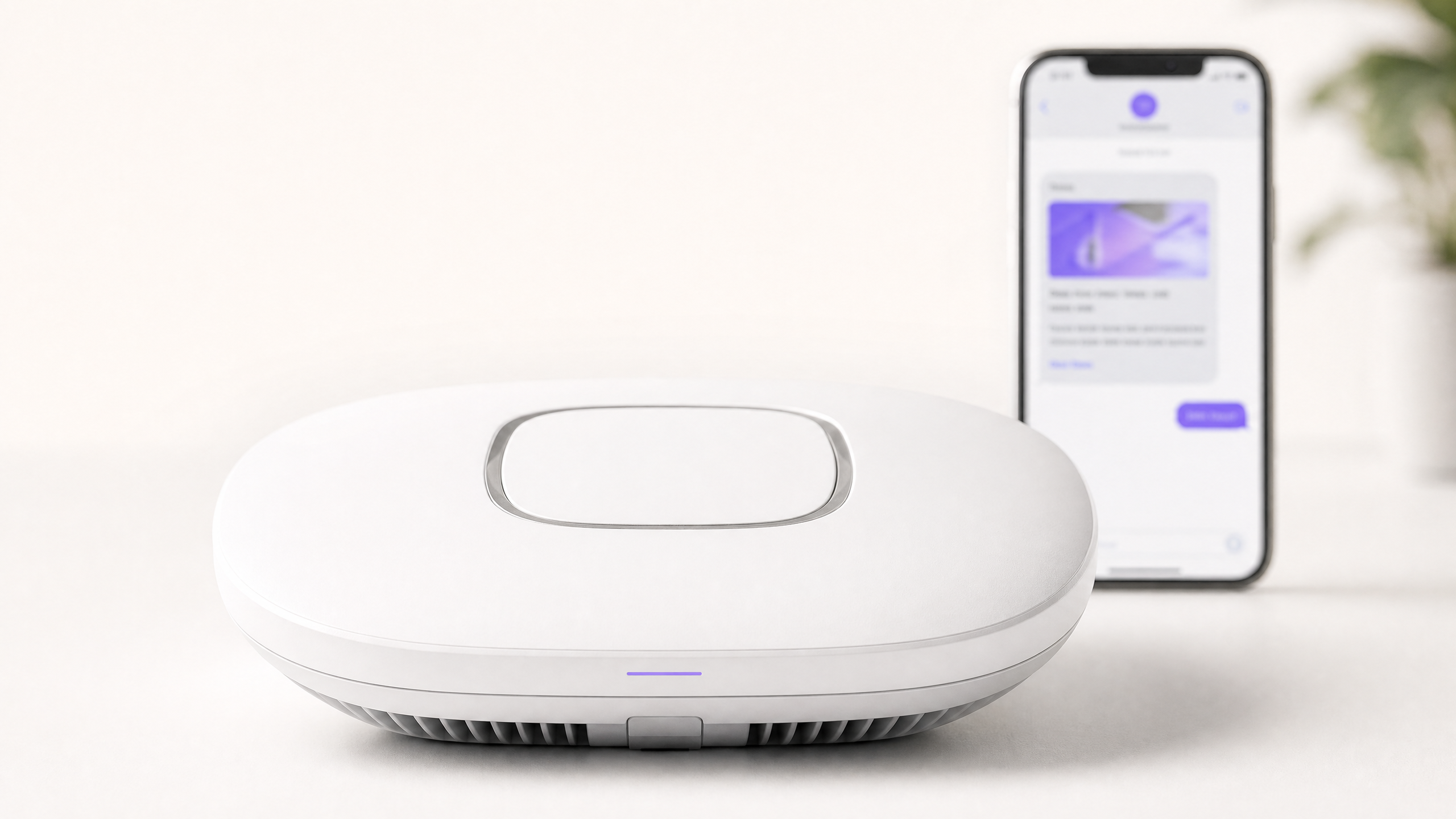
Physical venues have a persistent data gap. Millions of visitors walk through your doors every year, and most of them leave as strangers. You know they visited. You might know roughly when. But you have no verified way to reach them afterwards. SMS campaign marketing closes that gap - but only if you have the right data infrastructure underneath it.
This guide details how to build that infrastructure using Guest WiFi as the data capture layer and Purple Engage as the automation engine. It covers the technical architecture for capturing verified phone numbers at the captive portal, the segmentation logic for post-visit follow-ups and lapsed visitor re-engagement, and the compliance requirements under UK GDPR and PECR. Two real-world case studies - a 250-room hotel and a 12-site retail chain - show what measurable outcomes look like in practice.
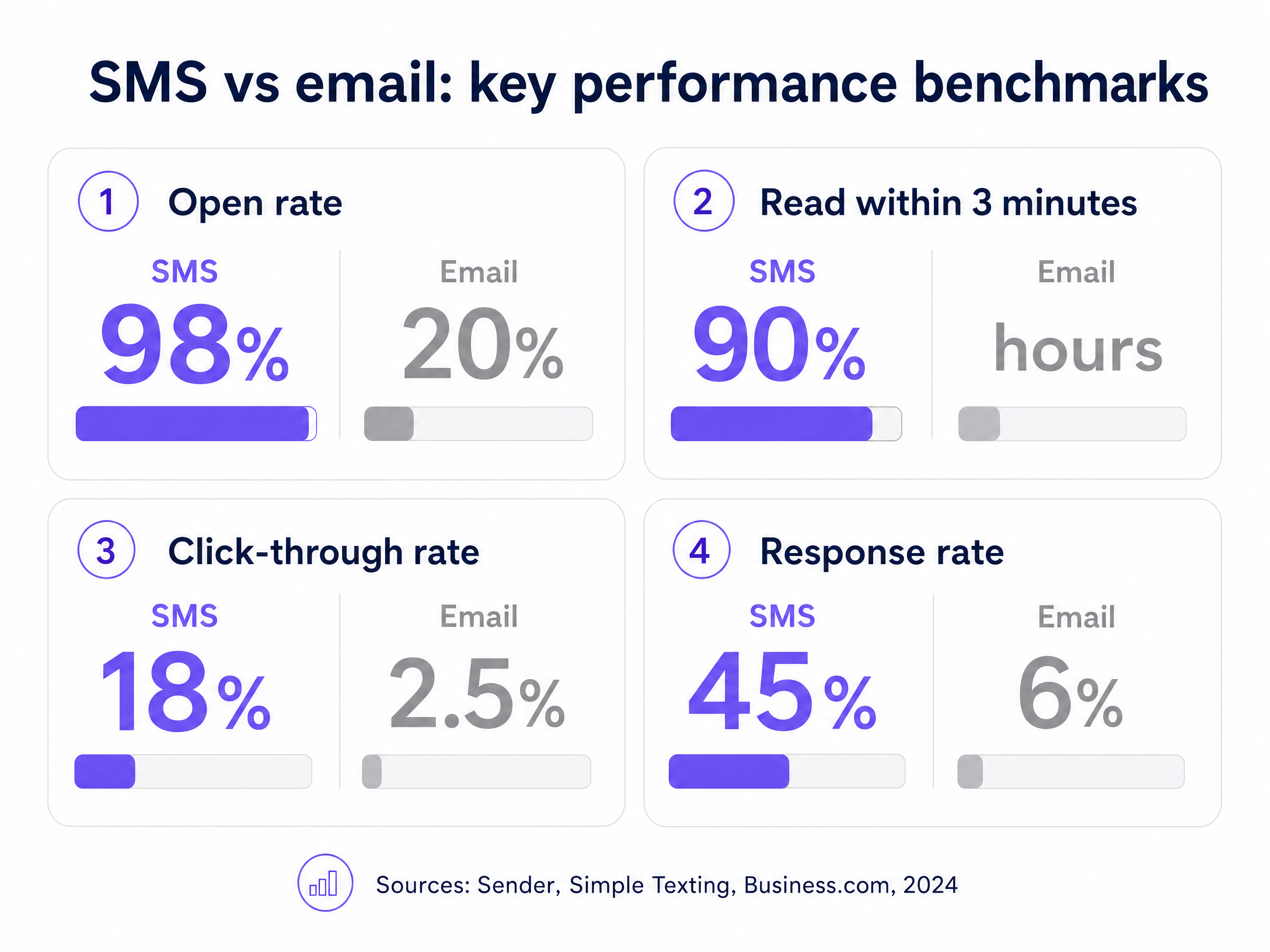
SMS open rates sit at 98%, compared to 20% for email. 90% of messages are read within three minutes of delivery. Industry data shows average SMS marketing returns at $71 for every $1 spent. These are not marginal improvements over other channels. They represent a fundamentally different category of performance - and they are available to any venue that captures verified phone numbers at the WiFi login.
Technical deep-dive: the data capture architecture
The foundation of any SMS campaign is a verified, compliant contact list. Capturing this data requires a seamless integration between your network infrastructure and your marketing platform. Purple operates as a hardware-agnostic cloud overlay. It integrates with enterprise networks including Cisco Meraki, HPE Aruba, Ruckus, Juniper Mist, Ubiquiti UniFi, Cambium, Extreme, and Fortinet. You do not need to replace your existing access points or controllers. The platform sits on top of your hardware, capturing data at the point of connection.
When a visitor selects SMS authentication on the captive portal, they enter their mobile number. Purple's gateway sends a One-Time Passcode (OTP) via SMS. The visitor enters this code to access the internet. This mechanism achieves two critical outcomes simultaneously. First, it verifies that the phone number is active and belongs to the person attempting to connect, eliminating fake data from your CRM. Second, it creates a documented, timestamped consent record.
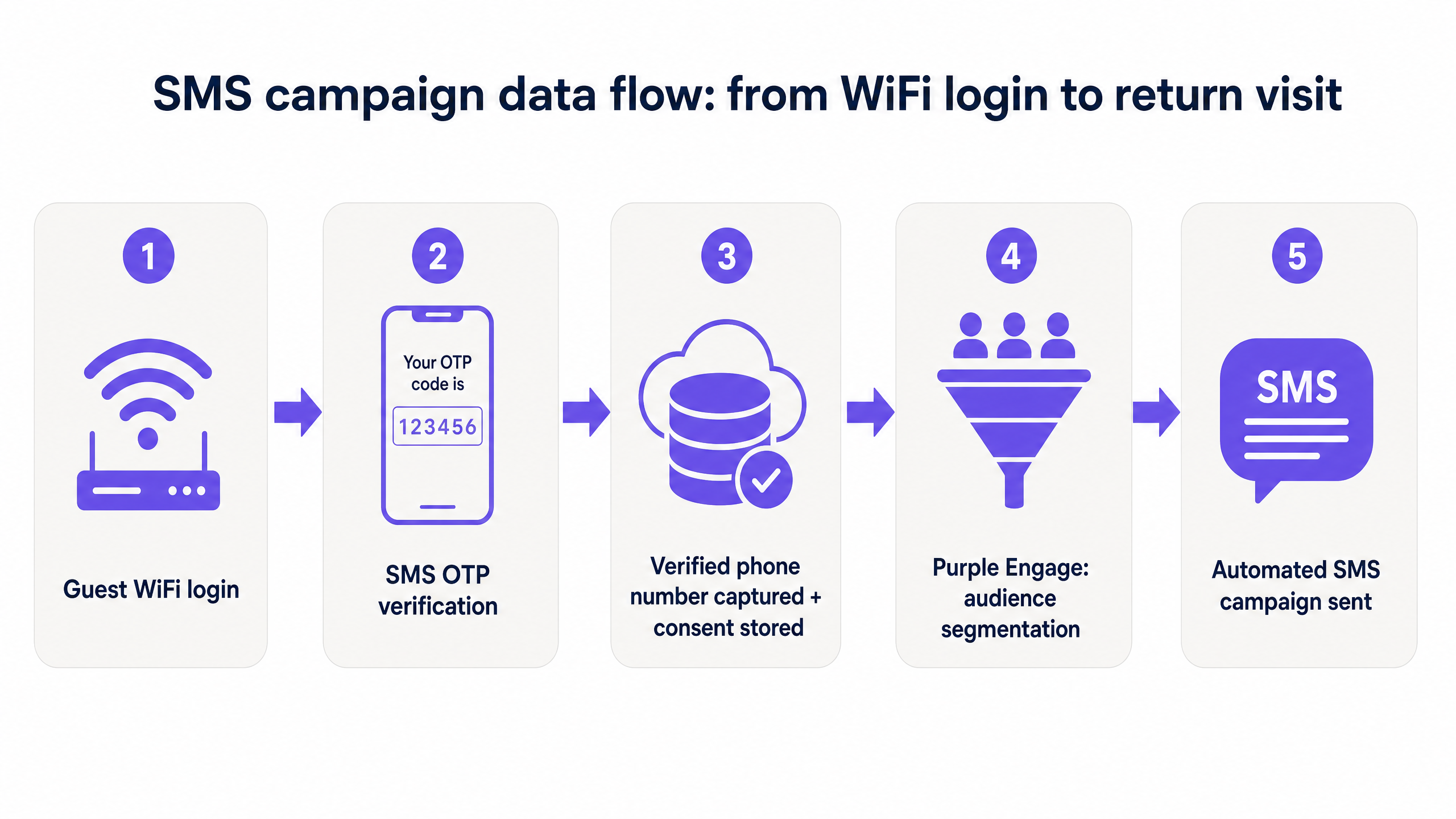
This consent record is the legal basis for your SMS marketing. Under UK GDPR Article 6 and the Privacy and Electronic Communications Regulations (PECR) Regulation 22, SMS marketing requires explicit, specific, and freely given consent. You cannot make marketing opt-in a condition of WiFi access. Purple's captive portal handles this by design, ensuring the opt-in checkbox is separate from the connect button. Every contact in your database has a documented legal basis, protecting your organisation from compliance risks and regulatory fines.
Purple's WiFi Analytics platform enriches each phone number record with visit frequency, dwell time, and location data. This behavioural layer is what enables precise segmentation. A phone number without visit context is just a contact. A phone number tied to 12 visits over six months, with an average dwell time of 90 minutes, is a high-value guest profile.
Implementation guide: segmentation and campaign triggers
A generic broadcast SMS to your entire database will underperform and drive high unsubscribe rates. The campaigns that increase return visits are triggered, personalised, and timed to the visitor's actual behaviour. Purple Engage provides the segmentation logic to automate these campaigns based on first-party data collected at the WiFi login.
Post-visit follow-up. The highest-converting SMS campaign is the post-visit follow-up. A visitor connects to your Guest WiFi, spends time in your venue, and leaves. Between 24 and 48 hours later, they receive a personalised SMS offering an incentive to return. This message is relevant because it references a real, recent interaction. It is timely because the experience is still fresh. Purple's platform data shows this campaign type alone drives a 24% average increase in return visits across our 80,000+ live venues.
Lapsed visitor re-engagement. Purple's WiFi Analytics tracks visit frequency per individual device. When a visitor who previously visited weekly has not appeared for 45 days, the platform identifies them as a churn risk. An automated SMS fires with a targeted re-engagement offer. You are not guessing who to target - you are using actual visit behaviour data to intervene before the visitor is lost permanently.
Event and promotion campaigns. For specific events or seasonal promotions, you can segment your SMS list based on past behaviour. A hotel can target guests who previously used the spa. A stadium can message fans who attended specific fixtures last season but have not renewed. A retail chain can push a flash sale to shoppers who visited a specific location in the last 90 days. You define the audience parameters once, and the platform automates the sends. Purple Engage integrates natively with over 400 CRM and marketing connectors.
For Retail environments, the segmentation can go further. WiFi Analytics tracks dwell time in specific zones within a store. A shopper who spent 15 minutes in the footwear section but did not purchase can receive an SMS offer for that category 24 hours later. This level of personalisation - driven entirely by WiFi behaviour data - consistently outperforms generic promotional messages.
For Hospitality operators, the post-stay follow-up is the single highest-ROI campaign available. Guests who have already experienced your property are four times more likely to book directly than cold prospects. An SMS with a time-bounded return offer, sent within 48 hours of checkout, converts at significantly higher rates than any email equivalent.
Best practices
To maximise the impact of your SMS campaigns and minimise unsubscribes, adhere to the following industry-standard practices.
| Practice | Recommendation | Rationale |
|---|---|---|
| List quality | Use OTP verification at capture | Eliminates fake numbers at source |
| Message frequency | No more than 4-6 SMS per month per contact | 61% of unsubscribes caused by excessive messaging |
| Send timing | 11:00 to 14:00 local time | Midday sends consistently outperform morning and evening |
| Blackout hours | No sends before 09:00 or after 20:00 | Legal requirement in many jurisdictions; also reduces opt-outs |
| Link tracking | UTM parameters on every link | Enables accurate attribution of return visits and revenue |
| Message length | Under 160 characters where possible | Avoids multi-part SMS charges and maintains readability |
| Sender ID | Branded alphanumeric sender ID | Increases open rates and reduces spam filtering |
Integrating SMS into a broader omnichannel strategy amplifies results. Brands that combine SMS with email see a 47.7% lift in customer engagement compared to single-channel approaches, according to Omnisend research. Use email for longer-form pre-arrival communications and post-visit content. Use SMS for time-sensitive triggers where the 98% open rate and three-minute read time create a genuine competitive advantage.
For Healthcare and public-sector venues, the compliance requirements are particularly stringent. Ensure your Data Protection Officer reviews the consent capture flow before deployment. Purple's consent records are GDPR-compliant by design and can be exported for audit purposes.
For Transport hubs and travel operators, the lapsed passenger re-engagement campaign is especially effective. Passengers who have not travelled in 60 days can be targeted with a personalised offer based on their most frequent route or destination, inferred from WiFi login location data.
Troubleshooting and risk mitigation
The most common failure mode in SMS marketing is poor deliverability due to carrier filtering. Mobile network operators aggressively filter messages that resemble spam. To mitigate this risk, register your sender ID with the relevant national messaging body. In the UK, this means registering with the Mobile Ecosystem Forum's SMS SenderID Protection Registry. Avoid excessive capital letters, multiple exclamation marks, or suspicious shortened URLs. Always use branded short links rather than raw URLs.
A second risk is integration failure between the WiFi platform and the CRM. Purple Engage integrates natively with over 400 CRM and marketing connectors. Ensure your API connections are monitored and that data flows bidirectionally. If a visitor opts out via SMS reply, that status must immediately sync back to the central CRM to prevent compliance breaches. Purple handles this automatically, but verify the sync is active during initial deployment.
A third risk is consent record loss during platform migration. If you switch CRM providers, ensure all consent timestamps and source records migrate with the contact data. Without a documented consent record, you cannot legally send SMS marketing to that contact under PECR, even if they previously opted in.
A fourth risk is message content that triggers spam filters. Avoid phrases like "FREE", "WIN", "URGENT", or "CLICK NOW" in SMS content. These are common spam filter triggers. Write messages in plain, conversational language that reflects your brand voice.
ROI and business impact
The return on investment for SMS campaign marketing significantly outperforms other direct channels. The table below summarises the key benchmarks.
| Metric | SMS | Source | |
|---|---|---|---|
| Open rate | 98% | 20% | Sender, 2024 |
| Read within 3 minutes | 90% | Hours | Validity, 2023 |
| Click-through rate | 18% | 2.5% | Sender, 2024 |
| Response rate | 45% | 6% | Business.com, 2024 |
| Average ROI | £71 per £1 spent | £42 per £1 spent | Upcity, 2023; DMA, 2023 |
To measure success, track four primary metrics. First, the return visit uplift percentage - the increase in repeat visits from SMS subscribers versus non-subscribers. Second, the conversion rate of SMS offers - the percentage of SMS recipients who redeem the offer. Third, the average transaction value of SMS subscribers versus non-subscribers. Fourth, the list growth rate - the percentage of WiFi users who opt in to SMS, which typically sits between 15% and 25% across Purple's 80,000+ live venues.
A venue with 500 daily WiFi connections can build a verified SMS list of 20,000 to 30,000 contacts within six months. At a conservative 15% opt-in rate and a 24% return visit uplift, the commercial impact is measurable within the first campaign cycle.
By capturing first-party data through Guest WiFi and automating targeted SMS campaigns through Purple Engage, venue operators transform their physical locations into measurable, high-performing direct marketing channels. The data you already have - visit frequency, dwell time, location - becomes the engine for campaigns that bring visitors back.
For further reading on related topics, see our guide on How to leverage text SMS marketing to increase return visits , our blog on How to make a great first impression with your guest WiFi (and keep your brand consistent) , and our technical overview of Three SSIDs to rule them all: guest, Passpoint, and IoT WiFi .
Key Definitions
Guest WiFi
A dedicated wireless network for visitors, separate from internal corporate networks, used to capture first-party data at the point of connection.
The primary mechanism for capturing verified phone numbers and marketing consent. Purple's Guest WiFi platform operates as a cloud overlay on existing hardware.
Captive portal
A web page that the user of a public-access network is obliged to view and interact with before internet access is granted.
Where the SMS OTP verification and marketing consent capture occur. Purple's captive portal is configurable and GDPR-compliant by design.
OTP (One-Time Passcode)
A password valid for only one login session or transaction, delivered via SMS to verify a mobile number.
Ensures the phone number provided by the visitor is real and active. Also creates the documented consent record required for GDPR and PECR compliance.
First-party data
Information a company collects directly from its customers or visitors, which it owns entirely and can use without third-party intermediaries.
The verified phone numbers, visit frequency, and dwell time data captured by Purple Engage. First-party data is increasingly valuable as third-party cookie deprecation reduces the effectiveness of other digital marketing channels.
GDPR (General Data Protection Regulation)
A regulation in EU and UK law on data protection and privacy, governing how personal data is collected, stored, and used.
Requires explicit, documented consent for SMS marketing under Article 6. Purple's consent records are GDPR-compliant by design and can be exported for audit purposes.
PECR (Privacy and Electronic Communications Regulations)
UK regulations governing electronic marketing, including SMS and email, implementing the EU ePrivacy Directive.
Regulation 22 mandates that marketing opt-in cannot be a condition of WiFi access. Purple's captive portal separates the opt-in checkbox from the connect button to comply with this requirement.
Hardware-agnostic
Software that is compatible with multiple hardware vendors and does not require specific proprietary equipment to function.
Purple operates as a cloud overlay on Cisco Meraki, HPE Aruba, Ruckus, Juniper Mist, Ubiquiti UniFi, Cambium, Extreme, and Fortinet. No hardware replacement is required for deployment.
UTM parameters
Urchin Tracking Module parameters appended to URLs to track the source, medium, and campaign name of web traffic in analytics platforms.
Required on every link in an SMS campaign to attribute return visits and revenue accurately. Without UTM parameters, SMS-driven traffic appears as direct or organic traffic in analytics reports.
Lapsed visitor
A visitor who has not returned to a venue within a defined period after a previous visit, indicating a risk of permanent churn.
Purple's WiFi Analytics identifies lapsed visitors automatically based on visit frequency data. The lapsed re-engagement campaign is one of the three core SMS campaign types that drive return visits.
Purple Engage
Purple's marketing automation platform that captures verified guest data at the WiFi login and automates SMS, email, and other marketing campaigns.
The engine behind all SMS campaign automation. Integrates natively with over 400 CRM and marketing connectors including Salesforce, HubSpot, and Microsoft Dynamics.
Worked Examples
A 250-room hotel wants to increase direct bookings from repeat guests and reduce OTA commission costs. They have an HPE Aruba network already deployed and want to build an SMS marketing channel without replacing any hardware.
Deploy Purple Engage as a cloud overlay on the existing HPE Aruba network. Configure the captive portal to offer SMS OTP authentication with a clearly labelled, separate opt-in checkbox for marketing communications. Over 12 months, the hotel builds a verified database of 18,000 unique guest phone numbers. Configure three automated campaigns in Purple Engage: (1) a post-checkout follow-up SMS sent 24 hours after departure with a direct booking offer valid for 30 days; (2) a lapsed guest re-engagement SMS triggered at 60 days of inactivity, offering a complimentary room upgrade on the next stay; (3) a seasonal promotion campaign targeting guests who visited during the same calendar period in the previous year. All campaigns use UTM-tracked links pointing to the hotel's direct booking engine, bypassing OTA platforms.
A 12-site retail chain running Cisco Meraki hardware wants to increase repeat visit frequency and average transaction value. They have no existing loyalty programme and limited CRM capability.
Deploy Purple on the existing Cisco Meraki infrastructure across all 12 sites. The captive portal captures phone numbers via SMS OTP with marketing opt-in. Purple Engage uses WiFi Analytics dwell time data to infer product category interest by zone. Configure two automated campaigns: (1) a post-visit SMS sent 24 hours after each visit, personalised by the product zone where the shopper spent the most time, with a relevant offer; (2) a lapsed shopper re-engagement SMS triggered at 30 days of inactivity, with a time-limited discount. Integrate Purple Engage with the chain's existing email platform to create a coordinated omnichannel flow: email for weekly newsletters, SMS for time-sensitive triggers. No loyalty app is required - the WiFi login is the opt-in mechanism.
Practice Questions
Q1. A stadium wants to launch an SMS campaign targeting fans who attended matches last season but have not renewed their season tickets. The operations team proposes making SMS marketing opt-in a mandatory condition for accessing the stadium's Guest WiFi. Assess whether this approach is compliant and recommend an alternative.
Hint: Consider the specific requirements of GDPR Article 6 and PECR Regulation 22 regarding freely given consent and the bundling of consent with service access.
View model answer
This approach is not compliant. Under GDPR Article 6 and PECR Regulation 22, consent for marketing must be freely given, specific, informed, and unambiguous. Making marketing opt-in a condition of accessing the WiFi service means consent is not freely given - the visitor has no genuine choice. This is explicitly prohibited. The correct approach is to present the SMS marketing opt-in as a separate, clearly labelled checkbox on the captive portal, distinct from the connect button. The visitor must be able to connect to the WiFi without opting in to marketing. Purple's captive portal implements this correctly by design. The stadium should deploy Purple Engage, configure the opt-in as a separate conscious-choice checkbox, and build the SMS list from genuine opt-ins. This produces a smaller but legally compliant and commercially more engaged list.
Q2. Your hotel chain has built a verified SMS database of 50,000 contacts through Guest WiFi over 18 months. The marketing director wants to send a weekly promotional SMS to the entire list. Predict the likely outcome and recommend a more effective strategy.
Hint: Consider the relationship between message frequency, relevance, and unsubscribe rates. Also consider the segmentation capabilities available through Purple Engage.
View model answer
Sending a weekly promotional SMS to the entire list will likely produce a high unsubscribe rate and declining ROI within two to three months. Research shows 61% of SMS unsubscribes are caused by excessive messaging. A generic weekly broadcast also lacks the relevance that drives conversions - a guest who stayed six months ago and has not returned is not in the same segment as a guest who checked out yesterday. The recommended strategy is to replace the broadcast approach with three triggered campaigns: a post-checkout follow-up sent 24 to 48 hours after departure, a lapsed guest re-engagement triggered at 60 days of inactivity, and a seasonal promotion targeting guests who visited during the same period last year. Frequency should be capped at four to six messages per month per contact. This approach uses Purple Engage's segmentation to ensure every send has a behavioural trigger and a relevant offer, which consistently outperforms broadcast campaigns on both conversion rate and list retention.
Q3. A retail venue operator reports that their SMS post-visit campaigns are not generating measurable return visits. They are sending messages 14 days after each visit, using a generic 10% discount offer, and linking to the homepage of their website. Identify the three most likely causes of underperformance and recommend specific fixes.
Hint: Consider the impact of timing, offer specificity, and attribution tracking on campaign performance.
View model answer
Three causes of underperformance are identifiable. First, the timing is wrong. Sending 14 days after a visit means the experience is no longer fresh and the urgency to return has dissipated. The fix is to send the post-visit SMS within 24 to 48 hours of the visit, while the experience is still top of mind. Second, the offer lacks personalisation. A generic 10% discount does not reference the visitor's actual behaviour. Purple's WiFi Analytics can identify which product zones the shopper visited based on dwell time. The fix is to use zone-based segmentation in Purple Engage to send an offer relevant to the category the shopper spent the most time in. Third, the link to the homepage makes attribution impossible. Without UTM parameters on the link, return visits driven by the SMS cannot be separated from organic traffic in the analytics platform. The fix is to add UTM parameters to every SMS link and link directly to the relevant product category page rather than the homepage. Implementing all three fixes typically produces a measurable uplift within the first campaign cycle.