
¿Por qué usar WiFi Marketing? El caso de negocio con datos reales
Esta guía de referencia técnica describe el caso de negocio basado en evidencia para el marketing WiFi. Proporciona a los líderes de TI y operadores de recintos datos accionables sobre el ROI, el tiempo de permanencia y las métricas de visitas repetidas, derivados de implementaciones en el mundo real.
Escucha esta guía
Ver transcripción del podcast
Resumen ejecutivo
Para los directores de TI, directores de tecnología (CTO) y gerentes de operaciones de recintos, la pregunta de por qué utilizar el marketing de WiFi ya no es teórica. La infraestructura necesaria (puntos de acceso, controladores y hardware de conmutación) probablemente ya esté desplegada en todas sus instalaciones. Sin embargo, sin una capa de inteligencia, esta infraestructura sirve como un mero centro de costos en lugar de un activo generador de ingresos. Esta guía examina la arquitectura técnica y el caso de negocio para transformar las redes de WiFi para invitados en plataformas estructuradas de captura de datos y de interacción con la audiencia. Al utilizar plataformas como WiFi para invitados y analítica de WiFi , las organizaciones de sectores como el comercio minorista , la hospitalidad , la atención médica y el transporte pueden pasar de ofrecer un servicio básico a impulsar un ROI medible mediante un mayor tiempo de permanencia, tasas más altas de visitas recurrentes e ingresos directos por publicidad en WiFi.
Análisis técnico profundo: arquitectura y captura de datos
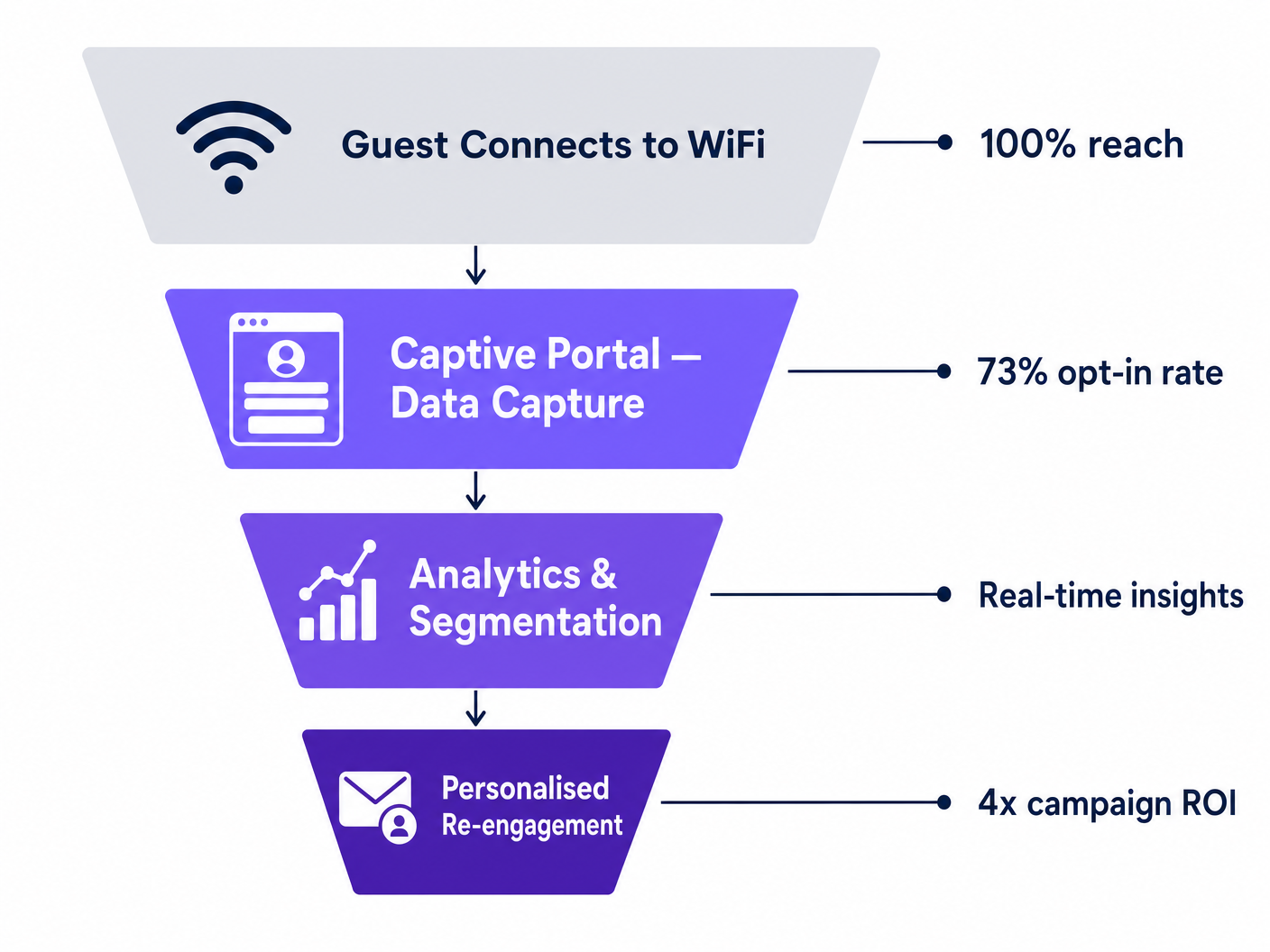
El marketing de WiFi se basa en la capa de autenticación, específicamente en el portal cautivo, que sirve como puerta de enlace para la captura estructurada de datos. Cuando un usuario conecta su dispositivo a una red 802.11ac u 802.11ax, el controlador del portal cautivo intercepta la sesión no autenticada y redirige al cliente a una página de inicio (splash page). Esta interacción es el punto crítico donde las direcciones MAC anónimas se asocian con señales de identidad verificadas (por ejemplo, correo electrónico, nombre, tokens de inicio de sesión de redes sociales).
Jerarquía de datos
- Analítica pasiva: Antes de la autenticación, las plataformas maduras ingieren datos de solicitudes de sondeo (probe requests). Esto proporciona una métrica de afluencia base, capturando los dispositivos que ingresan al recinto pero no se conectan.
- Autenticación activa: Al conectarse, el portal cautivo captura datos de origen (first-party data) con consentimiento. Esto es fundamental en un panorama donde las cookies de terceros se están eliminando gradualmente. Los mecanismos de consentimiento deben alinearse con los requisitos del Artículo 7 del GDPR, garantizando que los datos se entreguen libremente y se registren de manera inequívoca.
- Telemetría de comportamiento: Después de la autenticación, la red genera telemetría de forma continua. Las métricas como el tiempo de permanencia y el flujo de zonas se calculan triangulando las señales de los dispositivos a través de múltiples puntos de acceso. Para obtener información más detallada sobre el seguimiento de ubicación, consulte nuestra Guía de sistemas de posicionamiento en interiores: UWB, BLE y WiFi .
Guía de implementación: De la infraestructura a la inteligencia
La implementación de una solución de marketing de WiFi requiere una coordinación cuidadosa entre la ingeniería de red y las operaciones de marketing. El despliegue debe cerrar la brecha entre el hardware de red (por ejemplo, Cisco Meraki, Aruba) y el CRM o el conjunto de herramientas de automatización de marketing.
Despliegue paso a paso
- Segmentación de red: El tráfico de invitados debe aislarse en una VLAN dedicada. Este es un requisito de seguridad básico y un mandato de cumplimiento estricto bajo PCI-DSS si los sistemas de punto de venta operan en la misma infraestructura física.
- Configuración del portal cautivo: Implemente un perfilado progresivo (progressive profiling) en la página de inicio. Solicitar demasiados datos (nombre, correo electrónico, teléfono, fecha de nacimiento) en la conexión inicial eleva las tasas de abandono por encima del 60%. En su lugar, capture el correo electrónico y el consentimiento al principio, y luego enriquezca el perfil durante las visitas posteriores.
- Integración de datos: Establezca una integración mediante API o webhooks entre la plataforma de analítica de WiFi y el CRM del recinto. Un lago de datos (data lake) sin salida ofrece un ROI nulo. Las señales de identidad capturadas deben fluir sin problemas hacia plataformas como Salesforce o HubSpot para activar campañas automatizadas de reinteracción.
Buenas prácticas para operadores de recintos
Para maximizar el valor del despliegue, siga estas prácticas estándar de la industria:
- Priorice los datos de origen (first-party data): Utilice portales cautivos para crear una base de datos sólida que cumpla con el GDPR. Esto reduce la dependencia de costosos canales de adquisición de terceros.
- Utilice la autenticación basada en perfiles: Avance hacia modelos de autenticación seguros y fluidos. El papel de Purple como proveedor de identidad para servicios como OpenRoaming facilita una conectividad sin fricciones al tiempo que mantiene la visibilidad de los datos.
- Interacción contextual: Utilice los datos para tomar decisiones operativas. Si la analítica revela una caída significativa en el tiempo de permanencia en una zona comercial específica, los equipos de operaciones pueden investigar problemas de diseño o de personal. Para conocer estrategias que permitan capitalizar esta interacción, consulte Social WiFi: Qué es y cómo impulsa la interacción con el cliente (o el equivalente en francés: Social WiFi : Ce que c'est et comment il stimule l'engagement client ).
Resolución de problemas y mitigación de riesgos
Los modos de falla comunes en los despliegues de marketing de WiFi a menudo se deben a objetivos desalineados o deficiencias técnicas.
| Modo de falla | Causa raíz | Estrategia de mitigación |
|---|---|---|
| Alto abandono del portal | Formularios de captura de datos excesivamente complejos. | Implemente un perfilado progresivo; limite las solicitudes iniciales al correo electrónico y al consentimiento. |
| Silos de datos | Falta de integración de la analítica de WiFi con el CRM. | Defina los flujos de datos antes del despliegue; utilice integraciones de API nativas. |
| Analítica inexacta | Densidad insuficiente de puntos de acceso para la triangulación. | Realice un estudio de sitio (site survey) exhaustivo; asegure un mínimo de 3 a 4 AP por piso para la analítica de ubicación. |
| Brechas de seguridad/cumplimiento | Tráfico de invitados en la VLAN corporativa; registro deficiente del consentimiento. | Implemente una segmentación estricta de VLAN; utilice plataformas creadas bajo los estándares de la ICO/GDPR. |
Para entornos especializados como la atención médica, donde la seguridad es primordial, consulte nuestra guía sobre WiFi en hospitales: una guía para redes clínicas seguras .
> [!TIP] > Para obtener una proyección financiera detallada adaptada a su presencia física, consulte nuestra Calculadora de ROI de marketing de WiFi para modelar el ahorro en el CAC y el valor de los clientes recurrentes.
ROI e impacto comercial: La evidencia
El caso de negocio para el marketing de WiFi está validado por datos empíricos en múltiples sectores verticales. Al evaluar si el negocio de WiFi es rentable, las métricas demuestran retornos significativos.
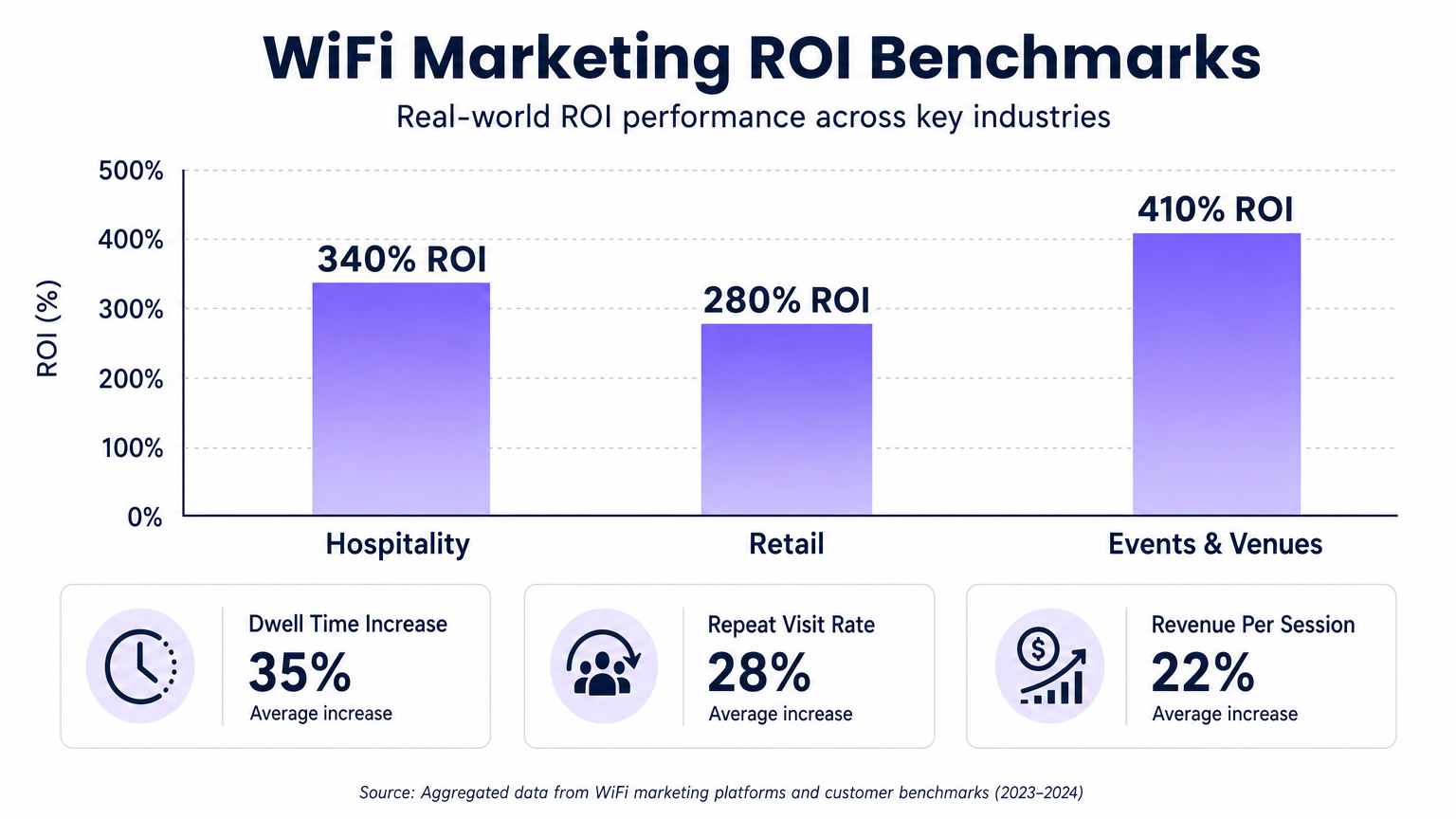
- Hospitalidad: Los recintos que utilizan datos de WiFi para una reinteracción dirigida ven un aumento promedio del 28% en las tasas de visitas recurrentes en un plazo de seis meses. Esto impacta directamente en la ocupación y reduce la dependencia de las agencias de viajes en línea (OTA), que normalmente cobran una comisión del 15 al 25%.
- Comercio minorista: Al analizar el tiempo de permanencia y el flujo de zonas, los minoristas optimizan el diseño de las tiendas y la asignación de personal. Además, las ofertas dirigidas entregadas a través del portal cautivo generan tasas de conversión 4 veces más altas en comparación con las campañas de difusión no dirigidas.
- Transporte y recintos: Los recintos a gran escala generan ingresos directos por publicidad en WiFi al monetizar el espacio del portal cautivo. Los medios minoristas (retail media) contextualmente relevantes pueden compensar por completo los costos de la plataforma en un plazo de 12 a 18 meses. Para obtener información sobre conectividad en movimiento, consulte su guía de soluciones empresariales de WiFi para automóviles .
En conclusión, comprender cómo la analítica de WiFi puede ayudar a las empresas transforma la red de un servicio pasivo a un motor activo de ingresos e inteligencia operativa.
Definiciones clave
Captive Portal
A web page that a user of a public-access network is obliged to view and interact with before access is granted.
This is the primary mechanism for capturing first-party data and securing user consent in a WiFi marketing deployment.
Dwell Time
The duration a unique device remains associated with or in proximity to the WiFi network within a specific zone.
A critical operational metric used by retail and hospitality to gauge customer engagement and optimise staffing or layout.
Probe Request
A frame sent by a client device (like a smartphone) to discover available 802.11 networks in its vicinity.
Used by analytics platforms to measure total venue footfall and capture data from devices that do not actively connect to the network.
Progressive Profiling
The practice of gradually gathering user information over multiple interactions rather than demanding all data upfront.
Essential for maintaining high opt-in rates on captive portals by reducing user friction during the initial connection.
First-Party Data
Information a company collects directly from its customers and owns entirely.
Highly valuable for targeted marketing, especially as third-party cookies are phased out. WiFi marketing is a primary source of this data.
VLAN Segmentation
The practice of dividing a physical network into multiple logical networks to isolate traffic.
A mandatory security requirement to ensure guest WiFi traffic cannot access corporate systems or point-of-sale hardware.
Identity Resolution
The process of connecting various identifiers across devices and touchpoints to a single, unified customer profile.
Crucial for tracking repeat visits and attributing offline behaviour (venue visits) to online marketing campaigns.
Retail Media Monetisation
The strategy of selling advertising space on owned digital assets (like a WiFi splash page) to third-party brands.
A direct revenue stream that can offset the cost of the WiFi infrastructure, generating direct ROI for large venues.
Ejemplos resueltos
A 200-room hotel currently offers open, unauthenticated guest WiFi. They want to implement WiFi marketing to increase direct bookings and reduce OTA commissions, but are concerned about user friction.
- Deploy a captive portal integrated with the existing network infrastructure (e.g., Meraki or Aruba).
- Configure the splash page for progressive profiling: ask only for an email address and GDPR consent on the first visit.
- Integrate the WiFi platform via API with the hotel's CRM.
- Set up an automated workflow: 48 hours after a guest disconnects, trigger an email offering a 10% discount on their next direct booking.
A large retail chain wants to understand why footfall in a specific department is high, but sales are low. They have existing WiFi infrastructure but no analytics layer.
- Implement a WiFi analytics platform that ingests probe request data from the existing access points.
- Map the physical store layout within the platform to define specific zones (e.g., 'Menswear', 'Electronics').
- Analyse the dwell time metrics specifically for the underperforming department compared to high-performing areas.
- Correlate the WiFi dwell time data with Point of Sale (POS) transaction data.
Preguntas de práctica
Q1. A stadium CTO is planning a new WiFi deployment and wants to offset the infrastructure cost within 18 months. They have high footfall but low direct engagement. What is the most effective architectural approach?
Sugerencia: Consider how large venues with high throughput can generate direct revenue from digital real estate.
Ver respuesta modelo
The CTO should implement a captive portal configured for Retail Media Monetisation. By serving contextually relevant, segmented third-party advertising on the splash page during the authentication flow, the stadium can generate direct 'wifi advertising revenue' per session. This approach leverages the high footfall to create a new digital ad inventory that offsets the hardware and platform costs.
Q2. An IT Manager at a retail chain notices that while the captive portal captures 10,000 emails a month, the marketing team reports zero increase in campaign ROI. What is the most likely technical failure?
Sugerencia: Data capture is only the first step; consider the flow of data post-authentication.
Ver respuesta modelo
The most likely failure is a lack of integration between the WiFi analytics platform and the marketing CRM (Data Silos). The IT Manager needs to configure API or webhook integrations to ensure the captured identity signals and behavioural data automatically flow into the marketing automation stack, enabling triggered re-engagement campaigns.
Q3. A hospital IT director needs to deploy patient/guest WiFi but must ensure strict compliance with health data security standards. How should the network be architected?
Sugerencia: Focus on network isolation and data residency.
Ver respuesta modelo
The architecture must enforce strict VLAN segmentation, physically or logically isolating the guest WiFi traffic from the clinical and corporate networks. Additionally, the captive portal must be configured to comply with GDPR/HIPAA, ensuring explicit consent is logged and data residency controls are in place to prevent unauthorised access to potentially sensitive location data.
Continúe leyendo esta serie
Marketing WiFi para Restaurantes: Cómo Convertir el WiFi Gratuito en Clientes Recurrentes
Esta guía de referencia técnica autorizada explora la arquitectura e implementación del marketing WiFi para restaurantes — la práctica de usar el acceso a la red de invitados como un canal estructurado de adquisición de datos y automatización de marketing. Proporciona a gerentes de TI, arquitectos de red y directores de operaciones de locales un plan táctico para implementar captive portals, integrarse con plataformas CRM y activar campañas automatizadas que impulsen negocios recurrentes medibles. Desde la captura de datos compatible con GDPR hasta los flujos de trabajo de correo electrónico basados en eventos, esta guía cubre el ciclo de vida completo de la implementación con métricas de ROI concretas.
Cómo Conectar con Clientes: Estrategias Digitales para Negocios Físicos
Esta guía técnica de referencia autorizada detalla cómo los negocios con ubicación física —hoteles, cadenas minoristas, estadios y recintos del sector público— pueden implementar infraestructura WiFi empresarial como un motor de captura de datos de primera parte y de interacción con el cliente. Cubre la arquitectura completa, desde el diseño del Captive Portal y la autenticación sin interrupciones (IEEE 802.11u/Passpoint) hasta la integración con CRM, el cumplimiento de GDPR y un ROI medible. Los líderes de TI y los operadores de recintos encontrarán orientación de implementación práctica, estudios de caso reales y un marco de mitigación de riesgos que prioriza el cumplimiento.
Cómo usar datos de primera parte en campañas de marketing
Esta guía autorizada detalla cómo los equipos de TI y marketing empresariales pueden transformar su infraestructura de WiFi para invitados en un potente motor de datos de primera parte. Cubre la arquitectura técnica para la captura de datos, la gestión de consentimiento compatible con GDPR, estrategias de segmentación y activación en el mundo real a través de correo electrónico, SMS, publicidad en redes sociales y display programático. Los operadores de recintos y los equipos de TI encontrarán orientación de implementación concreta, ejemplos prácticos de hostelería y comercio minorista, y marcos de ROI medibles.