
Mesh Network बनाम Access Points: बड़े स्थानों के लिए कौन सा बेहतर है?
यह तकनीकी गाइड बड़े पैमाने के स्थानों के लिए mesh networks और पारंपरिक वायर्ड access points के बीच एक निश्चित तुलना प्रदान करता है, जिसमें आर्किटेक्चर, प्रदर्शन समझौतों और परिनियोजन रणनीति को शामिल किया गया है। यह IT प्रबंधकों, नेटवर्क आर्किटेक्ट्स और CTOs को हॉस्पिटैलिटी, रिटेल, इवेंट्स और सार्वजनिक क्षेत्र के वातावरण के लिए उच्च-प्रदर्शन, अनुपालन वाले WiFi इंफ्रास्ट्रक्चर को डिजाइन करने के लिए कार्रवाई योग्य फ्रेमवर्क से लैस करता है। यह गाइड इन आर्किटेक्चरल निर्णयों को Purple के हार्डवेयर-अज्ञेयवादी guest WiFi और एनालिटिक्स प्लेटफॉर्म से भी जोड़ता है, जिससे यह प्रदर्शित होता है कि कैसे सही इंफ्रास्ट्रक्चर का चुनाव मापने योग्य व्यावसायिक परिणाम प्रदान करता है।
Video overview
इस गाइड को सुनें
पॉडकास्ट ट्रांसक्रिप्ट देखें
हमारी मुख्य श्रृंखला का हिस्सा: Guest WiFi गाइड →
Venue WiFi Architecture Advisor: Mesh vs Wired AP Calculator
Compare wireless mesh backhaul degradation against wired PoE access points. Model throughput loss per hop, latency penalties, roaming handover success, structured cabling investment, and 3-year total cost of ownership.
Multi-floor hospitality venue requiring guest captive portal onboarding, PMS billing integration, and consistent in-room streaming.
A shared radio carries client traffic and backhaul at once, so each hop is half-duplex. This is the largest single determinant of mesh throughput.
25 nodes puts the furthest ones 4 wireless hops from the gateway, where roaming succeeds 68% of the time and the edge keeps 179 Mbps of the 1000 Mbps uplink. A mesh this deep cannot hold a consistent SLA across the estate; cable the APs and let the controller coordinate 802.11k/v/r.
Side-by-Side Technical Comparison for 45,000 sq ft Venue
| Metric / Feature | Wired Enterprise APs (PoE) | Wireless Mesh Network |
|---|---|---|
| Backhaul Type | Dedicated Cat6/Cat6A Gigabit (1G/2.5G/10G) Full Duplex | Shared RF Airtime / Wireless 5GHz or 6GHz Hops |
| Edge Throughput | 1000 Mbps (100% capacity) | 1000 Mbps on the wired root node, falling to 179 Mbps at the edge (4 hops on a dedicated tri-band backhaul, -82%) |
| Network Latency | 14ms (Deterministic switched LAN) | 74ms (+15ms per wireless relay hop) |
| Max Concurrency / AP | 150+ devices (MU-MIMO, OFDMA scheduled) | ~25 devices (Airtime starvation risk) |
| Roaming Protocol | 802.11k/v/r Seamless Fast Transition (<50ms) | Client-driven roaming / Sticky clients common |
| Network Segmentation | 802.1Q Multi-VLAN (Staff, Guest, IoT, POS) | Limited single guest SSID isolation |
| Power Delivery | PoE/PoE+ from central UPS-backed switch | Individual AC wall outlets required per node |
Planning a Venue WiFi Network Upgrade?
Purple pairs with leading enterprise AP vendors to deliver automated guest splash pages, CRM profile capture, and location analytics.
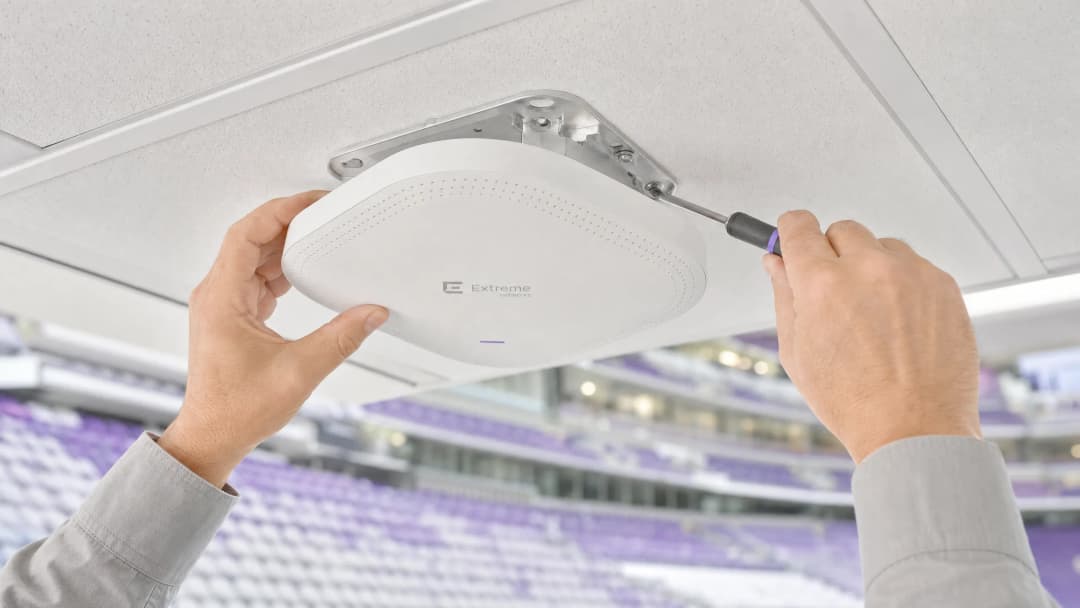
कार्यकारी सारांश (Executive Summary)
बड़े स्थलों - स्टेडियमों, Retail श्रृंखलाओं, Hospitality परिसरों, Transport केंद्रों, और सम्मेलन केंद्रों की देखरेख करने वाले IT प्रबंधकों और CTOs के लिए - सही वायरलेस आर्किटेक्चर चुनना एक बड़ा पूंजीगत निर्णय है। एक mesh network बनाम पारंपरिक वायर्ड Access Points (APs) को तैनात करने के बीच का विवाद सीधे तौर पर CapEx, परिचालन विश्वसनीयता, और अंतिम-उपयोगकर्ता के अनुभव को प्रभावित करता है।
जबकि पारंपरिक APs समर्पित ईथरनेट बैकहॉल के माध्यम से निश्चित प्रदर्शन और बेजोड़ थ्रूपुट प्रदान करते हैं, mesh network उन वातावरणों में तीव्र तैनाती क्षमताएं और लचीलापन प्रदान करते हैं जहां संरचित केबल बिछाना अत्यधिक महंगा या भौतिक रूप से असंभव होता है। यह मार्गदर्शिका दोनों आर्किटेक्चर की तकनीकी वास्तविकताओं का विश्लेषण करती है, जो आपकी हार्डवेयर रणनीति को आपके स्थल की विशिष्ट घनत्व, विलंबता (latency) और अनुपालन आवश्यकताओं के साथ संरेखित करने में आपकी सहायता करने के लिए व्यावहारिक ढांचा प्रदान करती है। गंभीर रूप से, सही बुनियादी ढांचे का चयन यह भी निर्धारित करता है कि आप उपयोगकर्ता डेटा कैप्चर करने और मापने योग्य व्यावसायिक परिणाम प्राप्त करने के लिए Guest WiFi और WiFi Analytics जैसे प्लेटफार्मों का कितना प्रभावी ढंग से लाभ उठा सकते हैं।
तकनीकी गहन विश्लेषण (Technical Deep-Dive)
पारंपरिक Access Point आर्किटेक्चर
पारंपरिक तैनाती में, प्रत्येक access point वापस एक एज या कोर स्विच से वायर्ड होता है, आमतौर पर Cat6 या Cat6a केबलिंग का उपयोग करके जिसे 8P8C (RJ-45) कनेक्टर पर समाप्त किया जाता है। यह वायर्ड बैकहॉल यह सुनिश्चित करता है कि AP की रेडियो फ्रीक्वेंसी (RF) क्षमता का 100% क्लाइंट उपकरणों की सेवा के लिए समर्पित है।
थ्रूपुट और विलंबता (Latency): चूंकि बैकहॉल ट्रैफ़िक पूरी तरह से भौतिक तार द्वारा नियंत्रित किया जाता है, इसलिए पारंपरिक APs निश्चित, मल्टी-गीगाबिट थ्रूपुट प्रदान करते हैं। आधुनिक WiFi 6 (IEEE 802.11ax) APs कई स्थानिक धाराओं में 9.6 Gbps तक के कुल थ्रूपुट का समर्थन करते हैं, और WiFi 7 (IEEE 802.11be) मल्टी-लिंक ऑपरेशन (MLO) के साथ इसे और आगे बढ़ाता है। यह आर्किटेक्चर उच्च-घनत्व वाले वातावरणों के लिए आवश्यक है जहाँ 10ms से कम की विलंबता महत्वपूर्ण होती है - पॉइंट-ऑफ-सेल (POS) सिस्टम, रीयल-टाइम एनालिटिक्स डैशबोर्ड, और VoWLAN तैनाती सभी इसी पर निर्भर करते हैं।
पावर और इन्फ्रास्ट्रक्चर: इस दृष्टिकोण के लिए मजबूत Power over Ethernet (PoE) इन्फ्रास्ट्रक्चर की आवश्यकता होती है। पूर्ण रेडियो चेन वाले आधुनिक WiFi 6 और WiFi 7 APs को अक्सर पूर्ण क्षमता पर कार्य करने के लिए PoE+ (IEEE 802.3at, 30W) या PoE++ (IEEE 802.3bt, 90W तक) की आवश्यकता होती है, जिससे किसी भी हार्डवेयर रीफ्रेश से पहले सावधानीपूर्वक स्विच पोर्ट और पावर बजट योजना बनाना आवश्यक हो जाता है।
सुरक्षा स्थिति: वायर्ड बैकहॉल स्वाभाविक रूप से भौतिक हमले के क्षेत्र को कम करते हैं। IEEE 802.1X पोर्ट-आधारित प्रमाणीकरण और WPA3-Enterprise एन्क्रिप्शन के साथ मिलकर, यह आर्किटेक्चर PCI-DSS और GDPR अनुपालन के लिए सबसे मजबूत आधार रेखा प्रदान करता है।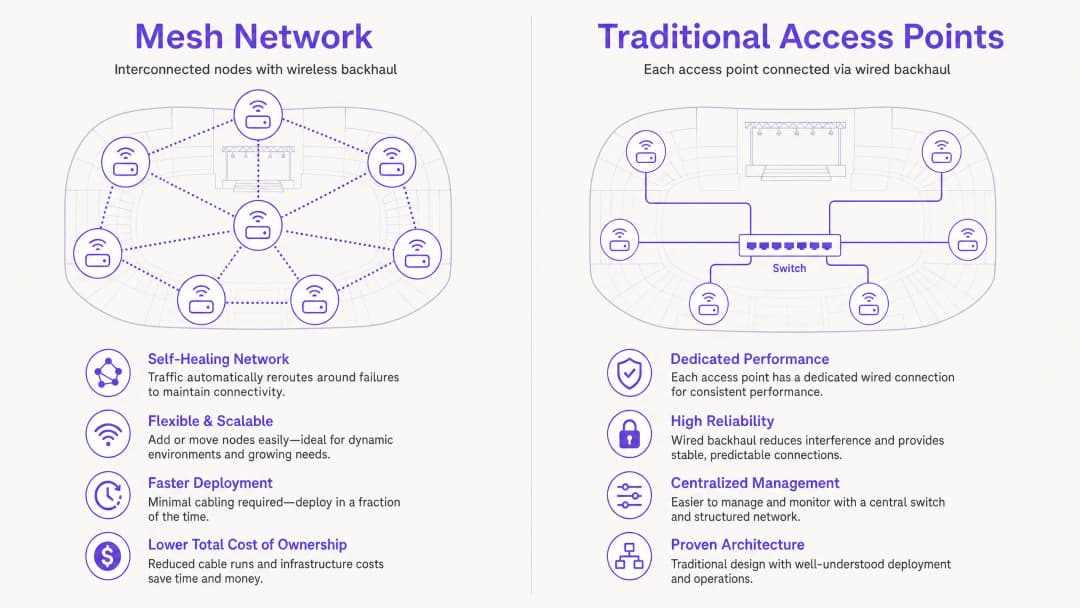
Mesh नेटवर्क आर्किटेक्चर
Mesh नेटवर्क वायर्ड बैकहॉल को वायरलेस लिंक से बदल देते हैं। एक विशिष्ट एंटरप्राइज परिनियोजन में वायर्ड LAN से जुड़ा एक रूट नोड शामिल होता है, जो पूरे आयोजन स्थल पर वितरित सैटेलाइट नोड्स को वायरलेस रूप से डेटा प्रसारित करता है।
हाफ-डुप्लेक्स पेनल्टी: WiFi स्वाभाविक रूप से हाफ-डुप्लेक्स है। एक मानक डुअल-बैंड mesh सिस्टम में, रेडियो को क्लाइंट डिवाइस को सेवा देने और चेन में अगले नोड पर ट्रैफ़िक रिले करने के बीच बारी-बारी से काम करना चाहिए। प्रत्येक वायरलेस हॉप प्रभावी रूप से उपलब्ध थ्रूपुट को आधा कर देता है और 1 - 5ms की अतिरिक्त लेटेंसी जोड़ता है। हजारों समवर्ती उपयोगकर्ताओं वाले उच्च-घनत्व वाले वातावरण में, यह लेटेंसी तेजी से बढ़ती है और परिचालन रूप से महत्वपूर्ण हो जाती है।
ट्राई-बैंड शमन: एंटरप्राइज-ग्रेड mesh सिस्टम विशेष रूप से बैकहॉल ट्रैफ़िक के लिए एक समर्पित तीसरे रेडियो का उपयोग करके इसे कम करते हैं - जो आमतौर पर 5GHz या 6GHz (Wi-Fi 6E) स्पेक्ट्रम में काम करता है। यह बैकहॉल को एयरटाइम के लिए क्लाइंट-फेसिंग रेडियो के साथ प्रतिस्पर्धा करने से रोकता है। हालांकि यह उपभोक्ता-ग्रेड mesh की तुलना में प्रदर्शन में काफी सुधार करता है, फिर भी यह मूल्यवान RF स्पेक्ट्रम की खपत करता है और घने वातावरण में वायर्ड कनेक्शन की वास्तविक, नियतात्मक क्षमता से मेल नहीं खा सकता है।
सेल्फ-हीलिंग टोपोलॉजी: mesh का एक प्रमुख लचीलापन लाभ इसकी सेल्फ-हीलिंग क्षमता है। यदि कोई सैटेलाइट नोड अपना प्राथमिक बैकहॉल लिंक खो देता है, तो यह स्वचालित रूप से एक आसन्न नोड के माध्यम से ट्रैफ़िक को फिर से रूट कर सकता है। यह विशेष रूप से गतिशील या अस्थायी आयोजन स्थल कॉन्फ़िगरेशन में मूल्यवान है जहां भौतिक व्यवधान की संभावना होती है।
आमने-सामने प्रदर्शन की तुलना
| विशेषता | पारंपरिक वायर्ड APs | एंटरप्राइज Mesh नेटवर्क |
|---|---|---|
| बैकहॉल प्रकार | वायर्ड (Cat6/Cat6a) | वायरलेस (समर्पित रेडियो) |
| प्रति AP थ्रूपुट | 9.6 Gbps तक (Wi-Fi 6) | प्रति हॉप ~50% कम |
| लेटेंसी | 5ms से कम (नियतात्मक) | 5 - 20ms (परिवर्तनीय) |
| परिनियोजन गति | धीमी (केबलिंग आवश्यक) | तेज (केवल पावर) |
| CapEx | उच्च (केबलिंग + स्विच) | कम (न्यूनतम केबलिंग) |
| OpEx | कम (उच्च विश्वसनीयता) | मध्यम (RF ट्यूनिंग) |
| उच्च-घनत्व उपयुक्तता | उत्कृष्ट | सीमित |
| लचीलापन / मापनीयता | कम (फिक्स्ड केबल रन) | उच्च (नोड रीपोजीशनिंग) |
| PCI-DSS / GDPR अनुपालन | सीधा | कॉन्फ़िगरेशन के साथ प्राप्त करने योग्य |
अपने विशिष्ट सेटअप को लेकर कोई सवाल हैं?
हमारी टीम 80,000 से अधिक वेन्यू में वेन्यू ऑपरेटरों, IT मैनेजरों और नेटवर्क इंजीनियरों के साथ काम करती है। 20 मिनट का कॉल बुक करें और हम आपको दिखाएंगे कि आपके जैसे अन्य लोगों ने इसे कैसे हल किया।
कार्यान्वयन गाइड
चरण 1: RF प्रेडिक्टिव सर्वे और डेंसिटी मैपिंग
हार्डवेयर का चयन करने से पहले, Ekahau Pro या iBwave जैसे टूल का उपयोग करके एक प्रेडिक्टिव RF साइट सर्वे का आदेश दें। अपने आयोजन स्थल को अलग-अलग ज़ोन में मैप करें:
- उच्च-घनत्व वाले ज़ोन: कॉन्फ्रेंस हॉल, स्टेडियम बैठने के क्षेत्र, होटल लॉबी, रिटेल चेकआउट क्षेत्र। इनके लिए वायर्ड APs की आवश्यकता होती है।
- मध्यम-घनत्व वाले ज़ोन: होटल के गलियारे, रिटेल फ्लोर स्पेस, ऑफिस विंग। वायर्ड APs को प्राथमिकता दी जाती है; mesh व्यवहार्य है।
- कठिन-तार / अस्थायी क्षेत्र: बाहरी आँगन, ऐतिहासिक भवन के हिस्से, अस्थायी कार्यक्रम स्थल। ऐसे में मेश नेटवर्क एक व्यावहारिक विकल्प है।
चरण 2: आर्किटेक्चर का चयन और हाइब्रिड डिज़ाइन
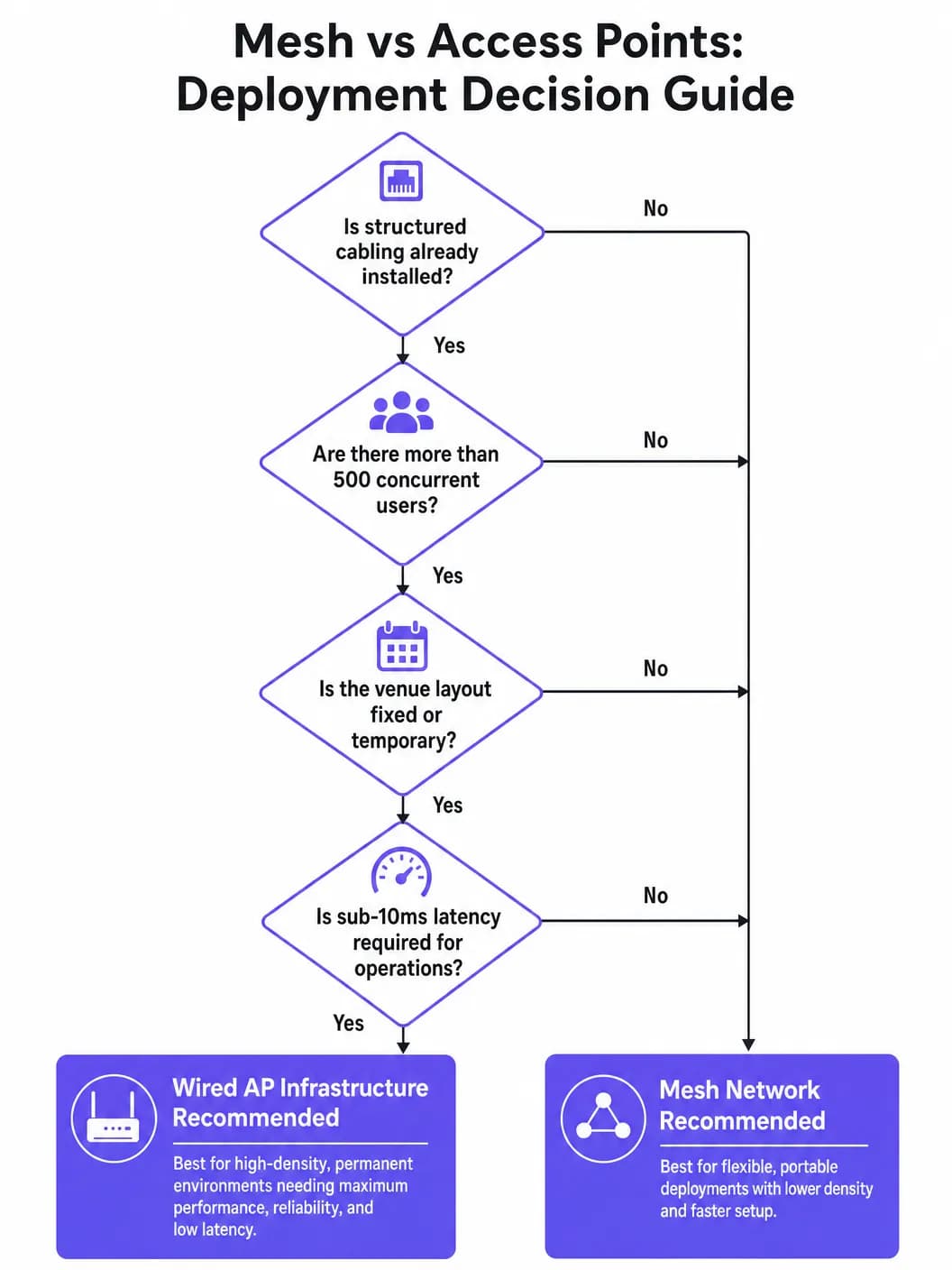
अधिकांश बड़े स्थानों के लिए, एक हाइब्रिड आर्किटेक्चर सबसे इष्टतम परिणाम है: उच्च-घनत्व वाले मुख्य भाग में वायर्ड APs और परिधीय या सीमित क्षेत्रों में कवरेज बढ़ाने के लिए मेश नोड्स। यह दृष्टिकोण लागत दक्षता और प्रदर्शन के बीच संतुलन बनाता है।
चरण 3: बैकहॉल इन्फ्रास्ट्रक्चर का आकार तय करना
वायर्ड डिप्लॉयमेंट के लिए, यह सुनिश्चित करें कि आपके एज स्विच पर्याप्त PoE बजट प्रदान करते हैं। आधुनिक Wi-Fi 6/7 डिप्लॉयमेंट के लिए प्रति-पोर्ट 90W बजट और कोर से 2.5GbE या 10GbE अपलिंक वाला एक 48-पोर्ट PoE++ स्विच अनुशंसित आधारभूत ढांचा है। मेश के लिए, यह सुनिश्चित करें कि रूट नोड्स मल्टी-गीगाबिट अपलिंक के माध्यम से जुड़े हों ताकि सभी सैटेलाइट नोड्स से आने वाले एकत्रित ट्रैफ़िक को संभाला जा सके।
चरण 4: सुरक्षा और अनुपालन कॉन्फ़िगरेशन
आर्किटेक्चर चाहे जो भी हो, निम्नलिखित को कॉन्फ़िगर करें:
- सभी कॉर्पोरेट और परिचालन SSIDs पर WPA3-Enterprise।
- डिवाइस प्रमाणीकरण के लिए RADIUS सर्वर (जैसे, FreeRADIUS, Cisco ISE, या क्लाउड-होस्टेड समकक्ष) के साथ IEEE 802.1X।
- POS और बैक-ऑफिस सिस्टम से गेस्ट ट्रैफ़िक को अलग करने के लिए VLAN पृथक्करण। यह PCI DSS अनुपालन के लिए एक अनिवार्य नियंत्रण है।
- अनधिकृत APs का पता लगाने और उन्हें रोकने के लिए Wireless Intrusion Prevention System (WIPS)।
चरण 5: प्लेटफ़ॉर्म एकीकरण
हार्डवेयर लेयर केवल आधार है, लेकिन व्यावसायिक मूल्य सॉफ़्टवेयर लेयर पर अनलॉक होता है। यह सुनिश्चित करें कि आपके चुने हुए AP विक्रेता का फ़र्मवेयर उन API एकीकरणों का समर्थन करता है जो आपके गेस्ट WiFi और एनालिटिक्स प्लेटफ़ॉर्म के लिए आवश्यक हैं। Purple का प्लेटफ़ॉर्म हार्डवेयर-स्वतंत्र है, जो Cisco Meraki, Aruba, Ruckus, और Ubiquiti सहित प्रमुख विक्रेताओं का समर्थन करता है। यह आपको गेस्ट डेटा कैप्चर करने, Captive Portal यात्राएँ चलाने और WiFi Analytics डैशबोर्ड को फ़ीड करने में सक्षम बनाता है, चाहे आपका बुनियादी हार्डवेयर विकल्प कोई भी हो। यह समझने के लिए कि प्रबंधन आर्किटेक्चर इसे कैसे प्रभावित करता है, Comparing Controller-Based vs. Cloud-Managed Access Points देखें।
-
सर्वोत्तम प्रथाएँ
मेश हॉप्स को तीन तक सीमित रखें। कभी भी ऐसा मेश नेटवर्क डिज़ाइन न करें जिसमें सैटेलाइट नोड से वापस रूट नोड तक तीन से अधिक वायरलेस हॉप्स की आवश्यकता हो। तीन हॉप्स से अधिक होने पर, एंटरप्राइज़ एप्लिकेशन्स के लिए लेटेंसी असहनीय हो जाती है और थ्रूपुट उस स्तर तक गिर जाता है जहाँ उपयोगकर्ता अनुभव गंभीर रूप से प्रभावित होता है।
किसी भी हार्डवेयर रीफ़्रेश से पहले PoE बजट ऑडिट करें। एज स्विच को अपग्रेड किए बिना Wi-Fi 6 या Wi-Fi 7 APs में अपग्रेड करना एक आम और महंगी गलती है। नए APs को अक्सर PoE++ (802.3bt) की आवश्यकता होती है, जबकि मौजूदा स्विच केवल PoE+ (802.3at) का समर्थन कर सकते हैं, जिससे लोड के तहत APs रीबूट हो जाते हैं।
सभी SSIDs पर WPA3 का मानकीकरण करें। WPA3 का साइमल्टेनियस ऑथेंटिकेशन ऑफ इक्वल्स (SAE) हैंडशेक, WPA2 में मौजूद KRACK और डिक्शनरी-अटैक कमजोरियों को समाप्त करता है। GDPR के तहत भुगतान डेटा या संवेदनशील व्यक्तिगत डेटा को संभालने वाले वेन्यू के लिए, यह एक गैर-परक्राम्य आधार रेखा है।
मेश बैकहॉल लिंक्स को क्रिटिकल इंफ्रास्ट्रक्चर मानें। मेश परिनियोजन में, नोड्स के बीच वायरलेस लिंक उतना ही महत्वपूर्ण है जितना कि एक केबल। बैकहॉल लिंक गुणवत्ता (RSSI, SNR और MCS दर) की लगातार निगरानी करें। एक ख़राब बैकहॉल लिंक डाउनस्ट्रीम से जुड़े प्रत्येक क्लाइंट के प्रदर्शन को चुपचाप कम कर देगा।
वेंडर बातचीत के लिए हार्डवेयर अज्ञेयवाद का लाभ उठाएं। सॉफ्टवेयर प्रबंधन परत (Purple का प्लेटफॉर्म) को हार्डवेयर परत से अलग करके, आप रीफ्रेश चक्रों पर हार्डवेयर वेंडर बदलने की क्षमता बनाए रखते हैं। यह प्रतिस्पर्धी लाभ आम तौर पर 5 साल की TCO अवधि में हार्डवेयर लागत को 15 - 25% तक कम कर देता है।
समस्या निवारण और जोखिम न्यूनीकरण
सामान्य विफलता मोड
हिडन नोड समस्या। मेश नेटवर्क में, यदि दो सैटेलाइट नोड एक-दूसरे को 'सुन' नहीं सकते हैं, लेकिन दोनों एक ही रूट नोड पर एक साथ ट्रांसमिट कर रहे हैं, तो पैकेट टकराव होता है, जिससे थ्रूपुट नष्ट हो जाता है। यह जटिल RF वातावरण वाले वेन्यू में विशेष रूप से आम है। न्यूनीकरण: सावधानीपूर्वक RF ट्यूनिंग, ट्रांसमिट पावर स्तरों को समायोजित करना, और RTS/CTS (रिक्वेस्ट टू सेंड/क्लियर टू सेंड) तंत्र का उपयोग करना।
PoE बजट थकावट। जैसा कि ऊपर उल्लेख किया गया है, विरासत PoE बुनियादी ढांचे पर नए उच्च-शक्ति APs को तैनात करने से लोड के तहत बीच-बीच में रीबूट होता है। न्यूनीकरण: परिनियोजन से पहले एक पूर्ण PoE बजट ऑडिट का संचालन करें। स्विच के कुल PoE बजट के विरुद्ध सभी जुड़े उपकरणों के कुल सबसे खराब स्थिति वाले बिजली उपयोग की गणना करें।
रॉग AP हस्तक्षेप। एक ही हवाई क्षेत्र में प्रसारण करने वाले अप्रबंधित उपभोक्ता-श्रेणी के उपकरण - विशेष रूप से उन वेन्यू में जहां प्रदर्शक या किरायेदार अपने स्वयं के उपकरण लाते हैं - मेश बैकहॉल और क्लाइंट एक्सेस दोनों को गंभीर रूप से ख़राब कर देंगे। न्यूनीकरण: निरंतर WIPS स्कैनिंग लागू करें और अनधिकृत वायरलेस उपकरणों को प्रतिबंधित करने वाली एक स्पष्ट नीति लागू करें।
डेड ज़ोन में मेश नोड प्लेसमेंट। एक सामान्य परिनियोजन त्रुटि मेश सैटेलाइट नोड को उसी कवरेज डेड ज़ोन में रखना है जिसे ठीक करने का इरादा है। यदि नोड एक मजबूत बैकहॉल सिग्नल प्राप्त नहीं कर सकता है, तो वह अच्छा क्लाइंट कवरेज प्रदान नहीं कर सकता है। न्यूनीकरण: सैटेलाइट नोड को रूट नोड और डेड ज़ोन के ठीक बीच में रखें, जहाँ बैकहॉल सिग्नल मजबूत हो, और डेड ज़ोन तक पहुँचने के लिए सैटेलाइट के क्लाइंट-सामना करने वाले रेडियो पर भरोसा करें।
ROI और व्यावसायिक प्रभाव
अपने वायरलेस बुनियादी ढांचे के ROI का मूल्यांकन करते समय, हार्डवेयर के प्रारंभिक CapEx से परे देखें।
| लागत श्रेणी | पारंपरिक वायर्ड APs | मेश नेटवर्क |
|---|---|---|
| हार्डवेयर CapEx | मध्यम | कम |
| केबलिंग CapEx | उच्च ($150 - $300/ड्रॉप) | न्यूनतम |
| स्थापना श्रम | उच्च | कम |
| चालू RF ट्यूनिंग OpEx | कम | मध्यम |
| हार्डवेयर जीवनचक्र | 5 - 7 वर्ष | 3 - 5 वर्ष |
| डाउनटाइम जोखिम | कम | मध्यम |
300 APs वाले 500 कमरों के होटल के लिए, पारंपरिक डिप्लॉयमेंट के लिए केवल केबल बिछाने की लागत £60,000 - £90,000 तक पहुंच सकती है। उसी स्थान पर एक मेश डिप्लॉयमेंट इसे £10,000 से कम कर सकता है, जो एक महत्वपूर्ण CapEx बचत का प्रतिनिधित्व करता है - बशर्ते प्रदर्शन से जुड़ा समझौता उस उपयोग के मामले के लिए स्वीकार्य हो।
अंततः, इन्फ्रास्ट्रक्चर डेटा के लिए एक माध्यम है। एक मजबूत, अच्छी तरह से डिज़ाइन किया गया नेटवर्क - चाहे वह वायर्ड हो, मेश हो, या हाइब्रिड हो - स्थानों को उपयोगी गेस्ट एनालिटिक्स कैप्चर करने, व्यक्तिगत मार्केटिंग को बढ़ावा देने और परिचालन दक्षता में सुधार करने में सक्षम बनाता है। Purple के Guest WiFi जैसे प्लेटफॉर्म नेटवर्क को एक लागत केंद्र से राजस्व उत्पन्न करने वाली संपत्ति में बदल देते हैं। इस डेटा का लाभ उठाने की व्यावहारिक रणनीतियों के लिए, How To Improve Guest Satisfaction: The Ultimate Playbook देखें। निर्बाध, पासवर्ड रहित प्रमाणीकरण की दिशा में विकास इस मूल्य को और बढ़ाता है, जैसा कि How a wi fi assistant Enables Passwordless Access in 2026 में बताया गया है।
सार्वजनिक क्षेत्र के स्थानों और स्मार्ट सिटी डिप्लॉयमेंट के लिए, नेटवर्क इन्फ्रास्ट्रक्चर डिजिटल समावेशन पहलों में भी एक मूलभूत भूमिका निभाता है, जो एक रणनीतिक प्राथमिकता है जिसे Purple सक्रिय रूप से चला रहा है, जैसा कि Purple Appoints Iain Fox as VP Growth - Public Sector to Drive Digital Inclusion and Smart City Innovation में परिलक्षित होता है।
ऑडियो ब्रीफिंग
इस 10 मिनट की तकनीकी ब्रीफिंग में हमारे सीनियर सॉल्यूशंस आर्किटेक्ट को आर्किटेक्चरल बारीकियों पर चर्चा करते हुए सुनें:
मुख्य परिभाषाएं
वायरलेस बैकहॉल
भौतिक ईथरनेट केबल का उपयोग करने के बजाय, डेटा को एक्सेस पॉइंट से वापस कोर नेटवर्क तक संचारित करने के लिए वायरलेस संचार का उपयोग करना।
मेष नेटवर्क की निर्णायक विशेषता। केबल बिछाने की लागत बचाता है और लचीली तैनाती सक्षम करता है लेकिन RF स्पेक्ट्रम की खपत करता है और लेटेंसी बढ़ाता है।
Tri-Band Radio
तीन अलग-अलग रेडियो से लैस एक एक्सेस पॉइंट - आमतौर पर एक 2.4GHz और दो 5GHz या 6GHz रेडियो - जो एक रेडियो को विशेष रूप से वायरलेस बैकहॉल ट्रैफ़िक के लिए समर्पित करने की अनुमति देता है।
एंटरप्राइज मेष नेटवर्क के लिए आवश्यक। एक समर्पित बैकहॉल रेडियो के बिना, क्लाइंट-सामना करने वाला थ्रूपुट गंभीर रूप से कम हो जाता है क्योंकि AP को क्लाइंट की सेवा करने और ट्रैफ़िक को रिले करने के बीच अपने रेडियो साझा करने होंगे।
Deterministic Performance
नेटवर्क व्यवहार जहां लेटेंसी और थ्रूपुट पूर्वानुमेय और सुसंगत होते हैं, चाहे मामूली पर्यावरणीय परिवर्तन या लोड में उतार-चढ़ाव कुछ भी हो।
वायर्ड एक्सेस पॉइंट्स का एक प्रमुख लाभ, Voice over WLAN (VoWLAN), रीयल-टाइम POS सिस्टम और किसी भी लेटेंसी-संवेदनशील परिचालन तकनीक जैसे अनुप्रयोगों के लिए महत्वपूर्ण।
Root Node
मेष नेटवर्क में वह एक्सेस पॉइंट जिसका LAN से भौतिक वायर्ड कनेक्शन होता है और जो सभी डाउनस्ट्रीम वायरलेस सैटेलाइट नोड्स के लिए गेटवे के रूप में कार्य करता है।
बाधाओं को रोकने के लिए root nodes का उचित स्थान और आकार महत्वपूर्ण हैं। root node की अपलिंक क्षमता सभी डाउनस्ट्रीम मेष ट्रैफ़िक के लिए सीमा निर्धारित करती है।
Power over Ethernet (PoE)
एक IEEE मानक (802.3af/at/bt) जो ईथरनेट केबलों को एक्सेस पॉइंट्स जैसे जुड़े उपकरणों को डेटा और विद्युत शक्ति दोनों को एक साथ संचारित करने की अनुमति देता है।
वायर्ड AP तैनाती के लिए एक प्रमुख नियोजन विचार। IT टीमों को यह सुनिश्चित करना चाहिए कि उनके स्विच के पास आधुनिक WiFi 6/7 हार्डवेयर का समर्थन करने के लिए पर्याप्त PoE बजट (30W पर PoE+ या 90W तक PoE++) हो।
IEEE 802.1X
पोर्ट-आधारित नेटवर्क एक्सेस नियंत्रण के लिए एक IEEE मानक, जो RADIUS सर्वर के माध्यम से LAN या WLAN से कनेक्ट करने का प्रयास करने वाले उपकरणों को एक प्रमाणीकरण तंत्र प्रदान करता है।
एंटरप्राइज सुरक्षा और अनुपालन के लिए महत्वपूर्ण। यह सुनिश्चित करता है कि केवल अधिकृत उपकरण और उपयोगकर्ता ही कॉर्पोरेट नेटवर्क सेगमेंट तक पहुंच सकें, जो PCI DSS और ISO 27001 अनुपालन के लिए एक बुनियादी आवश्यकता है।
VLAN Segmentation
विभिन्न उपयोगकर्ता समूहों या प्रणालियों के बीच ट्रैफ़िक को अलग करने के लिए एकल भौतिक नेटवर्क को कई तार्किक नेटवर्क (VLANs) में विभाजित करने की प्रथा।
PCI DSS अनुपालन के लिए अनिवार्य। गेस्ट WiFi ट्रैफ़िक को भुगतान टर्मिनलों और बैक-ऑफिस सिस्टम से पूरी तरह से अलग किया जाना चाहिए। सही ढंग से खंडित करने में विफलता सबसे आम PCI ऑडिट विफलताओं में से एक है।
Multi-Link Operation (MLO)
WiFi 7 (IEEE 802.11be) की एक प्रमुख विशेषता जो एक उपकरण को एक ही समय में कई फ्रीक्वेंसी बैंड (जैसे, 2.4GHz, 5GHz, और 6GHz) में डेटा संचारित और प्राप्त करने की अनुमति देती है।
समर्थित क्लाइंट उपकरणों के लिए थ्रूपुट को महत्वपूर्ण रूप से बढ़ाता है और लेटेंसी को कम करता है। विशेष रूप से उच्च-घनत्व स्थल योजना के लिए प्रासंगिक है क्योंकि WiFi 7 इन्फ्रास्ट्रक्चर अधिक प्रचलित हो गया है।
Wireless Intrusion Prevention System (WIPS)
एक सुरक्षा प्रणाली जो अनधिकृत एक्सेस पॉइंट्स की उपस्थिति के लिए वायरलेस रेडियो स्पेक्ट्रम की निगरानी करती है और उन्हें रोकने के लिए स्वचालित उपाय करती है।
उन स्थानों के लिए आवश्यक जहां प्रदर्शक, किरायेदार, या मेहमान अपने स्वयं के वायरलेस उपकरण ला सकते हैं। अनधिकृत AP दोनों RF हस्तक्षेप और सुरक्षा जोखिम का एक महत्वपूर्ण स्रोत हैं।
हल किए गए उदाहरण
एक 400-कमरों वाले ऐतिहासिक होटल को पूरे क्षेत्र में WiFi प्रदान करने की आवश्यकता है। मुख्य लॉबी और कॉन्फ्रेंस सेंटर में सस्पेंडेड सीलिंग हैं, लेकिन गेस्ट विंग्स में ठोस कंक्रीट की दीवारें हैं जहाँ विरासत संरक्षण नियमों द्वारा नए केबल बिछाने के लिए ड्रिलिंग करना प्रतिबंधित है। होटल को अपने CRM और लॉयल्टी प्रोग्राम के लिए गेस्ट डेटा कैप्चर करने की भी आवश्यकता है।
एक हाइब्रिड आर्किटेक्चर तैनात करें। लॉबी और कॉन्फ्रेंस सेंटर में पारंपरिक वायर्ड WiFi 6 Access Points (जैसे, Aruba AP-635 या Cisco Catalyst 9136) स्थापित करें, जहाँ उच्च घनत्व के लिए अधिकतम थ्रूपुट की आवश्यकता होती है और सस्पेंडेड सीलिंग आसान Cat6a रूटिंग की अनुमति देती हैं। गेस्ट विंग्स के लिए, एक ट्राई-बैंड एंटरप्राइज mesh network तैनात करें, जिसमें रूट नोड्स को मौजूदा विरासत Ethernet ड्रॉप्स पर गलियारों में स्थापित किया जाए, और वायरलेस सैटेलाइट नोड्स को बिना ड्रिलिंग के सिग्नल प्रसारित करने के लिए गलियारे के आलों में रखा जाए। वायर्ड और mesh दोनों APs में 802.1X प्रमाणीकरण के साथ एक सिंगल SSID कॉन्फ़िगर करें, जिसमें Purple के Guest WiFi प्लेटफॉर्म द्वारा प्रबंधित एक captive portal हो। गेस्ट ट्रैफ़िक के लिए VLAN 10, प्रबंधन के लिए VLAN 20। सुनिश्चित करें कि mesh नोड्स एनालिटिक्स डेटा कैप्चर के लिए Purple API एकीकरण का समर्थन करते हैं।
एक बड़े आउटडोर म्यूजिक फेस्टिवल में 15-हेक्टेयर के ग्रीनफील्ड साइट पर 3-दिवसीय सप्ताहांत में 20,000 उपस्थित लोगों के आने की उम्मीद है। साइट पर कोई मौजूदा इंफ्रास्ट्रक्चर नहीं है। POS विक्रेताओं को लेनदेन प्रसंस्करण के लिए 50ms से कम की लेटेंसी की आवश्यकता होती है। इवेंट आयोजक प्रायोजक सक्रियण के लिए स्प्लैश पेज के साथ ब्रांडेड guest WiFi की पेशकश भी करना चाहता है।
5GHz या 60GHz दिशात्मक रेडियो का उपयोग करके प्रोडक्शन कंपाउंड से फेस्टिवल ग्राउंड के चारों ओर लाइट टावरों के लिए एक Point-to-Multipoint (PtMP) वायरलेस बैकहॉल तैनात करें। प्रत्येक लाइट टावर पर, एक छोटे Cat6 रन के माध्यम से PtMP रेडियो से जुड़ा एक रूट mesh नोड स्थापित करें। क्षेत्र भरने के लिए प्रति ज़ोन 1 - 2 सैटेलाइट mesh नोड्स तैनात करें। गेस्ट ट्रैफ़िक पर सख्त QoS प्राथमिकता (DSCP EF मार्किंग) के साथ POS ट्रैफ़िक को एक समर्पित, छिपे हुए SSID (VLAN 30) पर विभाजित करें। प्रायोजक सक्रियण और गेस्ट डेटा कैप्चर के लिए Purple captive portal के साथ एक अलग ब्रांडेड गेस्ट SSID (VLAN 40) तैनात करें। सुनिश्चित करें कि सभी mesh नोड्स को प्रत्येक लाइट टावर पर कॉम्पैक्ट प्रबंधित स्विच से PoE के माध्यम से संचालित किया जाए, जो साइट के अस्थायी बिजली वितरण द्वारा संचालित हो।
अभ्यास प्रश्न
Q1. आपकी टीम नवनिर्मित 500,000 वर्ग फुट के खुदरा वितरण केंद्र में WiFi तैनात कर रही है। इस सुविधा में 40-फुट ऊंची छतें और भारी धातु की रैकिंग है। मुख्य उपयोग मामला फोर्कलिफ्ट पर लगे बारकोड स्कैनर हैं जिन्हें इन्वेंट्री प्रबंधन सर्वर के लिए निर्बाध रोमिंग और 20ms से कम लेटेंसी की आवश्यकता होती है। बजट की कोई सीमा नहीं है। क्या आप एक मेष नेटवर्क या पारंपरिक वायर्ड APs की सलाह देते हैं?
संकेत: RF प्रसार पर भारी धातु रैकिंग के प्रभाव, बारकोड स्कैनर की लेटेंसी आवश्यकताओं, और मेष बनाम वायर्ड नेटवर्क पर मोबाइल उपकरणों के रोमिंग व्यवहार पर विचार करें।
मॉडल उत्तर देखें
पारंपरिक वायर्ड APs स्पष्ट रूप से अनुशंसित हैं। भारी धातु की रैकिंग महत्वपूर्ण मल्टीपाथ व्यवधान और सिग्नल क्षीणन (attenuation) का कारण बनेगी, जिससे मेश नेटवर्क के वायरलेस बैकहॉल लिंक गंभीर रूप से प्रभावित होंगे। इसके अलावा, बारकोड स्कैनर्स के लिए 20ms से कम की सख्त लेटेंसी की आवश्यकता के लिए वायर्ड बैकहॉल के विश्वसनीय प्रदर्शन की आवश्यकता होती है। रैक्स के बीच सिग्नल को सीधे नीचे भेजने के लिए गलियारों में ऊपर की ओर डायरेक्शनल एंटेना का उपयोग करें। फोर्कलिफ्ट-माउंटेड स्कैनर्स के लिए निर्बाध रोमिंग सुनिश्चित करने के लिए सभी APs पर 802.11r (फास्ट BSS ट्रांजिशन) और 802.11k/v (नेबर रिपोर्ट्स और BSS ट्रांजिशन मैनेजमेंट) लागू करें।
Q2. एक बुटीक होटल एक आसन्न 19वीं सदी के टाउनहाउस को 15 लक्जरी सुइट्स में परिवर्तित करके विस्तार कर रहा है। इमारत का मालिक हॉलवे या कमरों में किसी भी नए कंड्यूट या दृश्यमान केबल बिछाने की अनुमति देने से इनकार करता है। आपके पास मुख्य इमारत से बेसमेंट में एक मौजूदा ईथरनेट ड्रॉप है। आप सभी 15 सुइट्स में हाई-स्पीड गेस्ट WiFi कैसे प्रदान करेंगे?
संकेत: आपको बेसमेंट से नए केबल चलाए बिना कई मंजिलों पर कवरेज प्रदान करने की आवश्यकता है। बेसमेंट से ऊपरी मंजिलों तक के बैकहॉल पथ पर विचार करें।
मॉडल उत्तर देखें
एक ट्राई-बैंड एंटरप्राइज मेश नेटवर्क तैनात करें। रूट नोड को बेसमेंट में मौजूद सिंगल ईथरनेट ड्रॉप से कनेक्ट करें। प्रत्येक मंजिल पर सैटेलाइट नोड्स को रणनीतिक रूप से स्थापित करें, जिन्हें फर्श के तख्तों के माध्यम से एक मजबूत वायरलेस बैकहॉल स्थापित करने के लिए रूट नोड के ठीक ऊपर जितना संभव हो सके वर्टिकल अलाइनमेंट में रखा गया हो। ट्राई-बैंड सिस्टम यह सुनिश्चित करता है कि समर्पित 6GHz बैकहॉल रेडियो 5GHz क्लाइंट एक्सेस रेडियो में हस्तक्षेप न करे, जिससे लक्जरी सुइट्स के लिए पर्याप्त बैंडविड्थ मिलती है। ब्रांडेड Captive Portal अनुभव प्रदान करने और होटल के CRM के लिए मेहमानों का डेटा कैप्चर करने के लिए इसे Purple के गेस्ट WiFi प्लेटफॉर्म के साथ एकीकृत करें।
Q3. आप एक साथ प्रशंसकों की कनेक्टिविटी का समर्थन करने के लिए 60,000 की क्षमता वाले स्टेडियम के WiFi को अपग्रेड कर रहे हैं। पिछले परिनियोजन में वायर्ड APs और मेश नोड्स के मिश्रण का उपयोग किया गया था, लेकिन प्रशंसकों ने लगातार हाफ-टाइम के दौरान अनुपयोगी स्पीड की शिकायत की थी। एक पूर्ण रिप-एंड-रिप्लेस बजट को मंजूरी दे दी गई है। मुख्य आर्किटेक्चरल रणनीति क्या है और हाफ-टाइम के दौरान प्रदर्शन विफल होने का संभावित कारण क्या था?
संकेत: उच्च घनत्व (हाई डेंसिटी) प्राथमिक बाधा है। जब हजारों क्लाइंट एक साथ कंटेंट अपलोड करने का प्रयास करते हैं तो मेश बैकहॉल क्षमता का क्या होता है?
मॉडल उत्तर देखें
हाफ-टाइम के दौरान प्रदर्शन की विफलता लगभग निश्चित रूप से मेश नोड्स के वायरलेस बैकहॉल लिंक के अत्यधिक लोड होने के कारण हुई थी, जो एक साथ क्लाइंट ट्रैफ़िक में अचानक वृद्धि के कारण हुआ था - जब हजारों प्रशंसक एक साथ सोशल मीडिया पर फ़ोटो और वीडियो अपलोड कर रहे थे। वायरलेस बैकहॉल, जो पहले से ही RF स्पेक्ट्रम का उपभोग कर रहा था, पूरी तरह चरमरा गया। रिप्लेसमेंट के लिए मुख्य रणनीति WiFi 6 या WiFi 7 एक्सेस पॉइंट्स का उपयोग करने वाला 100% पारंपरिक वायर्ड AP आर्किटेक्चर होना चाहिए, जिसमें सीटों के नीचे या ओवरहैंगिंग फेशिया स्थितियों में हाई-डेंसिटी डायरेक्शनल एंटेना तैनात किए गए हों। प्रत्येक AP के पास कोर से वापस जुड़ा हुआ एक समर्पित मल्टी-गीगाबिट वायर्ड कनेक्शन होना चाहिए। 60,000 की क्षमता वाले स्टेडियम परिनियोजन में मेश नोड्स का कोई स्थान नहीं है।
अक्सर पूछे जाने वाले प्रश्न
What is the core architectural difference between a mesh network and wired access points?
In a wired access point (AP) architecture, every AP connects directly to an Ethernet switch via Cat6/Cat6A cabling, providing dedicated full-duplex Gigabit (1G/2.5G/10G) backhaul with Power over Ethernet (PoE). In a wireless mesh network, only the root node connects to physical Ethernet; satellite mesh nodes relay client data across intermediate wireless hops over radio frequencies. This wireless backhaul shares airtime with client transmissions unless isolated on a dedicated 6GHz or secondary 5GHz backhaul radio.
How much throughput is lost across wireless mesh backhaul hops?
On single or dual-band mesh systems sharing a radio between client access and backhaul, throughput halves (50% reduction) with every wireless hop due to half-duplex radio contention. Even modern tri-band or WiFi 7 mesh systems with dedicated wireless backhaul experience a 20% to 35% throughput penalty per hop from channel contention, packet retransmissions, and RF interference. In venues larger than 10,000 sq ft requiring multi-hop relays, edge nodes often deliver less than 25% of baseline ISP speeds.
Why do wireless mesh networks struggle with high device density in commercial venues?
Commercial venues concentrate hundreds or thousands of active mobile devices. Mesh nodes saturate available radio airtime rapidly because each data frame must be transmitted twice across the same RF environment - once from client to mesh node, and once from node to upstream uplink. Furthermore, consumer and prosumer mesh systems lack enterprise radio resource management (RRM), dynamic channel assignment, and OFDMA spatial reuse, resulting in co-channel interference and bufferbloat under heavy concurrency.
How does client roaming compare between enterprise access points and mesh systems?
Enterprise AP architectures use centralized controllers or cloud platforms supporting 802.11k (radio resource measurement), 802.11v (BSS transition management), and 802.11r (fast BSS transition). These standards coordinate seamless sub-50ms handoffs with pre-authentication, eliminating VoIP jitter and video call drops. In contrast, wireless mesh systems rely primarily on client-initiated roaming or aggressive 802.11v deauthentication, which frequently causes 'sticky client' syndrome and disconnects as guests walk between coverage zones.
When is wireless mesh suitable versus dedicated wired access points?
Wireless mesh is appropriate for temporary pop-up retail, historical buildings where running structured cabling is structurally prohibited or cost-prohibitive, and low-density branch offices with under 25 concurrent users. Dedicated wired access points are mandatory for hotels, shopping centers, stadiums, corporate campuses, healthcare facilities, and multi-tenant MDUs where continuous uptime, multi-VLAN segmentation, SLA bandwidth guarantees, and enterprise security compliance (WPA3-Enterprise, 802.1X) are required.
What are the cabling and total cost of ownership (TCO) tradeoffs between mesh and wired APs?
While wireless mesh avoids initial structured cabling costs (typically $150 to $300 per Ethernet drop), its long-term total cost of ownership (TCO) in large venues is frequently higher due to troubleshooting labor, client churn from dead zones, hardware lifecycle churn, and lack of enterprise monitoring. Dedicated wired AP deployments require higher upfront CapEx for PoE switches and cabling, but deliver 5 to 7 year operational lifespans, zero backhaul airtime degradation, and centralized operational control.
इस श्रृंखला में आगे पढ़ें
WLC (Wireless LAN Controller) क्या है और क्या आपको अभी भी इसकी आवश्यकता है?
यह व्यापक गाइड Wireless LAN Controller (WLCs) के विकास का पता लगाती है और 2026 में सही आर्किटेक्चर निर्धारित करने के लिए एक तकनीकी ढांचा प्रदान करती है। इसमें पारंपरिक हार्डवेयर, क्लाउड-मैनेज्ड और कंट्रोलर-लेस मॉडल शामिल हैं, जो अनुपालन, स्केलेबिलिटी और गेस्ट अनुभव पर उनके प्रभाव का विवरण देते हैं।
Cisco Meraki बनाम Aruba: Guest WiFi के लिए एक तकनीकी तुलना
एंटरप्राइज guest WiFi परिनियोजन के लिए Cisco Meraki और HPE Aruba की एक आधिकारिक तकनीकी तुलना। यह गाइड IT प्रबंधकों और आर्किटेक्ट्स को आर्किटेक्चर, ऑथेंटिकेशन, नेटवर्क सेगमेंटेशन और हार्डवेयर-अज्ञेयवादी एनालिटिक्स एकीकरण पर व्यावहारिक अंतर्दृष्टि प्रदान करती है।
Controller-Based बनाम Cloud-Managed Access Points की तुलना
यह तकनीकी संदर्भ मार्गदर्शिका एंटरप्राइज़ वातावरण के लिए controller-based और cloud-managed Access Point आर्किटेक्चर की तुलना करती है। यह IT लीडर्स को डेप्लॉयमेंट मॉडल, कुल स्वामित्व लागत, और Purple जैसे गेस्ट इंटेलिजेंस प्लेटफॉर्म के साथ एकीकरण क्षमताओं के मूल्यांकन के लिए एक वेंडर-न्यूट्रल ढांचा प्रदान करती है।
अपने विशिष्ट सेटअप को लेकर कोई सवाल हैं?
हमारी टीम 80,000 से अधिक वेन्यू में वेन्यू ऑपरेटरों, IT मैनेजरों और नेटवर्क इंजीनियरों के साथ काम करती है। 20 मिनट का कॉल बुक करें और हम आपको दिखाएंगे कि आपके जैसे अन्य लोगों ने इसे कैसे हल किया।