
How to leverage SMS marketing news to increase return visits
This technical guide explains how venue operators and IT teams can deploy SMS marketing infrastructure over existing Guest WiFi to capture first-party data and drive measurable return visits. It covers architecture integration, GDPR compliance, and practical deployment steps for hospitality, retail, and event environments.
Listen to this guide
View podcast transcript
Executive Summary
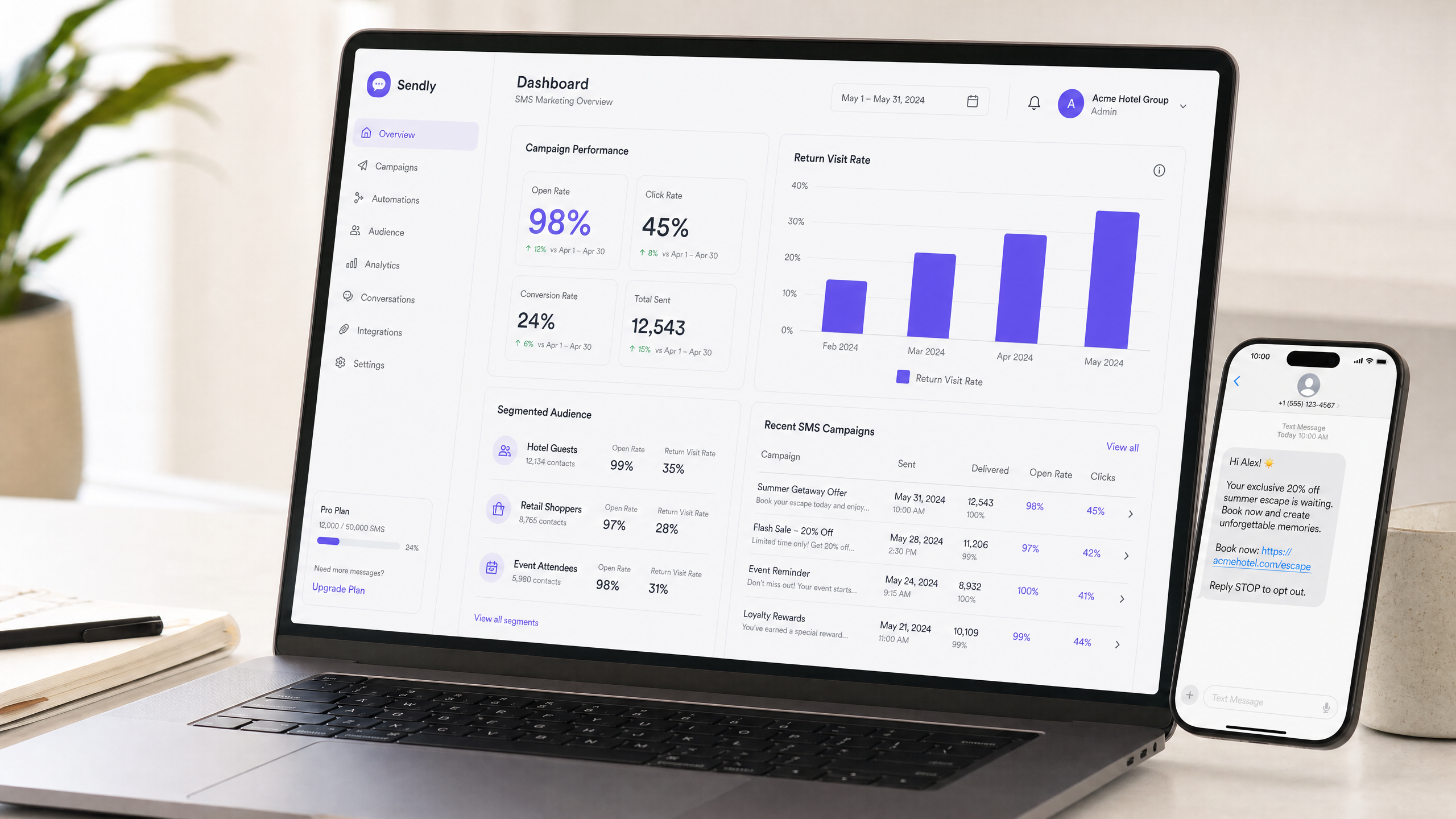
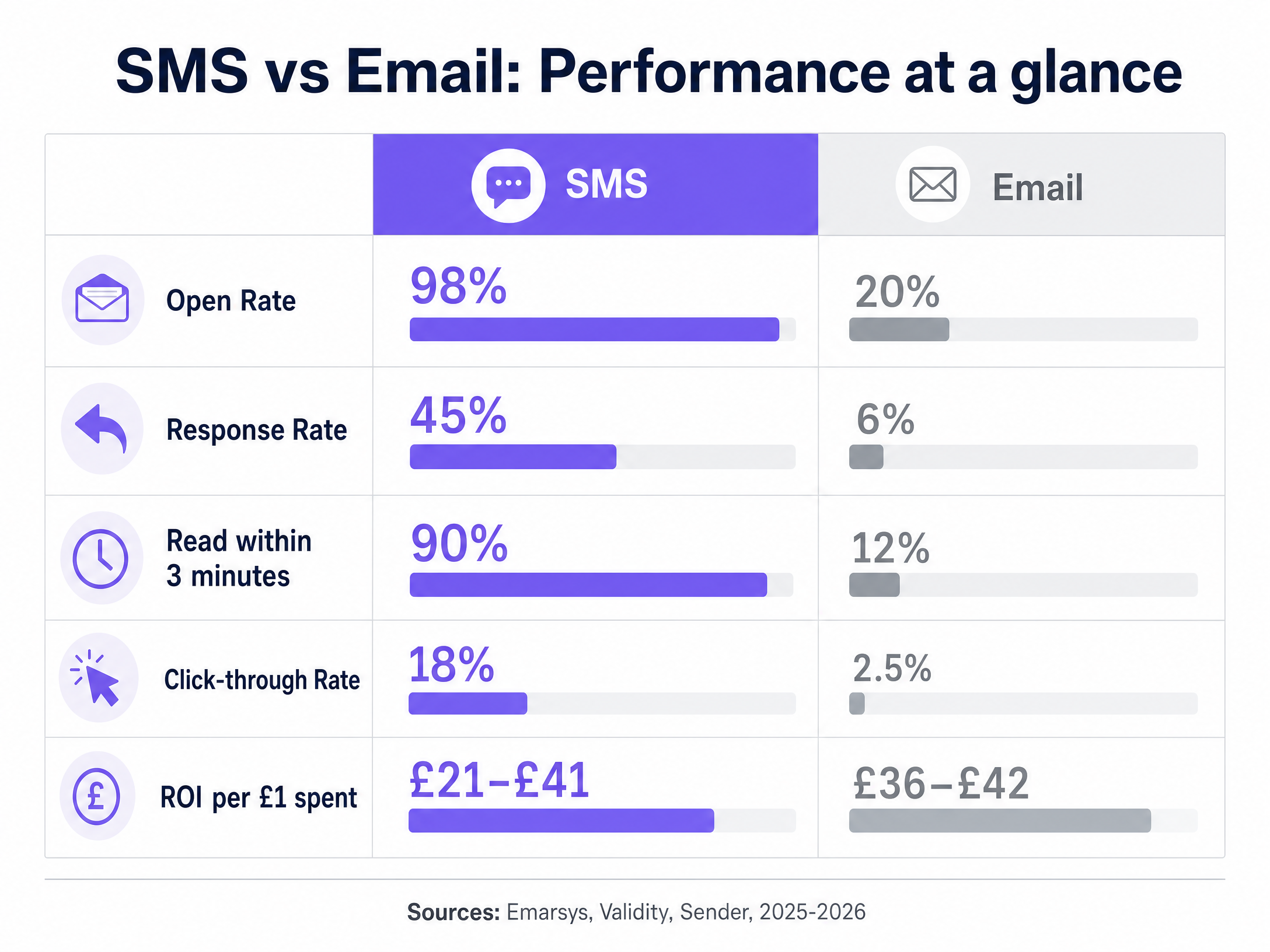
Recent SMS marketing news highlights a structural shift in how venues engage their audiences. With email open rates stagnating at 20% and third-party cookies disappearing, SMS has emerged as the most reliable channel for driving return visits, delivering a 98% open rate and a £21 to £41 return on every £1 spent. This guide details how IT managers and venue operations directors can use Purple Engage to capture verified first-party phone data at the point of Guest WiFi connection, build compliant audience segments, and automate SMS campaigns that drive measurable revenue. We cover the technical architecture required to integrate this capability over existing hardware from Cisco Meraki, HPE Aruba, and Juniper Mist, alongside strict GDPR compliance workflows. You will learn how to transition from anonymous footfall to a known, contactable audience capable of generating a 22% uplift in return visits.
Technical Deep-Dive
The foundation of an effective SMS marketing programme is identity resolution at the network edge. When a user connects to your Guest WiFi, the network must capture and verify their identity before granting access. This is achieved through a cloud-based captive portal overlay that integrates with your existing wireless LAN controllers.
Identity Capture and Verification
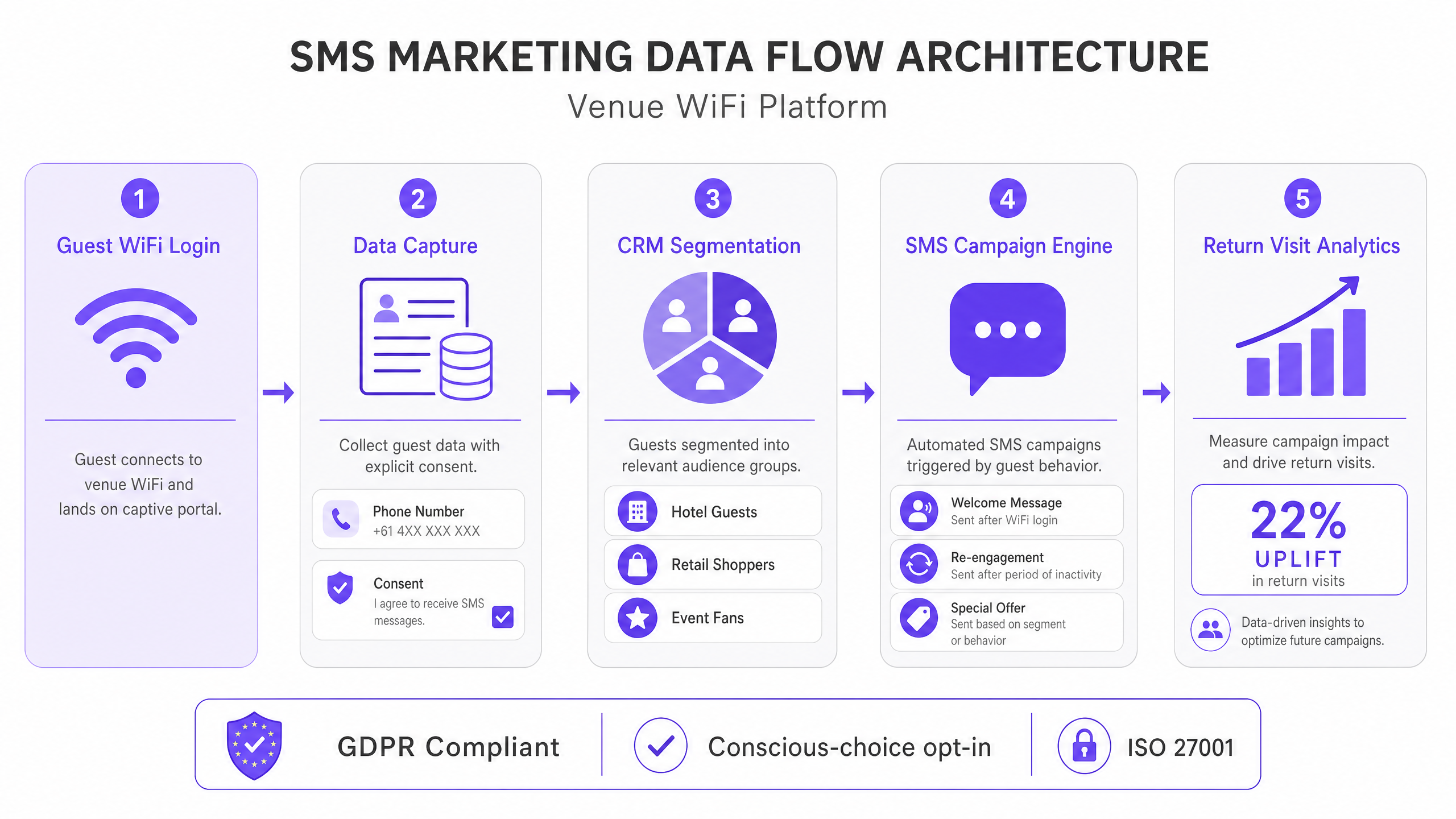
When a user selects the Guest WiFi SSID, the wireless controller redirects their HTTP request to the Purple captive portal via RADIUS authentication. The portal presents a custom-branded login interface requesting the user's phone number. To ensure data hygiene, the system can enforce SMS verification, sending a one-time passcode (OTP) to the provided number. This mechanism guarantees that the phone number entering your CRM is active and belongs to the user attempting to connect.
Hardware Integration
Purple operates as a hardware-agnostic cloud overlay. It integrates natively with enterprise access points and controllers from Cisco Meraki, HPE Aruba, Ruckus, Juniper Mist, Ubiquiti UniFi, Cambium, Extreme Networks, and Fortinet. This architecture eliminates the need for rip-and-replace hardware upgrades. Configuration involves updating the RADIUS server settings on your wireless controller to point to Purple's cloud infrastructure and configuring the walled garden entries to allow access to the captive portal and SMS gateway APIs before full authentication.
The Data Flow Architecture
Once the user authenticates, Purple captures the device MAC address and associates it with the verified phone number. This creates a persistent identity profile. Subsequent visits by the same device are automatically logged without requiring re-authentication, building a rich behavioural profile including visit frequency, dwell time, and cross-venue movement. This data flows into the Purple Engage segmentation engine, allowing you to trigger SMS campaigns based on precise physical behaviour.
Implementation Guide
Deploying an SMS marketing capability requires coordination between IT, marketing, and legal teams. Follow this structured approach to implement the solution effectively.
Phase 1: Network Configuration
Configure your wireless infrastructure to route Guest WiFi authentication through Purple. For a Cisco Meraki deployment, this involves setting the Splash page type to 'Click-through' and configuring the Custom splash URL to point to your Purple portal instance. Ensure your walled garden includes the necessary domains for SMS delivery and authentication.
Phase 2: Portal Design and Consent Workflow
Design the captive portal to prioritise phone number capture. The interface must present a clear value exchange, explaining why the user should provide their number. Implement a conscious-choice opt-in mechanism for SMS marketing. This requires an unticked checkbox accompanied by explicit consent language. Do not make marketing consent a condition of WiFi access; users must be able to connect while declining marketing communications to remain compliant.
Phase 3: Segmentation Strategy
Configure the Purple Engage engine to automatically categorise users based on their connection data. Build three foundational segments: New Visitors (first connection within 30 days), Lapsed Visitors (no connection for 60 days), and High-Frequency Visitors (more than three connections in 90 days). These segments form the basis of your automated campaign triggers.
Phase 4: Campaign Automation
Set up automated SMS sequences linked to your segments. Configure a welcome message triggered 24 hours after a first visit, a re-engagement offer triggered at day 60 of inactivity, and a loyalty reward for high-frequency visitors. Ensure every message includes a clear call to action and an automated opt-out mechanism (e.g., 'Reply STOP to unsubscribe').
Best Practices
Industry-standard recommendations for managing an SMS marketing programme focus on relevance, timing, and compliance.
Maintain Message Relevance
SMS is an intimate channel. Treat it with respect. A 98% open rate means your message will be seen, but it also means irrelevant messages will cause immediate annoyance. Use the behavioural data captured by Purple to personalise the content. Reference the specific venue the user visited or tailor the offer to their visit frequency. A generic broadcast message to your entire database will result in high opt-out rates.
Control Send Frequency
Limit your automated campaigns to prevent frequency fatigue. Start with a maximum of two messages per user per month. Monitor your unsubscribe rates closely. If the opt-out rate exceeds 1% per campaign, reduce your frequency or refine your segmentation criteria.
Prioritise Compliance
Adhere strictly to regional regulations such as GDPR in Europe or the TCPA in the United States. Maintain clear records of consent, including the timestamp and IP address of the opt-in event. Automate the processing of opt-out requests to ensure immediate removal from active segments. Purple's ISO 27001 certified platform manages these compliance workflows natively.
Troubleshooting & Risk Mitigation
Common failure modes in SMS marketing deployments typically stem from poor data hygiene or aggressive campaign tactics.
Low Opt-In Rates
If your portal is capturing phone numbers but users are not opting into marketing, review your value exchange. Ensure the benefits of subscribing (e.g., exclusive offers, priority access) are clearly communicated alongside the opt-in checkbox. Avoid overly legalistic language in the primary call to action, reserving detailed terms for the linked privacy policy.
High Unsubscribe Rates
Spikes in opt-outs indicate that your messages are either too frequent or irrelevant. Review your segmentation logic. Ensure you are not sending promotional offers to users who have recently visited the venue, as this demonstrates a lack of contextual awareness. Refine your triggers to ensure messages are timely and valuable.
SMS Delivery Failures
If SMS messages are failing to deliver, investigate your data capture process. Implement SMS OTP verification during the login flow to prevent users from entering fake numbers. This adds a slight friction point to the login process but guarantees the integrity of your marketing database.
ROI & Business Impact
The business case for SMS marketing is built on the conversion of anonymous footfall into measurable revenue.
Measuring Success
The primary metric for success is the return visit rate. Purple's analytics platform allows you to track the physical return of users who received an SMS campaign compared to a control group of non-subscribers. This closed-loop attribution proves the direct impact of the channel on venue footfall.
Expected Outcomes
Venues implementing a structured SMS re-engagement strategy typically observe a 22% increase in return visits within the first six months. The high open rate and immediacy of SMS make it highly effective for time-sensitive promotions, such as filling empty restaurant tables or driving footfall during off-peak retail hours. When executed correctly, SMS marketing transforms Guest WiFi from an IT cost centre into a measurable revenue driver.
Key Definitions
Captive Portal
A web page that a user is prompted to view and interact with before access is granted to a public WiFi network. Used to capture data and consent.
IT teams deploy captive portals to manage network access and capture first-party data for marketing purposes.
Conscious-choice Opt-in
A consent mechanism where the user must actively take an action, such as ticking an empty box, to agree to receive marketing communications.
Required for GDPR compliance; pre-ticked boxes or implied consent are legally invalid for SMS marketing.
First-party Data
Information a company collects directly from its customers or audience, rather than purchasing it from a third-party broker.
Capturing phone numbers via Guest WiFi builds a highly valuable first-party data asset that is immune to third-party cookie deprecation.
Hardware-agnostic
Software or services that are designed to function across different hardware platforms and vendor ecosystems.
Purple's cloud overlay is hardware-agnostic, allowing venues to deploy SMS marketing without replacing their existing Cisco Meraki or HPE Aruba access points.
MAC Address
A unique identifier assigned to a network interface controller for use as a network address in communications within a network segment.
Used by Purple to anonymously track device behaviour and visit frequency across a venue, linking physical presence to the verified phone number.
RADIUS
Remote Authentication Dial-In User Service. A networking protocol that provides centralised Authentication, Authorisation, and Accounting management.
IT configures the wireless LAN controller to communicate with Purple's RADIUS servers to manage Guest WiFi access and portal redirection.
RevPAR
Revenue Per Available Room. A performance metric in the hotel industry that is calculated by dividing a hotel's total guestroom revenue by the room count and the number of days in the period being measured.
Driving return visits through SMS marketing directly improves a hotel's RevPAR by increasing direct bookings.
Walled Garden
A limited environment that controls the user's access to web content and services before they have fully authenticated on the network.
IT must configure the walled garden to allow the user's device to reach the Purple captive portal and any required SMS API endpoints during the login process.
Worked Examples
A 200-room hotel needs to increase direct bookings from previous guests. They currently offer free Guest WiFi but do not capture contact details for marketing purposes. How should they deploy SMS marketing to achieve this?
The IT team configures their existing Cisco Meraki network to route Guest WiFi authentication through Purple Engage. They design a captive portal that requests a phone number and includes a conscious-choice opt-in for SMS marketing. The marketing team builds a 'Lapsed Guest' segment in Purple, targeting users who connected to the WiFi more than 60 days ago. They configure an automated SMS campaign offering a 15% discount on direct bookings, triggered when a user enters the Lapsed Guest segment.
A multi-site retail chain with 50 locations wants to drive footfall during quiet afternoon periods. They have a database of 10,000 opted-in phone numbers captured via Guest WiFi. How can they use SMS to achieve this?
The marketing team uses Purple's segmentation engine to identify users who frequently visit during peak weekend hours. They create a targeted SMS campaign offering a time-limited promotion (e.g., 'Flash Sale - 20% off today between 2 PM and 4 PM'). The campaign is scheduled for delivery at 1 PM on a Tuesday. The analytics team tracks the MAC addresses of the recipients to measure how many physically return to a store during the promotional window.
Practice Questions
Q1. A stadium operations director wants to send an SMS offer for merchandise to all fans attending a specific match. They plan to make SMS opt-in mandatory to access the free stadium WiFi. Is this the correct approach?
Hint: Consider the requirements for explicit consent under GDPR and the impact on data quality.
View model answer
No, this approach violates GDPR requirements for freely given consent. Making marketing consent a condition of accessing a service (like free WiFi) invalidates the consent. The stadium must offer a conscious-choice opt-in, allowing fans to access the WiFi even if they decline marketing messages. Furthermore, forcing opt-ins often results in users providing fake numbers, degrading the quality of the CRM database.
Q2. Your IT team is replacing older wireless access points with new Juniper Mist hardware. How will this affect your existing Purple Engage SMS marketing deployment?
Hint: Consider the architecture of the Purple platform and where the intelligence resides.
View model answer
The hardware replacement will not disrupt the SMS marketing capability. Purple operates as a hardware-agnostic cloud overlay. The IT team simply needs to configure the new Juniper Mist controllers to point to Purple's RADIUS servers and update the walled garden settings. The captive portal, segmentation rules, and automated SMS campaigns remain intact in the cloud.
Q3. A retail venue sends a monthly SMS newsletter to 5,000 opted-in shoppers. The unsubscribe rate for the latest campaign was 3.5%. What immediate action should the marketing team take?
Hint: Evaluate the unsubscribe rate against industry benchmarks and consider the relevance of a generic newsletter.
View model answer
An unsubscribe rate of 3.5% is significantly above the acceptable 1% threshold, indicating that the audience finds the messages irrelevant or annoying. The team should immediately pause the generic monthly newsletter. They must switch to a segmented approach, using Purple's behavioural data to trigger highly relevant messages based on specific shopper actions (e.g., a re-engagement offer for lapsed visitors) rather than broadcasting the same content to the entire database.