Vehicle & fleet WiFi architecture planner
Calculate concurrent device capacity, cellular 5G and satellite data consumption, QoS priority tiers, and Purple captive portal ROI for connected fleets.
Recommended hardware & backhaul specification
Automotive grade DC power input (9 - 36V) with ignition sensing, sleep timers, and dual active SIM slots for carrier redundancy.
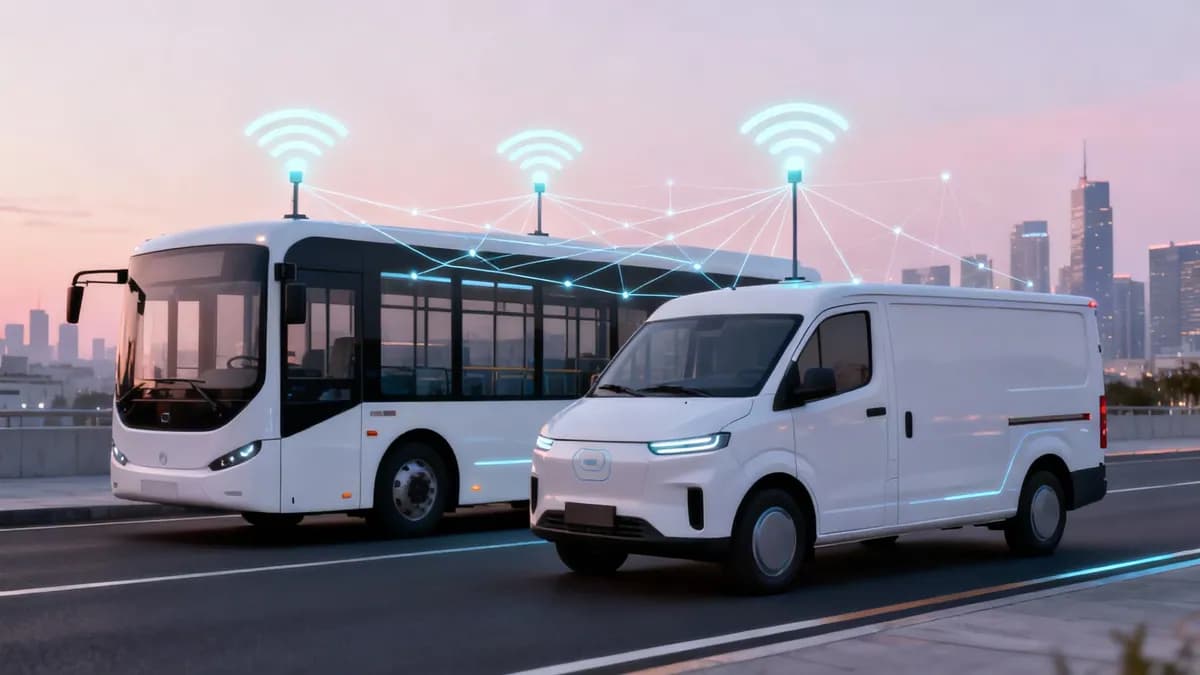
Roof-mounted aerodynamic housing with low-loss RF cabling to maximise signal gain in fringe cellular and satellite footprints.
Estimated latency: 25 - 45 ms. Features automated sub-second packet steering across healthy links.
Deploy secure passenger WiFi across your vehicle fleet
Purple provides cloud-managed guest WiFi captive portals, content filtering, and passenger movement analytics compatible with Cradlepoint, Peplink, Cisco, and Teltonika vehicle gateways.
In its simplest form, WiFi for vehicles takes a mobile signal - such as 4G, 5G, or satellite - and converts it into a stable, local wireless network inside the vehicle. This enables passengers, crew members, and onboard IoT devices to remain connected without interruption. Reliable onboard connectivity has transformed vehicle travel from lost transit time into productive work and entertainment time for modern transport operators.
Key Takeaways: WiFi for vehicles and connected fleets
- Vehicle WiFi definition: In-vehicle WiFi converts cellular 4G/5G or satellite signals into a stable local wireless network for passengers, crew, and onboard operational systems.
- Core architecture options: Ruggedised 5G cellular gateways provide primary connectivity, while multi-access point mesh WiFi extends coverage across multi-carriage trains and long coaches.
- Remote fleet coverage: Direct-to-satellite links (such as LEO satellite terminals) ensure reliable uptime for rural transit routes, maritime ferries, and remote logistics operations.
- Passpoint & zero-trust security: Passpoint (802.11u) enables seamless, encrypted auto-connect for passengers, while zero-trust network segmentation isolates passenger traffic from onboard telemetry and payment terminals.
- Fleet intelligence & revenue: Integrated guest portals and location analytics provide transport operators with real-time passenger demographics, footfall flow, and dwell metrics. Learn more in our WiFi Analytics Guide.
Why in-vehicle WiFi is no longer a luxury
The modern vehicle has evolved from simple transit into a mobile office, entertainment hub, and operational asset. Consistent connectivity on the move is an expectation for passengers and fleet managers alike.
Providing high-quality WiFi is a direct investment in passenger satisfaction and operational efficiency. Whether running hotel shuttles, public bus routes, corporate transport, or regional rail lines, passengers expect a smooth digital experience. This guide details the essential technologies, security protocols, and operational benefits of vehicle connectivity.
The driving forces behind vehicle connectivity
Several commercial and consumer trends drive the adoption of in-vehicle WiFi networks:
- Remote work productivity: Business commuters require secure connectivity to complete tasks, access enterprise cloud systems, and attend video meetings during transit.
- On-demand entertainment: Passengers expect seamless video streaming, social media access, and real-time transit updates throughout their journey.
- Fleet operational intelligence: Onboard telemetry, GPS tracking, passenger counting, and electronic ticketing systems depend on continuous network backhaul to cloud servers. Learn more about transport and logistics solutions.
Understanding the core technologies
Delivering reliable wireless coverage in motion requires matching the right network hardware to your fleet profile. Different vehicle types - from single vans to multi-carriage trains - require specific deployment architectures.
Industrial 5G cellular gateways
A cellular gateway sits at the heart of most vehicle WiFi systems. Unlike consumer hotspots, enterprise cellular gateways feature ruggedised enclosures designed to withstand vehicle vibration, temperature extremes, and voltage fluctuations. Connected to external roof-mounted MIMO antennas, these devices capture 4G and 5G signals to broadcast local WiFi inside the vehicle.
Scaling connectivity with mesh networks
For longer vehicles like articulated buses, double-decker coaches, or passenger rail cars, a single gateway may leave coverage gaps. Deploying a mesh WiFi network with multiple access points (APs) connected to the primary gateway ensures blanket coverage without dead zones. Fast-roaming protocols (802.11k/v/r) allow devices to transition between access points without dropping connections.
Reaching beyond ground coverage with satellite
In rural, mountainous, or maritime routes where mobile masts are sparse, satellite terminals provide reliable internet backhaul. Modern Low Earth Orbit (LEO) satellite links deliver low-latency bandwidth, ensuring unbroken connectivity for long-distance transport and specialized fleets.
Comparing in-vehicle WiFi technologies
Review the comparison table below to determine the ideal hardware architecture for your vehicle fleet:
| Technology | Deployment Model | Best Enterprise Use Case | Key Advantage | Primary Limitation |
|---|---|---|---|---|
| Cellular 5G Gateway | Single or dual-SIM industrial 5G router with external MIMO roof antennas | Buses, corporate shuttles, delivery fleets, and taxis | Fast deployment, low initial hardware cost, high throughput | Dependent on cellular mast density in rural areas |
| Mesh Vehicle WiFi | Interconnected access points connected to a central gateway | Multi-carriage passenger trains, long articulated coaches, and light rail | Eliminates signal dead zones across large vehicles | Higher installation complexity and cable routing requirements |
| Satellite Connectivity (LEO) | Low Earth Orbit satellite receiver mounted on vehicle roof | Remote tour buses, long-distance logistics, cross-country rail, and ferries | Continuous global coverage regardless of ground masts | Higher data plan cost and potential line-of-sight obstructions |
Securing your mobile network
Vehicle WiFi security requires a multi-layered defense model. Because passengers, crew, and onboard telemetry share space on a moving vehicle, relying on a simple shared password creates severe data security risks.
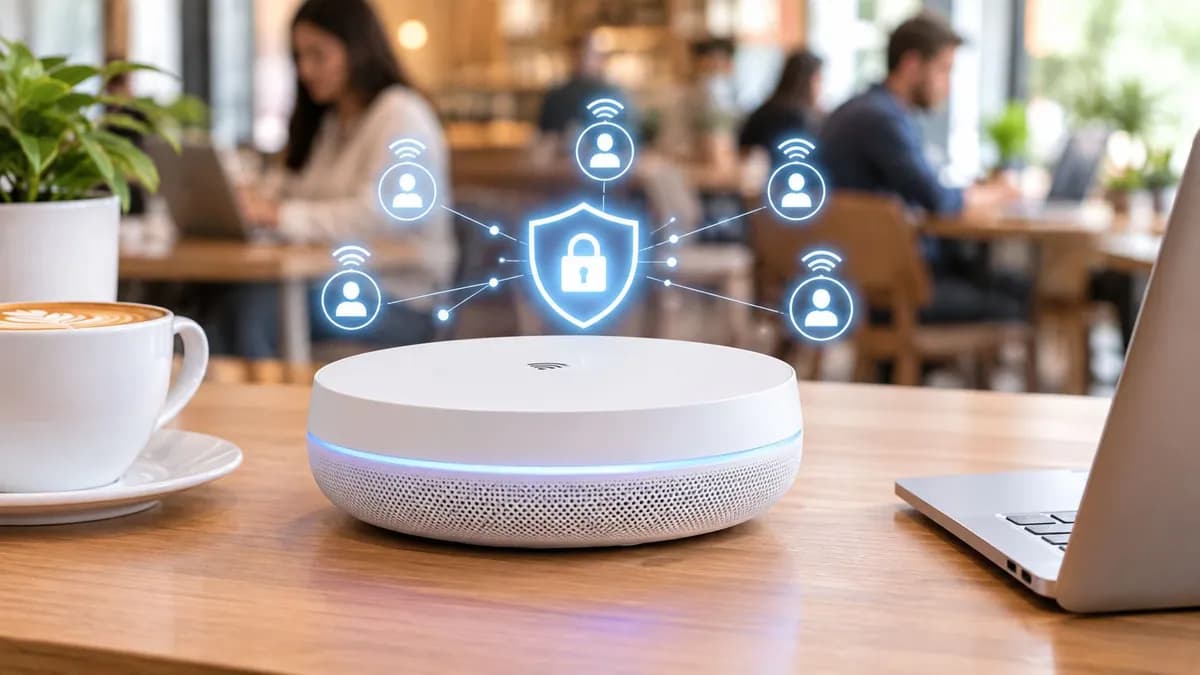
Passpoint and encrypted guest access
Passpoint (802.11u) provides automated, enterprise-grade encryption for passenger WiFi. Devices holding valid profiles connect automatically to vehicle networks without requiring open splash screens or unencrypted passwords. Learn how to configure splash pages in our captive portal guide.
Zero-trust network segmentation
To protect sensitive infrastructure, onboard networks must separate passenger traffic from vehicle operations. Using VLANs and zero-trust access control ensures guest devices cannot interact with payment processing systems, CCTV feeds, or vehicle telemetry.
Location analytics and passenger intelligence
Deploying guest WiFi across your fleet unlocks valuable operational insights through location analytics. Transport managers can measure real-time passenger occupancy, track dwell times at stops, and analyze travel patterns across routes.
Integrated captive portals also allow operators to broadcast journey updates, promote partner offers, and collect feedback directly from travelers. Explore complete details in our WiFi analytics guide.
Frequently asked questions about WiFi for vehicles
How does WiFi work in moving vehicles and passenger fleets?
Vehicle WiFi uses a ruggedised 4G/5G cellular gateway or satellite receiver connected to external roof antennas. The gateway converts mobile signals into a local WiFi network inside the vehicle, allowing passengers and staff to browse the internet, stream media, and access cloud apps seamlessly while traveling.
What is the difference between cellular gateways and satellite WiFi for fleets?
Cellular 5G gateways rely on ground-based mobile towers, offering low latency and high bandwidth in urban and suburban areas. Satellite WiFi uses low Earth orbit (LEO) terminals to maintain internet connectivity in remote, rural, or off-grid locations where mobile tower signals cannot reach.
How do transport operators secure public guest WiFi on vehicles?
Transport operators secure onboard WiFi by implementing Passpoint (802.11u) for automatic encrypted user authentication, isolating guest networks from internal telemetry via VLAN segmentation, and applying cloud firewall rules to prevent unauthorized access.
How can venue and fleet operators monetise vehicle WiFi?
Operators can monetise vehicle WiFi by delivering targeted sponsorship advertising on custom captive portals, offering premium high-speed bandwidth tiers, and using aggregated location analytics to optimise route schedules and retail partnerships.