
MAC Address Authentication কী? এটি কখন ব্যবহার করবেন এবং কখন এড়িয়ে চলবেন
এই নির্ভরযোগ্য টেকনিক্যাল রেফারেন্স নির্দেশিকাটি এন্টারপ্রাইজ WiFi পরিবেশে MAC address authentication নিয়ে আলোচনা করে - কীভাবে Layer 2-এ RADIUS-ভিত্তিক MAC authentication কাজ করে, এর সহজাত নিরাপত্তা দুর্বলতাগুলি (MAC spoofing এবং OS-লেভেল MAC randomisation-এর প্রভাব সহ), এবং সুনির্দিষ্ট অপারেশনাল প্রেক্ষাপট যেখানে এটি IoT এবং হেডলেস ডিভাইসগুলি পরিচালনা করার জন্য একটি কার্যকর টুল হিসেবে রয়ে গেছে। এটি হসপিটালিটি, রিটেইল, হেলথকেয়ার এবং পাবলিক-সেক্টর ভেন্যু জুড়ে IT ম্যানেজার এবং নেটওয়ার্ক আর্কিটেক্টদের জন্য বাস্তব-জগতের কার্যকরী উদাহরণ, সিদ্ধান্ত নেওয়ার ফ্রেমওয়ার্ক এবং Purple-এর গেস্ট WiFi ও অ্যানালিটিক্স প্ল্যাটফর্মের ইন্টিগ্রেশন কনটেক্সট সহ অ্যাকশনেবল ডিপ্লয়মেন্ট নির্দেশিকা প্রদান করে।
এই গাইডটি শুনুন
পডকাস্ট ট্রান্সক্রিপ্ট দেখুন
আমাদের মূল সিরিজের অংশ: Enterprise WiFi Security Guide →
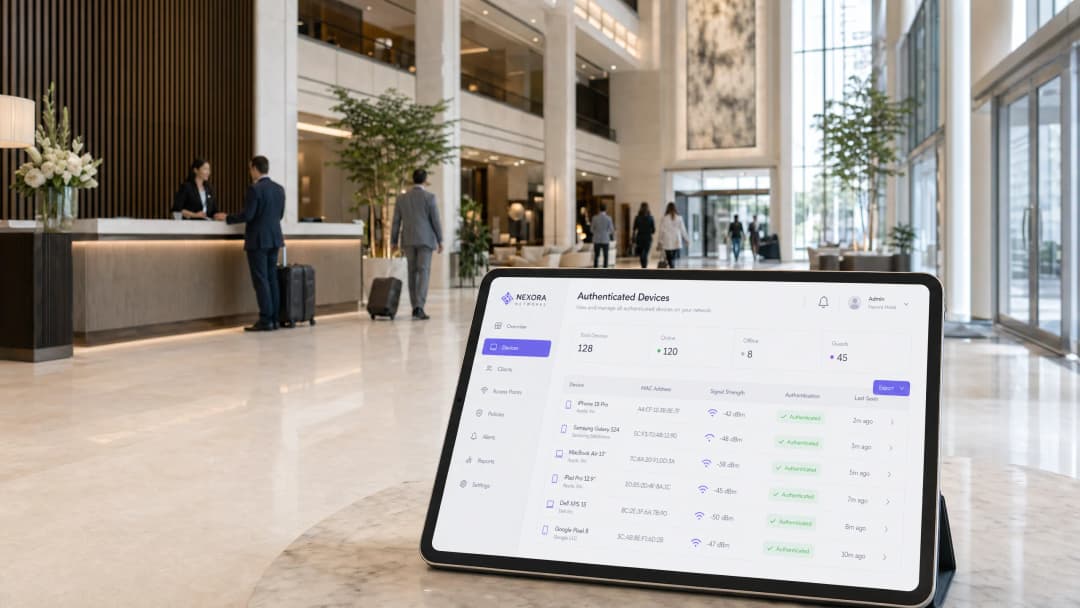
এক্সিকিউটিভ সামারি
জটিল ভেন্যু পরিচালনা করছেন এমন এন্টারপ্রাইজ আইটি লিডারদের জন্য - বিস্তৃত হোটেল প্রোপার্টি এবং রিটেইল চেইন থেকে শুরু করে স্টেডিয়াম এবং পাবলিক সেক্টরের সুবিধাগুলো পর্যন্ত - অনিয়ন্ত্রিত ডিভাইসগুলোর বৃদ্ধি সত্ত্বেও নেটওয়ার্ক অ্যাক্সেস সুরক্ষিত করা একটি অত্যন্ত গুরুত্বপূর্ণ অপারেশনাল চ্যালেঞ্জ। একটি একক সিকিউরিটি প্রোটোকল হিসেবে MAC অ্যাড্রেস অথেন্টিকেশনের কিছু মৌলিক সীমাবদ্ধতা থাকলেও, এটি IoT ডিভাইস, লিগ্যাসি হার্ডওয়্যার এবং হেডলেস সিস্টেমগুলোর জন্য একটি অপরিহার্য অনবোর্ডিং প্রক্রিয়া হিসেবে রয়ে গেছে যা 802.1X বা Captive Portal সমর্থন করতে পারে না।
এই গাইডটি RADIUS ভিত্তিক MAC অথেন্টিকেশনের আর্কিটেকচার বিশ্লেষণ করে, এর সহজাত সিকিউরিটি দুর্বলতাগুলোর বিপরীতে এর অপারেশনাল উপযোগিতা মূল্যায়ন করে। অপারেশন সহজ করার জন্য কখন MAC অথেন্টিকেশন প্রয়োগ করতে হবে, ঝুঁকি কমানোর জন্য কখন এটি এড়িয়ে চলতে হবে এবং কীভাবে আধুনিক এন্টারপ্রাইজ WiFi প্ল্যাটফর্মগুলো কানেক্টিভিটির সাথে আপস না করে শক্তিশালী সিকিউরিটি বজায় রাখতে এই নিয়ন্ত্রণগুলোকে একীভূত করে তা আমরা বিশদভাবে আলোচনা করেছি। মূল নীতিটি হলো: MAC অথেন্টিকেশন একটি নেটওয়ার্ক অ্যাক্সেস কন্ট্রোল মেকানিজম, কোনো সিকিউরিটি প্রোটোকল নয়। সেই অনুযায়ী এটি ব্যবহার করুন।
টেকনিক্যাল ডিপ-ডাইভ
MAC অ্যাড্রেস অথেন্টিকেশন যেভাবে কাজ করে
MAC (Media Access Control) অ্যাড্রেস অথেন্টিকেশন OSI মডেলের লেয়ার ২-এ কাজ করে। IEEE 802.1X এর মতো নয় - যার জন্য ক্লায়েন্ট ডিভাইসে একটি সাপ্লিক্যান্টের প্রয়োজন হয় PEAP-MSCHAPv2 বা EAP-TLS এর মতো EAP পদ্ধতিগুলো ব্যবহার করে ক্রেডেন্সিয়াল নেগোশিয়েট করার জন্য - MAC অথেন্টিকেশন সম্পূর্ণভাবে ডিভাইসের হার্ডওয়্যার অ্যাড্রেসের ওপর নির্ভর করে যা আইডেন্টিফায়ার এবং ক্রেডেন্সিয়াল উভয় হিসেবে কাজ করে।
অথেন্টিকেশন ফ্লোটি এইভাবে কাজ করে: যখন কোনো ডিভাইস একটি ওয়্যারলেস অ্যাক্সেস পয়েন্ট (AP) এর সাথে যুক্ত হওয়ার চেষ্টা করে, তখন AP অ্যাসোসিয়েশন রিকোয়েস্টটিকে ইন্টারসেপ্ট করে এবং ক্লায়েন্টের MAC অ্যাড্রেসটি (ম্যানুফ্যাকচারার দ্বারা নেটওয়ার্ক ইন্টারফেস কার্ড (NIC) কে দেওয়া অনন্য ৪৮-বিট আইডেন্টিফায়ার) বের করে নেয়। AP, একটি RADIUS ক্লায়েন্ট হিসেবে কাজ করে, RADIUS সার্ভারে একটি Access-Request মেসেজ ফরোয়ার্ড করে। একটি সাধারণ ইমপ্লিমেন্টেশনে, MAC অ্যাড্রেসটি ইউজারনেম এবং পাসওয়ার্ড উভয় হিসেবেই জমা দেওয়া হয়, সাধারণত কোনো ডিলিমিটার ছাড়াই ফর্ম্যাট করা হয় (যেমন A4CF12388E7F), যদিও ভেন্ডর ইমপ্লিমেন্টেশন ভিন্ন হতে পারে। RADIUS সার্ভার তার ব্যাকএন্ডে - সাধারণত একটি LDAP ডিরেক্টরি, Active Directory, বা একটি ডেডিকেটেড আইডেন্টিটি স্টোরে - কোয়েরি করে যাচাই করে যে MAC অ্যাড্রেসটি অ্যালাউলিস্টে আছে কিনা। যদি মিল পাওয়া যায়, একটি Access-Accept মেসেজ ফেরত পাঠানো হয়, AP নেটওয়ার্ক অ্যাক্সেস মঞ্জুর করে এবং ঐচ্ছিকভাবে একটি নির্দিষ্ট VLAN অ্যাসাইন করা যেতে পারে। যদি মিল না পাওয়া যায়, একটি Access-Reject ফেরত পাঠানো হয় এবং ডিভাইসটির অ্যাসোসিয়েশন প্রত্যাখ্যান করা হয় অথবা একটি সীমাবদ্ধ কোয়ারেন্টাইন VLAN-এ রাখা হয়।

সিকিউরিটি সীমাবদ্ধতা এবং দুর্বলতা
MAC authentication এর মৌলিক ত্রুটি হলো IEEE 802.11 ম্যানেজমেন্ট ফ্রেমের মধ্যে MAC অ্যাড্রেসগুলো ক্লিয়ারটেক্সট আকারে স্থানান্তরিত হয়। সাধারণ প্যাকেট অ্যানালাইসিস টুল - Wireshark, Kismet বা অনুরূপ কিছু সহ যেকোনো আক্রমণকারী কোনো সক্রিয় অনুপ্রবেশ ছাড়াই নেটওয়ার্কে যোগাযোগকারী বৈধ MAC অ্যাড্রেসগুলো পরোক্ষভাবে ক্যাপচার করতে পারে। একবার একটি বৈধ MAC অ্যাড্রেস চিহ্নিত হয়ে গেলে, আক্রমণকারী macchanger (Linux) বা বিল্ট-ইন অপারেটিং সিস্টেম ইউটিলিটির মতো টুল ব্যবহার করে তাদের নিজস্ব নেটওয়ার্ক কার্ডকে ক্যাপচার করা অ্যাড্রেসের সাথে মিলিয়ে স্পুফ করতে পারে।
যেহেতু RADIUS সার্ভার কোনো ক্রিপ্টোগ্রাফিক চ্যালেঞ্জ-রেসপন্স সম্পাদন করে না - এটি কেবল স্ট্রিংটি ডেটাবেস এন্ট্রির সাথে মিলছে কিনা তা যাচাই করে - তাই স্পুফ করা ডিভাইসটিকে ঠিক বৈধ ডিভাইসটির মতোই নেটওয়ার্কের সুযোগ-সুবিধা দেওয়া হয়। এটি কোনো তাত্ত্বিক আক্রমণ নয়; এর জন্য কোনো বিশেষজ্ঞ জ্ঞানের প্রয়োজন হয় না এবং এটি কার্যকর করতে দুই মিনিটেরও কম সময় লাগে।
তাছাড়া, MAC authentication ডেটা পেলোডের কোনো এনক্রিপশন প্রদান করে না। SSID-টি যদি WPA2-PSK, WPA3-SAE বা Opportunistic Wireless Encryption (OWE) দিয়ে সুরক্ষিত না থাকে, তবে সমস্ত ট্রাফিক ইন্টারসেপশনের জন্য ঝুঁকিপূর্ণ থেকে যায়। তাই MAC authentication-কে সর্বদা নেটওয়ার্ক অ্যাক্সেস কন্ট্রোল (NAC) এর একটি ফর্ম হিসেবে বুঝতে হবে, কোনো সিকিউরিটি বাউন্ডারি হিসেবে নয়।
MAC অ্যাড্রেস র্যান্ডমাইজেশনের ব্যাপক গ্রহণের ফলে একটি অতিরিক্ত অপারেশনাল জটিলতা দেখা দিয়েছে। Apple iOS 14 (2020) এ প্রতি-নেটওয়ার্ক ভিত্তিক র্যান্ডমাইজড MAC অ্যাড্রেস চালু করেছে, এবং Android এটিকে Android 10 এ অনুসরণ করেছে। Windows 11 ডিফল্টভাবে র্যান্ডমাইজেশন সক্রিয় করে। যখন একটি কনজিউমার ডিভাইস নেটওয়ার্কে সংযুক্ত হয়, তখন এটি তার হার্ডওয়্যার-বার্নড অ্যাড্রেসের পরিবর্তে একটি র্যান্ডমাইজড, ক্ষণস্থায়ী MAC অ্যাড্রেস প্রদর্শন করে। এটি সরাসরি এমন যেকোনো সিস্টেমকে ব্যাহত করে যা ফিরে আসা ব্যবহারকারীদের সনাক্ত বা অথেন্টিকেট করতে MAC অ্যাড্রেসের ওপর নির্ভর করে - যার মধ্যে Guest WiFi নেটওয়ার্কে Captive Portal এড়াতে ব্যবহৃত MAC ক্যাশিংও অন্তর্ভুক্ত।
আপনার নির্দিষ্ট সেটআপ নিয়ে কোনো প্রশ্ন আছে?
আমাদের টিম ৮০,০০০ ভেন্যুতে ভেন্যু অপারেটর, IT ম্যানেজার এবং নেটওয়ার্ক ইঞ্জিনিয়ারদের সাথে কাজ করে। একটি ২০ মিনিটের কল বুক করুন এবং আপনার মতো অন্যরা কীভাবে এর সমাধান করেছেন তা আমরা আপনাকে দেখাব।
ইমপ্লিমেন্টেশন গাইড
কখন MAC Authentication ব্যবহার করবেন
MAC authentication শুধুমাত্র সেই সমস্ত ডিভাইস ক্লাসের জন্য উপযুক্ত যেগুলোর আরও শক্তিশালী পদ্ধতিতে অথেন্টিকেট করার ক্ষমতা নেই। প্রধান ব্যবহারের ক্ষেত্রগুলো হলো:
| ডিভাইস ক্লাস | উদাহরণ | যৌক্তিকতা |
|---|---|---|
| হেডলেস IoT ডিভাইস | স্মার্ট টিভি, CCTV ক্যামেরা, এনভায়রনমেন্টাল সেন্সর | কোনো ব্রাউজার বা সাপ্লিক্যান্ট ক্ষমতা নেই |
| অপারেশনাল টেকনোলজি (OT) | HVAC কন্ট্রোলার, BMS, ডোর অ্যাক্সেস কন্ট্রোল প্যানেল | কোনো 802.1X সাপোর্ট ছাড়া লিগ্যাসি প্রোটোকল |
| লিগ্যাসি POS টার্মিনাল | পুরনো রিটেইল পেমেন্ট টার্মিনাল | শুধুমাত্র WPA2-PSK; MAC ফিল্টারিং একটি দুর্বল সেকেন্ডারি লেয়ার যুক্ত করে |
| ম্যানেজড ডিভাইস ফ্লিট | প্রিন্টার, VoIP ফোন, বারকোড স্ক্যানার | স্থিতিশীল, পরিচিত MAC অ্যাড্রেস; কেন্দ্রীয়ভাবে পরিচালিত |
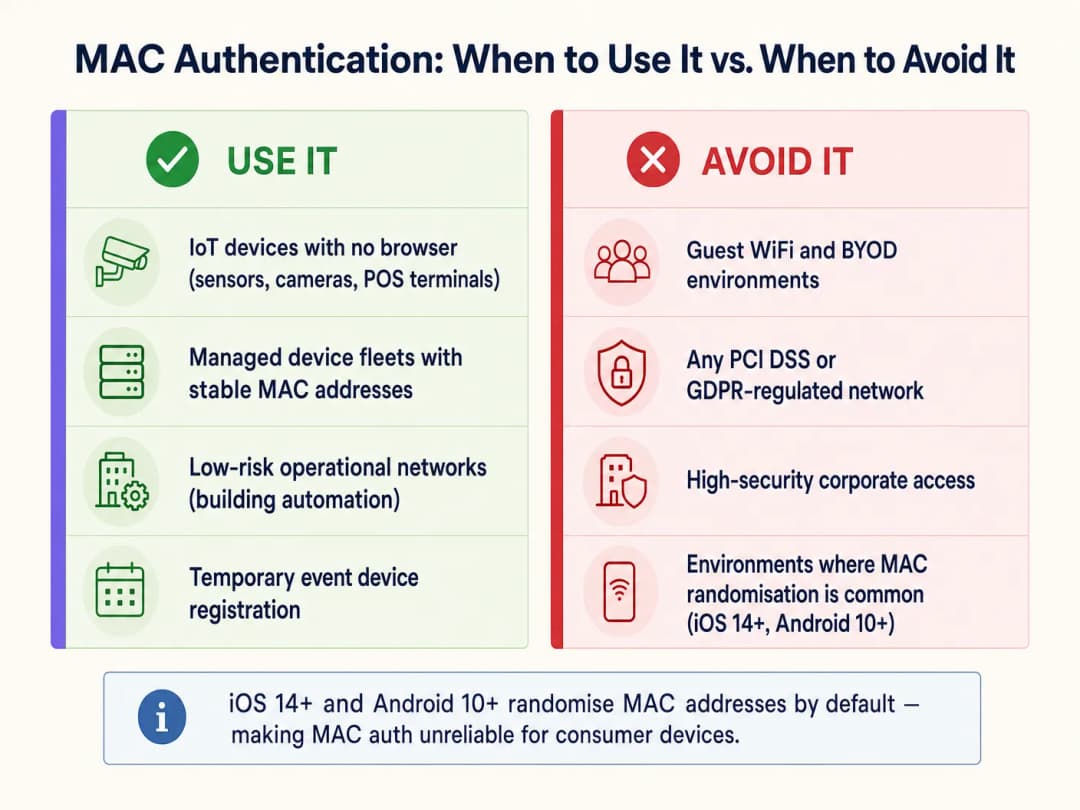
কখন MAC অথেন্টিকেশন এড়িয়ে চলবেন
IT আর্কিটেক্টদের অবশ্যই বেশ কয়েকটি জটিল পরিস্থিতিতে সক্রিয়ভাবে MAC অথেন্টিকেশন এড়িয়ে চলতে হবে:
গেস্ট WiFi এবং BYOD নেটওয়ার্ক। এটি বর্তমানে ভেন্যু অপারেটরদের মুখোমুখি হওয়া সবচেয়ে অপারেশনাল গুরুত্বপূর্ণ সমস্যা। আধুনিক মোবাইল অপারেটিং সিস্টেমগুলি ডিফল্টরূপে MAC অ্যাড্রেস র্যান্ডমাইজ করে। যদি একটি Guest WiFi স্থাপনা ফিরে আসা ভিজিটরদের নিরবচ্ছিন্ন রি-অথেন্টিকেশন প্রদানের জন্য MAC ক্যাশিংয়ের উপর নির্ভর করে, তবে এটি বেশিরভাগ আধুনিক ডিভাইসের ক্ষেত্রে ব্যর্থ হবে। ভিজিটরের ডিভাইস প্রতিটি ভিজিটে একটি নতুন র্যান্ডম MAC প্রদর্শন করে, নেটওয়ার্ক তাদের একটি নতুন ব্যবহারকারী হিসাবে বিবেচনা করে এবং তারা প্রতিবার captive portal ব্যবহার করতে বাধ্য হয়। এটি ব্যবহারকারীর অভিজ্ঞতাকে ব্যাহত করে এবং WiFi Analytics প্ল্যাটফর্মগুলিতে ফিরে আসা ভিজিটরের ডেটা নষ্ট করে। এর সমাধান হলো Passpoint (Hotspot 2.0) বা পারসিস্টেন্ট সেশন টোকেন সহ একটি সুরক্ষিত captive portal ব্যবহার করা।
উচ্চ-নিরাপত্তার কর্পোরেট নেটওয়ার্ক। সংবেদনশীল কর্পোরেট ডেটা হ্যান্ডেল করে এমন যেকোনো নেটওয়ার্ক সেগমেন্টে ন্যূনতম EAP-TLS (সার্টিফিকেট-ভিত্তিক) বা PEAP-MSCHAPv2 সহ 802.1X ব্যবহার করা আবশ্যক। বিস্তারিত স্থাপনার নির্দেশনার জন্য, How to Set Up Enterprise WiFi on iOS and macOS with 802.1X দেখুন। MAC অথেন্টিকেশন অভ্যন্তরীণ হুমকি বা কর্পোরেট অবকাঠামোতে লক্ষ্যযুক্ত আক্রমণের বিরুদ্ধে কোনো অর্থপূর্ণ সুরক্ষা প্রদান করে না।
PCI-DSS দ্বারা নিয়ন্ত্রিত পরিবেশ। PCI DSS v4.0 রিকোয়ারমেন্ট 8 কার্ডহোল্ডার ডেটা এনভায়রনমেন্ট (CDE)-এর মধ্যে থাকা সমস্ত সিস্টেমের জন্য শক্তিশালী অথেন্টিকেশন নিয়ন্ত্রণ বাধ্যতামূলক করে। MAC অথেন্টিকেশন শক্তিশালী অথেন্টিকেশনের সংজ্ঞার সাথে মেলে না এবং পেমেন্ট ডেটা স্পর্শ করে এমন কোনো সিস্টেমের জন্য প্রাথমিক অ্যাক্সেস কন্ট্রোল হিসেবে কাজ করতে পারে না। VLAN সেগমেন্টেশন CDE থেকে MAC-অথেন্টিকেটেড ডিভাইসগুলিকে আলাদা করতে পারে, তবে পেমেন্ট নেটওয়ার্কটিতে অবশ্যই 802.1X বা সমমানের অথেন্টিকেশন ব্যবহার করতে হবে।
GDPR দ্বারা নিয়ন্ত্রিত ডেটা পরিবেশ। ব্যক্তিগত ডেটা আইডেন্টিফায়ার হিসাবে MAC অ্যাড্রেস সংরক্ষণ করার জন্য (যা GDPR এর Article 4 এর অধীনে হতে পারে) একটি আইনি ভিত্তি এবং উপযুক্ত নিরাপত্তা ব্যবস্থার প্রয়োজন। ব্যক্তিগত ডেটা প্রসেস করে এমন নেটওয়ার্কগুলিতে অথেন্টিকেশন ক্রেডেনশিয়াল হিসাবে MAC অ্যাড্রেস ব্যবহার করা নিরাপত্তা এবং কমপ্লায়েন্স উভয় ঝুঁকিই তৈরি করে।
স্থাপনার সর্বোত্তম অনুশীলনসমূহ
যেসব ডিভাইস ক্লাসের জন্য MAC অথেনটিকেশনের প্রয়োজন হয়, সেগুলোর জন্য এটি বাস্তবায়নের সময় নিচে দেওয়া ভেন্ডর-নিরপেক্ষ পদ্ধতিগুলো কোনোভাবেই আপসযোগ্য নয়: VLAN সেগমেন্টেশন। MAC-অথেনটিকেটেড ডিভাইসগুলোকে কখনোই কর্পোরেট ইউজার, সার্ভার বা পেমেন্ট সিস্টেমের সাথে একই VLAN-এ রাখবেন না। এগুলোকে একটি ডেডিকেটেড IoT VLAN-এ অ্যাসাইন করুন যেখানে কঠোর ফায়ারওয়াল ACL থাকবে, যা শুধুমাত্র তাদের প্রয়োজনীয় নির্দিষ্ট সার্ভিসগুলোতে অ্যাক্সেস সীমিত করবে। এটিই একমাত্র সবচেয়ে গুরুত্বপূর্ণ ক্ষতিপূরণমূলক নিয়ন্ত্রণ। নেটওয়ার্ক-স্তরের সিকিউরিটি আর্কিটেকচার সম্পর্কে আরও নির্দেশনার জন্য, Access Point Security: Your 2026 Enterprise Guide এবং Protect Your Network with Strong DNS and Security দেখুন।
WPA2/WPA3 এনক্রিপশনের সাথে সমন্বয় করুন। ওয়্যারলেস পে-লোড এনক্রিপ্ট করতে সর্বদা WPA2-PSK বা WPA3-SAE সহ SSID কনফিগার করুন। MAC অথেনটিকেশন নিয়ন্ত্রণ করে কে নেটওয়ার্কে যুক্ত হতে পারে; আর এনক্রিপশন তাদের পাঠানো ডেটা সুরক্ষিত করে।
ডিভাইস প্রোফাইলিং এবং অ্যানোমালি ডিটেকশন। ডিভাইস প্রোফাইলিং অন্তর্ভুক্ত করে এমন NAC সমাধানগুলো ব্যবহার করুন। কোনো ডিভাইস যদি একটি রেজিস্টার্ড স্মার্ট টিভির MAC অ্যাড্রেস দিয়ে অথেনটিকেট করে কিন্তু সেটি কোনো Windows ওয়ার্কস্টেশনের মতো ট্রাফিকের ধরন (DNS কুয়েরি, SMB ট্রাফিক, HTTP ব্রাউজিং) প্রদর্শন করে, তবে সিস্টেমের উচিত তদন্তাধীন অবস্থায় সেটিকে ডায়নামিকভাবে কোয়ারেন্টাইন করা।
অ্যালাওলিস্ট লাইফসাইকেল ম্যানেজমেন্ট। MAC অ্যালাওলিস্টের জন্য একটি কঠোর লাইফসাইকেল বজায় রাখুন। অচল হয়ে যাওয়া ডিভাইসগুলো অবিলম্বে তালিকা থেকে সরিয়ে ফেলতে হবে। পুরোনো এন্ট্রিগুলো স্পুফিং-এর সরাসরি সুযোগ তৈরি করে। সম্ভব হলে অডিট প্রক্রিয়াটি অটোমেট করুন এবং ৯০ দিনের বেশি সময় ধরে নেটওয়ার্কে দেখা যায়নি এমন MAC এন্ট্রিগুলোকে চিহ্নিত করুন।
প্রতিটি ডিভাইস ক্লাসের জন্য আলাদা SSID। একই SSID-তে IoT ডিভাইস এবং ইউজার ডিভাইসগুলোর মিশ্রণ এড়িয়ে চলুন। IoT, কর্পোরেট এবং গেস্ট ট্রাফিকের জন্য ডেডিকেটেড SSID ব্যবহার করুন, যার প্রতিটি নিজস্ব VLAN-এর সাথে ম্যাপ করা থাকবে এবং উপযুক্ত সিকিউরিটি পলিসি থাকবে।
সেরা অনুশীলনসমূহ
নিচের টেবিলে ডিভাইস ক্লাস এবং কমপ্লায়েন্সের প্রেক্ষাপট অনুযায়ী সাজেস্টেড অথেনটিকেশন পদ্ধতি সংক্ষেপে তুলে ধরা হলো:
| পরিস্থিতি | সাজেস্টেড অথেনটিকেশন পদ্ধতি | MAC অথেনটিকেশনের ভূমিকা |
|---|---|---|
| কর্পোরেট ল্যাপটপ এবং স্মার্টফোন | 802.1X (EAP-TLS অথবা PEAP) | কোনোটিই নয় |
| গেস্ট স্মার্টফোন এবং ট্যাবলেট | Captive Portal / Passpoint | কোনোটিই নয় (MAC র্যান্ডমাইজেশনের কারণে এটি নির্ভরযোগ্য নয়) |
| হেডলেস IoT (ক্যামেরা, সেন্সর) | MAC Auth + WPA2/3-PSK | প্রাথমিক (একমাত্র কার্যকর বিকল্প) |
| লেগাসি POS টার্মিনাল | MAC Auth + WPA2-PSK + VLAN আইসোলেশন | সেকেন্ডারি (ক্ষতিপূরণমূলক নিয়ন্ত্রণ) |
| মেডিকেল ডিভাইস (HIPAA) | সম্ভব হলে 802.1X; না হলে MAC Auth + কঠোর VLAN | সর্বোচ্চ সেগমেন্টেশন সহ শেষ ভরসা |
| ইভেন্ট/অস্থায়ী ডিভাইস | সময়-সীমিত VLAN অ্যাক্সেস সহ MAC Auth | স্বল্পমেয়াদী, নিয়ন্ত্রিত ডেপ্লয়মেন্টের জন্য উপযুক্ত |
Transport হাব এবং পাবলিক-সেক্টর সুবিধাসহ একাধিক সেক্টরে পরিচালিত সংস্থাগুলোর জন্য নীতিটি একই থাকে: ডিভাইস ক্লাসটিকে তার সমর্থিত সবচেয়ে শক্তিশালী পদ্ধতি দিয়ে অথেনটিকেট করুন এবং নেটওয়ার্ক-স্তরের নিয়ন্ত্রণের মাধ্যমে দুর্বল পদ্ধতিগুলোর ক্ষতিপূরণ করুন।
ট্রাবলশুটিং এবং ঝুঁকি হ্রাস
উপসর্গ: MAC-authenticated ডিভাইসগুলি মাঝে মাঝে কানেক্ট হতে ব্যর্থ হচ্ছে।
মূল কারণ: ডিভাইসের NIC ফার্মওয়্যার সম্ভবত র্যান্ডমাইজড বা লোকালি অ্যাডমিনিস্টারড MAC অ্যাড্রেস তৈরি করছে। ডিভাইসটি তার বার্নড-ইন হার্ডওয়্যার MAC ব্যবহার করার জন্য কনফিগার করা হয়েছে কিনা তা নিশ্চিত করুন। Access-Reject মেসেজের জন্য RADIUS সার্ভার লগ পরীক্ষা করুন এবং অনুমোদিত তালিকার (allowlist) ফরম্যাটের সাথে ক্রস-রেফারেন্স করুন (কিছু RADIUS সার্ভার কোলন-ডিলিমিটেড ফরম্যাট AA:BB:CC:DD:EE:FF আশা করে; অন্যগুলি কোনো ডিলিমিটার আশা করে না)।
উপসর্গ: স্থিতিশীল ফুটফল থাকা সত্ত্বেও রিটার্নিং-ভিজিটর মেট্রিক্স হ্রাস পাচ্ছে। মূল কারণ: iOS 14+/Android 10+ ডিভাইসে MAC র্যান্ডমাইজেশন। আধুনিক কনজিউমার ডিভাইসগুলির জন্য MAC ক্যাশিং মেকানিজম এখন আর নির্ভরযোগ্য নয়। সঠিক WiFi Analytics ডেটা পুনরুদ্ধার করতে সেশন-টোকেন-ভিত্তিক রি-অথেন্টিকেশন বা Passpoint-এ ট্রানজিশন করুন।
উপসর্গ: IoT VLAN-এ অপ্রত্যাশিত ডিভাইস দেখা যাচ্ছে। মূল কারণ: MAC স্পুফিং বা সম্প্রতি অডিট না করা অনুমোদিত তালিকা (allowlist)। প্রত্যাশিত ডিভাইসের আচরণ এবং প্রকৃত ট্রাফিক প্যাটার্নের মধ্যে অমিল সনাক্ত করতে ডিভাইস প্রোফাইলিং বাস্তবায়ন করুন। অস্বাভাবিক সেশনের সময়কাল বা ডেটা ভলিউমের জন্য RADIUS অ্যাকাউন্টিং রেকর্ডগুলি পর্যালোচনা করুন।
উপসর্গ: পিক আওয়ারে RADIUS সার্ভারের পারফরম্যান্স হ্রাস পাওয়া। মূল কারণ: বিশাল IoT ফ্লিট থেকে উচ্চ পরিমাণের Access-Request মেসেজ। 802.1X হ্যান্ডেলকারী প্রাথমিক অথেন্টিকেশন সার্ভারগুলির লোড কমাতে MAC অথেন্টিকেশনের জন্য RADIUS প্রক্সি ক্যাশিং বা একটি ডেডিকেটেড RADIUS ইনস্ট্যান্স বাস্তবায়ন করুন।
ROI ও ব্যবসায়িক প্রভাব
ব্যাপকভাবে করার চেয়ে স্ট্র্যাটেজিক উপায়ে MAC অথেন্টিকেশন ডেপ্লয় করা অপারেশনাল দক্ষতা এবং সিকিউরিটি পোস্টারের ওপর সরাসরি প্রভাব ফেলে। ২,০০০টিরও বেশি ইন-রুম IoT ডিভাইস পরিচালনা করা একটি বড় হসপিটালিটি ভেন্যুর জন্য, প্রি-প্রোভিশনড MAC অনুমোদিত তালিকার মাধ্যমে স্মার্ট TV, থার্মোস্ট্যাট এবং IP ফোনের স্বয়ংক্রিয় অনবোর্ডিং ম্যানুয়াল প্রতি-ডিভাইস কনফিগারেশনের প্রয়োজনীয়তা দূর করে, যা ম্যানুয়াল ক্রেডেনশিয়াল এন্ট্রির তুলনায় ডেপ্লয়মেন্টের সময় আনুমানিক ৬০ - ৭০% কমিয়ে দেয়। ডিভাইসগুলিকে RADIUS অ্যাট্রিবিউটের মাধ্যমে ধারাবাহিকভাবে সঠিক VLAN-এ অ্যাসাইন করা হলে IoT কানেক্টিভিটি সংক্রান্ত সাপোর্ট টিকিট সাধারণত ৩৫ - ৪৫% হ্রাস পায়।
বিপরীতভাবে, গেস্ট নেটওয়ার্কের জন্য MAC অথেন্টিকেশন ব্যবহার করার চেষ্টা করলে পরিমাপযোগ্যভাবে নেতিবাচক ফলাফল আসে। Captive Portal বাইপাসের জন্য MAC ক্যাশিংয়ের ওপর নির্ভরশীল ভেন্যুগুলি রিপোর্ট করেছে যে, যেসব নেটওয়ার্কে বেশিরভাগ ব্যবহারকারী আধুনিক iOS বা Android ডিভাইস বহন করেন, সেখানে রিটার্নিং-ভিজিটর আইডেন্টিফিকেশন রেট ৭০ - ৮০% থেকে ২০%-এর নিচে নেমে গেছে। এটি সরাসরি একটি Guest WiFi Marketing & Analytics Platform-এর ROI-কে ক্ষতিগ্রস্ত করে, যেখানে রিটার্নিং-ভিজিটর ডেটা পার্সোনালাইজড মার্কেটিং ক্যাম্পেইন এবং লয়্যালটি এনগেজমেন্ট পরিচালনা করে।
ব্যবসায়িক কেসটি স্পষ্ট: প্রতিটি ডিভাইস ক্লাসের জন্য সঠিক অথেন্টিকেশন মেকানিজমে বিনিয়োগ করুন। IoT ডিভাইসের জন্য MAC অথেন্টিকেশন অপারেশনাল ওভারহেড কমায়। গেস্ট ডিভাইসের জন্য সুরক্ষিত Captive Portal এবং Passpoint অ্যানালিটিক্সের সততা এবং কমপ্লায়েন্স রক্ষা করে। এই দুটিকে কখনই একসাথে গুলিয়ে ফেলা উচিত নয়।
মূল সংজ্ঞাসমূহ
MAC Address (Media Access Control Address)
প্রস্তুতকারক দ্বারা একটি নেটওয়ার্ক ইন্টারফেস কন্ট্রোলার (NIC) -কে দেওয়া একটি অনন্য 48-বিট হার্ডওয়্যার আইডেন্টিফায়ার, যা সাধারণত হেক্সাডেসিমেল ডিজিটের ছয়টি জোড়া হিসাবে উপস্থাপিত হয় (যেমন, A4:CF:12:38:8E:7F)।
MAC authentication -এ RADIUS সার্ভারে সাবমিট করা ইউজারনেম এবং পাসওয়ার্ড উভয় হিসেবে ব্যবহৃত হয়। 802.11 ম্যানেজমেন্ট ফ্রেমে এর ক্লিয়ারটেক্সট ট্রান্সমিশনের কারণে এটি সহজেই ক্যাপচার করা সম্ভব।
RADIUS (Remote Authentication Dial-In User Service)
একটি নেটওয়ার্কিং প্রোটোকল যা একটি নেটওয়ার্ক সার্ভিসের সাথে সংযুক্ত ব্যবহারকারী এবং ডিভাইসগুলির জন্য সেন্ট্রালাইজড Authentication, Authorisation, and Accounting (AAA) ম্যানেজমেন্ট প্রদান করে।
MAC authentication -এর সার্ভার-সাইড উপাদান। এটি অ্যাক্সেস পয়েন্ট থেকে Access-Request মেসেজ গ্রহণ করে, MAC অনুমতি তালিকা অনুসন্ধান করে এবং Access-Accept বা Access-Reject রেসপন্স প্রদান করে।
MAC Spoofing
নেটওয়ার্কের অন্য একটি ডিভাইসের ছদ্মবেশ ধারণ করার জন্য একটি নেটওয়ার্ক ইন্টারফেসের ফ্যাক্টরি-অ্যাসাইন করা MAC অ্যাড্রেস পরিবর্তন করার প্রক্রিয়া।
MAC authentication -এর বিরুদ্ধে প্রধান অ্যাটাক ভেক্টর। এর জন্য কোনো বিশেষজ্ঞ সরঞ্জাম বা জ্ঞানের প্রয়োজন হয় না - স্ট্যান্ডার্ড OS ইউটিলিটি বা বিনামূল্যে উপলব্ধ সফ্টওয়্যার (যেমন, Linux -এ macchanger) ব্যবহার করে দুই মিনিটেরও কম সময়ে এটি সম্পন্ন করা যায়।
MAC Address Randomisation
আধুনিক অপারেটিং সিস্টেমের (iOS 14+, Android 10+, Windows 11) একটি গোপনীয়তা ফিচার যা ডিভাইসের হার্ডওয়্যার-বার্নড অ্যাড্রেস ব্যবহার করার পরিবর্তে WiFi -এর সাথে সংযোগ করার সময় একটি সাময়িক, নেটওয়ার্ক-ভিত্তিক র্যান্ডম MAC অ্যাড্রেস তৈরি করে।
গেস্ট নেটওয়ার্কে আধুনিক কনজিউমার ডিভাইসগুলির জন্য MAC authentication এবং MAC ক্যাশিং ব্যর্থ হওয়ার কারণ। এটি সরাসরি ফিরে আসা ভিজিটরদের অ্যানালিটিক্স এবং নিরবচ্ছিন্ন re-authentication ওয়ার্কফ্লোকে প্রভাবিত করে।
Headless Device
একটি কম্পিউটিং ডিভাইস যা মনিটর, গ্রাফিক্যাল ইউজার ইন্টারফেস, কীবোর্ড বা অন্যান্য ইনপুট পেরিফেরাল ছাড়াই কাজ করে।
MAC authentication -এর প্রধান বৈধ ব্যবহারের ক্ষেত্র। Headless Device (স্মার্ট টিভি, আইপি ক্যামেরা, সেন্সর) captive portal -এর সাথে ইন্টারঅ্যাক্ট করতে বা 802.1X ক্রেডেন্সিয়াল ইনপুট করতে পারে না, যার ফলে MAC authentication-ই একমাত্র কার্যকর অনবোর্ডিং প্রক্রিয়া হয়ে ওঠে।
VLAN Segmentation
একটি ফিজিক্যাল নেটওয়ার্ককে লজিক্যালি একাধিক আইসোলেটেড ভার্চুয়াল নেটওয়ার্কে (VLANs) বিভক্ত করার প্রক্রিয়া, যার প্রতিটির নিজস্ব ট্রাফিক পলিসি এবং ফায়ারওয়াল নিয়ম রয়েছে।
MAC authentication ডেপ্লয়মেন্টের জন্য অত্যন্ত গুরুত্বপূর্ণ ক্ষতিপূরণমূলক নিয়ন্ত্রণ। MAC-authenticated ডিভাইসগুলিকে একটি সীমাবদ্ধ VLAN -এর মধ্যে সীমাবদ্ধ রেখে একটি সফল MAC spoofing আক্রমণের ব্যাপ্তি নিয়ন্ত্রণ করা হয়।
IEEE 802.1X
পোর্ট-ভিত্তিক নেটওয়ার্ক অ্যাক্সেস কন্ট্রোলের জন্য একটি IEEE স্ট্যান্ডার্ড যা Extensible Authentication Protocol (EAP) ব্যবহার করে ক্রিপ্টোগ্রাফিক অথেন্টিকেশন প্রদান করে, যার জন্য ক্লায়েন্ট ডিভাইসে একটি সাপ্লিক্যান্ট, একটি অথেন্টিকেটর (AP) এবং একটি অথেন্টিকেশন সার্ভার (RADIUS) প্রয়োজন হয়।
সমস্ত সক্ষম ডিভাইসের জন্য MAC authentication -এর একটি নিরাপদ বিকল্প। করপোরেট ডিভাইস, ম্যানেজড এন্ডপয়েন্ট এবং সংবেদনশীল ডেটা হ্যান্ডেল করে এমন যেকোনো ডিভাইসের জন্য এটি ডিফল্ট অথেন্টিকেশন পদ্ধতি হওয়া উচিত।
Passpoint (Hotspot 2.0)
একটি WiFi Alliance সার্টিফিকেশন প্রোগ্রাম (IEEE 802.11u-এর উপর ভিত্তি করে) যা captive portal ইন্টারঅ্যাকশনের প্রয়োজন ছাড়াই ডিজিটাল সার্টিফিকেট বা সিম ক্রেডেন্সিয়াল ব্যবহার করে WiFi নেটওয়ার্কে স্বয়ংক্রিয়, নিরাপদ অথেন্টিকেশন সক্ষম করে।
গেস্ট নেটওয়ার্কে MAC ক্যাশিংয়ের কৌশলগত প্রতিস্থাপন। MAC অ্যাড্রেসের ওপর নির্ভর না করে ফিরে আসা ব্যবহারকারীদের জন্য নিরবচ্ছিন্ন re-authentication প্রদান করে, যা MAC randomisation সমস্যার সমাধান করে।
Network Access Control (NAC)
একটি সিকিউরিটি পদ্ধতি যা নেটওয়ার্ক রিসোর্স অ্যাক্সেস করতে চাওয়া ডিভাইসগুলির উপর পলিসি প্রয়োগ করে, যার মধ্যে প্রি-অ্যাডমিশন চেক (ডিভাইস হেলথ, অথেন্টিকেশন) এবং পোস্ট-অ্যাডমিশন মনিটরিং (ট্রাফিক আচরণ, অ্যানোমালি ডিটেকশন) অন্তর্ভুক্ত থাকে।
বৃহত্তর ক্যাটাগরি যার অধীনে MAC authentication পড়ে। MAC authentication হলো NAC -এর একটি মৌলিক রূপ; অর্থপূর্ণ সুরক্ষার জন্য এন্টারপ্রাইজ ডেপ্লয়মেন্টে ডিভাইস প্রোফাইলিং এবং অ্যানোমালি ডিটেকশনের সাথে এটিকে লেয়ার করা উচিত।
WPA3-SAE (Simultaneous Authentication of Equals)
WPA3 Personal মোডে ব্যবহৃত অথেন্টিকেশন হ্যান্ডশেক, যা WPA2 ফোর-ওয়ে হ্যান্ডশেককে একটি আরও নিরাপদ Dragonfly কী এক্সচেঞ্জ দ্বারা প্রতিস্থাপন করে যা অফলাইন ডিকশনারি অ্যাটাক প্রতিরোধী।
IoT SSID-তে MAC authentication-এর সাথে যুক্ত করার জন্য প্রস্তাবিত এনক্রিপশন স্ট্যান্ডার্ড, যা নিশ্চিত করে যে একটি ডিভাইসের MAC spoofed হলেও আক্রমণকারীর ট্রাফিক ডিক্রিপ্ট করার জন্য সঠিক PSK প্রয়োজন হবে।
সমাধানকৃত উদাহরণসমূহ
একটি জাতীয় রিটেইল চেইন তার স্টোরগুলিতে ৫০০টি নতুন ডিজিটাল সাইনেজ ডিসপ্লে স্থাপন করছে। ডিসপ্লেগুলি একটি স্ট্রিপড-ডাউন Linux OS-এ চলে যা 802.1X supplicants বা Captive Portal ইন্টারঅ্যাকশন সমর্থন করে না। নেটওয়ার্ক আর্কিটেক্টকে করপোরেট বা গেস্ট নেটওয়ার্কগুলিতে কোনো ব্যাঘাত না ঘটিয়ে নিরাপদে সেগুলিকে সংযুক্ত করতে হবে।
ডিজিটাল সাইনেজ ফ্লিটের জন্য একচেটিয়াভাবে একটি ডেডিকেটেড SSID স্থাপন করুন, যা WPA3-SAE (অথবা ডিসপ্লে হার্ডওয়্যার দ্বারা WPA3 সমর্থিত না হলে WPA2-PSK) দিয়ে সুরক্ষিত। এই SSID-এ MAC address authentication সক্রিয় করুন। ডিভাইস ক্রয়ের ম্যানিফেস্ট থেকে সংগ্রহ করে সেন্ট্রাল RADIUS সার্ভারের allowlist-এ সমস্ত ৫০০টি MAC address আগে থেকেই রেজিস্টার করুন। সমস্ত অথেন্টিকেটেড ডিসপ্লেকে একটি ডেডিকেটেড IoT VLAN-এ (যেমন, VLAN 50) অ্যাসাইন করার জন্য RADIUS সার্ভার কনফিগার করুন। VLAN 50-এ কঠোর ফায়ারওয়াল ACLs প্রয়োগ করুন যা শুধুমাত্র নির্দিষ্ট CMS ক্লাউড এন্ডপয়েন্ট এবং NTP সার্ভারে আউটবাউন্ড HTTPS ট্রাফিকের অনুমতি দেয়। অন্যান্য VLAN-এ সমস্ত ইনবাউন্ড সংযোগ এবং সমস্ত ল্যাটারাল ট্রাফিক ব্লক করুন। ডিকমিশনড ডিসপ্লে এন্ট্রিগুলি অপসারণ করতে একটি ত্রৈমাসিক RADIUS allowlist অডিটের সময়সূচী নির্ধারণ করুন।
একটি ৪০০ রুমের হোটেল রিপোর্ট করছে যে, ফিরে আসা গেস্টদের প্রতিবার ভিজিট করার সময় Captive Portal-এর মাধ্যমে যেতে বাধ্য করা হচ্ছে, যদিও পোর্টালটি MAC address caching ব্যবহার করে ৯০ দিনের জন্য ডিভাইসগুলি মনে রাখার জন্য কনফিগার করা হয়েছে। গেস্ট WiFi নেটওয়ার্কটি কোনো সমস্যা ছাড়াই তিন বছর ধরে এভাবে কাজ করছিল, কিন্তু গত ১৮ মাসে অভিযোগ তীব্রভাবে বৃদ্ধি পেয়েছে।
এর মূল কারণ হলো MAC address randomisation, যা iOS 14 (সেপ্টেম্বর ২০২০) এবং Android 10-এ একটি ডিফল্ট আচরণ হিসেবে চালু করা হয়েছে। এই ১৮ মাসের টাইমলাইনটি গেস্টদের মধ্যে এই OS সংস্করণগুলির ব্যাপক ব্যবহারের সাথে মিলে যায়। আধুনিক কনজিউমার ডিভাইসগুলির জন্য MAC caching মেকানিজম এখন আর নির্ভরযোগ্য নয়। এর তাত্ক্ষণিক সমাধান হলো রি-অথেন্টিকেশন মেকানিজম হিসেবে MAC caching অপসারণ করা এবং এটিকে Captive Portal ব্যাকএন্ডে সংরক্ষিত একটি পারসিস্টেন্ট সেশন টোকেন দিয়ে প্রতিস্থাপন করা, যা ব্যবহারকারীর MAC address-এর পরিবর্তে তাদের ইমেল ঠিকানা বা লয়্যালটি অ্যাকাউন্টের সাথে যুক্ত থাকবে। মধ্যমেয়াদী সমাধান হলো Passpoint (Hotspot 2.0) ক্রেডেনশিয়াল স্থাপন করা, যা MAC address নির্বিশেষে ফিরে আসা ব্যবহারকারীদের সনাক্ত করতে ক্রিপ্টোগ্রাফিক সার্টিফিকেট ব্যবহার করে, Captive Portal ইন্টারঅ্যাকশন ছাড়াই একটি নির্বিঘ্ন রি-অথেন্টিকেশন প্রদান করে।
অনুশীলনী প্রশ্নসমূহ
Q1. একজন স্টেডিয়াম অপারেশন ডিরেক্টর কনসেশন ভেন্ডরদের জন্য ২০০টি ওয়্যারলেস পয়েন্ট-অফ-সেল (POS) টার্মিনাল স্থাপন করতে চান। টার্মিনালগুলো শুধুমাত্র WPA2-PSK এবং MAC অথেন্টিকেশন সমর্থন করে। ডিরেক্টর নেটওয়ার্ক ম্যানেজমেন্ট সহজ করার জন্য সেগুলোকে মূল কর্পোরেট SSID-এ রাখার পরামর্শ দিচ্ছেন। আপনার সুপারিশ কী, এবং কমপ্লায়েন্সের ক্ষেত্রে এর প্রভাবগুলো কী কী?
ইঙ্গিত: কার্ডহোল্ডার ডেটা এনভায়রনমেন্টের জন্য PCI DSS রিকোয়ারমেন্ট ৮ (শক্তিশালী অথেন্টিকেশন) এবং নেটওয়ার্ক সেগমেন্টেশনের প্রয়োজনীয়তাগুলো বিবেচনা করুন।
মডেল উত্তর দেখুন
প্রস্তাবটি অবিলম্বে প্রত্যাখ্যান করুন। POS টার্মিনালগুলোকে কর্পোরেট SSID-এ রাখা PCI DSS নেটওয়ার্ক সেগমেন্টেশনের প্রয়োজনীয়তা লঙ্ঘন করে এবং একটি MAC-spoofable ডিভাইস থেকে সরাসরি কর্পোরেট নেটওয়ার্কে প্রবেশের পথ তৈরি করে। সঠিক আর্কিটেকচারটি হলো: POS টার্মিনালগুলোর জন্য একটি ডেডিকেটেড SSID তৈরি করুন, যা WPA2-PSK এবং MAC অথেন্টিকেশন দ্বারা সুরক্ষিত থাকবে এবং একটি ডেডিকেটেড POS VLAN-এ ম্যাপ করা থাকবে। ফায়ারওয়াল রুলস প্রয়োগ করুন যা HTTPS (পোর্ট ৪৪৩) এর মাধ্যমে পেমেন্ট গেটওয়ে প্রসেসরে শুধুমাত্র আউটবাউন্ড ট্রাফিকের অনুমতি দেয়। POS VLAN এবং কর্পোরেট বা গেস্ট VLAN-এর মধ্যে সমস্ত ইন্টার-VLAN রাউটিং ব্লক করুন। PCI DSS QSA অডিটের জন্য এই সেগমেন্টেশনটি ডকুমেন্ট করুন। MAC অথেন্টিকেশন একটি মৌলিক অ্যাক্সেস কন্ট্রোল লেয়ার প্রদান করে; VLAN এবং ফায়ারওয়াল রুলস আসল সিকিউরিটি বাউন্ডারি প্রদান করে।
Q2. আপনার WiFi Analytics ড্যাশবোর্ড দেখাচ্ছে যে, আপনার রিটেল ভেন্যুগুলোতে স্টেবল ফুট ট্রাফিক থাকা সত্ত্বেও গত ১২ মাসে ফিরে আসা ভিজিটর সনাক্তকরণের হার ৭৪% থেকে কমে ১৮% এ নেমে এসেছে। ফিরে আসা ভিজিটরদের জন্য Captive Portal বাইপাস করতে নেটওয়ার্কটি MAC অ্যাড্রেস ক্যাশিং ব্যবহার করে। এর মূল কারণ কী, এবং এটি সমাধানের উপায় কী?
ইঙ্গিত: প্রধান মোবাইল OS আপডেট এবং সেগুলোর প্রাইভেসি ফিচারগুলোর টাইমলাইন বিবেচনা করুন।
মডেল উত্তর দেখুন
এর মূল কারণ হলো MAC অ্যাড্রেস র্যান্ডমাইজেশন। iOS 14 (সেপ্টেম্বর ২০২০) এবং Android 10 ডিফল্ট প্রাইভেসি ফিচার হিসেবে প্রতি-নেটওয়ার্ক র্যান্ডমাইজড MAC অ্যাড্রেস চালু করেছে। যেহেতু গেস্ট ডিভাইসের বেস এই OS ভার্সনগুলোতে আপগ্রেড হয়েছে, তাই MAC ক্যাশিং মেকানিজমটি ক্রমাগত ব্যর্থ হয়েছে, যার ফলে অ্যানালিটিক্স প্ল্যাটফর্ম ফিরে আসা ভিজিটরদের নতুন ব্যবহারকারী হিসেবে বিবেচনা করছে। তাৎক্ষণিক সমাধান: MAC ক্যাশিংকে একটি পার্সিস্টেন্ট সেশন টোকেন সিস্টেম দ্বারা প্রতিস্থাপন করুন, যেখানে Captive Portal ব্যবহারকারীর ইমেল অ্যাড্রেস বা লয়্যালটি অ্যাকাউন্টের সাথে লিঙ্ক করা একটি দীর্ঘস্থায়ী কুকি বা টোকেন সংরক্ষণ করে, যা পোর্টালকে MAC অ্যাড্রেসের উপর নির্ভর না করেই ফিরে আসা ব্যবহারকারীদের চিনতে সাহায্য করে। কৌশলগত সমাধান: Passpoint (Hotspot 2.0) স্থাপন করুন যাতে একটি নিরবচ্ছিন্ন, সার্টিফিকেট-ভিত্তিক রি-অথেন্টিকেশন প্রদান করা যায় যা সম্পূর্ণরূপে MAC অ্যাড্রেসের উপর নির্ভরশীল নয়।
Q3. একজন হাসপাতালের IT ম্যানেজারকে ক্লিনিক্যাল WiFi নেটওয়ার্কের সাথে ৫০টি লেগ্যাসি ইনফিউশন পাম্প সংযুক্ত করতে হবে। পাম্পগুলো Captive Portals বা 802.1X সাপ্লিক্যান্ট হ্যান্ডেল করতে পারে না। ম্যানেজার একমাত্র অ্যাক্সেস কন্ট্রোল হিসেবে MAC অথেন্টিকেশন সহ একটি ওপেন SSID স্থাপন করার পরিকল্পনা করছেন। এর গুরুতর সিকিউরিটি ত্রুটিটি কী, এবং আর্কিটেকচারটি কীভাবে সংশোধন করা উচিত?
ইঙ্গিত: MAC অথেন্টিকেশন অ্যাক্সেস নিয়ন্ত্রণ করে; এটি ট্রানজিটে থাকা ডেটা সুরক্ষিত করে না। ডেটা এনক্রিপশনের জন্য HIPAA সিকিউরিটি রুল-এর প্রয়োজনীয়তাগুলো বিবেচনা করুন।
মডেল উত্তর দেখুন
গুরুতর ত্রুটিটি হলো ওয়্যারলেস এনক্রিপশনের অনুপস্থিতি। একটি ওপেন SSID বাতাসের মাধ্যমে সমস্ত ডেটা ক্লিয়ারটেক্সটে প্রেরণ করে। রেডিও রেঞ্জের মধ্যে থাকা যেকোনো আক্রমণকারী একটি স্ট্যান্ডার্ড প্যাকেট অ্যানালাইজার ব্যবহার করে ইনফিউশন পাম্প থেকে সমস্ত ট্রাফিক - যার মধ্যে রোগীর ডেটা, ডোজ কমান্ড এবং ডিভাইস টেলেমেট্রি অন্তর্ভুক্ত - ক্যাপচার করতে পারে। এটি একটি সরাসরি HIPAA সিকিউরিটি রুল লঙ্ঘন (45 CFR § 164.312(e)(2)(ii) - ট্রানজিটে ePHI-এর এনক্রিপশন)। সংশোধিত আর্কিটেকচারে অবশ্যই MAC অথেন্টিকেশনের পাশাপাশি SSID-তে WPA2-PSK (অথবা WPA3-SAE) ব্যবহার করতে হবে, যা ওয়্যারলেস পে-লোড এনক্রিপ্ট করা নিশ্চিত করবে। পাম্পগুলোকে একটি ডেডিকেটেড ক্লিনিক্যাল ডিভাইস VLAN-এ রাখতে হবে এবং ফায়ারওয়াল রুলস দিয়ে ট্রাফিককে নির্দিষ্ট ক্লিনিক্যাল ইনফরমেশন সিস্টেমে সীমাবদ্ধ করতে হবে যার সাথে তারা যোগাযোগ করে। PSK-টি জটিল হতে হবে, নেটওয়ার্ক ম্যানেজমেন্ট সিস্টেমে সংরক্ষিত থাকতে হবে এবং একটি নির্দিষ্ট সময়সূচী অনুযায়ী পরিবর্তন করতে হবে।
Q4. একটি কনফারেন্স সেন্টারের IT টিম একটি একক অথেন্টিকেশন পদ্ধতির মাধ্যমে ম্যানেজমেন্ট সহজ করতে গেস্ট নেটওয়ার্ক, এক্সিবিটর নেটওয়ার্ক এবং AV ইকুইপমেন্ট নেটওয়ার্ক সহ সমস্ত SSID জুড়ে MAC অথেন্টিকেশন প্রয়োগ করার পরিকল্পনা করছে। এই প্রস্তাবটি মূল্যায়ন করুন।
ইঙ্গিত: প্রতিটি নেটওয়ার্কে বিভিন্ন ডিভাইসের ক্লাস এবং ব্যবহারকারীর ধরন এবং গেস্ট নেটওয়ার্কে MAC র্যান্ডমাইজেশনের প্রভাব বিবেচনা করুন।
মডেল উত্তর দেখুন
প্রস্তাবটি তিনটি নেটওয়ার্কের মধ্যে দুটির জন্য অনুপযুক্ত। AV ইকুইপমেন্ট নেটওয়ার্কের জন্য (হেডলেস ডিভাইস, স্ট্যাবল MAC অ্যাড্রেস), MAC অথেন্টিকেশন একটি বৈধ এবং ব্যবহারিক পদ্ধতি - এটিকে WPA2/WPA3 এবং একটি ডেডিকেটেড VLAN এর সাথে পেয়ার করুন। এক্সিবিটর নেটওয়ার্কের জন্য (কর্পোরেট ল্যাপটপ, ট্যাবলেট), MAC অথেন্টিকেশন অপর্যাপ্ত; এক্সিবিটরদের ডিভাইসগুলো 802.1X সমর্থন করে এবং একটি সুরক্ষিত সার্টিফিকেট বা ক্রেডেনশিয়াল-ভিত্তিক পদ্ধতির মাধ্যমে অনবোর্ড করা উচিত। গেস্ট নেটওয়ার্কের জন্য (কনজিউমার স্মার্টফোন এবং ট্যাবলেট), MAC র্যান্ডমাইজেশনের কারণে MAC অথেন্টিকেশন সক্রিয়ভাবে বিপরীতমুখী প্রভাব ফেলবে - এটি বেশিরভাগ আধুনিক ডিভাইসের জন্য ব্যর্থ হবে এবং গেস্ট অভিজ্ঞতাকে ব্যাহত করবে। সঠিক আর্কিটেকচার তিনটি পৃথক অথেন্টিকেশন পদ্ধতি ব্যবহার করে: AV ইকুইপমেন্টের জন্য MAC অথেন্টিকেশন, এক্সিবিটরদের জন্য 802.1X বা একটি সুরক্ষিত পোর্টাল এবং গেস্টদের জন্য সেশন-টোকেন-ভিত্তিক রি-অথেন্টিকেশন সহ একটি Captive Portal।
এই সিরিজে পড়া চালিয়ে যান
গেস্ট WiFi-এর জন্য RADIUS প্রমাণীকরণ কনফিগার করার বিষয়ে একজন নেটওয়ার্ক অ্যাডমিনিস্ট্রেটরের গাইড
গেস্ট WiFi-এর জন্য RADIUS প্রমাণীকরণ ব্যবহারের বিষয়ে নেটওয়ার্ক অ্যাডমিনিস্ট্রেটরদের জন্য একটি ব্যাপক প্রযুক্তিগত রেফারেন্স। এতে আর্কিটেকচার, ভেন্ডর-নিরপেক্ষ কনফিগারেশন ধাপ, নিরাপত্তা বিষয়ক সর্বোত্তম অনুশীলন এবং সাধারণ ডেপ্লয়মেন্ট ব্যর্থতার সমস্যা সমাধান অন্তর্ভুক্ত রয়েছে।
উচ্চশিক্ষায় নিরাপদ BYOD এবং 802.1X WiFi-এর জন্য SCEP বাস্তবায়ন করা
এই টেকনিক্যাল গাইডটিতে বিস্তারিত জানানো হয়েছে কীভাবে উচ্চশিক্ষা প্রতিষ্ঠানের IT টিমগুলো SCEP ব্যবহার করে হাজার হাজার BYOD ডিভাইসের জন্য 802.1X সার্টিফিকেট এনরোলমেন্ট স্বয়ংক্রিয় করতে পারে। ম্যানুয়াল অনবোর্ডিং সরিয়ে একটি নিরাপদ, জিরো-টাচ নেটওয়ার্ক অ্যাক্সেস মডেল চালু করার জন্য এর আর্কিটেকচার, সিকিউরিটি সুবিধা এবং বাস্তবসম্মত ডিপ্লয়মেন্ট ধাপগুলো এখানে আলোচনা করা হয়েছে।
Guest এবং Staff WiFi নেটওয়ার্কের জন্য RADIUS Authentication কনফিগার করা
এই টেকনিক্যাল রেফারেন্স গাইডটি এন্টারপ্রাইজ guest এবং staff WiFi নেটওয়ার্কের জন্য RADIUS authentication-এর আর্কিটেকচার, কনফিগারেশন এবং ডিপ্লয়মেন্টের রূপরেখা প্রদান করে। এটি নেটওয়ার্ক আর্কিটেক্ট এবং IT ম্যানেজারদের সুরক্ষিত, স্কেলযোগ্য ওয়্যারলেস অ্যাক্সেস কন্ট্রোল সিস্টেম তৈরি করার জন্য প্রয়োজনীয় সঠিক প্রোটোকল, সিকিউরিটি স্ট্যান্ডার্ড এবং ট্রাবলশুটিং মেথডোলজি প্রদান করে।
আপনার নির্দিষ্ট সেটআপ নিয়ে কোনো প্রশ্ন আছে?
আমাদের টিম ৮০,০০০ ভেন্যুতে ভেন্যু অপারেটর, IT ম্যানেজার এবং নেটওয়ার্ক ইঞ্জিনিয়ারদের সাথে কাজ করে। একটি ২০ মিনিটের কল বুক করুন এবং আপনার মতো অন্যরা কীভাবে এর সমাধান করেছেন তা আমরা আপনাকে দেখাব।