Interactive Decision Tool
Network Access Control (NAC) Architecture Selector
Configure your network parameters to evaluate NAC deployment complexity, hardware overhead, and optimal solution fit.
Optimal Solution FitRecommended for Cloud & Hybrid Estates
Purple Cloud NAC & RADIUS
Best for: Multi-tenant Guest, Staff BYOD, 802.1X & Passwordless WiFi
| Solution | Architecture Category | Deployment Speed | Hardware Footprint | Licensing Model |
|---|---|---|---|---|
Purple Cloud NAC & RADIUS Native Purple Platform | Cloud-Native Access & Identity Platform | Hours (Zero On-Prem Hardware) | None (Integrates with existing APs/WLCs) | SaaS Subscription (Per Venue / AP) |
Portnox Cloud | Pure Cloud RADIUS & NAC | Days | None | Per-User Cloud Subscription |
HPE Aruba ClearPass Policy Manager | Enterprise Policy & BYOD Appliance | Weeks | Hardware or Virtual Appliances | Per-Endpoint Licenses + Hardware/Virtual Appliances |
Cisco Identity Services Engine (ISE) | On-Premises / Enterprise Appliance NAC | Weeks to Months | Dedicated Servers / VM Clusters | Per-Endpoint Tiered Subscriptions + Appliance Hardware |
Forescout Platform | Agentless IoT & OT Visibility Engine | Weeks | High-Throughput Network Appliances | Enterprise Tiered Licensing |
Need help choosing between cloud RADIUS and on-premise NAC?
## Executive summary
Network Access Control (NAC) is a fundamental pillar of modern enterprise cybersecurity and wireless network architecture. As organizations scale hybrid work, IoT deployment, and guest access across physical locations, controlling which users and endpoints connect to the corporate network is essential for compliance and threat prevention.
Selecting the right NAC solution requires balancing security enforcement with operational complexity. While legacy on-premises platforms offer granular policy control for complex campuses, modern cloud-native access control platforms reduce hardware overhead, accelerate deployment, and streamline identity-based 802.1X authentication.
This guide evaluates the top 10 Network Access Control solutions for 2026 based on deployment model, authentication protocols, IoT profiling capabilities, and total cost of ownership.
## What is network access control (NAC)?
Network Access Control (NAC) is an enterprise security framework that enforces access policies on devices attempting to connect to a private network. Operating across wired Ethernet, wireless WiFi, and VPN connections, NAC authenticates user identities and inspects endpoint security posture before granting network access.
### Core functions of an enterprise NAC solution
* **Identity-based authentication:** Verifies user and device credentials using 802.1X, EAP-TLS , SAML/OAuth, or Pre-Shared Keys ( IPSK ).
* **Device profiling and discovery:** Automatically identifies connected endpoints, including managed laptops, mobile BYOD, smart venue displays, and headless IoT devices.
* **Posture assessment:** Checks whether devices comply with organizational security policies, such as active OS patch levels and endpoint detection software.
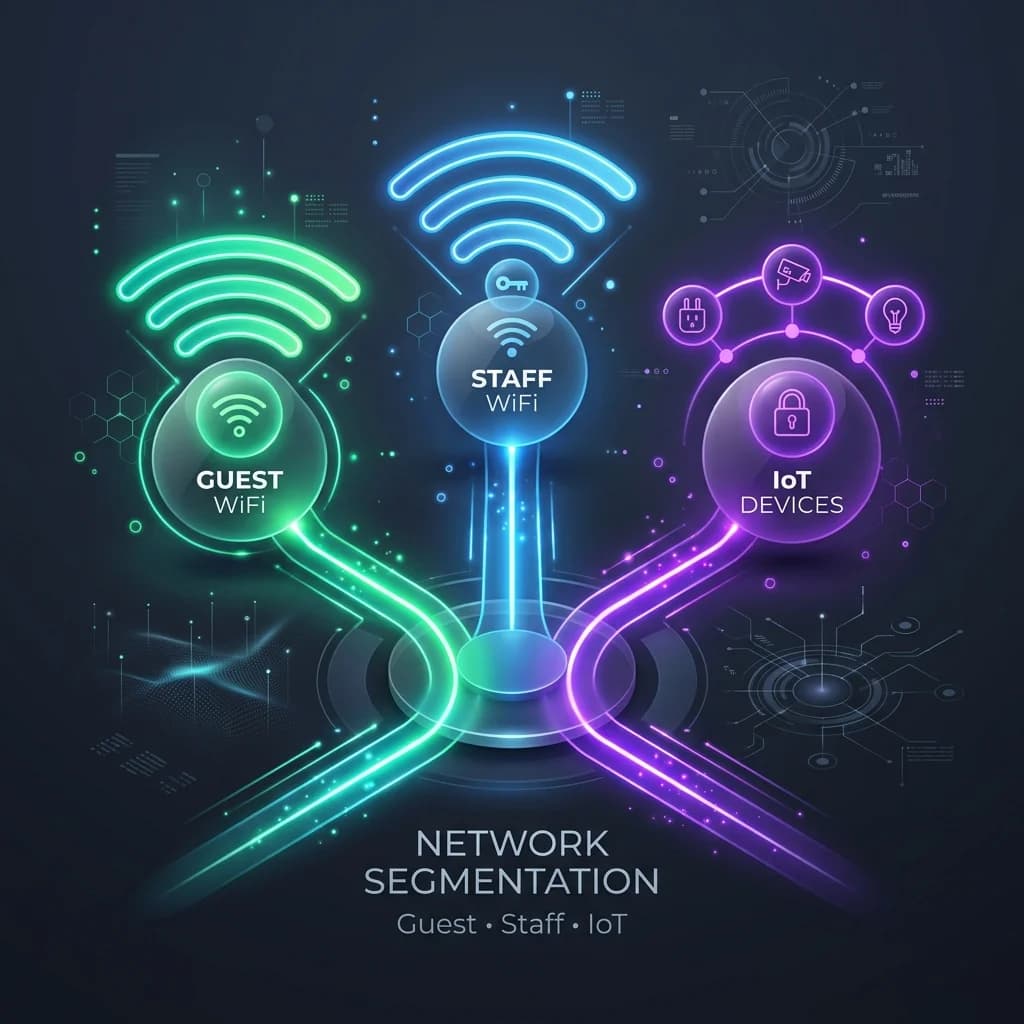
* **Network segmentation:** Assigns dynamic VLANs, Access Control Lists (ACLs), or security group tags based on role and trust level.
* **Guest and contractor onboarding:** Provides self-service authentication portals without compromising internal corporate networks.
## Top 10 network access control (NAC) solutions compared
| Solution | Architecture Model | Key Capabilities | Primary Use Case | Hardware Requirement |
| :--- | :--- | :--- | :--- | :--- |
| **Purple Cloud NAC & RADIUS** | Cloud-Native SaaS | Identity 802.1X, Passpoint , IPSK, multi-tenant guest & staff access | Enterprise venue WiFi , multi-site retail, hospitality & office networks | Zero on-premise hardware |
| **Cisco Identity Services Engine (ISE)** | On-Premises / Virtual Appliance | pxGrid ecosystem, TACACS+, deep Cisco ecosystem integration | Large global Cisco enterprise campuses | Dedicated servers / VM clusters |
| **HPE Aruba ClearPass** | On-Premises / Hybrid Appliance | Multi-vendor policy engine, self-service BYOD, posture checking | Higher education, healthcare, large enterprise BYOD | Hardware or virtual appliances |
| **Portnox Cloud** | Pure Cloud SaaS | Cloud RADIUS , automated cert lifecycle, multi-tenant MSP support | Cloud-first organizations & MSP managed networks | Zero on-premise hardware |
| **Forescout Platform** | Agentless Appliance | Agentless IoT/OT discovery, passive network monitoring, dynamic isolation | Industrial OT, healthcare medical devices & IoT estates | Dedicated high-throughput appliances |
| **Fortinet FortiNAC** | Fabric-Integrated Appliance | Network discovery, automated threat isolation, FortiGate integration | Multi-site organizations utilizing Fortinet Security Fabric | Hardware or VM appliances |
| **Juniper Mist Access Assurance** | Cloud Microservices | AI-driven telemetry, cloud PKI, dynamic policy enforcement | Cloud-first enterprise networks with Juniper APs | Zero on-premise hardware |
| **Ruckus Cloudpath** | On-Premises / Cloud | Automated PKI certificate provisioning, self-service onboarding | Education campuses, hospitality & multi-dwelling units (MDUs) | Virtual appliance or SaaS |
| **ExtremeControl** | Appliance / Cloud | Identity-based policy, fabric network integration, automated response | Campus and venue networks using Extreme switches | Virtual appliance or cloud |
| **Cisco Meraki Trusted Access** | Cloud Dashboard | Certificate onboarding, dashboard-integrated access policies | Lean IT teams with Meraki-managed infrastructure | Included in Meraki cloud |
## Key evaluation criteria for selecting a NAC vendor
When evaluating Network Access Control platforms, IT security directors and network engineers should assess four primary dimensions:
### 1. Deployment model: Cloud-native vs on-premises hardware
Legacy NAC architectures rely on local RADIUS servers and dedicated hardware appliances. While on-premises deployments provide absolute control for air-gapped networks, they require continuous server maintenance, certificate renewal management, and complex high-availability pairing.
Cloud-native NAC solutions eliminate local server infrastructure by delivering RADIUS authentication and policy enforcement via microservices. Cloud deployments reduce initial capital expenditure, streamline multi-site rollouts, and ensure continuous software updates without maintenance windows.
### 2. BYOD and guest access management
Managing unmanaged employee devices (BYOD) and visitor traffic requires seamless onboarding. Leading platforms support digital certificate provisioning (EAP-TLS) for staff devices alongside branded captive portals and Passpoint (Hotspot 2.0) for guest connectivity.
### 3. Multi-vendor infrastructure interoperability
Enterprise networks rarely use hardware from a single vendor. Ensure your selected NAC platform supports standard RADIUS (RFC 2865, RFC 2866), TACACS+, and 802.1X protocols across Cisco, HPE Aruba, Ruckus, Extreme Networks, and Ubiquiti UniFi hardware.
### 4. Zero Trust network segmentation
Basic access control is no longer sufficient. Modern NAC architectures support Zero Trust principles by dynamically assigning network segments (VLANs or micro-segmentation tags) based on continuous device telemetry and user identity.
## Frequently asked questions about network access control
### What is the difference between 802.1X and PSK in NAC?
802.1X authentication requires individual user credentials or digital certificates verified against an identity provider (IdP). Pre-Shared Key (PSK) uses a static shared password across all devices. Modern NAC platforms support Identity PSK (IPSK), assigning unique passkeys per user while delivering 802.1X-level dynamic VLAN segmentation.
### Why are organizations shifting from on-premises RADIUS to cloud NAC?
On-premises RADIUS servers require local hardware maintenance, complex redundancy clusters, and manual SSL/TLS certificate management. Cloud NAC offers 99.99% availability, zero hardware footprint, and instant scalability across hundreds of distributed physical sites.
### How does NAC protect against unauthorized IoT devices?
NAC continuously profiles incoming network traffic using MAC address lookups, DHCP fingerprinting, and behavioral analysis. Unidentified or rogue IoT devices are automatically restricted to isolated quarantine VLANs until verified by IT administrators.
## Modernize network access control with Purple
Purple provides a cloud-native access and identity platform that replaces legacy RADIUS hardware and shared WiFi passwords with identity-led 802.1X authentication, Passpoint, and dynamic network access control. Fully compatible with Cisco Meraki, HPE Aruba, Ruckus, and UniFi networks.