
How to leverage free marketing SMS to increase return visits
This guide details how venue operators can use existing Guest WiFi infrastructure to capture verified mobile numbers and deploy compliant, automated SMS marketing campaigns. It covers technical architecture, compliance frameworks (GDPR, TCPA), and measurable implementation strategies that drive return visits.
Listen to this guide
View podcast transcript
Executive Summary
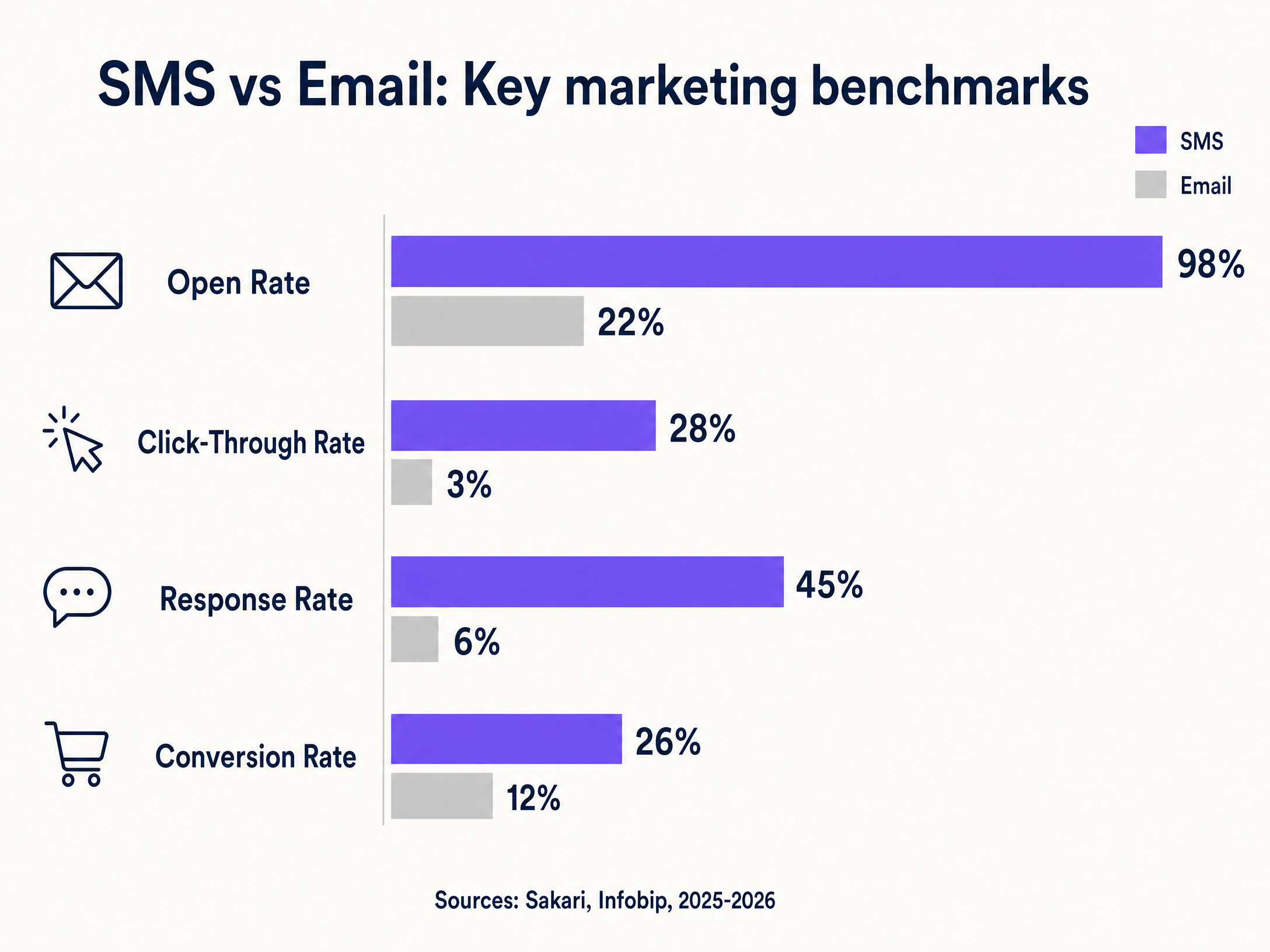
Guest WiFi networks capture hundreds of verified mobile numbers daily, yet most venue operators leave this data untouched. By routing authentication data into an automated CRM, venues can deploy free marketing SMS campaigns that drive measurable return visits. SMS achieves a 98% open rate and a 45% response rate, vastly outperforming email. This guide details the technical architecture required to capture first-party data at the point of access, ensuring full compliance with GDPR, PECR, and TCPA. We cover three core automated journeys: welcome messages, 7-day re-engagement, and 30-day win-back campaigns. IT and marketing teams will learn how to configure frequency caps, segment audiences by location, and measure exact ROI through WiFi reconnection attribution. Purple Engage provides the infrastructure to execute this without third-party data brokers or separate SMS gateway contracts.
Technical Deep-Dive
The Data Capture Architecture
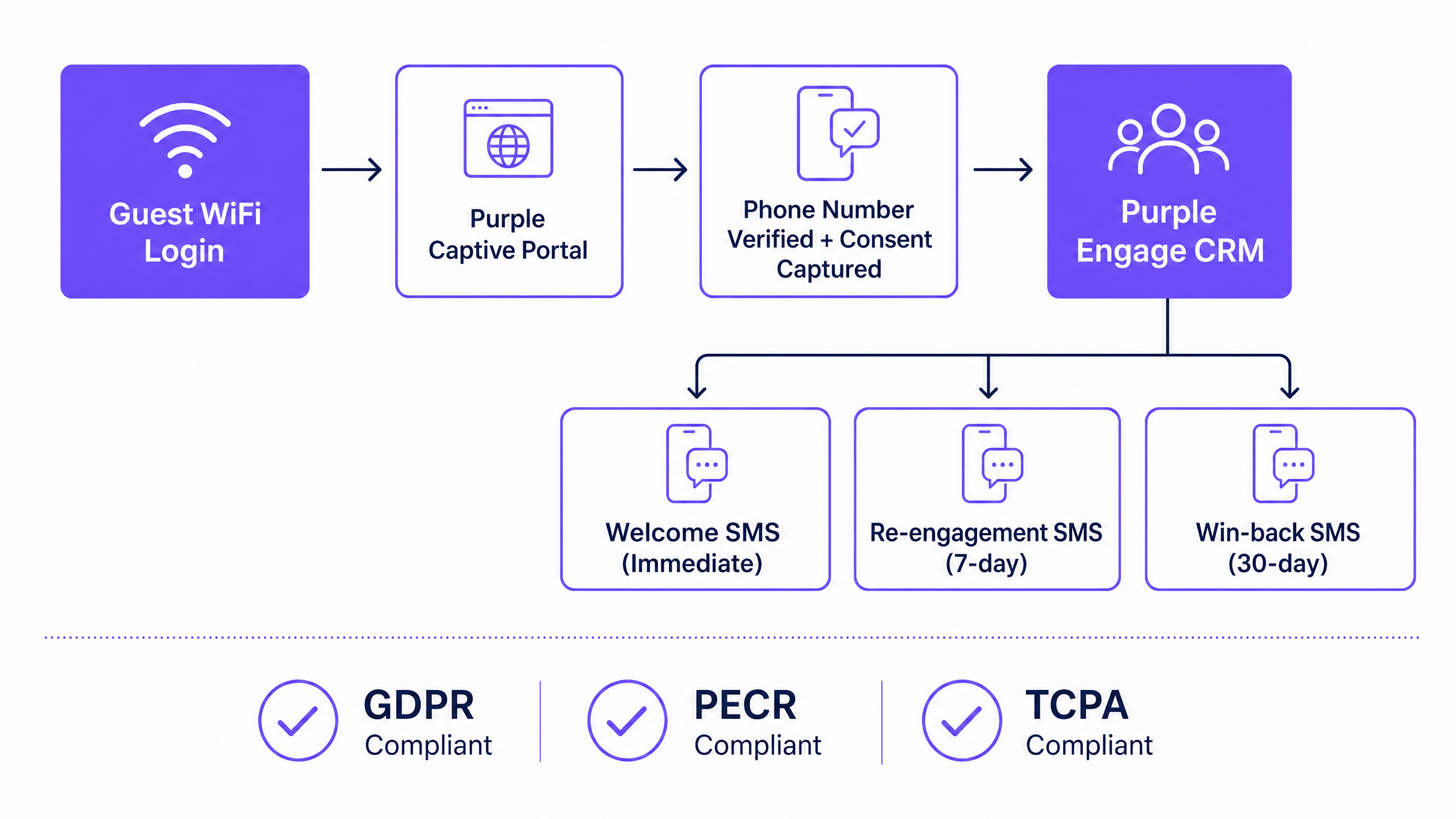
The foundation of an effective SMS strategy is verified, consented first-party data. When a guest connects to your WiFi, they encounter the Purple captive portal. They authenticate using their mobile number. Purple verifies this number in real time via a one-time passcode. At this exact moment, the portal presents a clear, unbundled opt-in for marketing communications.
If the guest opts in, the verified phone number flows directly into Purple Engage via API. This eliminates manual CSV exports and removes reliance on third-party data brokers. The architecture is hardware-agnostic, integrating natively with Cisco Meraki, HPE Aruba, Ruckus, Juniper Mist, Ubiquiti UniFi, Cambium, Extreme, and Fortinet access points.
Compliance Frameworks
Capturing mobile numbers requires strict adherence to regional regulations. Purple's architecture automates compliance across major frameworks:
- GDPR and PECR (UK/EU): You need explicit, freely given consent. WiFi access cannot be conditional on marketing consent. The Purple captive portal separates authentication from marketing opt-in, ensuring the choice is conscious and documented.
- TCPA (US): The Telephone Consumer Protection Act requires prior express written consent for automated marketing texts. Purple captures and timestamps this consent, creating an auditable record to protect against compliance failures.
Send-Time Optimisation and Frequency Capping
Technical configuration determines campaign success. Sending messages between 21:00 and 08:00 violates PECR and drives opt-outs. Purple Engage includes send-time optimisation that automatically schedules messages within compliant windows, adjusting for the recipient's local time zone. Furthermore, 53% of SMS unsubscribes stem from over-frequency. System administrators must configure hard frequency caps - typically a maximum of two messages per month per contact - within the Purple Engage dashboard.
Implementation Guide
Deploying an SMS strategy requires configuring specific automated journeys based on guest behaviour.
1. The Welcome Journey (Immediate)
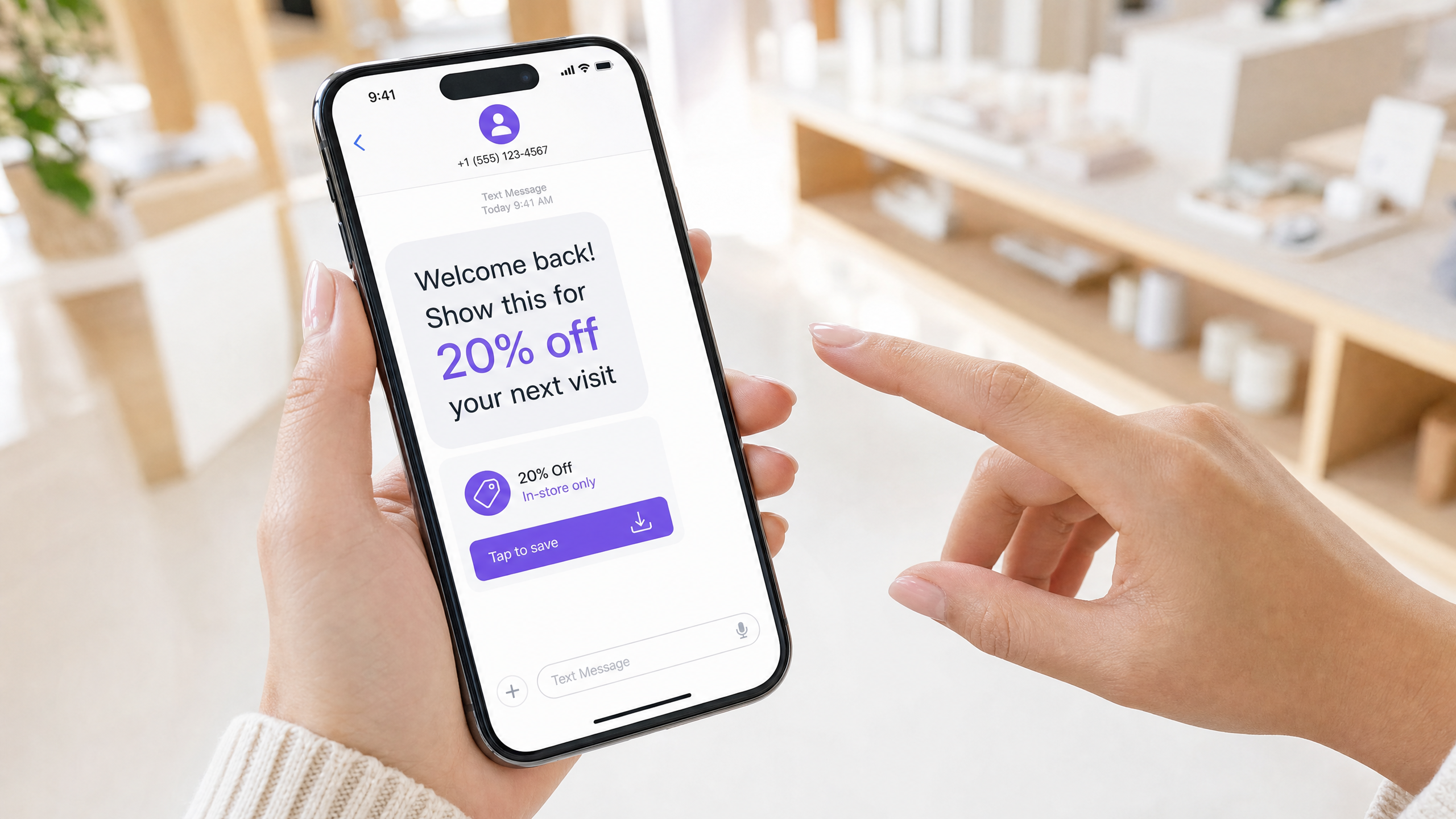
Trigger a welcome SMS within minutes of the initial WiFi connection. The guest is physically in your venue, making this the highest-converting touchpoint.
- Retail: Send a 10% discount code valid for the current visit.
- Hospitality: Offer a complimentary drink at the hotel bar or a room upgrade.
- Stadiums: Provide a link to an indoor map showing the shortest queue for merchandise.
2. The Re-engagement Journey (7-Day)
Configure an automated message to send seven days after the guest disconnects from the network. Use Purple's analytics layer to segment by location and visit frequency.
- Action: Reference the specific venue they visited. Generic messages underperform.
- Offer: Include a time-limited incentive to drive a repeat visit within the next 14 days.
3. The Win-back Journey (30-Day)
Set a trigger for guests who have not reconnected to the WiFi for 30 days. This is the final automated touchpoint before a guest becomes dormant.
- Action: Deploy your strongest commercial offer.
- Segmentation: Exclude guests who have already booked a future stay or visit (via API integration with your PMS or booking engine).
Best Practices
- Segment by Location: A guest who visited a Manchester location does not need an alert about a London store opening. Use Purple's location hierarchy to restrict message distribution to relevant audiences.
- Personalise the Content: Use dynamic tags to insert the guest's name and the specific venue they visited.
- Include Clear Opt-outs: Every SMS must include a clear STOP command. Purple Engage handles opt-out processing automatically, immediately suppressing the number from future broadcasts.
- Monitor the Benchmarks: Track your performance against industry standards.
Troubleshooting & Risk Mitigation
High Opt-out Rates
If opt-out rates exceed 3.5%, you are likely violating frequency tolerances or sending irrelevant content. Review your frequency caps in Purple Engage and ensure you are not sending more than two promotional messages per month. Check your audience segmentation to confirm messages are location-specific.
Low Conversion Rates
If click-through rates fall below 15%, evaluate the offer strength and timing. A 7-day re-engagement message performs better than a 14-day message. Ensure the call-to-action is clear and the linked landing page is mobile-optimised.
Delivery Failures
Delivery failures typically result from invalid numbers. Purple mitigates this by requiring one-time passcode verification at the point of WiFi login, ensuring the captured number is active and accurate.
ROI & Business Impact
Purple Engage closes the loop between campaign spend and physical footfall using WiFi reconnection data.
When a guest receives an SMS and subsequently walks back into your venue, their device automatically probes for the Guest WiFi network. Purple logs this reconnection and attributes it to the recent SMS campaign. This provides a direct, measurable ROI metric: the Return Visit Rate.
Because SMS sending credits are included within the Purple Engage plan, the marginal cost of sending these campaigns is zero. Venues typically see SMS ROI between £21 and £41 for every £1 of equivalent platform cost, driven by the 98% open rate and immediate contextual relevance of the channel.
Key Definitions
Captive Portal
The branded web page that intercepts a user's web browser when they attempt to connect to a Guest WiFi network, requiring authentication before granting internet access.
This is the primary data capture mechanism, where venues collect verified mobile numbers and marketing consent.
First-Party Data
Information a company collects directly from its customers or audience, rather than purchasing it from a third-party broker.
Capturing data via Guest WiFi ensures the venue owns the relationship and the data is accurate and compliant.
PECR
Privacy and Electronic Communications Regulations. The UK law that sits alongside GDPR and specifically governs electronic marketing, including SMS.
PECR dictates the rules around consent, opt-outs, and compliant send times for SMS campaigns.
TCPA
Telephone Consumer Protection Act. US federal law restricting telemarketing and the use of automated telephone equipment.
Requires prior express written consent for marketing SMS, which Purple captures and timestamps during the WiFi login process.
Return Visit Rate
The percentage of guests who return to a venue within a specific timeframe after receiving a marketing communication.
Purple tracks this automatically by monitoring when a device reconnects to the Guest WiFi network following an SMS campaign.
Frequency Cap
A system limit placed on the number of marketing messages a single contact can receive within a defined period (e.g., 30 days).
Essential for preventing list fatigue and keeping opt-out rates below the 3.5% industry benchmark.
Send-Time Optimisation
Automated scheduling that ensures messages are only delivered during legally compliant and socially acceptable hours (e.g., 08:00 to 21:00).
Prevents venues from breaching PECR regulations and annoying guests with late-night notifications.
Dynamic Tags
Placeholders within a message template (e.g., {{Venue_Name}}) that automatically populate with specific data relevant to the individual recipient.
Used to personalise SMS campaigns at scale, ensuring a guest receives a message referencing the exact location they visited.
Worked Examples
A mid-scale hotel group with 40 properties wants to increase direct bookings from previous guests. They currently capture email addresses via a generic web form but see open rates below 20%. How should they deploy Purple Engage to drive return visits?
The hotel group configures the Purple captive portal across their Cisco Meraki access points to capture verified mobile numbers via SMS authentication. They add a clear, unbundled marketing opt-in checkbox. In Purple Engage, they build a 7-day re-engagement journey. Guests who opt in receive an automated SMS exactly seven days after checkout, offering a 15% discount on their next direct booking. The message dynamically inserts the name of the specific property they visited.
A retail chain with 120 stores notices high footfall but low repeat visit rates. They want to use SMS to drive shoppers back in-store within 14 days of their initial visit, but are concerned about GDPR compliance and high opt-out rates.
The retailer implements Purple's captive portal on their HPE Aruba network. They configure the portal to separate WiFi access from marketing consent, ensuring GDPR compliance. They set a strict frequency cap in Purple Engage: maximum two messages per month. They deploy a welcome journey that sends an SMS 15 minutes after login with a 10% discount valid for that day, and a 14-day re-engagement message with a new offer if the shopper has not returned.
Practice Questions
Q1. A stadium wants to send an SMS to all fans offering a discount on next season's tickets. They plan to send the message at 22:00 on a Sunday to catch fans after the weekend games. What compliance and best practice issues does this raise?
Hint: Consider PECR regulations regarding send times.
View model answer
Sending an SMS at 22:00 violates PECR regulations and global best practices, which prohibit marketing messages between 21:00 and 08:00. The venue must use send-time optimisation in Purple Engage to schedule the broadcast for compliant hours the following morning.
Q2. A retail chain has seen their SMS opt-out rate climb to 6% over the last two months. They are currently sending a weekly generic discount code to their entire database. How should they adjust their strategy?
Hint: Evaluate frequency caps and audience segmentation.
View model answer
The 6% opt-out rate is well above the 3.5% benchmark, driven by over-frequency and irrelevance. They must implement a hard frequency cap of two messages per month. Furthermore, they should stop generic broadcasts and instead use Purple's analytics to segment the audience, sending targeted 7-day re-engagement messages based on the specific store visited.
Q3. A hotel IT director is concerned about the manual workload required to export guest phone numbers from the WiFi system into their SMS gateway. How does Purple Engage resolve this?
Hint: Consider the API architecture and integrated sending capabilities.
View model answer
Purple Engage eliminates manual exports. Verified phone numbers and consent timestamps flow directly into the Engage CRM via API at the point of login. Furthermore, Purple Engage includes built-in SMS sending capabilities, removing the need for a separate SMS gateway contract or manual data transfers.