
How to leverage SMS marketing for real estate to increase return visits
This technical guide details how to build an automated data capture pipeline using Guest WiFi to drive SMS marketing campaigns for real estate venues. It covers network configuration, GDPR compliance, audience segmentation, and how to measure the ROI of return visits.
Listen to this guide
View podcast transcript
Executive Summary
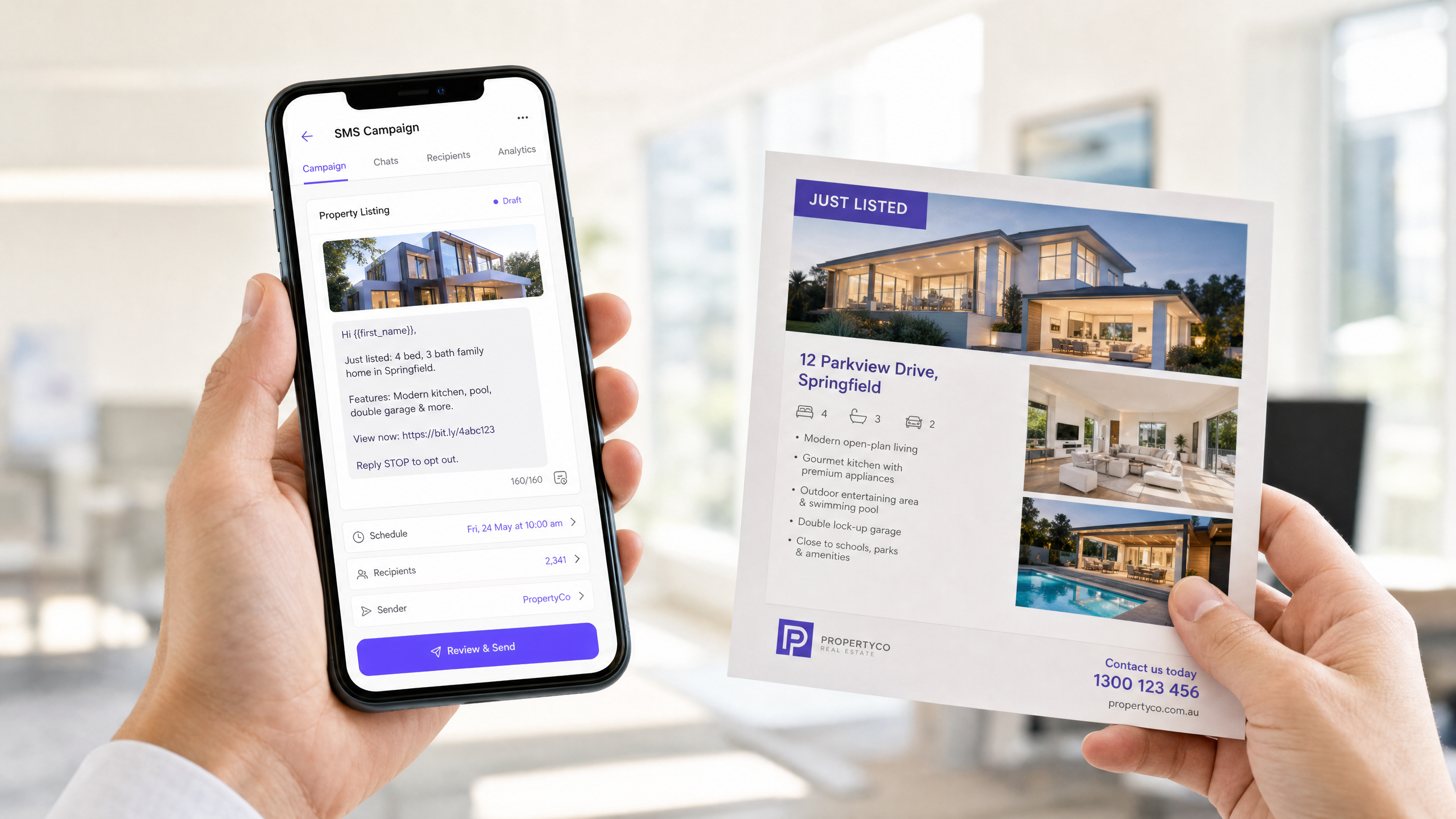
Real estate venues operate in a blind spot. Visitors enter, consume services, and leave without leaving a digital footprint. SMS marketing closes this gap, but only if you have the data infrastructure to feed it. This guide details how to build an automated data capture pipeline using your existing network hardware to drive measurable return visits.
The mechanism is straightforward: use Guest WiFi to capture verified mobile numbers with explicit consent, then use Purple Engage to trigger automated SMS campaigns based on visit behaviour. With SMS delivering a 98% open rate, this architecture transforms anonymous footfall into a contactable audience. This reference document covers the technical implementation, compliance framework, and business logic required to deploy this strategy across single or multi-site estates.
Technical Deep-Dive
The foundation of an effective SMS strategy is the data capture layer. You cannot market to visitors you cannot identify. The most reliable method for capturing first-party data in a physical venue is the captive portal.
The Capture Architecture
When a visitor attempts to access the internet, the local access point intercepts the HTTP request and redirects the client device to a captive portal hosted on Purple's cloud overlay. This architecture is hardware-agnostic, supporting deployments across Cisco Meraki, HPE Aruba, Ruckus, and Juniper Mist without requiring network redesigns.
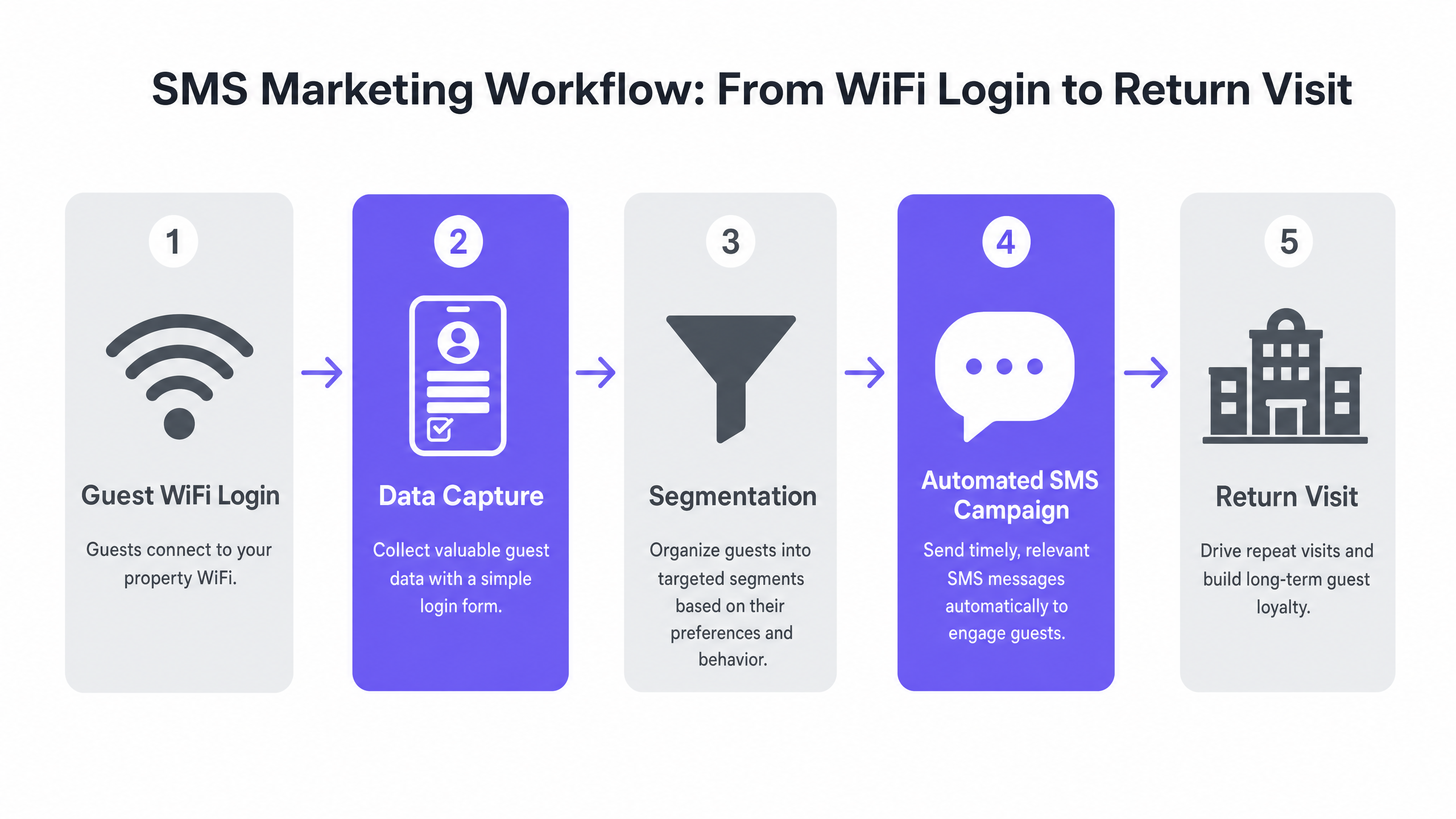
The authentication flow follows these steps:
- The client device associates with the Guest WiFi SSID.
- The access point restricts network access and redirects the browser.
- The captive portal presents the login form, requiring name, email, and mobile number.
- The visitor submits the form, explicitly opting into SMS marketing via an unbundled checkbox.
- Purple validates the input, authenticates the device via RADIUS, and authorises network access.
- The visitor profile is created or updated in the Purple database in real time.
This real-time synchronisation is critical. A visitor who logs in at 10:00 AM must be available for a welcome SMS by 10:05 AM. Batch processing or overnight syncs introduce latency that kills the immediacy of SMS.
The Compliance Framework
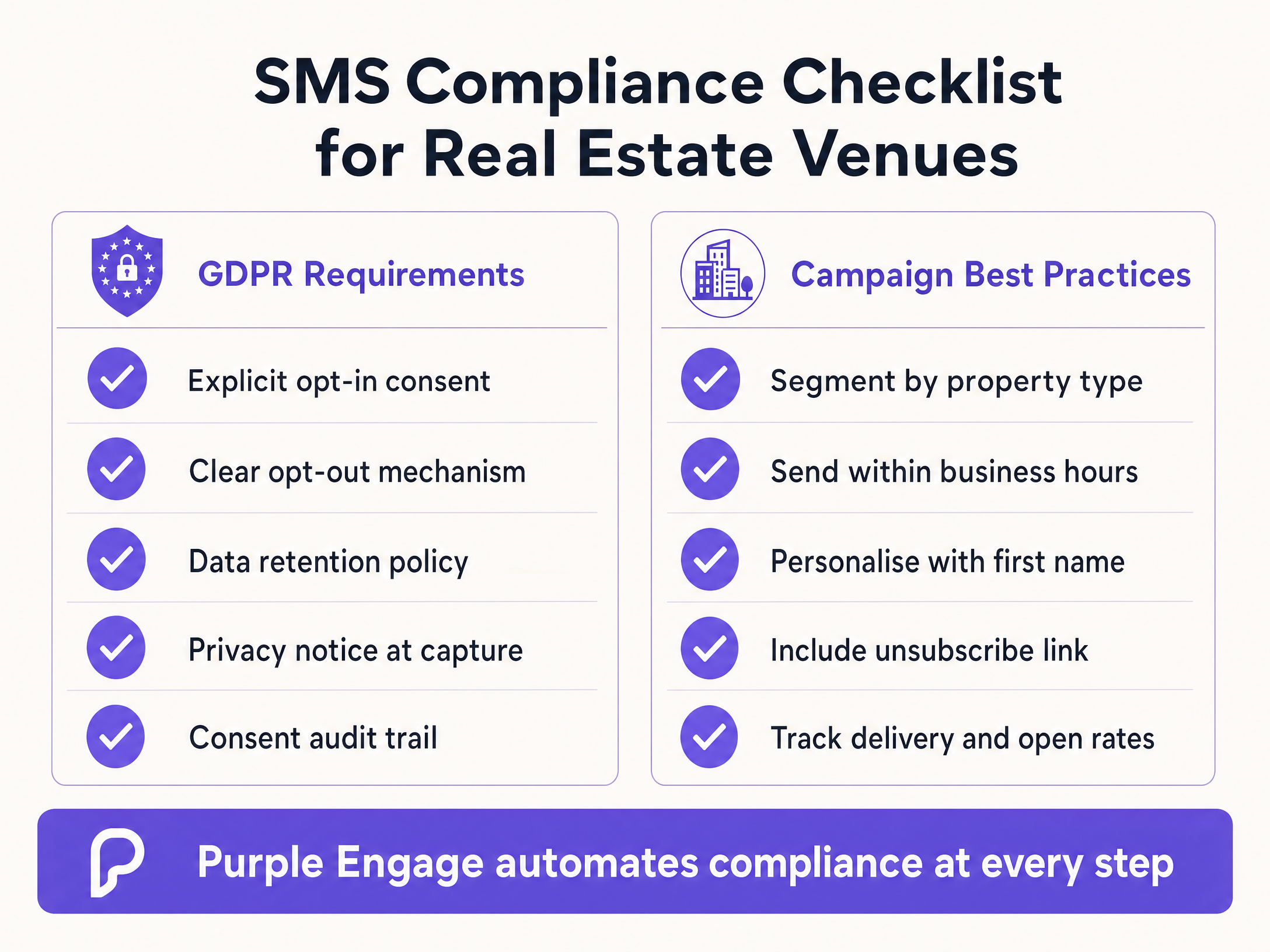
Under GDPR, consent for SMS marketing must be explicit, informed, and freely given. You cannot bundle SMS consent with the general terms of service for WiFi access.
The captive portal must present a distinct opt-in mechanism for SMS. Purple's Capture plan handles this natively, maintaining a secure audit trail of consent for every profile. This audit trail records the timestamp, IP address, and exact wording presented to the visitor at the point of capture.
Furthermore, every SMS sent must include a clear opt-out mechanism. The industry standard is "Reply STOP to unsubscribe." Your marketing platform must process these requests automatically and suppress the number from future campaigns immediately.
Implementation Guide
Deploying this architecture requires coordination between IT and marketing teams. Follow this sequence for a successful rollout.
Phase 1: Network Configuration
Verify your existing access points support captive portal redirection and RADIUS authentication. Configure the Guest WiFi SSID to point to the Purple cloud environment. If you operate a mixed hardware estate, configure each vendor's equipment to point to the same Purple portal to ensure consistent data capture across all sites.
Phase 2: Portal Design and Data Capture
Design the captive portal to reflect your brand. Keep the form concise. Request only the data necessary for your campaigns. For SMS marketing, this is first name and mobile number. Ensure the SMS opt-in checkbox is unchecked by default, in compliance with GDPR.
Phase 3: Integration and Segmentation
Connect Purple Engage to your SMS gateway or use the native functionality. Before launching campaigns, define your audience segments based on the data captured by the WiFi network.
Key segments include:
- New Visitors: Devices seen on the network for the first time.
- Returning Visitors: Devices seen previously.
- Lapsed Visitors: Devices not seen in 30, 60, or 90 days.
- High-Dwell Visitors: Devices connected for extended periods.
Phase 4: Automation Rules
Configure the trigger conditions for your campaigns. A welcome message should trigger 15 minutes after a new visitor logs in. A re-engagement offer should trigger when a visitor enters the 'Lapsed' segment. Purple Engage automates this logic, evaluating the visitor database continuously and dispatching messages when conditions are met.
Best Practices
To maximise return visits and minimise opt-outs, adhere to these operational standards.
Value Exchange
Visitors will not hand over their mobile number for a poor connection. Ensure your Guest WiFi provides sufficient bandwidth and reliability to justify the data exchange. Treat the WiFi connection as a premium service, not an afterthought.
Message Frequency
SMS is an intimate channel. Treat it with respect. Limit promotional messages to two per month per segment. Transactional messages, such as appointment reminders or maintenance notices in a residential context, can be more frequent but must remain relevant.
Timing
Schedule campaigns to land during business hours in the recipient's local timezone. A promotional text sent at 11:00 PM will drive opt-outs and damage your brand. Purple Engage allows you to define delivery windows to prevent off-hours messaging.
Troubleshooting & Risk Mitigation
When deployments fail to deliver ROI, the root cause usually falls into one of three categories.
Low Opt-In Rates
If visitors connect to the WiFi but do not opt into SMS marketing, review the portal design. Is the value proposition clear? Is the form too long? Ensure the opt-in language highlights the benefits of subscribing, such as exclusive offers or priority access.
High Opt-Out Rates
A sudden spike in STOP replies indicates a failure in segmentation or frequency. You are sending irrelevant messages or sending them too often. Review your campaign logic. Ensure you are not sending promotional offers to residents or staff who use the Guest WiFi.
Data Stagnation
If your contactable audience stops growing, verify the network configuration. Changes to access point firmware or firewall rules can break the captive portal redirection, allowing visitors to access the internet without authenticating. Implement monitoring to alert IT if authentication volumes drop unexpectedly.
ROI & Business Impact
The success of this architecture is measured in return visits, not just message delivery.
To calculate ROI, track the cohort of visitors who received a specific SMS campaign. Use Purple's analytics to monitor how many of those devices reconnect to the network within 7 and 30 days of the send date. Compare this return rate to a control group that did not receive the message.
Consider a retail property running a re-engagement campaign to lapsed visitors. If the campaign costs £500 to send and drives 200 return visits, the cost per acquisition is £2.50. If the average visitor spend is £40, the campaign generates £8,000 in revenue, delivering a 1500% ROI.
By combining the reach of SMS with the deterministic data capture of Guest WiFi, venue operators can build a marketing engine that directly influences visitor behaviour and drives measurable commercial outcomes.
Listen to our deep-dive podcast on this topic:
Key Definitions
Captive Portal
A web page that a user of a public access network is obliged to view and interact with before access is granted.
This is the primary mechanism for capturing first-party data and marketing consent in physical venues.
First-Party Data
Information a company collects directly from its customers and owns.
Guest WiFi allows venues to build first-party data assets, reducing reliance on third-party advertising platforms.
Hardware-Agnostic
Software that is compatible with multiple different hardware platforms.
Purple's cloud overlay works with Cisco Meraki, HPE Aruba, and others, meaning you do not need to replace access points to deploy the solution.
Unbundled Consent
The requirement under GDPR that consent requests must be separate from other terms and conditions.
You cannot force a visitor to accept SMS marketing as a condition of using the free WiFi.
RADIUS
Remote Authentication Dial-In User Service; a networking protocol that provides centralised Authentication, Authorization, and Accounting.
This protocol handles the communication between the local access point and the Purple cloud to grant internet access after the captive portal form is submitted.
Opt-Out Mechanism
A clear, simple method for a recipient to withdraw their consent for marketing communications.
Every SMS must include a way to unsubscribe, typically by replying STOP.
Dwell Time
The duration a device remains connected to the network during a single visit.
This metric is used to segment visitors; someone who stays for four hours has a different profile to someone who stays for ten minutes.
Return Visit Rate
The percentage of visitors who reconnect to the network within a specified timeframe after receiving a marketing message.
This is the primary metric for measuring the ROI of an SMS campaign in a physical venue.
Worked Examples
A regional retail property with 45 units across two sites is experiencing declining engagement with their email loyalty programme. They need to build a new contactable audience and drive return visits.
The IT team configures the Cisco Meraki access points across both sites to redirect to a Purple captive portal. The portal requires a mobile number and presents a clear GDPR-compliant opt-in for SMS marketing. The marketing team uses Purple Engage to build a segment of 'Lapsed Visitors' (not seen in 60 days). An automated rule triggers a personalised SMS offer when a visitor enters this segment.
A build-to-rent residential development needs a reliable way to communicate community events and maintenance updates to residents, as email notices are frequently ignored.
The operator deploys Guest WiFi across all communal areas (co-working space, gym, lounge). Residents log in and opt into SMS communications. The property manager segments the audience to separate residents from temporary visitors. They schedule automated SMS reminders 24 hours before community events and use bulk SMS for urgent maintenance notices.
Practice Questions
Q1. A hotel operator wants to send an SMS offer for a spa discount to all guests currently connected to the WiFi. However, their database shows that only 40% of connected guests have explicitly checked the SMS opt-in box on the captive portal. The marketing director suggests sending the SMS to all guests who provided a mobile number, arguing that the offer is highly relevant. What is the correct technical and compliance response?
Hint: Consider the requirements of GDPR regarding unbundled consent and the penalties for non-compliance.
View model answer
You must only send the SMS to the 40% who explicitly opted in. Sending marketing messages to individuals who provided a number but did not check the opt-in box is a direct violation of GDPR. The Purple Engage platform will automatically suppress the 60% who did not opt in, protecting the venue from compliance risks.
Q2. Your multi-site retail estate uses HPE Aruba access points in three locations and Cisco Meraki in two newer locations. You need to deploy a unified data capture strategy for a new SMS campaign. The IT team is concerned they need to replace the Aruba hardware to match the Meraki sites. How do you proceed?
Hint: Consider the architecture of the captive portal solution.
View model answer
No hardware replacement is necessary. Purple's cloud overlay is hardware-agnostic. You configure both the HPE Aruba and Cisco Meraki controllers to point to the same Purple captive portal URL and RADIUS servers. This ensures a consistent data capture experience for the visitor and centralises all profiles into a single database for the SMS campaign.
Q3. A co-working space launched an automated SMS campaign that sends a message to every visitor exactly 24 hours after their first login. Initially successful, the campaign is now seeing a high opt-out rate. Analytics show the majority of opt-outs are from members who use the space daily. How do you fix the campaign logic?
Hint: Review the segmentation strategy and how different types of visitors interact with the venue.
View model answer
The campaign logic lacks segmentation. It is treating daily members the same as one-off visitors. You must update the Purple Engage rules to exclude devices that connect frequently (e.g., more than 3 times a week). The welcome SMS should only trigger for true 'New Visitors', while members should be placed in a separate segment that receives operational updates rather than promotional offers.