
One network platform for every vessel, terminal and crew rotation
A captive portal that follows passengers from the terminal onto the ship, identity-based WiFi for crew, a private key for every onboard till, screen and camera, and passenger surveys at sign-in. Layered on top of the access points and backhaul you already run.
- Captive portal from terminal to ship
- Free and paid passenger tiers
- Cloud RADIUS for crew
- xPSK for onboard retail and F&B
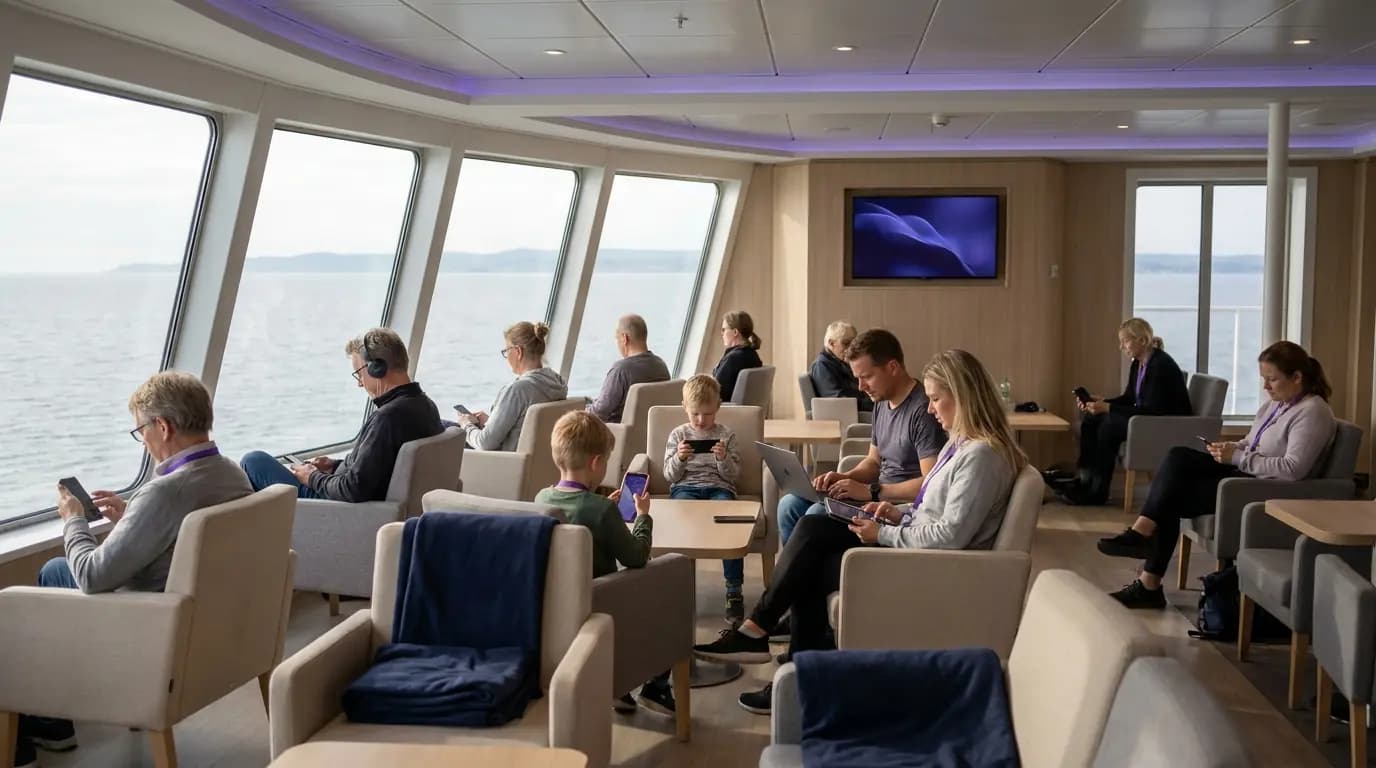
Every crossing is a full venue at sea. Most of its network runs on one password.
A ferry is a hotel, a café, a shop and a crew workplace, sealed off from shore for hours at a time, with backhaul that costs far more than any building's. Fleet IT teams run it across vessels, terminals and rotating crews, often with a separate supplier for each part. The gap tends to show up in four places.
A typical ferry today
- Free WiFi with no limits, so a few passengers stream and everyone else waits
- A crew WiFi password that outlives every rotation and every agency contract
- Shop tills, café terminals, cabin TVs and cameras sharing one network with passengers
- No way of hearing from passengers until a review appears after they have landed
With Purple
- Free and paid tiers with their own speed and time limits, as KiwiRail ran from terminal to ferry
- Crew sign in with their own work account, and leavers lose access when their account is disabled
- Every device gets its own key and VLAN, kept apart from passenger traffic
- Short surveys at sign-in, answered during the crossing: c2c gathered 5,066 responses in six days
Passengers, crew, devices and insight, each on the right network
Four networks that usually mean four suppliers, run from a single pane of glass for every vessel and terminal in the fleet.
One sign-in from terminal to ship
A branded captive portal in the terminal and on board, with free and paid tiers that keep your backhaul in check.
02 · CrewSign in with the work account
Identity-based WiFi through Microsoft Entra ID, Okta or Google Workspace. Joiners connect, leavers are revoked.
03 · Onboard devicesA private key for every device
xPSK gives shop and café tills, cabin TVs, screens and cameras their own key and VLAN.
04 · InsightAsk passengers mid-crossing
Micro-surveys at sign-in, shown by route, vessel or terminal, and switched on and off automatically.
Give every passenger a session, and sell more to those who want it
Bandwidth at sea is the most expensive you buy, so an open network with no limits serves the heaviest few and frustrates everyone else. Purple puts a captive portal in front of it, with tiers that set the speed and time each passenger gets. KiwiRail gave passengers free WiFi in the terminal and the option to buy a plan once on board the ferry, with several bandwidth tiers and discount vouchers for premium members. 2% of its passengers bought a plan.
- Free and paid tiers, each with its own download speed, upload speed and time limit, as AGS Airports runs with a free hour and a £2 day pass
- One sign-in that carries from the terminal onto the vessel, with plan options shown once passengers are on board
- CCPA/CPRA consent with a full audit trail, and emails checked in real time before they reach your CRM
- Consented passenger records sent to your CRM and booking platforms through 400+ data connectors
Purple does not provide your connection at sea. Your satellite, cellular and shore links bring the internet to the ship, and Purple runs the sign-in, tiers, identity and network policy on top.
Explore guest WiFi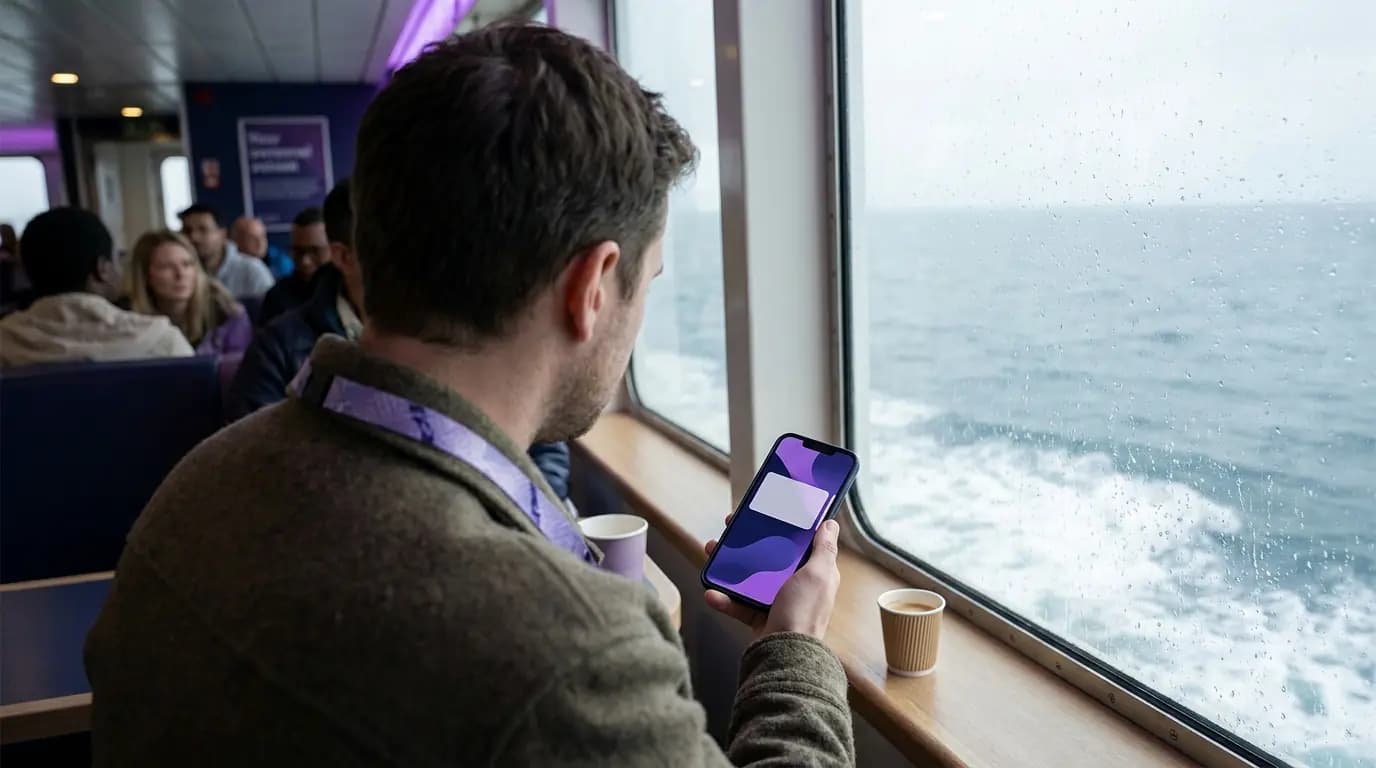 Passengers
One login for deck, hotel and catering crew
Crew change every rotation, agency staff come and go, and shore teams board for a single crossing. A shared crew password cannot keep up. Purple syncs with Microsoft Entra ID, Okta, Google Workspace and JumpCloud over SCIM, and group membership decides which network and policy each person gets on every vessel.
- Leavers and finished contracts are revoked automatically when the account is disabled
- Officers, hotel crew, contractors and shore staff land on separate VLANs with their own rules
- Company tablets and laptops get EAP-TLS certificates through Intune, Jamf, Kandji or Hexnode
- Crew phones are onboarded in about 60 seconds with the Purple app, on cloud RADIUS with a 99.9% uptime SLA
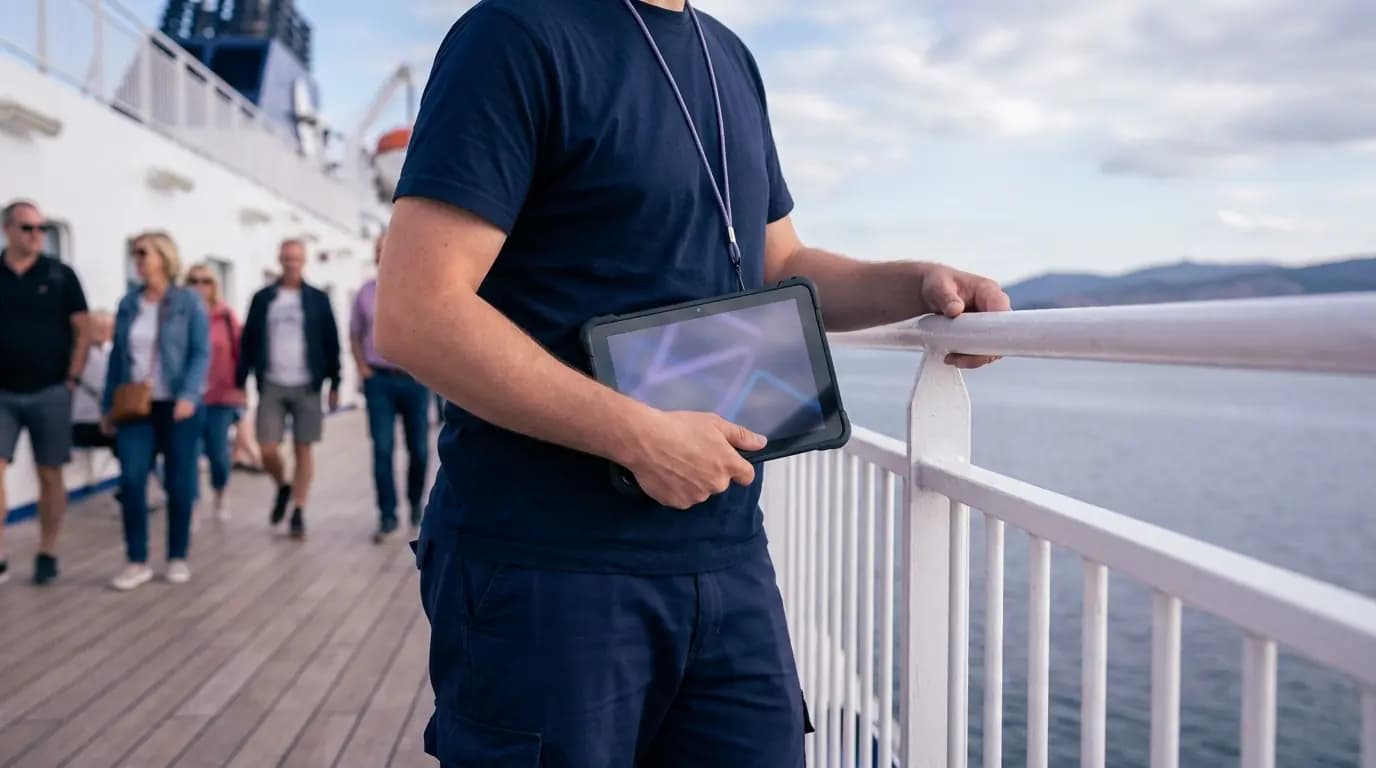 Crew
CrewA private key for everything on board that cannot sign in
Shop tills, café and bar card terminals, cabin TVs, digital signage, cameras and sensors cannot use a username and password. xPSK gives each one its own key and its own VLAN, so a leaked key affects one device, not the whole vessel, and payment devices never share a network with passengers.
- Keep onboard shop and café card terminals on their own VLAN, the separation PCI DSS segmentation relies on
- MAC binding ties each key to the first device that uses it
- Time-limited keys for contractors and refit teams, with no MDM needed
- Works under your vendor’s name: iPSK on Cisco, DPSK on Ruckus, MPSK on HPE Aruba and Juniper Mist, PPSK on Extreme and UniFi
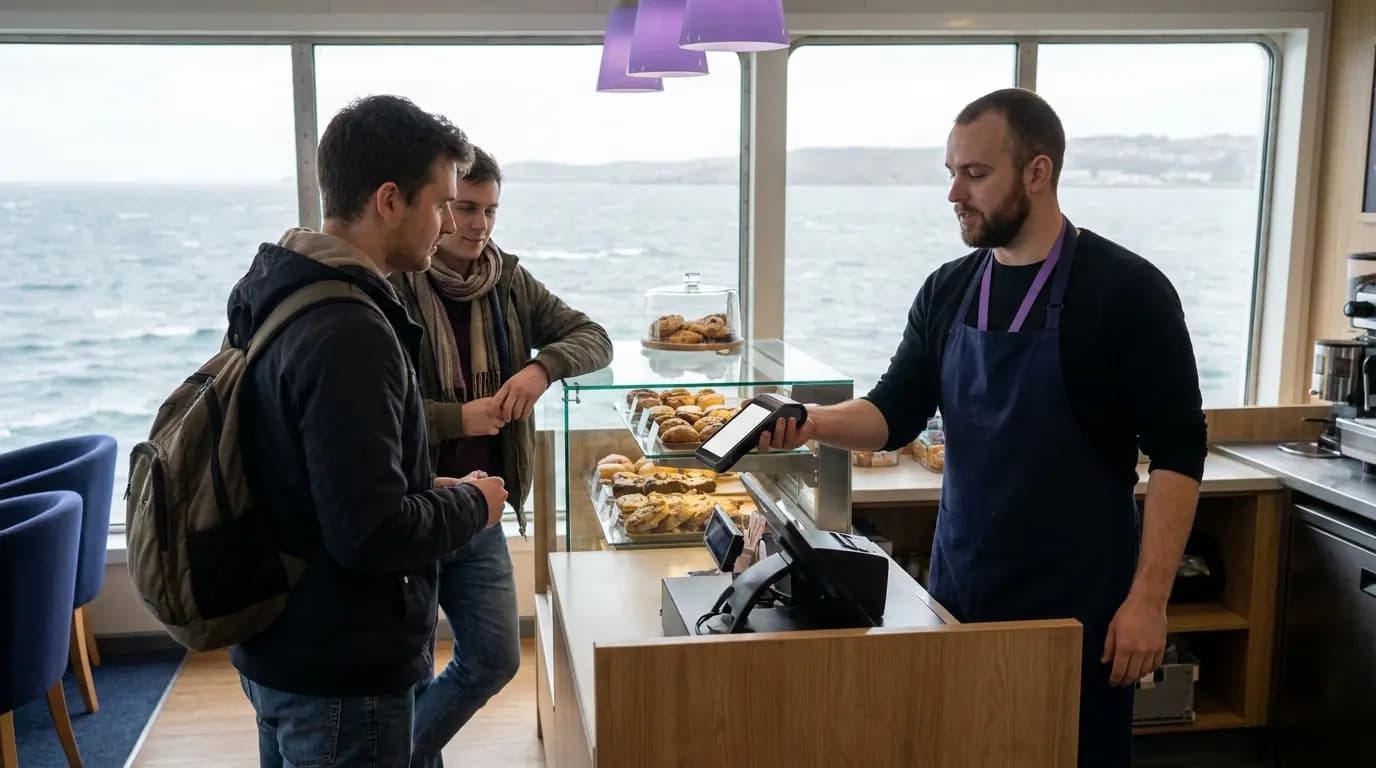 xPSK
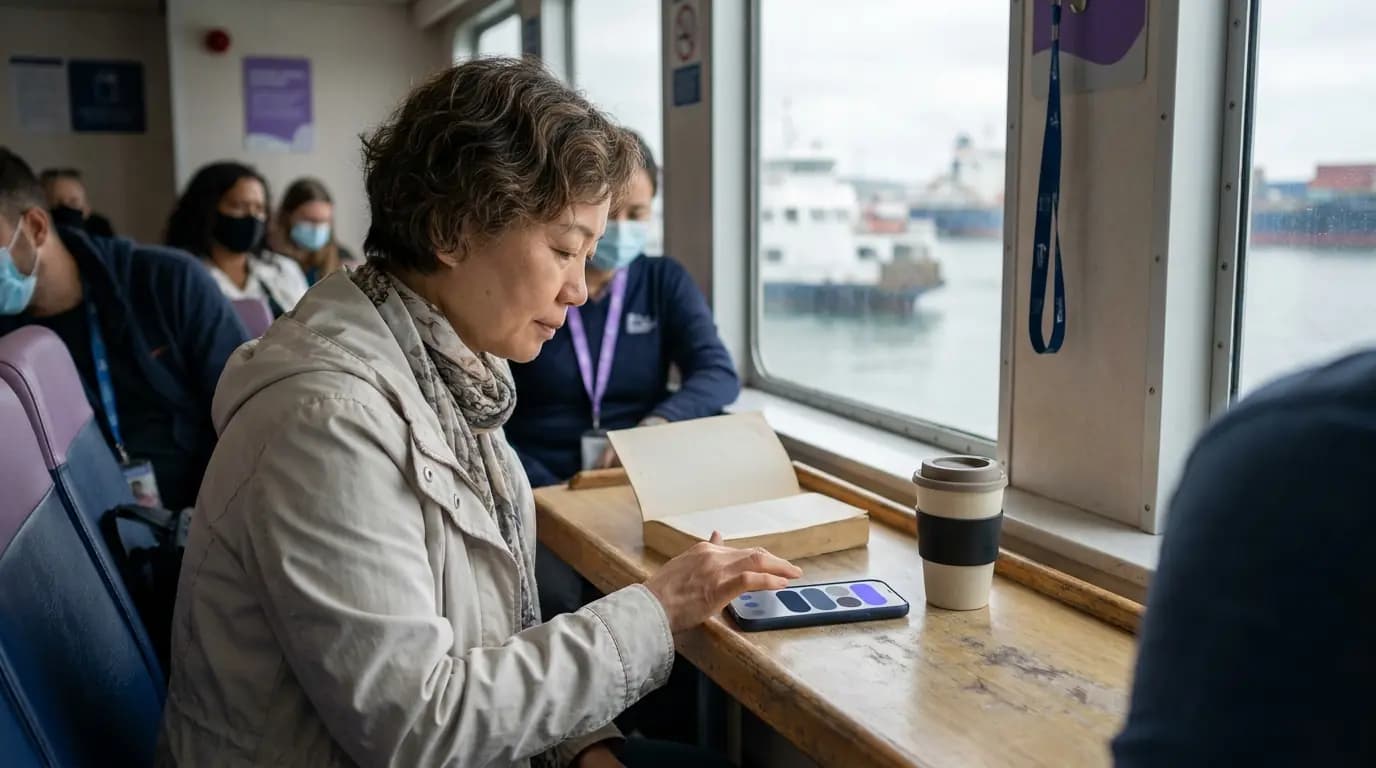
xPSKHear from passengers while they are still on board
A crossing gives you a seated, connected audience for hours. Micro-surveys sit inside the WiFi sign-in, so you hear about the café, the cabins and the boarding process during the trip rather than in a review afterwards. c2c ran separate surveys on traveler profiles, onboard safety and station safety this way, each switched on and off automatically.
- c2c gathered 5,066 responses in six days, at an average 35% response rate
- LogicFlow shows each survey only on the routes, vessels or terminals you choose
- Questions shown in English, French or Dutch automatically, as Brussels South Charleroi Airport does
- Results go straight to your operations and commercial teams, with no fieldwork to commission
 Surveys
What it takes to build it yourself, and what it takes with Purple
Everything a fleet network team would otherwise build, integrate and maintain across vessels and terminals, delivered as a service on the hardware you have.
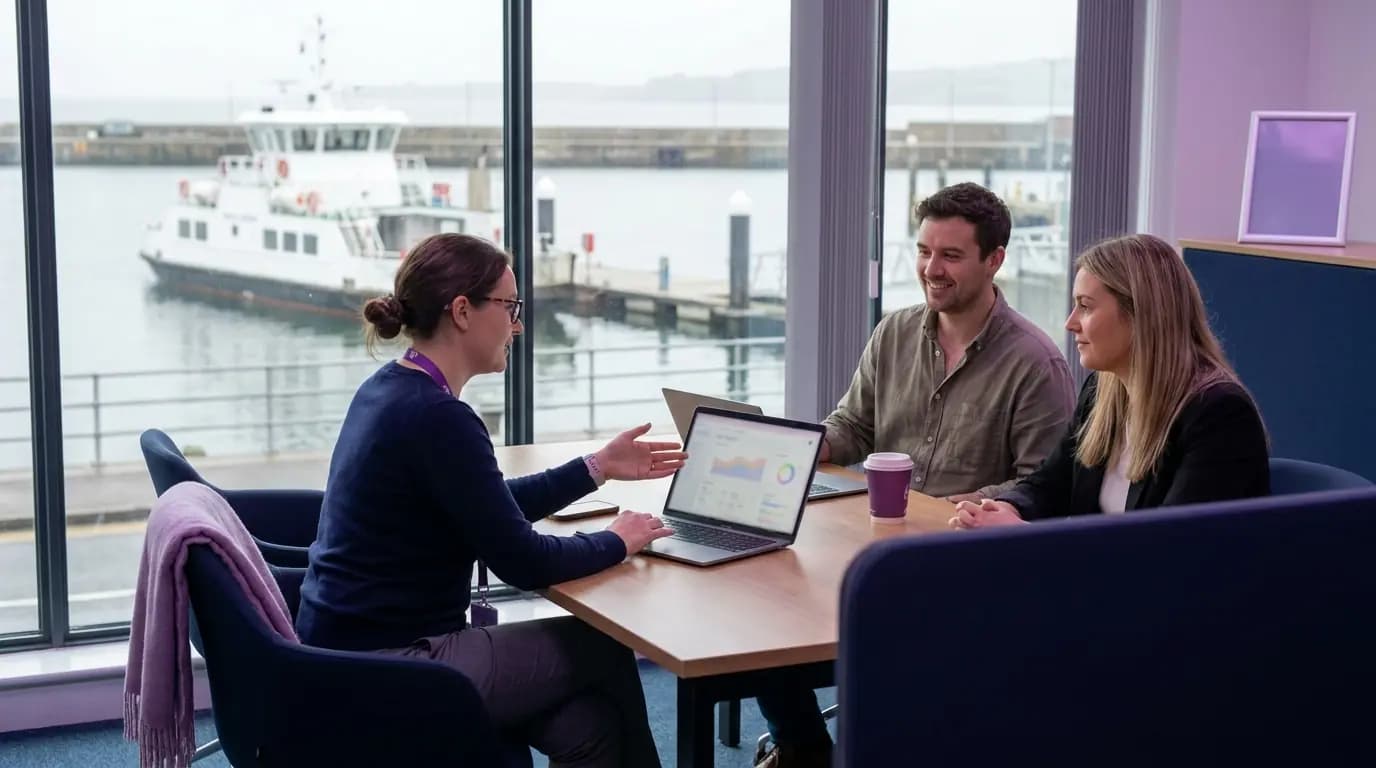
What operators get from the WiFi they already run
KiwiRail sold paid WiFi plans to passengers once they were on board its ferries. AGS Airports turns passenger sign-ins into verified, consented records. c2c uses short surveys at sign-in to understand how passengers feel during the trip.
Figures from Purple customer results: KiwiRail, AGS Airports and c2c, and Purple service terms.
Free brochure
Take this page into your next budget meeting
Everything on this page as an eight-page PDF brochure, ready to share with the people who sign off your network spend.
Get the brochure
Your name and email is all we need. The download appears straight away.
Live without new hardware
- 1
Connect your systems
Link your CRM and booking platforms, and Microsoft Entra ID, Okta or Google Workspace for crew and shore staff.
- 2
Point your access points at Purple
We configure the passenger, crew and device networks on the vessel and terminal access points you already own.
- 3
Roll out vessel by vessel
Switch on one vessel or route at a time with our onboarding team, fitted around your sailing schedule.
See your fleet and terminals on one network platform
Tell us about your vessels, routes and systems, and we will show you how passenger, crew, device and survey access would work on your hardware.
- Works with Cisco Meraki, HPE Aruba, Ruckus, Juniper Mist, Ubiquiti UniFi, Cambium, Extreme and Fortinet
- Single sign-on for crew with Microsoft Entra ID, Okta and Google Workspace
- ISO 27001 certified, CCPA/CPRA compliant, US RADIUS region
Book a ferry demo
A 30-minute call with someone who knows transport networks.
Ferry WiFi questions, answered
What fleet IT, commercial and onboard services teams ask us most
Do you provide the internet connection at sea?
No. Purple is not a satellite or connectivity provider. Your satellite, cellular and shore links bring the internet to the vessel. Purple runs the captive portal, passenger tiers, identity and network policy on top, on the access points you already have.
Can we charge for WiFi on board?
Yes. You can offer free and paid tiers, each with its own speed and time limit. KiwiRail gave passengers free WiFi in the terminal and the option to buy a plan on board its ferries, with several bandwidth tiers and discount vouchers for premium members.
Do we need to replace our access points?
No. Purple works with Cisco Meraki, HPE Aruba, Ruckus, Juniper Mist, Ubiquiti UniFi, Cambium, Extreme and Fortinet, and with any onboard or terminal hardware that supports a captive portal or RADIUS. There is no on-premise RADIUS server to install.
What happens when crew rotate off or leave?
When their account is disabled in Microsoft Entra ID, Okta or Google Workspace, SCIM revokes their WiFi access automatically. They cannot reconnect, and there is no shared crew password to change.
How do shop tills, café terminals and cabin TVs connect?
With xPSK. Each device gets its own key and VLAN, bound to the first device that uses it, so payment terminals stay apart from passenger traffic. You can revoke one key without touching any other device.
Can we survey passengers on specific routes?
Yes. Micro-surveys sit inside the WiFi sign-in, and LogicFlow decides who sees which survey, on which route, vessel or terminal, and when it switches on and off. c2c gathered 5,066 responses in six days this way.
Where is our data held?
Purple has RADIUS regions in the US, EU and UK, is ISO 27001 certified and CCPA/CPRA compliant, and has had zero data breaches since 2012.
Featured products for Ferries
The Purple platform pieces most Ferries venues deploy on day one.
Guest WiFi platform for Ferries
Captive Portals, analytics, and marketing automation as a cloud overlay.
Captive Portal software for Ferries
Modern Captive Portals with social login, SSO, and marketing consent.
Passwordless WiFi for Ferries
EAP-TLS, iPSK, and Passpoint - replace shared passwords with identity.
Recommended solution for Ferries
WiFi for marketing teams. First-party data capture, footfall analytics, and CRM-triggered automation built for venues that monetize visitor data.
See WiFi for marketing teams →Related pillar guides
The topical pillars most relevant to Ferries. Each guide is the canonical hub for that area of the platform.
Guest WiFi
The master guide to delivering guest WiFi: models, layers, compliance, and how to choose a provider.
Captive portal
How the WiFi sign-in works, the eight authentication methods, and the join surface technical detail.
WiFi marketing
Turn captive portal sign-ins into consented first-party data, activated through your CRM and ESP.
Related industries
Other verticals running on the same Purple platform.
Speak to an expert
Tell us about your venues and we'll show you how Purple fits.