
ग्राहकों से कैसे जुड़ें: भौतिक व्यवसायों के लिए डिजिटल रणनीतियाँ
यह आधिकारिक तकनीकी संदर्भ मार्गदर्शिका विवरण देती है कि कैसे भौतिक-स्थान वाले व्यवसाय — होटल, रिटेल श्रृंखलाएं, स्टेडियम और सार्वजनिक क्षेत्र के स्थान — एंटरप्राइज WiFi इन्फ्रास्ट्रक्चर को फर्स्ट-पार्टी डेटा कैप्चर और ग्राहक जुड़ाव इंजन के रूप में तैनात कर सकते हैं। यह कैप्टिव पोर्टल डिज़ाइन और सहज प्रमाणीकरण (IEEE 802.11u/Passpoint) से लेकर CRM एकीकरण, GDPR अनुपालन और मापने योग्य ROI तक के पूर्ण आर्किटेक्चर को कवर करता है। IT लीडर्स और स्थान ऑपरेटरों को कार्रवाई योग्य परिनियोजन मार्गदर्शन, वास्तविक दुनिया के केस स्टडीज और अनुपालन-प्रथम जोखिम शमन ढांचा मिलेगा।
इस गाइड को सुनें
पॉडकास्ट ट्रांसक्रिप्ट देखें
हमारी मुख्य श्रृंखला का हिस्सा: WiFi Marketing Guide →
कार्यकारी सारांश
भौतिक स्थानों का प्रबंधन करने वाले IT लीडर्स के लिए — चाहे वह 500 कमरों वाला होटल हो, एक विशाल रिटेल कॉम्प्लेक्स हो, या एक उच्च क्षमता वाला स्टेडियम हो — नेटवर्क अब केवल इंटरनेट एक्सेस प्रदान करने वाला एक लागत केंद्र नहीं रह गया है। यह ग्राहकों के व्यवहार को समझने और राजस्व बढ़ाने का प्राथमिक माध्यम है। भौतिक व्यवसायों को ई-कॉमर्स प्रतिस्पर्धियों की तुलना में डेटा की भारी कमी का सामना करना पड़ता है: एक ऑनलाइन रिटेलर हर क्लिक, हर स्क्रॉल और हर छोड़ी गई बास्केट को जानता है। एक भौतिक स्थान केवल तभी किसी ग्राहक को जान सकता है जब वे चेकआउट के समय लॉयल्टी कार्ड का उपयोग करते हैं।
यह गाइड विवरण देती है कि निष्क्रिय Guest WiFi इन्फ्रास्ट्रक्चर को एक सक्रिय, अनुपालन-अनुकूल डेटा कैप्चर इंजन में बदलकर उस अंतर को कैसे पाटा जाए। एक एंटरप्राइज-ग्रेड ग्राहक कनेक्शन रणनीति को तैनात करने के लिए नेटवर्क आर्किटेक्चर को मार्केटिंग उद्देश्यों के साथ संरेखित करना आवश्यक है। कैप्टिव पोर्टल, Passpoint/OpenRoaming जैसे सहज प्रमाणीकरण प्रोटोकॉल और CRM सिस्टम के साथ मजबूत API एकीकरण का लाभ उठाकर, IT टीमें मापने योग्य ROI प्रदान कर सकती हैं। हम आपके भौतिक आगंतुकों के साथ एक सुरक्षित, स्केलेबल डिजिटल संबंध बनाने के लिए आवश्यक तकनीकी आवश्यकताओं, परिनियोजन रणनीतियों और जोखिम शमन रणनीतियों को कवर करते हैं — Retail, Hospitality, Healthcare, और Transport वातावरणों में।
तकनीकी गहन विश्लेषण: कनेक्शन का आर्किटेक्चर
भौतिक स्थान के भीतर डिजिटल रूप से ग्राहकों से जुड़ना एक बहु-स्तरीय आर्किटेक्चर पर निर्भर करता है जो कड़े सुरक्षा और अनुपालन आवश्यकताओं के साथ सहज उपयोगकर्ता अनुभव को संतुलित करता है। इस आर्किटेक्चर को तीन कार्यात्मक परतों में विभाजित किया जा सकता है: एक्सेस लेयर, इंटेलिजेंस लेयर और इंटीग्रेशन लेयर।
एक्सेस लेयर: प्रमाणीकरण और ऑनबोर्डिंग
पारंपरिक कैप्टिव पोर्टल एक बुनियादी तत्व बना हुआ है, लेकिन इसके निष्पादन को विकसित होना चाहिए। एक आधुनिक परिनियोजन एक रिस्पॉन्सिव, गतिशील रूप से रेंडर किए गए स्प्लैश पेज का लाभ उठाता है जो फर्स्ट-पार्टी डेटा कैप्चर करते हुए उपयोगकर्ताओं को प्रमाणित करता है। पोर्टल मोबाइल-फर्स्ट होना चाहिए — अधिकांश उपयोगकर्ता स्मार्टफोन पर होंगे — और इसे छोड़ने से रोकने के लिए दो सेकंड से कम समय में लोड होना चाहिए।
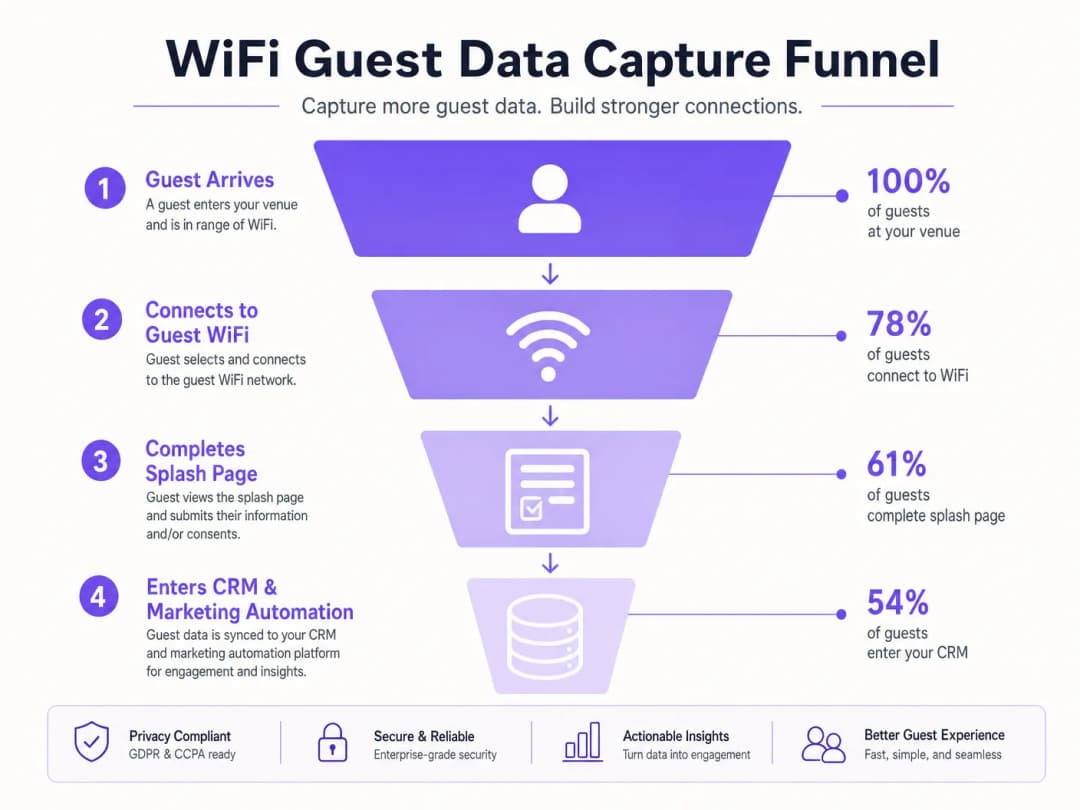
कैप्टिव पोर्टल अनुकूलन: स्प्लैश पेज प्रारंभिक टचपॉइंट के रूप में कार्य करता है, डेटा प्रोसेसिंग के लिए स्पष्ट सहमति (GDPR/CCPA अनुपालन) कैप्चर करता है और बेसलाइन जनसांख्यिकी एकत्र करता है। महत्वपूर्ण रूप से, इसे प्रोग्रेसिव प्रोफाइलिंग लागू करनी चाहिए — पहली यात्रा पर न्यूनतम डेटा (जैसे, ईमेल पता) का अनुरोध करना और बाद की यात्राओं पर अधिक समृद्ध प्रोफ़ाइल डेटा एकत्र करना। जो स्थान शुरुआत में ही अत्यधिक डेटा की मांग करते हैं, वे लगातार 60% से अधिक की ड्रॉप-ऑफ दर देखते हैं।
सहज प्रमाणीकरण (Passpoint/OpenRoaming): लौटने वाले आगंतुकों या वफादार ग्राहकों के लिए, घर्षण रहित ऑनबोर्डिंग महत्वपूर्ण है। IEEE 802.11u (Passpoint/Hotspot 2.0) को लागू करने से डिवाइस बिना किसी उपयोगकर्ता हस्तक्षेप के — WPA2/WPA3-Enterprise का उपयोग करके — स्वचालित रूप से सुरक्षित रूप से प्रमाणित हो जाते हैं, जो सेलुलर रोमिंग अनुभव को दर्शाता है। OpenRoaming इसे भाग लेने वाले नेटवर्क के संघ में विस्तारित करता है। Purple इस इकोसिस्टम में एक पहचान प्रदाता के रूप में कार्य करता है, जो अपने Connect लाइसेंस के तहत सुरक्षित, स्वचालित कनेक्शन की सुविधा प्रदान करता है। यह नामांकित उपयोगकर्ताओं के लिए कैप्टिव पोर्टल को पूरी तरह से समाप्त कर देता है, जिससे कैरियर-ग्रेड अनुभव मिलता है।
इंटेलिजेंस लेयर: डेटा प्रोसेसिंग और एनालिटिक्स
एक बार डिवाइस प्रमाणित हो जाने के बाद, नेटवर्क इन्फ्रास्ट्रक्चर — एक्सेस पॉइंट और कंट्रोलर — प्रचुर मात्रा में टेलीमेट्री डेटा उत्पन्न करता है। यह वह जगह है जहाँ WiFi Analytics प्लेटफॉर्म महत्वपूर्ण मूल्य प्रदान करते हैं, जो कच्चे नेटवर्क इवेंट्स को कार्रवाई योग्य व्यावसायिक बुद्धिमत्ता में बदलते हैं।
उपस्थिति और स्थान एनालिटिक्स: प्रोब अनुरोधों और RSSI (Received Signal Strength Indicator) डेटा का विश्लेषण करके, प्लेटफॉर्म पूरे स्थान पर ड्वेल टाइम, वापसी दर और फुट ट्रैफ़िक पैटर्न की गणना करता है। उन्नत परिनियोजन कुछ मीटर के भीतर सटीक इनडोर पोजीशनिंग के लिए कई एक्सेस पॉइंट्स, या BLE बीकन ओवरले में ट्राइलेटरेशन का उपयोग करते हैं।
MAC हैशिंग और गोपनीयता अनुपालन: यह महत्वपूर्ण अनुपालन सीमा है। इससे पहले कि कोई उपयोगकर्ता कैप्टिव पोर्टल के माध्यम से स्पष्ट सहमति प्रदान करे, सिस्टम को व्यक्तिगत रूप से पहचान योग्य जानकारी (PII) संग्रहीत नहीं करनी चाहिए। कच्चे MAC पतों को वन-वे क्रिप्टोग्राफिक हैश (जैसे, HMAC-SHA256) का उपयोग करके तुरंत अनाम किया जाना चाहिए। यह प्लेटफॉर्म को बिना किसी PII को संग्रहीत किए समग्र व्यवहार — ड्वेल टाइम, वापसी यात्रा की आवृत्ति — को ट्रैक करने की अनुमति देता है, जिससे GDPR Article 5 और CCPA का अनुपालन बना रहता है। एक बार जब उपयोगकर्ता प्रमाणित हो जाता है और सहमति प्रदान कर देता है, तो नेटवर्क डेटा को उनके पूर्ण उपयोगकर्ता प्रोफ़ाइल के साथ एकीकृत कर दिया जाता है।
इंटीग्रेशन लेयर: डेटा को सक्रिय करना
केवल नेटवर्किंग डैशबोर्ड में रहने वाला डेटा सीमित व्यावसायिक मूल्य प्रदान करता है। आर्किटेक्चर को व्यापक मार्केटिंग टेक्नोलॉजी स्टैक में रीयल-टाइम डेटा निर्यात का समर्थन करना चाहिए।
API और Webhook आर्किटेक्चर: प्रमाणित उपयोगकर्ता प्रोफाइल और स्थान इवेंट्स को CRM प्लेटफॉर्म, मार्केटिंग ऑटोमेशन टूल और लॉयल्टी अनुप्रयोगों में धकेलने के लिए मजबूत RESTful APIs और वेबहुक आवश्यक हैं। एकीकरण द्विदिश होना चाहिए — लौटने वाले आगंतुकों के लिए पोर्टल अनुभव को वैयक्तिकृत करने के लिए WiFi प्लेटफॉर्म को CRM से समृद्ध ग्राहक डेटा भी प्राप्त होना चाहिए।
ट्रिगर-आधारित जुड़ाव: एकीकरण रीयल-टाइम वर्कफ़्लो को स्वचालित करने में सक्षम बनाता है। WiFi से कनेक्ट होने वाले अतिथि द्वारा ट्रिगर किया गया एक वेबहुक कनेक्शन के कुछ सेकंड के भीतर एक वैयक्तिकृत स्वागत ईमेल या एक SMS ऑफ़र शुरू कर सकता है। एक प्रीमियम ज़ोन में प्रवेश करने वाले VIP ग्राहक द्वारा ट्रिगर किया गया स्थान इवेंट उनके मोबाइल ऐप पर एक अनुकूलित अधिसूचना भेज सकता है। यह वह तंत्र है जो एक निष्क्रिय नेटवर्क इवेंट को मापने योग्य राजस्व कार्रवाई में परिवर्तित करता है। जैसा कि हमारी गाइड How Personalisation Increases Customer Loyalty and Sales में बताया गया है, प्रासंगिक प्रासंगिकता रूपांतरण का प्राथमिक चालक है।

अपने विशिष्ट सेटअप को लेकर कोई सवाल हैं?
हमारी टीम 80,000 से अधिक वेन्यू में वेन्यू ऑपरेटरों, IT मैनेजरों और नेटवर्क इंजीनियरों के साथ काम करती है। 20 मिनट का कॉल बुक करें और हम आपको दिखाएंगे कि आपके जैसे अन्य लोगों ने इसे कैसे हल किया।
कार्यान्वयन गाइड: विक्रेता-तटस्थ परिनियोजन रणनीति
एक सफल परिनियोजन के लिए IT, मार्केटिंग और ऑपरेशन्स के बीच क्रॉस-फंक्शनल सहयोग की आवश्यकता होती है। निम्नलिखित अनुक्रम हॉस्पिटैलिटी, रिटेल और सार्वजनिक क्षेत्र के वातावरण में लागू होता है।
चरण 1 — डेटा रणनीति को परिभाषित करें: SSIDs को कॉन्फ़िगर करने से पहले, यह निर्धारित करें कि वास्तव में किस डेटा की आवश्यकता है और यह किस व्यावसायिक उद्देश्य को पूरा करता है। क्या आप एक ईमेल मार्केटिंग सूची बना रहे हैं, ऐप डाउनलोड बढ़ा रहे हैं, परिचालन अनुकूलन के लिए ड्वेल टाइम को ट्रैक कर रहे हैं, या OTA निर्भरता को कम कर रहे हैं? उत्तर कैप्टिव पोर्टल डिज़ाइन, आवश्यक एकीकरण और उन KPIs को निर्धारित करता है जिनके आधार पर परिनियोजन को मापा जाएगा।
चरण 2 — नेटवर्क मूल्यांकन और इन्फ्रास्ट्रक्चर सत्यापन: सुनिश्चित करें कि अंतर्निहित WLAN इन्फ्रास्ट्रक्चर उच्च-घनत्व वाले क्लाइंट वातावरण का समर्थन कर सकता है। इसमें RF साइट सर्वेक्षण, क्षमता योजना (पीक लोड पर प्रति एक्सेस पॉइंट न्यूनतम 25 क्लाइंट को लक्षित करना), और बैकहॉल बैंडविड्थ का सत्यापन शामिल है। उच्च-ट्रैफ़िक वाले स्थानों के लिए, मूल्यांकन करें कि थ्रूपुट और लेटेंसी SLAs की गारंटी के लिए एक समर्पित Leased Line आवश्यक है या नहीं।
चरण 3 — कैप्टिव पोर्टल कॉन्फ़िगरेशन: एक स्पष्ट मूल्य प्रस्ताव के साथ एक मोबाइल-फर्स्ट स्प्लैश पेज डिज़ाइन करें। प्रोग्रेसिव प्रोफाइलिंग लागू करें। सुनिश्चित करें कि सभी आवश्यक सेवाओं (सोशल लॉगिन APIs, ऐप स्टोर URLs, भुगतान गेटवे) के लिए पूर्व-प्रमाणीकरण ट्रैफ़िक की अनुमति देने के लिए walled garden को सही ढंग से कॉन्फ़िगर किया गया है। मार्केटिंग संचार के लिए स्पष्ट, असंदिग्ध ऑप्ट-इन तंत्र लागू करें — ईमेल, SMS और तीसरे पक्ष के साझाकरण के लिए अलग चेकबॉक्स GDPR के तहत सर्वोत्तम अभ्यास हैं।
चरण 4 — एकीकरण कॉन्फ़िगरेशन: WiFi प्लेटफॉर्म और CRM के बीच सुरक्षित API कनेक्शन स्थापित करें। डेटा फ़ील्ड को सटीक रूप से मैप करें। मजबूत त्रुटि हैंडलिंग, पुनः प्रयास तर्क और वितरण पुष्टि के साथ वेबहुक एंडपॉइंट लागू करें। सत्यापित करें कि Last Seen टाइमस्टैम्प, विज़िट आवृत्ति और स्थान की स्थिति का डेटा सही CRM फ़ील्ड में भर रहा है।
चरण 5 — परीक्षण और सत्यापन: सभी प्रमुख डिवाइस प्रकारों (iOS, Android, Windows, macOS) और ब्राउज़रों पर कड़ा एंड-टू-एंड परीक्षण करें। प्रत्येक प्रमाणीकरण पथ (ईमेल, सोशल लॉगिन, Passpoint) का परीक्षण करें। परीक्षण प्रोफाइल का उपयोग करके नेटवर्क एज से CRM तक डेटा प्रवाह को सत्यापित करें। गो-लाइव से पहले सभी walled garden समस्याओं का दस्तावेजीकरण और समाधान करें।
चरण 6 — निगरानी और निरंतर अनुकूलन: परिनियोजन के बाद, पोर्टल रूपांतरण दर, डेटा कैप्चर दर, API त्रुटि दर और वेबहुक वितरण सफलता को ट्रैक करने वाले डैशबोर्ड स्थापित करें। पहले महीने के दौरान साप्ताहिक रूप से इनकी समीक्षा करें। रूपांतरण को अनुकूलित करने के लिए पोर्टल डिज़ाइनों का A/B परीक्षण करें।
स्थान ऑपरेटरों के लिए सर्वोत्तम अभ्यास
घर्षण रहित पहुंच को प्राथमिकता दें: ऑनबोर्डिंग प्रक्रिया में प्रत्येक अतिरिक्त चरण रूपांतरण को कम करता है। जहाँ लागू हो, सोशल लॉगिन विकल्पों (OAuth 2.0) या सहज प्रमाणीकरण प्रोटोकॉल का उपयोग करें। एक अच्छी तरह से अनुकूलित पोर्टल के लिए लक्ष्य 30 सेकंड से कम का कनेक्ट-समय है।
मूल्य विनिमय को स्पष्ट करें: ग्राहक अपने डेटा के बदले में एक ठोस लाभ की उम्मीद करते हैं। स्प्लैश पेज पर लाभ को स्पष्ट रूप से बताएं — चाहे वह हाई-स्पीड एक्सेस हो, एक विशेष छूट हो, या उन्नत स्थान सेवाएं हों। अस्पष्ट या सामान्य संदेश ऑप्ट-इन दरों को महत्वपूर्ण रूप से कम करते हैं।
प्रासंगिक जुड़ाव ROI को बढ़ाता है: सही समय पर प्रासंगिक संदेश देने के लिए स्थान डेटा का लाभ उठाएं। एक सामान्य साप्ताहिक न्यूज़लेटर उस SMS की तुलना में बहुत कम प्रभावी होता है जो तब ट्रिगर होता है जब कोई ग्राहक किसी रिटेल स्टोर में किसी विशिष्ट विभाग या हॉस्पिटैलिटी स्थान में किसी विशिष्ट ज़ोन में प्रवेश करता है। यह रिटेल और अन्य भौतिक वातावरणों में ग्राहकों के साथ संबंध बनाने के तरीके के पीछे का मूल सिद्धांत है।
विभाजित और वैयक्तिकृत करें: अपने दर्शकों को विभाजित करने के लिए पोर्टल के माध्यम से कैप्चर की गई विज़िट आवृत्ति, ड्वेल टाइम और जनसांख्यिकीय डेटा का उपयोग करें। पहली बार आने वाले आगंतुकों, बार-बार आने वाले आगंतुकों और निष्क्रिय आगंतुकों को अलग-अलग संचार प्राप्त होने चाहिए। वैयक्तिकरण रणनीति पर एक विस्तृत ढांचे के लिए हमारी गाइड Wie Personalisierung Kundenbindung und Umsatz steigert देखें।
निरंतर निगरानी: डिजिटल कनेक्शन रणनीति एक बार सेट करके भूल जाने वाला परिनियोजन नहीं है। नियमित रूप से कनेक्शन एनालिटिक्स, पोर्टल ड्रॉप-ऑफ दर, एकीकरण लॉग और अभियान प्रदर्शन की समीक्षा करें। Apple और Google के OS अपडेट अक्सर कैप्टिव पोर्टल डिटेक्शन व्यवहार को बदल देते हैं, जिससे पोर्टल समायोजन की आवश्यकता होती है।
समस्या निवारण और जोखिम शमन
| जोखिम | मूल कारण | शमन |
|---|---|---|
| उच्च पोर्टल ड्रॉप-ऑफ दर | गलत तरीके से कॉन्फ़िगर किया गया walled garden; अत्यधिक डेटा अनुरोध; धीमा पोर्टल लोड समय | walled garden श्वेतसूची का ऑडिट करें; प्रोग्रेसिव प्रोफाइलिंग लागू करें; पोर्टल संपत्तियों को अनुकूलित करें |
| सोशल लॉगिन विफलताएं | प्रमाणीकरण प्रदाता सर्वर श्वेतसूची में नहीं हैं | सभी OAuth एंडपॉइंट IPs/डोमेन को walled garden में जोड़ें |
| GDPR गैर-अनुपालन | अंतर्निहित सहमति; लापता डेटा प्रतिधारण नीति | स्पष्ट ऑप्ट-इन चेकबॉक्स लागू करें; प्रतिधारण अवधि को परिभाषित और लागू करें; नियमित DPA ऑडिट आयोजित करें |
| CRM डेटा सिंक विफलताएं | API दर सीमाएं; स्कीमा परिवर्तन; वेबहुक वितरण विफलताएं | त्रुटि अलर्टिंग लागू करें; घातीय बैकऑफ़ पुनः प्रयास तर्क का उपयोग करें; वेबहुक वितरण दरों की निगरानी करें |
| खराब स्थान सटीकता | अपर्याप्त AP घनत्व; मल्टीपाथ हस्तक्षेप | RF सर्वेक्षण आयोजित करें; लक्षित क्षेत्रों में AP घनत्व बढ़ाएं; BLE बीकन ओवरले पर विचार करें |
| PCI-DSS स्कोप क्रीप | Guest WiFi नेटवर्क भुगतान नेटवर्क से ठीक से खंडित नहीं है | सख्त नेटवर्क विभाजन (अलग VLANs) लागू करें; सुनिश्चित करें कि अतिथि ट्रैफ़िक POS सिस्टम तक न पहुँच सके |
ROI और व्यावसायिक प्रभाव
लागत-केंद्र नेटवर्क से राजस्व-सक्षम प्लेटफॉर्म में संक्रमण मापने योग्य है। निम्नलिखित KPIs सी-सुइट को व्यावसायिक प्रभाव प्रदर्शित करने के लिए एक रूपरेखा प्रदान करते हैं।
| KPI | परिभाषा | बेंचमार्क |
|---|---|---|
| डेटा कैप्चर दर | स्थान के आगंतुकों का प्रतिशत जो प्रमाणित करते हैं और संपर्क जानकारी प्रदान करते हैं | 40-65% (स्थान के प्रकार और पोर्टल डिज़ाइन के आधार पर भिन्न होता) |
| ईमेल सूची विकास दर | WiFi के कारण प्रति माह नए ऑप्ट-इन संपर्क | स्थान पर निर्भर; महीने-दर-महीने के रुझान को ट्रैक करें |
| अभियान-श्रेय राजस्व | WiFi पोर्टल के माध्यम से प्राप्त ग्राहकों से राजस्व, CRM के माध्यम से ट्रैक किया गया | UTM ट्रैकिंग और CRM एट्रिब्यूशन की आवश्यकता है |
| वापसी यात्रा दर | WiFi उपयोगकर्ताओं का प्रतिशत जो 30/60/90 दिनों के भीतर वापस आते हैं | बेसलाइन भिन्न होती है; अभियान के बाद की वृद्धि को ट्रैक करें |
| ड्वेल टाइम | कनेक्टेड उपयोगकर्ताओं द्वारा स्थान पर बिताया गया औसत समय | परिचालन बेंचमार्क; लेआउट और स्टाफिंग को अनुकूलित करने के लिए उपयोग करें |
| ऐप डाउनलोड दर | पोर्टल उपयोगकर्ताओं का प्रतिशत जो स्थान ऐप डाउनलोड करते हैं | मजबूत प्रोत्साहन के साथ 15-25% का लक्ष्य |
केस स्टडी: बुटीक होटल ग्रुप (200 कमरे, 3 संपत्तियां)
एक बुटीक होटल समूह ने अपने मौजूदा PMS और ईमेल मार्केटिंग प्लेटफॉर्म के साथ एकीकृत करते हुए, तीन संपत्तियों में Purple के अतिथि WiFi प्लेटफॉर्म को तैनात किया। कैप्टिव पोर्टल को उन मेहमानों की पहचान करने के लिए कॉन्फ़िगर किया गया था जिन्होंने OTAs के माध्यम से बुकिंग की थी और उन्हें उनके अगले प्रवास पर सीधे बुकिंग के लिए एक वैयक्तिकृत ऑफ़र दिया गया था। छह महीनों के भीतर, समूह ने बार-बार आने वाले मेहमानों से सीधे बुकिंग पूछताछ में 22% की वृद्धि, उनके ऑप्ट-इन ईमेल डेटाबेस में 41% की वृद्धि और OTA कमीशन लागतों में मापने योग्य कमी की सूचना दी। परिनियोजन ने पहली तिमाही के भीतर ही अपनी लागत वसूल कर ली।
केस स्टडी: क्षेत्रीय रिटेल श्रृंखला (45 स्टोर)
एक क्षेत्रीय रिटेल श्रृंखला ने अपने लॉयल्टी CRM के साथ प्लेटफॉर्म को एकीकृत करते हुए, 45 स्टोर्स में अतिथि WiFi तैनात किया। स्थान एनालिटिक्स ने पहचान की कि होमवेयर अनुभाग का दौरा करने वाले ग्राहकों का एक महत्वपूर्ण हिस्सा खरीदारी के लिए आगे नहीं बढ़ा। एक ट्रिगर की गई SMS अभियान — जो उन ग्राहकों को भेजा गया था जो बिना कोई लेनदेन किए तीन मिनट से अधिक समय तक उस अनुभाग में रुके थे — जिसमें 10% की छूट की पेशकश की गई थी, ने उस विशिष्ट श्रेणी पर 17% रूपांतरण वृद्धि दर्ज की। अभियान को WiFi प्लेटफॉर्म के लाइव होने के चार सप्ताह के भीतर डिज़ाइन, तैनात और परिणाम उत्पन्न करने के लिए तैयार किया गया था।
मुख्य परिभाषाएं
कैप्टिव पोर्टल
एक वेब पेज जिसके साथ सार्वजनिक-पहुंच नेटवर्क के उपयोगकर्ता को पूर्ण इंटरनेट एक्सेस दिए जाने से पहले बातचीत करना आवश्यक होता है। इसका उपयोग प्रमाणीकरण, भुगतान प्रसंस्करण, या सहमति और जनसांख्यिकीय डेटा कैप्चर करने के लिए किया जाता है।
एक अज्ञात भौतिक आगंतुक को एक ज्ञात डिजिटल प्रोफ़ाइल में बदलने के लिए प्राथमिक इंटरफ़ेस। पोर्टल डिज़ाइन और लोड गति सीधे डेटा कैप्चर दरों को प्रभावित करती है।
MAC Hashing
एक क्रिप्टोग्राफिक प्रक्रिया (आमतौर पर HMAC-SHA256) जो किसी डिवाइस के मीडिया एक्सेस कंट्रोल (MAC) पते को अपरिवर्तनीय रूप से अनाम बनाती है। यह स्थानों को स्पष्ट उपयोगकर्ता सहमति से पहले व्यक्तिगत रूप से पहचान योग्य जानकारी (PII) संग्रहीत किए बिना कुल फुटफॉल और ड्वेल टाइम को ट्रैक करने की अनुमति देता है।
अप्रमाणित उपकरणों से मूल्यवान परिचालन एनालिटिक्स एकत्र करते हुए भी GDPR Article 5 और CCPA अनुपालन बनाए रखने के लिए महत्वपूर्ण है।
Passpoint (Hotspot 2.0 / IEEE 802.11u)
एक उद्योग मानक जो नेटवर्क एक्सेस को सुव्यवस्थित करता है, जिससे डिवाइस उपयोगकर्ता के हस्तक्षेप या कैप्टिव पोर्टल को पूरा करने की आवश्यकता के बिना WPA2/WPA3-Enterprise क्रेडेंशियल्स का उपयोग करके भाग लेने वाले WiFi नेटवर्क से स्वचालित रूप से और सुरक्षित रूप से कनेक्ट हो सकते हैं।
वफादार ग्राहकों और मोबाइल ऐप उपयोगकर्ताओं के लिए एक घर्षण रहित, सेलुलर जैसी रोमिंग अनुभव प्रदान करने के लिए आवश्यक है। नामांकित उपकरणों के लिए कैप्टिव पोर्टल को समाप्त करता है।
OpenRoaming
एक वायरलेस ब्रॉडबैंड एलायंस (WBA) फेडरेशन जो उपयोगकर्ताओं को बार-बार मैन्युअल प्रमाणीकरण के बिना भाग लेने वाले WiFi नेटवर्क और सेलुलर नेटवर्क के बीच सहज और सुरक्षित रूप से रोम करने में सक्षम बनाता है। यह Passpoint/IEEE 802.11u पर निर्मित है।
कई स्थानों और ऑपरेटरों में एक सहज कनेक्टिविटी अनुभव प्रदान करता है। Purple अपने Connect लाइसेंस के तहत OpenRoaming फेडरेशन के भीतर एक पहचान प्रदाता के रूप में कार्य करता है।
Walled Garden
कंट्रोलर या फ़ायरवॉल पर एक नेटवर्क कॉन्फ़िगरेशन जो अप्रमाणित उपयोगकर्ताओं को पूर्ण नेटवर्क एक्सेस दिए जाने से पहले IP पतों या डोमेन के एक विशिष्ट, प्रतिबंधित सेट तक पहुंच की अनुमति देता है।
सोशल लॉगिन (OAuth) को सक्षम करने, ऐप डाउनलोड को बढ़ावा देने, या कैप्टिव पोर्टल पर भुगतान पृष्ठों तक पहुंच प्रदान करने के लिए आवश्यक है। गलत कॉन्फ़िगरेशन पोर्टल प्रमाणीकरण विफलताओं का प्रमुख कारण है।
RSSI (Received Signal Strength Indicator)
प्राप्त रेडियो सिग्नल के शक्ति स्तर का एक माप, जिसे dBm में व्यक्त किया जाता है। एनालिटिक्स प्लेटफॉर्म द्वारा किसी विशिष्ट एक्सेस पॉइंट से डिवाइस की निकटता का अनुमान लगाने के लिए उपयोग किया जाता है।
ड्वेल टाइम, फुटफॉल घनत्व और बुनियादी इनडोर स्थान ट्रैकिंग की गणना के लिए बुनियादी मीट्रिक। जब तीन या अधिक एक्सेस पॉइंट्स पर ट्राइलेटरेशन लागू किया जाता है तो सटीकता में काफी सुधार होता है।
प्रोग्रेसिव प्रोफाइलिंग
एक डेटा संग्रह रणनीति जो शुरुआत में ही एक व्यापक प्रोफ़ाइल का अनुरोध करने के बजाय, कई इंटरैक्शन या विज़िट में वृद्धिशील रूप से ग्राहक जानकारी एकत्र करती है।
प्रारंभिक ऑनबोर्डिंग के दौरान घर्षण को कम करके कैप्टिव पोर्टल रूपांतरण दरों में सुधार करता है। विशेष रूप से रिटेल और हॉस्पिटैलिटी वातावरण में प्रभावी है जहाँ बार-बार आना आम बात है।
Webhook
एक HTTP कॉलबैक तंत्र जो स्रोत प्रणाली में एक परिभाषित इवेंट होने पर एक निर्दिष्ट एंडपॉइंट URL पर एक रीयल-टाइम डेटा पेलोड भेजता है।
बाहरी प्रणालियों में रीयल-टाइम क्रियाओं (CRM अपडेट, SMS भेजना, पुश नोटिफिकेशन) को ट्रिगर करने के लिए उपयोग किया जाता है जैसे ही कोई विशिष्ट नेटवर्क इवेंट होता है (उपयोगकर्ता कनेक्शन, ज़ोन प्रविष्टि, ड्वेल सीमा पार होना)।
First-Party Data
स्पष्ट सहमति के साथ, स्वामित्व वाले चैनलों और इंटरैक्शन के माध्यम से सीधे ग्राहकों से एकत्र किया गया डेटा। इसमें ईमेल पते, जनसांख्यिकीय जानकारी और कैप्टिव पोर्टल के माध्यम से कैप्चर किया गया व्यवहार डेटा शामिल है।
तेजी से मूल्यवान हो रहा है क्योंकि तीसरे पक्ष के कुकी मूल्यह्रास डिजिटल विज्ञापन लक्ष्यीकरण को सीमित करता है। WiFi-कैप्चर किया गया फर्स्ट-पार्टी डेटा भौतिक-स्थान वाले व्यवसायों के लिए एक रणनीतिक संपत्ति है।
हल किए गए उदाहरण
एक 200 कमरों वाला बुटीक होटल सीधे बुकिंग बढ़ाना चाहता है और OTAs (ऑनलाइन ट्रैवल एजेंसियों) पर निर्भरता कम करना चाहता है। वे वर्तमान में बिना किसी डेटा कैप्चर के एक खुला, अप्रमाणित अतिथि WiFi नेटवर्क प्रदान करते हैं।
- ईमेल प्रमाणीकरण या सोशल लॉगिन (OAuth 2.0) की आवश्यकता वाले कैप्टिव पोर्टल को तैनात करें। 2. WiFi प्रमाणीकरण के बिंदु पर यह पहचानने के लिए कि किन मेहमानों ने OTAs के माध्यम से बुकिंग की है, API के माध्यम से प्रॉपर्टी मैनेजमेंट सिस्टम (PMS) के साथ एकीकृत करें। 3. प्रमाणित अतिथि प्रोफाइल को सिंक करने के लिए मार्केटिंग ऑटोमेशन प्लेटफॉर्म के साथ एक API एकीकरण कॉन्फ़िगर करें। 4. एक स्वचालित ट्रिगर वर्कफ़्लो सेट करें: जब कोई अतिथि प्रमाणित होता है, तो सिस्टम PMS बुकिंग स्रोत की जाँच करता है। यदि स्रोत एक OTA है, तो उनके अगले प्रवास के लिए सीधे-बुकिंग छूट या लॉयल्टी लाभ की पेशकश करने वाला एक वैयक्तिकृत ईमेल ट्रिगर होता है। 5. सीधे बुकिंग मूल्य प्रस्ताव को सुदृढ़ करने के लिए एक पोस्ट-स्टे स्वचालित ईमेल अनुक्रम (चेक-आउट के 48 घंटे बाद ट्रिगर) कॉन्फ़िगर करें। 6. ईमेल अभियानों में सभी सीधे बुकिंग लिंक पर UTM मापदंडों के माध्यम से रूपांतरण को ट्रैक करें।
एक बड़ा स्टेडियम (क्षमता 60,000) प्रशंसकों के अनुभव को बेहतर बनाना चाहता है और अपने मोबाइल ऐप के माध्यम से इन-सीट भोजन और पेय ऑर्डर करने के लिए प्रेरित करना चाहता है, लेकिन ऐप अपनाने की दर वर्तमान में उपस्थित लोगों के 8% से कम है।
- नामांकित ऐप उपयोगकर्ताओं के लिए उच्च-घनत्व वाले वातावरण में स्वचालित, घर्षण रहित कनेक्टिविटी प्रदान करने के लिए OpenRoaming/Passpoint लागू करें — यह ऐप डाउनलोड के लिए एक मजबूत प्रोत्साहन भी प्रदान करता है। 2. ऐप डाउनलोड को प्राथमिक कॉल-टू-एक्शन के रूप में प्रदर्शित करने के लिए कैप्टिव पोर्टल (गैर-रोमिंग उपयोगकर्ताओं के लिए) को कॉन्फ़िगर करें, जिसमें एक स्पष्ट प्रोत्साहन (जैसे, पहले इन-सीट ऑर्डर पर एक मुफ्त पेय) हो। 3. रीयल-टाइम ड्वेल टाइम डेटा के आधार पर भीड़भाड़ वाले क्षेत्रों (कॉन्कोर्स बार, विशिष्ट रियायत स्टैंड) की पहचान करने के लिए स्थान एनालिटिक्स का उपयोग करें। 4. स्थान-आधारित पुश नोटिफिकेशन (ऐप के माध्यम से) या SMS संदेश कॉन्फ़िगर करें — जो तब ट्रिगर होते हैं जब एक उच्च-भीड़भाड़ वाले क्षेत्र में एक मान्यता प्राप्त उपयोगकर्ता डिवाइस का पता चलता है — प्रशंसकों को कम भीड़भाड़ वाले रियायतों की ओर निर्देशित करते हैं या इन-सीट डिलीवरी की पेशकश करते हैं। 5. इवेंट के बाद, सभी प्रमाणित उपस्थित लोगों को एक वैयक्तिकृत हाइलाइट रील लिंक और अगले इवेंट के लिए प्री-रजिस्टर करने के संकेत के साथ एक री-एंगेजमेंट ईमेल ट्रिगर करें।
अभ्यास प्रश्न
Q1. एक रिटेल श्रृंखला अपने कैप्टिव पोर्टल पर 70% ड्रॉप-ऑफ दर का सामना कर रही है। उपयोगकर्ता SSID से कनेक्ट होते हैं लेकिन प्रमाणित करने से पहले स्प्लैश पेज छोड़ देते हैं। पोर्टल Facebook और Google लॉगिन विकल्प प्रदान करता है। सबसे संभावित आर्किटेक्चरल या कॉन्फ़िगरेशन समस्या क्या है, और आप इसका निदान और समाधान कैसे करेंगे?
संकेत: विचार करें कि प्रमाणीकरण पूरा होने से पहले किस नेटवर्क एक्सेस की आवश्यकता है, और पोर्टल किन सेवाओं पर निर्भर करता है।
मॉडल उत्तर देखें
सबसे संभावित समस्या एक गलत तरीके से कॉन्फ़िगर किया गया walled garden है। कैप्टिव पोर्टल Facebook और Google OAuth प्रमाणीकरण एंडपॉइंट्स को लोड करने का प्रयास कर रहा है, लेकिन उन डोमेन और IP श्रेणियों को पूर्व-प्रमाणीकरण walled garden में श्वेतसूची में नहीं डाला गया है। ब्राउज़र लॉगिन स्क्रिप्ट लोड करने में चुपचाप विफल हो जाता है, जिससे उपयोगकर्ता को एक टूटा हुआ या अनुत्तरदायी पोर्टल दिखाई देता है। निदान: अतिथि SSID से जुड़े एक परीक्षण डिवाइस पर ब्राउज़र डेवलपर टूल का निरीक्षण करें — oauth.facebook.com, accounts.google.com और संबंधित CDN डोमेन के लिए अवरुद्ध अनुरोधों (HTTP 403 या कनेक्शन टाइमआउट) की तलाश करें। समाधान: नेटवर्क कंट्रोलर पर walled garden श्वेतसूची में सभी आवश्यक OAuth एंडपॉइंट डोमेन और IP श्रेणियों को जोड़ें। पोर्टल द्वारा लोड की गई किसी भी CDN संपत्ति (JavaScript, CSS) का भी ऑडिट करें जो अवरुद्ध हो सकती है। माध्यमिक विचार: यदि फ़ॉर्म भी बहुत लंबा है, तो घर्षण को और कम करने के लिए प्रोग्रेसिव प्रोफाइलिंग लागू करें।
Q2. एक सार्वजनिक क्षेत्र के स्थान (एक बड़ा नगरपालिका पुस्तकालय) को परिषद के समक्ष स्टाफिंग स्तरों और खुलने के घंटों को सही ठहराने के लिए आगंतुकों के ड्वेल टाइम और वापसी यात्रा की आवृत्ति को ट्रैक करने की आवश्यकता है। वे अपने सार्वजनिक पहुंच जनादेश के कारण उपयोगकर्ताओं को पंजीकरण या लॉग इन करने की आवश्यकता नहीं कर सकते हैं। आप GDPR का कड़ाई से पालन करते हुए इस एनालिटिक्स क्षमता को कैसे प्रदान करते हैं?
संकेत: विचार करें कि बिना किसी व्यक्तिगत रूप से पहचान योग्य जानकारी को संग्रहीत किए लौटने वाले उपकरणों की पहचान कैसे करें।
मॉडल उत्तर देखें
MAC हैशिंग का उपयोग करके निष्क्रिय उपस्थिति एनालिटिक्स तैनात करें। एक्सेस पॉइंट सीमा के भीतर सभी उपकरणों से प्रोब अनुरोधों का पता लगाते हैं — जिनमें वे भी शामिल हैं जो कभी WiFi से कनेक्ट नहीं होते हैं। एनालिटिक्स प्लेटफॉर्म तुरंत प्रत्येक पाए गए MAC पते पर एक-तरफ़ा क्रिप्टोग्राफिक हैश (जैसे, रोटेटिंग साल्ट के साथ HMAC-SHA256) लागू करता है। परिणामी हैश संग्रहीत किया जाता है, न कि मूल MAC पता। यह सिस्टम को बिना किसी PII को संग्रहीत किए एक लौटने वाले हैश किए गए पहचानकर्ता को पहचानने (वापसी यात्रा की आवृत्ति और ड्वेल टाइम की गणना करने) की अनुमति देता है। GDPR के तहत, एक उचित रूप से कार्यान्वित हैश किया गया MAC पता व्यक्तिगत डेटा के बजाय छद्म नाम डेटा माना जाता है, बशर्ते कि मूल MAC को रिवर्स-इंजीनियर न किया जा सके — जिसे एक सुरक्षित साल्ट के साथ वन-वे हैश सुनिश्चित करता है। स्थान को इस प्रसंस्करण गतिविधि को अपने रिकॉर्ड ऑफ प्रोसेसिंग एक्टिविटीज (RoPA) में प्रलेखित करना चाहिए और इसे परिचालन एनालिटिक्स के लिए एक वैध हित आधार के रूप में अपने गोपनीयता नोटिस में शामिल करना चाहिए।
Q3. एक स्टेडियम IT निदेशक VIP सीज़न टिकट धारकों को प्रीमियम हॉस्पिटैलिटी लाउंज में प्रवेश करते ही एक मानार्थ पेय की पेशकश करते हुए एक वैयक्तिकृत SMS ऑफ़र ट्रिगर करना चाहता है। वास्तविक समय में इसे वितरित करने के लिए आवश्यक तकनीकी आर्किटेक्चर डिज़ाइन करें।
संकेत: इस बारे में सोचें कि सिस्टम उपयोगकर्ता की पहचान कैसे करता है, उनके स्थान का निर्धारण कैसे करता है, और आउटबाउंड संचार को कैसे ट्रिगर करता है।
मॉडल उत्तर देखें
इसके लिए चार-घटक एकीकरण आर्किटेक्चर की आवश्यकता होती है। पहला, पहचान समाधान: CRM/टिकटिंग सिस्टम को WiFi प्लेटफॉर्म के साथ सिंक्रोनाइज़ किया जाना चाहिए, जिससे VIP सीज़न टिकट धारक रिकॉर्ड को उनके प्रमाणित WiFi डिवाइस प्रोफाइल (MAC पता या Passpoint क्रेडेंशियल) से मैप किया जा सके। दूसरा, ज़ोन परिभाषा: प्रीमियम लाउंज को WiFi एनालिटिक्स प्लेटफॉर्म में एक नामित स्थान ज़ोन के रूप में परिभाषित किया जाना चाहिए, जिसमें एक सटीक भौगोलिक सीमा बनाने के लिए एक्सेस पॉइंट ट्राइलेटरेशन या BLE बीकन ओवरले का उपयोग किया जाए। तीसरा, इवेंट ट्रिगरिंग: एक मान्यता प्राप्त VIP डिवाइस के लाउंज ज़ोन के भीतर पाए जाने पर फायर करने के लिए WiFi प्लेटफॉर्म पर एक वेबहुक कॉन्फ़िगर किया जाना चाहिए। चौथा, SMS प्रेषण: वेबहुक पेलोड (जिसमें उपयोगकर्ता पहचानकर्ता और ज़ोन प्रविष्टि टाइमस्टैम्प शामिल है) को SMS गेटवे API पर भेजा जाता, जो CRM से उपयोगकर्ता का मोबाइल नंबर ढूंढता है और वैयक्तिकृत ऑफ़र संदेश भेजता है। ज़ोन प्रविष्टि से SMS वितरण तक एंड-टू-एंड लेटेंसी का लक्ष्य 30 सेकंड से कम होना चाहिए। प्रेषण से पहले सुनिश्चित करें कि उपयोगकर्ता ने अपने CRM प्रोफ़ाइल में स्पष्ट SMS मार्केटिंग सहमति प्रदान की है।
Q4. आपका संगठन 45-स्टोर रिटेल श्रृंखला में अतिथि WiFi तैनात कर रहा है। CISO ने PCI-DSS स्कोप क्रीप के बारे में चिंताएं उठाई हैं — विशेष रूप से, कि अतिथि WiFi ट्रैफ़िक संभावित रूप से भुगतान कार्ड नेटवर्क तक पहुँच सकता है। इस जोखिम को दूर करने के लिए आप नेटवर्क का आर्किटेक्चर कैसे तैयार करते हैं?
संकेत: नेटवर्क विभाजन मानकों और न्यूनतम विशेषाधिकार के सिद्धांत पर विचार करें।
मॉडल उत्तर देखें
सख्त नेटवर्क विभाजन प्राथमिक नियंत्रण है। अतिथि WiFi SSID को एक समर्पित VLAN पर अलग किया जाना चाहिए जिसका भुगतान कार्ड नेटवर्क (कार्डधारक डेटा पर्यावरण, या CDE) से कोई लेयर 2 या लेयर 3 कनेक्टिविटी न हो। इसे नेटवर्क कंट्रोलर पर लागू किया जाता है और फ़ायरवॉल पर सत्यापित किया जाता है। विशेष रूप से: 1) अतिथि VLAN को CDE IP श्रेणियों के लिए नियत किसी भी ट्रैफ़िक के लिए एक स्पष्ट deny-all नियम के साथ एक अलग फ़ायरवॉल ज़ोन पर समाप्त किया जाना चाहिए। 2) अतिथि SSID को आंतरिक कॉर्पोरेट नेटवर्क को पूरी तरह से बायपास करते हुए, एक अलग अपलिंक या DMZ के माध्यम से सीधे इंटरनेट पर रूट किया जाना चाहिए। 3) यह सत्यापित करने के लिए कि अतिथि VLAN पर कोई डिवाइस किसी CDE सिस्टम तक नहीं पहुँच सकता है, PCI-DSS मूल्यांकन के हिस्से के रूप में एक नेटवर्क विभाजन परीक्षण आयोजित करें। 4) PCI-DSS स्कोपिंग दस्तावेज़ में विभाजन आर्किटेक्चर का दस्तावेजीकरण करें। यह दृष्टिकोण अतिथि WiFi नेटवर्क को PCI-DSS स्कोप से पूरी तरह से हटा देता है, बशर्ते कि विभाजन मजबूत और सत्यापित हो।
इस श्रृंखला में आगे पढ़ें
रेस्टोरेंट WiFi मार्केटिंग: फ्री WiFi को दोबारा आने वाले ग्राहकों में कैसे बदलें
यह आधिकारिक तकनीकी संदर्भ गाइड रेस्टोरेंट WiFi मार्केटिंग के आर्किटेक्चर और कार्यान्वयन की पड़ताल करती है — जो गेस्ट नेटवर्क एक्सेस को एक संरचित डेटा अधिग्रहण और मार्केटिंग ऑटोमेशन चैनल के रूप में उपयोग करने की प्रथा है। यह IT प्रबंधकों, नेटवर्क आर्किटेक्ट्स और वेन्यू संचालन निदेशकों को Captive Portals को तैनात करने, CRM प्लेटफॉर्म के साथ एकीकृत करने और स्वचालित अभियानों को ट्रिगर करने के लिए एक व्यावहारिक खाका प्रदान करता है जो मापने योग्य दोबारा आने वाले व्यवसाय को बढ़ावा देते हैं। GDPR-अनुपालन डेटा कैप्चर से लेकर इवेंट-संचालित ईमेल वर्कफ़्लो तक, यह गाइड ठोस ROI मेट्रिक्स के साथ पूर्ण परिनियोजन जीवनचक्र को कवर करती है।
मार्केटिंग कैंपेन में फ़र्स्ट-पार्टी डेटा का उपयोग कैसे करें
यह आधिकारिक गाइड विस्तार से बताती है कि एंटरप्राइज़ IT और मार्केटिंग टीमें अपने गेस्ट WiFi इंफ्रास्ट्रक्चर को एक शक्तिशाली फ़र्स्ट-पार्टी डेटा इंजन में कैसे बदल सकती हैं। इसमें डेटा कैप्चर के लिए तकनीकी आर्किटेक्चर, GDPR-कंप्लायंट सहमति प्रबंधन, सेगमेंटेशन रणनीतियाँ, और ईमेल, SMS, सोशल एडवरटाइज़िंग और प्रोग्रामेटिक डिस्प्ले में वास्तविक दुनिया के एक्टिवेशन शामिल हैं। वेन्यू ऑपरेटरों और IT टीमों को ठोस इम्प्लीमेंटेशन मार्गदर्शन, हॉस्पिटैलिटी और रिटेल से काम किए गए उदाहरण, और मापने योग्य ROI फ़्रेमवर्क मिलेंगे।
सोशल WiFi: यह क्या है और यह ग्राहक जुड़ाव को कैसे बढ़ावा देता है
यह आधिकारिक तकनीकी संदर्भ गाइड सोशल WiFi के आर्किटेक्चर, डिप्लॉयमेंट और व्यावसायिक मूल्य को कवर करती है - जो कि एक कैप्टिव पोर्टल पर OAuth 2.0 सोशल लॉगिन के माध्यम से गेस्ट नेटवर्क उपयोगकर्ताओं को प्रमाणित करने की प्रथा है। यह IT प्रबंधकों, नेटवर्क आर्किटेक्ट्स और वेन्यू ऑपरेशंस निदेशकों को तकनीकी कार्यान्वयन, GDPR अनुपालन और लक्षित ग्राहक जुड़ाव के लिए कैप्चर किए गए फर्स्ट-पार्टी डेटा का लाभ उठाने पर व्यावहारिक मार्गदर्शन प्रदान करती है। हॉस्पिटैलिटी, रिटेल और इवेंट क्षेत्रों के वेन्यू ऑपरेटरों को ठोस डिप्लॉयमेंट फ्रेमवर्क और वास्तविक दुनिया के परिदृश्य मिलेंगे जो मापने योग्य ROI प्रदर्शित करते हैं।
अपने विशिष्ट सेटअप को लेकर कोई सवाल हैं?
हमारी टीम 80,000 से अधिक वेन्यू में वेन्यू ऑपरेटरों, IT मैनेजरों और नेटवर्क इंजीनियरों के साथ काम करती है। 20 मिनट का कॉल बुक करें और हम आपको दिखाएंगे कि आपके जैसे अन्य लोगों ने इसे कैसे हल किया।