
रेस्टोरेंट WiFi मार्केटिंग: फ्री WiFi को दोबारा आने वाले ग्राहकों में कैसे बदलें
यह आधिकारिक तकनीकी संदर्भ गाइड रेस्टोरेंट WiFi मार्केटिंग के आर्किटेक्चर और कार्यान्वयन की पड़ताल करती है — जो गेस्ट नेटवर्क एक्सेस को एक संरचित डेटा अधिग्रहण और मार्केटिंग ऑटोमेशन चैनल के रूप में उपयोग करने की प्रथा है। यह IT प्रबंधकों, नेटवर्क आर्किटेक्ट्स और वेन्यू संचालन निदेशकों को Captive Portals को तैनात करने, CRM प्लेटफॉर्म के साथ एकीकृत करने और स्वचालित अभियानों को ट्रिगर करने के लिए एक व्यावहारिक खाका प्रदान करता है जो मापने योग्य दोबारा आने वाले व्यवसाय को बढ़ावा देते हैं। GDPR-अनुपालन डेटा कैप्चर से लेकर इवेंट-संचालित ईमेल वर्कफ़्लो तक, यह गाइड ठोस ROI मेट्रिक्स के साथ पूर्ण परिनियोजन जीवनचक्र को कवर करती है।
इस गाइड को सुनें
पॉडकास्ट ट्रांसक्रिप्ट देखें
हमारी मुख्य श्रृंखला का हिस्सा: WiFi Marketing Guide →

कार्यकारी सारांश
हॉस्पिटैलिटी, रिटेल और सार्वजनिक क्षेत्र के वातावरण में काम करने वाले IT प्रबंधकों, नेटवर्क आर्किटेक्ट्स और CTOs के लिए, गेस्ट नेटवर्क एक्सेस प्रदान करना एक बुनियादी उपयोगिता से बढ़कर एक महत्वपूर्ण डेटा अधिग्रहण चैनल (data acquisition channel) में बदल गया है। नेटवर्क इंफ्रास्ट्रक्चर निवेश से ROI प्राप्त करने के लिए यह समझना बुनियादी है कि रेस्टोरेंट WiFi मार्केटिंग क्या है। यह गाइड उस तकनीकी आर्किटेक्चर, परिनियोजन (deployment) रणनीतियों और जोखिम शमन (risk mitigation) प्रोटोकॉल की रूपरेखा तैयार करती है जो एक लागत-केंद्र (cost-centre) — फ्री गेस्ट WiFi — को दोबारा आने वाले बिजनेस और ग्राहक निष्ठा (customer loyalty) के एक मापने योग्य चालक में बदलने के लिए आवश्यक हैं।
एंटरप्राइज-ग्रेड Guest WiFi समाधान को तैनात करने के लिए केवल एक SSID प्रसारित करने से कहीं अधिक की आवश्यकता होती है। इसके लिए एक मजबूत आर्किटेक्चर की आवश्यकता होती है जो CRM प्लेटफॉर्म, मार्केटिंग ऑटोमेशन टूल और एनालिटिक्स इंजन के साथ सहजता से एकीकृत हो, और साथ ही GDPR और PCI DSS सहित कड़े अनुपालन मानकों का पालन करे। Captive Portals के माध्यम से संरचित डेटा कैप्चर लागू करके, वेन्यू उपयोगकर्ताओं को विभाजित (segment) कर सकते हैं, स्वचालित मार्केटिंग अभियान (यात्रा के बाद के ईमेल, जन्मदिन के ऑफ़र और इवेंट प्रमोशन) ट्रिगर कर सकते हैं और मूल्यवान समीक्षाएं (reviews) उत्पन्न कर सकते हैं। यह गाइड थ्रूपुट को अधिकतम करने, सुरक्षा सुनिश्चित करने और मापने योग्य व्यावसायिक प्रभाव को चलाने के लिए WiFi मार्केटिंग वर्कफ़्लो को कॉन्फ़िगर और अनुकूलित (optimise) करने के लिए एक व्यावहारिक खाका (tactical blueprint) प्रदान करती है।
तकनीकी गहन विश्लेषण: आर्किटेक्चर और मानक
प्रभावी गेस्ट WiFi मार्केटिंग की नींव एक स्केलेबल और सुरक्षित नेटवर्क आर्किटेक्चर पर टिकी है। इसके मूल में, सिस्टम एक Captive Portal तंत्र पर निर्भर करता है जो अनधिकृत (unauthenticated) उपकरणों से HTTP/HTTPS अनुरोधों को रोकता है, और उन्हें एक होस्ट किए गए प्रमाणीकरण (authentication) पेज पर रीडायरेक्ट करता है। यह प्रक्रिया आमतौर पर केंद्रीकृत प्रमाणीकरण, प्राधिकरण और लेखांकन (AAA) के लिए RADIUS (रिमोट ऑथेंटिकेशन डायल-इन यूजर सर्विस) का उपयोग करती है।
प्रमाणीकरण वर्कफ़्लो और डेटा कैप्चर
जब एक डिवाइस गेस्ट SSID से कनेक्ट होता है, तो वायरलेस LAN कंट्रोलर (WLC) या एक्सेस पॉइंट नेटवर्क एक्सेस को प्रतिबंधित कर देता है, जिससे डिवाइस एक Walled Garden में आ जाता है। उपयोगकर्ता के सामने एक Captive Portal प्रस्तुत किया जाता है, जो प्राथमिक डेटा अधिग्रहण इंटरफ़ेस के रूप में कार्य करता है। रूपांतरण दरों (conversion rates) को अनुकूलित करने के लिए, पोर्टल को कई प्रमाणीकरण विधियों का समर्थन करना चाहिए:
| प्रमाणीकरण विधि | घर्षण स्तर (Friction Level) | डेटा गुणवत्ता | कार्यान्वयन जटिलता |
|---|---|---|---|
| सोशल लॉगिन (OAuth 2.0) | कम | उच्च (जनसांख्यिकीय-समृद्ध) | मध्यम |
| फॉर्म-आधारित (ईमेल + ऑप्ट-इन) | मध्यम | नियंत्रित | कम |
| SMS सत्यापन | मध्यम-उच्च | उच्च (सत्यापित मोबाइल) | मध्यम |
| Passpoint / Hotspot 2.0 | बहुत कम | मध्यम | उच्च |
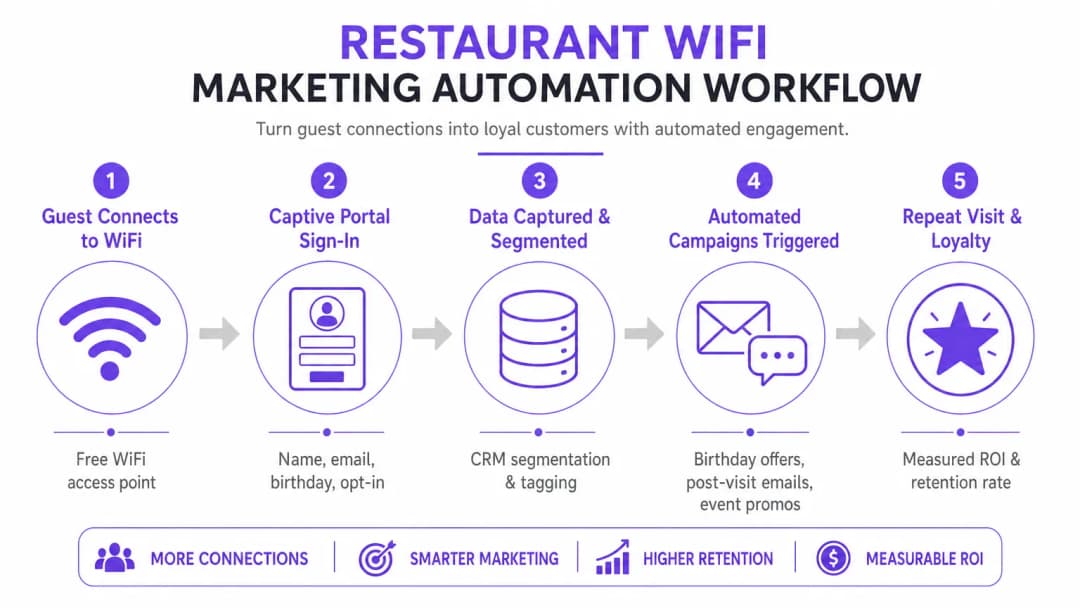
Google या Facebook के साथ सोशल लॉगिन (OAuth 2.0) एकीकरण समृद्ध जनसांख्यिकीय डेटा कैप्चर करते हुए कम-घर्षण पहुंच प्रदान करते हैं। यह विधि सुरक्षित टोकन एक्सचेंज पर निर्भर करती है, जिससे उपयोगकर्ताओं को नए क्रेडेंशियल बनाने की आवश्यकता नहीं होती है। फॉर्म-आधारित प्रमाणीकरण उपयोगकर्ताओं को अपना नाम, ईमेल पता और वैकल्पिक रूप से जन्म तिथि या फोन नंबर प्रदान करने की अनुमति देता है। इस डेटा को सत्यापित किया जाता है और केंद्रीकृत डेटाबेस में सुरक्षित रूप से प्रेषित किया जाता है। निर्बाध पुन: प्रमाणीकरण (MAC Caching) एक कॉन्फ़िगर करने योग्य अवधि (जैसे, 30 दिन) के लिए डिवाइस के MAC एड्रेस को कैश करता है, जिससे बाद की यात्राओं पर घर्षण रहित पहुंच और सटीक आवृत्ति ट्रैकिंग (frequency tracking) सक्षम होती है।
सुरक्षा और अनुपालन प्रोटोकॉल
मार्केटिंग के लिए WiFi तैनात करने के लिए सुरक्षा और गोपनीयता मानकों का कड़ाई से पालन करना आवश्यक है। लेटरल मूवमेंट को रोकने के लिए आर्केटेक्चर को VLAN का उपयोग करके कॉर्पोरेट नेटवर्क से गेस्ट ट्रैफ़िक को अलग करना चाहिए। कार्यान्वयन को निम्नलिखित का अनुपालन करना चाहिए:
- GDPR / CCPA: Captive Portal में स्पष्ट, असंबद्ध (unbundled) सहमति तंत्र एकीकृत होना चाहिए। उपयोगकर्ताओं को मार्केटिंग संचार के लिए सक्रिय रूप से ऑप्ट-इन करना होगा, और प्लेटफ़ॉर्म को मजबूत डेटा विषय पहुंच अनुरोध (DSAR) क्षमताएं प्रदान करनी होंगी। मार्केटिंग सहमति को नेटवर्क एक्सेस की सेवा शर्तों के साथ बंडल नहीं किया जा सकता है।
- PCI DSS: यदि वेन्यू उसी भौतिक बुनियादी ढांचे पर भुगतान संसाधित करता है, तो नेटवर्क सेगमेंटेशन और फ़ायरवॉल नियमों को कार्डधारक डेटा पर्यावरण (CDE) को गेस्ट नेटवर्क से अलग करना चाहिए।
- WPA3-Enhanced Open (OWE): सुरक्षित ऑनबोर्डिंग प्रोटोकॉल पर संक्रमण अनधिकृत ट्रैफ़िक के लिए अवसरवादी एन्क्रिप्शन प्रदान करता है, जिससे उपयोगकर्ता क्रेडेंशियल की आवश्यकता के बिना खुले नेटवर्क पर जासूसी (eavesdropping) के जोखिम कम हो जाते हैं।
अपने विशिष्ट सेटअप को लेकर कोई सवाल हैं?
हमारी टीम 80,000 से अधिक वेन्यू में वेन्यू ऑपरेटरों, IT मैनेजरों और नेटवर्क इंजीनियरों के साथ काम करती है। 20 मिनट का कॉल बुक करें और हम आपको दिखाएंगे कि आपके जैसे अन्य लोगों ने इसे कैसे हल किया।
कार्यान्वयन गाइड: परिनियोजन रणनीतियाँ
सफल परिनियोजन के लिए एक चरणबद्ध दृष्टिकोण की आवश्यकता होती है, जो एकीकरण और स्वचालन (automation) पर केंद्रित हो। इसका लक्ष्य एक्सेस पॉइंट से मार्केटिंग ऑटोमेशन प्लेटफ़ॉर्म तक एक निर्बाध डेटा प्रवाह स्थापित करना है।
चरण 1: बुनियादी ढांचे का आकलन और साइजिंग
Captive Portal तैनात करने से पहले, सुनिश्चित करें कि अंतर्निहित RF बुनियादी ढांचा अनुमानित क्लाइंट घनत्व को संभाल सकता है। कवरेज अंतराल की पहचान करने और AP प्लेसमेंट को अनुकूलित करने के लिए एक भविष्य कहनेवाला (predictive) और सक्रिय साइट सर्वेक्षण करें। चैनल उपयोग, सह-चैनल हस्तक्षेप (co-channel interference) और प्रति डिवाइस आवश्यक थ्रूपुट पर विचार करें। एंटरप्राइज परिनियोजन के लिए, एक समर्पित व्यावसायिक इंटरनेट कनेक्शन — जैसे कि लीज़्ड लाइन — का लाभ उठाना गारंटीकृत बैंडविड्थ और सममित (symmetrical) गति सुनिश्चित करता है, जिससे गेस्ट ट्रैफ़िक को महत्वपूर्ण परिचालन प्रणालियों को प्रभावित करने से रोका जा सकता है।
चरण 2: Captive Portal कॉन्फ़िगरेशन
रूपांतरण अनुकूलन (conversion optimisation) पर ध्यान केंद्रित करते हुए Captive Portal को डिज़ाइन करें। UI उत्तरदायी (responsive) होना चाहिए और मोबाइल उपकरणों पर तेज़ी से लोड होना चाहिए, क्योंकि अधिकांश कनेक्शन स्मार्टफोन से उत्पन्न होंगे। प्रोग्रेसिव प्रोफाइलिंग (progressive profiling) लागू करें: प्रारंभिक यात्रा के दौरान बुनियादी जानकारी (ईमेल पता, ऑप्ट-इन) का अनुरोध करें, और बाद के कनेक्शन पर पूरक डेटा (जन्मदिन, फोन नंबर) मांगें। यह समय के साथ ग्राहक प्रोफ़ाइल को समृद्ध करते हुए घर्षण को कम करता है।
चरण 3: CRM और ऑटोमेशन एकीकरण
WiFi Analytics प्लेटफ़ॉर्म का वास्तविक मूल्य एकीकरण के माध्यम से महसूस किया जाता है। वेन्यू के CRM (जैसे, Salesforce, HubSpot) और मार्केटिंग ऑटोमेशन टूल के साथ कैप्चर किए गए डेटा को सिंक्रोनाइज़ करने के लिए API वेबहुक या नेटिव कनेक्टर कॉन्फ़िगर करें। यह सुनिश्चित करने के लिए स्पष्ट डेटा मैपिंग नियम स्थापित करें कि Last Visit Date और Total Visits जैसे फ़ील्ड प्रत्येक प्रमाणीकरण इवेंट पर वास्तविक समय में अपडेट हों।
चरण 4: अभियान स्वचालन सेटअप
विशिष्ट नेटवर्क इवेंट्स द्वारा ट्रिगर किए गए स्वचालित वर्कफ़्लो को कॉन्फ़िगर करें। हर परिनियोजन में शामिल होने वाले तीन मुख्य अभियान हैं:
- वेलकम कैंपेन (The Welcome Campaign): पहले सफल प्रमाणीकरण पर तुरंत ट्रिगर होता है। एक निश्चित समय सीमा के भीतर दोबारा आने के लिए प्रोत्साहित करने के लिए एक स्वागत संदेश और एक आसान ऑफ़र प्रदान करता है।
- वी मिस यू कैंपेन (The We Miss You Campaign): तब ट्रिगर होता है जब कोई डिवाइस एक निर्दिष्ट अवधि (जैसे, 45 दिन) के लिए नेटवर्क पर नहीं देखा गया हो। निष्क्रिय ग्राहकों को बिल्कुल सही समय पर फिर से जोड़ने के लिए एक लक्षित छूट प्रदान करता है।
- रिव्यू जनरेशन कैंपेन (The Review Generation Campaign): उपयोगकर्ता के नेटवर्क से डिस्कनेक्ट होने के 2 घंटे बाद ट्रिगर होता है, जो RADIUS Accounting-Stop इवेंट्स या लोकेशन API वेबहुक का लाभ उठाता है। जब तक अनुभव नया है, तब तक TripAdvisor या Google My Business के माध्यम से प्रतिक्रिया (feedback) मांगता है।
एंटरप्राइज वेन्यू के लिए सर्वोत्तम अभ्यास
WiFi मार्केटिंग के माध्यम से एक रेस्टोरेंट में ग्राहक अनुभव को कैसे बेहतर बनाया जाए की प्रभावकारिता को अधिकतम करने के लिए, निम्नलिखित विक्रेता-तटस्थ (vendor-neutral) सर्वोत्तम अभ्यास हॉस्पिटैलिटी, रिटेल, और परिवहन वातावरणों में लागू होते हैं।
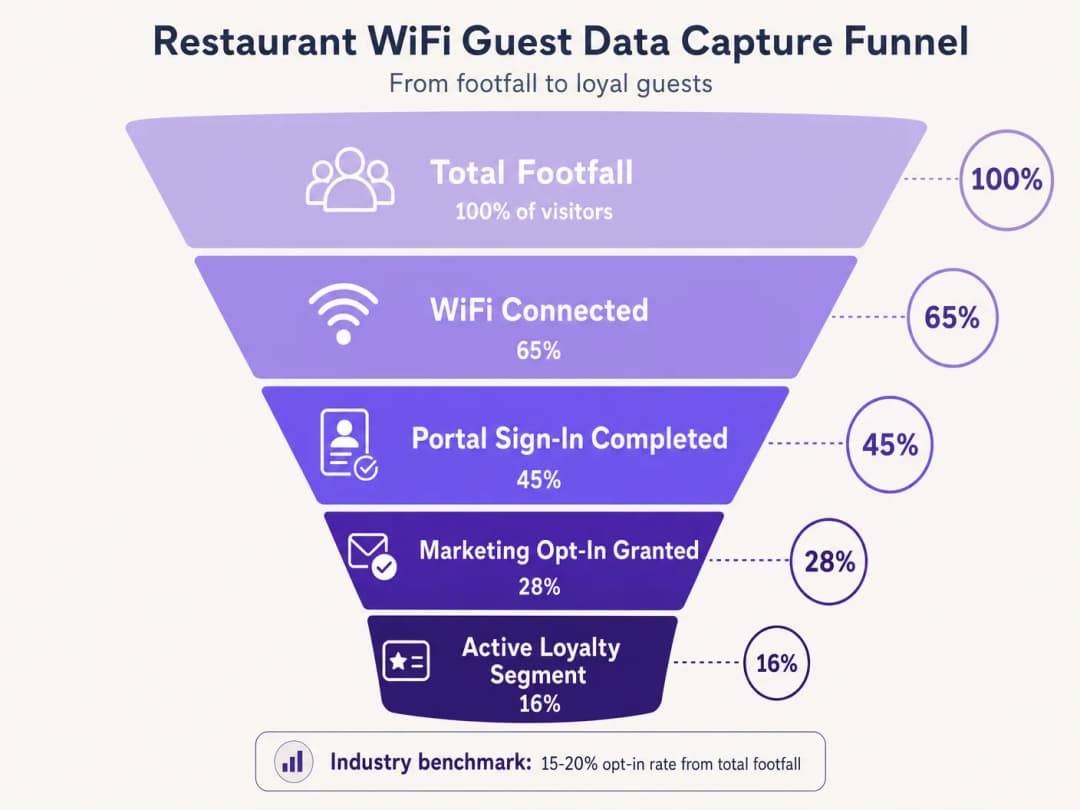
ऑप्ट-इन को प्राथमिकता दें। Captive Portal का प्राथमिक उद्देश्य मार्केटिंग सहमति प्राप्त करना है। सुनिश्चित करें कि मूल्य प्रस्ताव (value proposition) — उदाहरण के लिए, 'विशेष ऑफ़र और जन्मदिन के उपहार के लिए हमारे WiFi से जुड़ें' — प्रमुखता से प्रदर्शित हो। उद्योग के बेंचमार्क बताते हैं कि अनुकूलित पोर्टलों के साथ कुल फुटफॉल से 15-20% ऑप्ट-इन दर प्राप्त की जा सकती है। खराब डिज़ाइन किए गए पोर्टलों वाले वेन्यू में अक्सर दरें 5% से कम देखी जाती हैं।
लोकेशन एनालिटिक्स का लाभ उठाएं। ड्वेल टाइम (dwell times) और मूवमेंट पैटर्न को समझने के लिए वायरलेस इंफ्रास्ट्रक्चर की लोकेशन सेवाओं (RSSI ट्राइएंगुलेशन) का उपयोग करें। यह डेटा शुद्ध मार्केटिंग अनुप्रयोगों से परे परिचालन निर्णयों — स्टाफिंग स्तर, लेआउट अनुकूलन, पीक-ऑवर प्रबंधन — को सूचित करता है। WiFi Analytics प्लेटफ़ॉर्म इस इंटेलिजेंस के लिए डैशबोर्ड और रिपोर्टिंग लेयर प्रदान करता है।
बैंडविड्थ थ्रॉटलिंग लागू करें। प्रति-डिवाइस बैंडविड्थ सीमा और सत्र टाइमआउट लागू करके उपयोगकर्ताओं की एक छोटी संख्या को नेटवर्क संसाधनों पर एकाधिकार करने से रोकें। यह सभी मेहमानों के लिए एक सुसंगत अनुभव की गुणवत्ता (QoE) सुनिश्चित करता है और परिचालन प्रणालियों को बैंडविड्थ संतृप्ति (saturation) से बचाता है।
क्रॉस-वर्टिकल अनुप्रयोग। WiFi मार्केटिंग के सिद्धांत सीधे आस-पास के क्षेत्रों तक फैले हुए हैं। लाइसेंस प्राप्त परिसरों का प्रबंधन करने वाले ऑपरेटरों के लिए, बार और पब WiFi: एक संपूर्ण सेटअप और मार्केटिंग गाइड एक समानांतर व्यावहारिक संदर्भ प्रदान करता है। स्वास्थ्य सेवा और सार्वजनिक क्षेत्र के परिनियोजन के लिए, अनुपालन आवश्यकताएं अधिक सख्त हैं लेकिन डेटा कैप्चर आर्किटेक्चर मौलिक रूप से समान रहता है।
समस्या निवारण और जोखिम शमन
गेस्ट WiFi को तैनात करने से विशिष्ट जोखिम पैदा होते हैं जिन्हें गो-लाइव से पहले सक्रिय रूप से प्रबंधित किया जाना चाहिए।
सामान्य विफलता मोड और समाधान
| विफलता मोड | मूल कारण | समाधान |
|---|---|---|
| Captive Portal दिखाई नहीं देता | Walled Garden का गलत कॉन्फ़िगरेशन, SSL प्रमाणपत्र त्रुटि | श्वेतसूची (whitelist) डोमेन का ऑडिट करें; पोर्टल पर वैध SSL प्रमाणपत्र तैनात करें |
| सोशल लॉगिन बिना किसी सूचना के विफल हो जाता है | OAuth प्रदाता डोमेन श्वेतसूची में नहीं हैं | Walled Garden में प्रदाता प्रमाणीकरण डोमेन जोड़ें |
| लौटने वाले मेहमानों को पुन: प्रमाणित करने के लिए प्रेरित किया जाता है | MAC रैंडमाइजेशन (iOS 14+, Android 10+) | Passpoint प्रोफाइल या वेन्यू ऐप लागू करें |
| CRM डेटा सिंक में देरी | API दर सीमा या वेबहुक विफलताएं | घातीय बैकऑफ़ (exponential backoff), डेड-लेटर कतारें लागू करें |
| कम ऑप्ट-इन दर | अत्यधिक फ़ॉर्म फ़ील्ड, खराब मूल्य प्रस्ताव | ईमेल + ऑप्ट-इन तक सीमित करें; पोर्टल कॉपी में सुधार करें |
MAC Address Randomization पर विशेष ध्यान देने की आवश्यकता है। आधुनिक मोबाइल ऑपरेटिंग सिस्टम गोपनीयता बढ़ाने के लिए रैंडमाइज्ड MAC एड्रेस उत्पन्न करते हैं, जो सीधे MAC Caching और आवृत्ति ट्रैकिंग को बाधित करते हैं। लौटने वाले मेहमानों को नए आगंतुकों के रूप में माना जा सकता है, जिससे एनालिटिक्स प्रभावित होता है और गलत अभियान अनुक्रम ट्रिगर होते हैं। दीर्घकालिक शमन Passpoint (Hotspot 2.0) पर संक्रमण करना है, जो MAC एड्रेस से स्वतंत्र लगातार डिवाइस प्रोफाइल का उपयोग करता है। जैसा कि Purple की विस्तारवादी प्लेटफ़ॉर्म रणनीति प्रदर्शित करती है — जिसमें Purple ने VP एजुकेशन टिम पीयर्स की नियुक्ति के साथ हायर एजुकेशन महत्वाकांक्षाओं का संकेत दिया के संदर्भ में चर्चा की गई प्रगति शामिल है — सभी वर्टिकल में स्थायी डेटा रणनीति के लिए विकसित होते गोपनीयता मानकों के अनुकूल होना महत्वपूर्ण है।
ROI और व्यावसायिक प्रभाव
WiFi मार्केटिंग समाधान तैनात करने का अंतिम लक्ष्य निवेश पर मापने योग्य रिटर्न (ROI) उत्पन्न करना है। सफलता को पहले दिन से ट्रैक किए गए KPIs के एक परिभाषित सेट का उपयोग करके मापा जाना चाहिए।
| KPI | परिभाषा | उद्योग बेंचमार्क |
|---|---|---|
| डेटा कैप्चर दर | कुल फुटफॉल का % जो प्रमाणित करता है | 40–65% |
| मार्केटिंग ऑप्ट-इन दर | सहमति देने वाले प्रमाणित उपयोगकर्ताओं का % | 15–28% |
| अभियान ओपन दर | खोले गए अभियान ईमेल का % | 35–45% |
| अभियान रूपांतरण दर | ऑफ़र भुनाने वाले प्राप्तकर्ताओं का % | 8–15% |
| दोबारा आने में वृद्धि | नियंत्रण समूह (control group) की तुलना में वापसी यात्राओं में वृद्धि | 12–22% |
व्यवस्थित रूप से डेटा कैप्चर करके, दर्शकों को विभाजित करके और लक्षित अभियानों को स्वचालित करके, IT और मार्केटिंग टीमें अपने वायरलेस बुनियादी ढांचे को एक आवश्यक खर्च से एक रणनीतिक संपत्ति में बदल सकती हैं। 2026 में वेन्यू संचालन को प्रभावित करने वाले व्यापक कनेक्टिविटी रुझानों की जानकारी के लिए, जिसमें इन-व्हीकल और वेन्यू WiFi रणनीतियों का अभिसरण (convergence) शामिल है, Wi Fi in Auto: द कम्प्लीट 2026 एंटरप्राइज गाइड देखें।
ऑडियो ब्रीफिंग: मार्केटिंग ROI के लिए WiFi को आर्किटेक्ट करने पर 10 मिनट की सलाहकार ब्रीफिंग — जिसमें आर्किटेक्चर, एकीकरण, जोखिम शमन और त्वरित-फायर प्रश्नोत्तर शामिल हैं।
मुख्य परिभाषाएं
Captive Portal
एक वेब पेज जिसे सार्वजनिक-पहुंच नेटवर्क के उपयोगकर्ता को पूर्ण इंटरनेट एक्सेस दिए जाने से पहले देखने और बातचीत करने के लिए बाध्य होना पड़ता है। यह गेस्ट WiFi परिनियोजन में प्राथमिक डेटा अधिग्रहण और सहमति इंटरफ़ेस के रूप में कार्य करता है।
Captive Portal एक WiFi मार्केटिंग आर्किटेक्चर में सबसे महत्वपूर्ण घटक है। इसका डिज़ाइन सीधे डेटा कैप्चर दरों और मार्केटिंग ऑप्ट-इन दरों को निर्धारित करता है।
MAC Caching
प्रारंभिक प्रमाणीकरण के बाद डेटाबेस में डिवाइस के मीडिया एक्सेस कंट्रोल (MAC) एड्रेस को संग्रहीत करने की प्रक्रिया, जिससे Captive Portal को दोबारा प्रस्तुत किए बिना बाद की यात्राओं पर स्वचालित नेटवर्क एक्सेस की अनुमति मिलती है।
दोबारा आने वाले ग्राहकों के लिए घर्षण को कम करने और यात्रा की आवृत्ति को सटीक रूप से ट्रैक करने के लिए आवश्यक है। आधुनिक मोबाइल ऑपरेटिंग सिस्टम में MAC Address Randomization द्वारा तेजी से चुनौती दी जा रही है।
Walled Garden
एक प्रतिबंधित नेटवर्क वातावरण जो नियंत्रित करता है कि प्रमाणीकरण पूरा करने से पहले कोई डिवाइस किन IP पतों या डोमेन तक पहुंच सकता है। गेस्ट WiFi में, यह Captive Portal साइन-इन से पहले सुलभ संसाधनों को परिभाषित करता है।
पूर्ण इंटरनेट एक्सेस दिए जाने से पहले उपकरणों को Captive Portal, सोशल लॉगिन प्रदाताओं और आवश्यक बैकएंड सेवाओं तक पहुंचने की अनुमति देने के लिए आवश्यक महत्वपूर्ण कॉन्फ़िगरेशन। गलत कॉन्फ़िगरेशन पोर्टल के दिखाई न देने का प्रमुख कारण है।
Progressive Profiling
प्रारंभिक बातचीत के दौरान एक ही बार में सभी विवरणों का अनुरोध करने के बजाय, कई बातचीत या यात्राओं में धीरे-धीरे ग्राहक जानकारी एकत्र करने की तकनीक।
पहली Captive Portal बातचीत को संक्षिप्त (केवल ईमेल + ऑप्ट-इन) रखकर प्रारंभिक ऑप्ट-इन दरों को अधिकतम करने के लिए उपयोग किया जाता है, जबकि बाद की यात्राओं में समृद्ध ग्राहक प्रोफाइल का निर्माण किया जाता है।
RADIUS (Remote Authentication Dial-In User Service)
एक नेटवर्किंग प्रोटोकॉल जो नेटवर्क सेवा से जुड़ने वाले उपयोगकर्ताओं के लिए केंद्रीकृत प्रमाणीकरण, प्राधिकरण और लेखांकन (AAA) प्रबंधन प्रदान करता है।
गेस्ट एक्सेस का प्रबंधन करने वाले केंद्रीय डेटाबेस के साथ संवाद करने के लिए अधिकांश एंटरप्राइज WLC बुनियादी ढांचे द्वारा उपयोग किया जाने वाला अंतर्निहित प्रोटोकॉल। RADIUS Accounting-Stop संदेशों का उपयोग इवेंट-संचालित अभियान ट्रिगर्स के लिए गेस्ट प्रस्थान का पता लगाने के लिए किया जाता है।
OAuth 2.0
एक उद्योग-मानक प्राधिकरण प्रोटोकॉल जो तृतीय-पक्ष अनुप्रयोगों को उपयोगकर्ता पासवर्ड साझा किए बिना, सुरक्षित टोकन एक्सचेंज के माध्यम से HTTP सेवा तक सीमित पहुंच प्रदान करने की अनुमति देता है।
सोशल लॉगिन विकल्पों (Google के साथ लॉग इन करें, Facebook के साथ लॉग इन करें) के अंतर्निहित प्रोटोकॉल। पहचान प्रदाता से सत्यापित जनसांख्यिकीय डेटा कैप्चर करते हुए Captive Portals के लिए कम-घर्षण प्रमाणीकरण प्रदान करता है।
Passpoint (Hotspot 2.0)
एक Wi-Fi एलायंस मानक जो मैन्युअल Captive Portal बातचीत की आवश्यकता के बिना, WPA2/WPA3 एंटरप्राइज-ग्रेड एन्क्रिप्शन का उपयोग करके स्वचालित, सुरक्षित नेटवर्क खोज और कनेक्शन सक्षम करता है।
खुले Captive Portals का रणनीतिक दीर्घकालिक विकल्प, लगातार डिवाइस पहचान प्रदान करता है जो MAC Address Randomization से प्रभावित नहीं होता है। उच्च कार्यान्वयन जटिलता लेकिन बेहतर उपयोगकर्ता अनुभव और डेटा सटीकता।
MAC Address Randomization
आधुनिक मोबाइल ऑपरेटिंग सिस्टम (iOS 14+, Android 10+) में एक गोपनीयता सुविधा जो प्रत्येक नेटवर्क कनेक्शन के लिए एक अद्वितीय, रैंडमाइज्ड MAC एड्रेस उत्पन्न करती है, या इसे समय-समय पर घुमाती है।
WiFi मार्केटिंग परिनियोजन में सीधे MAC Caching और आवृत्ति ट्रैकिंग को बाधित करता है। लौटने वाले मेहमानों को नए आगंतुकों के रूप में माना जा सकता है, जिससे एनालिटिक्स प्रभावित होता है और गलत अभियान अनुक्रम ट्रिगर होते हैं। शमन रणनीति के रूप में Passpoint या ऐप-आधारित पहचान की आवश्यकता होती है।
हल किए गए उदाहरण
150 स्थानों वाली एक राष्ट्रीय रेस्टोरेंट श्रृंखला अपने मौजूदा गेस्ट WiFi नेटवर्क पर कम डेटा कैप्चर दरों — कुल फुटफॉल के 5% से कम — का अनुभव कर रही है। वर्तमान सेटअप में उपयोगकर्ताओं को पहुंच प्रदान करने से पहले एक लंबा 6-फ़ील्ड फ़ॉर्म भरना आवश्यक है। IT टीम से अंतर्निहित WLC बुनियादी ढांचे को बदले बिना इसे कम से कम 20% कैप्चर दर तक सुधारने के लिए कहा गया है। आर्किटेक्चर को कैसे पुन: कॉन्फ़िगर किया जाना चाहिए?
कार्यान्वयन के लिए प्रोग्रेसिव प्रोफाइलिंग और कम-घर्षण प्रमाणीकरण में बदलाव की आवश्यकता है, जिसे WLC हार्डवेयर को बदले बिना प्राप्त किया जा सकता है। चरण 1: प्राथमिक प्रमाणीकरण विकल्प के रूप में OAuth 2.0 सोशल लॉगिन बटन (Google, Facebook) प्रस्तुत करने के लिए Captive Portal एप्लिकेशन लेयर को पुन: कॉन्फ़िगर करें। इसके लिए WLC पर Walled Garden श्वेतसूची में OAuth प्रदाता प्रमाणीकरण डोमेन जोड़ने की आवश्यकता होती है। चरण 2: जो उपयोगकर्ता फ़ॉर्म-आधारित प्रमाणीकरण पसंद करते हैं, उनके लिए प्रारंभिक फ़ॉर्म को केवल दो फ़ील्ड तक कम करें: ईमेल पता और एक स्पष्ट रूप से लेबल किया गया मार्केटिंग ऑप्ट-इन चेकबॉक्स। प्रारंभिक बातचीत से अन्य सभी फ़ील्ड हटा दें। चरण 3: पोर्टल बैकएंड पर 30-दिन की समाप्ति के साथ MAC Caching लागू करें। प्रमाणित MAC एड्रेस पोर्टल डेटाबेस में संग्रहीत किए जाते हैं; WLC पोर्टल प्रस्तुत करने से पहले इस सूची की जाँच करता है। चरण 4: विश्वास स्थापित होने के बाद, दूसरी या तीसरी यात्रा पर एक माध्यमिक डेटा कैप्चर प्रॉम्प्ट (जन्मदिन, फोन नंबर) प्रस्तुत करने के लिए पोर्टल को कॉन्फ़िगर करें। चरण 5: REST API वेबहुक के माध्यम से पोर्टल डेटाबेस को केंद्रीय CRM के साथ एकीकृत करें, यह सुनिश्चित करते हुए कि प्रोग्रेसिव प्रोफाइलिंग लॉजिक को चलाने के लिए प्रत्येक प्रमाणीकरण इवेंट पर 'Visit Count' फ़ील्ड को बढ़ाया जाए।
प्रति वर्ष 200+ कार्यक्रमों की मेजबानी करने वाला एक बड़ा सम्मेलन केंद्र (conference centre) एक स्वचालित रिव्यू जनरेशन अभियान लागू करना चाहता है। उन्हें प्रतिनिधियों के वेन्यू छोड़ने के ठीक 2 घंटे बाद एक ईमेल भेजने के लिए सिस्टम की आवश्यकता होती है, जिसमें ईमेल सामग्री उनके द्वारा भाग लिए गए विशिष्ट कार्यक्रम के लिए व्यक्तिगत हो। किन तकनीकी घटकों और कॉन्फ़िगरेशन की आवश्यकता है?
इसके लिए WLC, लोकेशन एनालिटिक्स इंजन, इवेंट मैनेजमेंट सिस्टम और मार्केटिंग ऑटोमेशन प्लेटफ़ॉर्म के बीच एकीकरण की आवश्यकता होती है। चरण 1: क्लाइंट डिवाइस के अलग होने पर RADIUS Accounting-Stop संदेश उत्पन्न करने के लिए WLC को कॉन्फ़िगर करें। वैकल्पिक रूप से, जब किसी डिवाइस का RSSI एक निरंतर अवधि (जैसे, 5 मिनट) के लिए वेन्यू की जियोफेंस सीमा से नीचे गिर जाता है, तो 'प्रस्थान' (departure) इवेंट को ट्रिगर करने के लिए लोकेशन एनालिटिक्स इंजन को कॉन्फ़िगर करें। चरण 2: WiFi Analytics प्लेटफ़ॉर्म में एक वेबहुक कॉन्फ़िगर करें जो प्रस्थान इवेंट प्राप्त होने पर सक्रिय होता है। वेबहुक पेलोड में उपयोगकर्ता का ईमेल पता, वेन्यू ज़ोन ID और टाइमस्टैम्प शामिल होना चाहिए। चरण 3: इवेंट मैनेजमेंट सिस्टम में, विशिष्ट इवेंट नामों के लिए वेन्यू ज़ोन ID और समय विंडो को मैप करने वाली एक लुकअप टेबल बनाए रखें। मार्केटिंग ऑटोमेशन प्लेटफ़ॉर्म इवेंट के नाम के साथ वेबहुक पेलोड को समृद्ध करने के लिए इस टेबल को क्वेरी करता है। चरण 4: मार्केटिंग ऑटोमेशन प्लेटफ़ॉर्म में, एक वर्कफ़्लो बनाएं जो समृद्ध वेबहुक प्राप्त करता है, 2 घंटे का विलंब टाइमर शुरू करता है, और फिर एक गतिशील सामग्री चर (dynamic content variable) के रूप में इवेंट नाम का उपयोग करके एक व्यक्तिगत समीक्षा अनुरोध ईमेल भेजता है। चरण 5: यदि प्रतिनिधि ने पहले ही समीक्षा सबमिट कर दी है या यदि उन्हें व्यक्तिगत अनुवर्ती कार्रवाई की आवश्यकता वाले VIP के रूप में चिह्नित किया गया है, तो ईमेल भेजने से रोकने के लिए सप्रेशन सूचियों (suppression lists) को कॉन्फ़िगर करें।
अभ्यास प्रश्न
Q1. एक वेन्यू की रिपोर्ट है कि iOS उपयोगकर्ताओं को हर बार आने पर बार-बार साइन इन करने के लिए कहा जाता है, भले ही 30-दिन की समाप्ति के साथ MAC Caching सक्षम हो। Android उपयोगकर्ता इस समस्या का इस हद तक अनुभव नहीं कर रहे हैं। WLC लॉग एक ही भौतिक डिवाइस से प्रत्येक iOS कनेक्शन के लिए नए MAC एड्रेस दिखाते हैं। इसका मूल कारण क्या है और उपलब्ध शमन रणनीतियाँ क्या हैं?
संकेत: प्रति-नेटवर्क आधार पर हार्डवेयर पहचानकर्ताओं के संबंध में iOS 14 और बाद के संस्करणों में पेश की गई गोपनीयता सुविधाओं पर विचार करें।
मॉडल उत्तर देखें
मूल कारण MAC Address Randomization (iOS 14+ में प्राइवेट Wi-Fi एड्रेस फीचर) है। iOS डिवाइस प्रत्येक SSID के लिए एक अद्वितीय, रैंडमाइज्ड MAC एड्रेस उत्पन्न करते हैं, और इसे समय-समय पर घुमा सकते हैं। चूंकि कैश्ड MAC एड्रेस अब डिवाइस के वर्तमान रैंडमाइज्ड एड्रेस से मेल नहीं खाता है, इसलिए WLC प्रत्येक कनेक्शन को एक नए डिवाइस के रूप में मानता है और Captive Portal प्रस्तुत करता है। अल्पकालिक शमन: उपयोगकर्ताओं को उनकी iOS नेटवर्क सेटिंग्स में वेन्यू के विशिष्ट SSID के लिए प्राइवेट Wi-Fi एड्रेस को अक्षम करने का निर्देश दें। दीर्घकालिक शमन: Passpoint (Hotspot 2.0) प्रोफाइल तैनात करें जो MAC एड्रेस से स्वतंत्र लगातार, प्रमाणपत्र-आधारित डिवाइस पहचान प्रदान करते हैं, या एक वेन्यू-विशिष्ट मोबाइल ऐप विकसित करें जो एक निरंतर उपयोगकर्ता सत्र पहचानकर्ता बनाए रखता है।
Q2. आप एक नए Captive Portal परिनियोजन के लिए Walled Garden कॉन्फ़िगरेशन डिज़ाइन कर रहे हैं जो सोशल लॉगिन के लिए Facebook और Google का उपयोग करता है, और CDN पर पोर्टल UI होस्ट करता है। पोर्टल एक बाहरी फ़ॉन्ट लाइब्रेरी का भी उपयोग करता है। प्रमाणीकरण प्रक्रिया सफलतापूर्वक पूरी होने को सुनिश्चित करने के लिए संसाधनों की किन विशिष्ट श्रेणियों को श्वेतसूची (whitelist) में डाला जाना चाहिए?
संकेत: SSID से कनेक्ट होने के क्षण से लेकर OAuth कॉलबैक टोकन प्राप्त होने के क्षण तक क्लाइंट डिवाइस द्वारा किए जाने वाले HTTP अनुरोधों के पूर्ण अनुक्रम का मानचित्रण करें।
मॉडल उत्तर देखें
Walled Garden को निम्नलिखित संसाधन श्रेणियों को श्वेतसूची में डालना चाहिए: 1. Captive Portal सर्वर का अपना IP दायरा या डोमेन। 2. पोर्टल के HTML, CSS और JavaScript संपत्तियों को होस्ट करने वाले CDN डोमेन। 3. बाहरी फ़ॉन्ट लाइब्रेरी डोमेन (जैसे, fonts.googleapis.com)। 4. Facebook (जैसे, graph.facebook.com, www.facebook.com) और Google (जैसे, accounts.google.com, oauth2.googleapis.com) के लिए OAuth प्रमाणीकरण डोमेन। 5. OAuth प्रदाताओं के लॉगिन बटन द्वारा उपयोग किए जाने वाले कोई भी इमेज या एसेट CDN। 6. क्लाइंट डिवाइस को पोर्टल के SSL प्रमाणपत्र को सत्यापित करने की अनुमति देने के लिए प्रमाणपत्र निरसन सूची (CRL) या OCSP एंडपॉइंट। इनमें से किसी भी श्रेणी के छूट जाने से प्रमाणीकरण प्रवाह बिना किसी सूचना के विफल हो जाएगा या टूटा हुआ UI प्रस्तुत करेगा।
Q3. एक मार्केटिंग टीम मेहमानों को ठीक उसी समय एक SMS अभियान ट्रिगर करना चाहती है जब वे रेस्टोरेंट के भीतर एक विशिष्ट डेज़र्ट काउंटर के पास से गुजरते हैं। वर्तमान बुनियादी ढांचा RSSI-आधारित स्थान एनालिटिक्स के साथ मानक 802.11ac एक्सेस पॉइंट का उपयोग करता है। क्या यह आवश्यक सटीकता और विलंबता के साथ व्यवहार्य है? यदि कोई हो, तो बुनियादी ढांचे में क्या बदलाव आवश्यक होंगे?
संकेत: काउंटर-स्तरीय ट्रिगर के लिए आवश्यक सटीकता बनाम मानक RSSI-आधारित ट्राइएंगुलेशन के स्थानिक रिज़ॉल्यूशन और अपडेट विलंबता का मूल्यांकन करें।
मॉडल उत्तर देखें
नहीं, यह मानक RSSI-आधारित स्थान एनालिटिक्स के साथ व्यवहार्य नहीं है। RSSI ट्राइएंगुलेशन आमतौर पर 5-10 मीटर की स्थितिजन्य सटीकता प्रदान करता है, जो रेस्टोरेंट के भीतर एक विशिष्ट काउंटर को अलग करने के लिए अपर्याप्त है। इसके अलावा, RSSI अपडेट के लिए पोलिंग अंतराल कई सेकंड की विलंबता (latency) पेश करता है, जिसका अर्थ है कि ट्रिगर चलने से पहले मेहमान लक्षित क्षेत्र से आगे निकल चुका होगा। कम विलंबता के साथ काउंटर-स्तरीय सटीकता प्राप्त करने के लिए, बुनियादी ढांचे को डेज़र्ट काउंटर पर रखे गए BLE (ब्लूटूथ लो एनर्जी) बीकन या अल्ट्रा-वाइडबैंड (UWB) तकनीक के साथ संवर्धित करने की आवश्यकता होगी। वेन्यू ऐप या BLE-सक्षम डिवाइस बीकन के निकटता सिग्नल का पता लगाएगा और मार्केटिंग ऑटोमेशन प्लेटफ़ॉर्म के माध्यम से SMS ट्रिगर करेगा। इसके लिए एक वेन्यू-विशिष्ट मोबाइल एप्लिकेशन और एक BLE बीकन प्रबंधन प्रणाली की आवश्यकता होती है, जो परिनियोजन जटिलता और लागत में महत्वपूर्ण वृद्धि का प्रतिनिधित्व करती है।
इस श्रृंखला में आगे पढ़ें
ग्राहकों से कैसे जुड़ें: भौतिक व्यवसायों के लिए डिजिटल रणनीतियाँ
यह आधिकारिक तकनीकी संदर्भ मार्गदर्शिका विवरण देती है कि कैसे भौतिक-स्थान वाले व्यवसाय — होटल, रिटेल श्रृंखलाएं, स्टेडियम और सार्वजनिक क्षेत्र के स्थान — एंटरप्राइज WiFi इन्फ्रास्ट्रक्चर को फर्स्ट-पार्टी डेटा कैप्चर और ग्राहक जुड़ाव इंजन के रूप में तैनात कर सकते हैं। यह कैप्टिव पोर्टल डिज़ाइन और सहज प्रमाणीकरण (IEEE 802.11u/Passpoint) से लेकर CRM एकीकरण, GDPR अनुपालन और मापने योग्य ROI तक के पूर्ण आर्किटेक्चर को कवर करता है। IT लीडर्स और स्थान ऑपरेटरों को कार्रवाई योग्य परिनियोजन मार्गदर्शन, वास्तविक दुनिया के केस स्टडीज और अनुपालन-प्रथम जोखिम शमन ढांचा मिलेगा।
मार्केटिंग कैंपेन में फ़र्स्ट-पार्टी डेटा का उपयोग कैसे करें
यह आधिकारिक गाइड विस्तार से बताती है कि एंटरप्राइज़ IT और मार्केटिंग टीमें अपने गेस्ट WiFi इंफ्रास्ट्रक्चर को एक शक्तिशाली फ़र्स्ट-पार्टी डेटा इंजन में कैसे बदल सकती हैं। इसमें डेटा कैप्चर के लिए तकनीकी आर्किटेक्चर, GDPR-कंप्लायंट सहमति प्रबंधन, सेगमेंटेशन रणनीतियाँ, और ईमेल, SMS, सोशल एडवरटाइज़िंग और प्रोग्रामेटिक डिस्प्ले में वास्तविक दुनिया के एक्टिवेशन शामिल हैं। वेन्यू ऑपरेटरों और IT टीमों को ठोस इम्प्लीमेंटेशन मार्गदर्शन, हॉस्पिटैलिटी और रिटेल से काम किए गए उदाहरण, और मापने योग्य ROI फ़्रेमवर्क मिलेंगे।
सोशल WiFi: यह क्या है और यह ग्राहक जुड़ाव को कैसे बढ़ावा देता है
यह आधिकारिक तकनीकी संदर्भ गाइड सोशल WiFi के आर्किटेक्चर, डिप्लॉयमेंट और व्यावसायिक मूल्य को कवर करती है - जो कि एक कैप्टिव पोर्टल पर OAuth 2.0 सोशल लॉगिन के माध्यम से गेस्ट नेटवर्क उपयोगकर्ताओं को प्रमाणित करने की प्रथा है। यह IT प्रबंधकों, नेटवर्क आर्किटेक्ट्स और वेन्यू ऑपरेशंस निदेशकों को तकनीकी कार्यान्वयन, GDPR अनुपालन और लक्षित ग्राहक जुड़ाव के लिए कैप्चर किए गए फर्स्ट-पार्टी डेटा का लाभ उठाने पर व्यावहारिक मार्गदर्शन प्रदान करती है। हॉस्पिटैलिटी, रिटेल और इवेंट क्षेत्रों के वेन्यू ऑपरेटरों को ठोस डिप्लॉयमेंट फ्रेमवर्क और वास्तविक दुनिया के परिदृश्य मिलेंगे जो मापने योग्य ROI प्रदर्शित करते हैं।
अपने विशिष्ट सेटअप को लेकर कोई सवाल हैं?
हमारी टीम 80,000 से अधिक वेन्यू में वेन्यू ऑपरेटरों, IT मैनेजरों और नेटवर्क इंजीनियरों के साथ काम करती है। 20 मिनट का कॉल बुक करें और हम आपको दिखाएंगे कि आपके जैसे अन्य लोगों ने इसे कैसे हल किया।