
NAC Posture Assessment: नेटवर्क एक्सेस से पहले प्रबंधित डिवाइस अनुपालन (Compliance) सुनिश्चित करना
यह तकनीकी संदर्भ गाइड NAC Posture Assessment का गहन विश्लेषण प्रदान करती है, जिसमें प्रबंधित डिवाइस अनुपालन को लागू करने के लिए आवश्यक आर्किटेक्चर, मानकों और परिनियोजन रणनीतियों का विवरण दिया गया है। यह IT प्रबंधकों और नेटवर्क आर्किटेक्ट्स को बहु-साइट एंटरप्राइज़ वातावरणों में जोखिमों को कम करने और सुरक्षित नेटवर्क एक्सेस सुनिश्चित करने के लिए व्यावहारिक अंतर्दृष्टि प्रदान करती है।
इस गाइड को सुनें
पॉडकास्ट ट्रांसक्रिप्ट देखें
हमारी मुख्य श्रृंखला का हिस्सा: एंटरप्राइज WiFi सिक्योरिटी गाइड →
कार्यकारी सारांश (Executive Summary)
जटिल और बहु-साइट वातावरण का प्रबंधन करने वाले एंटरप्राइज IT लीडर्स के लिए, केवल पहचान ही नेटवर्क एक्सेस के लिए पर्याप्त मीट्रिक नहीं है। यह जानना कि कौन कनेक्ट हो रहा है, यह जानने से कम महत्वपूर्ण है कि वे जिस डिवाइस का उपयोग कर रहे हैं उसकी सुरक्षा स्थिति (security state) क्या है। नेटवर्क एक्सेस कंट्रोल (NAC) पॉस्चर असेसमेंट वह तंत्र है जो इस अंतर को पाटता है, यह सुनिश्चित करता है कि प्रोडक्शन ट्रैफ़िक का एक भी पैकेट ट्रांसमिट होने से पहले केवल प्रबंधित और अनुपालन करने वाले उपकरणों को कॉर्पोरेट इन्फ्रास्ट्रक्चर तक पहुंच प्राप्त हो।
यह गाइड NAC पॉस्चर असेसमेंट को डिजाइन, तैनात और प्रबंधित करने के लिए एक व्यापक तकनीकी संदर्भ प्रदान करती है। हम इसकी अंतर्निहित आर्किटेक्चर का पता लगाते हैं, जिसमें 802.1X, RADIUS, और EAP-TLS शामिल हैं, एजेंट-आधारित बनाम एजेंटलेस पूछताछ के पेशेवरों और विपक्षों का मूल्यांकन करते हैं, और एक चरणबद्ध परिनियोजन रणनीति की रूपरेखा तैयार करते हैं जो परिचालन व्यवधान को कम करती है। चाहे आप कॉर्पोरेट मुख्यालय, वितरित रिटेल एस्टेट, या हॉस्पिटैलिटी बैक-ऑफिस संचालन को सुरक्षित कर रहे हों, जोखिम को कम करने और अनुपालन को लागू करने में एक मजबूत पॉस्चर असेसमेंट को लागू करना एक महत्वपूर्ण कदम है।
प्रमुख अवधारणाओं और सामान्य परिनियोजन त्रुटियों के कार्यकारी अवलोकन के लिए नीचे हमारा 10 मिनट का तकनीकी ब्रीफिंग पॉडकास्ट सुनें।
Technical Deep-Dive
Posture Assessment Architecture
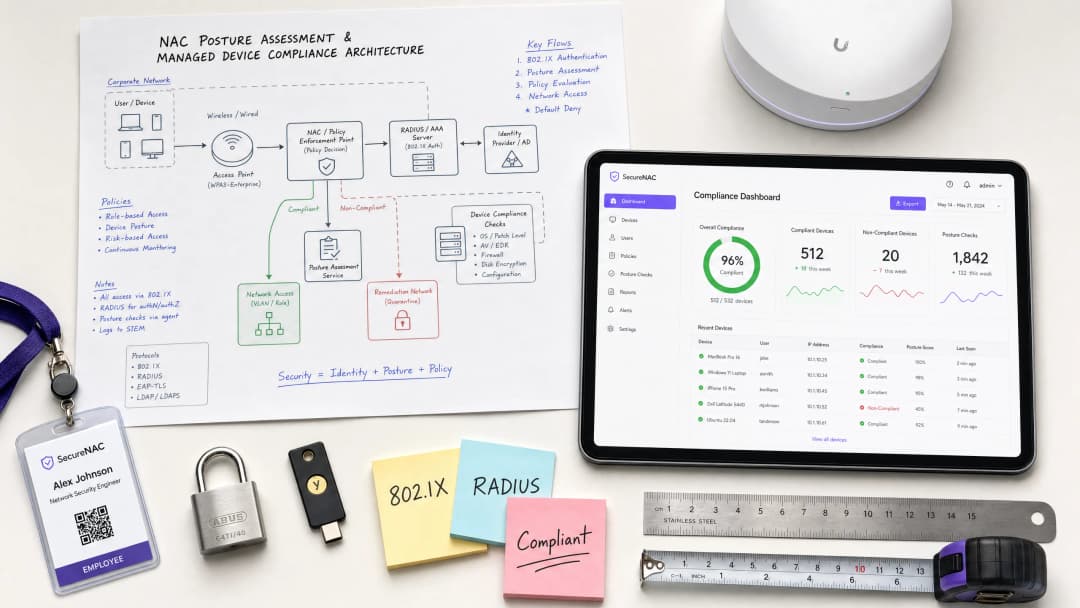
Network Access Control डिवाइस कनेक्टिविटी को नियंत्रित करता है, लेकिन posture assessment किसी डिवाइस के सुरक्षा स्वास्थ्य की विशिष्ट जांच है। इसका आर्किटेक्चर मुख्य रूप से एक साथ काम करने वाले तीन मुख्य घटकों पर निर्भर करता है:
- Policy Enforcement Point (PEP): यह भौतिक या तार्किक गेटकीपर है - आमतौर पर एक वायरलेस एक्सेस पॉइंट, स्विच पोर्ट, या वायरलेस LAN कंट्रोलर। PEP पॉलिसी इंजन के निर्देशों के आधार पर ट्रैफिक के प्रवाह को भौतिक रूप से नियंत्रित करता है।
- Policy Decision Point (PDP): अक्सर एक RADIUS या AAA सर्वर के साथ एकीकृत, PDP NAC आर्किटेक्चर का दिमाग है। यह posture डेटा प्राप्त करता है, परिभाषित अनुपालन पॉलिसियों के खिलाफ इसका मूल्यांकन करता है, और PEP को प्रवर्तन निर्देश जारी करता है।
- Posture Assessment Engine: यह घटक एंडपॉइंट से वास्तविक स्वास्थ्य डेटा एकत्र करता है। यह डिवाइस पर स्थानीय रूप से चलने वाला एक एजेंट हो सकता है, या नेटवर्क प्रोटोकॉल (जैसे SNMP, WMI) या किसी Mobile Device Management (MDM) प्लेटफॉर्म के साथ API एकीकरण का उपयोग करने वाला एक एजेंटलेस तंत्र हो सकता है।

The Role of IEEE 802.1X and EAP-TLS
एंटरप्राइज NAC की नींव IEEE 802.1X मानक है, जो पोर्ट-आधारित नेटवर्क एक्सेस कंट्रोल को परिभाषित करता है। इस ढांचे के भीतर, तीन भूमिकाएँ परिभाषित की गई हैं:
- Supplicant: कनेक्ट करने का प्रयास करने वाला एंडपॉइंट डिवाइस।
- Authenticator: कनेक्शन की सुविधा प्रदान करने वाला PEP (स्विच या एक्सेस पॉइंट)।
- Authentication Server: क्रेडेंशियल्स को सत्यापित करने वाला RADIUS सर्वर।
Supplicant और Authentication Server के बीच संचार Extensible Authentication Protocol (EAP) के माध्यम से होता है, जो Authenticator के माध्यम से टनल किया जाता है। प्रबंधित कॉर्पोरेट डिवाइसों के लिए, EAP-TLS स्वर्ण मानक है। यह X.509 डिजिटल प्रमाणपत्रों का उपयोग करके पारस्परिक प्रमाणीकरण को अनिवार्य बनाता है, जिससे यह सुनिश्चित होता है कि डिवाइस और नेटवर्क दोनों एक-दूसरे की पहचान को क्रिप्टोग्राफिक रूप से सत्यापित करते हैं। यह क्रेडेंशियल चोरी और दुष्ट एक्सेस पॉइंट हमलों को रोकता है।
Posture Check Categories
जब कोई डिवाइस कनेक्ट करने का प्रयास करता है, तो posture assessment engine कई महत्वपूर्ण कारकों का मूल्यांकन करता है:
- OS and Patch Management: यह सत्यापित करना कि ऑपरेटिंग सिस्टम समर्थित है और परिभाषित SLAs के भीतर महत्वपूर्ण पैच लागू किए गए हैं।
- Endpoint Security (AV/EDR): यह सुनिश्चित करना कि स्वीकृत एंटी-वायरस या Endpoint Detection and Response एजेंट स्थापित, सक्रिय और अपडेटेड डेफिनिशन के साथ चल रहे हैं।
- Firewall Status: इसकी पुष्टि करना कि होस्ट-आधारित फ़ायरवॉल सक्षम हैं और उनकी पॉलिसियों के साथ कोई छेड़छाड़ नहीं की गई है।
- Disk Encryption: यह सत्यापित करना कि फुल-डिस्क एन्क्रिप्शन (जैसे, BitLocker, FileVault) सक्रिय है और निलंबित नहीं है।
- Certificate Validation: आवश्यक मशीन प्रमाणपत्रों की उपस्थिति और वैधता की जांच करना।* कॉन्फ़िगरेशन अनुपालन: यह सुनिश्चित करना कि डिवाइस की सुरक्षा आधाररेखा कॉर्पोरेट नीति के अनुरूप है (जैसे, स्क्रीन लॉक टाइमर, अक्षम यूएसबी मास स्टोरेज)।

WPA3-Enterprise और क्रिप्टोग्राफिक सुदृढ़ता
जैसे-जैसे नेटवर्क सुरक्षा विकसित होती है, वैसे-वैसे इसके अंतर्निहित क्रिप्टोग्राफिक मानक भी विकसित होते हैं। WPA3-Enterprise, विशेष रूप से जब 192-बिट मोड में काम कर रहा हो, WPA2 की तुलना में महत्वपूर्ण प्रगति प्रदान करता है। यह एन्क्रिप्शन के लिए GCMP-256 और अखंडता के लिए HMAC-SHA-384 के उपयोग को अनिवार्य बनाता है। संवेदनशील डेटा को संभालने वाले संगठनों के लिए - जैसे कि रिटेल वातावरण जो PCI-DSS के अधीन हैं या सख्त डेटा प्रशासन के तहत स्वास्थ्य सेवा सुविधाएं - WPA3-Enterprise में संक्रमण नेटवर्क बुनियादी ढांचे को भविष्य के लिए सुरक्षित बनाने के लिए एक आवश्यक कदम है।
अपने विशिष्ट सेटअप को लेकर कोई सवाल हैं?
हमारी टीम 80,000 से अधिक वेन्यू में वेन्यू ऑपरेटरों, IT मैनेजरों और नेटवर्क इंजीनियरों के साथ काम करती है। 20 मिनट का कॉल बुक करें और हम आपको दिखाएंगे कि आपके जैसे अन्य लोगों ने इसे कैसे हल किया।
कार्यान्वयन मार्गदर्शिका
व्यापक नेटवर्क आउटेज से बचने के लिए NAC पोस्चर असेसमेंट को तैनात करने के लिए सावधानीपूर्वक योजना की आवश्यकता होती है। उद्यम वातावरण के लिए निम्नलिखित चरणबद्ध दृष्टिकोण की सिफारिश की जाती है:
चरण 1: इन्फ्रास्ट्रक्चर तत्परता और PKI डिजाइन
पोस्चर जांच सक्षम करने से पहले, सुनिश्चित करें कि आपका अंतर्निहित बुनियादी ढांचा आर्किटेक्चर का समर्थन कर सकता है। यदि EAP-TLS तैनात कर रहे हैं, तो एक मजबूत सार्वजनिक कुंजी इन्फ्रास्ट्रक्चर (PKI) आवश्यक है। प्रमाणपत्र आपके MDM या समूह नीति के माध्यम से स्वचालित रूप से प्रावधानित और नवीनीकृत होने चाहिए। प्रमाणपत्र समाप्त होने पर मैन्युअल प्रमाणपत्र प्रबंधन अनिवार्य रूप से कनेक्टिविटी विफलताओं का कारण बनेगा।
चरण 2: मॉनिटर मोड (दृश्यता चरण)
किसी भी NAC परिनियोजन का सबसे महत्वपूर्ण चरण मॉनिटर मोड है। इस चरण के दौरान, NAC सिस्टम डिवाइस पोस्चर का मूल्यांकन करता है और परिणामों को लॉग करता है, लेकिन नीतियों को लागू नहीं करता है। पोस्चर परिणाम की परवाह किए बिना PEP पूर्ण पहुंच की अनुमति देता है।
कम से कम 2 से 4 सप्ताह के लिए मॉनिटर मोड चलाएं। यह आपके एस्टेट की वास्तविक अनुपालन स्थिति में दृश्यता प्रदान करता है। आप टूटे हुए एजेंटों, लंबित रीबूट, या गलत कॉन्फ़िगरेशन के कारण विफल होने वाले उपकरणों की पहचान करेंगे। सक्रिय रूप से एस्टेट को ठीक करने के लिए इस डेटा का उपयोग करें।
चरण 3: खंडित प्रवर्तन
एक बार जब अनुपालन आधाररेखा स्वीकार्य स्तर पर पहुंच जाती है, तो प्रवर्तन शुरू करें। नीति मूल्यांकन के आधार पर, उपकरणों को तीन स्थितियों में वर्गीकृत किया जाता है:
- अनुपालन: डिवाइस सभी महत्वपूर्ण जांचों को पार कर लेता है और पूर्ण आवश्यक पहुंच के साथ उत्पादन VLAN को सौंपा जाता है।
- सशर्त: डिवाइस एक गैर-महत्वपूर्ण जांच में विफल रहता है (जैसे, एक छोटा OS अपडेट लंबित है)। इसे प्रतिबंधित पहुंच (जैसे, केवल इंटरनेट) प्रदान की जा सकती है और उपयोगकर्ता को एक निर्दिष्ट छूट अवधि के भीतर समाधान करने के लिए अधिसूचित किया जाता है।
- गैर-अनुपालन: डिवाइस एक महत्वपूर्ण जांच में विफल रहता है (जैसे, AV अक्षम है)। PEP डिवाइस को एक संगरोध VLAN को सौंपता है।
चरण 4: निवारण आर्किटेक्चर
quarantine VLAN को पूरी तरह से अलग (isolated) किया जाना चाहिए। इसे केवल सुधार पोर्टल (remediation portal), आवश्यक अपडेट सर्वर (जैसे, Windows Update, AV डेफिनिशन सर्वर) और आंतरिक IT सहायता संसाधनों के ट्रैफ़िक की अनुमति देनी चाहिए। यदि कोई क्वारंटाइन किया गया डिवाइस प्रोडक्शन सबनेट पर ट्रैफ़िक रूट कर सकता है, तो NAC आर्किटेक्चर विफल हो गया है।
सर्वोत्तम प्रथाएं
- निरंतर मूल्यांकन (Continuous Assessment): लेगेसी NAC केवल कनेक्शन के समय की स्थिति का मूल्यांकन करता है। आधुनिक डिप्लॉयमेंट में निरंतर मूल्यांकन का समर्थन होना चाहिए, नियमित अंतराल पर या किसी घटना (जैसे, एक EDR अलर्ट) के जवाब में स्थिति का पुन: मूल्यांकन करना और Change of Authorization (CoA) के माध्यम से डिवाइस के एक्सेस स्तर को गतिशील रूप से अपडेट करना आवश्यक है।
- एजेंट बनाम एजेंटलेस: प्रबंधित कॉर्पोरेट उपकरणों के लिए, एजेंट-आधारित दृष्टिकोण सबसे गहरी दृश्यता और निरंतर निगरानी क्षमताएं प्रदान करता है। बिना एजेंट वाली जांच उन अप्रबंधित उपकरणों या वातावरण के लिए उपयुक्त है जहां एजेंट को डिप्लॉय करना प्रशासनिक रूप से प्रतिबंधित है।
- MAC Authentication Bypass (MAB): उन उपकरणों के लिए MAB की आवश्यकता होती है जो 802.1X (जैसे, लेगेसी प्रिंटर, IoT सेंसर) के लिए अक्षम हैं। हालांकि, MAB स्वाभाविक रूप से असुरक्षित है क्योंकि MAC पते को स्पूफ़ किया जा सकता है। MAB उपकरणों को गहराई से प्रोफाइल किया जाना चाहिए और कड़ाई से नियंत्रित, अलग किए गए VLANs में रखा जाना चाहिए।
- मानकों के साथ संरेखित करना: अपनी स्थिति नीतियों को CIS Benchmarks जैसे स्थापित फ्रेमवर्क पर आधारित करें। यह सुनिश्चित करता है कि आपकी अनुपालन जांच वेंडर-तटस्थ है और उद्योग की सर्वोत्तम प्रथाओं के साथ संरेखित है।
- अतिथि ट्रैफ़िक को अलग करना: कॉर्पोरेट NAC स्थिति मूल्यांकन को कभी भी सार्वजनिक पहुंच नेटवर्क के साथ नहीं मिलना चाहिए। उन स्थानों पर जहां दोनों की आवश्यकता होती है, पूरी तरह से अलग बुनियादी ढांचे पर सार्वजनिक पहुंच को प्रबंधित करने के लिए एक समर्पित Guest WiFi प्लेटफॉर्म का उपयोग करें, जैसे कि Purple का WiFi Analytics समाधान।
समस्या निवारण और जोखिम शमन
सामान्य विफलता मोड
- 'बिग बैंग' प्रवर्तन: पूरे एस्टेट में एक साथ ओपन एक्सेस से सख्त प्रवर्तन में जाना परिचालन व्यवधान का एक निश्चित नुस्खा है। हमेशा साइट या विभाग द्वारा चरणबद्ध रोलआउट का उपयोग करें।
- PKI विफलता: समाप्त हो चुके रूट या मध्यवर्ती प्रमाणपत्र, या प्रमाणपत्र निरसन सूची (CRL) / ऑनलाइन प्रमाणपत्र स्थिति प्रोटोकॉल (OCSP) बुनियादी ढांचे में विफलताएं व्यापक प्रमाणीकरण विफलताओं का कारण बनेंगी। अपने PKI के लिए मजबूत निगरानी लागू करें।
- सुधार लूप (Remediation Loops): यह सुनिश्चित करें कि क्वारंटाइन VLAN में उपकरणों के पास अनुपालन करने के लिए आवश्यक अपडेट डाउनलोड करने के लिए पर्याप्त नेटवर्क एक्सेस हो। यदि वे अपडेट सर्वर तक नहीं पहुंच सकते हैं, तो वे स्थायी रूप से क्वारंटाइन रहेंगे।
ROI और व्यावसायिक प्रभाव
NAC स्थिति मूल्यांकन को लागू करना केवल सुरक्षा मेट्रिक्स से परे मापने योग्य व्यावसायिक मूल्य प्रदान करता है:
- जोखिम शमन: यह सुनिश्चित करके कि केवल सुरक्षित उपकरणों को ही नेटवर्क तक पहुंच प्राप्त हो, मैलवेयर और रैंसमवेयर के पार्श्व प्रसार (lateral spread) में काफी कमी आती है, जिससे महंगे डेटा उल्लंघनों की संभावना कम हो जाती है।* अनुपालन सत्यापन (Compliance Verification): हॉस्पिटैलिटी और परिवहन जैसे अत्यधिक विनियमित क्षेत्रों के लिए, स्वचालित पॉस्चर असेसमेंट PCI-DSS और GDPR जैसे मानकों के साथ अनुपालन का निरंतर प्रमाण प्रदान करता है, जिससे ऑडिट प्रक्रिया सरल हो जाती है।
- परिचालन दक्षता (Operational Efficiency): क्वारंटाइन और सुधार प्रक्रिया को स्वचालित करने से IT हेल्पडेस्क पर बोझ कम होता है, जिससे इंजीनियरों को मैन्युअल रूप से संक्रमित एंडपॉइंट्स को साफ करने के बजाय रणनीतिक पहलों पर ध्यान केंद्रित करने की अनुमति मिलती है।
मुख्य परिभाषाएं
802.1X
पोर्ट-आधारित नेटवर्क एक्सेस कंट्रोल के लिए एक IEEE मानक जो LAN या WLAN से जुड़ने के इच्छुक डिवाइसों को एक प्रमाणीकरण तंत्र प्रदान करता है।
एक मूलभूत प्रोटोकॉल जो यह सुनिश्चित करता है कि स्विच पोर्ट या एक्सेस पॉइंट द्वारा किसी भी IP ट्रैफ़िक को गुज़रने की अनुमति देने से पहले डिवाइस को प्रमाणित होना चाहिए।
EAP-TLS
Extensible Authentication Protocol - Transport Layer Security। एक प्रमाणीकरण ढांचा जो आपसी प्रमाणीकरण के लिए X.509 डिजिटल प्रमाणपत्रों का उपयोग करता है।
प्रबंधित कॉर्पोरेट डिवाइसों के लिए अनुशंसित मानक, क्योंकि यह आसानी से लीक होने वाले पासवर्ड के बजाय क्रिप्टोग्राफ़िक प्रमाणपत्रों पर निर्भर करता है।
Posture Assessment
एक परिभाषित कॉर्पोरेट नीति के विरुद्ध एंडपॉइंट डिवाइस की सुरक्षा स्थिति और कॉन्फ़िगरेशन का मूल्यांकन करने की प्रक्रिया।
यह सुनिश्चित करता है कि नेटवर्क एक्सेस दिए जाने से पहले कोई डिवाइस न केवल प्रमाणित हो बल्कि 'स्वस्थ' (पैच किया हुआ, एन्क्रिप्टेड, सुरक्षित) भी हो।
Policy Enforcement Point (PEP)
वह नेटवर्क डिवाइस (स्विच, वायरलेस कंट्रोलर, या एक्सेस पॉइंट) जो NAC पॉलिसी के आधार पर ट्रैफ़िक को भौतिक रूप से ब्लॉक करता है या अनुमति देता है।
वह घटक जो वास्तव में NAC सर्वर द्वारा जारी किए गए 'अनुमति दें' या 'क्वारंटीन' कमांड को निष्पादित करता है।
Policy Decision Point (PDP)
केंद्रीय सर्वर या इंजन (अक्सर एक RADIUS सर्वर) जो एक्सेस अधिकारों को निर्धारित करने के लिए प्रमाणीकरण अनुरोधों और स्थिति डेटा का मूल्यांकन करता है।
इस प्रक्रिया का मुख्य मस्तिष्क जो नियम-आधारित डेटा रखता है और यह तय करता है कि किसी विशिष्ट डिवाइस को किस स्तर की एक्सेस मिलनी चाहिए।
MAC Authentication Bypass (MAB)
एक फ़ॉलबैक प्रमाणीकरण विधि जो किसी डिवाइस के MAC पते को उसके क्रेडेंशियल के रूप में उपयोग करती है जब वह 802.1X निष्पादित नहीं कर सकता है।
प्रिंटर या IoT सेंसर जैसे हेडलेस डिवाइस के लिए उपयोग किया जाता है। यह स्वाभाविक रूप से कमजोर है और इसे सख्त नेटवर्क सेग्मेंटेशन के साथ जोड़ा जाना चाहिए।
Change of Authorisation (CoA)
एक RADIUS एक्सटेंशन जो NAC सर्वर को सक्रिय सत्र की प्राधिकरण स्थिति को गतिशील रूप से बदलने की अनुमति देता है।
निरंतर मूल्यांकन के लिए महत्वपूर्ण; यदि कोई डिवाइस कनेक्ट होने के दौरान गैर-अनुपालन (non-compliant) हो जाता है, तो CoA NAC सर्वर को बिना डिस्कनेक्ट किए तुरंत उसे क्वारंटाइन VLAN में ले जाने की अनुमति देता है।
Quarantine VLAN
एक कड़ाई से अलग किया गया नेटवर्क खंड जो गैर-अनुपालन (non-compliant) डिवाइसों को रखने के लिए डिज़ाइन किया गया है, जो केवल सुधारात्मक संसाधनों तक पहुंच प्रदान करता है।
संक्रमित या कमजोर डिवाइस को आवश्यक अपडेट या पैच डाउनलोड करने के दौरान प्रोडक्शन सिस्टम के साथ संवाद करने से रोकता है।
हल किए गए उदाहरण
एक 400 कमरों वाले होटल को बैक-ऑफ़-हाउस प्रॉपर्टी मैनेजमेंट सिस्टम (PMS) तक सुरक्षित रूप से पहुँचने के लिए कॉर्पोरेट स्टाफ के लैपटॉप की आवश्यकता होती है। हालांकि, इस परिसर में कई अप्रबंधित IoT डिवाइस (स्मार्ट थर्मोस्टेट, डिजिटल साइनेज) भी मौजूद हैं जो NAC एजेंट नहीं चला सकते हैं।
कॉर्पोरेट स्टाफ के सभी लैपटॉप के लिए 802.1X EAP-TLS पॉलिसी लागू करें, और सख्त स्थिति जांच (एक्टिव AV, एन्क्रिप्टेड डिस्क, पैच किया हुआ) अनिवार्य करें। ये डिवाइस सफल अनुपालन के बाद गतिशील रूप से कॉर्पोरेट VLAN को असाइन किए जाते हैं। IoT डिवाइस के लिए, डीप डिवाइस प्रोफाइलिंग के साथ संयुक्त MAC Authentication Bypass (MAB) लागू करें। यह सुनिश्चित करें कि इन MAB डिवाइसों को आइसोलेटेड, समर्पित IoT VLANs में रखा जाए, जिनमें ACLs के ज़रिये उनकी पहुँच को केवल उन विशिष्ट कंट्रोलर्स तक सीमित किया जाए जिनसे उन्हें संवाद करने की आवश्यकता है। किसी भी परिस्थिति में, IoT VLAN का रूट कॉर्पोरेट VLAN या PMS की ओर नहीं होना चाहिए।
एक रिटेल चेन 50 स्थानों पर नए पॉइंट-ऑफ़-सेल (POS) टर्मिनल तैनात कर रही है। IT टीम PCI DSS आवश्यकताओं को पूरा करने के लिए अनुपालन लागू करना चाहती है, लेकिन रोलआउट के दौरान स्टोर के संचालन में बाधा आने को लेकर चिंतित है।
NAC आर्किटेक्चर को 30 दिनों के लिए मॉनिटर मोड में तैनात करें। इस अवधि के दौरान, NAC सिस्टम POS टर्मिनलों को प्रमाणित करेगा और PCI DSS बेसलाइन (जैसे, एक्टिव फ़ायरवॉल, कोई अनधिकृत सॉफ़्टवेयर नहीं) के आधार पर उनकी स्थिति का मूल्यांकन करेगा, लेकिन एक्सेस को ब्लॉक किए बिना विफलताओं को लॉग करेगा। IT टीम साप्ताहिक रूप से लॉग की समीक्षा करती है, उन टर्मिनलों की पहचान करती है जो जांच में विफल हो रहे हैं, और MDM प्लेटफ़ॉर्म के माध्यम से उन्हें ठीक करती है। एक बार अनुपालन दर 100% तक पहुँच जाने पर, मेंटेनेंस विंडो के दौरान पॉलिसी को साइट-दर-साइट एनफोर्समेंट मोड में बदल दिया जाता है।
अभ्यास प्रश्न
Q1. एक कॉर्पोरेट कार्यालय में हाल ही में तैनात किया गया NAC समाधान व्यापक कनेक्टिविटी समस्याएं पैदा कर रहा है। जो डिवाइस कल तक अनुपालन (compliant) कर रहे थे, उन्हें अब Quarantine VLAN में रखा जा रहा है। IT हेल्पडेस्क की रिपोर्ट है कि डिवाइस स्वस्थ दिखाई दे रहे हैं, जिनमें AV चल रहा है और पैच लागू हैं। सबसे संभावित आर्किटेक्चरल विफलता क्या है?
संकेत: EAP-TLS में उपयोग किए जाने वाले क्रेडेंशियल्स के लाइफसाइकिल पर विचार करें।
मॉडल उत्तर देखें
सबसे संभावित कारण पब्लिक की इन्फ्रास्ट्रक्चर (PKI) में विफलता है। यदि EAP-TLS प्रमाणीकरण के लिए उपयोग किए जाने वाले मशीन सर्टिफिकेट की अवधि समाप्त हो गई है, या यदि NAC सर्वर सर्टिफिकेट रिवोकेशन लिस्ट (CRL) या OCSP रिस्पॉन्डर तक नहीं पहुंच सकता है, तो डिवाइस की वास्तविक सुरक्षा स्थिति के बावजूद प्रमाणीकरण विफल हो जाएगा। NAC सिस्टम डिफ़ॉल्ट रूप से फेल-क्लोज्ड या क्वारंटाइन स्थिति में आ जाता है।
Q2. आप एक नए NAC परिनियोजन के लिए VLAN आर्किटेक्चर डिज़ाइन कर रहे हैं। सुरक्षा टीम का आग्रह है कि Quarantine VLAN को कॉर्पोरेट प्रॉक्सी सर्वर तक पहुंच की अनुमति देनी चाहिए ताकि उपयोगकर्ता अपने डिवाइस के सुधरने के दौरान इंटरनेट ब्राउज़ कर सकें। क्या यह एक सही डिज़ाइन है?
संकेत: किसी संभावित रूप से प्रभावित डिवाइस को साझा बुनियादी ढांचे तक पहुंच की अनुमति देने के जोखिम का मूल्यांकन करें।
मॉडल उत्तर देखें
नहीं, यह एक त्रुटिपूर्ण डिज़ाइन है। क्वारंटाइन किए गए डिवाइस को कॉर्पोरेट प्रॉक्सी तक पहुंच की अनुमति देने से महत्वपूर्ण जोखिम पैदा होता है। यदि डिवाइस मैलवेयर से संक्रमित है, तो यह कमांड-एंड-कंट्रोल संचार स्थापित करने या प्रॉक्सी के माध्यम से सुलभ अन्य आंतरिक प्रणालियों तक पहुंचने का प्रयास करने के लिए प्रॉक्सी का उपयोग कर सकता है। Quarantine VLAN को कड़ाई से अलग किया जाना चाहिए, केवल विशिष्ट सुधारात्मक सर्वरों (जैसे, Windows Update, AV परिभाषा सर्वर) और स्वयं सुधारात्मक पोर्टल तक पहुंच की अनुमति दी जानी चाहिए।
Q3. एक अस्पताल की IT टीम को नए वायरलेस मेडिकल इन्फ्यूजन पंपों के बेड़े के लिए नेटवर्क एक्सेस सुरक्षित करने की आवश्यकता है। ये डिवाइस 802.1X सप्लीकेंट्स का समर्थन नहीं करते हैं और पोस्चर एजेंट नहीं चला सकते हैं। इन डिवाइसों के लिए नेटवर्क एक्सेस को कैसे नियंत्रित किया जाना चाहिए?
संकेत: वैकल्पिक प्रमाणीकरण विधियों और न्यूनतम विशेषाधिकार के सिद्धांत पर विचार करें।
मॉडल उत्तर देखें
इन डिवाइसों को MAC Authentication Bypass (MAB) का उपयोग करके प्रमाणित किया जाना चाहिए। चूंकि MAB स्वाभाविक रूप से कमजोर है (MAC पतों को स्पूफ़ किया जा सकता है), इसलिए नेटवर्क एक्सेस को भारी रूप से प्रतिबंधित किया जाना चाहिए। इन्फ्यूजन पंपों को एक समर्पित, पृथक मेडिकल IoT VLAN में रखा जाना चाहिए। इस VLAN पर एक्सेस कंट्रोल लिस्ट (ACLs) लागू की जानी चाहिए, जिससे केवल उनके संचालन के लिए आवश्यक विशिष्ट केंद्रीय प्रबंधन सर्वरों के साथ संचार की अनुमति मिले, और अन्य सभी लेटरल मूवमेंट या इंटरनेट एक्सेस को अवरुद्ध किया जा सके।
इस श्रृंखला में आगे पढ़ें
PPSK WPA3: सुविधाओं और परिनियोजन मॉडलों की तुलना
यह तकनीकी संदर्भ गाइड PPSK और WPA3-SAE की तुलना करती है, मल्टी-टेनेंट वातावरण के लिए उनके आर्किटेक्चरल अंतर और परिनियोजन मॉडल की व्याख्या करती है। यह IT प्रबंधकों और प्रॉपर्टी डेवलपर्स को Purple के पहचान-आधारित समाधानों का उपयोग करके सुरक्षित, पृथक WiFi नेटवर्क प्राप्त करने पर व्यावहारिक मार्गदर्शन प्रदान करती है.
Staff WiFi के लिए बैंडविड्थ प्रबंधित करना: शेपिंग, QoS और ट्रैफ़िक को कम करना
यह गाइड एंटरप्राइज़ स्थानों में staff WiFi के लिए बैंडविड्थ प्रबंधित करने के व्यावहारिक तरीकों का विवरण देती है। इसमें ट्रैफ़िक शेपिंग, QoS कार्यान्वयन, और बुनियादी ढांचे के अपग्रेड की आवश्यकता के बिना Purple Shield को तैनात करने से नेटवर्क लोड कैसे कम होता है, यह शामिल है।
प्रति-डिवाइस PSK (iPSK, DPSK, MPSK) का उपयोग करके WiFi SSID की संख्या कैसे कम करें
यह आधिकारिक तकनीकी संदर्भ गाइड बताती है कि कैसे IT टीमें प्रति-डिवाइस PSK (xPSK) का उपयोग करके कई विशिष्ट उद्देश्यों के लिए बनाए गए नेटवर्क को एक सिंगल SSID में मिलाकर SSID बीकन ओवरहेड के कारण होने वाले WiFi परफॉर्मेंस के नुकसान को समाप्त कर सकती हैं। इसमें Cisco iPSK, HPE Aruba MPSK, Ruckus DPSK, Juniper Mist PPSK और Ubiquiti UniFi PPSK के वेंडर परिदृश्य को शामिल किया गया है, जिसमें डायनेमिक VLAN असाइनमेंट, IoT ऑनबोर्डिंग और PCI DSS अनुपालन पर व्यावहारिक कार्यान्वयन मार्गदर्शन दिया गया है। हॉस्पिटैलिटी, रिटेल, स्टेडियम और सार्वजनिक क्षेत्र के संगठनों के वेन्यू ऑपरेटरों को इसमें व्यावहारिक आर्किटेक्चर मार्गदर्शन और वास्तविक दुनिया के व्यावहारिक उदाहरण मिलेंगे।
अपने विशिष्ट सेटअप को लेकर कोई सवाल हैं?
हमारी टीम 80,000 से अधिक वेन्यू में वेन्यू ऑपरेटरों, IT मैनेजरों और नेटवर्क इंजीनियरों के साथ काम करती है। 20 मिनट का कॉल बुक करें और हम आपको दिखाएंगे कि आपके जैसे अन्य लोगों ने इसे कैसे हल किया।