
NAC पर MAC रैंडमाइज़ेशन का प्रभाव और इसे कैसे दूर करें
यह मार्गदर्शिका नेटवर्क एक्सेस कंट्रोल (NAC) सिस्टम और गेस्ट WiFi आर्किटेक्चर पर MAC एड्रेस रैंडमाइज़ेशन के प्रभाव पर एक डीप-डाइव तकनीकी संदर्भ प्रदान करती है। यह iOS, Android और Windows में प्रति-नेटवर्क और आवधिक MAC रोटेशन की कार्यप्रणाली की व्याख्या करती है, और इसके कारण होने वाली विफलताओं की श्रृंखला का विवरण देती है — Captive Portal की थकान और DHCP की समाप्ति से लेकर नीति प्रवर्तन के टूटने और गलत एनालिटिक्स तक। IT लीडर्स और नेटवर्क आर्किटेक्ट्स को IEEE 802.1X, Passpoint (Hotspot 2.0) और OpenRoaming का उपयोग करके डिवाइस-केंद्रित से पहचान-केंद्रित प्रमाणीकरण में माइग्रेट करने के लिए कार्रवाई योग्य, वेंडर-न्यूट्रल रणनीतियां मिलेंगी, जिसमें हॉस्पिटैलिटी, रिटेल, हेल्थकेयर और सार्वजनिक-क्षेत्र के वातावरण के लिए ठोस कार्यान्वयन मार्गदर्शन शामिल है।
इस गाइड को सुनें
पॉडकास्ट ट्रांसक्रिप्ट देखें
हमारी मुख्य श्रृंखला का हिस्सा: Enterprise WiFi Security Guide →
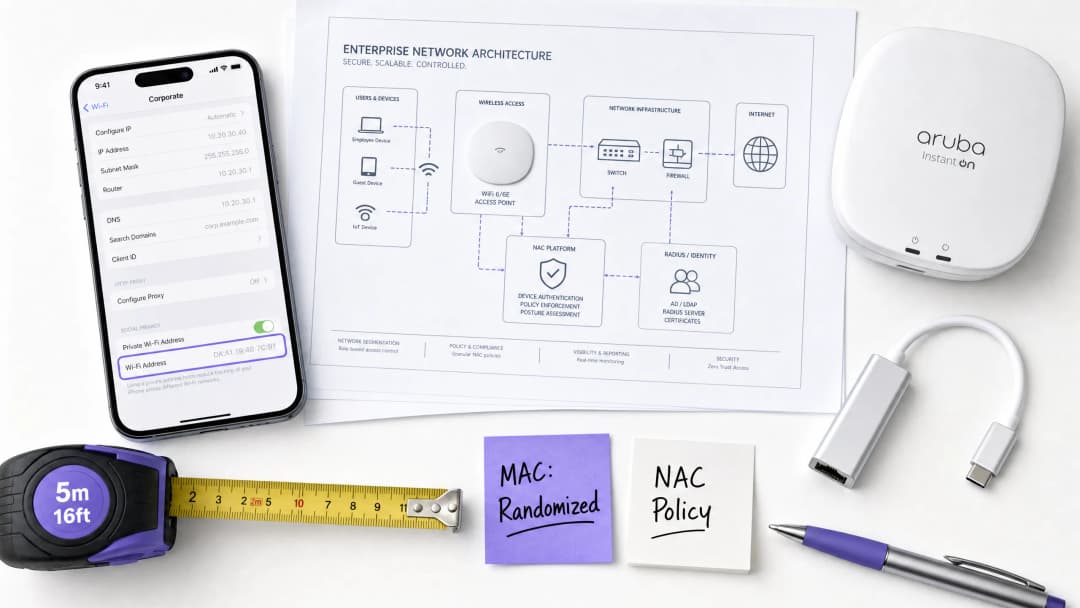
कार्यकारी सारांश
MAC एड्रेस रैंडमाइज़ेशन — जो अब iOS 14+, Android 10+ और Windows 11 पर डिफ़ॉल्ट व्यवहार है — ने उस डिवाइस-केंद्रित प्रमाणीकरण मॉडल को मौलिक रूप से तोड़ दिया है जिस पर एंटरप्राइज़ NAC सिस्टम दो दशकों से निर्भर थे। जब कोई डिवाइस अपना MAC एड्रेस रोटेट करता है, तो नेटवर्क उसे एक बिल्कुल नए क्लाइंट के रूप में मानता है। इसके परिणाम तत्काल और परिचालन संबंधी होते हैं: Captive Portal लौटने वाले मेहमानों को फिर से प्रमाणित करने के लिए मजबूर करते हैं, उच्च-घनत्व वाले वातावरण में DHCP स्कोप समाप्त हो जाते हैं, NAC नीतियां लागू होने में विफल रहती हैं, और एनालिटिक्स प्लेटफ़ॉर्म आगंतुकों की अत्यधिक बढ़ी हुई संख्या की रिपोर्ट करते हैं。
Hospitality संपत्तियों, Retail एस्टेट, Healthcare परिसरों, या Transport हब का प्रबंधन करने वाले IT लीडर्स के लिए, यह कोई सैद्धांतिक जोखिम नहीं है — यह एक सक्रिय परिचालन समस्या है जो अतिथि संतुष्टि, सुरक्षा स्थिति और मार्केटिंग डेटा गुणवत्ता को प्रभावित कर रही है。
इसका समाधान आर्किटेक्चरल है, कॉस्मेटिक नहीं। नेटवर्क को हार्डवेयर आइडेंटिफ़ायर (MAC एड्रेस) को प्रमाणित करने से हटकर IEEE 802.1X, Passpoint (Hotspot 2.0) और OpenRoaming के माध्यम से सत्यापित उपयोगकर्ता पहचान को प्रमाणित करने की ओर माइग्रेट करना होगा। यह मार्गदर्शिका इस तिमाही में उस बदलाव को करने के लिए तकनीकी गहराई और कार्यान्वयन रोडमैप प्रदान करती है。
तकनीकी डीप-डाइव: MAC रैंडमाइज़ेशन की कार्यप्रणाली
MAC रैंडमाइज़ेशन कोई मोनोलिथिक मानक नहीं है। इसका कार्यान्वयन डिवाइस इकोसिस्टम में काफी भिन्न होता है, जिससे नेटवर्क इंजीनियरों के लिए अप्रत्याशित और स्तरित चुनौतियां पैदा होती हैं。
ऑपरेटिंग सिस्टम रैंडमाइज़ेशन को कैसे हैंडल करते हैं
आधुनिक ऑपरेटिंग सिस्टम MAC रैंडमाइज़ेशन को दो अलग-अलग मोड में लागू करते हैं, और ये दोनों ही लीगेसी NAC आर्किटेक्चर को बाधित करते हैं:
प्रति-नेटवर्क रैंडमाइज़ेशन (डिफ़ॉल्ट व्यवहार): डिवाइस जिस भी SSID से कनेक्ट होता है, उसके लिए एक विशिष्ट, स्थानीय रूप से प्रबंधित MAC एड्रेस जनरेट करता है। यह एड्रेस SSID के हैश और डिवाइस-विशिष्ट सीड से प्राप्त होता है, जिसका अर्थ है कि यह उस विशिष्ट नेटवर्क के लिए स्थिर है लेकिन हार्डवेयर MAC से पूरी तरह अलग है। यह iOS 14+, Android 10+ और Windows 11 पर डिफ़ॉल्ट है。
आवधिक रोटेशन (एन्हांस्ड प्राइवेसी मोड): Apple का 'Private Wi-Fi Address' (iOS 15+) और एन्हांस्ड ट्रैकिंग प्रोटेक्शन के साथ Android का 'Use randomized MAC' जैसी सुविधाएं किसी दिए गए SSID के लिए रैंडमाइज़्ड MAC एड्रेस को दैनिक या साप्ताहिक शेड्यूल पर, या निष्क्रियता की एक कॉन्फ़िगर करने योग्य अवधि के बाद रोटेट करेंगी। एंटरप्राइज़ वातावरण के लिए यह अधिक विघटनकारी मोड है。
इसके अलावा, डिवाइस सक्रिय स्कैनिंग (प्रोब रिक्वेस्ट) के दौरान रैंडमाइज़्ड MAC का उपयोग करते हैं — इससे पहले कि कोई एसोसिएशन हो। इसका मतलब है कि प्रोब रिक्वेस्ट को ट्रैक करने वाले पैसिव एनालिटिक्स इंजन भी विशिष्ट डिवाइसों की विश्वसनीय रूप से गिनती नहीं कर सकते हैं。
नेटवर्क इंफ्रास्ट्रक्चर पर विफलताओं की श्रृंखला
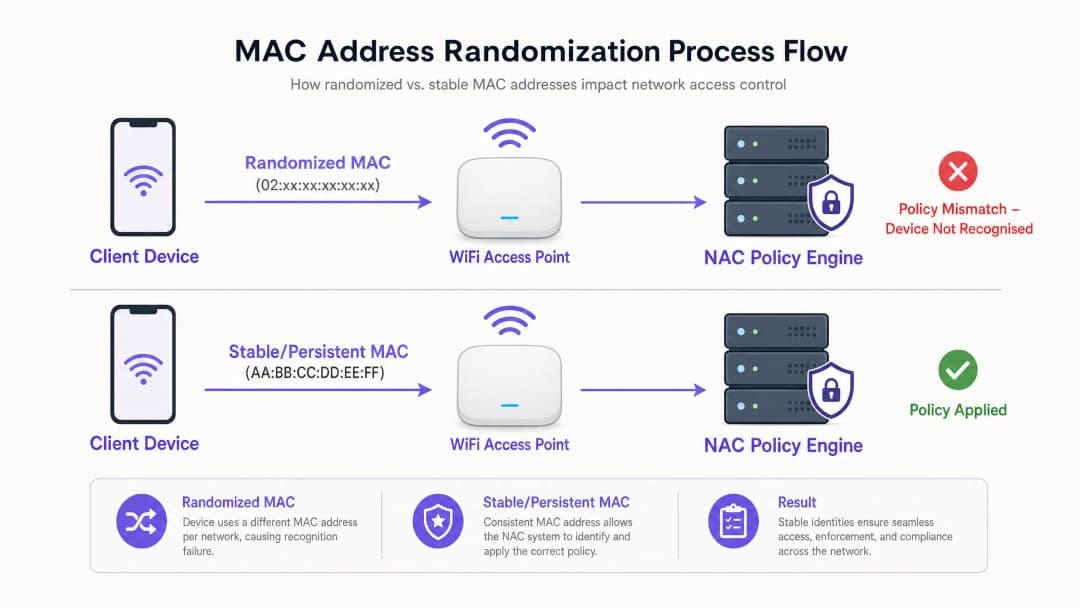
जब कोई डिवाइस अपना MAC एड्रेस रोटेट करता है, तो नेटवर्क उसे एक बिल्कुल नए क्लाइंट के रूप में मानता है। यह एक घटना कई नेटवर्क लेयर्स में आर्किटेक्चरल विफलताओं की एक श्रृंखला को ट्रिगर करती है:
| विफलता मोड | तकनीकी कारण | व्यावसायिक प्रभाव |
|---|---|---|
| Captive Portal थकान | MAC पर आधारित NAC सेशन कैश; रोटेशन कैश एंट्री को अमान्य कर देता है | लौटने वाले मेहमानों को फिर से प्रमाणित करने के लिए मजबूर होना; सपोर्ट टिकटों में वृद्धि |
| DHCP स्कोप की समाप्ति | प्रत्येक नया MAC एक नया IP लीज़ लेता है; TTL समाप्त होने तक पुराने लीज़ जारी नहीं किए जाते | नए डिवाइस IP एड्रेस प्राप्त करने में असमर्थ; मेहमानों के लिए नेटवर्क आउटेज |
| NAC नीति बेमेल | नीतियां (VLAN, रेट लिमिट, ACL) MAC से बंधी होती हैं; नए MAC की कोई नीति नहीं होती | सुरक्षा नियंत्रण बायपास; मेहमान गलत VLAN पर पहुंच सकते हैं |
| एनालिटिक्स इन्फ्लेशन | लेयर 2 MAC पर आधारित एनालिटिक्स; एक डिवाइस कई विशिष्ट आगंतुकों के रूप में दिखाई देता है | गलत फुटफॉल डेटा; झूठे मेट्रिक्स पर आधारित मार्केटिंग निर्णय |
| सेशन निरंतरता की हानि | AP रोमिंग और लोड बैलेंसिंग सेशन हैंडऑफ़ के लिए MAC पर निर्भर करते हैं | रोमिंग अनुभव में गिरावट; मूवमेंट के दौरान सेशन ड्रॉप होना |
IEEE मानक संदर्भ
स्थानीय रूप से प्रबंधित एड्रेस बिट (पहले ऑक्टेट का दूसरा सबसे कम महत्वपूर्ण बिट) रैंडमाइज़्ड MAC में 1 पर सेट होता है, जो उन्हें विश्व स्तर पर विशिष्ट हार्डवेयर एड्रेस से अलग करता है। पहले ऑक्टेट में 02:, 06:, 0A:, या 0E: से शुरू होने वाला MAC निश्चित रूप से एक स्थानीय रूप से प्रबंधित (संभावित रूप से रैंडमाइज़्ड) एड्रेस है। नेटवर्क इंजीनियर इसका उपयोग RADIUS या DHCP सर्वर स्तर पर रैंडमाइज़्ड क्लाइंट का पता लगाने के लिए कर सकते हैं, हालांकि केवल पता लगाने से प्रमाणीकरण समस्या का समाधान नहीं होता है。
जिस RF वातावरण में ये डिवाइस काम करते हैं, उसके बारे में अधिक संदर्भ के लिए, Wi-Fi Frequencies: A Guide to Wi-Fi Frequencies in 2026 पर हमारी मार्गदर्शिका देखें。
अपने विशिष्ट सेटअप को लेकर कोई सवाल हैं?
हमारी टीम 80,000 से अधिक वेन्यू में वेन्यू ऑपरेटरों, IT मैनेजरों और नेटवर्क इंजीनियरों के साथ काम करती है। 20 मिनट का कॉल बुक करें और हम आपको दिखाएंगे कि आपके जैसे अन्य लोगों ने इसे कैसे हल किया।
कार्यान्वयन मार्गदर्शिका: पहचान-केंद्रित आर्किटेक्चर की ओर माइग्रेट करना
MAC रैंडमाइज़ेशन का एकमात्र स्थायी समाधान प्रमाणीकरण और नीति प्रवर्तन को हार्डवेयर आइडेंटिफ़ायर से पूरी तरह अलग करना है। निम्नलिखित तीन-चरणीय कार्यान्वयन रोडमैप पहचान-केंद्रित नेटवर्क के लिए एक वेंडर-न्यूट्रल मार्ग प्रदान करता है。
चरण 1: तत्काल शमन (सप्ताह 1–2)
पूर्ण आर्किटेक्चरल माइग्रेशन शुरू करने से पहले, वातावरण को स्थिर करने के लिए इन सामरिक शमन उपायों को लागू करें:
- DHCP लीज़ का समय कम करें: गेस्ट VLAN पर, लीज़ की अवधि को सामान्य 24 घंटे से घटाकर 1–4 घंटे करें। यह अस्थायी डिवाइसों से IP एड्रेस को तेज़ी से पुनः प्राप्त करता है और स्कोप को समाप्त होने से रोकता है। उच्च टर्नओवर वाले स्टेडियमों या सम्मेलन केंद्रों में, 30 मिनट तक के छोटे लीज़ पर विचार करें。
- DHCP पूल का आकार बढ़ाएं: रोटेटिंग MAC से बढ़ी हुई मांग को समायोजित करने के लिए शॉर्ट-टर्म बफ़र के रूप में गेस्ट DHCP स्कोप का विस्तार करें。
- हेल्पडेस्क स्क्रिप्ट अपडेट करें: सपोर्ट स्टाफ़ को निर्देश दें कि गेस्ट कनेक्शन समस्या का निवारण करते समय, उन्हें सामान्य डिवाइस सेटिंग्स से हार्डवेयर MAC के बजाय उस विशिष्ट SSID के लिए डिवाइस का वर्तमान रैंडमाइज़्ड MAC (जो Wi-Fi नेटवर्क विवरण में पाया जाता है) मांगना चाहिए。
चरण 2: ज्ञात उपयोगकर्ताओं के लिए IEEE 802.1X तैनात करें (महीना 1–3)
IEEE 802.1X पहचान-केंद्रित नेटवर्क एक्सेस की आधारशिला है। डिवाइस को उसके MAC के माध्यम से प्रमाणित करने के बजाय, नेटवर्क RADIUS सर्वर के साथ EAP (Extensible Authentication Protocol) एक्सचेंज के माध्यम से क्रेडेंशियल्स, प्रमाणपत्रों या टोकनाइज़्ड पहचान के ज़रिए उपयोगकर्ता को प्रमाणित करता है。
प्रमुख कॉन्फ़िगरेशन चरण:
- अपनी पहचान निर्देशिका (Active Directory, LDAP, या क्लाउड IdP) के साथ एकीकृत एक RADIUS सर्वर (उदा., FreeRADIUS, Cisco ISE, Aruba ClearPass) तैनात करें。
- ज्ञात उपयोगकर्ताओं (स्टाफ़, पंजीकृत मेहमानों, लॉयल्टी सदस्यों) के लिए एक समर्पित WPA3-Enterprise SSID बनाएं。
- कॉर्पोरेट डिवाइसों के लिए मोबाइल डिवाइस मैनेजमेंट (MDM) समाधान के माध्यम से, या BYOD और पंजीकृत मेहमानों के लिए सेल्फ़-सर्विस ऑनबोर्डिंग पोर्टल के माध्यम से 802.1X क्रेडेंशियल्स का प्रावधान करें。
- MAC एड्रेस के बजाय RADIUS एट्रिब्यूट्स (उदा., VLAN असाइनमेंट के लिए
Tunnel-Private-Group-ID) के आधार पर VLAN असाइनमेंट, ACL और रेट लिमिट लागू करने के लिए NAC नीतियों को अपडेट करें。
चरण 3: अस्थायी मेहमानों के लिए Passpoint और OpenRoaming लागू करें (महीना 3–6)
अस्थायी मेहमानों — होटल के आगंतुकों, रिटेल शॉपर्स, स्टेडियम में आने वालों — के लिए व्यक्तिगत रूप से 802.1X क्रेडेंशियल्स का प्रबंधन करना अव्यावहारिक है। Passpoint (Hotspot 2.0 / IEEE 802.11u) बिना किसी Captive Portal के निर्बाध, स्वचालित और एन्क्रिप्टेड प्रमाणीकरण को सक्षम करके इसका समाधान करता है。
Passpoint एक डिवाइस को स्वचालित रूप से एक संगत नेटवर्क खोजने और एक विश्वसनीय आइडेंटिटी प्रोवाइडर (IdP) द्वारा प्रदान किए गए क्रेडेंशियल्स का उपयोग करके प्रमाणित करने की अनुमति देता है। उपयोगकर्ता को कभी भी लॉगिन पेज दिखाई नहीं देता है。
आइडेंटिटी प्रोवाइडर के रूप में Purple की भूमिका: Purple's Guest WiFi प्लेटफ़ॉर्म कनेक्ट लाइसेंस के तहत OpenRoaming जैसी सेवाओं के लिए एक मुफ़्त आइडेंटिटी प्रोवाइडर के रूप में कार्य करता है। जब कोई मेहमान किसी एक स्थान पर Purple-संचालित Captive Portal या लॉयल्टी ऐप के माध्यम से प्रमाणित होता है, तो Purple उन्हें Passpoint क्रेडेंशियल्स प्रदान करता है। फ़ेडरेशन में किसी भी OpenRoaming-सक्षम स्थान पर बाद की यात्राओं पर, डिवाइस स्वचालित रूप से और सुरक्षित रूप से कनेक्ट हो जाता है — उपयोगकर्ता की पहचान लेयर 7 पर सत्यापित होती है, चाहे उनका MAC एड्रेस कुछ भी हो。
यह आर्किटेक्चर सीधे WiFi Analytics प्लेटफ़ॉर्म में भी फ़ीड करता है, जहां आगंतुकों की संख्या, ड्वेल टाइम और वापसी यात्रा दरों की गणना अल्पकालिक MAC एड्रेस के बजाय सत्यापित पहचान से की जाती है。

एंटरप्राइज़ परिनियोजन के लिए सर्वोत्तम अभ्यास
निम्नलिखित वेंडर-न्यूट्रल सर्वोत्तम अभ्यास सभी परिनियोजन पैमानों पर लागू होते हैं:
नीति को MAC एड्रेस से अलग करें: अपने वातावरण में प्रत्येक NAC नीति का ऑडिट करें। कोई भी नीति जो किसी विशिष्ट MAC एड्रेस या MAC-आधारित डिवाइस समूह को संदर्भित करती है, उसे उपयोगकर्ता पहचान एट्रिब्यूट (RADIUS उपयोगकर्ता नाम, Active Directory समूह, प्रमाणपत्र CN) को संदर्भित करने के लिए माइग्रेट किया जाना चाहिए। यह MAC-रैंडमाइज़ेशन-रेज़िलिएंट नेटवर्क के लिए एक गैर-परक्राम्य शर्त है。
IoT डिवाइसों को अलग से सेगमेंट करें: अधिकांश एंटरप्राइज़ IoT डिवाइस (एक्सेस कंट्रोल रीडर, HVAC कंट्रोलर, डिजिटल साइनेज) MAC रैंडमाइज़ेशन लागू नहीं करते हैं। हालांकि, उन्हें MAC ऑथेंटिकेशन बायपास (MAB) के बजाय MPSK या प्रमाणपत्र-आधारित प्रमाणीकरण का उपयोग करके एक समर्पित VLAN पर अलग किया जाना चाहिए, जो स्पूफिंग के प्रति संवेदनशील रहता है। इस विषय के विस्तृत विवरण के लिए, Managing IoT Device Security with NAC and MPSK पर हमारी मार्गदर्शिका देखें (también disponible en español: Gestión de la seguridad de dispositivos IoT con NAC y MPSK)。
WPA3 को बेसलाइन के रूप में अपनाएं: WPA3-Personal (SAE) और WPA3-Enterprise, WPA2 की तुलना में काफी मजबूत सुरक्षा प्रदान करते हैं और Passpoint R3 परिनियोजन के लिए आवश्यक हैं। चरण 3 शुरू करने से पहले सुनिश्चित करें कि आपका एक्सेस पॉइंट फ़र्मवेयर और क्लाइंट सप्लिकेंट्स WPA3 का समर्थन करते हैं。
अनुपालन लॉगिंग को मान्य करें: GDPR और PCI DSS के तहत, आपको नेटवर्क गतिविधि को किसी विशिष्ट उपयोगकर्ता या डिवाइस से जोड़ने में सक्षम होना चाहिए। MAC-आधारित लॉगिंग सिस्टम अब पर्याप्त नहीं है। सुनिश्चित करें कि आपका SIEM और लॉगिंग इंफ्रास्ट्रक्चर केवल DHCP लॉग से MAC एड्रेस के बजाय RADIUS अकाउंटिंग रिकॉर्ड से प्रमाणित उपयोगकर्ता पहचान कैप्चर करता है。
संबंधित एंटरप्राइज़ नेटवर्किंग निर्णयों के संदर्भ के लिए, SD-WAN vs MPLS: The 2026 Enterprise Network Guide पर हमारी मार्गदर्शिका और BLE Low Energy Explained for Enterprise पर हमारा प्राइमर देखें。
समस्या निवारण और जोखिम शमन
सामान्य विफलता मोड और समाधान
लक्षण: सामान्य फुटफॉल के बावजूद पीक आवर्स के दौरान DHCP पूल समाप्त हो गया। निदान: एक ही भौतिक डिवाइस को असाइन किए गए कई लीज़ के लिए DHCP लीज़ लॉग की जांच करें (AP एसोसिएशन लॉग के साथ सहसंबंधित करके पहचाना जा सकता है)। यदि किसी एक डिवाइस ने 24 घंटों में 3+ लीज़ का उपभोग किया है, तो MAC रोटेशन की पुष्टि हो जाती है। समाधान: लीज़ के समय को तुरंत कम करें। उच्च-आवृत्ति वाले उपयोगकर्ताओं की पहचान को स्थिर करने के लिए चरण 2 (802.1X) लागू करें。
लक्षण: लौटने वाले मेहमानों को बार-बार Captive Portal पर रीडायरेक्ट किया जाता है। निदान: NAC सेशन कैश MAC पर आधारित है। यह जांच कर पुष्टि करें कि क्या मेहमान का वर्तमान MAC उनके पिछले सेशन के कैश किए गए MAC से मेल खाता है। समाधान: लॉयल्टी ऐप या प्रोफ़ाइल प्रोविज़निंग के माध्यम से लौटने वाले मेहमानों के लिए Passpoint लागू करें। यह एकमात्र स्थायी समाधान है。
लक्षण: एनालिटिक्स अपेक्षित विशिष्ट आगंतुकों की संख्या से 3 गुना अधिक रिपोर्ट कर रहा है। निदान: एनालिटिक्स प्लेटफ़ॉर्म विशिष्ट प्रमाणित सेशन के बजाय विशिष्ट MAC एड्रेस की गिनती कर रहा है। समाधान: Captive Portal प्रमाणीकरण लॉग या RADIUS अकाउंटिंग से लेयर 7 पहचान डेटा पर निर्भर रहने के लिए एनालिटिक्स को माइग्रेट करें। MAC-आधारित आगंतुक गिनती को पूरी तरह से छोड़ दें。
लक्षण: स्पष्ट रूप से फिर से कनेक्ट होने के बाद IoT डिवाइस VLAN असाइनमेंट खो देता है। निदान: पुष्टि करें कि क्या IoT डिवाइस फ़र्मवेयर MAC रैंडमाइज़ेशन लागू करता है (दुर्लभ लेकिन एंटरप्राइज़ वातावरण में तैनात कुछ उपभोक्ता-ग्रेड IoT डिवाइसों में मौजूद है)। समाधान: IoT प्रमाणीकरण को MPSK या प्रमाणपत्र-आधारित 802.1X में माइग्रेट करें। रैंडमाइज़ेशन लागू करने वाले किसी भी डिवाइस के लिए MAB पर निर्भर न रहें。
ROI और व्यावसायिक प्रभाव
MAC रैंडमाइज़ेशन को संबोधित करना कोई लागत केंद्र नहीं है — यह एक राजस्व और अनुपालन एनेबलर है。
परिचालन लागत में कमी: Captive Portal से संबंधित सपोर्ट टिकटों को खत्म करने से तत्काल बचत होती है। 200 संपत्तियों वाली एक बड़ी होटल श्रृंखला के लिए, गेस्ट WiFi सपोर्ट कॉल को 30% तक कम करने से भी वार्षिक हेल्पडेस्क लागत में दसियों हज़ार पाउंड की कमी आ सकती है。
मार्केटिंग डेटा गुणवत्ता: सटीक, पहचान-आधारित आगंतुक एनालिटिक्स सीधे मार्केटिंग अभियानों के ROI में सुधार करता है। जब फुटफॉल डेटा रोटेटिंग MAC के बजाय सत्यापित पहचान पर आधारित होता है, तो रूपांतरण दर की गणना, ड्वेल टाइम विश्लेषण और वापसी यात्रा एट्रिब्यूशन व्यावसायिक निर्णयों के लिए विश्वसनीय इनपुट बन जाते हैं。
अनुपालन आश्वासन: GDPR की आवश्यकता है कि डेटा प्रोसेसिंग उचित सहमति के साथ पहचाने जाने योग्य व्यक्तियों से जुड़ी हो। एक MAC-आधारित सिस्टम नेटवर्क गतिविधि को किसी विशिष्ट व्यक्ति से विश्वसनीय रूप से नहीं जोड़ सकता है। सत्यापित प्रमाणीकरण के साथ एक पहचान-केंद्रित सिस्टम GDPR अनुपालन और PCI DSS नेटवर्क सेगमेंटेशन लॉगिंग के लिए आवश्यक ऑडिट ट्रेल प्रदान करता है。
अतिथि अनुभव और राजस्व: हॉस्पिटैलिटी में, एक घर्षण रहित, स्वचालित Wi-Fi कनेक्शन (Passpoint के माध्यम से) तेजी से एक प्रतिस्पर्धी विभेदक बन रहा है। जो होटल और स्थान लौटने वाले मेहमानों के लिए Captive Portal को खत्म कर देते हैं, वे अतिथि संतुष्टि स्कोर में उल्लेखनीय वृद्धि और ड्वेल टाइम में बढ़ोतरी की रिपोर्ट करते हैं — ये दोनों ही प्रति विज़िट उच्च सहायक राजस्व से संबंधित हैं।
मुख्य परिभाषाएं
MAC एड्रेस रैंडमाइज़ेशन
आधुनिक ऑपरेटिंग सिस्टम (iOS 14+, Android 10+, Windows 11) में एक प्राइवेसी सुविधा जहां कोई डिवाइस Wi-Fi नेटवर्क से कनेक्ट या स्कैन करते समय अपने बर्न-इन हार्डवेयर एड्रेस का उपयोग करने के बजाय एक स्थानीय रूप से प्रबंधित, अस्थायी MAC एड्रेस जनरेट करता है। रैंडमाइज़्ड एड्रेस प्रति-नेटवर्क (किसी दिए गए SSID के लिए स्थिर) या समय-समय पर रोटेट होने वाला हो सकता है।
IT टीमों को इसका सामना तब करना पड़ता है जब डिवाइस वापसी यात्राओं पर Captive Portal को बायपास करने में विफल रहते हैं, जब एनालिटिक्स प्लेटफ़ॉर्म विशिष्ट आगंतुकों की बढ़ी हुई संख्या की रिपोर्ट करते हैं, या जब उच्च-घनत्व वाले वातावरण में DHCP स्कोप अप्रत्याशित रूप से समाप्त हो जाते हैं।
नेटवर्क एक्सेस कंट्रोल (NAC)
एक सुरक्षा ढांचा और संबंधित तकनीक जो नेटवर्क तक पहुंचने का प्रयास करने वाले डिवाइसों पर नीति लागू करती है, डिवाइस की पहचान, पोस्चर (अनुपालन स्थिति) और उपयोगकर्ता क्रेडेंशियल्स के आधार पर दिए गए एक्सेस का स्तर निर्धारित करती है। सामान्य NAC प्लेटफ़ॉर्म में Cisco ISE, Aruba ClearPass और Forescout शामिल हैं।
NAC सिस्टम पारंपरिक रूप से डिवाइस प्रोफ़ाइलिंग, नीति प्रवर्तन और सेशन ट्रैकिंग के लिए MAC एड्रेस पर निर्भर थे — एक ऐसा प्रतिमान जिसे MAC रैंडमाइज़ेशन ने मौलिक रूप से कमजोर कर दिया है।
Captive Portal
एक वेब पेज जो उपयोगकर्ता के HTTP ट्रैफ़िक को इंटरसेप्ट करता है और नेटवर्क एक्सेस देने से पहले इंटरैक्शन (लॉगिन, शर्तों की स्वीकृति, या भुगतान) की आवश्यकता होती है। Captive Portal आमतौर पर लौटने वाले उपयोगकर्ताओं को पहचानने और पुनः प्रमाणीकरण को बायपास करने के लिए MAC एड्रेस कैशिंग का उपयोग करते हैं।
MAC रैंडमाइज़ेशन Captive Portal की 'Remember Me' कार्यक्षमता को तोड़ देता है, क्योंकि लौटने वाला डिवाइस एक नया MAC एड्रेस प्रस्तुत करता है जो कैश किए गए सेशन से मेल नहीं खाता है।
IEEE 802.1X
पोर्ट-आधारित नेटवर्क एक्सेस कंट्रोल के लिए एक IEEE मानक जो LAN या WLAN से कनेक्ट होने वाले डिवाइसों के लिए एक प्रमाणीकरण तंत्र प्रदान करता है। यह RADIUS सर्वर के विरुद्ध उपयोगकर्ताओं या डिवाइसों को प्रमाणित करने के लिए एक्सटेंसिबल ऑथेंटिकेशन प्रोटोकॉल (EAP) का उपयोग करता है, जो नेटवर्क एक्सेस को हार्डवेयर एड्रेस के बजाय सत्यापित पहचान से बांधता है।
802.1X एंटरप्राइज़ वातावरण के लिए MAC रैंडमाइज़ेशन का प्राथमिक आर्किटेक्चरल समाधान है, जो प्रमाणीकरण को डिवाइस लेयर से आइडेंटिटी लेयर में स्थानांतरित करता है।
Passpoint (Hotspot 2.0 / IEEE 802.11u)
एक Wi-Fi एलायंस प्रमाणन कार्यक्रम और संबंधित IEEE मानक जो डिवाइसों को उपयोगकर्ता इंटरैक्शन या Captive Portal रीडायरेक्शन के बिना, एक विश्वसनीय आइडेंटिटी प्रोवाइडर द्वारा प्रदान किए गए क्रेडेंशियल्स का उपयोग करके स्वचालित रूप से Wi-Fi नेटवर्क खोजने, चुनने और प्रमाणित करने में सक्षम बनाता है।
Passpoint हॉस्पिटैलिटी, रिटेल और सार्वजनिक स्थानों में अस्थायी अतिथि आबादी के लिए MAC-निर्भर Captive Portal को खत्म करने के लिए अनुशंसित समाधान है।
OpenRoaming
Wi-Fi नेटवर्क और आइडेंटिटी प्रोवाइडर्स का एक वायरलेस ब्रॉडबैंड एलायंस (WBA) फ़ेडरेशन जो डिवाइसों को उनके मौजूदा सेलुलर, एंटरप्राइज़ या सोशल क्रेडेंशियल्स का उपयोग करके विश्व स्तर पर भाग लेने वाले नेटवर्क से निर्बाध और सुरक्षित रूप से कनेक्ट करने में सक्षम बनाता है।
Purple कनेक्ट लाइसेंस के तहत OpenRoaming के लिए एक आइडेंटिटी प्रोवाइडर के रूप में कार्य करता है, जिससे स्थानों को एनालिटिक्स और अनुपालन के लिए पहचान दृश्यता बनाए रखते हुए स्वचालित, सुरक्षित गेस्ट Wi-Fi एक्सेस प्रदान करने की अनुमति मिलती है।
DHCP स्कोप की समाप्ति
एक नेटवर्क स्थिति जहां एक DHCP सर्वर ने अपने कॉन्फ़िगर किए गए पूल में सभी उपलब्ध IP एड्रेस असाइन कर दिए हैं और नए DHCP अनुरोधों को सेवा नहीं दे सकता है, जिससे नए क्लाइंट नेटवर्क कनेक्टिविटी प्राप्त करने में विफल हो जाते हैं।
उच्च-घनत्व वाले वातावरण में MAC रैंडमाइज़ेशन का एक प्रत्यक्ष परिचालन लक्षण। अपना MAC एड्रेस रोटेट करने वाला एक भौतिक डिवाइस कई IP लीज़ का उपभोग कर सकता है, जिससे उपलब्ध पूल तेज़ी से समाप्त हो जाता है।
लेयर 7 आइडेंटिटी बाइंडिंग
नेटवर्क गतिविधि, सेशन डेटा और एनालिटिक्स को MAC एड्रेस (लेयर 2) या IP एड्रेस (लेयर 3) जैसे नेटवर्क-लेयर आइडेंटिफ़ायर पर निर्भर रहने के बजाय एप्लिकेशन लेयर (OSI मॉडल की लेयर 7) पर एक विशिष्ट प्रमाणित उपयोगकर्ता पहचान के साथ जोड़ने की प्रक्रिया।
पोस्ट-MAC रैंडमाइज़ेशन नेटवर्क आर्किटेक्चर में सटीक Wi-Fi एनालिटिक्स, GDPR-अनुपालन सेशन लॉगिंग और विश्वसनीय NAC नीति प्रवर्तन के लिए आवश्यक।
स्थानीय रूप से प्रबंधित एड्रेस (LAA)
एक MAC एड्रेस जिसमें पहले ऑक्टेट का दूसरा सबसे कम महत्वपूर्ण बिट ('U/L' बिट) 1 पर सेट होता है, जो यह दर्शाता है कि एड्रेस हार्डवेयर निर्माता के बजाय सॉफ़्टवेयर द्वारा असाइन किया गया है। रैंडमाइज़्ड MAC एड्रेस हमेशा स्थानीय रूप से प्रबंधित एड्रेस होते हैं।
नेटवर्क इंजीनियर LAA बिट की जांच करके RADIUS या DHCP सर्वर पर रैंडमाइज़्ड क्लाइंट का पता लगा सकते हैं। 02, 06, 0A, या 0E के पहले ऑक्टेट स्थानीय रूप से प्रबंधित एड्रेस का संकेत देते हैं।
हल किए गए उदाहरण
एक 500-स्टोर वाली रिटेल श्रृंखला पीक वीकेंड ट्रेडिंग घंटों के दौरान DHCP पूल की समाप्ति का अनुभव कर रही है। नेटवर्क टीम ने फुटफॉल नहीं बढ़ाया है, लेकिन DHCP लॉग दिखाते हैं कि गेस्ट VLAN स्कोप शनिवार को दोपहर तक लगातार समाप्त हो जाता है। वर्तमान लीज़ समय 24 घंटे है।
चरण 1 — मूल कारण की पुष्टि करें: DHCP लीज़ लॉग निकालें और AP एसोसिएशन लॉग के साथ क्रॉस-रेफरेंस करें। 24 घंटे की विंडो के भीतर एक ही भौतिक डिवाइस को असाइन किए गए कई लीज़ खोजें। यदि कोई डिवाइस एक ही दिन में 3+ अलग-अलग MAC एड्रेस के साथ दिखाई देता है, तो MAC रोटेशन की प्राथमिक चालक के रूप में पुष्टि हो जाती है।
चरण 2 — तत्काल शमन: गेस्ट VLAN पर DHCP लीज़ समय को 24 घंटे से घटाकर 2 घंटे करें। यह अस्थायी शॉपर्स और रोटेटिंग MAC से IP एड्रेस को काफी तेज़ी से पुनः प्राप्त करता है। बफ़र के रूप में DHCP पूल का आकार भी बढ़ाएं।
चरण 3 — मध्यम अवधि का समाधान: ब्रांड के लॉयल्टी ऐप के माध्यम से Passpoint प्रोविज़निंग लागू करें। ऐप इंस्टॉल करने वाले लगातार शॉपर्स को एक Passpoint प्रोफ़ाइल प्राप्त होती है जो उन्हें MAC-निर्भर Captive Portal को बायपास करते हुए 802.1X पर स्वचालित रूप से प्रमाणित करती है। उनका सेशन अब उनके MAC से नहीं, बल्कि उनकी लॉयल्टी पहचान से जुड़ा है।
चरण 4 — NAC नीतियां अपडेट करें: सुनिश्चित करें कि VLAN असाइनमेंट और रेट लिमिटिंग नीतियां MAC एड्रेस के बजाय RADIUS उपयोगकर्ता नाम एट्रिब्यूट को संदर्भित करती हैं। यह MAC रोटेशन की परवाह किए बिना सुसंगत नीति अनुप्रयोग सुनिश्चित करता है।
एक 400 कमरों वाले होटल समूह को मेहमानों की शिकायतें मिल रही हैं कि उन्हें अपने ठहरने के हर दिन होटल WiFi में लॉग इन करना पड़ता है, जबकि Captive Portal 'इस डिवाइस को 7 दिनों के लिए याद रखें' विकल्प प्रदर्शित करता है। होटल की IT टीम ने पुष्टि की है कि NAC को 7-दिन के सेशन कैश के साथ सही ढंग से कॉन्फ़िगर किया गया है।
चरण 1 — MAC रोटेशन का निदान करें: किसी मेहमान से विशिष्ट होटल SSID के लिए उनकी iPhone या Android सेटिंग्स की जांच करने के लिए कहें। iOS पर, Settings > Wi-Fi > [Hotel SSID] पर नेविगेट करें और जांचें कि क्या 'Private Wi-Fi Address' 'Rotating' पर सेट है। यदि सक्षम है, तो डिवाइस प्रतिदिन अपना MAC रोटेट करता है, जिससे हर 24 घंटे में 7-दिन का सेशन कैश अमान्य हो जाता है।
चरण 2 — अल्पकालिक अतिथि संचार: मेहमानों को यह निर्देश देने के लिए होटल की WiFi वेलकम स्क्रीन और इन-रूम सामग्री को अपडेट करें कि होटल SSID के लिए अपना Private Wi-Fi Address 'Fixed' पर कैसे सेट करें। यह केवल एक कामचलाऊ उपाय है।
चरण 3 — स्थायी आर्किटेक्चरल समाधान: होटल के एक्सेस पॉइंट पर Passpoint R2 कॉन्फ़िगरेशन तैनात करें। आइडेंटिटी प्रोवाइडर के रूप में Purple के Guest WiFi प्लेटफ़ॉर्म के साथ एकीकृत करें। जो मेहमान पहले दिन Captive Portal के माध्यम से एक बार प्रमाणित होते हैं, उन्हें Passpoint प्रोफ़ाइल प्रदान की जाती है। उनके ठहरने के शेष समय के लिए — और भविष्य की यात्राओं पर — उनका डिवाइस बिना किसी पोर्टल इंटरैक्शन के स्वचालित रूप से और सुरक्षित रूप से कनेक्ट हो जाता है।
चरण 4 — RADIUS अकाउंटिंग के साथ मान्य करें: पुष्टि करें कि RADIUS अकाउंटिंग लॉग GDPR-अनुपालन सेशन लॉगिंग सुनिश्चित करने के लिए केवल MAC एड्रेस के बजाय मेहमान की प्रमाणित पहचान (ईमेल या लॉयल्टी ID) कैप्चर कर रहे हैं।
अभ्यास प्रश्न
Q1. एक स्टेडियम IT निदेशक ने देखा कि उनका गेस्ट Wi-Fi एनालिटिक्स प्लेटफ़ॉर्म एक मैच के दौरान 58,000 विशिष्ट आगंतुकों की रिपोर्ट कर रहा है, लेकिन स्टेडियम की सत्यापित क्षमता 32,000 है। एनालिटिक्स वेंडर पुष्टि करता है कि प्लेटफ़ॉर्म विशिष्ट MAC एड्रेस की गिनती करता है। इसका सबसे संभावित कारण क्या है, और सटीक आगंतुक संख्या उत्पन्न करने के लिए किस आर्किटेक्चरल बदलाव की आवश्यकता है?
संकेत: विचार करें कि 3 घंटे के इवेंट के दौरान किसी एक डिवाइस का MAC एड्रेस कितनी बार रोटेट हो सकता है, और एनालिटिक्स प्लेटफ़ॉर्म नेटवर्क स्टैक की किस लेयर से पढ़ रहा है।
मॉडल उत्तर देखें
एनालिटिक्स प्लेटफ़ॉर्म लेयर 2 पर विशिष्ट MAC एड्रेस की गिनती कर रहा है, और MAC रैंडमाइज़ेशन के कारण प्रत्येक भौतिक डिवाइस इवेंट के दौरान अपना एड्रेस रोटेट करते समय कई विशिष्ट आगंतुकों के रूप में दिखाई दे रहा है। 58,000 का आंकड़ा वास्तविक व्यक्तियों के बजाय MAC रोटेशन घटनाओं का प्रतिनिधित्व करता है। आर्किटेक्चरल समाधान एनालिटिक्स प्लेटफ़ॉर्म को लेयर 7 पर विशिष्ट प्रमाणित पहचानों की गिनती करने के लिए माइग्रेट करना है — विशेष रूप से, विशिष्ट Captive Portal प्रमाणीकरण सेशन या RADIUS अकाउंटिंग रिकॉर्ड। प्रत्येक प्रमाणित सेशन एक सत्यापित पहचान (ईमेल, फ़ोन नंबर, या सोशल लॉगिन) से जुड़ा होता है, जो MAC रोटेट होने पर नहीं बदलता है। यह एक सटीक, GDPR-अनुपालन आगंतुक संख्या उत्पन्न करेगा।
Q2. आप एक नया NAC समाधान तैनात करने वाले एक बड़े NHS ट्रस्ट के लिए नेटवर्क आर्किटेक्ट हैं। आपको यह सुनिश्चित करने की आवश्यकता है कि मेडिकल IoT डिवाइस (इन्फ्यूजन पंप, रोगी निगरानी प्रणाली) एक क्लिनिकल VLAN से सुरक्षित रूप से जुड़े रहें, जबकि गेस्ट डिवाइस (रोगी और आगंतुक) इंटरनेट-ओनली VLAN पर अलग-थलग रहें। ट्रस्ट के CISO ने फ़्लैग किया है कि क्लिनिकल डिवाइस सुरक्षा के लिए MAC ऑथेंटिकेशन बायपास (MAB) अपर्याप्त है। आप प्रत्येक डिवाइस क्लास के लिए प्रमाणीकरण आर्किटेक्चर कैसे डिज़ाइन करते हैं?
संकेत: हेडलेस मेडिकल IoT डिवाइसों बनाम उपभोक्ता स्मार्टफ़ोन की प्रमाणीकरण क्षमताओं में अंतर करें। विचार करें कि कौन से डिवाइस 802.1X प्रमाणपत्रों का समर्थन कर सकते हैं और कौन से नहीं।
मॉडल उत्तर देखें
मेडिकल IoT डिवाइसों के लिए: इसका समर्थन करने वाले डिवाइसों के लिए EAP-TLS (प्रमाणपत्र-आधारित प्रमाणीकरण) के साथ 802.1X तैनात करें। 802.1X का समर्थन नहीं कर सकने वाले लीगेसी डिवाइसों के लिए, प्रति डिवाइस एक विशिष्ट PSK के साथ MPSK (मल्टी प्री-शेयर्ड की) का उपयोग करें, यह सुनिश्चित करते हुए कि यदि एक PSK से समझौता किया जाता है तो भी प्रत्येक डिवाइस अलग-थलग रहे। एक सख्त डिवाइस इन्वेंट्री बनाए रखें और MDM/डिवाइस प्रबंधन प्रणाली के माध्यम से प्रमाणपत्र या PSK प्रदान करें। सफल प्रमाणीकरण पर RADIUS एट्रिब्यूट्स के माध्यम से क्लिनिकल VLAN असाइन करें。
गेस्ट डिवाइसों (रोगियों और आगंतुकों) के लिए: मान लें कि सभी MAC रैंडमाइज़्ड हैं। प्रारंभिक प्रमाणीकरण (GDPR सहमति के लिए ईमेल/SMS सत्यापन) के लिए एक Captive Portal तैनात करें। लौटने वाले मेहमानों के लिए, बाद की यात्राओं पर स्वचालित पुन: कनेक्शन सक्षम करने के लिए Purple के Passpoint/OpenRoaming के साथ एकीकृत करें। सभी गेस्ट ट्रैफ़िक को इंटरनेट-ओनली VLAN पर असाइन करें जिसमें क्लिनिकल नेटवर्क तक कोई पहुंच न हो, जिसे MAC एड्रेस के बजाय उपयोगकर्ता समूह द्वारा RADIUS स्तर पर लागू किया गया हो।
Q3. एक लक्ज़री रिटेल ब्रांड एक 'घर्षण रहित' Wi-Fi अनुभव लागू करना चाहता है जहां VIP लॉयल्टी सदस्य विश्व स्तर पर ब्रांड के 80 प्रमुख स्टोरों में से किसी में भी प्रवेश करने पर बिना किसी पोर्टल इंटरैक्शन के स्वचालित रूप से कनेक्ट हो जाते हैं। यह देखते हुए कि MAC रैंडमाइज़ेशन MAC-आधारित सेशन कैशिंग को अविश्वसनीय बनाता है, सबसे मजबूत आर्किटेक्चरल दृष्टिकोण क्या है, और इसके परिणामस्वरूप ब्रांड को कौन सा डेटा प्राप्त होता है?
संकेत: MAC कैशिंग 'घर्षण रहित' वापसी यात्राओं के लिए एक व्यवहार्य तंत्र नहीं है। विचार करें कि इसके बजाय किस स्थायी, गैर-रोटेटिंग आइडेंटिफ़ायर का उपयोग किया जा सकता है, और इसे डिवाइस को कैसे प्रदान किया जाता है।
मॉडल उत्तर देखें
सबसे मजबूत दृष्टिकोण ब्रांड के लॉयल्टी ऐप के माध्यम से प्रदान किया गया Passpoint (Hotspot 2.0) है। जब कोई VIP सदस्य पहली बार प्रमाणित होता है (ऐप या वन-टाइम Captive Portal के माध्यम से), तो Purple Guest WiFi प्लेटफ़ॉर्म सदस्य की लॉयल्टी पहचान से जुड़े 802.1X क्रेडेंशियल्स वाली एक Passpoint प्रोफ़ाइल प्रदान करता है। प्रोफ़ाइल डिवाइस पर इंस्टॉल की जाती है और सुरक्षित रूप से संग्रहीत की जाती है। 80 स्टोरों में से किसी पर भी बाद की यात्राओं पर, डिवाइस स्वचालित रूप से Passpoint-सक्षम SSID खोजता है और संग्रहीत क्रेडेंशियल्स का उपयोग करके बैकग्राउंड में प्रमाणित करता है — कोई पोर्टल नहीं, कोई इंटरैक्शन नहीं, कोई MAC निर्भरता नहीं。
ब्रांड को प्राप्त होता है: (1) प्रत्येक स्टोर विज़िट के लिए सटीक, पहचान-लिंक्ड कनेक्शन ईवेंट, विशिष्ट लॉयल्टी सदस्यों को सटीक फुटफॉल एट्रिब्यूशन सक्षम करना; (2) CRM संवर्धन के लिए सत्यापित पहचानों से जुड़ा ड्वेल टाइम और विज़िट फ़्रीक्वेंसी डेटा; (3) प्रारंभिक ऑनबोर्डिंग के दौरान कैप्चर की गई स्पष्ट सहमति से नेटवर्क एक्सेस को जोड़ने वाला एक GDPR-अनुपालन ऑडिट ट्रेल; और (4) WiFi Analytics प्लेटफ़ॉर्म का उपयोग करके इन-स्टोर उपस्थिति के आधार पर रीयल-टाइम वैयक्तिकृत मार्केटिंग संदेशों को ट्रिगर करने की क्षमता।
इस श्रृंखला में आगे पढ़ें
PPSK WPA3: सुविधाओं और परिनियोजन मॉडलों की तुलना
यह तकनीकी संदर्भ गाइड PPSK और WPA3-SAE की तुलना करती है, मल्टी-टेनेंट वातावरण के लिए उनके आर्किटेक्चरल अंतर और परिनियोजन मॉडल की व्याख्या करती है। यह IT प्रबंधकों और प्रॉपर्टी डेवलपर्स को Purple के पहचान-आधारित समाधानों का उपयोग करके सुरक्षित, पृथक WiFi नेटवर्क प्राप्त करने पर व्यावहारिक मार्गदर्शन प्रदान करती है.
Staff WiFi के लिए बैंडविड्थ प्रबंधित करना: शेपिंग, QoS और ट्रैफ़िक को कम करना
यह गाइड एंटरप्राइज़ स्थानों में staff WiFi के लिए बैंडविड्थ प्रबंधित करने के व्यावहारिक तरीकों का विवरण देती है। इसमें ट्रैफ़िक शेपिंग, QoS कार्यान्वयन, और बुनियादी ढांचे के अपग्रेड की आवश्यकता के बिना Purple Shield को तैनात करने से नेटवर्क लोड कैसे कम होता है, यह शामिल है।
प्रति-डिवाइस PSK (iPSK, DPSK, MPSK) का उपयोग करके WiFi SSID की संख्या कैसे कम करें
यह आधिकारिक तकनीकी संदर्भ गाइड बताती है कि कैसे IT टीमें प्रति-डिवाइस PSK (xPSK) का उपयोग करके कई विशिष्ट उद्देश्यों के लिए बनाए गए नेटवर्क को एक सिंगल SSID में मिलाकर SSID बीकन ओवरहेड के कारण होने वाले WiFi परफॉर्मेंस के नुकसान को समाप्त कर सकती हैं। इसमें Cisco iPSK, HPE Aruba MPSK, Ruckus DPSK, Juniper Mist PPSK और Ubiquiti UniFi PPSK के वेंडर परिदृश्य को शामिल किया गया है, जिसमें डायनेमिक VLAN असाइनमेंट, IoT ऑनबोर्डिंग और PCI DSS अनुपालन पर व्यावहारिक कार्यान्वयन मार्गदर्शन दिया गया है। हॉस्पिटैलिटी, रिटेल, स्टेडियम और सार्वजनिक क्षेत्र के संगठनों के वेन्यू ऑपरेटरों को इसमें व्यावहारिक आर्किटेक्चर मार्गदर्शन और वास्तविक दुनिया के व्यावहारिक उदाहरण मिलेंगे।
अपने विशिष्ट सेटअप को लेकर कोई सवाल हैं?
हमारी टीम 80,000 से अधिक वेन्यू में वेन्यू ऑपरेटरों, IT मैनेजरों और नेटवर्क इंजीनियरों के साथ काम करती है। 20 मिनट का कॉल बुक करें और हम आपको दिखाएंगे कि आपके जैसे अन्य लोगों ने इसे कैसे हल किया।