
NAC और MPSK के साथ IoT डिवाइस सुरक्षा का प्रबंधन
यह तकनीकी मार्गदर्शिका विस्तार से बताती है कि एंटरप्राइज़ स्थान मल्टीपल प्री-शेयर्ड की (MPSK) आर्किटेक्चर और नेटवर्क एक्सेस कंट्रोल (NAC) का उपयोग करके हेडलेस IoT डिवाइसों को कैसे सुरक्षित कर सकते हैं। यह स्केलेबिलिटी से समझौता किए बिना माइक्रो-सेगमेंटेशन प्राप्त करने, सुरक्षा ब्लास्ट रेडियस को सीमित करने और अनुपालन बनाए रखने के लिए कार्रवाई योग्य कार्यान्वयन चरण प्रदान करता है।
इस गाइड को सुनें
पॉडकास्ट ट्रांसक्रिप्ट देखें
हमारी मुख्य श्रृंखला का हिस्सा: Enterprise WiFi Security Guide →
कार्यकारी सारांश
Retail, Hospitality, और Transport स्थानों के एंटरप्राइज़ नेटवर्क में हेडलेस IoT डिवाइसों—जैसे पर्यावरण सेंसर और स्मार्ट थर्मोस्टेट से लेकर IP कैमरे और पॉइंट-ऑफ़-सेल टर्मिनल तक—का भारी विस्तार हो रहा है। IT प्रबंधकों और नेटवर्क आर्किटेक्ट्स के लिए बुनियादी चुनौती यह है कि इनमें से अधिकांश डिवाइस एंटरप्राइज़-ग्रेड IEEE 802.1X प्रमाणीकरण का समर्थन नहीं करते हैं।
ऐतिहासिक रूप से, संगठन अपने संपूर्ण IoT SSID के लिए एकल, ग्लोबल प्री-शेयर्ड की (PSK) पर निर्भर रहे हैं। यह एक अस्वीकार्य सुरक्षा स्थिति पैदा करता है जहाँ एक भी समझौता किया गया डिवाइस या लीक हुआ पासवर्ड पूरे IoT नेटवर्क सेगमेंट में सेंध लगा देता है।
यह तकनीकी संदर्भ मार्गदर्शिका विस्तार से बताती है कि एक मजबूत नेटवर्क एक्सेस कंट्रोल (NAC) पॉलिसी इंजन के साथ मल्टीपल प्री-शेयर्ड की (MPSK) आर्किटेक्चर को तैनात करने से यह चुनौती कैसे हल होती है। प्रति डिवाइस अद्वितीय क्रेडेंशियल जारी करके और डायनामिक VLAN असाइनमेंट का लाभ उठाकर, नेटवर्क टीमें हजारों एंडपॉइंट्स के लिए आवश्यक स्केलेबिलिटी से समझौता किए बिना माइक्रो-सेगमेंटेशन प्राप्त कर सकती हैं, ब्लास्ट रेडियस को सीमित कर सकती हैं और सख्त अनुपालन (जैसे PCI DSS) बनाए रख सकती हैं। जब इसे Purple के Guest WiFi और WiFi Analytics जैसे प्लेटफॉर्म के साथ एकीकृत किया जाता है, तो यह दृष्टिकोण निर्बाध, सुरक्षित और अत्यधिक दृश्यमान नेटवर्क संचालन सुनिश्चित करता है。
तकनीकी डीप-डाइव
पारंपरिक PSK और 802.1X की सीमाएँ
एक मानक एंटरप्राइज़ वातावरण में, डिवाइस प्रमाणपत्र (EAP-TLS) या क्रेडेंशियल (PEAP) का उपयोग करके IEEE 802.1X के माध्यम से प्रमाणित होते हैं। हालाँकि, हेडलेस IoT डिवाइसों में आमतौर पर 802.1X के लिए आवश्यक सप्लिकेंट सॉफ़्टवेयर का अभाव होता है। पारंपरिक रूप से इसका विकल्प एकल PSK का उपयोग करके WPA2/WPA3-Personal रहा है।
ग्लोबल PSK की परिचालन वास्तविकता गंभीर है:
- शून्य सेगमेंटेशन: PSK पर सभी डिवाइस एक ही ब्रॉडकास्ट डोमेन साझा करते हैं जब तक कि उन्हें MAC पते द्वारा मैन्युअल रूप से मैप न किया जाए, जो परिचालन रूप से अस्थिर है।
- उच्च ब्लास्ट रेडियस: एक समझौता किया गया स्मार्ट बल्ब पूरे VLAN तक लेटरल मूवमेंट एक्सेस प्रदान करता है।
- की रोटेशन की समस्या: एक समझौता किए गए डिवाइस के लिए एक्सेस रद्द करने के लिए ग्लोबल PSK को बदलना और नेटवर्क पर हर दूसरे डिवाइस को मैन्युअल रूप से अपडेट करना आवश्यक होता है।
MPSK और NAC आर्किटेक्चर
MPSK (जिसे वेंडर आइडेंटिटी PSK या iPSK भी कहते हैं) मौलिक रूप से इस प्रतिमान को बदल देता है। यह एक एकल SSID को हजारों अद्वितीय पासवर्ड स्वीकार करने की अनुमति देता है। हालाँकि, इसकी बुद्धिमत्ता NAC या RADIUS सर्वर के साथ एकीकरण में निहित है।
जब कोई डिवाइस MPSK SSID से जुड़ता है, तो वायरलेस LAN कंट्रोलर (WLC) प्रमाणीकरण अनुरोध को NAC को अग्रेषित करता है। NAC इंजन उपयोग किए गए विशिष्ट पासवर्ड का मूल्यांकन करता है, इसे डिवाइस की पहचान (MAC पता, प्रोफाइलिंग डेटा) के साथ सहसंबंधित करता है, और विशिष्ट विशेषताओं—विशेष रूप से, VLAN ID और एक्सेस कंट्रोल लिस्ट (ACL) नीतियों—युक्त एक RADIUS एक्सेस-एक्सेप्ट संदेश लौटाता है।
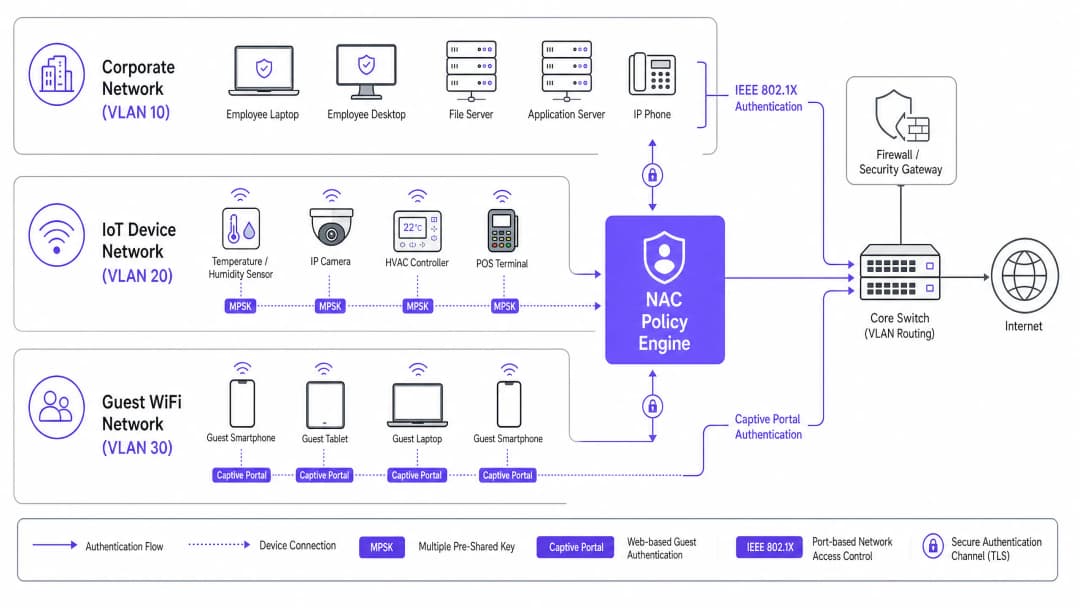
यह आर्किटेक्चर डायनामिक VLAN असाइनमेंट को सक्षम बनाता है। एक स्मार्ट थर्मोस्टेट और एक IP कैमरा अलग-अलग पासवर्ड का उपयोग करके बिल्कुल एक ही SSID से कनेक्ट हो सकते हैं, और नेटवर्क इन्फ्रास्ट्रक्चर थर्मोस्टेट को VLAN 50 (क्लाउड गेटवे एक्सेस तक सीमित) और कैमरे को VLAN 40 (स्थानीय NVR सर्वर तक सीमित) में डाल देगा।

ऑडियो ब्रीफिंग
इस आर्किटेक्चर पर हमारे वरिष्ठ सलाहकार की तकनीकी ब्रीफिंग सुनें:
अपने विशिष्ट सेटअप को लेकर कोई सवाल हैं?
हमारी टीम 80,000 से अधिक वेन्यू में वेन्यू ऑपरेटरों, IT मैनेजरों और नेटवर्क इंजीनियरों के साथ काम करती है। 20 मिनट का कॉल बुक करें और हम आपको दिखाएंगे कि आपके जैसे अन्य लोगों ने इसे कैसे हल किया।
कार्यान्वयन मार्गदर्शिका
NAC के साथ MPSK को तैनात करने के लिए स्केलेबिलिटी और सुरक्षा सुनिश्चित करने हेतु सावधानीपूर्वक योजना बनाने की आवश्यकता होती है। सफल रोलआउट के लिए इन चरणों का पालन करें।
चरण 1: इन्फ्रास्ट्रक्चर तत्परता मूल्यांकन
सुनिश्चित करें कि आपके वायरलेस कंट्रोलर और एक्सेस पॉइंट MPSK/iPSK का समर्थन करते हैं। अधिकांश आधुनिक एंटरप्राइज़ नेटवर्किंग वेंडर (Cisco, Aruba, Meraki, Ruckus) मूल रूप से इसका समर्थन करते हैं, बशर्ते फर्मवेयर अप-टू-डेट हो। सत्यापित करें कि आपका NAC समाधान RADIUS अनुरोधों के अपेक्षित लोड को संभाल सकता है और पासवर्ड मिलान के आधार पर डायनामिक VLAN असाइनमेंट का समर्थन करता है।
चरण 2: माइक्रो-सेगमेंटेशन नीतियां परिभाषित करें
एक भी कुंजी उत्पन्न करने से पहले, अपने VLAN आर्किटेक्चर को परिभाषित करें। IoT डिवाइसों को उनके कार्य और आवश्यक एक्सेस के आधार पर समूहीकृत करें।
- VLAN 40 (सुरक्षा कैमरे): केवल स्थानीय NVR IP और विशिष्ट NTP सर्वर पर ट्रैफ़िक की अनुमति दें। इंटरनेट एक्सेस को ब्लॉक करें।
- VLAN 50 (पर्यावरण सेंसर): विशिष्ट वेंडर क्लाउड एंडपॉइंट्स पर आउटबाउंड HTTPS ट्रैफ़िक की अनुमति दें। इंटर-VLAN रूटिंग को ब्लॉक करें।
- VLAN 60 (पॉइंट ऑफ़ सेल): सख्त PCI DSS अनुपालन। सभी इनबाउंड ट्रैफ़िक को अस्वीकार करें; केवल पेमेंट गेटवे के लिए आउटबाउंड की अनुमति दें।
चरण 3: डिवाइस प्रोफाइलिंग और की जनरेशन
कुंजियों को मैन्युअल रूप से उत्पन्न न करें। प्रति डिवाइस अद्वितीय कुंजियाँ उत्पन्न करने के लिए NAC के API या सेल्फ़-सर्विस पोर्टल का उपयोग करें। प्रत्येक कुंजी को डिवाइस के MAC पते से बाइंड करें। यह सुनिश्चित करता है कि भले ही किसी थर्मोस्टेट से MPSK निकाल लिया जाए, इसका उपयोग नेटवर्क को स्पूफ करने वाले किसी दुष्ट लैपटॉप द्वारा नहीं किया जा सकता है।
चरण 4: एनालिटिक्स और गेस्ट नेटवर्क के साथ एकीकरण
हालाँकि IoT नेटवर्क अलग-थलग होते हैं, लेकिन समग्र प्रबंधन एकीकृत होना चाहिए। सुनिश्चित करें कि आपका NAC परिनियोजन आपकी व्यापक नेटवर्क रणनीति के अनुरूप है, जिसमें Guest WiFi प्रोविजनिंग शामिल है। जो प्लेटफ़ॉर्म WiFi Analytics प्रदान करते हैं, वे सभी सेगमेंट में डिवाइस घनत्व और नेटवर्क स्वास्थ्य के बारे में मूल्यवान जानकारी दे सकते हैं। नेटवर्क के मूल सिद्धांतों के बारे में अधिक जानने के लिए, Wi Fi Frequencies: A Guide to Wi-Fi Frequencies in 2026 की समीक्षा करें।
सर्वोत्तम प्रथाएँ
- MAC बाइंडिंग लागू करें: हमेशा MPSK को डिवाइस के विशिष्ट MAC पते से बाइंड करें। यदि कोई भिन्न MAC कुंजी का उपयोग करने का प्रयास करता है, तो NAC को प्रमाणीकरण अस्वीकार कर देना चाहिए。
- DHCP फिंगरप्रिंटिंग लागू करें: डिवाइस प्रकारों को सत्यापित करने के लिए NAC के भीतर DHCP प्रोफाइलिंग का उपयोग करें। यदि 'स्मार्ट टीवी' को असाइन किया गया MPSK अचानक 'Windows 11' के रूप में फिंगरप्रिंटिंग करने वाले डिवाइस द्वारा उपयोग किया जाता है, तो स्वचालित क्वारंटाइन ट्रिगर करें。
- जीवनचक्र प्रबंधन को स्वचालित करें: अपने IT सर्विस मैनेजमेंट (ITSM) प्लेटफ़ॉर्म के साथ MPSK जनरेशन को एकीकृत करें। जब एसेट रजिस्टर में किसी डिवाइस को डिकमीशन किया जाता है, तो संबंधित MPSK को API के माध्यम से स्वचालित रूप से रद्द कर दिया जाना चाहिए。
- नियमित ऑडिटिंग: अनाथ कुंजियों की पहचान करने और उन्हें हटाने के लिए अपनी एसेट इन्वेंट्री के विरुद्ध सक्रिय MPSKs का त्रैमासिक ऑडिट करें。
समस्या निवारण और जोखिम न्यूनीकरण
सामान्य विफलता मोड
- RADIUS टाइमआउट समस्याएँ: यदि NAC इंजन पर अत्यधिक भार है या विलंबता अधिक है, तो हेडलेस डिवाइस टाइम आउट हो सकते हैं और कनेक्ट होने में विफल हो सकते हैं।
- बचाव: यदि बड़ी रिटेल चेन जैसे अत्यधिक वितरित वातावरण से निपट रहे हैं, तो उच्च उपलब्धता और स्थानीयकृत RADIUS प्रॉक्सी सुनिश्चित करें।
- MAC स्पूफिंग: एक हमलावर अधिकृत IoT डिवाइस के MAC पते को क्लोन करता है और उसका MPSK निकाल लेता है।
- बचाव: डीप पैकेट इंस्पेक्शन और व्यवहार संबंधी प्रोफाइलिंग पर भरोसा करें। यदि "थर्मोस्टेट" अचानक पोर्ट 22 (SSH) पर नेटवर्क को स्कैन करना शुरू कर देता है, तो NAC या IDS को तुरंत पोर्ट को अलग कर देना चाहिए।
- रोमिंग डिस्कनेक्ट: कुछ खराब डिज़ाइन किए गए IoT डिवाइस MPSK का उपयोग करके APs के बीच रोमिंग करते समय कनेक्शन छोड़ देते हैं।
- बचाव: न्यूनतम बुनियादी दरों को समायोजित करें और उचित RF सेल ओवरलैप सुनिश्चित करें। गहन वायरलेस डिज़ाइन विचारों के लिए, BLE Low Energy Explained for Enterprise देखें।
ROI और व्यावसायिक प्रभाव
MPSK/NAC आर्किटेक्चर में परिवर्तन औसत दर्जे का व्यावसायिक मूल्य प्रदान करता है:
- कम परिचालन व्यय (OpEx): जब कोई एक डिवाइस समझौता किया जाता है या बदला जाता है, तो ग्लोबल PSK को मैन्युअल रूप से अपडेट करने में IT टीमों द्वारा खर्च किए जाने वाले सैकड़ों घंटों को समाप्त करता है।
- अनुपालन आश्वासन: रिटेल और हॉस्पिटैलिटी स्थानों के लिए, सख्त माइक्रो-सेगमेंटेशन PCI DSS की एक मुख्य आवश्यकता है। MPSK भुगतान टर्मिनलों को अलग करने के लिए एक सिद्ध, ऑडिट योग्य तंत्र प्रदान करता है, जिससे महंगे अनुपालन जुर्माने से बचा जा सकता है।
- जोखिम न्यूनीकरण: किसी भी समझौता किए गए डिवाइस के ब्लास्ट रेडियस को उसके विशिष्ट माइक्रो-सेगमेंट तक सीमित करके, लेटरल-मूवमेंट रैंसमवेयर हमले के संभावित वित्तीय और प्रतिष्ठित नुकसान को काफी कम कर दिया जाता है।
- भविष्य की तैयारी: जैसे-जैसे एंटरप्राइज़ नेटवर्क विकसित होते हैं, IoT सुरक्षा को व्यापक WAN रणनीतियों के साथ एकीकृत करना महत्वपूर्ण हो जाता है। व्यापक नेटवर्क आर्किटेक्चर के संदर्भ के लिए, SD WAN vs MPLS: The 2026 Enterprise Network Guide और The Role of SCEP and NAC in Modern MDM Infrastructure देखें।
मुख्य परिभाषाएं
MPSK (मल्टीपल प्री-शेयर्ड की)
एक वायरलेस सुरक्षा सुविधा जो एक ही SSID पर कई अद्वितीय पासवर्ड का उपयोग करने की अनुमति देती है, जिसमें प्रत्येक पासवर्ड विभिन्न नेटवर्क नीतियों को ट्रिगर करने में सक्षम होता है।
उन हेडलेस IoT डिवाइसों को सुरक्षित करने के लिए महत्वपूर्ण है जो एंटरप्राइज़ 802.1X प्रमाणीकरण का समर्थन नहीं कर सकते हैं।
NAC (नेटवर्क एक्सेस कंट्रोल)
एक सुरक्षा समाधान जो नेटवर्क तक पहुँचने का प्रयास करने वाले डिवाइसों पर नीति लागू करता है, यह सुनिश्चित करता है कि वे एक्सेस देने से पहले सुरक्षा आवश्यकताओं को पूरा करते हैं।
MPSK के पीछे इंटेलिजेंस इंजन के रूप में कार्य करता है, जो उपयोग किए गए पासवर्ड के आधार पर VLAN असाइनमेंट निर्धारित करता है।
डायनामिक VLAN असाइनमेंट
वह प्रक्रिया जहाँ एक नेटवर्क स्विच या वायरलेस कंट्रोलर भौतिक पोर्ट या SSID के बजाय प्रमाणीकरण क्रेडेंशियल्स के आधार पर किसी डिवाइस को एक विशिष्ट VLAN असाइन करता है।
एक ही वायरलेस नेटवर्क पर ब्रॉडकास्ट करने वाले IoT डिवाइसों के माइक्रो-सेगमेंटेशन को सक्षम बनाता है।
ब्लास्ट रेडियस
किसी एक डिवाइस या सिस्टम से समझौता करने के बाद हमलावर द्वारा प्राप्त की जा सकने वाली क्षति या लेटरल मूवमेंट की सीमा।
MPSK और NAC समझौता किए गए IoT डिवाइसों को सख्त माइक्रो-सेगमेंट के भीतर अलग करके ब्लास्ट रेडियस को काफी कम कर देते हैं।
हेडलेस डिवाइस
एक कंप्यूटिंग डिवाइस, जो आमतौर पर IoT परिनियोजन में होता है, जो मॉनिटर, कीबोर्ड या यूजर इंटरफेस के बिना काम करता है।
ये डिवाइस उपयोगकर्ता को क्रेडेंशियल्स के लिए संकेत नहीं दे सकते हैं, जिससे पारंपरिक 802.1X प्रमाणीकरण असंभव हो जाता है।
MAC बाइंडिंग
एक सुरक्षा नियंत्रण जो किसी विशिष्ट क्रेडेंशियल (जैसे MPSK) के उपयोग को एकल, अधिकृत MAC पते तक सीमित करता है।
किसी हमलावर को स्मार्ट बल्ब से MPSK चुराने और दुर्भावनापूर्ण लैपटॉप पर उसका उपयोग करने से रोकता है।
DHCP फिंगरप्रिंटिंग
NAC सिस्टम द्वारा उपयोग की जाने वाली एक प्रोफाइलिंग तकनीक जो किसी डिवाइस के ऑपरेटिंग सिस्टम और प्रकार की पहचान उसके द्वारा अनुरोधित DHCP विकल्पों के विशिष्ट अनुक्रम के आधार पर करती है।
यह सत्यापित करने के लिए उपयोग किया जाता है कि IoT MPSK के साथ कनेक्ट होने वाला डिवाइस वास्तव में एक IoT डिवाइस है न कि कोई स्पूफ किया गया एंडपॉइंट।
माइक्रो-सेगमेंटेशन
एक सुरक्षा तकनीक जो सख्त एक्सेस कंट्रोल बनाए रखने और लेटरल मूवमेंट को सीमित करने के लिए नेटवर्क को दानेदार, अलग-थलग क्षेत्रों में विभाजित करती है।
IoT सुरक्षा के लिए MPSK और NAC को तैनात करने का प्राथमिक वास्तुशिल्प लक्ष्य।
हल किए गए उदाहरण
एक 300 कमरों वाला होटल नए स्मार्ट टीवी, IP-आधारित डोर लॉक और पर्यावरण सेंसर तैनात कर रहा है। वर्तमान इन्फ्रास्ट्रक्चर सभी गैर-कॉर्पोरेट डिवाइसों के लिए एकल ग्लोबल PSK का उपयोग करता है। इष्टतम सुरक्षा और प्रबंधनीयता के लिए नेटवर्क आर्किटेक्ट को इसे कैसे फिर से डिज़ाइन करना चाहिए?
आर्किटेक्ट को एक MPSK SSID ('Hotel-IoT') तैनात करना चाहिए। NAC पॉलिसी इंजन को तीन अलग-अलग डिवाइस प्रोफाइल के साथ कॉन्फ़िगर किया जाना चाहिए। स्मार्ट टीवी अद्वितीय MPSKs प्राप्त करते हैं और गतिशील रूप से VLAN 100 (केवल इंटरनेट, क्लाइंट आइसोलेशन सक्षम) को असाइन किए जाते हैं। डोर लॉक अद्वितीय MPSKs प्राप्त करते हैं, उनके विशिष्ट MAC पतों से बंधे होते हैं, और VLAN 110 (केवल स्थानीय सुरक्षा सर्वर तक सीमित एक्सेस) को असाइन किए जाते हैं। सेंसर अद्वितीय MPSKs प्राप्त करते हैं और VLAN 120 (केवल HVAC प्रबंधन क्लाउड तक एक्सेस) को असाइन किए जाते हैं। डिवाइस ऑनबोर्डिंग के दौरान API के माध्यम से सभी कुंजियाँ उत्पन्न की जाती हैं।
एक बड़ी रिटेल चेन को 50 स्थानों पर सैकड़ों वायरलेस पॉइंट-ऑफ़-सेल (POS) स्कैनर और डिजिटल साइनेज डिस्प्ले कनेक्ट करने की आवश्यकता है। वे IT ओवरहेड को कम करते हुए PCI DSS अनुपालन कैसे सुनिश्चित कर सकते हैं?
MPSK के साथ एक केंद्रीकृत NAC आर्किटेक्चर लागू करें। POS स्कैनर को अद्वितीय MPSKs जारी किए जाते हैं और एक अत्यधिक प्रतिबंधित PCI-अनुपालक VLAN में प्रोफाइल किया जाता है जो सभी लेटरल ट्रैफ़िक को अस्वीकार करता है और केवल पेमेंट प्रोसेसिंग गेटवे के लिए आउटबाउंड कनेक्शन की अनुमति देता है। डिजिटल साइनेज डिस्प्ले अलग-अलग MPSKs का उपयोग करते हैं और सामग्री अपडेट के लिए केवल इंटरनेट एक्सेस वाले एक अलग VLAN में डाल दिए जाते हैं। की (Key) जीवनचक्र प्रबंधन को केंद्रीय एसेट मैनेजमेंट सिस्टम के साथ एकीकृत किया गया है।
अभ्यास प्रश्न
Q1. एक स्टेडियम IT टीम को 200 नए वायरलेस पॉइंट-ऑफ़-सेल टर्मिनल तैनात करने की आवश्यकता है। वे MPSK का उपयोग करने की योजना बना रहे हैं। अधिकतम सुरक्षा सुनिश्चित करने के लिए, POS टर्मिनल को सुरक्षित VLAN असाइन करने से पहले NAC को कौन सी दो प्रोफाइलिंग जाँच करनी चाहिए?
संकेत: विचार करें कि चोरी हुए MPSK को गैर-POS डिवाइस पर उपयोग होने से कैसे रोका जाए।
मॉडल उत्तर देखें
NAC को MAC बाइंडिंग (यह सत्यापित करना कि विशिष्ट MPSK का उपयोग अधिकृत MAC पते द्वारा किया जा रहा है) और DHCP फिंगरप्रिंटिंग (यह सत्यापित करना कि IP पते का अनुरोध करने वाला डिवाइस अपेक्षित POS टर्मिनल OS की विशेषताओं को प्रदर्शित करता है, न कि किसी सामान्य लैपटॉप या स्मार्टफोन की) करनी चाहिए।
Q2. एक ऑडिट के दौरान, यह पता चला है कि एक स्मार्ट थर्मोस्टेट को असाइन किए गए MPSK का उपयोग ठेकेदार के लैपटॉप द्वारा नेटवर्क एक्सेस प्राप्त करने के लिए सफलतापूर्वक किया गया था। NAC ने लैपटॉप को थर्मोस्टेट के VLAN में असाइन कर दिया। किस कॉन्फ़िगरेशन विफलता ने इसकी अनुमति दी?
संकेत: कुंजी और डिवाइस की पहचान के बीच संबंध के बारे में सोचें।
मॉडल उत्तर देखें
प्राथमिक विफलता MAC बाइंडिंग की कमी थी। MPSK थर्मोस्टेट के विशिष्ट MAC पते तक सीमित नहीं था। इसके अतिरिक्त, NAC डिवाइस प्रोफाइलिंग (उदा., DHCP फिंगरप्रिंटिंग) लागू करने में विफल रहा, जो उस विशिष्ट कुंजी और VLAN के लिए ठेकेदार के लैपटॉप को एक विषम डिवाइस प्रकार के रूप में पहचान लेता।
Q3. एक रिटेल चेन ग्लोबल PSK से MPSK में माइग्रेट कर रही है। उनके पास 5,000 पुराने बारकोड स्कैनर हैं जो WPA2-Personal का समर्थन करते हैं लेकिन नए प्रोटोकॉल का समर्थन करने के लिए अपडेट नहीं किए जा सकते हैं। क्या इन डिवाइसों को सुरक्षित करने के लिए MPSK का उपयोग किया जा सकता है, और यदि हाँ, तो कैसे?
संकेत: MPSK के लिए क्लाइंट-साइड आवश्यकताओं पर विचार करें।
मॉडल उत्तर देखें
हाँ, MPSK का उपयोग किया जा सकता है। क्लाइंट डिवाइस (बारकोड स्कैनर) के दृष्टिकोण से, MPSK मानक WPA2-Personal PSK के समान है। बुद्धिमत्ता और विभेदन पूरी तरह से इन्फ्रास्ट्रक्चर पक्ष (WLC और NAC) पर होता है। स्कैनर्स को बस उनके नए असाइन किए गए, अद्वितीय पासवर्ड के साथ कॉन्फ़िगर करने की आवश्यकता है।
इस श्रृंखला में आगे पढ़ें
स्टाफ और गेस्ट WiFi नेटवर्क को सुरक्षित रूप से कैसे खंडित करें: एंटरप्राइज LANs के लिए सर्वोत्तम अभ्यास
यह गाइड IT प्रबंधकों और नेटवर्क आर्किटेक्ट्स को स्टाफ और गेस्ट WiFi ट्रैफ़िक को ठीक से खंडित करके एंटरप्राइज LANs को सुरक्षित करने के लिए एक विक्रेता-तटस्थ, तकनीकी खाका प्रदान करती है। इसमें 802.1X प्रमाणीकरण, क्लाउड RADIUS, VLAN आइसोलेशन और साझा पासफ़्रेज़ को समाप्त करने और कॉर्पोरेट संपत्तियों की सुरक्षा के लिए आवश्यक क्रेडेंशियल लाइफसाइकल मैनेजमेंट शामिल है।
सर्वश्रेष्ठ DNS फ़िल्टरिंग: व्यवसायों के लिए एक व्यापक गाइड
यह तकनीकी संदर्भ गाइड बताती है कि कैसे उद्यम DNS फ़िल्टरिंग रिज़ॉल्यूशन परत पर दुर्भावनापूर्ण डोमेन को ब्लॉक करके सार्वजनिक नेटवर्क को सुरक्षित करती है - इससे पहले कि कोई कनेक्शन स्थापित हो। यह IT निदेशकों, नेटवर्क आर्किटेक्ट्स और वेन्यू ऑपरेशंस टीमों को परिनियोजन आर्किटेक्चर, फ़ायरवॉल कॉन्फ़िगरेशन और अनुपालन संदर्भ प्रदान करता है जिसकी उन्हें हॉस्पिटैलिटी, रिटेल और सार्वजनिक क्षेत्र के वातावरण में Guest WiFi की सुरक्षा के लिए आवश्यकता होती है। Purple Shield 80,000 से अधिक लाइव वेन्यू में DNS स्तर पर मैलवेयर, बॉटनेट और अनुपयुक्त सामग्री को ब्लॉक करता है।
Cisco SUDI को समझना: सुरक्षित नेटवर्क एक्सेस कंट्रोल में हार्डवेयर-एंकर वाली पहचान
यह गाइड बताती है कि कैसे Cisco SUDI एंटरप्राइज नेटवर्क इन्फ्रास्ट्रक्चर के लिए हार्डवेयर-एंकर वाली, क्रिप्टोग्राफिक रूप से सुरक्षित पहचान प्रदान करता है। सीखें कि अपने स्थल के नेटवर्क एक्सेस कंट्रोल को सुरक्षित करने के लिए आसानी से स्पूफ होने वाले MAC एड्रेस को अपरिवर्तनीय 802.1AR प्रमाणपत्रों से कैसे बदलें।
अपने विशिष्ट सेटअप को लेकर कोई सवाल हैं?
हमारी टीम 80,000 से अधिक वेन्यू में वेन्यू ऑपरेटरों, IT मैनेजरों और नेटवर्क इंजीनियरों के साथ काम करती है। 20 मिनट का कॉल बुक करें और हम आपको दिखाएंगे कि आपके जैसे अन्य लोगों ने इसे कैसे हल किया।