
The Compliance Playbook: GDPR e la Data Privacy nel WiFi per gli ospiti
Questa guida completa offre a IT manager e gestori di location una struttura tecnica per progettare reti WiFi per ospiti conformi al GDPR. Dettaglia i meccanismi di consenso, la segmentazione di rete, la conservazione automatizzata dei dati e come trasformare la compliance da un obbligo normativo in un asset strategico e difendibile di dati proprietari.
Video overview
Ascolta questa guida
Visualizza trascrizione del podcast
Parte della nostra serie principale: Guida al WiFi per ospiti →

Executive Summary
Il WiFi per gli ospiti è un endpoint regolamentato per la raccolta dei dati. Ogni hotel, catena di negozi, stadio e centro congressi che fornisce un accesso alla rete pubblica diventa, nel momento in cui un ospite si connette, un titolare del trattamento dei dati ai sensi del GDPR. L'Information Commissioner's Office (ICO) può imporre sanzioni in caso di non conformità fino a 20 milioni di euro o al 4% del fatturato annuo globale.
Questa guida fornisce ai responsabili IT, agli architetti di rete e ai direttori operativi un quadro pratico e attuabile per garantire che i loro servizi WiFi per gli ospiti siano completamente conformi. Esaminiamo i tipi specifici di dati raccolti tramite il WiFi per gli ospiti, i requisiti legali per il consenso e il trattamento dei dati, nonché le best practice indipendenti dai fornitori per l'implementazione di una soluzione conforme.
Scoprirai come ridurre al minimo i rischi legali e finanziari associati alla non conformità progettando un sistema sicuro - dal design del Captive Portal all'automazione delle policy di conservazione dei dati. Aderendo a questi principi, le aziende possono trasformare il loro WiFi per gli ospiti da un potenziale rischio di conformità a un asset strategico che favorisce la crescita aziendale rispettando al contempo la privacy degli utenti.
Approfondimento Tecnico
La comprensione della conformità al GDPR per il WiFi per gli ospiti inizia con una chiara valutazione dei dati trattati. Ai sensi del regolamento, i dati personali sono ampiamente definiti come qualsiasi informazione relativa a una persona fisica identificata o identificabile. Nel contesto di una rete WiFi per gli ospiti, ciò include una gamma di punti dati più ampia di quanto molte aziende ipotizzino. Una classificazione errata di questi dati rappresenta un errore fondamentale nella strategia di conformità.
Categorie di Dati nel WiFi per gli Ospiti
I dati raccolti tramite una rete WiFi per gli ospiti possono essere suddivisi in quattro categorie principali. Ciascuna ha implicazioni diverse per la conformità al GDPR, in particolare per quanto riguarda la base giuridica del trattamento e il periodo di conservazione richiesto.
- Dati di registrazione: nome, indirizzo e-mail, numero di telefono e dati del profilo social. Si tratta di informazioni esplicite fornite dagli ospiti sul Captive Portal. La base giuridica principale è il consenso, che deve essere fornito in modo libero, specifico, informato e inequivocabile.
- Dati del dispositivo e della sessione: indirizzi MAC, indirizzi IP, timestamp di connessione e durata della sessione. Questi dati vengono acquisiti automaticamente. La base giuridica è solitamente il legittimo interesse per la gestione e la sicurezza della rete, a condizione che sia stata condotta una valutazione del legittimo interesse (Legitimate Interest Assessment).
- Dati di localizzazione: coordinate della posizione fisica, tempo di permanenza e percorsi di movimento derivati dalla triangolazione degli access point WiFi. Questi dati vengono elaborati dai sistemi di WiFi Analytics. Poiché il tracciamento della posizione può essere invasivo, richiede un'informativa chiara e spesso un consenso esplicito, in particolare se utilizzato per la profilazione.
- Dati di utilizzo: utilizzo delle applicazioni, comportamento di navigazione e consumo di larghezza di banda. Se si monitora il contenuto del traffico dati, è necessaria una base giuridica estremamente chiara. Per indicazioni su come gestire in sicurezza questo tipo di traffico, consultare la nostra guida Bandwidth Management: A Practical Guide for 2026.
Architettura di conformità del Captive Portal
Il Captive Portal rappresenta la vostra interfaccia principale per la conformità. È qui che viene stabilita la base giuridica per il trattamento dei dati.
L'errore architetturale più comune è il condizionamento del consenso. Se si richiede a un ospite di accettare le e-mail di marketing per accedere alla rete, tale consenso non è fornito liberamente ed è nullo ai sensi dell'articolo 7 del GDPR. È necessario implementare un consenso disaccoppiato.
Il vostro Captive Portal deve presentare almeno due elementi di consenso separati:
- Una casella di controllo obbligatoria per accettare i Termini di servizio per l'accesso alla rete.
- Una casella di controllo opzionale, non preselezionata, per il consenso alle comunicazioni di marketing.
Il Considerando 32 del GDPR vieta espressamente le caselle preselezionate. Inoltre, ai sensi dell'articolo 13, il portale deve mostrare un'informativa sulla privacy chiara prima che l'utente invii qualsiasi dato. Questa informativa deve spiegare quali dati vengono raccolti, per quale motivo, per quanto tempo vengono conservati e con chi vengono condivisi.
Un aspetto cruciale è che il sistema mantenga un registro di audit del consenso. Questo registro deve documentare chi ha fornito il consenso, quando è stato fornito, per cosa è stato fornito e l'esatta versione dell'informativa sulla privacy visualizzata. Questa rappresenta la vostra prova di conformità.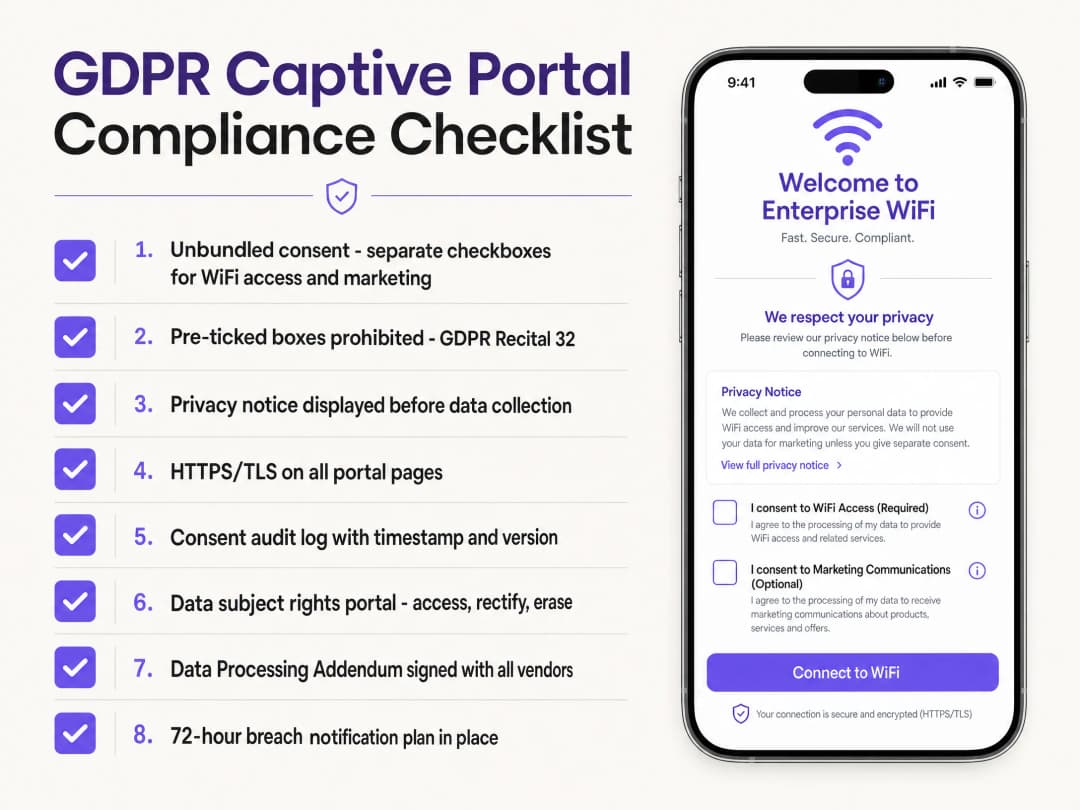
Segmentazione della rete e sicurezza
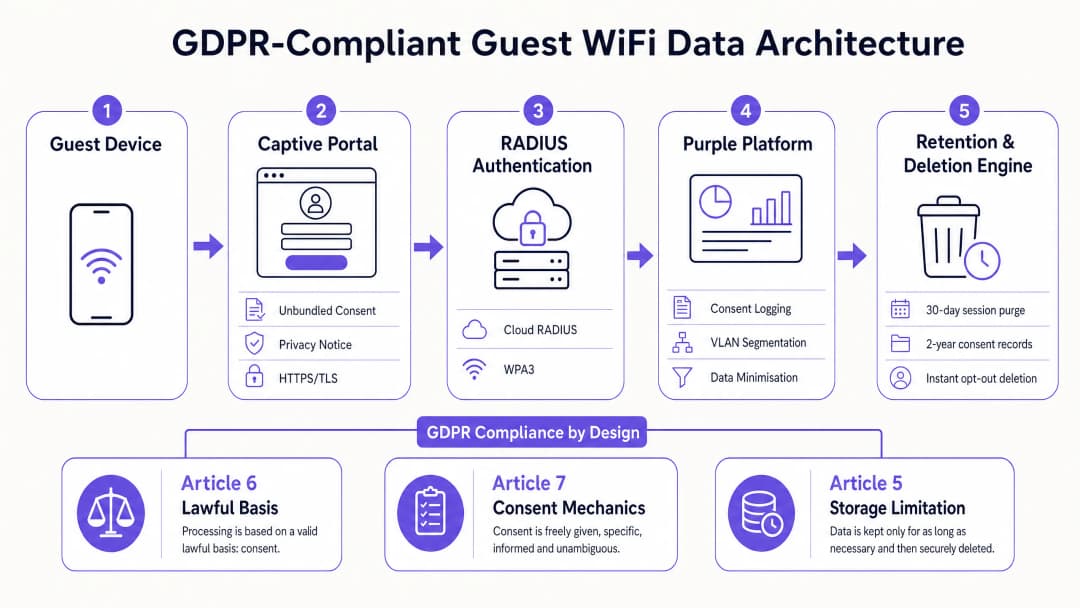
Dal punto di vista dell'architettura di rete, la segmentazione non è negoziabile. Il traffico WiFi per gli ospiti deve essere isolato in una VLAN (Virtual Local Area Network) dedicata, completamente separata dalla rete aziendale. Utilizza le liste di controllo degli accessi per impedire ai dispositivi degli ospiti di accedere alle sottoreti interne e abilita l'isolamento dei client per evitare che i dispositivi degli ospiti comunichero tra loro. Questo protegge sia gli ospiti sia le tue risorse aziendali. Per ulteriori informazioni su questi principi, consulta What Is Secure WiFi: Essential Guide for Business 2026.
Per l'autenticazione, integra il tuo controller wireless LAN con un server RADIUS in cloud. Quando un utente completa il flusso del Captive Portal, la piattaforma invia un messaggio RADIUS Access-Accept al controller per concedere l'accesso. Ciò garantisce una netta separazione tra il livello di autenticazione e il livello di raccolta dei dati. Per quanto riguarda la crittografia, l'SSID per gli ospiti dovrebbe utilizzare WPA3, a condizione che l'hardware lo supporti. Forza almeno lo standard WPA2 con crittografia AES. Inoltre, il tuo Captive Portal deve essere erogato tramite HTTPS con un certificato TLS valido. Presentare un modulo per la raccolta di dati personali tramite HTTP costituisce una grave falla di sicurezza.
Hai domande sulla tua configurazione specifica?
Il nostro team collabora con gestori di sedi, responsabili IT e ingegneri di rete in 80.000 sedi. Prenota una chiamata di 20 minuti e ti mostreremo come altri professionisti come te hanno risolto il problema.
Guida all'implementazione
La distribuzione di una rete WiFi per ospiti conforme al GDPR richiede un approccio strutturato tra i livelli di hardware, software e policy.
- Scelta dell'hardware: Assicurati che i tuoi Access Point supportino il tagging VLAN, l'isolamento dei client e WPA3. La piattaforma di Purple è indipendente dall'hardware e si integra perfettamente con Cisco Meraki, HPE Aruba, Ruckus, Juniper Mist, Ubiquiti UniFi, Cambium, Extreme Networks e Fortinet. Non utilizzare hardware di livello consumer; vedi Perché i dispositivi WiFi consumer non sono adatti alla tua rete ospiti.
- Design del Captive Portal: crea una splash page con consenso disaccoppiato. Assicurati che l'informativa sulla privacy sia accessibile prima dell'invio dei dati. Se operi in regioni che richiedono accessi social specifici, assicurati che la condivisione dei dati sia trasparente. Consulta, ad esempio, la nostra guida su Integrazione dell'autenticazione WeChat WiFi: onboarding del Captive Portal per i clienti APAC.
- Automazione della conservazione dei dati: configura la tua piattaforma per eliminare automaticamente i dati in conformità con la tua policy di conservazione. L'eliminazione manuale non è praticabile per volumi di dati su larga scala.
- Accordi con i fornitori: assicurati di avere un accordo sul trattamento dei dati (DPA) firmato con il tuo fornitore di WiFi per gli ospiti, il fornitore di CRM e qualsiasi altra terza parte che elabori questi dati.
Best practice
Per mantenere la conformità e costruire fiducia, attieniti a queste best practice standard del settore:
- Minimizzazione dei dati: raccogli solo i dati strettamente necessari. Se non hai un caso d'uso aziendale definito per un numero di telefono, non richiederlo nel Captive Portal.
- Limitazione automatica della conservazione: implementa periodi di conservazione rigorosi per i dati. I registri di sessione dovrebbero essere eliminati dopo 30 giorni. Le prove del consenso dovrebbero essere conservate per la durata della relazione di servizio più due anni. I profili di marketing devono essere eliminati immediatamente dopo la revoca del consenso.
- Garantire i diritti degli interessati: metti a disposizione un centro preferenze self-service in cui gli ospiti possono gestire il proprio consenso, richiedere l'accesso ai propri dati o richiedere la cancellazione (il diritto all'oblio). Ciò riduce drasticamente il carico operativo per la gestione delle richieste di accesso ai dati (DSAR).
- Conduzione di una DPIA: una valutazione d'impatto sulla protezione dei dati è richiesta dalla legge ai sensi dell'articolo 35 del GDPR se la distribuzione include il tracciamento della posizione su larga scala o la profilazione comportamentale.
Risoluzione dei problemi e mitigazione dei rischi
Anche con un'architettura solida, i rischi rimangono. Affronta proattivamente questi problemi comuni:
- Affaticamento da consenso: se il tuo portale è troppo complesso, gli utenti si disconnetteranno o faranno clic alla cieca. Mantieni chiaro lo scambio di valore: WiFi veloce e gratuito in cambio di un indirizzo e-mail e marketing opzionale.
- Mancanza di DPA: il tuo fornitore di piattaforma WiFi per ospiti è un responsabile del trattamento dei dati. Se condividi dati personali con loro senza un DPA firmato, non sei conforme. Assicurati che i contratti siano in vigore prima che i dati inizino a fluire.
- Notifica tardiva delle violazioni dei dati: in conformità con l'articolo 33 del GDPR, avete 72 ore di tempo dal momento in cui ne venite a conoscenza per segnalare una violazione dei dati personali all'autorità di vigilanza. Integrate questa tempistica nel vostro piano di risposta agli incidenti; non aspettate che l'indagine sia completata per effettuare la segnalazione.
ROI e impatto sul business
La compliance non è solo un ostacolo normativo, ma un abilitatore strategico. Una piattaforma di Guest WiFi conforme al GDPR protegge da sanzioni fino al 4% del fatturato globale, ma offre anche un ROI misurabile.
Implementando opt-in separati e consapevoli, costruirete un database di alta qualità con dati di prima parte. Sebbene il volume assoluto di opt-in di marketing possa essere inferiore rispetto a un approccio accoppiato non conforme, i tassi di interazione (tassi di apertura, tassi di clic e conversioni) sono significativamente più elevati, poiché il pubblico ha scelto attivamente di ricevere le vostre comunicazioni.
Inoltre, una piattaforma conforme fornisce una Business Intelligence ottenuta in modo etico. In settori come il retail e l' hotellerie, questi dati guidano i miglioramenti operativi - dall'ottimizzazione del personale in base alla frequenza dei visitatori alla personalizzazione dell'esperienza degli ospiti. La piattaforma Purple, certificata ISO 27001, ha già gestito 440 milioni di login e raccolto 29 miliardi di punti dati, dimostrando che la scalabilità e una rigorosa compliance possono coesistere con successo.
Definizioni chiave
Titolare del trattamento
L'entità che determina le finalità e i mezzi del trattamento dei dati personali. Quando una location offre il WiFi per gli ospiti, agisce in qualità di Titolare del trattamento e detiene la responsabilità legale primaria.
Gli IT manager devono comprendere che l'esternalizzazione della piattaforma WiFi non esternalizza la responsabilità legale.
Responsabile del trattamento
Un'entità che tratta i dati personali per conto del Titolare del trattamento. Purple, in qualità di fornitore della piattaforma WiFi, agisce come Responsabile del trattamento.
Richiede un Data Processing Addendum (DPA) formale per gestire legalmente i dati degli ospiti della location.
Captive Portal
La pagina di benvenuto o pagina web che un utente deve visualizzare e con cui deve interagire prima di poter accedere a una rete pubblica.
Questa è l'interfaccia principale in cui le location presentano le informative sulla privacy e acquisiscono il consenso legale.
Consenso Disgiunto
La pratica di separare le richieste di consenso da altri termini e condizioni. Il consenso al marketing non può essere vincolante per l'erogazione del servizio.
Essenziale per la progettazione del Captive Portal per garantire che il consenso sia considerato "liberamente espresso" ai sensi del GDPR.
Indirizzo MAC
Indirizzo Media Access Control; un identificativo univoco assegnato a un controller di interfaccia di rete. Ai sensi del GDPR, questo è considerato un dato personale quando è collegato a un utente.
Anche se un utente non fornisce un'email, la registrazione del suo indirizzo MAC costituisce un trattamento di dati personali.
Segmentazione VLAN
La suddivisione di una rete fisica in più reti logiche. Il traffico del WiFi degli ospiti deve essere isolato dal traffico aziendale.
Un controllo di sicurezza fondamentale per impedire ai dispositivi degli ospiti di accedere alle risorse aziendali interne.
RADIUS
Remote Authentication Dial-In User Service; un protocollo di rete che fornisce una gestione centralizzata di autenticazione, autorizzazione e tracciamento degli accessi.
Utilizzato per autenticare in modo sicuro gli utenti che hanno completato la procedura del Captive Portal prima di concedere l'accesso alla rete.
DSAR
Data Subject Access Request - un meccanismo che consente alle persone fisiche di richiedere una copia dei propri dati personali, o di richiederne la rettifica o la cancellazione.
Le location devono disporre di una procedura per gestire queste richieste entro 30 giorni. I centri di gestione delle preferenze in modalità self-service automatizzano questo adempimento.
Esempi pratici
Un hotel da 200 camere desidera raccogliere le email degli ospiti per incentivare le iscrizioni al programma fedeltà. Il loro sistema attuale richiede agli ospiti di accettare le email di marketing come condizione per connettersi a internet.
L'hotel deve implementare un Captive Portal conforme con consenso disgiunto. Devono essere predisposte due caselle di controllo separate: una obbligatoria per accettare i termini di servizio per l'accesso alla rete, e una opzionale e non preselezionata per il consenso al marketing. L'informativa sulla privacy deve essere chiaramente collegata tramite link prima del pulsante di invio dei dati.
Il team IT di uno stadio desidera utilizzare l'analisi del WiFi per monitorare la densità della folla e gestire la sicurezza durante gli eventi. Il team legale teme che il tracciamento della posizione dei dispositivi senza un consenso esplicito violi il GDPR.
La soluzione è duplice. In primo luogo, l'informativa sulla privacy del Captive Portal deve essere aggiornata per indicare esplicitamente che i dati di posizione vengono elaborati per scopi di gestione della folla e sicurezza sulla base del legittimo interesse. In secondo luogo, il team IT deve implementare la pseudonimizzazione degli indirizzi MAC all'edge (sugli access point) prima che i dati raggiungano la piattaforma di analisi in cloud.
Domande di esercitazione
Q1. Il tuo team di marketing vuole ampliare il database delle email. Propone di rendere pre-selezionata di default la casella di opt-in per il marketing sul Captive Portal del guest WiFi per aumentare le conversioni. Come li consigli?
Suggerimento: Considera la definizione di consenso inequivocabile del GDPR e il Considerando 32.
Visualizza risposta modello
Devi rifiutare questa proposta. Il Considerando 32 del GDPR stabilisce esplicitamente che il silenzio, le caselle pre-selezionate o l'inattività non costituiscono consenso. Il consenso deve richiedere una chiara azione positiva. L'implementazione di caselle pre-selezionate invalida il consenso ed espone l'organizzazione a sanzioni normative.
Q2. Un ospite si connette al tuo WiFi ma non fornisce un indirizzo email, effettuando l'accesso tramite un'opzione "salta". Il tuo sistema registra l'indirizzo MAC del suo dispositivo, l'ora di connessione e l'access point a cui si è connesso. Stai trattando dati personali?
Suggerimento: Considera le linee guida dell'ICO sugli identificatori e sul potenziale di individuare un singolo individuo.
Visualizza risposta modello
Sì. Anche in assenza di un nome o di un'email, un indirizzo MAC combinato con dati di localizzazione e temporali può essere utilizzato per individuare un singolo dispositivo e tracciarne i movimenti nel tempo. L'ICO considera questi dati personali. Devi assicurarti di avere una base giuridica (in genere il legittimo interesse per la registrazione di rete di base) e comunicare in modo trasparente questo trattamento nella tua informativa sulla privacy.
Q3. Durante un audit di routine, scopri che la tua piattaforma guest WiFi ha conservato log di sessione dettagliati (indirizzi IP, indirizzi MAC, tempi di connessione) per gli ultimi quattro anni. Quale azione dovresti intraprendere?
Suggerimento: Fai riferimento al principio del GDPR di limitazione della conservazione (Articolo 5).
Visualizza risposta modello
Devi implementare immediatamente una policy di cancellazione automatica dei dati. In base al principio di limitazione della conservazione, i dati devono essere conservati per un tempo non superiore a quello necessario. Quattro anni di log di sessione sono eccessivi per la risoluzione dei problemi di rete. Dovresti eliminare i dati delle sessioni storiche più vecchi di 30 giorni e configurare la piattaforma per cancellare automaticamente i futuri log di sessione al raggiungimento dei 30 giorni.
Continua a leggere questa serie
Pianificazione del passaggio da WiFi 6 a WiFi 7 quando Cisco Meraki WiFi 6 raggiunge la fine delle vendite
Questo riferimento tecnico offre agli operatori multi-sito un framework decisionale per il passaggio da Cisco Meraki WiFi 6 a WiFi 7 prima della data dell'ultimo ordine fissata al 31 dicembre 2026. Combina la pianificazione della flotta e del backhaul con i controlli della Meraki Dashboard che proteggono la continuità dell'autenticazione Purple e della location analytics durante ogni sostituzione di access point.
GDPR e Guest WiFi: Guida alla Conformità per Marketer e IT di Location Fisiche
Questa guida tecnica mostra ai team IT e marketing delle location fisiche come gestire la raccolta dati del Guest WiFi ai sensi del GDPR, senza trasformare un captive portal in una falla di conformità. Distingue l'accesso alla rete, le informazioni sulla privacy, le scelte di marketing opzionali e i flussi CRM, mappando poi Purple Connect, Capture ed Engage rispetto a queste decisioni operative.
Cisco Catalyst WLC e guest WiFi: configurazione del captive portal con Purple
Come funziona un controller wireless LAN Cisco Catalyst 9800 (IOS-XE) con il guest WiFi di Purple: autenticazione web esterna, RADIUS e walled garden, con un link alla guida di configurazione passo-passo di Purple per l'esatta configurazione.
Hai domande sulla tua configurazione specifica?
Il nostro team collabora con gestori di sedi, responsabili IT e ingegneri di rete in 80.000 sedi. Prenota una chiamata di 20 minuti e ti mostreremo come altri professionisti come te hanno risolto il problema.