
GDPR Compliance for Guest WiFi Data Collection
Questa guida fornisce a IT manager, network architect e Data Protection Officer un framework completo e pratico per raggiungere la conformità al GDPR nelle implementazioni di guest WiFi nei settori dell'ospitalità, del retail e degli spazi pubblici. Copre l'intera gamma di dati raccolti dalle reti guest WiFi, i requisiti legali per ottenere un consenso valido, le best practice per le policy di conservazione dei dati e come implementare un'architettura di conformità difendibile. I gestori delle sedi impareranno a trasformare il proprio guest WiFi da potenziale passività normativa a risorsa strategica che crea fiducia nei clienti e genera business intelligence misurabile.
Ascolta questa guida
Visualizza trascrizione del podcast
Parte della nostra serie principale: Guest WiFi Guide →
Executive Summary
Questa guida fornisce a IT manager, network architect e gestori di location un framework pratico e operativo per garantire che i loro servizi di guest WiFi siano pienamente conformi al Regolamento Generale sulla Protezione dei Dati (GDPR). Esploreremo le tipologie specifiche di dati raccolti tramite il guest WiFi, i requisiti legali per il consenso e il trattamento dei dati, e le best practice indipendenti dai vendor per implementare una soluzione conforme. Per il Chief Technology Officer e il Data Protection Officer, questo documento illustra come mitigare i rischi legali e finanziari associati alla non conformità, che possono includere sanzioni fino al 4% del fatturato globale annuo. Per il Direttore Operativo, dimostra come una distribuzione conforme del guest WiFi possa rafforzare la fiducia dei clienti e fornire una business intelligence preziosa e di provenienza etica. Copriremo l'architettura tecnica di un sistema conforme, dalla progettazione del Captive Portal all'automazione delle policy di conservazione dei dati. La guida include anche casi di studio reali provenienti dai settori hospitality e retail, che dimostrano il ROI tangibile di una piattaforma guest WiFi ben strutturata e conforme come Purple. Seguendo i principi di questa guida, le organizzazioni possono trasformare il proprio guest WiFi da potenziale passività di conformità a risorsa strategica che guida la crescita aziendale nel rispetto della privacy degli utenti.

Technical Deep-Dive
La comprensione della conformità al GDPR per il guest WiFi inizia con una valutazione chiara dei dati trattati. Ai sensi del regolamento, i "dati personali" sono definiti ampiamente come qualsiasi informazione relativa a una persona fisica identificata o identificabile. Nel contesto di una rete guest WiFi, ciò comprende una gamma di punti dati più ampia di quanto molte organizzazioni presumano. La mancata corretta classificazione di questi dati rappresenta un errore fondamentale nella strategia di conformità.
Data Categories in Guest WiFi
I dati raccolti tramite una rete guest WiFi possono essere suddivisi in quattro categorie principali. Ciascuna comporta implicazioni distinte per la conformità al GDPR, in particolare per quanto riguarda la base giuridica del trattamento e il periodo di conservazione richiesto.
| Categoria di Dati | Esempi | Base Giuridica Principale | Considerazione Chiave sulla Conformità |
|---|---|---|---|
| Dati di Registrazione | Nome, indirizzo email, numero di telefono, dati del profilo social media | Consenso | Deve essere fornito liberamente, specifico, informato e inequivocabile. I dati raccolti devono essere ridotti al minimo. |
| Dati del Dispositivo e della Sessione | Indirizzo MAC, indirizzo IP, tipo di dispositivo, browser, timestamp di connessione/disconnessione, utilizzo dei dati | Legittimo Interesse / Consenso | La trasparenza è fondamentale. Gli utenti devono essere informati di questa raccolta. L'anonimizzazione dovrebbe essere utilizzata ove possibile. |
| Location Data | Posizione del dispositivo in tempo reale, pattern di affluenza, tempi di sosta, mappe di calore | Consenso Esplicito | Trattamento ad alto rischio. Richiede un opt-in chiaro e specifico. La finalità deve essere articolata chiaramente (es. 'per migliorare il layout del negozio'). |
| Usage & Browsing Data | Siti web visitati, applicazioni utilizzate (meno comune) | Consenso Esplicito | Rischio estremamente elevato e raramente giustificabile. Dovrebbe essere evitato a meno che non vi sia una finalità critica, esplicita e acconsentita. |
La Base Giuridica: Consenso vs. Legittimo Interesse
Sebbene il Legittimo Interesse possa essere invocato per il trattamento dei dati di sessione di base necessari per la sicurezza della rete e il monitoraggio delle prestazioni (es. ai sensi del considerando 49 del GDPR), l'ICO e le altre autorità europee per la protezione dei dati hanno fissato uno standard elevato. Per qualsiasi dato utilizzato per marketing, analisi o profilazione degli utenti, il Consenso è l'unica base giuridica appropriata.
Secondo l'ICO, "È necessario assicurarsi di poter dimostrare che il consenso sia stato espresso liberamente, in modo specifico e informato, e che costituisca un'indicazione inequivocabile della volontà dell'interessato."
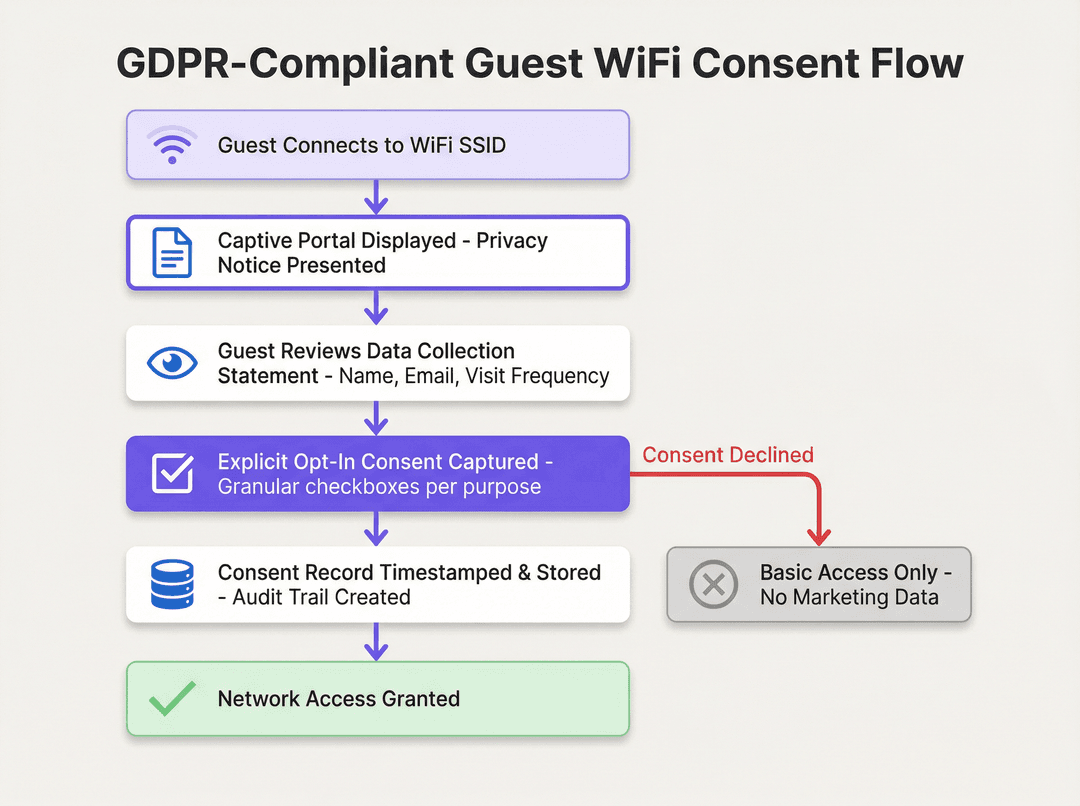
Ciò richiede un passaggio dall'accettazione passiva dei termini a un meccanismo di consenso attivo e granulare. L'architettura del vostro Captive Portal non è quindi solo una considerazione tecnica, ma legale.
Componenti Architetturali per la Conformità
Un'architettura WiFi per ospiti conforme al GDPR si basa sul principio della Privacy by Design e by Default. Ciò significa che la protezione dei dati non è un'aggiunta successiva, ma un componente centrale della progettazione del sistema.
- Infrastruttura di Rete Sicura (WPA3/802.1X): Prima di raccogliere qualsiasi dato, la rete stessa deve essere sicura. L'uso del WPA3 è l'attuale standard di settore, che fornisce una protezione robusta contro l'intercettazione. Per gli ambienti aziendali, lo standard IEEE 802.1X offre un controllo dell'accesso alla rete basato sulle porte, garantendo che solo i dispositivi autenticati e autorizzati possano connettersi.
- Il Captive Portal Conforme: Questo è il componente più critico rivolto all'utente. Deve presentare un'informativa sulla privacy "just-in-time" prima che l'utente inserisca qualsiasi informazione, rimandare a un'informativa sulla privacy completa e accessibile, utilizzare caselle di controllo granulari e non selezionate per ciascuna finalità di trattamento e funzionare tramite HTTPS per prevenire attacchi man-in-the-middle.
- Consent Management Platform (CMP): Dietro le quinte, è necessaria una CMP robusta per registrare ogni azione di consenso con un audit trail immutabile, gestire il ciclo di vita del consenso (incluso il ritiro) e integrarsi con un flusso di lavoro DSAR per facilitare la ricerca, l'esportazione o la cancellazione dei dati di uno specifico utente.
Hai domande sulla tua configurazione specifica?
Il nostro team collabora con gestori di sedi, responsabili IT e ingegneri di rete in 80.000 sedi. Prenota una chiamata di 20 minuti e ti mostreremo come altri professionisti come te hanno risolto il problema.
Guida all'Implementazione
La distribuzione di una soluzione WiFi per ospiti conforme al GDPR richiede un approccio strutturato, che va dalla definizione delle policy alla configurazione tecnica.
Fase 1: Definizione delle Policy e dei Requisiti (Settimane 1-2)
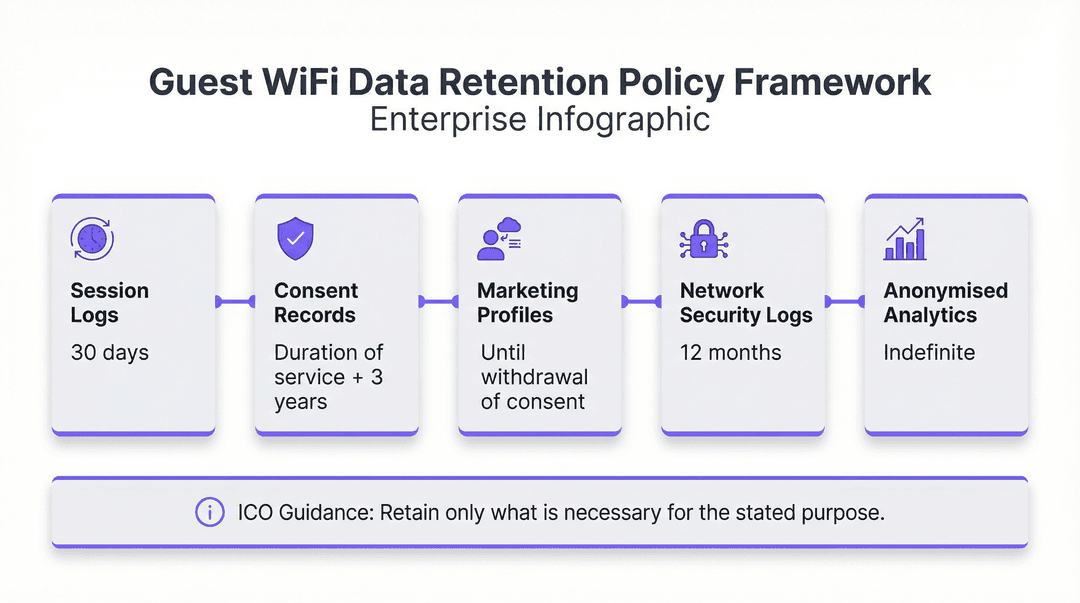
Prima di distribuire qualsiasi hardware o software, l'organizzazione deve definire le proprie policy. Riunisci un workshop di stakeholder con i rappresentanti di IT, Legal, Marketing e Operations per concordare lo scopo del guest WiFi. Conduci una valutazione di minimizzazione dei dati, documentando la specifica giustificazione aziendale per ogni dato richiesto. Definisci e documenta il periodo di conservazione per ciascuna categoria di dati, e seleziona e documenta formalmente la base giuridica per ogni attività di trattamento.
Fase 2: Progettazione della soluzione tecnica e selezione del fornitore (Settimane 3-4)
Con una policy chiara e definita, valuta la tua attuale infrastruttura di rete per verificare la compatibilità con WPA3 e la segmentazione VLAN. Valuta i fornitori di Captive Portal e CMP in base a criteri quali il design personalizzabile del portale, log di audit del consenso robusti e ricercabili, strumenti di automazione DSAR, regole automatizzate di conservazione dei dati e capacità di integrazione CRM.
Fase 3: Distribuzione e test (Settimane 5-6)
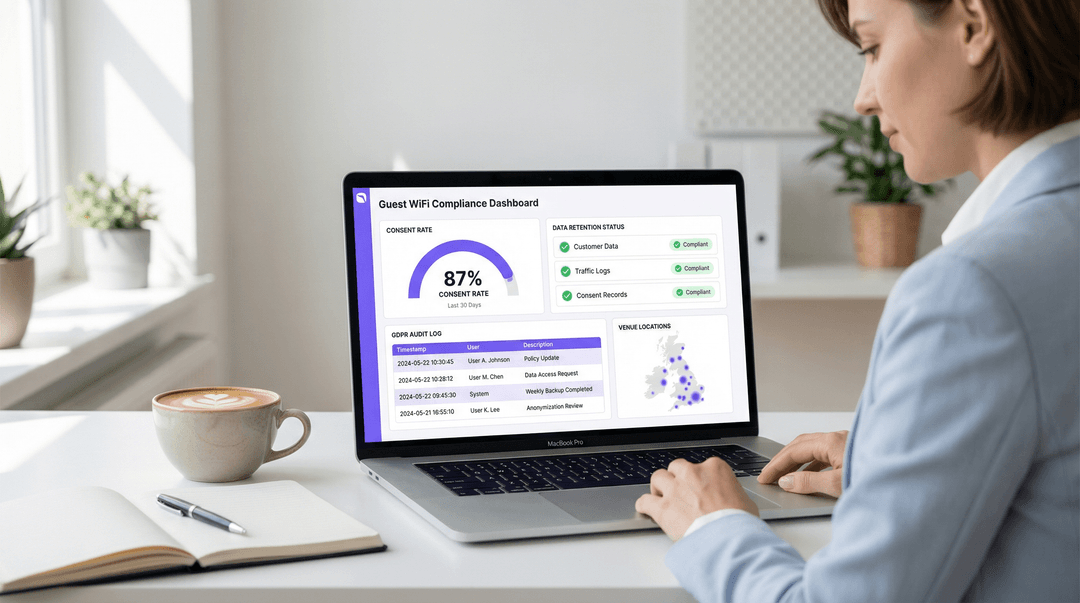
Distribuisci la soluzione prima in un ambiente di staging. Configura il Captive Portal con il testo definitivo e le caselle di consenso non selezionate, imposta le regole di conservazione dei dati e implementa il controllo degli accessi basato sui ruoli. Conduci test end-to-end dell'intero percorso utente, inclusi l'accettazione del consenso, il rifiuto del consenso, l'invio di DSAR e la cancellazione automatizzata dei dati.
Fase 4: Rollout in produzione e formazione del personale (Settimane 7-8)
Distribuisci la soluzione in modo graduale in tutte le sedi. Formare il personale dell'helpdesk IT e del front-of-house per rispondere alle domande di base degli utenti e inoltrare le richieste specifiche sulla privacy al Data Protection Officer. Assicurati che tutte le configurazioni e i processi siano accuratamente documentati.
Best Practice
Oltre all'implementazione tecnica, l'adesione alle best practice standard del settore è fondamentale per mantenere la conformità al GDPR a lungo termine e creare fiducia con i tuoi utenti.
Principio del privilegio minimo: Concedi l'accesso ai dati personali in base a una stretta necessità di conoscenza utilizzando il controllo degli accessi basato sui ruoli (RBAC). I team di marketing non dovrebbero avere accesso ai log di sicurezza della rete e viceversa.
Audit regolari e penetration test: Pianifica audit annuali che includano la revisione dei log dei consensi, la verifica della policy di conservazione e il test del processo DSAR. Coinvolgi una terza parte per i penetration test del Captive Portal e dell'infrastruttura WiFi.
Trasparenza rivolta all'utente: Implementa un'informativa sulla privacy stratificata sul Captive Portal, fornisci un centro preferenze self-service per consentire agli utenti di gestire i propri dati e integra gli sforzi digitali con una chiara segnaletica in loco nella tua sede.
Anonimizzazione e pseudonimizzazione dei dati: Applica tecniche di anonimizzazione o pseudonimizzazione il prima possibile nel ciclo di vita dei dati. Per scopi di analisi, memorizza un hash unidirezionale dell'indirizzo MAC anziché l'identificativo non elaborato e utilizza identificativi pseudonimizzati nel database di analisi per ridurre l'ambito di conformità.
Risoluzione dei problemi e mitigazione dei rischi
Anche con un sistema ben progettato, possono sorgere problemi operativi e rischi di conformità. Identificare e pianificare in modo proattivo questi scenari è il segno distintivo di un programma di governance dei dati maturo.
| Modalità di errore | Impatto | Mitigazione e soluzione |
|---|---|---|
| Mancata corrispondenza del registro dei consensi | Alto. L'impossibilità di dimostrare il consenso può comportare sanzioni normative. | Distribuisci una CMP con un registro di controllo immutabile e con timestamp. Rimuovi immediatamente l'utente dalle liste di marketing in caso di contestazione. |
| Mancata conservazione dei dati | Da medio ad alto. Violazione tecnica della policy, critica in caso di ricezione di una richiesta DSAR di cancellazione. | Implementa sistemi di monitoraggio e allerta robusti per tutti i processi di eliminazione dei dati. Avvia manualmente l'eliminazione e conduci un'analisi post-mortem. |
| Bypass del Captive Portal | Da basso a medio. Rischio di accesso non autorizzato alla rete. | Implementa regole di firewall rigide che blocchino tutto il traffico proveniente da dispositivi non autenticati, ad eccezione di DHCP e DNS verso il portale. |
| Interruzione del processo DSAR | Alto. La mancata risposta entro un mese viola l'Articolo 15 del GDPR. | Crea un alias e-mail dedicato e monitorato per la privacy. Conduci una formazione annuale obbligatoria del personale sull'identificazione e la gestione delle richieste DSAR. |
Per una mitigazione proattiva del rischio, conduci una valutazione d'impatto sulla protezione dei dati (DPIA) prima di distribuire o modificare in modo significativo un sistema WiFi per ospiti. Esegui una due diligence approfondita sui fornitori, esaminando le certificazioni di sicurezza (ISO 27001, SOC 2) e assicurando la presenza di un solido Addendum sul trattamento dei dati. Mantieni un piano di risposta agli incidenti documentato che copra il requisito di notifica della violazione entro 72 ore.
ROI e impatto aziendale
Una soluzione WiFi per ospiti conforme al GDPR non deve essere vista come un centro di costo. Se implementata correttamente, rappresenta un fattore abilitante strategico che offre un ROI misurabile attraverso la mitigazione del rischio, una maggiore fiducia dei clienti e una business intelligence etica.
Le sanzioni GDPR possono raggiungere i 20 milioni di euro o il 4% del fatturato globale annuo. Una piattaforma conforme che costa 50.000 euro all'anno rappresenta una frazione di questa potenziale responsabilità. Oltre alla mitigazione del rischio, i dati anonimizzati e aggregati raccolti con il consenso dell'utente forniscono informazioni preziose su affluenza, tempi di permanenza, frequenza delle visite e modelli demografici. Una catena di vendita al dettaglio con un fatturato annuo di 50 milioni di euro che evita una multa di 2 milioni di euro e incrementa il proprio database di marketing con consenso di 10.000 utenti (con un valore medio per lead di 10 euro) ottiene un ROI convincente e multidimensionale.
Inquadrando la discussione attorno alla mitigazione del rischio, alla fiducia dei clienti e a un processo decisionale etico basato sui dati, i leader IT possono dimostrare che una soluzione di guest WiFi conforme al GDPR non è solo una necessità legale, ma un potente motore per la crescita aziendale.
Definizioni chiave
GDPR (General Data Protection Regulation)
La principale legge sulla protezione dei dati dell'UE, entrata in vigore il 25 maggio 2018 e recepita nella legislazione del Regno Unito post-Brexit come UK GDPR. Disciplina il modo in cui le organizzazioni raccolgono, elaborano, conservano e condividono i dati personali delle persone fisiche nel Regno Unito e nell'UE. La mancata conformità può comportare sanzioni fino a 20 milioni di euro o al 4% del fatturato globale annuo.
I team IT si confrontano con il GDPR come quadro giuridico generale che disciplina ogni aspetto della raccolta dei dati del WiFi per gli ospiti. È la fonte di tutti i requisiti di consenso, conservazione e trasparenza discussi in questa guida.
Captive Portal
Una pagina web presentata a un utente quando si connette per la prima volta a una rete WiFi per gli ospiti, prima che gli venga concesso l'accesso completo a Internet. È il meccanismo principale per presentare le informative sulla privacy, acquisire il consenso e raccogliere i dati di registrazione (es. nome, email). Ai sensi del GDPR, il design del Captive Portal rappresenta un controllo di conformità critico.
Gli architetti di rete e i responsabili IT configurano i Captive Portal come parte dell'implementazione del WiFi per gli ospiti. Il design del portale, in particolare le caselle di controllo del consenso e l'informativa sulla privacy, determina direttamente il livello di conformità al GDPR dell'organizzazione.
Titolare del trattamento (Data Controller)
L'organizzazione che determina le finalità e i mezzi del trattamento dei dati personali. Quando un hotel, un rivenditore o un gestore di una sede implementa il WiFi per gli ospiti e decide quali dati raccogliere e perché, diventa il Titolare del trattamento e si assume la responsabilità primaria della conformità al GDPR.
I gestori delle sedi rimangono spesso sorpresi nel constatare che sono loro i Titolari del trattamento per il loro WiFi per gli ospiti, e non il fornitore della tecnologia. Questa distinzione è fondamentale perché significa che gli obblighi legali e le potenziali sanzioni ricadono sul gestore della sede, non sul fornitore della piattaforma.
Responsabile del trattamento (Data Processor)
Un'organizzazione che tratta dati personali per conto di un Titolare del trattamento. Un fornitore di piattaforme WiFi per gli ospiti come Purple agisce in qualità di Responsabile del trattamento. Il rapporto deve essere disciplinato da un Addendum sul trattamento dei dati (DPA) formale che definisce gli obblighi e le restrizioni del responsabile.
I responsabili IT devono assicurarsi che sia in vigore un DPA con ogni fornitore di tecnologia che gestisce dati personali raccolti tramite il WiFi per gli ospiti. Senza un DPA, l'organizzazione viola l'Articolo 28 del GDPR.
Consent Management Platform (CMP)
Un sistema software che gestisce la raccolta, la memorizzazione e il ciclo di vita del consenso dell'utente. Nel contesto del WiFi per gli ospiti, una CMP registra ogni evento di consenso con una marca temporale, le finalità specifiche acconsentite e la versione dell'informativa sulla privacy presentata. Gestisce inoltre la revoca del consenso e si integra con i flussi di lavoro DSAR.
Una CMP è la spina dorsale tecnica della conformità al GDPR per il WiFi per gli ospiti. I responsabili IT dovrebbero valutare qualsiasi piattaforma WiFi per gli ospiti in base alla solidità delle sue funzionalità CMP, in particolare per quanto riguarda l'immutabilità e la ricercabilità del registro di controllo dei consensi.
Data Subject Access Request (DSAR)
Una richiesta formale da parte di un individuo (l'"interessato") a un'organizzazione, con cui si chiede una copia di tutti i dati personali conservati sul suo conto, o si richiede la correzione o la cancellazione dei propri dati. Ai sensi del GDPR, le organizzazioni devono rispondere alle DSAR entro un mese di calendario.
I responsabili IT e i DPO devono disporre di un processo documentato e testato per la gestione delle DSAR. Le piattaforme WiFi per gli ospiti dovrebbero fornire strumenti per cercare ed esportare o eliminare rapidamente i dati di un utente specifico, riducendo l'onere operativo legato all'evasione di queste richieste.
Minimizzazione dei dati
Un principio cardine del GDPR (Articolo 5(1)(c)) che richiede che i dati personali raccolti siano "adeguati, pertinenti e limitati a quanto necessario rispetto alle finalità per cui sono trattati". In pratica, ciò significa raccogliere solo i dati di cui si ha realmente bisogno per uno scopo specifico e dichiarato.
La minimizzazione dei dati è il principio più comunemente violato nelle implementazioni del WiFi per gli ospiti. I responsabili IT dovrebbero mettere in discussione ogni campo dati presente sul Captive Portal ponendosi la domanda: "A quale scopo aziendale specifico serve questo dato, e possiamo raggiungere tale scopo senza raccoglierlo?"
Valutazione d'impatto sulla protezione dei dati (DPIA)
Un processo formale per identificare e ridurre al minimo i rischi per la protezione dei dati di un progetto o sistema. Ai sensi dell'Articolo 35 del GDPR, una DPIA è obbligatoria per legge prima di intraprendere qualsiasi trattamento che "presenti un rischio elevato" per i diritti e le libertà delle persone fisiche. Ciò include il tracciamento della posizione su larga scala e la profilazione sistematica del comportamento.
I responsabili IT e i DPO devono condurre una DPIA prima di implementare sistemi WiFi per gli ospiti che includono analisi delle presenze, tracciamento della posizione in tempo reale o profilazione di marketing. La mancata esecuzione di una DPIA obbligatoria costituisce di per sé una violazione del GDPR.
Pseudonimizzazione
Una tecnica di trattamento dei dati che sostituisce le informazioni di identificazione diretta (es. un nome o un indirizzo email) con un identificativo artificiale, in modo tale che i dati non possano più essere attribuiti a un individuo specifico senza l'utilizzo di informazioni aggiuntive conservate separatamente. A differenza dell'anonimizzazione, la pseudonimizzazione è reversibile.
Gli architetti IT utilizzano la pseudonimizzazione nei database di analisi del WiFi per gli ospiti per ridurre il rischio associato a una violazione dei dati. Se il database di analisi viene compromesso, l'autore dell'attacco non può identificare direttamente le persone. La "chiave" che collega lo pseudonimo all'identità reale viene memorizzata separatamente con controlli di accesso più severi.
ICO (Information Commissioner's Office)
L'autorità indipendente del Regno Unito istituita per tutelare i diritti d'informazione nell'interesse pubblico, promuovendo la trasparenza da parte degli enti pubblici e la privacy dei dati per i singoli individui. L'ICO è l'autorità di controllo principale per la conformità al GDPR nel Regno Unito. Ha il potere di emettere sanzioni, condurre audit e pubblicare provvedimenti attuativi.
I gestori delle sedi con sede nel Regno Unito devono conformarsi al UK GDPR così come applicato dall'ICO. I responsabili IT dovrebbero monitorare le linee guida e i provvedimenti dell'ICO, in quanto forniscono un'interpretazione pratica di come la legge si applica a scenari specifici, incluso il WiFi per gli ospiti.
Esempi pratici
Un gruppo alberghiero a quattro stelle con 250 camere e 12 strutture nel Regno Unito desidera implementare il WiFi per gli ospiti in tutte le sedi. I loro obiettivi principali sono offrire un'esperienza di connettività fluida agli ospiti, creare un database di marketing basato sul consenso per il loro programma fedeltà e ottenere analisi sulle presenze per ottimizzare il layout della reception e del ristorante. La loro configurazione attuale è una rete WiFi aperta di base, non gestita e priva di Captive Portal. Come dovrebbero approcciare un'implementazione conforme al GDPR?
L'implementazione dovrebbe seguire un approccio in quattro fasi. Nella Fase 1 (Policy), il gruppo alberghiero deve organizzare un workshop con IT, Marketing, Ufficio Legale e il DPO. Devono definire tre finalità di trattamento distinte: (1) fornitura dell'accesso alla rete, (2) comunicazioni di marketing per il programma fedeltà e (3) analisi delle presenze. Ciascuna finalità richiede una base giuridica e un meccanismo di consenso separati. Nella Fase 2 (Progettazione), dovrebbero selezionare una piattaforma di gestione del WiFi per gli ospiti come Purple, che fornisce un Captive Portal personalizzabile, una piattaforma di gestione del consenso e analisi integrate. Il Captive Portal deve essere progettato con un flusso chiaro in due passaggi: in primo luogo, l'accettazione obbligatoria dei termini per l'accesso alla rete (che può utilizzare il Legittimo Interesse per i dati di sessione di base); in secondo luogo, due caselle di controllo separate, opzionali e non selezionate, una per il 'Marketing del programma fedeltà' e una per l' 'Analisi anonima delle presenze'. L'informativa sulla privacy deve essere concisa e spiegare chiaramente ciascuna finalità. Nella Fase 3 (Implementazione), la soluzione deve essere testata prima in una singola struttura. Il team deve configurare regole automatizzate per la conservazione dei dati: i log di sessione vengono eliminati dopo 30 giorni, i profili di marketing vengono conservati fino alla revoca del consenso e i dati di analisi delle presenze vengono anonimizzati al momento della raccolta e conservati a tempo indeterminato. Nella Fase 4 (Rollout), la soluzione viene distribuita in tutte e 12 le strutture con un rollout graduale nell'arco di 8 settimane. Il personale della reception viene formato per indirizzare gli ospiti al WiFi e per inoltrare eventuali richieste sui dati al DPO.
Una catena di vendita al dettaglio nazionale con 85 negozi desidera utilizzare il WiFi per gli ospiti per generare mappe di calore sulle presenze e misurare l'efficacia delle promozioni in negozio. Il loro team di marketing desidera utilizzare il WiFi per inviare notifiche push ai clienti attualmente presenti in negozio. Il loro team IT è preoccupato per la conformità al GDPR, in particolare per quanto riguarda l'uso degli indirizzi MAC per il tracciamento. In che modo il responsabile IT dovrebbe consigliare l'azienda?
Il responsabile IT dovrebbe consigliare all'azienda che questo caso d'uso è realizzabile ma richiede scelte architetturali attente. In primo luogo, per quanto riguarda il tracciamento degli indirizzi MAC: i moderni dispositivi mobili (iOS 14+ e Android 10+) utilizzano la randomizzazione dell'indirizzo MAC per impostazione predefinita, il che significa che un indirizzo MAC non è un identificatore stabile e persistente per un dispositivo specifico. Tuttavia, è ancora considerato un dato personale al momento della raccolta, poiché può essere combinato con altri dati per identificare un individuo. Il responsabile IT dovrebbe raccomandare che la piattaforma di analisi anonimizzi l'indirizzo MAC immediatamente dopo la raccolta (utilizzando un hash unidirezionale) e che la dashboard di analisi mostri sempre e solo dati aggregati e anonimizzati. Ciò riduce significativamente il rischio GDPR. In secondo luogo, per quanto riguarda le notifiche push in negozio: si tratta di un'attività di trattamento ad alto rischio che richiede un consenso esplicito e specifico. Il Captive Portal deve includere una casella di controllo specifica e non selezionata con la dicitura: 'Acconsento a ricevere offerte personalizzate e notifiche mentre sono connesso al WiFi del negozio.' La finalità deve essere spiegata chiaramente. In terzo luogo, il responsabile IT dovrebbe raccomandare di condurre una DPIA prima di implementare la funzione di notifica push, poiché comporta un trattamento di dati personali basato sulla posizione in tempo reale. La DPIA dovrebbe valutare il rischio per la privacy degli utenti e documentare le misure di mitigazione adottate. Una piattaforma come Purple può supportare questo caso d'uso grazie alle sue funzionalità di gestione del consenso, analisi e automazione del marketing, fornendo al contempo il registro delle attività necessario per dimostrare la conformità.
Domande di esercitazione
Q1. Sei l'IT Manager di una catena di vendita al dettaglio con 50 negozi. Il tuo Direttore Marketing desidera implementare il WiFi per gli ospiti e utilizzarlo per inviare notifiche push in-store ai clienti che hanno precedentemente visitato uno dei tuoi negozi. Le notifiche verrebbero attivate quando un dispositivo noto (identificato tramite indirizzo MAC) si riconnette al WiFi di un qualsiasi negozio. Il tuo DPO ha segnalato questa operazione come ad alto rischio. Quali passaggi devi compiere prima che questa funzionalità possa essere implementata e quali tutele tecniche sono necessarie?
Suggerimento: Considera la checklist di attivazione della DPIA, il consenso specifico richiesto per il tracciamento dei dispositivi tra più punti vendita e le sfide tecniche della randomizzazione degli indirizzi MAC sui dispositivi moderni.
Visualizza risposta modello
Prima di implementare questa funzionalità, è necessario: (1) Condurre una Valutazione d'Impatto sulla Protezione dei Dati (DPIA) obbligatoria, poiché ciò comporta il monitoraggio sistematico delle persone in più sedi tramite identificatori dei dispositivi - un chiaro fattore di attivazione dell'Articolo 35 del GDPR. La DPIA deve documentare i rischi e le relative misure di mitigazione. (2) Riprogettare il Captive Portal per includere una casella di controllo del consenso specifica e non preselezionata che spieghi chiaramente il riconoscimento del dispositivo tra più negozi e le notifiche mirate. Il linguaggio deve essere esplicito: "Acconsento a che [Brand] riconosca il mio dispositivo in tutti i negozi e mi invii offerte personalizzate quando mi connetto." (3) Affrontare la sfida della randomizzazione dei MAC: poiché i moderni dispositivi iOS e Android randomizzano gli indirizzi MAC, non è possibile utilizzare in modo affidabile gli indirizzi MAC grezzi per il riconoscimento tra più negozi. È invece necessario richiedere agli utenti di autenticarsi tramite un identificatore persistente, come un indirizzo e-mail o un social login, che diventa quindi la chiave di tracciamento tra i vari punti vendita. (4) Implementare un Addendum sul Trattamento dei Dati (DPA) con il fornitore di notifiche push. (5) Fornire un meccanismo di opt-out chiaro e accessibile in ogni notifica push e in un centro preferenze self-service. La funzionalità deve essere implementata solo dopo aver completato questi passaggi e aver ottenuto l'approvazione del DPO.
Q2. La tua organizzazione ha ricevuto una Richiesta di Accesso dell'Interessato (DSAR) da parte di un ex ospite dell'hotel che ha soggiornato 18 mesi fa. Richiede una copia di tutti i dati personali in tuo possesso che lo riguardano, inclusa la cronologia delle sue sessioni WiFi. La tua attuale piattaforma WiFi per gli ospiti memorizza i log delle sessioni a tempo indeterminato. Quali sono i tuoi obblighi immediati e quali modifiche sistemiche dovresti apportare?
Suggerimento: Considera il termine di risposta di un mese, il principio di minimizzazione dei dati e la necessità di una politica di conservazione documentata.
Visualizza risposta modello
I tuoi obblighi immediati sono: (1) Confermare la ricezione della DSAR per iscritto entro 5 giorni lavorativi, confermando di averla ricevuta e che risponderai entro un mese di calendario. (2) Cercare in tutti i sistemi - la CMP del tuo WiFi per gli ospiti, il CRM e qualsiasi piattaforma di email marketing - tutti i dati personali associati a questo individuo. (3) Compilare e fornire una copia di tutti i dati trovati, in un formato elettronico di uso comune, entro un mese di calendario dalla ricezione. Ciò include i log delle sessioni, i record del consenso e qualsiasi dato del profilo di marketing. Il cambiamento sistemico richiesto è urgente: la memorizzazione indefinita dei log delle sessioni è una chiara violazione dei principi di minimizzazione dei dati e di limitazione della conservazione del GDPR. È necessario definire e implementare immediatamente una politica di conservazione dei dati. I log delle sessioni dovrebbero essere eliminati dopo 30-90 giorni. È necessario configurare regole di conservazione automatizzate nella piattaforma WiFi per gli ospiti per applicare questa politica in futuro. Inoltre, è opportuno implementare un processo formale di ricezione delle DSAR - un alias e-mail dedicato alla privacy, un punto di contatto formato e un flusso di lavoro documentato - per garantire che le richieste future siano gestite in modo efficiente ed entro i termini di legge.
Q3. Un centro congressi sta implementando il WiFi per gli ospiti in occasione di un importante evento di tre giorni con 5.000 partecipanti. L'organizzatore dell'evento desidera utilizzare l'analisi del WiFi per fornire agli sponsor dati su quanti visitatori unici hanno visitato lo stand espositivo di ciascuno sponsor. I dati verrebbero presentati sotto forma di report che mostra il conteggio delle visite allo stand e i tempi medi di permanenza per stand. Questo caso d'uso è conforme al GDPR così come descritto e quali condizioni devono essere soddisfatte per procedere?
Suggerimento: Considera la distinzione tra dati aggregati anonimizzati e dati personali, e il consenso specifico richiesto per l'analisi basata sulla posizione.
Visualizza risposta modello
Il caso d'uso descritto è potenzialmente conforme, ma solo a determinate condizioni. La questione chiave è se i dati forniti agli sponsor siano realmente anonimizzati e aggregati, o se possano essere utilizzati per identificare le persone. Se il report mostra solo conteggi aggregati (ad es. "Lo Stand A ha ricevuto 342 visite di dispositivi unici con un tempo medio di permanenza di 4,2 minuti") e se i dati sottostanti a livello di dispositivo sono stati anonimizzati in modo irreversibile prima di qualsiasi analisi, allora questi dati non sono più dati personali e possono essere condivisi con gli sponsor senza restrizioni. Tuttavia, per arrivare a questo punto, devono essere soddisfatte le seguenti condizioni: (1) Il Captive Portal per il WiFi dell'evento deve includere una casella di controllo del consenso specifica e non preselezionata per "Analisi anonima delle presenze per misurare l'affluenza all'evento e la popolarità degli stand". Lo scopo e il fatto che i dati aggregati saranno condivisi con gli sponsor dell'evento devono essere chiaramente indicati. (2) La piattaforma di analisi deve anonimizzare gli identificatori dei dispositivi (ad es. hashing dell'indirizzo MAC) al momento della raccolta, prima che venga eseguita qualsiasi analisi. (3) I report condivisi con gli sponsor devono contenere solo dati aggregati senza alcuna possibilità di re-identificazione. Se uno stand ha avuto pochissimi visitatori, i dati relativi a tale stand dovrebbero essere oscurati per impedire la re-identificazione. (4) Dovrebbe essere condotta una DPIA data la grande scala della raccolta dati. Se queste condizioni sono soddisfatte, il caso d'uso è conforme e rappresenta un'applicazione legittima e preziosa dell'analisi del WiFi per gli ospiti.
Continua a leggere questa serie
India DPDP Act: Guest WiFi Compliance for Indian Venues
Questa guida di riferimento tecnica e autorevole analizza il Digital Personal Data Protection (DPDP) Act 2023 per i locali indiani che offrono guest WiFi. Fornisce strategie di conformità attuabili, considerazioni sull'architettura dei Captive Portal e framework pratici per la conservazione dei dati e i trasferimenti transfrontalieri.
LGPD in Brasile e guest WiFi: guida alla conformità
Questa guida di riferimento tecnica descrive dettagliatamente come l'LGPD brasiliano si applica alle distribuzioni di guest WiFi aziendali, concentrandosi sulla conformità del captive portal, sulle basi giuridiche per il trattamento e sull'intersezione con il Marco Civil da Internet. Fornisce indicazioni pratiche di implementazione per i responsabili IT e gli architetti di rete per mitigare i rischi normativi mantenendo al contempo l'utilità della rete.
EU AI Act e Guest WiFi: cosa devono sapere i marketer
L'EU AI Act (Regolamento 2024/1689) introduce un quadro basato sul rischio che influisce direttamente sul modo in cui i gestori di location distribuiscono il marketing WiFi basato sull'intelligenza artificiale, i Captive Portal e la guest analytics. Questa guida mappa i quattro livelli di rischio della normativa rispetto ai casi d'uso reali del Guest WiFi, identifica le pratiche vietate, tra cui l'inferenza delle emozioni e il social scoring, e fornisce passaggi di conformità pratici per i team IT e i direttori marketing che operano nei settori dell'ospitalità, del retail, degli eventi e degli ambienti pubblici. Capire dove si colloca la tua installazione nello spettro dei rischi - e implementare gli obblighi di trasparenza dell'Articolo 50 per i chatbot AI e i portali conversazionali - non è più facoltativo: l'applicazione delle pratiche vietate è iniziata a febbraio 2025.
Hai domande sulla tua configurazione specifica?
Il nostro team collabora con gestori di sedi, responsabili IT e ingegneri di rete in 80.000 sedi. Prenota una chiamata di 20 minuti e ti mostreremo come altri professionisti come te hanno risolto il problema.