
Train WiFi: la guida completa per operatori ferroviari e passeggeri
Questa guida autorevole analizza l'architettura, le sfide di implementazione e le opportunità commerciali del WiFi per i passeggeri sui treni. Progettata per i leader IT e delle operazioni senior, copre l'aggregazione del backhaul, la segmentazione della rete e come trasformare un obbligo di conformità in analisi utili sui passeggeri.
Ascolta questa guida
Visualizza trascrizione del podcast
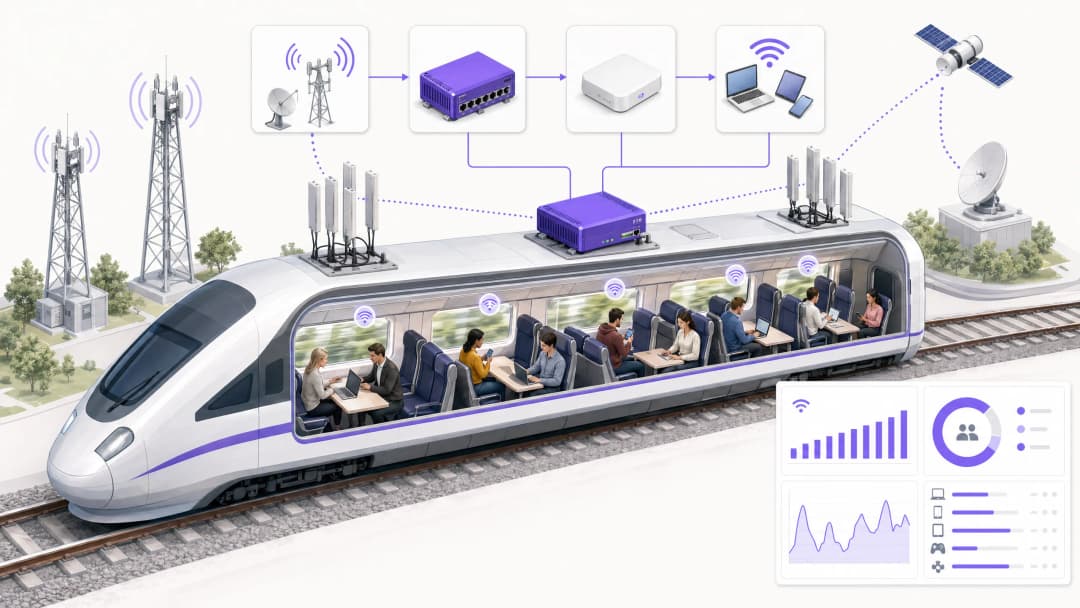
कार्यकारी सारांश
रेल्वे ऑपरेटर्ससाठी, उच्च-गुणवत्तेचे ट्रेन WiFi आता केवळ प्रवाशांसाठीची एक सुविधा राहिलेली नसून ती एक आवश्यक ऑपरेशनल पायाभूत सुविधा बनली आहे. सर्वोत्तम आणि जुन्या डिप्लॉयमेंट्समधील तफावत स्पष्ट आहे: Ookla च्या Q2 2025 च्या डेटानुसार स्वीडनमध्ये 64.58 Mbps चा मीडियन डाउनलोड स्पीड मिळतो, तर यूके 1.09 Mbps वर अडकला आहे [1]. हा 59 पटींचा फरक प्रामुख्याने तंत्रज्ञानाची समस्या नाही; तर हे आर्किटेक्चर आणि गुंतवणूक धोरणाचे अपयश आहे.
हे मार्गदर्शक आयटी डायरेक्टर्स, नेटवर्क आर्किटेक्ट्स आणि व्हेन्यू ऑपरेशन्स लीडर्ससाठी एक व्हेंडर-न्यूट्रल ब्ल्यूप्रिंट प्रदान करते. आम्ही लवचिक ऑनबोर्ड कनेक्टिव्हिटीसाठी आवश्यक असलेल्या थ्री-लेयर आर्किटेक्चरचे विश्लेषण करतो, नेटवर्क सेगमेंटेशनच्या महत्त्वपूर्ण सुरक्षा आवश्यकतांचा शोध घेतो आणि Guest WiFi सारखे प्लॅटफॉर्म्स कच्च्या कनेक्शन डेटाला कृती करण्यायोग्य व्यावसायिक बुद्धिमत्तेत कसे रूपांतरित करतात हे दाखवून देतो. तुम्ही हाय-स्पीड इंटरसिटी मार्गाचे व्यवस्थापन करत असाल किंवा प्रादेशिक कम्युटर सेवेचे, बॅकहॉल ॲग्रीगेशन आणि GDPR-सुसंगत डेटा कॅप्चरची तत्त्वे समानच राहतात.
तांत्रिक सखोल माहिती: थ्री-लेयर आर्किटेक्चर
आधुनिक ट्रेन WiFi डिप्लॉयमेंट हे Retail किंवा Hospitality मध्ये आढळणाऱ्या स्टॅटिक व्हेन्यू डिप्लॉयमेंट्सपेक्षा मूलभूतपणे वेगळे असते. 300 किमी/तास वेगाने प्रवास करताना, ट्रॅकसाइड सेल्समध्ये हँडऑफ करताना आणि हेवी इन्सुलेटेड रोलिंग स्टॉकमध्ये प्रवेश करताना नेटवर्कने सेशन पर्सिस्टन्स राखणे आवश्यक आहे.
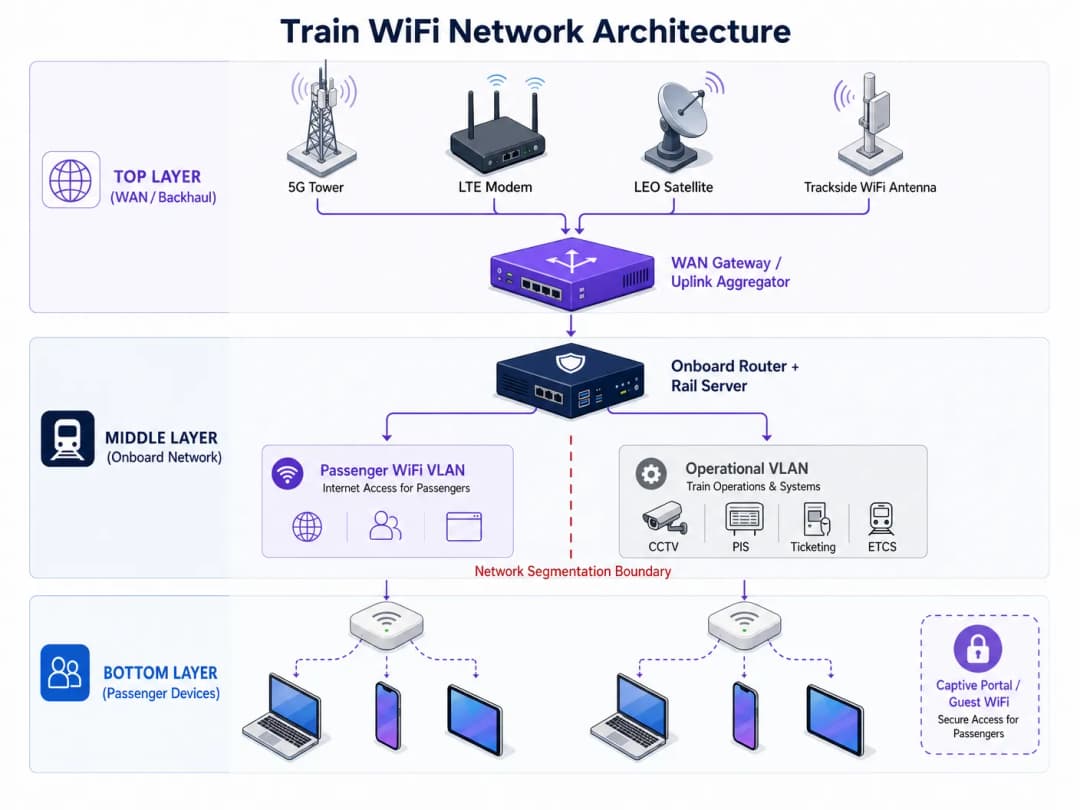
लेयर 1: WAN बॅकहॉल आणि ॲग्रीगेशन
तुमच्या प्रवासी अनुभवाची मर्यादा पूर्णपणे तुमच्या बॅकहॉल क्षमतेवर अवलंबून असते. छतावर बसवलेल्या अँटेनासह सिंगल LTE मॉडेम आता व्यवहार्य राहिलेला नाही. आधुनिक आर्किटेक्चर्स एकाधिक अपलिंक्स एकत्रित करण्यासाठी WAN गेटवे वापरतात:
- सेल्युलर बाँडिंग: सिंगल-नेटवर्क कव्हरेज ब्लॅक स्पॉट्स कमी करण्यासाठी एकाधिक मोबाईल नेटवर्क ऑपरेटर्स (MNOs) कडील 4G/5G कनेक्शन्स एकत्रित करणे.
- ट्रॅकसाइड इन्फ्रास्ट्रक्चर: रेल्वे कॉरिडॉरच्या बाजूने डिप्लॉय केलेले समर्पित 5 GHz किंवा 60 GHz वायरलेस नेटवर्क्स.
- LEO सॅटेलाइट: लो-अर्थ-ऑर्बिट कॉन्स्टेलेशन्स (उदा. Starlink) ग्रामीण किंवा क्रॉस-बॉर्डर भागांमध्ये 100-200 Mbps थ्रूपुट प्रदान करतात जिथे टेरेस्ट्रियल सेल्युलर अपयशी ठरते [2].
लेयर 2: ऑनबोर्ड नेटवर्क आणि सेगमेंटेशन
WAN गेटवे ऑनबोर्ड राउटर आणि रेल सर्व्हरला फीड करतो. हा लेयर नेटवर्क सेगमेंटेशन चे महत्त्वपूर्ण कार्य हाताळतो.
"प्रवासी WiFi पूर्णपणे आयसोलेटेड VLAN वर चालले पाहिजे, ज्याचा CCTV फीड्स, पॅसेंजर इन्फॉर्मेशन सिस्टीम्स (PIS), किंवा युरोपियन ट्रेन कंट्रोल सिस्टीम (ETCS) सिग्नलिंग डेटा वाहून नेणाऱ्या ऑपरेशनल नेटवर्कशी कोणताही राउटिंग पाथ नसावा."
यूके मधील प्रवासी WiFi नेटवर्कवरील 2024 च्या सायबर हल्ल्याने अपुऱ्या सेगमेंटेशनचे गंभीर धोके दाखवून दिले, जिथे पब्लिक-फेसिंग असुरक्षिततेमुळे व्यापक टर्मिनल इन्फ्रास्ट्रक्चर धोक्यात आले [3]. IEEE 802.1X पोर्ट-आधारित ऑथेंटिकेशन आणि कठोर इंटर-VLAN फायरवॉल नियम लागू करणे ही एक तडजोड न करण्यायोग्य सुरक्षा आवश्यकता आहे. शिवाय, रेल सर्व्हर कंटेनराइज्ड ॲप्लिकेशन होस्टिंग प्रदान करतो, ज्यामुळे बॅकहॉल कनेक्टिव्हिटी खंडित झाल्यावरही लोकल कंटेंट कॅशिंग आणि Captive Portal सेवा कार्य करू शकतात.
लेयर 3: पॅसेंजर ॲक्सेस आणि केबिन हार्डवेअर
अंतिम लेयरमध्ये डब्यांमध्ये वितरित केलेल्या ॲक्सेस पॉइंट्स (APs) चा समावेश असतो. जुने हार्डवेअर कामगिरीत मोठी अडचण निर्माण करते. जर्मनीमध्ये, WiFi 4 (802.11n) वरून WiFi 5 (802.11ac) वर अपग्रेड केल्याने स्पीडमध्ये 241% सुधारणा झाली, तर ट्रॅफिक 2.4 GHz बँडवरून 5 GHz वर हलवल्याने 328% वाढ झाली [1]. तरीही, युरोपियन रेल्वे कनेक्शन्सपैकी जवळपास 40% अजूनही WiFi 4 वर अवलंबून आहेत.

अंमलबजावणी मार्गदर्शक: डिप्लॉयमेंट आणि कंप्लायन्स
ट्रेन WiFi डिप्लॉय करणे हा एक गुंतागुंतीचा सिस्टीम्स इंटिग्रेशन प्रकल्प आहे. खालील पायऱ्या एका मजबूत डिप्लॉयमेंट धोरणाची रूपरेषा देतात:
- बॅकहॉल ऑडिट करा: केबिन APs निश्चित करण्यापूर्वी, सेल्युलर कव्हरेज गॅप्ससाठी तुमच्या मार्गाचे ऑडिट करा. या ब्लॅक स्पॉट्सच्या आधारे तुमचे अपलिंक ॲग्रीगेशन धोरण डिझाइन करा.
- RF-परमिएबल खिडक्या निर्दिष्ट करा: आधुनिक ट्रेनच्या खिडक्या थर्मल कार्यक्षमतेसाठी मेटॅलिक कोटिंग्ज वापरतात, ज्यामुळे सेल्युलर सिग्नल्स 20-30 dB ने कमी होऊ शकतात. यावर मात करण्यासाठी इंटर्नल APs ला फीड करणारे छतावरील अँटेना अनिवार्य आहेत.
- एक मजबूत Captive Portal लागू करा: Captive Portal हा प्रवासी आणि ऑपरेटर यांच्यातील प्राथमिक इंटरफेस आहे. सेवा अटी सादर करताना त्याने सुरक्षितपणे व्हेरिफाईड क्रेडेंशियल्स (ईमेल किंवा सोशल लॉगिन) कॅप्चर करणे आवश्यक आहे.
- GDPR कंप्लायन्स सुनिश्चित करा: ऑपरेटर्सनी प्रवासी डेटा प्रोसेस करण्यासाठी कायदेशीर आधार स्थापित करणे आवश्यक आहे. संमती मुक्तपणे दिलेली आणि स्पष्टपणे रेकॉर्ड केलेली असावी. मजबूत DNS आणि सुरक्षेसह तुमच्या नेटवर्कचे संरक्षण करा हा येथे एक महत्त्वाचा विचार आहे.
ROI आणि व्यावसायिक प्रभाव: डेटाचे इंटेलिजन्समध्ये रूपांतर करणे
मोफत WiFi प्रदान करणे हा एक महत्त्वपूर्ण ऑपरेशनल खर्च आहे. ROI जनरेट करण्यासाठी, ऑपरेटर्सनी फर्स्ट-पार्टी डेटा गोळा करण्यासाठी कनेक्शन लेयरचा फायदा घेतला पाहिजे.
जेव्हा प्रवासी कंप्लायंट Captive Portal द्वारे ऑथेंटिकेट करतात, तेव्हा ऑपरेटर्स प्रवासाच्या वर्तनाचे समृद्ध प्रोफाइल्स तयार करू शकतात. येथेच WiFi ॲनालिटिक्स ट्रान्सफॉर्मेटिव्ह ठरते. कनेक्शन फ्रिक्वेन्सी, विशिष्ट स्टेशन्सवरील ड्वेल टाइम्स आणि डब्यातील ऑक्युपन्सी पॅटर्नचे विश्लेषण करून, ऑपरेटर्सना ऑपरेशनल इंटेलिजन्स प्राप्त होतो जो Transport हब्स आणि विमानतळांवर गोळा केलेल्या इनसाइट्सच्या तोडीचा असतो.
उदाहरणार्थ, व्यावसायिक प्रवाशांचा एक विशिष्ट गट सातत्याने 07:30 च्या सेवेवर कनेक्ट होतो हे समजून घेतल्यास टार्गेटेड, हाय-व्हॅल्यू मार्केटिंग कम्युनिकेशन्स किंवा लॉयल्टी प्रोग्राम इंटिग्रेशन शक्य होते. हा डेटा-ड्रिव्हन दृष्टिकोन WiFi नेटवर्कला कॉस्ट सेंटरमधून रेव्हेन्यू-इनेबलिंग ॲसेटमध्ये बदलतो.
ब्रीफिंग ऐका
आर्किटेक्चर आणि व्यावसायिक धोरणाच्या सखोल माहितीसाठी, आमचे संपूर्ण तांत्रिक ब्रीफिंग ऐका:
संदर्भ: [1] Ookla Speedtest Intelligence, "Fast Trains, Slow Wi-Fi: The Reality of Onboard Connectivity in Europe and Asia", Q2 2025. [2] Industry Trials, LEO Satellite Integration for Mobility, 2024-2025. [3] Railway Technology, "UK passenger wifi network hacked", सप्टेंबर 2024.
Definizioni chiave
Aggregazione WAN
Il processo di combinazione di più connessioni Wide Area Network (ad es. due connessioni 5G e un collegamento satellitare) in un'unica connessione logica per aumentare la larghezza di banda e la resilienza.
Fondamentale per i treni che si spostano in aree con copertura cellulare variabile per evitare la caduta delle connessioni.
Segmentazione della rete (VLAN)
La divisione di una rete informatica in sottoreti più piccole e isolate. Le reti locali virtuali (VLAN) mantengono il traffico separato logicamente anche se condivide gli stessi switch fisici.
Essenziale per impedire a un dispositivo passeggero compromesso di accedere ai sistemi critici di controllo del treno.
Captive Portal
Una pagina web che un utente di una rete ad accesso pubblico è obbligato a visualizzare e con cui deve interagire prima che venga concesso l'accesso.
Utilizzato per far rispettare i termini di servizio, raccogliere i dati degli utenti e ottenere il consenso GDPR.
Attenuazione RF
La riduzione della forza del segnale quando le onde radio passano attraverso un mezzo.
I moderni finestrini dei treni con rivestimenti termici metallici causano una massiccia attenuazione RF, richiedendo antenne montate sul tetto.
Satellite LEO
Satelliti in orbita terrestre bassa che operano molto più vicino alla Terra rispetto ai tradizionali satelliti geostazionari, offrendo una latenza inferiore e una larghezza di banda maggiore.
Sempre più utilizzato come soluzione di backhaul per i treni nelle aree rurali o transfrontaliere.
IEEE 802.1X
Uno standard IEEE per il controllo dell'accesso alla rete basato su porta (PNAC), che fornisce un meccanismo di autenticazione ai dispositivi che desiderano connettersi a una LAN o WLAN.
Utilizzato per proteggere le interfacce di rete operative sul treno da accessi non autorizzati.
Server ferroviario
Un computer di bordo robusto progettato per ospitare applicazioni containerizzate localmente sul treno.
Utilizzato per ospitare intrattenimento locale, caching e servizi di Captive Portal per ridurre la dipendenza dal collegamento WAN.
Dati di prima parte
Informazioni che un'azienda raccoglie direttamente dai propri clienti e di cui è proprietaria.
Il principale risultato commerciale di una rete Guest WiFi configurata correttamente.
Esempi pratici
Un operatore ferroviario regionale che gestisce treni pendolari a 4 carrozze attraverso un mix di aree urbane dense e profonde valli rurali sta riscontrando gravi reclami da parte dei passeggeri per le disconnessioni del WiFi. La loro configurazione attuale utilizza un singolo modem 4G LTE per treno. Come dovrebbero riprogettare la loro architettura?
- Aggiornare il backhaul WAN: sostituire il singolo modem LTE con un gateway WAN in grado di effettuare l'aggregazione dell'uplink. Installare router dual-SIM utilizzando due diversi operatori di rete mobile (MNO) per fornire il failover nelle aree urbane.
- Gestire i gap nelle aree rurali: per le valli profonde dove la copertura cellulare è inesistente, integrare un terminale satellitare LEO (ad es. Starlink Mobility) nel gateway WAN come collegamento aggregato secondario.
- Caching locale: distribuire un server ferroviario di bordo per memorizzare nella cache locale il Captive Portal e le informazioni chiave sul viaggio, garantendo che l'interfaccia utente del passeggero rimanga reattiva anche durante brevi perdite totali di connessione nelle gallerie.
Una franchigia ferroviaria intercity sta aggiornando la sua flotta e desidera utilizzare il nuovo WiFi di bordo per raccogliere dati analitici sui passeggeri per il marketing, in modo simile a come operano i punti vendita [Retail](/industries/retail). Quali passaggi tecnici e di conformità devono intraprendere?
- Distribuzione del Captive Portal: implementare un Captive Portal robusto che richieda agli utenti di autenticarsi tramite e-mail o social login prima di accedere a Internet.
- Conformità GDPR: assicurarsi che il portale richieda esplicitamente il consenso opt-in per le comunicazioni di marketing. Non devono essere utilizzate caselle preselezionate. Il sistema deve registrare il timestamp e la versione dell'informativa sulla privacy a cui si è acconsentito.
- Integrazione degli Analytics: instradare i dati della sessione autenticata in una piattaforma centralizzata di WiFi Analytics per tracciare la frequenza dei viaggi, il tempo di permanenza e incrociare i dati con quelli di bigliettazione, ove consentito.
Domande di esercitazione
Q1. Il tuo CTO desidera aggiornare tutti gli access point delle carrozze al WiFi 6 per risolvere i reclami dei passeggeri sulla bassa velocità di Internet. Il tuo backhaul attuale è una singola connessione 4G. Qual è la risposta architetturale corretta?
Suggerimento: Considera dove si sta verificando l'effettivo collo di bottiglia nel flusso di dati.
Visualizza risposta modello
Consiglia al CTO di interrompere l'aggiornamento degli AP e di investire il budget in un gateway WAN in grado di effettuare l'aggregazione dell'uplink. L'aggiornamento al WiFi 6 migliorerà la velocità locale dal dispositivo all'AP all'interno della carrozza, ma la larghezza di banda totale verso Internet rimarrà strozzata dalla singola connessione 4G. Risolvi prima il collo di bottiglia del backhaul.
Q2. Durante una revisione della progettazione di rete, un ingegnere suggerisce di instradare i dati della TVCC del treno attraverso le stesse interfacce del router del WiFi dei passeggeri per risparmiare sui costi di cablaggio. Come rispondi?
Suggerimento: Considera le implicazioni di sicurezza derivanti dalla combinazione di traffico pubblico e operativo.
Visualizza risposta modello
Rifiuta immediatamente la proposta. Il WiFi dei passeggeri e i sistemi operativi come la TVCC devono essere rigorosamente segmentati in VLAN isolate con regole firewall di negazione totale tra di esse. La combinazione di questo traffico crea una vulnerabilità di sicurezza critica, consentendo potenzialmente a un utente malintenzionato sul WiFi pubblico di accedere o interrompere le operazioni ferroviarie.
Q3. Il team di marketing desidera iscrivere automaticamente tutti i passeggeri che utilizzano il WiFi gratuito a una newsletter settimanale per aumentare il coinvolgimento. Cosa devi configurare sul Captive Portal per garantire che ciò sia legale?
Suggerimento: Rivedi i requisiti per il trattamento lecito dei dati ai sensi del GDPR.
Visualizza risposta modello
È necessario configurare il Captive Portal in modo da includere una casella di controllo opt-in esplicita e non selezionata per le comunicazioni di marketing. L'iscrizione automatica o le caselle preselezionate violano i requisiti del GDPR per un consenso libero e inequivocabile. Il sistema deve inoltre registrare il timestamp di questo consenso a fini di audit.
Continua a leggere questa serie
Staff WiFi vs. Guest WiFi: Best Practices for Corporate Network Segmentation
Una guida tecnica completa per i leader IT sulla segmentazione delle reti WiFi per il personale e gli ospiti. Copre l'architettura VLAN, l'autenticazione 802.1X, le policy dei firewall e l'impatto aziendale di una progettazione di rete sicura.
Soluzioni WiFi per appartamenti: una guida completa per le aziende
Questa guida copre l'architettura, l'implementazione e il business case per le soluzioni WiFi per appartamenti nelle proprietà Build to Rent e nelle unità abitative plurifamiliari. Spiega come la tecnologia Identity Pre-Shared Key (iPSK) crei bolle di rete sicure e isolate per ogni residente, supportando al contempo i dispositivi intelligenti e l'IoT. Gli sviluppatori immobiliari, i proprietari e gli operatori BTR troveranno indicazioni pratiche per l'implementazione, dati sul ROI e scenari di implementazione pratici.
Cox business managed WiFi: a comprehensive guide for businesses
Questa guida spiega in dettaglio come gli sviluppatori immobiliari e gli operatori BTR possano implementare reti scalabili e sicure utilizzando Cox Business managed WiFi. Copre l'architettura di rete, l'implementazione di hardware indipendente dai fornitori e l'impatto aziendale del passaggio della connettività da problema operativo a infrastruttura affidabile.