
मोफत विरुद्ध सशुल्क हॉटेल WiFi: तुमच्या प्रॉपर्टीसाठी योग्य मॉडेल कोणते आहे?
हे मार्गदर्शक IT लीडर्स आणि व्हेन्यू ऑपरेटर्सना हॉस्पिटॅलिटी वातावरणात मोफत, सशुल्क आणि टायर्ड WiFi मॉडेल्स दरम्यान निवड करण्यासाठी एक निश्चित फ्रेमवर्क प्रदान करते. हे एंटरप्राइझ-ग्रेड सुरक्षा आणि GDPR चे पालन राखून यशस्वीरित्या कनेक्टिव्हिटीचे कमाईकरण करण्यासाठी आवश्यक असलेल्या तांत्रिक आर्किटेक्चर, व्यावसायिक प्रभाव आणि अतिथी समाधान मेट्रिक्सचे विश्लेषण करते. जे ऑपरेटर्स Freemium Tiered मॉडेल लागू करतात ते थेट बुकिंग वाढवणारे उच्च CSAT स्कोअर राखून भरीव पूरक महसूल मिळवू शकतात.
Video overview
हे मार्गदर्शक ऐका
पॉडकास्ट ट्रान्सक्रिप्ट पहा
आमच्या मुख्य मालिकेचा भाग: अतिथी WiFi मार्गदर्शक →

कार्यकारी सारांश (Executive Summary)
हॉस्पिटॅलिटी आणि मोठ्या प्रमाणावरील वेन्यूजमध्ये मोफत आणि पेड WiFi मधील वाद आता सोपा पर्याय उरलेला नाही. 4K स्ट्रीमिंग, क्लाउड-आधारित कॉन्फरन्सिंग आणि हेडलेस IoT उपकरणांच्या प्रचंड संख्येमुळे बँडविड्थची मागणी सातत्याने वाढत असल्याने, पारंपारिक "सर्वांसाठी मोफत" मॉडेल दबावाखाली येत आहे. याउलट, कडक "पे-टू-प्ले" मॉडेल्स अतिथी समाधान (CSAT) स्कोअर खराब करत आहेत आणि नकारात्मक ऑनलाइन पुनरावलोकनांना कारणीभूत ठरत आहेत.
IT व्यवस्थापक, नेटवर्क आर्किटेक्ट्स आणि CTOs साठी, सुवर्णमध्य हा Freemium Tiered Model मध्ये आहे. हा दृष्टिकोन सर्व अतिथींसाठी मोफत, मूलभूत कनेक्टिव्हिटी प्रदान करतो आणि पॉवर युजर्ससाठी हाय-स्पीड, प्रीमियम टियर्स ऑफर करतो. हे मार्गदर्शक टायर्ड बँडविड्थ लागू करण्यासाठी आवश्यक असलेल्या तांत्रिक आर्किटेक्चरचा, पूरक महसूल मिळवण्यासाठीच्या बिझनेस केसचा आणि Guest WiFi व WiFi Analytics सारखे प्लॅटफॉर्म्स कॉस्ट सेंटरला धोरणात्मक मालमत्तेमध्ये कसे रूपांतरित करतात याचा शोध घेते. खालील विश्लेषण कोणत्याही वेन्यू ऑपरेटरसाठी सुसंगत आहे, मग ते ५० खोल्यांचे बुटीक हॉटेल व्यवस्थापित करत असोत, एक मोठे कॉन्फरन्स सेंटर असो, किंवा स्टेडियम - जिथे paid wifi service बद्दलचा निर्णय आत्मविश्वासाने घेणे आवश्यक आहे.
बिझनेस केस: मोफत विरुद्ध पेड विरुद्ध टायर्ड (Free vs. Paid vs. Tiered)
Paid wifi service चे मूल्यांकन करताना, वेन्यू ऑपरेटर्सनी आधुनिक अतिथींच्या अपेक्षांसह इन्फ्रास्ट्रक्चर खर्चाचा समतोल राखला पाहिजे. उद्योग प्रामुख्याने तीन प्राथमिक मॉडेल्सभोवती केंद्रित झाला आहे, प्रत्येकाचे वेगळे आर्थिक आणि ऑपरेशनल फायदे-तोटे आहेत.
१. केवळ मोफत ("Free Only") मॉडेल
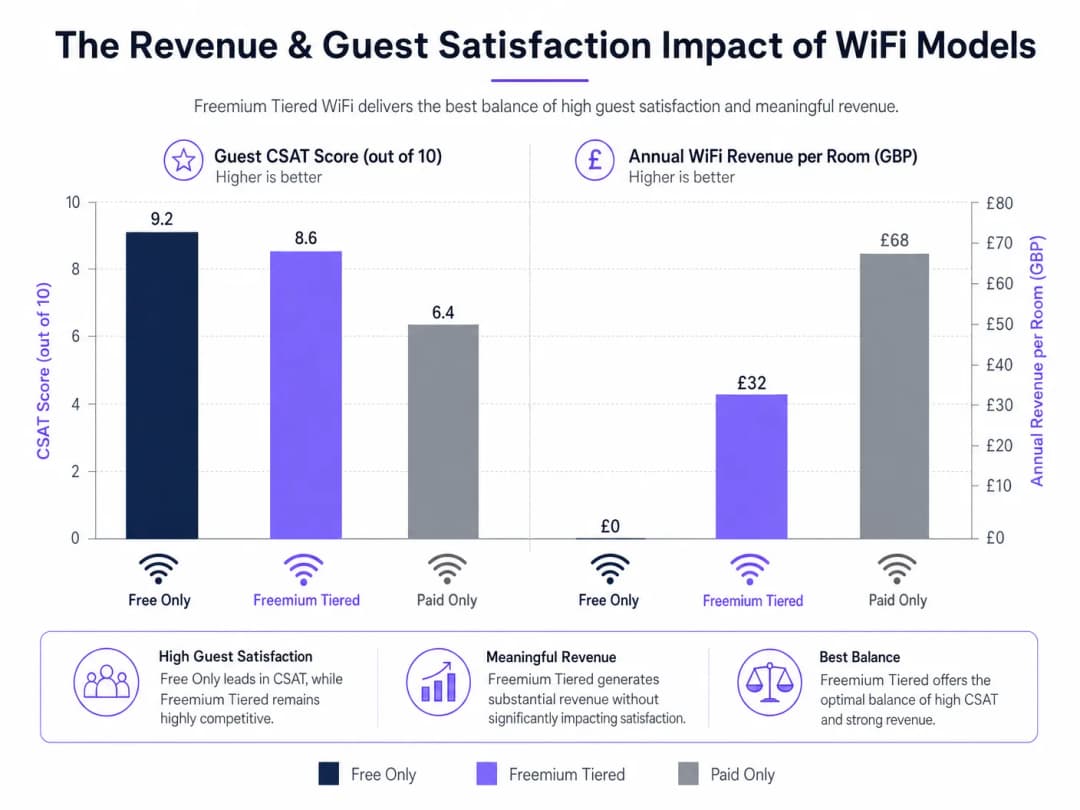
पूर्णपणे मोफत WiFi ऑफर करणे ही बऱ्याचदा मूलभूत अपेक्षा मानली जाते, विशेषत: बजेट आणि मध्यम-श्रेणीच्या hospitality आणि retail वातावरणात. ८४% पेक्षा जास्त हॉटेल अतिथी बुकिंगच्या निर्णयांमध्ये मोफत WiFi चा महत्त्वाचा घटक म्हणून उल्लेख करतात, ज्यामुळे ते एक आवश्यक सुविधा बनते.
फायदे: सुरुवातीचे उच्च अतिथी समाधान; विना-अडथळा ऑनबोर्डिंग; OTA रिव्ह्यू स्कोअरवर सकारात्मक प्रभाव.
तोटे: वाढत्या बँडविड्थ खर्चाची भरपाई करण्यासाठी थेट ROI नाही; हेवी युजर्समुळे होणारी नेटवर्क गर्दी सर्वांसाठीचा अनुभव खराब करते; Captive Portal आणि योग्य ऑथेंटिकेशनसह लागू न केल्यास फर्स्ट-पार्टी डेटा कॅप्चर करण्याची संधी गमावणे.
२. केवळ पेड ("Paid Only") मॉडेल
प्रवेशासाठी प्रत्येक अतिथीकडून शुल्क आकारणे आता अत्यंत दुर्मिळ आहे आणि सामान्यतः अल्ट्रा-बजेट वाहक, विशिष्ट transport हब किंवा आधुनिकीकरण न केलेल्या जुन्या सिस्टम्सपुरते मर्यादित आहे.
फायदे: थेट महसूल निर्मिती; बँडविड्थ वापरावर नैसर्गिक मर्यादा; जुन्या हार्डवेअरवर लागू करणे सोपे.
तोटे: CSAT वर गंभीर नकारात्मक प्रभाव; ऑनबोर्डिंग दरम्यान अत्यंत अडथळे; कनेक्टिव्हिटी हा विशेषाधिकार नसून अधिकार मानल्या जाणाऱ्या बाजारपेठेत बुकिंगला सक्रियपणे परावृत्त करते.
३. "Freemium Tier" मॉडेलहा एंटरप्राइझचा मानक दर्जा आहे. एका स्प्लॅश पेजद्वारे अतिथींच्या डेटाच्या बदल्यात मोफत बेसलाइन स्पीड (उदा. प्रति डिव्हाइस 5 Mbps) प्रदान केला जातो, तर जास्त स्पीड (उदा. 25 Mbps किंवा 100 Mbps) दैनिक किंवा प्रति-मुक्काम शुल्काद्वारे कमाईसाठी वापरला जातो.
फायदे: महसूल निर्मितीसह अतिथींच्या अपेक्षांचा समतोल राखतो; फर्स्ट-पार्टी डेटा कॅप्चरद्वारे लक्ष्यित मार्केटिंग सक्षम करतो; QoS द्वारे वाजवी बँडविड्थ वाटप सुनिश्चित करतो; निष्ठा कार्यक्रमांशी (loyalty programmes) समाकलित करतो.
तोटे: यासाठी अत्याधुनिक नेटवर्क व्यवस्थापन, सक्षम WiFi गेटवे आणि प्रॉपर्टी मॅनेजमेंट सिस्टम (PMS) सह अखंड एकत्रीकरण आवश्यक आहे.

तांत्रिक विश्लेषण: टायर्ड ॲक्सेसची रचना करणे
टायर्ड मॉडेल लागू करण्यासाठी मजबूत नेटवर्क आर्किटेक्चर आवश्यक आहे. ही केवळ राउटरची गती कमी करण्याची बाब नाही; यासाठी एंटरप्राइझ-ग्रेड ॲक्सेस पॉइंट्स, इंटेलिजेंट कंट्रोलर्स आणि IEEE 802.1X आणि WPA3 मानकांचे पालन करणारे सुरक्षित प्रमाणीकरण फ्रेमवर्क आवश्यक आहे.
बँडविड्थ वाटप आणि क्वालिटी ऑफ सर्व्हिस (QoS)
सशुल्क WiFi सेवा यशस्वीरित्या उपयोजित करण्यासाठी, नेटवर्कने बँडविड्थचे डायनॅमिकरित्या वाटप केले पाहिजे. हे कंट्रोलर स्तरावर व्यवस्थापित केलेल्या क्वालिटी ऑफ सर्व्हिस (QoS) धोरणांद्वारे साध्य केले जाते - मग ते ऑन-प्रिमायसेस असो किंवा वाढत्या प्रमाणात, क्लाउड-व्यवस्थापित प्लॅटफॉर्मद्वारे असो.
| स्तर | थ्रूपुट मर्यादा | सामान्य वापर | QoS प्राधान्य |
|---|---|---|---|
| मोफत बेसिक | प्रति डिव्हाइस 5 Mbps | ईमेल, ब्राउझिंग, सोशल मीडिया | कमी |
| मानक | प्रति डिव्हाइस 25 Mbps | HD स्ट्रीमिंग, मानक VPN | मध्यम |
| प्रीमियम | प्रति डिव्हाइस 100 Mbps | 4K व्हिडिओ, कॉन्फरन्सिंग, मोठ्या फाइल्स अपलोड करणे | उच्च |
आमच्या Hotel WiFi Speed: What Guests Expect and How to Deliver It मार्गदर्शकामध्ये चर्चा केल्याप्रमाणे, अतिथींची निराशा टाळण्यासाठी या मर्यादा अचूकपणे सेट करणे अत्यंत महत्त्वाचे आहे. एक खराब कॅलिब्रेट केलेला मोफत स्तर जो मूलभूत YouTube प्रवाहालाही सपोर्ट करू शकत नाही, तो केवळ सशुल्क मॉडेलपेक्षा अधिक नकारात्मक पुनरावलोकने निर्माण करेल.
सुरक्षित प्रमाणीकरण आणि एकत्रीकरण
अखंड ऑनबोर्डिंग अनुभव अत्यंत महत्त्वाचा आहे. सामायिक पासवर्डची (PSK) जुनी पद्धत हा सुरक्षिततेचा धोका आहे आणि यामुळे अडथळे निर्माण होतात. आधुनिक उपयोजन लेअर्ड प्रमाणीकरण दृष्टिकोन वापरतात. Captive Portals: मोफत स्तरासाठी, अतिथी ब्रँडेड स्प्लॅश पेजद्वारे प्रमाणीकरण करतात, अटी स्वीकारतात आणि डेटा प्रदान करतात (उदा. ईमेल, मार्केटिंग संमती). हा WiFi Analytics डेटा पाइपलाइनचा पाया आहे आणि थेट CRM प्रणालींना फीड करतो.
PMS एकत्रीकरण: प्रीमियम स्तरांसाठी, WiFi गेटवे थेट हॉटेलच्या PMS (उदा. Oracle Opera, Mews, किंवा Apaleo) सह समाकलित होतो. अतिथी त्यांच्या खोलीचा क्रमांक आणि आडनाव वापरून प्रमाणीकरण करतात आणि प्रीमियम शुल्क त्यांच्या फोलिओवर स्वयंचलितपणे पोस्ट केले जाते - पोर्टलवर कोणत्याही क्रेडिट कार्डची आवश्यकता नसते.
Passpoint / OpenRoaming (IEEE 802.11u): परत येणाऱ्या पाहुण्यांसाठी किंवा लॉयल्टी सदस्यांसाठी, Passpoint अखंड, पासवर्ड-मुक्त आणि वैयक्तिकरित्या एन्क्रिप्टेड (WPA3-Enterprise) कनेक्शन्स सक्षम करते, ज्यामुळे Captive Portal ची गरज पूर्णपणे नाहीशी होते आणि सेल्युलरसारखा रोमिंगचा अनुभव मिळतो.
नेटवर्कचे वर्गीकरण आणि सुरक्षा
VLANs द्वारे नेटवर्कचे वर्गीकरण करणे ही तडजोड न करता येणारी सुरक्षा आवश्यकता आहे, विशेषतः रिटेल आणि आदरातिथ्य (हॉस्पिटॅलिटी) वातावरणात PCI-DSS पूर्ततेसाठी. अतिथींचा ट्रॅफिक, कर्मचाऱ्यांचा ट्रॅफिक आणि IoT/ऑपरेशनल ट्रॅफिक पूर्णपणे स्वतंत्र लॉजिकल नेटवर्क्सवर असणे आवश्यक आहे, जरी ते एकाच प्रत्यक्ष ॲक्सेस पॉईंट्स सामायिक करत असले तरीही.
वर्गीकरण न केलेल्या नेटवर्कवरील तडजोड केलेले अतिथी डिव्हाइस POS सिस्टीम, स्मार्ट लॉक्स आणि अंतर्गत व्यवस्थापन इंटरफेसेसमध्ये प्रवेश करू शकते. VLANs ही अशी बाजूने होणारी हालचाल पूर्णपणे रोखतात.
तुमच्या विशिष्ट सेटअपबद्दल काही प्रश्न आहेत का?
आमची टीम ८०,००० हून अधिक वेन्यूजमधील वेन्यू ऑपरेटर्स, IT मॅनेजर्स आणि नेटवर्क इंजिनिअर्ससोबत काम करते. २० मिनिटांचा कॉल बुक करा आणि तुमच्यासारख्या इतरांनी ही समस्या कशी सोडवली हे आम्ही तुम्हाला दाखवू.
अंमलबजावणी मार्गदर्शक
स्तरीय WiFi मॉडेल तैनात करण्यासाठी अनुपालन, सुरक्षा आणि पाहुण्यांना अखंड अनुभव मिळण्याची खात्री करण्यासाठी काळजीपूर्वक नियोजनाची आवश्यकता असते. खालील पायऱ्या नवीन उपयोजन आणि विद्यमान पायाभूत सुविधांच्या अपग्रेड या दोन्हीसाठी लागू होतात.
पायरी १: बेसलाईन मूल्यांकन. सर्वसमावेशक साइट सर्वेक्षण करा. सध्याच्या बँडविड्थ वापराचे मूल्यांकन करा, कव्हरेजमधील त्रुटी ओळखा आणि विद्यमान हार्डवेअरचे मूल्यांकन करा. बॅकहॉल - सहसा समर्पित फायबर लीज्ड लाईन - अंदाजित पीक लोडला सपोर्ट करू शकते याची खात्री करा. बॅकहॉल आवश्यकतांबद्दल अधिक माहितीसाठी, लीज्ड लाईन म्हणजे काय? समर्पित व्यावसायिक इंटरनेट पहा.
पायरी २: स्तर निश्चित करा. प्रदान केलेल्या मूल्याचे प्रतिनिधित्व करणाऱ्या किंमतीसह स्पष्ट, संवाद साधण्यायोग्य स्तर स्थापित करा. एक सामान्य रचना अशी आहे: बेसिक (मोफत, 5 Mbps), बिझनेस (£५ - £१०/दिवस, 25 Mbps), आणि प्रो (£१५+/दिवस, 100 Mbps अनकॅप्ड).
पायरी ३: Captive Portal डिझाइन करा. पोर्टल ब्रँडेड, मोबाईल-प्रतिसादात्मक आणि कायदेशीररित्या सुसंगत असणे आवश्यक आहे. GDPR चे पालन करण्यासाठी मार्केटिंगसाठी स्पष्ट, अनटिक केलेले ऑप्ट-इन चेकबॉक्स असल्याची खात्री करा. पोर्टलने प्रिमियम स्तराचे मूल्य स्पष्टपणे मांडले पाहिजे आणि अपग्रेडमधील अडथळे कमी केले पाहिजेत.
पायरी ४: नेटवर्क वर्गीकरण अंमलात आणा. अतिथी, कर्मचारी आणि ऑपरेशनल ट्रॅफिक वेगळे करण्यासाठी कंट्रोलरवर VLANs कॉन्फिगर करा. स्तरांच्या मर्यादा लागू करण्यासाठी प्रति VLAN QoS पॉलिसी लागू करा.
पायरी ५: PMS आणि CRM सह समाकलित करा. स्वयंचलित फोलिओ बिलिंगसाठी WiFi गेटवेला PMS शी कनेक्ट करा. मुक्कामानंतरच्या मार्केटिंग मोहिमांसाठी गोळा केलेला अतिथींचा डेटा CRM मध्ये पाठवा.
पायरी ६: चाचणी आणि देखरेख. थेट सुरू करण्यापूर्वी लोड चाचणी करा. बँडविड्थ वापर, स्तर अवलंबण्याचा दर आणि प्रति उपलब्ध खोली महसूल (RevPAR मध्ये WiFi चे योगदान) ट्रॅक करण्यासाठी सतत देखरेख डॅशबोर्ड सेट करा.
सर्वोत्तम पद्धती
खालील शिफारसी व्हेंडर-तटस्थ उद्योग मानके आणि आदरातिथ्य (hospitality), किरकोळ विक्री (retail), आणि कार्यक्रम (events) क्षेत्रातील कार्यात्मक अनुभवांवर आधारित आहेत.
सर्व स्तरांवर WPA3 लागू करा. WPA3 प्रत्येक उपकरणासाठी वैयक्तिक डेटा एन्क्रिप्शन प्रदान करते, म्हणजेच सामायिक केलेल्या विनामूल्य स्तरावर देखील, एक अतिथी दुसऱ्याच्या ट्रॅफिकमध्ये हस्तक्षेप करू शकत नाही. हे WPA2 पेक्षा एक महत्त्वपूर्ण सुधारणा आहे आणि आता सर्व आधुनिक क्लायंट उपकरणांद्वारे समर्थित आहे.
अतिथी VLAN वर क्लायंट आयसोलेशन वापरा. एकाच VLAN मध्ये असताना देखील, अतिथी उपकरणांना एकमेकांशी थेट संवाद साधण्यापासून रोखले पाहिजे. हे पीअर टू पीअर हल्ल्यांचे धोके कमी करते.
केवळ गेटवे पातळीवरच नाही, तर AP पातळीवर दर मर्यादा (rate limiting) लागू करा. गेटवे-पातळीवरील थ्रॉटलिंगपेक्षा कंट्रोलर-पातळीवरील QoS अधिक तपशीलवार आणि प्रतिसाद देणारे असते आणि कोणत्याही एका उपकरणाला सामायिक ऍक्सेस पॉईंटच्या रेडिओ संसाधनांवर मक्तेदारी मिळवण्यापासून रोखते.
त्रैमासिक आधारावर GDPR अनुपालनाचे ऑडिट करा. Captive Portal ची संमती यंत्रणा, डेटा संचय धोरणे आणि तृतीय-पक्ष डेटा-शेअरिंग करारांचे नियमितपणे पुनरावलोकन केले जात असल्याची खात्री करा. डेटा उल्लंघनासाठी सरासरी UK GDPR दंड लक्षणीय आहे आणि आदरातिथ्य हे उच्च-जोखमीचे क्षेत्र आहे.
ROI आणि व्यावसायिक प्रभाव
स्तरीय मॉडेलवर संक्रमण केल्याने WiFi चे रूपांतर एका बुडीत खर्चातून अनेक योगदान देणाऱ्या घटकांसह मोजता येण्याजोग्या महसूल प्रवाहात होते.
थ्रेट महसूल: प्रीमियम स्तर खरेदी थेट, उच्च-मार्जिन पूरक महसूल प्रदान करते. ७०% ऑक्युपन्सी असलेल्या २०० खोल्यांच्या प्रॉपर्टीमध्ये, जर १०% अतिथींनी £१० ची प्रीमियम अपग्रेड खरेदी केली, तर ती प्रॉपर्टी थेट WiFi महसूलात दरमहा अंदाजे £५,११० व्युत्पन्न करते - जे बऱ्याच मध्यम-श्रेणीच्या प्रॉपर्टीजमधील वार्षिक पायाभूत सुविधांचा खर्च भरून काढण्यासाठी पुरेसे आहे.
अप्रत्यक्ष महसूल (डेटा कॅप्चर): विनामूल्य स्तर हा लीड जनरेशन इंजिन म्हणून काम करतो. पडताळणी केलेला ईमेल आणि CRM डेटा मिळवून, ठिकाणे थेट बुकिंग वाढवू शकतात, ऑन-साइट F&B ला प्रोत्साहन देऊ शकतात आणि निष्ठा कार्यक्रमाच्या नोंदणी वाढवू शकतात - जे प्रत्येक ठिकाणी OTA कमिशन फी टाळते जी सहसा खोलीच्या महसूलाचा १५-२५% भाग खर्च करते.
कार्यक्षम बुद्धिमत्ता (Operational Intelligence): Purple सारखे WiFi Analytics प्लॅटफॉर्म्स फूटफॉल हीटमॅप्स, ड्वेल टाइम विश्लेषण आणि पुन्हा भेट देणाऱ्या अभ्यागतांचे ट्रॅकिंग प्रदान करतात. हा डेटा कर्मचाऱ्यांचे निर्णय, जाहिरातींची वेळ आणि जागेचा वापर याबद्दल माहिती देतो - ज्यामुळे कालांतराने वाढणारी कार्यक्षम बचत होते.
जोखीम कमी करणे: खराब व्यवस्थापित केलेले, खुले नेटवर्क महत्त्वपूर्ण कायदेशीर आणि प्रतिष्ठेचे धोके निर्माण करते. WPA3, क्लायंट आयसोलेशन, आणि VLAN सेगमेंटेशनसह योग्यरित्या डिझाइन केलेली, स्तरीय प्रणाली मॅन-इन-द-मिडल हल्ल्यांचे धोके कमी करते आणि GDPR आणि PCI-DSS अंतर्गत योग्य खबरदारी दर्शवते.
हेच नियम लगतच्या क्षेत्रातील ऑपरेटर्सना देखील लागू होतात. Wi-Fi in Auto: The Complete 2026 Enterprise Guide दाखवते की ऑटोमोटिव्ह रिटेल आणि सेवा क्षेत्रांमध्ये स्तरीय कनेक्टिव्हिटी मॉडेल कसे तैनात केले जात आहेत, आणि healthcare क्षेत्र रुग्ण आणि अतिथी WiFi साठी वेगाने तत्सम फ्रेमवर्क स्वीकारत आहे.
समस्येचे निवारण आणि जोखीम कमी करणे
समस्या: प्रीमियम पाहुणे टॉप टियरसाठी पैसे देऊनही स्लो स्पीडची तक्रार करत आहेत. मुख्य कारण: QoS पॉलिसी AP स्तरावर लागू केल्या जात नाहीत, केवळ गेटवेवर लागू आहेत. गेटवे-स्तरीय पॉलिसी काहीही असल्या तरी, एकाच वेळी ४०+ उपकरणांना सेवा देणारा एकच AP रेडिओ बॉटलनेक बनू शकतो. निवारण: प्रति-AP एअरटाइम फेअरनेस लागू करा आणि अपेक्षित समवर्ती उपकरण संख्येसाठी AP ची घनता पुरेशी असल्याची खात्री करा. उच्च-घनता असलेल्या वातावरणात प्रति २०-२५ समवर्ती उपकरणांमागे एक AP हा एक सामान्य नियम आहे.
समस्या: पाहुणे त्यांचे स्मार्ट टीव्ही किंवा गेमिंग कन्सोल कनेक्ट करू शकत नाहीत. मुख्य कारण: हेडलेस उपकरणे Captive Portals नेव्हिगेट करू शकत नाहीत. निवारण: ब्राऊझर नसलेल्या, खोली-विशिष्ट उपकरणांच्या ऑनबोर्डिंगला अनुमती देण्यासाठी iPSK (Individual Pre-Shared Keys) उपयोजित करा. पाहुणे हॉटेल ॲप किंवा खोलीतील QR कोडद्वारे की जनरेट करू शकतात.
समस्या: डेटा कॅप्चरबद्दल GDPR अनुपालन चिंता. मुख्य कारण: Captive Portal वरील चुकीच्या पद्धतीने डिझाइन केलेले संमती प्रवाह. निवारण: पोर्टल मार्केटिंगसाठी स्पष्ट, अनटिक केलेले ऑप्ट-इन चेकबॉक्स वापरत असल्याची खात्री करा. एक स्पष्ट डेटा धारणा धोरण लागू करा आणि गोपनीयता सूचना लिंक केलेली आणि प्रवेशयोग्य असल्याची खात्री करा. एंटरप्राइझ प्लॅटफॉर्म हे स्वयंचलितपणे हाताळतात.
महत्वाच्या व्याख्या
Captive Portal
सार्वजनिक WiFi नेटवर्कवर प्रवेश मिळण्यापूर्वी वापरकर्त्यांनी पाहिले पाहिजे आणि संवाद साधला पाहिजे असे वेब पेज, जे सहसा प्रमाणीकरण, विपणन संमती मिळवणे किंवा पेमेंटसाठी वापरले जाते.
मोफत स्तर लागू करण्यासाठी, GDPR-सुसंगत मार्केटिंग डेटा कॅप्चर करण्यासाठी आणि प्रीमियम स्तरांसाठी अपसेल पर्याय सादर करण्यासाठी हे आवश्यक आहे. पोर्टलची रचना थेट कन्व्हर्जन रेट आणि अनुपालन स्थिती या दोन्हींवर परिणाम करते.
Quality of Service (QoS)
नेटवर्क व्यवस्थापन तंत्रज्ञान जे विशिष्ट प्रकारच्या ट्रॅफिकला प्राधान्य देते किंवा विशिष्ट वापरकर्ते, डिव्हाइस किंवा ट्रॅफिक वर्गांसाठी उपलब्ध बँडविड्थ मर्यादित करते.
विनामूल्य श्रेणीवर बँडविड्थ मर्यादा लागू करण्यासाठी आणि प्रीमियम पैसे देणाऱ्या पाहुण्यांना थ्रूपुटची हमी देण्यासाठी वापरली जाणारी मुख्य यंत्रणा. जास्तीत जास्त प्रभावीतेसाठी कंट्रोलर आणि AP दोन्ही स्तरांवर कॉन्फिगर करणे आवश्यक आहे.
Property Management System (PMS)
हॉटेल्सद्वारे आरक्षणे, बिलिंग, खोल्यांचे वाटप आणि अतिथी प्रोफाइल व्यवस्थापित करण्यासाठी वापरली जाणारी मध्यवर्ती सॉफ्टवेअर प्रणाली.
खोली क्रमांकाद्वारे पाहुण्यांचे प्रमाणीकरण करण्यासाठी आणि त्यांच्या फोलिओवर प्रीमियम WiFi शुल्क स्वयंचलितपणे पोस्ट करण्यासाठी WiFi गेटवे PMS सह समाकलित करणे आवश्यक आहे, ज्यामुळे स्वतंत्र पेमेंट पायरीशिवाय त्रासमुक्त बिलिंग सक्षम होते.
Passpoint (Hotspot 2.0 / IEEE 802.11u)
एक WiFi Alliance प्रोटोकॉल जो WPA3-Enterprise प्रमाणपत्रांचा वापर करून विविध WiFi नेटवर्क दरम्यान अखंड, सुरक्षित, पासवर्डशिवाय रोमिंग सक्षम करतो.
परतणाऱ्या पाहुण्यांना किंवा लॉयल्टी सदस्यांना Captive Portal शी संवाद न साधता स्वयंचलितपणे आणि सुरक्षितपणे कनेक्ट होण्याची परवानगी देते, ज्यामुळे सेल्युलर-सारखा रोमिंग अनुभव मिळतो आणि ऑनबोर्डिंगमधील मुख्य अडथळे दूर होतात.
VLAN (Virtual Local Area Network)
एक लॉजिकल सबनेटवर्क जे वेगवेगळ्या भौतिक नेटवर्क विभागांमधील डिव्हाइसेसच्या संग्रहाला गटबद्ध करते, सॉफ्टवेअर पातळीवर ट्रॅफिक वेगळे करणे लागू करते.
एकाच भौतिक ॲक्सेस पॉइंट्सवर अतिथींच्या ट्रॅफिकला ऑपरेशनल ट्रॅफिक (POS प्रणाली, स्मार्ट लॉक्स, कर्मचारी डिव्हाइसेस) पासून सुरक्षितपणे वेगळे करण्यासाठी वापरले जाते. PCI DSS अनुपालन आणि सामान्य जोखीम कमी करण्यासाठी हे एक अनिवार्य नियंत्रण आहे.
Ancillary Revenue
कंपनीच्या प्राथमिक उत्पादन ऑफर व्यतिरिक्त इतर वस्तू किंवा सेवांमधून मिळणारे उत्पन्न - आदरातिथ्य (hospitality) क्षेत्रात, मूळ खोलीच्या दरापलीकडील काहीही.
प्रीमियम WiFi श्रेणी सहाय्यक महसुलाचे (Ancillary Revenue) उच्च-मार्जिन स्वरूप दर्शवतात. F&B किंवा स्पा सेवांच्या विपरीत, एकदा पायाभूत सुविधा तैनात केल्यावर WiFi अपग्रेडची किरकोळ किंमत जवळपास शून्य असते, ज्यामुळे ते अत्यंत फायदेशीर ठरते.
iPSK (Individual Pre-Shared Key)
एक सुरक्षा पद्धत जी संपूर्ण 802.1X पायाभूत सुविधांची आवश्यकता न ठेवता, एकाच SSID वरील प्रत्येक वापरकर्त्याला, खोलीला किंवा डिव्हाइसला एक युनिक WiFi पासवर्ड प्रदान करते.
हेडलेस IoT डिव्हाइसेस - स्मार्ट टीव्ही, गेमिंग कन्सोल, स्ट्रीमिंग स्टिक्स - जे Captive Portal नेव्हिगेट करू शकत नाहीत, त्यांना सुरक्षितपणे कनेक्ट करण्यासाठी अत्यंत महत्त्वाचे आहे. प्रत्येक खोलीला एक युनिक की मिळते, ज्यामुळे पाहुण्यांमध्ये अलगाव राखला जातो.
Freemium Tiered Model
एक सेवा वितरण मॉडेल ज्यामध्ये मूलभूत स्तरावरील सेवा विनामूल्य प्रदान केली जाते, तर सुधारित वैशिष्ट्ये किंवा कार्यक्षमता प्रीमियम किंमतीवर उपलब्ध असते.
आधुनिक आदरातिथ्य क्षेत्रातील प्रमुख WiFi व्यवसाय मॉडेल. विनामूल्य श्रेणी CSAT आणि डेटा कॅप्चरला चालना देते; प्रीमियम श्रेणी थेट महसूल मिळवून देते. सशुल्क श्रेणी खरोखरच चांगला अनुभव देईल याची खात्री करण्यासाठी मजबूत QoS अंमलबजावणीसह हे मॉडेल व्यवहार्य ठरते.
RevPAR (Revenue Per Available Room)
सरासरी दैनिक खोली दराला व्यापलेल्या दराने (occupancy rate) गुणून मोजले जाणारे हॉटेलच्या कामगिरीचे मेट्रिक.
WiFi महसूल आणि WiFi डेटा कॅप्चरद्वारे चालविलेले अप्रत्यक्ष बुकिंग हे दोन्ही RevPAR मध्ये योगदान देतात. २०२६ साठी लंडन हॉटेलच्या अंदाजानुसार अंदाजे १.८% RevPAR वाढ अपेक्षित आहे, ज्यामध्ये तंत्रज्ञान-सक्षम अतिथी अनुभवांना मुख्य चालक म्हणून नमूद केले आहे.
सोडवलेली उदाहरणे
एका ३०० खोल्यांच्या लक्झरी हॉटेलमध्ये संध्याकाळच्या गर्दीच्या वेळी संथ WiFi बद्दल अतिथींच्या तक्रारी येत आहेत. ते सध्या सामायिक पासवर्डसह सिंगल, मोफत, अमर्यादित नेटवर्क ऑफर करत आहेत. त्यांना सुट्टीसाठी आलेल्या पाहुण्यांना नाराज न करता व्यावसायिक प्रवाशांसाठी कामगिरी सुधारण्याची गरज आहे. IT टीमने डिप्लॉयमेंटची पुनर्रचना कशी करावी?
पायरी १: सामायिक PSK च्या जागी PMS (Oracle Opera) सोबत समाकलित केलेले Captive Portal वापरा. पायरी २: तीन स्तरांसह Freemium Tiered मॉडेल लागू करा: मोफत (10 Mbps, CRM डेटा कॅप्चरसाठी ईमेल पडताळणी), बिझनेस (50 Mbps, £८/दिवस, PMS-प्रमाणित आणि फोलिओवर बिल केलेले), आणि प्रीमियम (100 Mbps, £१५/दिवस, समान बिलिंग पद्धत). पायरी ३: मोफत स्तरावर प्रति-डिव्हाइस बँडविड्थ मर्यादा लागू करण्यासाठी आणि सशुल्क स्तरांसाठी थ्रूपुटची हमी देण्यासाठी कंट्रोलर स्तरावर QoS पॉलिसी कॉन्फिगर करा. पायरी ४: हॉटेल लॉयल्टी ॲपद्वारे Passpoint प्रोफाइल डिप्लॉय करा जेणेकरून एलिट लॉयल्टी सदस्यांना आल्यावर कोणत्याही पोर्टल परस्परसंवादाशिवाय स्वयंचलितपणे बिझनेस स्तर मोफत मिळेल. पायरी ५: अतिथींच्या ट्रॅफिकला POS आणि ऑपरेशनल सिस्टम्सपासून वेगळे करण्यासाठी VLAN सेगमेंटेशन लागू करा.
एक मोठे कॉन्फरन्स सेंटर २,००० लोकांच्या तंत्रज्ञान परिषदेचे यजमानपद भूषवत आहे. इव्हेंट ऑर्गनायझरला POS आणि डेमो हार्डवेअर चालवणाऱ्या प्रदर्शकांसाठी एक समर्पित, सुरक्षित नेटवर्क आणि उपस्थितांसाठी स्वतंत्र सामान्य-प्रवेश नेटवर्क हवे आहे. व्हेन्यूच्या IT टीमला अस्तित्वात असलेल्या प्रत्यक्ष AP इन्फ्रास्ट्रक्चरवरच या दोन्ही गोष्टी पुरवायच्या आहेत. याचे आर्किटेक्चर कसे असावे?
पायरी १: एकाच प्रत्यक्ष हार्डवेअरवर दोन लॉजिकल नेटवर्क तयार करण्यासाठी अस्तित्वात असलेल्या क्लाउड-व्यवस्थापित AP इन्फ्रास्ट्रक्चरवर VLAN सेगमेंटेशनचा वापर करा. पायरी २: सुरक्षित, वेगळ्या कनेक्टिव्हिटीसाठी WPA3-Enterprise किंवा iPSK वापरून प्रदर्शकांसाठी एक समर्पित SSID (उदा. 'TechSummit_Exhibitor') तयार करा. प्रत्येक प्रदर्शकाला त्यांच्या स्टॉलसाठी एक युनिक iPSK मिळतो, ज्यामुळे इतर प्रदर्शकांचे ट्रॅफिक एकमेकांमध्ये मिसळत नाही. QoS द्वारे प्रति प्रदर्शक स्टॉलला 20 Mbps ची हमी द्या. पायरी ३: उपस्थितांसाठी ब्रँडेड captive portal सह एक सार्वजनिक SSID (उदा. 'TechSummit_Guest') तयार करा जे इव्हेंट ऑर्गनायझरसाठी उपस्थितांचा डेटा कॅप्चर करेल. एकाच वेळी कनेक्ट असलेल्या उपकरणांची संख्या व्यवस्थापित करण्यासाठी प्रति-डिव्हाइस 5 Mbps मर्यादा लागू करा. पायरी ४: व्हेन्यू सेवा म्हणून समर्पित, उच्च-SLA प्रदर्शक नेटवर्कसाठी इव्हेंट ऑर्गनायझरकडून प्रीमियम शुल्क आकारा.
सराव प्रश्न
Q1. एका मध्यम-श्रेणीच्या हॉटेल चेनच्या ऑपरेशन्स डायरेक्टरना हार्डवेअरचा खर्च लवकर वसूल करण्यासाठी सर्व पाहुण्यांना WiFi साठी दररोज £५ शुल्क आकारायचे आहे. एक नेटवर्क आर्किटेक्ट म्हणून, तुम्ही त्यांना काय सल्ला द्याल आणि कोणता पर्याय सुचवाल?
टीप: OTA रँकिंग, CSAT स्कोअर आणि विनामूल्य श्रेणीच्या अप्रत्यक्ष महसूल क्षमतेवरील प्रभावाचा विचार करा.
नमुना उत्तर पहा
फक्त पेड (Paid Only) मॉडेलला सक्त विरोध केला पाहिजे. ८०% पेक्षा जास्त अतिथी मोफत WiFi ला एक अनिवार्य गरज मानतात आणि बेसलाईन शुल्क आकारल्याने CSAT स्कोअर, OTA रिव्ह्यू रेटिंग आणि बुकिंग कन्व्हर्जनवर थेट नकारात्मक परिणाम होतो. त्याऐवजी, एक प्रीमियम टायर्ड (Freemium Tiered) मॉडेल सुचवा: captive portal द्वारे ईमेल मिळवण्याच्या बदल्यात विनामूल्य ५ Mbps गती द्या आणि पॉवर युजर्ससाठी ५० Mbps वर प्रति दिन £८ चा प्रीमियम प्लॅन ऑफर करा. विनामूल्य प्लॅनमुळे CRM डेटा मिळतो जो थेट बुकिंग वाढवण्यास मदत करतो, ज्यामुळे OTA कमिशनचा खर्च कमी होतो. तर प्रीमियम प्लॅन थेट अतिरिक्त महसूल मिळवून देतो. ७०% ऑक्युपन्सी आणि १०% प्रीमियम वापरकर्त्यांसह, २०० खोल्यांचे हॉटेल दरमहा £५,००० पेक्षा जास्त कमाई करू शकते - जे ब्रँडचे नुकसान न करता इन्फ्रास्ट्रक्चरचा खर्च भागवण्यासाठी पुरेसे आहे.
Q2. तुम्ही एक टायर्ड WiFi सिस्टम तैनात करत आहात. विनामूल्य-टियर वापरणारे अतिथी सर्व बँडविड्थ वापरून पेड प्रीमियम अतिथींचा अनुभव खराब करणार नाहीत याची खात्री तुम्ही कशी कराल?
टीप: कंट्रोलर-पातळीवरील ट्रॅफिक शेपिंग आणि QoS पॉलिसी कुठे लागू केल्या जातात याचा विचार करा.
नमुना उत्तर पहा
हे नेटवर्क कंट्रोलर पातळीवर कडक Quality of Service (QoS) पॉलिसीद्वारे व्यवस्थापित केले जाते. जेव्हा एखादा अतिथी captive portal द्वारे लॉग इन करतो आणि विनामूल्य टियर निवडतो, तेव्हा कंट्रोलर त्यांच्या MAC ॲड्रेसला बँडविड्थ मर्यादा (उदा. ५ Mbps अप/डाऊन) असलेल्या विशिष्ट युझर ग्रुप किंवा VLAN मध्ये समाविष्ट करतो. PMS इंटिग्रेशनद्वारे ऑथेंटिकेट झालेल्या प्रीमियम अतिथींना अमर्याद बँडविड्थ आणि उच्च ट्रॅफिक प्राधान्य असलेल्या स्वतंत्र ग्रुपमध्ये समाविष्ट केले जाते. याव्यतिरिक्त, प्रति-AP एअरटाइम फेअरनेस सेटिंग्ज कोणत्याही एका डिव्हाइसला सामायिक रेडिओ माध्यमावर पूर्ण नियंत्रण मिळवण्यापासून रोखतात. यामुळे विनामूल्य वापरकर्त्यांमुळे मुख्य नेटवर्क कधीही ओव्हरलोड होत नाही आणि प्रीमियम टायर्ड ग्राहकांना त्यांनी पैसे भरलेला दर्जा सतत मिळत राहतो.
Q3. एका लक्झरी रिसॉर्टला त्यांच्या टॉप-टियर लॉयल्टी सदस्यांना ते प्रॉपर्टीमध्ये येताच, कोणतीही captive portal न दाखवता, विनाव्यत्यय आणि पासवर्डशिवाय WiFi द्यायचे आहे. हे तांत्रिकदृष्ट्या कसे साध्य केले जाते आणि त्यामागे कोणती सुरक्षा प्रोटोकॉल कार्यरत असते?
टीप: सेल्युलर नेटवर्क रोमिंग ऑथेंटिकेशन कसे हाताळतात आणि त्याचे समतुल्य WiFi काय आहे याचा विचार करा.
नमुना उत्तर पहा
हे IEEE 802.11u वर आधारित Passpoint (Hotspot 2.0) चा वापर करून साध्य केले जाते. हॉटेलचे लॉयल्टी ॲप सदस्याच्या डिव्हाइसवर सुरक्षित डिजिटल सर्टिफिकेट असलेले Passpoint प्रोफाइल इन्स्टॉल करते. जेव्हा सदस्य हॉटेलमध्ये येतो, तेव्हा त्याचे डिव्हाइस स्वयंचलितपणे Passpoint-सक्षम SSID शोधून काढते, पार्श्वभूमीत WPA3-Enterprise आणि 802.1X ऑथेंटिकेशनचा वापर करून सर्टिफिकेटची पडताळणी करते आणि कोणत्याही युझर संवादाशिवाय किंवा captive portal शिवाय कनेक्ट होते. नेटवर्क कंट्रोलर सर्टिफिकेटची पडताळणी करतो, एलिट स्टेटसची पुष्टी करतो आणि डिव्हाइसला प्रीमियम QoS VLAN मध्ये समाविष्ट करतो. प्रत्येक कनेक्शन वैयक्तिकरित्या एन्क्रिप्ट केलेले असते, जे सामायिक PSK पेक्षा अधिक मजबूत सुरक्षा प्रदान करते. हा अनुभव अगदी तसाच आहे जसा मोबाईल फोन परदेशात रोमिंग सेल्युलर नेटवर्कशी स्वयंचलितपणे कनेक्ट होतो.
Q4. एक हॉटेल सर्व १५० अतिथी खोल्यांमध्ये स्मार्ट टीव्ही आणि Apple TV डिव्हाइसेस तैनात करण्याची योजना आखत आहे. हे डिव्हाइसेस captive portal वापरू शकत नाहीत. IT टीमने त्यांचे नेटवर्क ऑनबोर्डिंग कसे हाताळले पाहिजे?
टीप: ब्राउझरची आवश्यकता नसलेल्या ऑथेंटिकेशन पद्धतींचा विचार करा.
नमुना उत्तर पहा
यासाठी योग्य पद्धत म्हणजे Individual Pre-Shared Keys (iPSK) तैनात करणे. प्रत्येक खोलीसाठी एक युनिक आणि सुरक्षित WiFi पासवर्ड दिला जातो जो इतर सर्व खोल्यांपेक्षा वेगळा असतो. अतिथी खोलीतील वेलकम कार्डवरील QR कोड स्कॅन करून किंवा हॉटेल ॲपद्वारे त्यांच्या खोलीचा पासवर्ड मिळवू शकतात. ते हा पासवर्ड थेट स्मार्ट टीव्ही किंवा Apple TV च्या सेटिंग्जमध्ये टाकतात. नेटवर्क कंट्रोलर हा युनिक पासवर्ड ओळखतो, डिव्हाइस ऑथेंटिकेट करतो आणि त्याला संबंधित खोलीच्या विशिष्ट VLAN मध्ये समाविष्ट करतो - ज्यामुळे हे डिव्हाइस इतर अतिथींच्या डिव्हाइसेसपासून सुरक्षितपणे वेगळे राहते. ही पद्धत ब्राउझर-आधारित captive portal शिवाय एंटरप्राइझ-ग्रेड सुरक्षा सुनिश्चित करते.
या मालिकेमध्ये पुढे वाचा
Guest WiFi कसा सेट करावा: एक सुरक्षित Enterprise कॉन्फिगरेशन मार्गदर्शिका
ही अधिकृत मार्गदर्शिका IT लीडर्स आणि नेटवर्क आर्किटेक्ट्सना सुरक्षित enterprise guest WiFi तैनात करण्यासाठी एक निश्चित ब्ल्यूप्रिंट प्रदान करते. यामध्ये अंतर्गत प्रणालींचे संरक्षण करताना सुसंगत फर्स्ट - पार्टी डेटा गोळा करण्यासाठी आवश्यक आर्किटेक्चर, WPA3 मायग्रेशन, VLAN सेगमेंटेशन आणि captive portal इंटिग्रेशन समाविष्ट आहे.
तुमचा इंटरनेट प्लॅन अपग्रेड न करता स्लो WiFi ची समस्या कशी सोडवायची
ISP बँडविड्थ न वाढवता एंटरप्राइज WiFi परफॉर्मन्स ऑप्टिमाइझ करण्याबाबत IT व्यवस्थापक आणि नेटवर्क आर्किटेक्ट्ससाठी एक सर्वसमावेशक तांत्रिक संदर्भ मार्गदर्शक. यामध्ये RF ट्यूनिंग, क्लायंट डेन्सिटी मॅनेजमेंट, QoS इम्प्लीमेंटेशन आणि अडथळे शोधण्यासाठी व ते दूर करण्यासाठी WiFi अॅनालिटिक्सचा वापर कसा करावा याचा समावेश आहे.
कॅम्पस WiFi नेटवर्क कसे तयार करावे: युनिव्हर्सिटी IT मार्गदर्शक
हे तांत्रिक मार्गदर्शक हाय डेंसिटी कॅम्पस WiFi नेटवर्क डिझाइन आणि तैनात करण्यासाठी सर्वसमावेशक आराखडा प्रदान करते, ज्यामध्ये ॲक्टिव्ह साईट सर्व्हे आणि ॲक्सेस पॉइंट प्लेसमेंटपासून ते कंट्रोलर आर्किटेक्चर, अखंड रोमिंग आणि सुरक्षित गेस्ट ऑनबोर्डिंगपर्यंत सर्व गोष्टींचा समावेश आहे. हे मार्गदर्शक विद्यापीठे आणि मोठ्या ठिकाणांवरील IT मॅनेजर, नेटवर्क आर्किटेक्ट आणि CTO यांच्यासाठी लिहिले गेले आहे ज्यांना चालू तिमाहीत वायरलेस उपयोजनाचे नियोजन आणि अंमलबजावणी करण्यासाठी प्रत्यक्ष कृतीयोग्य मार्गदर्शनाची आवश्यकता आहे. हे मार्गदर्शक उपयोजन जीवनचक्रामधील वास्तविक एकत्रीकरण बिंदूंवर Purple चे Guest WiFi आणि ॲनालिटिक्स प्लॅटफॉर्म देखील मॅप करते.
तुमच्या विशिष्ट सेटअपबद्दल काही प्रश्न आहेत का?
आमची टीम ८०,००० हून अधिक वेन्यूजमधील वेन्यू ऑपरेटर्स, IT मॅनेजर्स आणि नेटवर्क इंजिनिअर्ससोबत काम करते. २० मिनिटांचा कॉल बुक करा आणि तुमच्यासारख्या इतरांनी ही समस्या कशी सोडवली हे आम्ही तुम्हाला दाखवू.