
हॉटेल WiFi स्पीड: अतिथींना काय अपेक्षा असते आणि ती कशी पूर्ण करावी
हे अधिकृत तांत्रिक संदर्भ मार्गदर्शक IT मॅनेजर्स, नेटवर्क आर्किटेक्ट्स आणि CTOs यांना हॉटेल WiFi बँडविड्थ प्लॅनिंग, QoS अंमलबजावणी आणि टियर-आधारित प्राइसिंग मॉडेल्ससाठी कृतीयोग्य धोरणे प्रदान करते. हे सुरक्षित, सुसंगत आणि स्केलेबल एंटरप्राइझ डिप्लॉयमेंट सुनिश्चित करताना, आधुनिक पाहुण्यांच्या अपेक्षा पूर्ण करण्यासाठी नेटवर्क क्षमता कशी योग्य आकाराची करावी - जसे की मिड-स्केल प्रॉपर्टीजमध्ये प्रति खोली 15 Mbps पासून ते लक्झरी आणि कॉन्फरन्स वेन्यूमध्ये 50+ Mbps पर्यंत - याबद्दल तपशीलवार माहिती देते. Purple च्या Guest WiFi आणि ॲनालिटिक्स प्लॅटफॉर्मचे एकत्रीकरण करून, वेन्यू ऑपरेटर्स त्यांच्या नेटवर्कला खर्च केंद्रातून महसूल निर्माण करणाऱ्या, डेटा-चालित मालमत्तेत रूपांतरित करू शकतात.
हे मार्गदर्शक ऐका
पॉडकास्ट ट्रान्सक्रिप्ट पहा
📚 आमच्या मुख्य मालिकेचा भाग: Guest WiFi Guide →
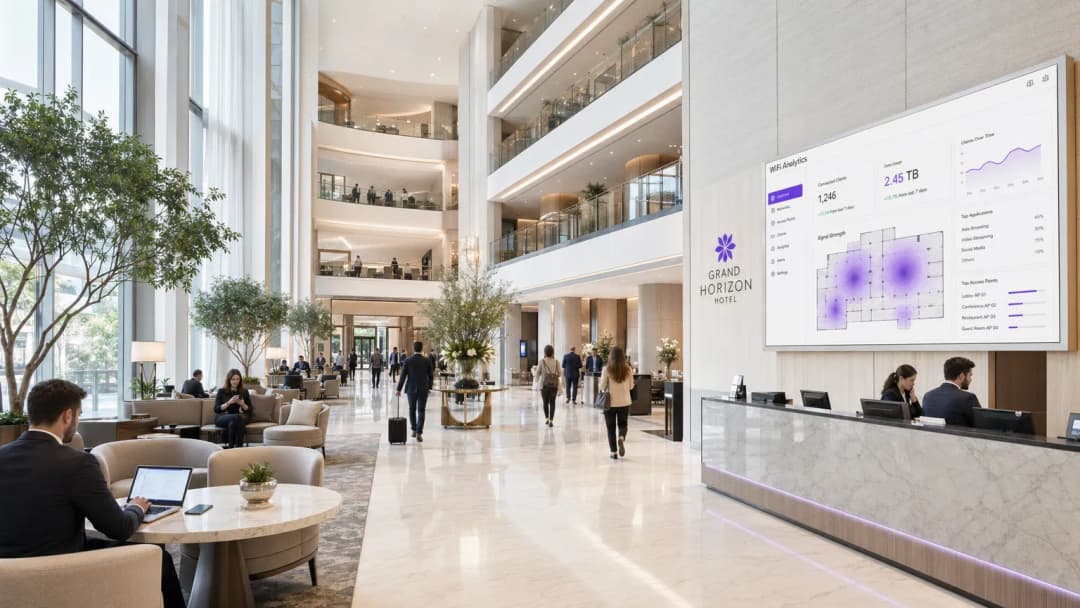
मुख्य सारांश (Executive Summary)
हॉस्पिटॅलिटी पोर्टफोलिओ व्यवस्थापित करणाऱ्या आयटी (IT) संचालक आणि CTO साठी, guest WiFi ही आता केवळ एक मूलभूत सुविधा राहिलेली नसून ती एक अत्यंत महत्त्वपूर्ण युटिलिटी इन्फ्रास्ट्रक्चर बनली आहे. खराब कनेक्टिव्हिटीचा थेट परिणाम अतिथींच्या समाधानाच्या गुणांवर, ब्रँडच्या प्रतिष्ठेवर आणि महसुलावर होतो. हे मार्गदर्शक बँडविड्थ योग्य आकाराचे करण्यासाठी, सेवा गुणवत्ता (QoS) लागू करण्यासाठी आणि मध्यम आकाराच्या बिझनेस हॉटेल्सपासून ते लक्झरी ब्रँड्सपर्यंतच्या विविध मालमत्तांमध्ये टियर-आधारित WiFi आर्किटेक्चर तैनात करण्यासाठी आवश्यक तांत्रिक आवश्यकतांचा तपशील देते. जुन्या फ्लॅट-रेट बँडविड्थ मॉडेलचा वापर थांबवून, हॉटेल्स नेटवर्क कामगिरी ऑप्टिमाइझ करू शकतात, पीक डिमांड हाताळू शकतात आणि प्रीमियम सेवांचे कमाईमध्ये रूपांतर करू शकतात. Purple सारखे मजबूत Guest WiFi प्लॅटफॉर्म समाकलित केल्याने सुरक्षित ऑथेंटिकेशन, ट्रॅफिक शेपिंग आणि मौल्यवान फर्स्ट-पार्टी डेटा कॅप्चर करणे शक्य होते - ज्यामुळे पारंपारिक खर्चाच्या केंद्राचे एका धोरणात्मक मालमत्तेमध्ये रूपांतर होते. हे मार्गदर्शक Hospitality , Retail , Healthcare , आणि Transport क्षेत्रातील ऑपरेटर्ससाठी तितकेच संबंधित आहे जिथे हाय-डेन्सिटी, अत्यंत विश्वसनीय वायरलेस नेटवर्क ही एक मूलभूत आवश्यकता आहे.
तांत्रिक सखोल माहिती (Technical Deep-Dive)
बँडविड्थ नियोजन आणि क्षमता (Bandwidth Planning and Capacity)
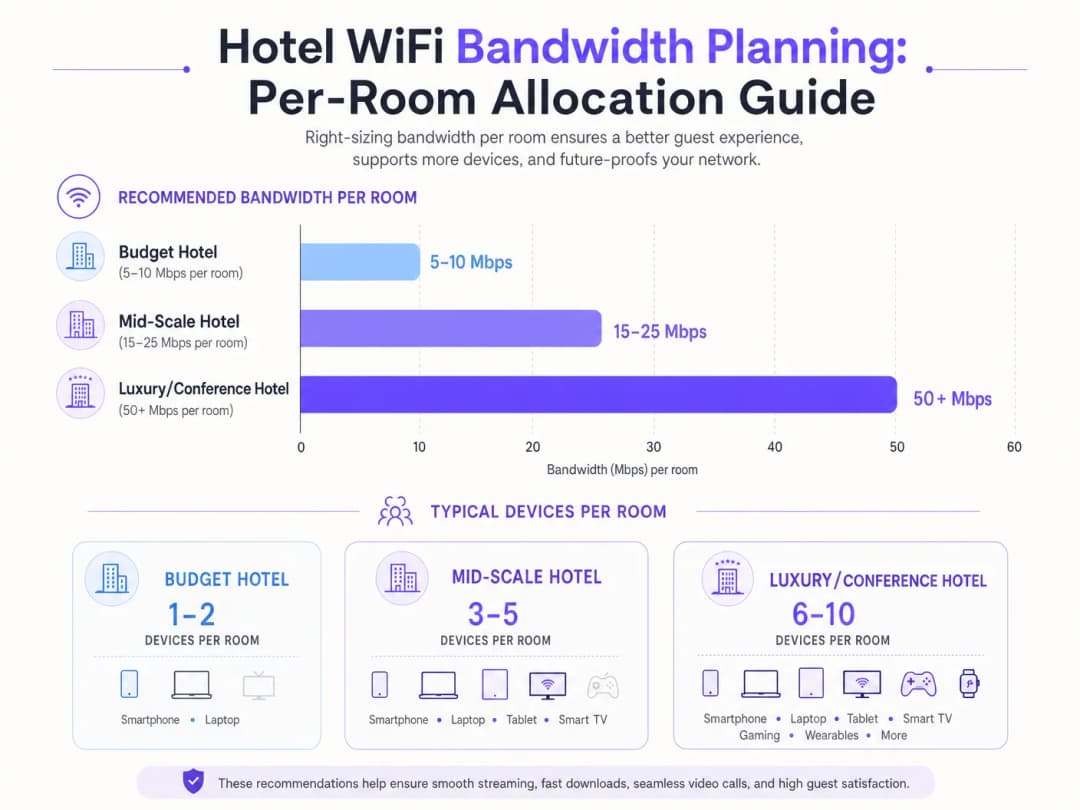
हॉस्पिटॅलिटी नेटवर्क डिझाइनमधील मूलभूत आव्हान म्हणजे क्षमता नियोजन. प्रत्येक खोलीसाठी ५ ते १० Mbps चे सपाट वाटप करण्याचा जुना दृष्टिकोन आधुनिक अतिथींच्या गरजांसाठी अपुरा आहे. आज, एका अतिथीच्या खोलीत सामान्यत: ३ ते ५ कनेक्ट केलेली डिव्हाइसेस असतात - स्मार्टफोन्स, लॅपटॉप, टॅब्लेट, वेअरेबल्स आणि 4K कंटेंट स्ट्रीम करणारे स्मार्ट टीव्ही. Wi-Fi Alliance च्या मते, २०२५ पर्यंत जागतिक स्तरावर प्रति व्यक्ती कनेक्ट केलेल्या डिव्हाइसेसची सरासरी संख्या ९ पेक्षा जास्त झाली आहे, ज्यामध्ये हॉस्पिटॅलिटी वातावरणात इतर कोणत्याही क्षेत्राच्या तुलनेत प्रति-खोली डिव्हाइस घनता सर्वात जास्त आहे.
मध्यम आकाराच्या हॉटेलसाठी, आयटी (IT) आर्किटेक्ट्सना प्रति खोली १५ ते २५ Mbps ची तरतूद करावी लागेल. लक्झरी किंवा कॉन्फरन्स-केंद्रित ठिकाणी, ही आवश्यकता प्रति खोली ५०+ Mbps पर्यंत वाढते. यासाठी पुरेशी सिग्नल ताकद आणि क्षमता सुनिश्चित करण्यासाठी हाय-डेन्सिटी ॲक्सेस पॉइंट (AP) तैनातीची आवश्यकता असते - जे अनेकदा बांधकामाच्या साहित्यावर अवलंबून प्रति खोली एक AP किंवा दर दोन खोल्यांमागे एक AP याप्रमाणे असते. कॉन्फरन्स स्पेससाठी शेकडो एकाच वेळी असणारे कनेक्शन्स हाताळण्यास सक्षम अशा विशेष हाय-डेन्सिटी APs ची आवश्यकता असते, जे समर्पित बँडविड्थ पूल आणि VLANs द्वारे अतिथी खोलीच्या ट्रॅफिकपासून वेगळे केले जातात.
वायर्ड बॅकहॉल तितकाच महत्त्वाचा आहे. प्रत्येक ॲक्सेस पॉईंटला गिगाबिट इथरनेट अपलिंक आवश्यक आहे, जे आदर्शपणे PoE+ स्विचेसवर असावे. मुख्य स्विचिंग लेयरने सर्व AP चा एकूण थ्रुपुट एकाच वेळी हाताळला पाहिजे. प्रति-रूम AP असणारे २०० खोल्यांचे हॉटेल पीक अवर्स दरम्यान १० Gbps किंवा त्यापेक्षा जास्त एकूण ट्रॅफिक निर्माण करू शकते. इंटरनेट अपलिंक - विशेषतः एक समर्पित लिझ्ड लाईन - त्या प्रमाणात असणे आवश्यक आहे, ज्यामध्ये मध्यम आकाराच्या मालमत्तांसाठी किमान शिफारस १ Gbps आणि मोठ्या कॉन्फरन्स ठिकाणांसाठी १० Gbps आहे.
वायरलेस मानके आणि तंत्रज्ञान
आधुनिक उपयोजनांमध्ये किमान WiFi ६ (802.11ax) कार्यरत असणे आवश्यक आहे. WiFi ६ ने OFDMA (ऑर्थोगोनल फ्रिक्वेन्सी डिव्हिजन मल्टिपल ॲक्सेस) सादर केले, जे एकाच AP ला एकाच वेळी एकाधिक क्लायंटना सेवा देण्याची परवानगी देते, ज्यामुळे गर्दीच्या वातावरणात कार्यक्षमता नाटकीयरित्या सुधारते. नवीन उपयोजनांसाठी, WiFi ६E ही क्षमता ६ GHz बँडमध्ये वाढवते, ज्यामुळे को-चॅनल इंटरफेरन्स (CCI) कमी होतो आणि हाय-बँडविड्थ ॲप्लिकेशन्ससाठी अतिरिक्त स्पेक्ट्रम मिळतो. कॉर्पोरेट उपकरणांसाठी 802.1X ऑथेंटिकेशनसह WPA3 Enterprise द्वारे आणि अतिथी नेटवर्कसाठी WPA3 Personal द्वारे सुरक्षा लागू केली जाणे आवश्यक आहे.
क्वालिटी ऑफ सर्व्हिस (QoS) आणि ट्रॅफिक व्यवस्थापन
केवळ रॉ बँडविड्थ वाढवणे हा सहसा सर्वात किफायतशीर उपाय नसतो. 802.11e QoS मानके वापरून बुद्धिमान ट्रॅफिक व्यवस्थापन आवश्यक आहे. बल्क डेटा ट्रान्सफरपेक्षा लेटन्सी-सेन्सिटिव्ह ॲप्लिकेशन्स - व्हिडिओ कॉन्फरन्सिंग, VoIP - यांना प्राधान्य देऊन, नेटवर्क ॲडमिनिस्ट्रेटर व्यावसायिक प्रवाशांसाठी पीक अवर्स दरम्यान (सामान्यतः संध्याकाळी ७ ते रात्री १०) देखील अखंड अनुभव सुनिश्चित करू शकतात. डीप पॅकेट इन्स्पेक्शन (DPI) नेटवर्कला ॲप्लिकेशन प्रकारानुसार ट्रॅफिकचे वर्गीकरण करण्यास आणि योग्य QoS धोरणे गतिमानपणे लागू करण्यास सक्षम करते.
अंमलबजावणी मार्गदर्शक
टियर सेवा आर्किटेक्चर
पायाभूत सुविधांच्या खर्चासह अतिथींच्या समाधानाचा समतोल राखण्यासाठी टियर WiFi मॉडेल हे उद्योग मानक आहे. या आर्किटेक्चरमध्ये सहसा तीन वेगळे सेवा स्तर समाविष्ट असतात:
| टियर | गती | वापरण्याचे उदाहरण | किंमत मॉडेल |
|---|---|---|---|
| मोफत बेसिक | ५ Mbps | मेसेजिंग, हलके ब्राउझिंग | मोफत |
| मानक अतिथी | १५ Mbps | सोशल मीडिया, SD स्ट्रीमिंग | £४.९९/दिवस किंवा लॉयल्टी सदस्यांसाठी समाविष्ट |
| प्रीमियम बिझनेस | ५०+ Mbps हमी | VPN, ४K स्ट्रीमिंग, व्हिडिओ कॉन्फरन्सिंग | £९.९९/दिवस |
 ही आर्किटेक्चर लागू करण्यासाठी एक मजबूत Captive Portal, प्रमाणीकरणासाठी (authentication) एक RADIUS सर्व्हर आणि एक पॉलिसी एन्फोर्समेंट इंजिन आवश्यक आहे. Purple सारखे प्लॅटफॉर्म Connect लायसन्स अंतर्गत OpenRoaming सारख्या सेवांसाठी विनामूल्य ओळख प्रदाता (identity provider) म्हणून काम करतात, ज्यामुळे ऑनबोर्डिंग प्रक्रिया सुलभ होते आणि बँडविड्थ मर्यादा लागू करताना त्यांच्या WiFi Analytics डॅशबोर्डद्वारे युझर अॅनालिटिक्स कॅप्चर केले जातात. हे Captive Portal स्वतः प्रथम-पक्ष डेटा कॅप्चर करण्यासाठी मुख्य साधन आहे - जसे की ईमेल पत्ते, सोशल प्रोफाईल आणि लोकसंख्याशास्त्रीय माहिती - जी थेट CRM आणि मार्केटिंग ऑटोमेशन वर्कफ्लोमध्ये फीड होते.
डिप्लॉयमेंट चेकलिस्ट
लाइव्ह जाण्यापूर्वी, खालील गोष्टींची पडताळणी करा:
१. साइट सर्व्हे: कव्हरेज गॅप्स, हस्तक्षेपाचे स्रोत आणि इष्टतम AP प्लेसमेंट ओळखण्यासाठी प्रेडिक्टिव्ह RF सर्व्हे करा. सिग्नल कमकुवत करणाऱ्या बांधकाम साहित्याचा (काँक्रीट, स्टील, काच) विचार करा. २. AP घनता (Density): प्रति रूम किंवा प्रत्येक दुसऱ्या रूममध्ये एक AP डिप्लॉय करा. कॉन्फरन्स स्पेससाठी, मायक्रो-सेल्स तयार करण्यासाठी दिशात्मक अँटेनासह हाय-डेन्सिटी APs डिप्लॉय करा. ३. VLAN सेगमेंटेशन: फायरवॉलवर लागू केलेल्या कडक ACLs सह वेगवेगळ्या VLANs वर गेस्ट, कॉर्पोरेट, IoT आणि पेमेंट नेटवर्क्स वेगळे करा. ४. QoS पॉलिसी: व्हॉईस आणि व्हिडिओ ट्रॅफिकला प्राधान्य देण्यासाठी 802.11e WMM प्रोफाइल कॉन्फिगर करा. प्रति SSID किंवा प्रति युझर रेट लिमिटिंग लागू करा. ५. Captive Portal: मार्केटिंग कम्युनिकेशन्ससाठी स्पष्ट संमतीसह (opt-in) GDPR सुसंगत पोर्टल डिप्लॉय करा. अॅनालिटिक्स आणि आयडेंटिटी मॅनेजमेंटसाठी Purple सोबत समाकलित (integrate) करा. ६. मॉनिटरिंग: AP अपयश, उच्च वापर आणि लेटन्सी स्पाइक्सवर अलर्ट देण्यासाठी SNMP किंवा क्लाउड-आधारित नेटवर्क मॅनेजमेंट प्लॅटफॉर्म कॉन्फिगर करा.
-
सर्वोत्तम पद्धती (Best Practices)
सुरक्षा आणि सेगमेंटेशन या तडजोड न करता येणाऱ्या गोष्टी आहेत. PCI-DSS अनुपालन राखण्यासाठी गेस्ट ट्रॅफिक VLANs चा वापर करून कॉर्पोरेट आणि पेमेंट प्रोसेसिंग नेटवर्क्सपासून काटेकोरपणे वेगळे केले पाहिजे. एंटरप्राइझ डिप्लॉयमेंटसाठी WPA3 एन्क्रिप्शन आणि मजबूत 802.1X प्रमाणीकरण लागू करणे अनिवार्य आहे. गेस्ट डिव्हाइसेस दरम्यान लॅटरल मूव्हमेंट रोखण्यासाठी गेस्ट SSIDs वर क्लायंट आयसोलेशन सक्षम केले जावे.
डेटा गोपनीयता आणि अनुपालन (Compliance) साठी Captive Portal आणि डेटा संकलन पद्धती GDPR आणि इतर प्रादेशिक गोपनीयता नियमांचे पालन करत असणे आवश्यक आहे. युके आणि युरोपियन युनियन (EU) मध्ये मार्केटिंग कम्युनिकेशन्ससाठी स्पष्ट सेवा अटी आणि अन-टिक केलेले संमती पर्याय (un-ticked opt-in mechanisms) कायदेशीररित्या अनिवार्य आहेत. Purple चे प्लॅटफॉर्म संमती व्यवस्थापन आणि डेटा रिटेंशन नियंत्रणांसह अंगभूत GDPR अनुपालन साधने प्रदान करते.
सतत मॉनिटरिंग करणे अत्यंत आवश्यक आहे. केवळ अपटाइम मेट्रिक्सवर अवलंबून राहणे पुरेसे नाही. गर्दीच्या वेळी समस्या सक्रियपणे ओळखण्यासाठी आणि त्यांचे निराकरण करण्यासाठी IT टीम्सनी लेटन्सी, पॅकेट लॉस आणि पीक अवर्समध्ये AP वापरावर लक्ष ठेवले पाहिजे. जर लेटन्सी १५०ms पेक्षा जास्त असेल किंवा पॅकेट लॉस १% पेक्षा जास्त असेल, तर कनेक्शन तांत्रिकदृष्ट्या 'सुरू' असू शकते परंतु व्हिडिओ कॉलसाठी पूर्णपणे निरुपयोगी ठरू शकते.सर्वसमावेशक हॉटेल नेटवर्क धोरणावर अधिक वाचनासाठी, Hotel WiFi: The Complete Guide for Hoteliers आणि स्पॅनिश-भाषेतील समतुल्य WiFi para Hoteles: La Guía Completa para Hoteleros पहा.
Troubleshooting & Risk Mitigation
Co-Channel Interference (CCI): दाट प्रमाणातील उपयोजनांमध्ये, ओव्हरलॅपिंग चॅनेल्स कार्यक्षमतेत गंभीर बिघाड करतात. चॅनेल असाइनमेंट आणि ट्रान्समिट पॉवर डायनॅमिकपणे समायोजित करण्यासाठी ऑटोमेटेड रेडिओ रिसोर्स मॅनेजमेंट (RRM) लागू करा. एकाच चॅनेलवर एकमेकांच्या रेंजमध्ये अनेक APs उपयोजित करणे टाळा.
Captive Portal Friction: क्लिष्ट किंवा खराब डिझाइन केलेल्या लॉगइन प्रक्रिया पाहुण्यांना निराश करतात आणि डेटा कॅप्चर दर कमी करतात. अनुपालन राखताना अडथळे कमी करण्यासाठी सोशल लॉगइन, OpenRoaming, किंवा QR कोड-आधारित ॲक्सेस यासारख्या अखंड ऑथेंटिकेशन पद्धतींचा वापर करा.
अपुर्ण Backhaul: वायरलेस नेटवर्क हे त्याच्या वायर्ड बॅकहॉलइतकेच वेगवान असते. कोर स्विचेस आणि इंटरनेट कनेक्शन सर्व APs च्या एकत्रित थ्रूपुटला सपोर्ट करू शकतात याची खात्री करा. एक सिंगल सॅच्युरेटेड अपलिंक पोर्ट संपूर्ण फ्लोअरच्या कार्यक्षमतेत बिघाड करू शकतो.
Rogue Access Points: मोठ्या मालमत्तांमध्ये, पाहुणे कधीकधी वैयक्तिक ट्रॅव्हल राउटर किंवा हॉटस्पॉट कनेक्ट करतात, ज्यामुळे हस्तक्षेप आणि सुरक्षा धोके निर्माण होतात. रोग उपकरणांचा शोध घेण्यासाठी आणि अलर्ट मिळवण्यासाठी वायरलेस इंट्र्युजन प्रिव्हेंशन सिस्टम (WIPS) क्षमता लागू करा.
ROI & Business Impact
एंटरप्राइझ-ग्रेड WiFi इन्फ्रास्ट्रक्चरमध्ये गुंतवणूक केल्याने अनेक आयामांमध्ये मोजण्यायोग्य परतावा मिळतो. टियर आधारित प्राइसिंग मॉडेल प्रीमियम टियर्समधून थेट महसूल मिळवून देते - £9.99/दिवस या दराने 30% प्रीमियम टियर वापरणाऱ्या 200-रुमच्या हॉटेलमधून केवळ WiFi महसुलातून दरवर्षी £200,000 पेक्षा जास्त महसूल मिळू शकतो, जो अनेकदा 12 ते 18 महिन्यांत नेटवर्क अपग्रेडसाठी निधी पुरवण्यास पुरेसा असतो.
थ्रेट महसुलाच्या पलीकडे, Purple सारख्या प्लॅटफॉर्मचे एकत्रीकरण केल्याने ठिकाणांना मौल्यवान फर्स्ट-पार्टी डेटा कॅप्चर करण्यास सक्षम करते, ज्यामुळे लक्ष्यित मार्केटिंग मोहिमा सक्षम होतात, लॉयल्टी प्रोग्राम साइन-अप वाढतात आणि पुनरावृत्ती बुकिंग चालविण्यास मदत होते. Purple चा WiFi Analytics प्लॅटफॉर्म ड्वेल टाईम विश्लेषण, फूटफॉल हीटमॅप्स आणि पुनरावृत्ती भेट देणाऱ्यांचा मागोवा प्रदान करतो - हे इनसाइट्स स्टाफिंग निर्णय, F&B प्लेसमेंट आणि रिटेल लेआउट ऑप्टिमायझेशनची माहिती देतात. हा दृष्टिकोन Retail आणि Transport क्षेत्रांमध्येही तितकाच लागू आहे.
गुंतवणूक न करण्याचा धोका देखील तितकाच मोजण्यायोग्य आहे. 2024 च्या J.D. Power Hotel Guest Satisfaction Study मध्ये असे आढळून आले आहे की बिझनेस हॉटेल्सच्या नकारात्मक ऑनलाइन पुनरावलोकनांमध्ये WiFi कार्यक्षमता हा एकमेव सर्वात जास्त उद्धृत केलेला घटक आहे. TripAdvisor रेटिंगमध्ये एक-स्टारची घसरण उपलब्ध खोलीच्या महसुलात (RevPAR) 5 ते 9% कपातीशी संबंधित आहे.
वरील संपूर्ण तांत्रिक माहिती देणारा पॉडकास्ट ऐका - अंदाजे १० मिनिटे, ज्यामध्ये बँडविड्थ प्लॅनिंग, QoS आर्किटेक्चर, अंमलबजावणीतील त्रुटी आणि जलद प्रश्नोत्तरे समाविष्ट आहेत.
महत्वाच्या व्याख्या
Quality of Service (QoS)
नेटवर्क यंत्रणा ज्याचा वापर विशिष्ट प्रकारच्या ट्रॅफिकला - जसे की व्हॉईस आणि व्हिडिओ - कमी महत्त्वाच्या डेटापेक्षा प्राधान्य देण्यासाठी केला जातो, ज्यामुळे गर्दीच्या कालावधीतही सातत्यपूर्ण कामगिरी सुनिश्चित होते.
इतर पाहुण्यांमुळे नेटवर्कवर मोठा लोड असतानाही व्यावसायिक प्रवाशांना अखंड व्हिडिओ कॉन्फरन्सिंगचा अनुभव मिळावा हे सुनिश्चित करण्यासाठी आवश्यक आहे.
VLAN (Virtual Local Area Network)
नेटवर्क डिव्हाइसेसचा एक लॉजिकल गट जो प्रशासकांना एका भौतिक नेटवर्कला अनेक वेगवेगळ्या ब्रॉडकास्ट डोमेनमध्ये विभाजित करण्याची परवानगी देतो, ज्यातील प्रत्येकाचे स्वतःचे सुरक्षा आणि ट्रॅफिक धोरण असते.
PCI DSS अनुपालन राखण्यासाठी सुरक्षित कॉर्पोरेट नेटवर्क्स आणि पेमेंट प्रोसेसिंग वातावरणापासून गेस्ट ट्रॅफिक वेगळे करण्यासाठी अत्यंत महत्त्वपूर्ण आहे.
Captive Portal
एक वेब पेज ज्याच्याशी युझर्सनी सार्वजनिक WiFi नेटवर्कमध्ये प्रवेश करण्यापूर्वी संवाद साधणे आवश्यक आहे, सामान्यतः ऑथेंटिकेशन, सेवा अटींची स्वीकृती किंवा पेमेंट प्रक्रियेसाठी वापरले जाते.
गेस्ट ऑनबोर्डिंग आणि फर्स्ट - पार्टी डेटा कॅप्चरसाठी प्राथमिक टचपॉइंट; याच्या डिझाइनचा थेट परिणाम युझर फ्रिक्शन, कन्व्हर्जन रेट्स आणि GDPR अनुपालनावर होतो.
802.11e / WMM
एक IEEE मानक जे MAC लेयरमधील बदलांद्वारे वायरलेस LAN साठी क्वालिटी ऑफ सर्विस सुधारणा परिभाषित करते. Wi-Fi मल्टिमिडीया (WMM) हे या मानकावर आधारित ग्राहक प्रमाणपत्र आहे.
WiFi वर व्हॉइस आणि व्हिडिओसाठी ट्रॅफिक प्राधान्य सक्षम करणारा मूळ प्रोटोकॉल. प्रभावी होण्यासाठी AP आणि क्लायंट डिव्हाइस दोन्हीवर सक्षम असणे आवश्यक आहे.
OpenRoaming
WiFi नेटवर्कचे एक फेडरेशन जे युझर्सना Passpoint/Hotspot 2.0 फ्रेमवर्कचा वापर करून, वारंवार क्रेडेंशियल न टाकता किंवा captive portals शी संवाद न साधता स्वयंचलितपणे आणि सुरक्षितपणे कनेक्ट होण्याची परवानगी देते.
गेस्टसाठी ऑनबोर्डिंग फ्रिक्शन कमी करते; Purple या सेवेसाठी Connect लायसन्स अंतर्गत विनामूल्य ओळख प्रदाता म्हणून काम करते.
Throughput
कम्युनिकेशन चॅनेलवर यशस्वी डेटा वितरणाचा वास्तविक दर, जो बिट्स प्रति सेकंद (bps) मध्ये मोजला जातो. हा सैद्धांतिक जास्तीत जास्त बँडविड्थपेक्षा वेगळा आहे.
एखाद्या गेस्टला मिळणारा प्रत्यक्ष वेग, जो प्रोटोकॉल ओव्हरहेड, हस्तक्षेप आणि एकाच वेळी असणारे युझर्स यामुळे सामान्यतः सैद्धांतिक जास्तीत जास्त वेगाच्या 40 - 70% असतो.
Co-Channel Interference (CCI)
कार्यक्षमतेतील घट जी तेव्हा उद्भवते जेव्हा एकाच चॅनेलवर कार्यरत असलेले अनेक ॲक्सेस पॉइंट्स एकमेकांना शोधू शकतात, ज्यामुळे ते ट्रान्समिशन पुढे ढकलतात आणि एकूण throughput कमी होतो.
उच्च घनता असलेल्या डिप्लॉयमेंटमधील एक मोठी समस्या. यासाठी काळजीपूर्वक चॅनेलचे नियोजन, स्वयंचलित रेडिओ रिसोर्स मॅनेजमेंट (RRM) आणि शक्यतो कमी गर्दी असलेल्या 5 GHz किंवा 6 GHz बँडवर स्थलांतर करणे आवश्यक आहे.
PCI DSS
Payment Card Industry Data Security Standard - पेमेंट कार्ड डेटावर प्रक्रिया करणाऱ्या, साठवणाऱ्या किंवा ट्रान्समिट करणाऱ्या संस्थांसाठी सुरक्षा मानकांचा एक अनिवार्य संच.
जर हॉटेल गेस्ट WiFi प्रमाणेच समान भौतिक नेटवर्क इन्फ्रास्ट्रक्चरवर पेमेंट प्रक्रिया करत असेल, तर कठोर विभाजन आणि अनुपालन नियंत्रणे कायद्यानुसार आवश्यक आहेत.
OFDMA (Orthogonal Frequency Division Multiple Access)
OFDM ची एक मल्टि - युझर आवृत्ती जी चॅनेलला रिसोर्स युनिट्स (RUs) नावाच्या लहान सब - चॅनेल्समध्ये विभाजित करून एकाच ॲक्सेस पॉइंटला एकाच वेळी अनेक क्लायंट्सना सेवा देण्याची परवानगी देते.
Wi-Fi 6 (802.11ax) मध्ये सादर केलेले, OFDMA हे हॉटेल लॉबी आणि कॉन्फरन्स स्पेस यांसारख्या दाट वातावरणात Wi-Fi 6 चे कार्यप्रदर्शन Wi-Fi 5 पेक्षा सरस असण्याचे प्राथमिक कारण आहे.
सोडवलेली उदाहरणे
एक 400 खोल्यांचे लक्झरी हॉटेल संध्याकाळी 7 ते रात्री 10 दरम्यान गंभीर नेटवर्क गर्दीचा सामना करत आहे, ज्यामुळे त्यांची 1 Gbps लीज्ड लाइन पूर्णपणे संपून जाते. IT संचालकांना 10 Gbps सर्किट अपग्रेडची त्वरित बांधिलकी न घेता याचे निराकरण करणे आवश्यक आहे. शिफारस केलेला दृष्टिकोन काय आहे?
IT संचालकांनी तीन टप्प्यांत टियर-आधारित QoS धोरण लागू केले पाहिजे. पहिला टप्पा: वायरलेस कंट्रोलरवर प्रति-वापरकर्ता रेट लिमिटिंग वापरून विनामूल्य गेस्ट टियरवर 5 Mbps ची कठोर मर्यादा लागू करा. हे कमी संख्येच्या वापरकर्त्यांना मोठ्या प्रमाणात डाउनलोड किंवा टोरेंटिंगद्वारे बँडविड्थवर मक्तेदारी मिळवण्यापासून रोखते. दुसरा टप्पा: 802.11e WMM QoS टॅग वापरून प्रीमियम टियरसाठी ट्रॅफिकला प्राधान्य द्या (50 Mbps ची हमी), ज्यामुळे व्हिडिओ कॉन्फरन्सिंग आणि VPN ट्रॅफिकला सामान्य ट्रॅफिकपेक्षा प्राधान्य रांगेत जागा मिळेल. तिसरा टप्पा: ट्रॅफिक पॅटर्नचे विश्लेषण करण्यासाठी, गर्दीच्या वेळेतील ॲप्लिकेशन प्रकार ओळखण्यासाठी आणि Deep Packet Inspection वापरून ॲप्लिकेशन-अवेअर QoS धोरणे लागू करण्यासाठी Purple चे WiFi Analytics तैनात करा. सर्किट अपग्रेड अजूनही आवश्यक आहे की नाही हे निर्धारित करण्यासाठी 30 दिवसांच्या कालावधीत पीक युटिलायझेशनचे निरीक्षण करा.
500 लोकांच्या तंत्रज्ञान कार्यक्रमाचे आयोजन करणाऱ्या एका मोठ्या कॉन्फरन्स हॉटेलला असे आढळले की मुख्य सत्रांदरम्यान बॉलरूम WiFi पूर्णपणे निरुपयोगी ठरते. वेन्यूमध्ये 10 Gbps लीज्ड लाइन आणि बॉलरूममध्ये तीन ॲक्सेस पॉइंट्स आहेत. यामध्ये आर्किटेक्चरल बिघाड काय आहे आणि तो कसा सोडवला जातो?
हा बिघाड कव्हरेज-विरुद्ध-क्षमता (coverage-versus-capacity) डिझाइनमधील त्रुटी आहे. तीन APs या जागेसाठी पुरेसे कव्हरेज (सिग्नल स्ट्रेंथ) प्रदान करतात, परंतु ते 1,500+ उपकरणांसह 500+ उपस्थितांच्या एकाच वेळी येणाऱ्या असोसिएशन विनंत्या आणि डेटा थ्रूटपुट हाताळू शकत नाहीत. याचे निराकरण करण्यासाठी डायरेक्शनल अँटेनासह 12 हाय-डेन्सिटी APs तैनात करावे लागतील, ज्यामुळे लहान नॉन-ओव्हरलॅपिंग मायक्रो-सेल्स तयार होतील. प्रत्येक AP नॉन-ओव्हरलॅपिंग चॅनेलवर कॉन्फिगर केला पाहिजे (2.4 GHz वर 1, 6, 11; उपलब्ध चॅनेलची संख्या जास्तीत जास्त करण्यासाठी 20 MHz चॅनेल विड्थ वापरून 5 GHz वर एकाधिक चॅनेल). गेस्ट रूम नेटवर्कपासून वेगळे ठेवून, एका समर्पित VLAN वर समर्पित बँडविड्थ पूलसह एक समर्पित कॉन्फरन्स SSID प्रोव्हिजन केला पाहिजे. सक्षम उपकरणांना 5 GHz किंवा 6 GHz बँडवर पाठवण्यासाठी बँड स्टिअरिंग सक्षम केले पाहिजे.
सराव प्रश्न
Q1. एक हॉटेल एका मोठ्या टेक कॉन्फरन्सचे आयोजन करत आहे. आयटी टीमने गेस्ट टॉवर्समधील प्रति रूमसाठी 50 Mbps ची तरतूद केली आहे, परंतु मुख्य बॉलरूममधील 500 उपस्थित लोक संथ गती आणि वारंवार डिस्कनेक्शनची तक्रार करत आहेत. या ठिकाणी 10 Gbps ची लीज्ड लाईन आणि बॉलरूममध्ये तीन ॲक्सेस पॉइंट्स आहेत. सर्वात संभाव्य आर्किटेक्चरल त्रुटी कोणती आहे आणि त्यावर काय उपाययोजना आहे?
टीप: कव्हरेज - आधारित आणि कॅपॅसिटी - आधारित डिझाइनमधील फरक लक्षात घ्या. सिग्नलची ताकद म्हणजे कॅपॅसिटी नव्हे.
नमुना उत्तर पहा
बॉलरूममधील नेटवर्क कॅपॅसिटी ऐवजी कव्हरेजसाठी डिझाइन केले गेले होते. तीन APs पुरेसा सिग्नल देतात परंतु ते 500+ उपस्थितांच्या 1,500+ डिव्हाइसेसच्या एकाच वेळच्या असोसिएशन विनंत्या आणि throughput हाताळू शकत नाहीत. यावरील उपाययोजना म्हणजे लहान नॉन - ओव्हरलॅपिंग मायक्रो - सेल्स तयार करण्यासाठी डायरेक्शनल अँटेनासह 12 हाय - डेंसिटी APs तैनात करणे. नॉन - ओव्हरलॅपिंग चॅनेल्स कॉन्फिगर करा, सक्षम डिव्हाइसेसना 5 GHz किंवा 6 GHz कडे नेण्यासाठी बँड स्टीयरिंग सक्षम करा, आणि गेस्ट रूम नेटवर्कपासून वेगळ्या केलेल्या समर्पित बँडविड्थ पूलसह स्वतंत्र VLAN वर समर्पित कॉन्फरन्स SSID ची तरतूद करा.
Q2. मार्केटिंग डायरेक्टरना WiFi वापरणाऱ्या सर्व पाहुण्यांचे ईमेल पत्ते मिळवायचे आहेत, परंतु IT डायरेक्टरना GDPR अनुपालन आणि ऑनबोर्डिंगमधील अडचणींबद्दल काळजी वाटत आहे. यासाठी कोणती आर्किटेक्चर शिफारस केली जाते?
टीप: तुम्ही युझर एक्सपीरियन्स आणि कायदेशीर आवश्यकतांसह डेटा संकलनाचा समतोल कसा साधू शकता? GDPR अंतर्गत वैध संमती कशामुळे बनते याचा विचार करा.
नमुना उत्तर पहा
Purple शी समाकलित केलेले captive portal लागू करा. अडथळामुक्त अनुभवासाठी सोशल लॉगिन (Google, Facebook, Apple) चा पर्याय द्या. पोर्टलमध्ये मार्केटिंग संवादांसाठी स्पष्ट, टिक न केलेले ऑप्ट-इन चेकबॉक्स समाविष्ट असणे आवश्यक आहे - पूर्व-टिक केलेले बॉक्स GDPR अंतर्गत वैध संमती मानले जात नाहीत. गोपनीयतेच्या धोरणाची (privacy policy) स्पष्ट लिंक समाविष्ट करा. ऑडिटच्या उद्देशांसाठी टाइमस्टॅम्पसह संमतीच्या नोंदी Purple प्लॅटफॉर्मवर साठवा. हा दृष्टिकोन संपूर्ण कायदेशीर अनुपालन राखून जास्तीत जास्त डेटा मिळवणे शक्य करतो.
Q3. एका मध्यम आकाराच्या हॉटेलला £9.99/दिवस या दराने प्रीमियम WiFi टियर सुरू करायचा आहे परंतु ट्रॅव्हल राउटरद्वारे एकाच कनेक्शनचा वापर सामायिक करून पाहुणे हे शुल्क चुकवतील अशी त्यांना काळजी आहे. तांत्रिकदृष्ट्या याचे निवारण कसे केले जाऊ शकते?
टीप: नेटवर्क-स्तरीय कोणती नियंत्रणे विशिष्ट डिव्हाइस प्रकार ओळखू किंवा प्रतिबंधित करू शकतात? डिव्हाइस फिंगरप्रिंटिंग आणि सेशन मॅनेजमेंट या दोन्हीचा विचार करा.
नमुना उत्तर पहा
ट्रॅव्हल राउटर आणि NAT डिव्हाइसेस शोधण्यासाठी नेटवर्क MAC ॲड्रेस फिल्टरिंगसह डिव्हाइस फिंगरप्रिंटिंग (DHCP फिंगरप्रिंटिंग किंवा HTTP User-Agent विश्लेषणाद्वारे) चा वापर करू शकते. याव्यतिरिक्त, captive portal प्रत्येक प्रीमियम ॲक्सेस क्रेडेंशियलसाठी कठोर डिव्हाइस मर्यादा - सामान्यतः 3 डिव्हाइसेस - लागू करू शकते, ज्यामुळे ते सामायिक करणे अव्यवहार्य होईल. IP TTL विश्लेषण लागू करून देखील NAT ट्रॅव्हर्सल शोधता येऊ शकते, कारण ट्रॅव्हल राउटरद्वारे राउट केलेले पॅकेट्स सहसा कमी झालेल्या TTL सह येतात. सातत्याने नियमांचे उल्लंघन करणाऱ्यांसाठी, RADIUS सर्व्हर MAC ॲड्रेस ध्वजांकित (flag) करू शकतो आणि पुन्हा-प्रमाणीकरण (re-authentication) आवश्यक करू शकतो.
Q4. एक 300 खोल्यांचे बिझनेस हॉटेल संपूर्ण नेटवर्क रिफ्रेशचे नियोजन करत आहे. IT डायरेक्टरना प्रत्येक खोलीत एक AP तैनात करणे विरुद्ध प्रत्येक कॉरिडॉरमध्ये एक AP (दर 3-4 खोल्यांमागे) तैनात करणे यापैकी एक निवडणे आवश्यक आहे. कोणत्या घटकांनी हा निर्णय घेतला पाहिजे आणि शिफारस केलेला दृष्टिकोन काय आहे?
टीप: इमारत बांधकाम साहित्य, पाहुण्यांच्या उपकरणांची घनता आणि प्रत्येक खोली विरुद्ध कॉरिडॉर डिप्लॉयमेंटच्या खर्च-फायद्याचा विचार करा.
नमुना उत्तर पहा
हा निर्णय बांधकाम साहित्य आणि अपेक्षित डिव्हाइस घनतेवर अवलंबून असतो. आधुनिक काँक्रीट-आणि-स्टील बांधकामामध्ये, फायर-रेट केलेले दरवाजे आणि जाड भिंती 5 GHz सिग्नल लक्षणीयरीत्या कमी करतात, ज्यामुळे पाहुणे नियमितपणे VPN आणि व्हिडिओ कॉन्फरन्सिंग वापरत असलेल्या बिझनेस हॉटेलसाठी प्रति-खोली AP चा दृष्टिकोन शिफारस केला जातो. हलक्या बांधकामात (उदा. ड्रायवॉल पार्टिशन), बजेट प्रॉपर्टीजसाठी कॉरिडॉर AP पुरेसे असू शकतात. 300 खोल्यांच्या बिझनेस हॉटेलसाठी, प्रति-खोली AP चा अतिरिक्त खर्च (अंदाजे £150 - £250 प्रति AP) पाहुण्यांच्या समाधानातील सुधारणा आणि प्रति खोली 6-10 उपकरणांना विश्वासाने सपोर्ट करण्याच्या क्षमतेमुळे योग्य ठरतो.
या मालिकेमध्ये पुढे वाचा
Staff WiFi vs. Guest WiFi: Corporate Network Segmentation साठी सर्वोत्तम पद्धती
स्टाफ आणि guest WiFi नेटवर्क्सचे विभाजन करण्याबाबत IT लीडर्ससाठी एक सर्वसमावेशक तांत्रिक मार्गदर्शक. यामध्ये VLAN आर्किटेक्चर, 802.1X ऑथेंटिकेशन, फायरवॉल पॉलिसीज आणि सुरक्षित नेटवर्क डिझाइनचा व्यवसायावर होणारा प्रभाव समाविष्ट आहे.
हॉटेल अतिथी WiFi व्यवस्थापन: PMS, पोर्टल्स आणि ब्रँड मानके यांचे एकत्रीकरण
हे तांत्रिक मार्गदर्शक एंटरप्राइझ-श्रेणीचे हॉटेल WiFi नेटवर्क कसे डिझाइन करावे हे तपशीलवार सांगते, ज्यामध्ये VLAN विभाजन, स्वयंचलित सत्र व्यवस्थापनासाठी PMS एकत्रीकरण आणि GDPR-अनुपालक डेटा संकलनासाठी captive portal ऑप्टिमायझेशन यावर लक्ष केंद्रित केले आहे.
गेस्ट WiFi कसे सेट अप करावे: एक सुरक्षित एंटरप्राइज कॉन्फिगरेशन मार्गदर्शिका
ही अधिकृत मार्गदर्शिका IT लीडर्स आणि नेटवर्क आर्केटेक्ट्सना सुरक्षित एंटरप्राइज गेस्ट WiFi तैनात करण्यासाठी एक निश्चित ब्ल्यूप्रिंट प्रदान करते. यामध्ये अंतर्गत प्रणालींचे रक्षण करताना अनुपालन करणारा फर्स्ट-पार्टी डेटा कॅप्चर करण्यासाठी आवश्यक आर्किटेक्चर, WPA3 मायग्रेशन, VLAN सेगमेंटेशन आणि कॅप्टिव्ह पोर्टल इंटिग्रेशन समाविष्ट आहे.