
Privacidade desde a Concepção: Anonimizando Dados WiFi para Conformidade com a GDPR
Este guia autorizado detalha a arquitetura técnica e as estratégias de implementação para anonimizar dados WiFi, garantindo a conformidade com a GDPR. Ele fornece a líderes de TI e arquitetos de rede estruturas acionáveis para equilibrar análises robustas de locais com requisitos rigorosos de privacidade de dados.
Ouça este guia
Ver transcrição do podcast
Resumo Executivo
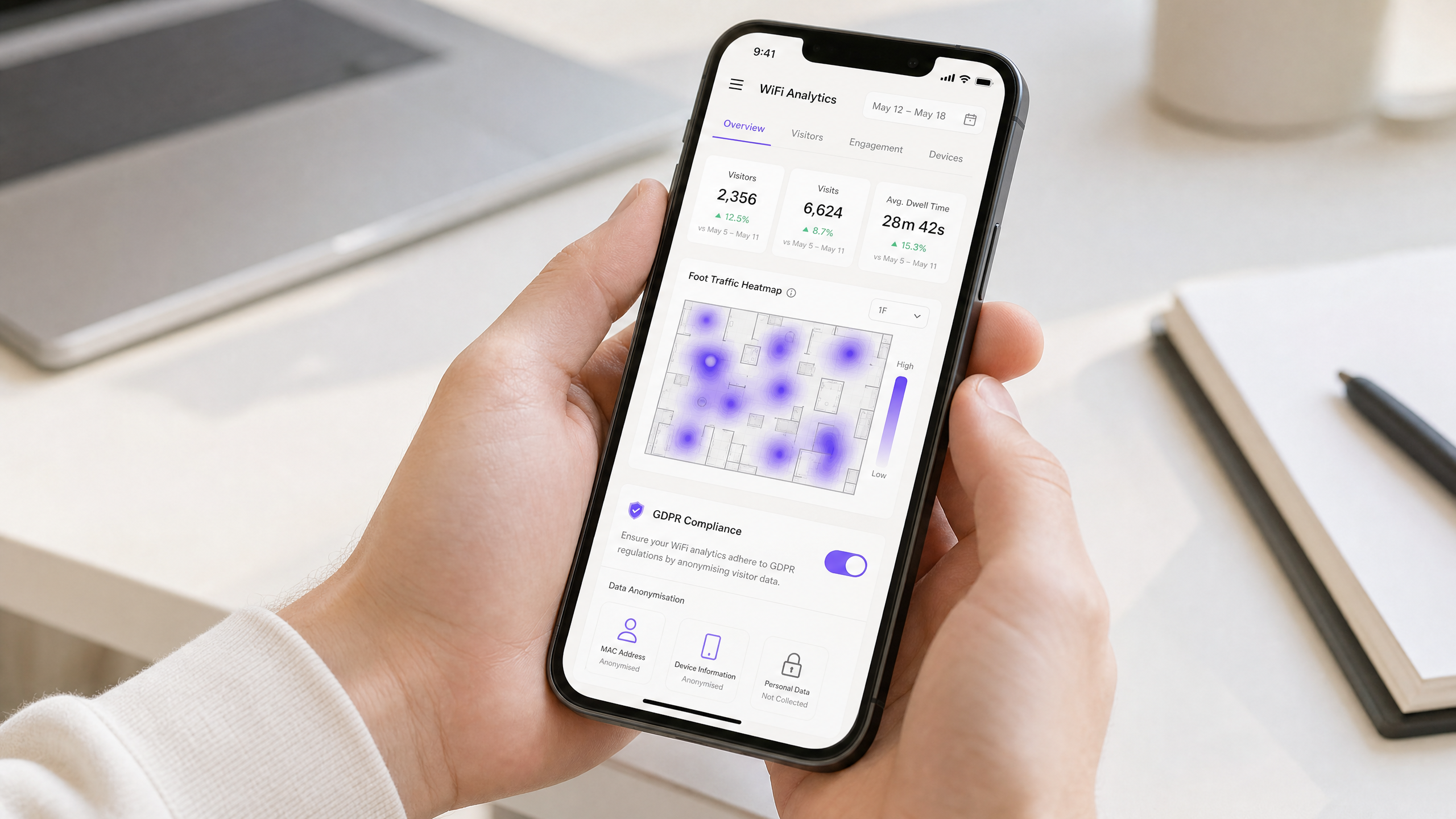
Para diretores de TI corporativos e arquitetos de rede que gerenciam grandes locais, a tensão entre inteligência de negócios e conformidade regulatória é uma realidade diária. As equipes de operações exigem WiFi Analytics granulares para entender o fluxo de pessoas, o tempo de permanência e as taxas de conversão. Simultaneamente, os responsáveis pela conformidade exigem adesão estrita ao Regulamento Geral de Proteção de Dados (GDPR) e estruturas de privacidade semelhantes.
Este guia explora a implementação técnica da Privacidade desde a Concepção (Privacy by Design) dentro da infraestrutura sem fio. Dissecaremos a arquitetura necessária para anonimizar solicitações de sondagem brutas e endereços MAC, garantindo que insights acionáveis possam ser extraídos sem expor a organização a riscos regulatórios. Ao incorporar a privacidade no nível arquitetônico – em vez de tratá-la como uma reflexão tardia – os locais podem alavancar suas redes de Guest WiFi para impulsionar o ROI, mantendo a integridade absoluta dos dados.
Análise Técnica Aprofundada: A Anatomia dos Dados WiFi
Para entender o desafio da conformidade, devemos primeiro examinar os dados brutos gerados pelos pontos de acesso sem fio (APs).
O Dilema do Endereço MAC
Quando um dispositivo móvel tem o WiFi ativado, ele periodicamente transmite "solicitações de sondagem" para descobrir redes próximas. Essas solicitações contêm o endereço Media Access Control (MAC) do dispositivo. De acordo com a GDPR (Recital 30), os endereços MAC são explicitamente classificados como dados pessoais porque podem ser usados para identificar e rastrear um indivíduo, mesmo que sua identidade no mundo real permaneça desconhecida.
O Pipeline de Anonimização
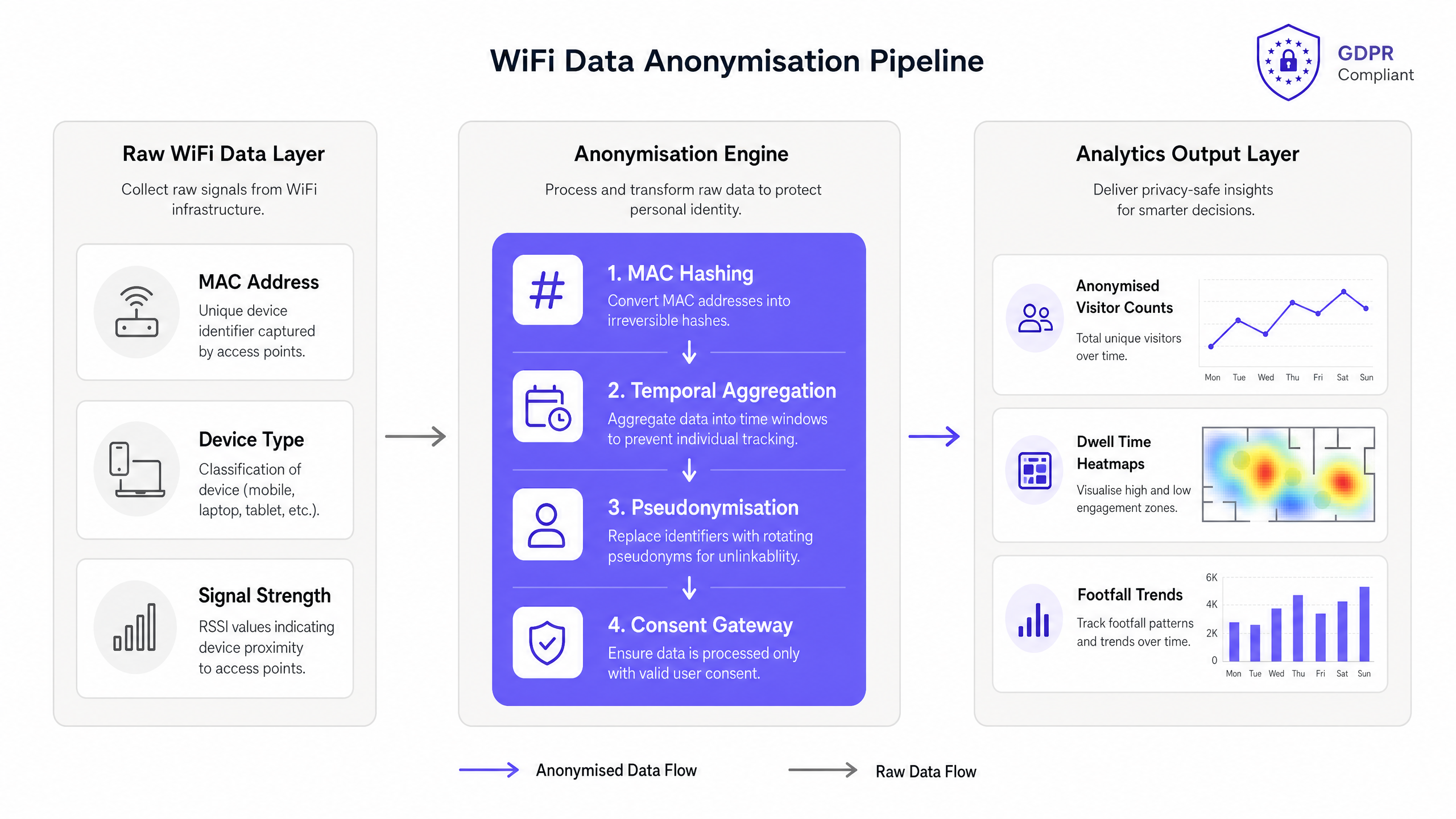
Para processar esses dados legalmente para análise sem consentimento explícito, eles devem ser anonimizados irreversivelmente. A pseudonimização (substituir o MAC por um identificador estático) é insuficiente, pois os dados permanecem sujeitos à GDPR. A verdadeira anonimização requer um pipeline de várias etapas:
- Hashing Criptográfico: Endereços MAC brutos devem ser hashed usando algoritmos fortes (por exemplo, SHA-256) na borda ou imediatamente após a ingestão pelo controlador.
- Salting Dinâmico: Para evitar ataques de dicionário ou consultas de tabelas rainbow, um "salt" (dados aleatórios) deve ser adicionado ao hash. Crucialmente, este salt deve ser rotacionado frequentemente (por exemplo, diariamente). Uma vez que o salt é descartado, os hashes não podem ser vinculados entre os dias, garantindo a anonimização temporal.
- Agregação de Dados: As análises devem depender de métricas agregadas (por exemplo, "50 dispositivos na Zona A entre 10:00 e 10:15") em vez de trajetórias de dispositivos individuais.
Guia de Implementação: Arquitetando para Conformidade
Implantar uma solução de análise compatível requer uma abordagem independente de fornecedor que se integre perfeitamente à infraestrutura existente.
Etapa 1: Minimização de Dados na Borda
Configure seus controladores WLAN ou APs para descartar campos de dados desnecessários antes da transmissão para o mecanismo de análise. Se você precisar apenas de dados de presença, não encaminhe cargas úteis de inspeção profunda de pacotes (DPI) ou logs precisos de trilateração RSSI, a menos que seja absolutamente necessário.
Etapa 2: O Gateway de Consentimento
Quando os usuários se conectam ativamente à rede por meio de um Captive Portal, você transita da análise passiva para o engajamento ativo. Aqui, o consentimento explícito é primordial. O portal deve apresentar opções de aceitação claras e desagrupadas para marketing e rastreamento. Soluções modernas, como as que utilizam um wi fi assistant , podem otimizar esse processo, mantendo a conformidade.
Etapa 3: Transmissão Segura de Dados
Garanta que todos os dados transmitidos dos APs para a plataforma de análise sejam criptografados em trânsito usando TLS 1.2 ou superior, alinhando-se com padrões como IEEE 802.1X e PCI DSS, quando aplicável.
Melhores Práticas: Os 7 Princípios da Privacidade desde a Concepção
Desenvolvido pela Dra. Ann Cavoukian, o framework Privacy by Design é agora fundamental para a GDPR (Artigo 25).
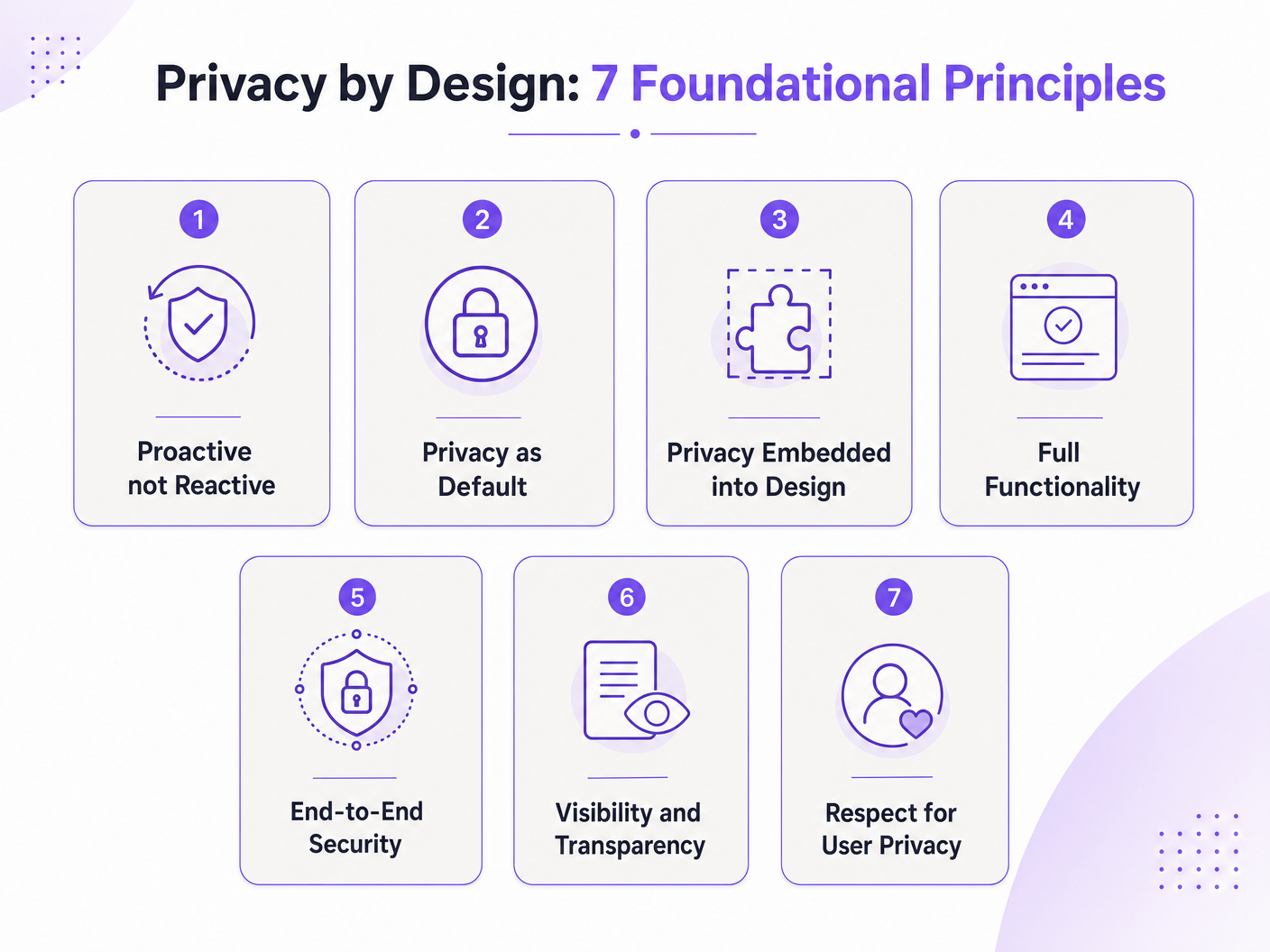
- Proativo, não Reativo: Antecipe os riscos de privacidade antes que se materializem. Implemente pipelines de anonimização antes que os dados sejam armazenados.
- Privacidade como Padrão: A configuração padrão deve ser sempre a mais protetora da privacidade. Os usuários não devem precisar agir para proteger seus dados.
- Privacidade Incorporada ao Design: A privacidade deve ser um componente central da arquitetura de rede, não um módulo adicional.
- Funcionalidade Completa (Soma Positiva): Você pode ter privacidade e análise. Não é um jogo de soma zero.
- Segurança Ponta a Ponta: Os dados devem ser protegidos durante todo o seu ciclo de vida, desde a coleta até a destruição.
- Visibilidade e Transparência: As operações devem ser verificáveis. Os usuários devem saber quais dados são coletados e por quê.
- Respeito pela Privacidade do Usuário: Mantenha os interesses do usuário em primeiro lugar, oferecendo padrões fortes e avisos claros.
Solução de Problemas e Mitigação de Riscos
O Desafio da Randomização de MAC
Sistemas operacionais modernos (iOS 14+, Android 10+) empregam randomização de MAC para evitar o rastreamento. Embora isso aumente a privacidade do usuário, complica a análise.
Risco: Contagem excessiva de visitantes únicos devido à rotação de endereços MAC. Mitigação: Conte com sessões autenticadas para métricas de fidelidade precisas. Para análises passivas, aceite uma margem de erro e concentre-se em tendências relativas, em vez de contagens absolutas de dispositivos únicos. Garanta que seu planejamento de canais seja ideal; ambientes RF ruins exacerbam os problemas de rastreamento. Revise guias como 20MHz vs 40MHz vs 80MHz: Qual Largura de Canal Você Deve Usar? pode ajudar a estabilizar a qualidade da conexão.
ROI e Impacto nos Negócios
A implementação de análises robustas e compatíveis gera valor de negócio mensurável em diversos setores:
- Varejo: Compreender as taxas de conversão (transeuntes vs. visitantes) permite ajustes baseados em dados para vitrines e níveis de pessoal.
- Hotelaria: Analisar os tempos de permanência em áreas de A&B (Alimentos e Bebidas) ajuda a otimizar a velocidade do serviço e a rotatividade das mesas, impactando diretamente a receita. Para mais estratégias, consulte Como Melhorar a Satisfação do Hóspede: O Guia Definitivo .
- Transporte: Monitorar o fluxo de passageiros evita gargalos e informa a alocação de recursos durante os horários de pico.
Ao garantir que esses insights sejam coletados de forma compatível, as organizações protegem a reputação de sua marca e evitam multas punitivas de GDPR, garantindo o ROI de longo prazo de sua infraestrutura sem fio.
Definições principais
Probe Request
A frame broadcast by a WiFi-enabled device to discover nearby wireless networks.
This is the primary source of data for passive analytics and contains the device's MAC address.
MAC Address
Media Access Control address; a unique identifier assigned to a network interface controller.
Classified as personal data under GDPR, requiring protection and anonymisation.
Cryptographic Hashing
A one-way mathematical function that converts data (like a MAC address) into a fixed-size string of characters.
Used to obscure the original MAC address, though insufficient on its own without salting.
Salting
Adding random data to the input of a hash function to guarantee a unique output.
Prevents attackers from using pre-computed tables (rainbow tables) to reverse-engineer hashed MAC addresses.
Pseudonymisation
Replacing identifying data with artificial identifiers.
Useful for security, but pseudonymised data remains subject to GDPR as it can potentially be re-identified.
Anonymisation
Processing data in such a way that the data subject can no longer be identified, irreversibly.
The ultimate goal for passive analytics, removing the data from the scope of GDPR.
RSSI
Received Signal Strength Indicator; a measurement of the power present in a received radio signal.
Used in analytics to estimate the distance of a device from an access point, determining if a user is inside or outside a venue.
Data Minimisation
The principle that personal data should be adequate, relevant, and limited to what is necessary.
A core GDPR requirement dictating that venues should not collect or store more WiFi data than strictly required for their stated purpose.
Exemplos práticos
A 500-store retail chain needs to measure window conversion rates (passers-by vs. store entrants) using passive WiFi analytics without violating GDPR.
- Deploy sensors/APs configured to capture probe requests.
- Implement an edge-based hashing agent. The agent applies a SHA-256 hash to the MAC address, combined with a daily rotating salt.
- The agent forwards only the hashed identifier, RSSI (signal strength), and timestamp to the central analytics platform.
- The platform uses RSSI thresholds to distinguish between 'passers-by' (weak signal) and 'entrants' (strong signal).
- At midnight, the salt is discarded. Hashes from Monday cannot be linked to hashes from Tuesday.
A large exhibition centre wants to track repeat visitor attendance across a multi-day event, requiring data linkage beyond a 24-hour period.
Passive analytics with daily salt rotation cannot link days. The venue must transition to active analytics.
- Deploy a captive portal offering high-speed WiFi.
- Present a clear, unbundled consent request for tracking and analytics during the login process.
- Once consent is granted, the system generates a persistent pseudonym linked to the user's authenticated profile.
- This pseudonym is used to track the user across the multi-day event.
Questões práticas
Q1. A hospital IT director wants to track patient flow through outpatient clinics using WiFi. They plan to hash the MAC addresses but use a static salt so they can track individuals across multiple visits over a month. Is this compliant?
Dica: Consider the difference between anonymisation and pseudonymisation, and the requirement for consent.
Ver resposta modelo
No, this is not compliant for passive tracking. Using a static salt means the data is pseudonymised, not anonymised, because the individual can still be singled out over time. To track individuals over a month, the hospital must obtain explicit consent (e.g., via a captive portal). Without consent, the salt must be rotated frequently (e.g., daily) to ensure true anonymisation.
Q2. Your network architecture team proposes sending raw MAC addresses to a cloud analytics provider, arguing that the provider's terms of service state they will anonymise the data upon receipt. Should you approve this architecture?
Dica: Apply the 'Privacy Embedded into Design' and 'End-to-End Security' principles.
Ver resposta modelo
No, you should not approve this. Transmitting raw MAC addresses across the internet, even to a trusted processor, introduces unnecessary risk and violates the principle of Privacy Embedded into Design. The anonymisation pipeline (hashing and salting) should occur at the edge (on the controller or AP) before the data leaves the corporate network.
Q3. Following an iOS update that increases MAC randomisation frequency, your marketing team notices a 30% drop in 'repeat visitor' metrics from passive analytics. They ask IT to find a technical workaround to identify these devices. What is the appropriate response?
Dica: Focus on the intent of MAC randomisation and the boundaries of passive vs. active analytics.
Ver resposta modelo
The appropriate response is to explain that circumventing MAC randomisation to identify individuals without their knowledge violates privacy principles and GDPR. The solution is not a technical workaround for passive tracking, but a strategic shift to active tracking. IT should work with marketing to implement a compelling Guest WiFi portal that incentivises users to authenticate and provide consent, thereby providing accurate loyalty metrics.