
GDPR e Guest WiFi: Guia de Conformidade para Marketing e TI de Espaços
Este guia técnico mostra às equipas de TI e marketing de espaços como gerir a recolha de dados de Guest WiFi ao abrigo do GDPR, sem transformar um captive portal num ponto cego de conformidade. Separa o acesso à rede, as informações de privacidade, as opções de marketing opcionais e os fluxos de CRM, mapeando depois o Purple Connect, Capture e Engage com essas decisões operacionais.
Video overview
Ouça este guia
Ver transcrição do podcast
Parte da nossa série principal: Guia de Guest WiFi →

O Guest WiFi em conformidade com o GDPR começa com um objetivo definido, base legal documentada, informações de privacidade claras, minimização de dados e segurança adequada ao risco. O Purple Connect fornece Captive Portals de marca e análise de WiFi; o Purple Capture adiciona captura de dados originais e integração de CRM. Mantenha as opções de marketing opcionais separadas do acesso e teste cada transferência de dados antes do lançamento.
Como tornar o Guest WiFi em conformidade com o GDPR?
Torna o Guest WiFi em conformidade com o GDPR ao tratá-lo como dois sistemas interligados: um serviço de acesso à rede e um processo de dados pessoais. O serviço de acesso coloca o convidado online. O processo de dados decide o que recolhe, por que motivo recolhe, quem o recebe e como prova essas decisões. Os princípios do GDPR exigem um processamento lícito, leal e transparente, limitação das finalidades, minimização dos dados, segurança e responsabilidade. 1
Comece com um breve registo de conceção antes de qualquer pessoa editar uma splash page. Escreva o objetivo de cada campo, a base legal selecionada pelo seu responsável de privacidade, o destinatário dos dados, a abordagem de retenção e o proprietário que irá rever o fluxo. O ICO afirma que deve determinar e documentar a sua base legal antes de utilizar informações pessoais, e incluir os seus objetivos e base legal nas informações de privacidade. 2
Regra operacional: o acesso ao Guest WiFi, a análise de espaços físicos e o marketing opcional são finalidades de processamento distintas. Não permita que um fluxo de início de sessão conveniente os reduza a uma única decisão não documentada.
| Finalidade do processamento | Decisão de recolha de dados | Controlo de privacidade | Controlo técnico | Provas a reter |
|---|---|---|---|---|
| Fornecer acesso a Guest WiFi | Recolher apenas as informações necessárias para o método de acesso selecionado | Apresentar informações de privacidade onde os dados são recolhidos | Isolar o tráfego de convidados de redes internas | Registo de fluxo de acesso aprovado |
| Compreender a utilização e cobertura do serviço | Utilizar apenas dados aprovados para essa finalidade de análise | Explicar a finalidade da análise | Limitar o acesso a funções de análise | Registo de campos de dados de análise |
| Marketing opcional | Manter os campos e opções de marketing distintos do acesso | Indicar a finalidade do marketing e a opção de forma clara | Enviar apenas campos de adesão aprovados para o CRM | Registo de consentimento ou de base legal |
| Manter a plataforma | Documentar o suporte e o envolvimento do subcontratante | Identificar os destinatários relevantes nas informações de privacidade | Controlar o acesso do administrador | Registo de subcontratantes e de revisão de acessos |
Isto constitui governança, não aconselhamento jurídico. O seu encarregado de proteção de dados ou consultor jurídico deve confirmar a finalidade específica do controlador e a base legal. O ponto prático para as TI é mais simples: não implemente um formulário até que a finalidade, os campos e o destino final estejam de acordo.
Por que razão o GDPR altera o que o seu Guest WiFi recolhe?
Um captive portal não está em conformidade com a privacidade apenas por conter uma caixa de seleção. Passa a fazer parte de um processo em conformidade quando consegue explicar cada elemento do fluxo em linguagem simples, recolher apenas os dados necessários para a finalidade escolhida e manter o acesso separado de utilizações opcionais. Os Artigos 12 e 13 exigem informações transparentes quando recolhe dados pessoais. O Artigo 25 exige a proteção de dados desde a conceção e por defeito. 1
Isso altera a conversa entre o marketing e as TI. O marketing pode querer informações de contacto e demográficas para enriquecer um registo de CRM. As TI podem precisar de informações suficientes para operar o serviço de acesso e investigar incidentes. Nenhum dos requisitos autoriza automaticamente todos os campos numa página de início de sessão. Comece com o menor conjunto de dados aprovado. Adicione um campo apenas quando a sua finalidade, base jurídica, redação de privacidade, destinatário e tratamento de retenção forem conhecidos.
O consentimento não é um controlo decorativo. Se o consentimento for a base escolhida para uma atividade opcional, as diretrizes do ICO cobrem se o consentimento é apropriado, válido, registado, gerido e retirado. 3 O termo da Purple conscious-choice opt-ins é útil aqui. Significa que a escolha de marketing deve permanecer reconhecidamente separada do ato de se ligar à internet. O seu responsável pela privacidade deve aprovar a redação exata e as provas que retém.
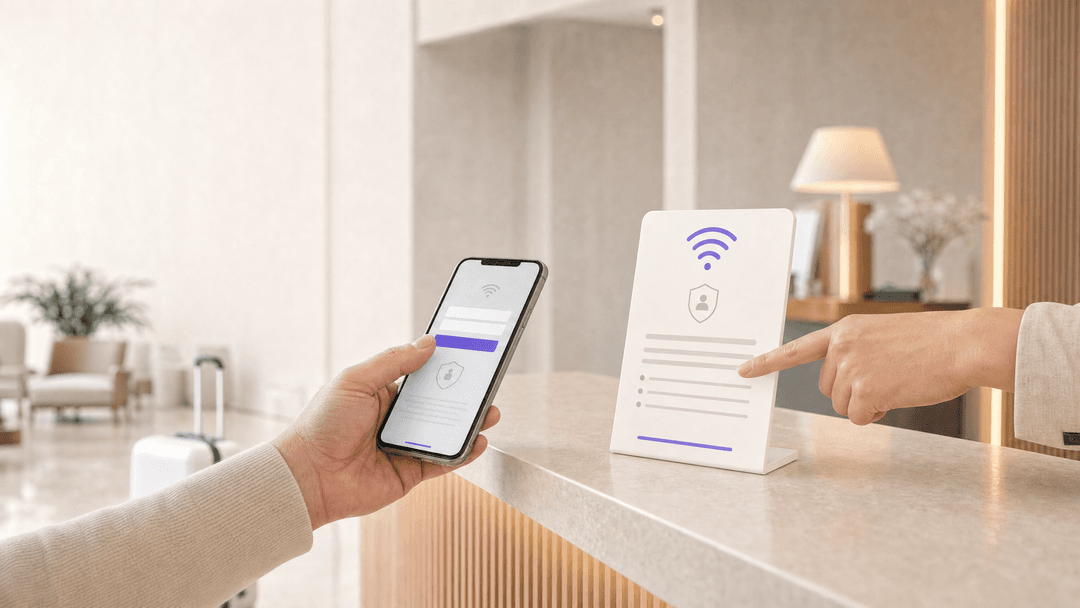
Para um hotel, isso pode significar que um hóspede vê o aviso de acesso antes de submeter os dados, enquanto a oferta para receber informações sobre estadias futuras é apresentada como uma escolha adicional. Para uma cadeia de retalho, o mesmo princípio aplica-se quando um comprador adere na loja física mas um CRM central recebe os campos selecionados. O valor não está no design da página. O valor está em ser capaz de mostrar o que aconteceu, por que aconteceu e para onde foram os dados.
Como devem os dados de Guest WiFi mover-se pela sua rede e CRM?
Desenhe o fluxo para que uma decisão de rede não acione silenciosamente uma decisão de marketing. Um modelo operativo útil tem quatro fronteiras. Primeiro, o dispositivo do convidado solicita acesso. Segundo, o captive portal apresenta a experiência de acesso e privacidade aprovada. Terceiro, a rede admite o dispositivo num serviço de Guest WiFi segmentado. Quarto, quaisquer dados pessoais aprovados movem-se através de uma integração controlada para o CRM.
flowchart LR
    A[Dispositivo do convidado] --> B[Acesso Guest WiFi]
    B --> C[Captive portal e informações de privacidade]
    C --> D[Decisão de acesso]
    D --> E[Rede de convidados segmentada]
    C --> F[Campos de dados aprovados]
    F --> G[CRM através de integração controlada]
    H[Governação de TI e marketing] --> C
    H --> F
Figura 1. Um fluxo concetual que separa o controlo de acesso, o tráfego de convidados e o processamento de dados pessoais aprovado.

O diagrama é deliberadamente neutro em relação ao fornecedor. O GDPR não prescreve um padrão de Captive Portal, protocolo de autenticação ou tecnologia de segmentação. Exige, sim, medidas de segurança adequadas ao risco. 1 As orientações de WLAN do NIST apontam para o mesmo aspeto operacional sob uma perspetiva de segurança: a segurança depende de como os dispositivos dos clientes, os pontos de acesso e os comutadores de rede sem fios são protegidos ao longo do design, implementação, manutenção e monitorização. 6
Utilize esta distinção quando analisar a rede. A segmentação por VLAN, a política de firewall, o controlo de acesso do administrador e a monitorização ajudam a reduzir a exposição. Não definem, por si só, o fundamento jurídico para a recolha do endereço de email de um visitante. Por outro lado, um bom aviso de privacidade não torna aceitável uma rede de convidados não segmentada. A sua implementação precisa tanto de uma decisão de privacidade como de uma decisão de controlo de rede. Onde a sua política de acesso exigir controlo baseado em portas, o IEEE 802.1X regula o acesso e protege contra a transmissão ou receção por partes não identificadas ou não autorizadas. 9 Utilize-o como uma referência de normas para a camada de acesso relevante, e não como um substituto para o design de privacidade.
Onde operar a aceitação de pagamentos, trate o Guest WiFi como uma rede que não se deve tornar um caminho não testado para sistemas que gerem informações de titulares de cartões. Existem materiais do PCI-DSS para apoiar o manuseamento seguro das informações dos titulares de cartões. 7 O seu avaliador PCI e a sua equipa de segurança de rede devem decidir sobre o âmbito aplicável e os testes de segmentação. Este guia não constitui uma avaliação PCI-DSS.
A segurança sem fios também evolui com o tempo. A WiFi Alliance descreve o WPA3 como uma certificação de segurança para redes pessoais e empresariais e destaca o conjunto de segurança mais elevado do WPA3-Enterprise. 8 A ação prática consiste em analisar as capacidades de segurança suportadas em todo o seu parque existente e aplicar a sua própria política de segurança. Este guia não afirma que um único padrão de segurança sem fios por si só torna um serviço de Guest WiFi em conformidade com o GDPR.
Onde se posiciona o Purple em relação à sua infraestrutura de WiFi existente?
O Purple é uma camada de sobreposição na nuvem para Guest WiFi que se posiciona ao lado da sua infraestrutura de acesso existente. Oferece-lhe uma forma de alinhar a experiência do visitante, a recolha de dados e os relatórios operacionais com os controlos que a sua equipa de TI já possui. Comece com o Guest WiFi quando a sua prioridade for uma experiência de acesso personalizada com a marca e, em seguida, utilize o WiFi Analytics para discutir a utilização, velocidade e cobertura do espaço.
O limite do plano da Purple é útil para o planeamento de conformidade. A Purple afirma que o Connect inclui páginas de splash totalmente personalizadas com a sua marca, múltiplos métodos de início de sessão, mais de 25 idiomas, suporte para conformidade com o GDPR e privacidade global, análises de utilização de WiFi e monitorização de velocidade e cobertura. A Purple posiciona o Connect para locais que não pretendem recolher dados dos visitantes. 4 Isto torna o Connect um ponto de partida relevante quando o acesso e a monitorização do serviço são os seus objetivos imediatos.
O Capture inclui as funcionalidades do Connect e adiciona a recolha de dados de contacto e demográficos, integração de enriquecimento de CRM e verificação de e-mail, de acordo com o Suporte da Purple. 4 Isso altera o seu trabalho de governação. Antes de ativar uma integração de CRM, concorde com o mapeamento de campos, o acesso do destinatário, a finalidade, a base legal, as informações de privacidade, o acordo com o subcontratante e um método de teste. O Artigo 28 exige que o tratamento por um subcontratante seja regulado por um contrato ou outro ato jurídico. 1
O Engage baseia-se no Capture com comunicações personalizadas, promoções e jornadas de acesso personalizadas com base nos interesses dos visitantes, a par de análises do local, conectores pré-construídos e SecurePass. 5 Isso torna a governação mais importante, não menos. Uma equipa de campanha não deve ser capaz de criar uma nova utilização de dados sem a revisão de privacidade e do proprietário dos dados que se aplica a qualquer nova finalidade.
O modelo adequa-se a diferentes contextos de locais. As equipas de Hotelaria podem manter o acesso de convidados e o enriquecimento de CRM num único design regulado. As equipas de Retalho podem aplicar os mesmos controlos em várias lojas. As equipas de Transportes e de Saúde podem concentrar-se no acesso, em avisos claros e em limites de segurança onde a sensibilidade dos dados ou a utilização pública exigem cuidados redobrados. Para detalhes sobre a arquitetura de rede, combine este guia com o Enterprise Guest WiFi Setup Guide: VLAN Segmentation, Security, and Captive Portals.
Tem dúvidas sobre a sua configuração específica?
A nossa equipa trabalha com operadores de espaços, gestores de TI e engenheiros de rede em 80.000 espaços. Agende uma chamada de 20 minutos e mostraremos como outros profissionais na sua área o resolveram.
Que limites e riscos de conformidade devem as equipas dos locais prever?
O erro mais comum não é a falta de um documento de política. É o desalinhamento entre a política, o fluxo de início de sessão, a rede e o CRM. Corrija isso com critérios de aceitação que possam ser testados. As TI devem validar que o tráfego de Guest WiFi segue o limite de rede aprovado e que o acesso de administrador é controlado. O Marketing deve validar as etiquetas dos campos, os destinos dos dados e a recolha de escolhas. A Privacidade deve validar o aviso, a finalidade e o registo da base legal. As Operações devem confirmar que a equipa do local sabe para onde direcionar um convidado com dúvidas sobre privacidade.
A minimização de dados é o desafio certo para todos os campos. Pergunte se o método de acesso realmente necessita dele. Pergunte se o objetivo da análise pode funcionar sem ele. Pergunte se o CRM precisa dele agora, ou se uma interação opcional futura o pode recolher mais tarde. Se nenhum proprietário souber responder, remova o campo do lançamento. Isto evita a criação de um conjunto de dados que as suas equipas não conseguem explicar ou gerir.
Não trate uma alteração de finalidade como uma pequena edição de portal. Um novo público de marketing, um novo destino de CRM, uma questão demográfica adicionada ou uma jornada de acesso automatizada podem alterar o design de processamento. Reveja o registo e a avaliação de privacidade antes do lançamento. Se a sua avaliação indicar que o processamento tem probabilidade de criar um elevado risco para os direitos e liberdades das pessoas, o Artigo 35 exige uma avaliação de impacto sobre a proteção de dados. 1
Deve também distinguir a identidade de rede da identidade da força de trabalho. Um serviço de início de sessão de convidados não substitui os controlos de identidade de WiFi de colaboradores. Mantenha o acesso da força de trabalho dentro do seu design de Redes Baseadas em Identidade, com o seu próprio modelo de aprovação e revogação. O processo operacional para remover o acesso de colaboradores é abordado em Como revogar o acesso WiFi quando um funcionário sai. Para padrões de funcionamento mais amplos, consulte Gestão de WiFi de Convidados: Autenticação Inteligente e Segmentação e Gestão de Cloud Wifi: Conectividade Empresarial Segura 2026.
Como é uma implementação na prática?
Os cenários abaixo são padrões de implementação ilustrativos, não alegações sobre uma implementação Purple específica ou uma garantia de conformidade. Eles oferecem às suas equipas verificações de lançamento mensuráveis em vez de resultados comerciais inventados.
| Cenário do local | Padrão de implementação prática | Verificações de lançamento mensuráveis |
|---|---|---|
| Hotel de 200 quartos | Use o Connect para um ponto de entrada de WiFi de Convidados de marca e monitorização do serviço. Mantenha o fluxo inicial focado no acesso e não no enriquecimento do CRM. | As informações de privacidade aparecem antes da entrada; nenhum campo de contacto não aprovado está presente; as TI verificam o limite da rede de convidados; as operações aprovam uma rota de suporte a convidados. |
| Retalhista multi-site | Use o Capture onde campos de contacto e demográficos aprovados enriquecem o CRM. Desenhe uma opção de marketing opcional separada. | O mapeamento de campos corresponde ao registo aprovado; apenas os campos com consentimento chegam ao CRM; as exportações de marketing são controladas por funções; a equipa de privacidade aprova o aviso. |
| Centro de conferências | Avalie o Engage apenas após o acesso, a governação do CRM e as aprovações de mensagens estarem estabelecidos. Utilize proprietários de campanhas que compreendam a finalidade acordada. | Os dados de teste provam a lógica de público selecionada; as comunicações alinham-se com a finalidade aprovada; os proprietários conseguem identificar o sistema de destino; o registo de alterações está assinado. |
O lançamento é apenas o primeiro ponto de controlo. Defina uma cadência de revisão para os campos do portal, acesso de administradores, integrações de dados, limites de rede e utilizações de campanhas. Registe o resultado da revisão. É assim que transforma a proteção de dados desde a conceção de uma frase de política numa prática operacional.
O que deve fazer a seguir?
Comece com uma revisão de design de 60 minutos que envolva as equipas de TI, marketing, operações e o seu responsável de privacidade. Mapeie o percurso atual do convidado, desde a ligação do dispositivo até à receção no CRM. Marque cada ponto onde os dados aparecem, mudam de mãos ou adquirem uma nova finalidade. Em seguida, decida se a sua necessidade imediata é o acesso e a perceção do serviço, a recolha de dados primários (first-party data) ou a interação no local.
Se o acesso e as operações seguras no local forem a prioridade, analise o Purple Connect face à arquitetura da sua rede. Se planeia enriquecer um CRM, analise o Purple Capture e a governação de integração em conjunto. Se pretende enviar comunicações personalizadas no local, integre a governação adicional do Purple Engage no design antes do lançamento da campanha. Os resumos do Suporte da Purple Connect vs Capture e Capture vs Engage definem as fronteiras do produto.
Termine com uma decisão de entrada em produção registada. Esta deve identificar os campos de dados aprovados, a finalidade declarada e a base jurídica, o proprietário das informações de privacidade, o proprietário da segurança, o destinatário do CRM, a data de revisão e a rota de escalamento para o seu responsável de privacidade. Esse registo será mais útil do que outra lista de verificação de conformidade genérica.
Referências
Perguntas frequentes
Os dados de Guest WiFi são dados pessoais ao abrigo do GDPR?
Podem ser, pelo que deve tratar a recolha de dados de Guest WiFi como um processo de dados pessoais até que o seu responsável de privacidade tenha avaliado os campos exatos e o processamento. O GDPR aplica princípios como a transparência, limitação de finalidade, minimização, segurança e responsabilidade ao processamento de dados pessoais. 1 Comece por documentar cada campo, finalidade e destinatário em vez de assumir que um Captive Portal está fora da governação de privacidade.
Precisamos de consentimento para fornecer acesso a Guest WiFi?
Não automaticamente. Deve selecionar, documentar e explicar uma base legal apropriada antes de processar informações pessoais. 2 O consentimento é uma base possível, mas o ICO refere que deve avaliar se este é apropriado e, quando utilizado, deve obtê-lo, registá-lo e geri-lo corretamente. 3 Solicite ao seu DPO ou consultor jurídico a confirmação da base legal para o seu serviço de acesso e para cada atividade opcional de marketing.
Podemos adicionar opções de adesão de marketing a uma página de início de sessão de Guest WiFi?
Sim, desde que a escolha seja gerida separadamente do serviço de acesso e a sua equipa de privacidade aprove a finalidade, a base legal, o aviso e a evidência. A Purple refere-se a opções de adesão por escolha consciente. Se o consentimento for a sua base legal, utilize as diretrizes do ICO para determinar se o mesmo é válido, registado, gerido e revogável. 3 Não trate a aceitação dos termos de acesso à rede como prova de uma escolha de marketing independente.
O Purple Connect recolhe os dados de contacto dos visitantes?
Não, a Purple posiciona o Connect para locais que não pretendem recolher dados de visitantes. O Connect fornece páginas de entrada personalizadas com a marca, múltiplos métodos de início de sessão, suporte de conformidade de privacidade, análise de utilização de WiFi e monitorização da velocidade e cobertura do local. 4 O Capture adiciona informações demográficas e de contacto, integração de CRM e verificação de e-mail. Confirme o design exato de acesso e dados com a Purple antes da implementação.
O que devemos testar antes de ligar o Guest WiFi ao nosso CRM?
Teste o mapeamento de campos aprovado, o acesso dos destinatários, a redação das informações de privacidade, a finalidade e o registo da base legal antes de disponibilizar a integração. A Purple refere que o Capture se pode integrar para enriquecer um CRM existente. 4 O GDPR exige acordos de subcontratante apropriados sempre que um subcontratante trate dados. 1 O seu responsável pela privacidade deve aprovar a atribuição de funções e os controlos contratuais; a TI deve testar o caminho de dados e os controlos de acesso.
O Guest WiFi precisa de estar separado dos sistemas de funcionários e de pagamentos?
Sim, trate a separação de redes como um requisito de design de segurança essencial e, em seguida, verifique-a com a sua equipa de segurança de rede. O GDPR exige medidas de segurança adequadas ao risco. 1 O NIST explica que a segurança WLAN depende da segurança do ciclo de vida dos clientes, pontos de acesso e switches sem fios. 6 Se os sistemas de pagamento estiverem integrados no âmbito, confirme os requisitos de segmentação e teste com o seu avaliador PCI. 7
A Purple consegue suportar comunicações personalizadas no local?
Sim, a Purple refere que o Engage adiciona comunicações personalizadas, promoções e percursos de acesso personalizados com base nos interesses dos visitantes, juntamente com análises, conectores e SecurePass. 5 Antes de os ativar, documente a finalidade pretendida, a base jurídica, as regras de audiência, os sistemas recetores e a rota de aprovação de alterações. A capacidade do produto não elimina a sua responsabilidade de gerir cada utilização de dados.
Definições Principais
Captive portal
Uma experiência web que um espaço apresenta durante o fluxo de ligação ao Guest WiFi antes ou em paralelo com o acesso à rede.
É onde os termos de acesso, as informações de privacidade, os campos de dados aprovados e as opções de marketing opcionais se devem alinhar.
Base legal
O fundamento jurídico fundamentado em que um responsável pelo tratamento de dados se baseia para processar informações pessoais ao abrigo do GDPR ou UK GDPR.
Necessita de uma base legal para cada finalidade de processamento de Guest WiFi antes que o fluxo de dados entre em funcionamento.
Minimização de dados
O princípio do GDPR de que os dados pessoais devem ser adequados, relevantes e limitados ao que é necessário para a finalidade declarada.
É o teste aplicado a cada campo de início de sessão e a cada elemento de dados enviado para o seu CRM.
Informações de privacidade
Informações claras que explicam como e por que razão os dados pessoais são recolhidos e utilizados.
Coloque-as onde o convidado possa aceder às mesmas no momento da recolha, mantendo depois o proprietário e a versão sob controlo.
Subcontratante
Uma entidade que processa dados pessoais em nome de um responsável pelo tratamento de dados.
As integrações de Guest WiFi, o suporte e as rotas de dados do CRM podem exigir que a sua equipa confirme a atribuição de funções e os controlos contratuais.
Proteção de dados desde a conceção e por defeito
O requisito do GDPR de integrar medidas de proteção de dados adequadas no processamento e nas configurações por defeito.
Para o Guest WiFi, isto significa definir a finalidade, os campos, as informações de privacidade, os destinatários e os controlos antes de publicar um fluxo de início de sessão.
Segmentação de VLAN
Uma abordagem de conceção de rede que separa o tráfego em diferentes segmentos de rede lógicos.
As equipas de TI utilizam-na como parte de um limite de segurança de Guest WiFi, mas esta não substitui a governação de privacidade.
IEEE 802.1X
Um padrão IEEE de controlo de acesso à rede baseado em portas que regula o acesso à rede e suporta comunicações controladas após a autenticação.
Utilize-o ao analisar quais as partes da sua infraestrutura de rede mais ampla que necessitam de acesso controlado e autenticado. É independente da decisão do GDPR de recolher e utilizar dados de Guest WiFi.
WPA3
Uma certificação de segurança da WiFi Alliance para redes WiFi pessoais e empresariais, com modos pessoal e empresarial separados.
Utilize-o numa revisão de normas do seu parque sem fios, reconhecendo simultaneamente que a seleção do protocolo por si só não estabelece a conformidade com o GDPR.
PCI-DSS
Uma norma de segurança para cartões de pagamento com documentação mantida pelo PCI Security Standards Council.
Sempre que estiverem envolvidos sistemas de pagamento, utilize o seu processo de avaliação PCI para decidir o âmbito e a segmentação de rede e testes necessários.
Exemplos Práticos
Um hotel com 200 quartos precisa de Guest WiFi personalizado com a sua marca, mas não pretende recolher dados de contacto no lançamento. O que deve fazer?
Utilizar o limite de design do Connect: proporcionar uma experiência de acesso com a marca e monitorizar a utilização, velocidade e cobertura do serviço. Antes de entrar em funcionamento, registar a finalidade do acesso, apresentar as informações de privacidade onde os dados são recolhidos, validar o limite da rede de convidados, manter os campos de contacto não aprovados fora do fluxo e fornecer às operações uma via clara para pedidos de informação sobre privacidade. Este é um plano de aceitação ilustrativo e não uma afirmação sobre um espaço específico.
Um retalhista com vários espaços físicos pretende dados de Guest WiFi para enriquecer o seu CRM e oferecer marketing opcional. O que deve fazer?
Utilizar o limite de design do Capture após as equipas de marketing, TI e privacidade aprovarem o registo de campos de dados. Mapear cada campo aprovado para o seu destino no CRM, manter o marketing como uma opção de consentimento explícito e consciente (opt-in) em vez de uma condição de acesso, testar se apenas os campos aprovados são enviados para o CRM e registar o proprietário responsável pela revisão de avisos, integração e acessos. Este é um plano de aceitação ilustrativo e não uma afirmação sobre um retalhista específico.
Um centro de conferências pretende comunicações personalizadas após o início de sessão. O que deve fazer?
Avaliar o Engage apenas após o fluxo de acesso ao Guest WiFi e a transferência de dados para o CRM terem passado a revisão de governação. Definir a finalidade da campanha e o público-alvo antes da automatização, aprovar a mensagem e o sistema destinatário, testar a lógica do público-alvo selecionado utilizando dados controlados e registar a decisão de alteração. A Purple declara que o Engage adiciona comunicações personalizadas, jornadas de acesso personalizadas, análises, conectores e SecurePass.
Fontes
- Regulation (EU) 2016/679 (GDPR), EUR-Lex
- ICO: A guide to lawful basis
- ICO: Consent
- Purple Support: Connect vs Capture
- Purple Support: Capture vs Engage
- NIST SP 800-153: Guidelines for Securing Wireless Local Area Networks
- IEEE 802.1X: Port-Based Network Access Control
- PCI Security Standards Council: PCI DSS Document Library
- WiFi Alliance: WPA3 security announcement
Continue a ler esta série
WiFi de convidados multisite para franchisados: controlo central com imagem de marca local
Poderá escolher um modelo operacional para o WiFi de convidados em toda a sua rede de franchisados e decidir quem controla os dados dos convidados ao abrigo do GDPR. Pode depois bloquear centralmente a imagem de marca e os consentimentos, conceder aos franchisados acesso limitado ao local e planejar uma implementação agrupada por fornecedor. A abordagem funciona como uma sobreposição na nuvem em hardware misto Cisco Meraki, HPE Aruba, Ruckus e Ubiquiti UniFi.
Fornecedores de WiFi público para câmaras municipais: vias de contratação e o que especificar
Poderá escolher a via de contratação certa para o WiFi público da câmara municipal, separando a plataforma em nuvem da construção física. Também poderá elaborar uma especificação sobre a qual os concorrentes possam apresentar propostas e que possa testar na entrega. Cobre cobertura, simultaneidade de pico, filtragem IWF, WCAG 2.2 AA, base legal do UK GDPR e pontuação de fornecedores baseada em evidências.
Como o WiFi de Colaboradores o Ajuda a Cumprir a ISO/IEC 27001: Mapeamento de Controlos do Anexo A para a Sua Rede Sem Fios
Será capaz de decidir se o seu WiFi de colaboradores pode comprovar 12 controlos do Anexo A da ISO/IEC 27001:2022, incluindo A.5.15, A.8.5 e A.8.22. Será também capaz de substituir uma chave WPA2-PSK partilhada por IEEE 802.1X e VLANs dinâmicas. Finalmente, poderá reunir os registos RADIUS, testes de segregação e registos de fornecedores que um auditor aceita na fase 2.
Tem dúvidas sobre a sua configuração específica?
A nossa equipa trabalha com operadores de espaços, gestores de TI e engenheiros de rede em 80.000 espaços. Agende uma chamada de 20 minutos e mostraremos como outros profissionais na sua área o resolveram.