
রিটেইল WiFi: কীভাবে ইন-স্টোর WiFi বিক্রি, আনুগত্য এবং গ্রাহক সমাগম বৃদ্ধি করে
এই নির্ভরযোগ্য টেকনিক্যাল রেফারেন্স গাইডটিতে বিস্তারিত আলোচনা করা হয়েছে কীভাবে এন্টারপ্রাইজ আইটি এবং অপারেশনস টিমগুলো রিটেইল WiFi-কে একটি কৌশলগত বাণিজ্যিক সম্পদ হিসেবে স্থাপন করতে পারে। এটি ফার্স্ট-পার্টি ডেটা সংগ্রহ, গ্রাহক সমাগম বিশ্লেষণ এবং নিরাপদ, হাই-ডেনসিটি নেটওয়ার্ক আর্কিটেকচারের মাধ্যমে সাধারণ কানেক্টিভিটি থেকে রাজস্ব-উৎপাদনকারী অবকাঠামোতে রূপান্তরের বিষয়টি কভার করে।
এই গাইডটি শুনুন
পডকাস্ট ট্রান্সক্রিপ্ট দেখুন
আমাদের মূল সিরিজের অংশ: WiFi Analytics Guide →

এক্সিকিউটিভ সামারি
আধুনিক ভেন্যু অপারেটর এবং রিটেইল এন্টারপ্রাইজগুলোর জন্য, ইন-স্টোর WiFi প্রদান করা এখন আর কেবল একটি সাধারণ সেবা বা গ্রাহকদের ছোটখাটো সুবিধা নয়; এটি একটি অত্যন্ত গুরুত্বপূর্ণ বাণিজ্যিক অবকাঠামো। যখন আইটি আর্কিটেক্ট এবং মার্কেটিং লিডাররা এটি স্থাপনের বিষয়ে একমত হন, তখন রিটেইল স্টোর WiFi ফার্স্ট-পার্টি ডেটা সংগ্রহ, গ্রাহক সমাগম বিশ্লেষণ (footfall analytics) এবং ব্যক্তিগতকৃত গ্রাহক সম্পৃক্ততার একটি শক্তিশালী ইঞ্জিনে পরিণত হয়।
এই গাইডটি সিনিয়র আইটি ম্যানেজার, CTO এবং নেটওয়ার্ক আর্কিটেক্টদের রিটেইল স্টোরে হাই-ডেনসিটি WiFi স্থাপনের জন্য একটি কৌশলগত ফ্রেমওয়ার্ক প্রদান করে। এটি কেবল ইন্টারনেট অ্যাক্সেস দেওয়ার সাধারণ ধারণার বাইরে গিয়ে নেটওয়ার্ক অ্যাক্সেস লেয়ার, ক্যাপটিভ পোর্টাল এবং অ্যানালিটিক্স ইন্টিগ্রেশন কীভাবে একত্রিত হয়ে পরিমাপযোগ্য রিটার্ন অন ইনভেস্টমেন্ট (ROI) প্রদান করে তা অন্বেষণ করে। আমরা শত শত যুগপৎ সংযোগ নিরাপদে পরিচালনা করার জন্য প্রয়োজনীয় টেকনিক্যাল আর্কিটেকচার, ডেটা সংগ্রহের ক্ষেত্রে প্রযোজ্য কমপ্লায়েন্স নির্দেশাবলী এবং আনুগত্য ও বিক্রি বাড়াতে Purple-এর Guest WiFi-এর মতো প্ল্যাটফর্মগুলোর ইন্টিগ্রেশন পরীক্ষা করব। আপনি একটি একক ফ্ল্যাগশিপ লোকেশন আপগ্রেড করছেন বা একটি গ্লোবাল রিটেইল চেইন জুড়ে অবকাঠামো মানসম্মত করছেন, এই রেফারেন্সটি ব্যবহারকারী এবং ব্যবসা উভয়েরই উপকারে আসে এমন একটি নেটওয়ার্ক তৈরি করার জন্য প্রয়োজনীয় ভেন্ডর-নিরপেক্ষ সেরা অনুশীলন এবং আর্কিটেকচারাল সিদ্ধান্তগুলো তুলে ধরে।
টেকনিক্যাল ডিপ-ডাইভ: আর্কিটেকচার এবং স্ট্যান্ডার্ডস
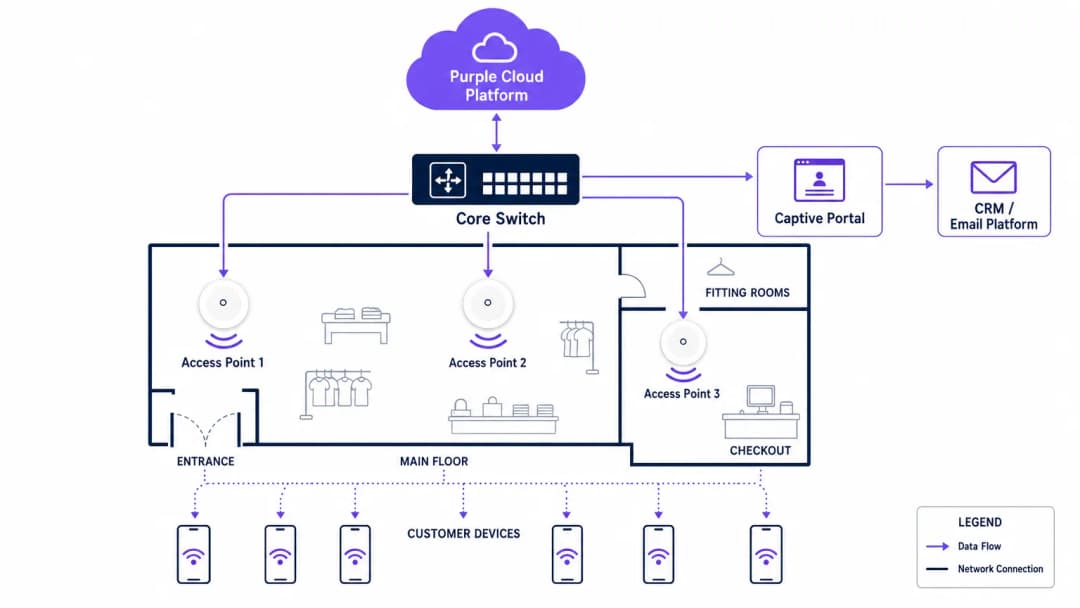
একটি শক্তিশালী রিটেইল WiFi স্থাপনের জন্য নির্ভরযোগ্যতা, নিরাপত্তা এবং ডেটা নিষ্কাশনের ক্ষমতা নিশ্চিত করতে একটি সুগঠিত, বহু-স্তরের আর্কিটেকচার প্রয়োজন। অবকাঠামোটিকে অবশ্যই উচ্চ ক্লায়েন্ট ডেনসিটি সমর্থন করতে হবে এবং একই সাথে গেস্ট ট্র্যাফিক এবং কর্পোরেট বা পয়েন্ট অব সেল (POS) সিস্টেমের মধ্যে কঠোর বিচ্ছিন্নতা বজায় রাখতে হবে।
রেডিও অ্যাক্সেস লেয়ার
যেকোনো আধুনিক রিটেইল স্থাপনের ভিত্তি হলো রেডিও অ্যাক্সেস লেয়ার, যা অবশ্যই IEEE 802.11ax স্ট্যান্ডার্ডের ওপর ভিত্তি করে তৈরি হতে হবে, যা বাণিজ্যিকভাবে WiFi 6 নামে পরিচিত। WiFi সহ রিটেইল স্টোরগুলোতে যেকোনো নতুন স্থাপনের জন্য WiFi 6 হলো বাধ্যতামূলক বেসলাইন। রিটেইল পরিবেশে এর প্রধান সুবিধা কেবল সর্বোচ্চ থ্রুপুট নয়, বরং Orthogonal Frequency-Division Multiple Access (OFDMA) এবং Basic Service Set (BSS) Colouring-এর মাধ্যমে দক্ষতার সাথে উচ্চ ক্লায়েন্ট ডেনসিটি পরিচালনা করার ক্ষমতা।
OFDMA একটি একক ওয়্যারলেস চ্যানেলকে ছোট ছোট সাব-চ্যানেলে বিভক্ত করার অনুমতি দেয়, যা একটি অ্যাক্সেস পয়েন্টকে একই সাথে একাধিক ক্লায়েন্ট ডিভাইসের সাথে যোগাযোগ করতে সক্ষম করে। একটি ব্যস্ত রিটেইল পরিবেশে, যেমন পিক ট্রেডিং পিরিয়ডে একটি ডিপার্টমেন্টাল স্টোরে, এটি নেটওয়ার্কের কার্যক্ষমতা হ্রাস পাওয়া রোধ করে যা পুরোনো WiFi 5 স্থাপনে সমস্যা সৃষ্টি করত। BSS Colouring কো-চ্যানেল ইন্টারফারেন্স হ্রাস করে, যা বিশেষ করে মাল্টি-টেন্যান্ট রিটেইল পার্কগুলোতে অত্যন্ত গুরুত্বপূর্ণ যেখানে সংলগ্ন নেটওয়ার্কগুলো প্রায়শই ওভারল্যাপ করে।
নেটওয়ার্ক অবকাঠামো এবং সুইচিং
অ্যাক্সেস পয়েন্টগুলোকে অবশ্যই একটি স্থিতিস্থাপক তারযুক্ত অবকাঠামোর সাথে সংযুক্ত হতে হবে। আধুনিক অ্যাক্সেস পয়েন্টগুলোকে সমর্থন করার জন্য কোর এবং এজ সুইচগুলোতে পর্যাপ্ত Power over Ethernet (PoE+) এবং সেই সাথে পর্যাপ্ত আপলিঙ্ক ক্ষমতা থাকা উচিত। একটি সাধারণ মাঝারি আকারের রিটেইল স্টোরের জন্য এজ থেকে কোরে কমপক্ষে ১-গিগাবিট আপলিঙ্ক প্রয়োজন, যেখানে হাই-ডেনসিটি পরিবেশ বা ফ্ল্যাগশিপ স্টোরগুলোর ১০-গিগাবিট গতিতে একত্রিত হওয়া উচিত।
External ইন্টারনেট সার্কিটটি প্রায়শই একটি উপেক্ষিত বাধা (bottleneck) হয়ে দাঁড়ায়। ভেন্যু অপারেটরদের ডেডিকেটেড, প্রতিসম (symmetrical) সংযোগগুলোকে অগ্রাধিকার দেওয়া উচিত। আমাদের What Is a Leased Line? Dedicated Business Internet গাইডে বিস্তারিতভাবে যেমন বলা হয়েছে, একটি ডেডিকেটেড সার্কিট গেস্ট সার্ভিস এবং গুরুত্বপূর্ণ রিটেইল অপারেশন উভয়ের জন্যই আপটাইম নিশ্চিত করতে প্রয়োজনীয় সার্ভিস লেভেল এগ্রিমেন্ট (SLA) প্রদান করে।
অথেন্টিকেশন এবং ক্যাপটিভ পোর্টাল
ক্যাপটিভ পোর্টাল হলো সেই গুরুত্বপূর্ণ ইন্টারফেস যেখানে টেকনিক্যাল অবকাঠামো বাণিজ্যিক কৌশলের সাথে মিলিত হয়। যখন একজন ব্যবহারকারী গেস্ট নেটওয়ার্কের সাথে সংযুক্ত হন, তখন তাদের সংযোগটি আটকে একটি ব্র্যান্ডেড পোর্টালে রিডাইরেক্ট করা হয় যেখানে অথেন্টিকেশন প্রয়োজন হয়। এটি ফার্স্ট-পার্টি ডেটা সংগ্রহের মূল প্রক্রিয়া।
অথেন্টিকেশন পদ্ধতির মধ্যে সাধারণত ইমেল, SMS বা সোশ্যাল লগইন অন্তর্ভুক্ত থাকে, তবে দীর্ঘমেয়াদী CRM ইন্টিগ্রেশনের জন্য ইমেল সবচেয়ে কার্যকর মাধ্যম হিসেবে রয়ে গেছে। স্থানান্তরের সময় ব্যবহারকারীর ক্রেডেনশিয়াল সুরক্ষিত রাখতে পোর্টালটিকে অবশ্যই HTTPS-এর মাধ্যমে কাজ করতে হবে। তাছাড়া, ডিভাইসের MAC অ্যাড্রেসের সাথে অথেন্টিকেট হওয়া ব্যবহারকারীর প্রোফাইলের সমন্বয় করতে অথেন্টিকেশন প্রক্রিয়াটিকে অবশ্যই একটি WiFi Analytics ব্যাকএন্ডের সাথে নির্বিঘ্নে সংহত হতে হবে, যা পরবর্তীতে আচরণগত ট্র্যাকিং সক্ষম করে।
নিরাপত্তা এবং কমপ্লায়েন্স
একটি রিটেইল WiFi পরিবেশে নিরাপত্তা দ্বিমুখী: কর্পোরেট নেটওয়ার্ক রক্ষা করা এবং গেস্টকে রক্ষা করা।
১. নেটওয়ার্ক সেগমেন্টেশন: VLANs ব্যবহার করে গেস্ট ট্র্যাফিককে অবশ্যই কর্পোরেট এবং POS ট্র্যাফিক থেকে লজিক্যালি আলাদা করতে হবে। এটি PCI-DSS কমপ্লায়েন্সের জন্য একটি বাধ্যতামূলক প্রয়োজনীয়তা। একই সাবনেটে গেস্ট এবং পেমেন্ট ট্র্যাফিক মিশ্রিত করলে তা অডিটে সরাসরি ব্যর্থতা হিসেবে গণ্য হবে। ২. এনক্রিপশন স্ট্যান্ডার্ডস: ক্যাপটিভ পোর্টাল সহ ওপেন নেটওয়ার্কগুলো এখনও সাধারণ হলেও, ইন্ডাস্ট্রি এখন WPA3 এনক্রিপশনের দিকে ঝুঁকছে। WPA3-SAE (Simultaneous Authentication of Equals) ফরোয়ার্ড সিক্রেসি প্রদান করে, যা পাসওয়ার্ড হ্যাক হলেও অতীতের সেশনগুলোকে সুরক্ষিত রাখে। এন্টারপ্রাইজ ডিভাইসগুলোর জন্য, 802.1X অথেন্টিকেশন কঠোরভাবে প্রয়োগ করা উচিত। ৩. ডেটা প্রাইভেসি (GDPR): ক্যাপটিভ পোর্টালে ফার্স্ট-পার্টি ডেটা সংগ্রহ অবশ্যই আঞ্চলিক প্রাইভেসি রেগুলেশন, যেমন ইউরোপের GDPR মেনে চলতে হবে। সম্মতি অবশ্যই স্পষ্টভাবে, সুনির্দিষ্টভাবে এবং সাধারণ শর্তাবলী থেকে আলাদাভাবে দিতে হবে। WiFi প্ল্যাটফর্ম প্রদানকারীকে অবশ্যই একটি কমপ্লায়েন্ট ডেটা প্রসেসর হিসেবে কাজ করতে হবে।
আপনার নির্দিষ্ট সেটআপ নিয়ে কোনো প্রশ্ন আছে?
আমাদের টিম ৮০,০০০ ভেন্যুতে ভেন্যু অপারেটর, IT ম্যানেজার এবং নেটওয়ার্ক ইঞ্জিনিয়ারদের সাথে কাজ করে। একটি ২০ মিনিটের কল বুক করুন এবং আপনার মতো অন্যরা কীভাবে এর সমাধান করেছেন তা আমরা আপনাকে দেখাব।
ইমপ্লিমেন্টেশন গাইড
একটি বাণিজ্যিক-মানের WiFi নেটওয়ার্ক স্থাপনের জন্য টেকনিক্যাল পারফরম্যান্স এবং ব্যবসায়িক সামঞ্জস্য উভয়ই নিশ্চিত করতে একটি নিয়মতান্ত্রিক পদ্ধতির প্রয়োজন।
ধাপ ১: প্রয়োজনীয়তা সংগ্রহ এবং স্টেকহোল্ডারদের সমন্বয়
আইটি-কে অবশ্যই আলাদাভাবে কাজ করলে চলবে না। হার্ডওয়্যার নির্বাচন করার আগে, আইটি আর্কিটেক্টদের বাণিজ্যিক উদ্দেশ্যগুলো নির্ধারণ করতে মার্কেটিং এবং অপারেশনস ডিরেক্টরদের সাথে সমন্বয় করতে হবে। ক্যাপটিভ পোর্টালের জন্য প্রয়োজনীয় ডেটা সংগ্রহের ক্ষেত্রগুলো, বিদ্যমান CRM সিস্টেমের সাথে ইন্টিগ্রেশন পয়েন্টগুলো এবং প্রয়োজনীয় নির্দিষ্ট অ্যানালিটিক্স (যেমন, ডুয়েলিং টাইম, জোন ফ্লো) নির্ধারণ করুন।
ধাপ ২: RF সাইট সার্ভে এবং প্রেডিক্টিভ মডেলিং
একটি পেশাদার রেডিও ফ্রিকোয়েন্সি (RF) সাইট সার্ভে করা বাধ্যতামূলক। অ্যাক্সেস পয়েন্ট স্থাপনের অনুমান করার জন্য কেবল ফ্লোর প্ল্যানের ওপর নির্ভর করলে প্রায়শই ট্রাইং রুম বা চেকআউট লাইনের মতো গুরুত্বপূর্ণ জায়গাগুলোতে কভারেজ গ্যাপ তৈরি হয়।
ইঞ্জিনিয়ারদের প্রেডিক্টিভ মডেলিং সফটওয়্যার ব্যবহার করা উচিত এবং তারপরে একটি সক্রিয় অন-সাইট সার্ভে করা উচিত, যাতে শেল্ভিং, ইনভেন্টরি এবং আর্কিটেকচারাল বৈশিষ্ট্যের কারণে সৃষ্ট সিগন্যাল হ্রাস (attenuation) বিবেচনা করা যায়। একটি সাধারণ নিয়ম হলো প্রতি ১৫০-২০০ বর্গমিটারে একটি অ্যাক্সেস পয়েন্ট, তবে হাই-ডেনসিটি জোনগুলোর জন্য কেবল কভারেজ প্ল্যানিংয়ের চেয়ে নির্দিষ্ট ক্যাপাসিটি প্ল্যানিং প্রয়োজন।
ধাপ ৩: অবকাঠামো স্থাপন এবং কনফিগারেশন
শারীরিক ইনস্টলেশনের সময়, ভবিষ্যতের মাল্টি-গিগাবিট অ্যাক্সেস পয়েন্টগুলোকে সমর্থন করার জন্য সমস্ত ক্যাবলিং যেন Cat6a স্ট্যান্ডার্ড পূরণ করে তা নিশ্চিত করুন। গেস্ট VLAN-এ ক্লায়েন্ট আইসোলেশন কার্যকর করতে নেটওয়ার্ক কন্ট্রোলারগুলো কনফিগার করুন, যা সংযুক্ত ডিভাইসগুলোর মধ্যে পিয়ার-টু-পিয়ার যোগাযোগ রোধ করবে। গেস্ট ব্যান্ডউইথ সীমিত করতে কোয়ালিটি অব সার্ভিস (QoS) পলিসিগুলো বাস্তবায়ন করুন, যাতে গুরুত্বপূর্ণ রিটেইল অপারেশনগুলো (যেমন ইনভেন্টরি স্ক্যানার এবং POS টার্মিনাল) অগ্রাধিকার পায়।
ধাপ ৪: ক্যাপটিভ পোর্টাল এবং CRM ইন্টিগ্রেশন
গ্রাহকদের ঝামেলা কমিয়ে ব্র্যান্ডের পরিচয় ফুটিয়ে তোলার জন্য ক্যাপটিভ পোর্টালটি ডিজাইন করুন। কনভার্সন রেট সর্বাধিক করতে ডেটা সংগ্রহের ক্ষেত্রগুলো ন্যূনতম রাখুন - সাধারণত নাম এবং ইমেল ঠিকানা। API-এর মাধ্যমে পোর্টালটিকে ব্র্যান্ডের CRM বা মার্কেটিং অটোমেশন প্ল্যাটফর্মের সাথে সংহত করুন। এটি নিশ্চিত করে যে যখন একজন গ্রাহক অথেন্টিকেট করবেন, তখন তাদের প্রোফাইল অবিলম্বে কেন্দ্রীয় ডেটাবেসে আপডেট বা তৈরি হবে, যা স্বয়ংক্রিয় ওয়েলকাম ওয়ার্কফ্লো বা লয়্যালটি প্রোগ্রাম ইন্টিগ্রেশনকে সক্রিয় করবে।
ধাপ ৫: অ্যানালিটিক্স ক্যালিব্রেশন এবং রিভিউ
নেটওয়ার্ক চালু হয়ে গেলে, স্টোরের মধ্যে নির্দিষ্ট ফিজিক্যাল জোনগুলো (যেমন, 'মেনসওয়্যার', 'প্রবেশদ্বার', 'চেকআউট') নির্ধারণ করতে অ্যানালিটিক্স প্ল্যাটফর্মটি ক্যালিব্রেট করুন। একটি মাসিক রিভিউ প্রক্রিয়া প্রতিষ্ঠা করুন যেখানে আইটি এবং মার্কেটিং টিম নেটওয়ার্ক কনফিগারেশন এবং স্টোরের লেআউট উভয়ই উন্নত করতে গ্রাহক সমাগমের প্রবণতা, ডুয়েলিং টাইম এবং নেটওয়ার্ক পারফরম্যান্স মেট্রিক্স বিশ্লেষণ করবে।

সেরা অনুশীলনসমূহ
- ফার্স্ট-পার্টি ডেটাকে অগ্রাধিকার দিন: থার্ড-পার্টি কুকিজের অবলুপ্তির সাথে সাথে, ইন-স্টোর WiFi হলো ফার্স্ট-পার্টি ডেটার অন্যতম নির্ভরযোগ্য উৎস। আপনার ক্যাপটিভ পোর্টাল কৌশলটি যেন সম্মতি-ভিত্তিক ডেটা সংগ্রহের জন্য অপ্টিমাইজ করা হয় তা নিশ্চিত করুন।
- প্রোফাইল-ভিত্তিক অথেন্টিকেশন বাস্তবায়ন করুন: Passpoint (Hotspot 2.0)-এর মতো নির্বিঘ্ন, নিরাপদ অথেন্টিকেশন পদ্ধতির দিকে অগ্রসর হওয়া ব্যবহারকারীদের বারবার ক্যাপটিভ পোর্টালে না গিয়েই বিভিন্ন ভেন্যুতে স্বয়ংক্রিয়ভাবে সংযুক্ত হতে দেয়, যা ব্যবহারকারীর অভিজ্ঞতা এবং ডেটার ধারাবাহিকতা উল্লেখযোগ্যভাবে উন্নত করে।
- লোকেশন অ্যানালিটিক্স ব্যবহার করুন: গ্রাহকদের যাতায়াত বুঝতে সংযুক্ত ডিভাইসগুলো দ্বারা তৈরি প্রেজেন্স ডেটা ব্যবহার করুন। Retail পরিবেশে যেমন দেখা গেছে, কোন আইলগুলোতে সবচেয়ে বেশি ট্র্যাফিক পাওয়া যাচ্ছে তা বিশ্লেষণ করে মার্চেন্ডাইজিং এবং স্টাফিংয়ের সিদ্ধান্ত নেওয়া যেতে পারে।
- ভেন্ডর নিরপেক্ষতা নিশ্চিত করুন: Purple-এর মতো একটি অ্যানালিটিক্স এবং ক্যাপটিভ পোর্টাল ওভারলে বেছে নিন যা হার্ডওয়্যার-নিরপেক্ষ। এটি অবকাঠামো স্তরে ভেন্ডর লক-ইন প্রতিরোধ করে এবং একটি মিশ্র-হার্ডওয়্যার এস্টেট জুড়ে মানসম্মত অ্যানালিটিক্স পাওয়ার সুবিধা দেয়।
ট্রাবলশুটিং এবং ঝুঁকি প্রশমন
এমনকি সুপরিকল্পিত নেটওয়ার্কেও সমস্যা দেখা দিতে পারে। পরিষেবার ধারাবাহিকতা বজায় রাখার জন্য সাধারণ ব্যর্থতার ধরনগুলো বোঝা অপরিহার্য।
| ব্যর্থতার ধরন | লক্ষণ | মূল কারণ ও প্রশমন |
|---|---|---|
| ক্যাপটিভ পোর্টাল ব্যর্থতা | ব্যবহারকারীরা SSID-এর সাথে সংযুক্ত হন কিন্তু কোনো ইন্টারনেট অ্যাক্সেস এবং লগইন প্রম্পট পান না। | কারণ: পোর্টাল কন্ট্রোলারে DNS রিডাইরেকশন ব্যর্থতা বা SSL সার্টিফিকেট ত্রুটি। প্রশমন: নিশ্চিত করুন যে Walled Garden কনফিগারেশন অথেন্টিকেশনের আগে DNS রেজোলিউশন এবং পোর্টালের IP/হোস্টনেমে অ্যাক্সেসের অনুমতি দেয়। SSL সার্টিফিকেটগুলো বৈধ এবং বিশ্বস্ত কিনা তা যাচাই করুন। |
| হাই-ডেনসিটি পারফরম্যান্স হ্রাস | পিক ট্রেডিংয়ের সময়ে ধীরগতির থ্রুপুট এবং ঘন ঘন সংযোগ বিচ্ছিন্ন হওয়া। | কারণ: কো-চ্যানেল ইন্টারফারেন্স বা অপর্যাপ্ত AP ক্ষমতা (প্রতি রেডিওতে অতিরিক্ত ক্লায়েন্ট)। প্রশমন: ডাইনামিক চ্যানেল অ্যাসাইনমেন্ট বাস্তবায়ন করুন। WiFi 6 অ্যাক্সেস পয়েন্টে আপগ্রেড করুন। সেল সাইজ ছোট করতে ট্রান্সমিট পাওয়ার হ্রাস করুন এবং কম ভিড়যুক্ত AP-তে রোমিং করতে উৎসাহিত করুন। |
| অননুমোদিত অ্যাক্সেস পয়েন্ট (Rogue AP) | অনুরূপ SSID সহ অননুমোদিত নেটওয়ার্কের উপস্থিতি (Evil Twin আক্রমণ)। | কারণ: ক্ষতিকারক হ্যাকাররা গেস্ট ক্রেডেনশিয়াল হাতিয়ে নেওয়ার চেষ্টা করছে। প্রশমন: অননুমোদিত AP-গুলো স্বয়ংক্রিয়ভাবে সনাক্ত এবং দমন করতে নেটওয়ার্ক কন্ট্রোলারে Wireless Intrusion Prevention Systems (WIPS) সক্ষম করুন। |
| VLAN লিকেজ | গেস্ট ডিভাইসগুলো কর্পোরেট IP অ্যাড্রেসগুলোতে পিং করতে পারে। | কারণ: ভুলভাবে কনফিগার করা সুইচ পোর্ট বা কোর রাউটারে অ্যাক্সেস কন্ট্রোল লিস্ট (ACL)-এর অনুপস্থিতি। প্রশমন: নিয়মিত পেনিট্রেশন টেস্টিং পরিচালনা করুন। ক্লায়েন্ট আইসোলেশন কঠোরভাবে প্রয়োগ করুন এবং যাচাই করুন যে ACL-গুলো গেস্ট VLAN থেকে সমস্ত RFC 1918 প্রাইভেট অ্যাড্রেস স্পেস ব্লক করছে। |
ROI এবং ব্যবসায়িক প্রভাব
একটি রিটেইল WiFi স্থাপনের চূড়ান্ত পরিমাপ হলো ব্যবসার মূল মুনাফায় (bottom line) এর প্রভাব। আইটি লিডারদের অবশ্যই এই মূল্যটি বৃহত্তর ব্যবসার কাছে স্পষ্টভাবে তুলে রাখতে হবে।
- ডুয়েলিং টাইম বৃদ্ধি: নির্ভরযোগ্য WiFi গ্রাহকদের স্টোরে আরও বেশি সময় কাটাতে উৎসাহিত করে, যা সরাসরি বাস্কেটের আকার (ক্রয়ের পরিমাণ) বৃদ্ধির সাথে সম্পর্কিত।
- মার্কেটিং অ্যাট্রিবিউশন: ডিভাইসের MAC অ্যাড্রেস ট্র্যাক করে, রিটেইলাররা অনলাইন ক্যাম্পেইনের অফলাইন প্রভাব পরিমাপ করতে পারেন। যদি একজন গ্রাহক একটি প্রমোশনাল ইমেল পান এবং তিন দিন পরে স্টোর ভিজিট করেন, তবে WiFi নেটওয়ার্ক সেই অ্যাট্রিবিউশন ডেটা সরবরাহ করে।
- লয়্যালটি মেম্বার সংগ্রহ: লয়্যালটি প্রোগ্রামগুলোর জন্য ক্যাপтивное পোর্টাল হলো একটি উচ্চ-কনভার্সন চ্যানেল। লয়্যালটি রেজিস্ট্রেশনের বিনিময়ে উচ্চ-গতির অ্যাক্সেস অফার করা প্রোগ্রামের ব্যবহারকারী সংখ্যা দ্রুত বৃদ্ধি করে।
- অপারেশনাল দক্ষতা: গ্রাহক সমাগম বিশ্লেষণ (footfall analytics) ডাইনামিক স্টাফিং মডেল সক্ষম করে, যা পিক পিরিয়ডে পর্যাপ্ত কর্মী নিশ্চিত করে এবং শান্ত সময়ে মজুরি খরচ কমায়।
ইন-স্টোর WiFi-কে একটি অপচয় হওয়া খরচের পরিবর্তে একটি কৌশলগত সম্পদ হিসেবে বিবেচনা করে, রিটেইল এন্টারপ্রাইজগুলো এমন একটি নেটওয়ার্ক তৈরি করতে পারে যা কেবল ডিভাইসগুলোকে সংযুক্তই করে না, বরং মৌলিকভাবে বিক্রি, আনুগত্য এবং অপারেশনাল ইন্টেলিজেন্স বৃদ্ধি করে।
মূল সংজ্ঞাসমূহ
ক্যাপটিভ পোর্টাল
একটি ওয়েব পেজ যা একটি পাবলিক অ্যাক্সেস নেটওয়ার্কের ব্যবহারকারীকে অ্যাক্সেস পাওয়ার আগে দেখতে এবং ইন্টারঅ্যাক্ট করতে হয়। এটি অথেন্টিকেশন, পরিষেবার শর্তাবলী গ্রহণ এবং ডেটা সংগ্রহের প্রাথমিক প্রক্রিয়া।
আইটি টিমগুলো নেটওয়ার্ক সুরক্ষিত করতে এবং আইনি কমপ্লায়েন্স নিশ্চিত করতে ক্যাপটিভ পোর্টাল স্থাপন করে, অন্যদিকে মার্কেটিং টিমগুলো গ্রাহকের ডেটা সংগ্রহ করতে এবং লয়্যালটি প্রোগ্রামে সাইন-আপ বাড়াতে এগুলো ব্যবহার করে।
MAC Address (Media Access Control)
একটি নেটওয়ার্ক ইন্টারফেস কন্ট্রোলার (NIC)-কে দেওয়া একটি অনন্য আইডেন্টিফায়ার, যা একটি নেটওয়ার্ক সেগমেন্টের মধ্যে যোগাযোগের জন্য নেটওয়ার্ক অ্যাড্রেস হিসেবে ব্যবহৃত হয়।
রিটেইল WiFi অ্যানালিটিক্সে, ব্যবহারকারী অথেন্টিকেট না করলেও স্টোর জুড়ে ডিভাইসের গতিবিধি বেনামে ট্র্যাক করতে MAC অ্যাড্রেস ব্যবহার করা হয়, যা ডুয়েলিং টাইম এবং বারবার ভিজিটের ডেটা সরবরাহ করে।
WiFi 6 (802.11ax)
WiFi স্ট্যান্ডার্ডের ষষ্ঠ প্রজন্ম, যা OFDMA এবং BSS Colouring-এর মতো প্রযুক্তির মাধ্যমে হাই-ডেনসিটি পরিবেশে পারফরম্যান্স উন্নত করার জন্য বিশেষভাবে ডিজাইন করা হয়েছে।
রিটেইল অবকাঠামো আপগ্রেড করার সময়, আইটি ম্যানেজাররা WiFi 6 নির্দিষ্ট করেন যাতে নেটওয়ার্কটি পারফরম্যান্স হ্রাস না করেই একই সাথে শত শত ক্রেতাকে পরিচালনা করতে পারে।
VLAN (Virtual Local Area Network)
একটি লজিক্যাল সাবনেটওয়ার্ক যা বিভিন্ন ফিজিক্যাল LAN থেকে ডিভাইসের একটি সংগ্রহকে গ্রুপ করে। এটি নেটওয়ার্ক অ্যাডমিনিস্ট্রেটরদের তাদের সিস্টেমের কার্যকরী এবং নিরাপত্তা প্রয়োজনীয়তার সাথে মেলাতে একটি একক সুইচড নেটওয়ার্ককে বিভক্ত করার অনুমতি দেয়।
PCI-DSS কমপ্লায়েন্স নিশ্চিত করতে রিটেইলে অনিরাপদ গেস্ট WiFi ট্র্যাফিককে অত্যন্ত সংবেদনশীল পয়েন্ট-অব-সেল (POS) ট্র্যাফিক থেকে আলাদা করতে VLAN অত্যন্ত গুরুত্বপূর্ণ।
ফার্স্ট-পার্টি ডেটা
একটি কোম্পানি সরাসরি তার গ্রাহকদের কাছ থেকে যে তথ্য সংগ্রহ করে এবং সম্পূর্ণ মালিকানা বজায় রাখে, যেমন ইমেল ঠিকানা, ক্রয়ের ইতিহাস এবং WiFi সেশন ডেটা।
থার্ড-পার্টি ট্র্যাকিং কুকিজের পতনের সাথে সাথে, রিটেইল মার্কেটাররা টার্গেটেড ক্যাম্পেইনের জন্য ফার্স্ট-পার্টি ডেটা সংগ্রহ করতে গেস্ট WiFi নেটওয়ার্কের ওপর অনেক বেশি নির্ভর করেন।
Walled Garden
একটি নেটওয়ার্ক কনফিগারেশন যা আনঅথেন্টিকেটেড ব্যবহারকারীদের নির্দিষ্ট ওয়েবসাইট বা IP অ্যাড্রেসের একটি সীমিত সেট অ্যাক্সেস করার অনুমতি দেয়, এবং অন্যান্য সমস্ত ইন্টারনেট অ্যাক্সেস ব্লক করে।
আইটি টিমগুলো walled gardens কনফিগার করে যাতে ব্যবহারকারীরা নেটওয়ার্কে সম্পূর্ণরূপে অনুমোদিত হওয়ার আগে ক্যাপটিভ পোর্টাল লগইন পেজ এবং প্রয়োজনীয় অথেন্টিকেশন সার্ভিস (যেমন সোশ্যাল মিডিয়া APIs) অ্যাক্সেস করতে পারে।
ডুয়েলিং টাইম
একজন গ্রাহক স্টোরের একটি নির্দিষ্ট এলাকায় যে পরিমাণ সময় ব্যয় করেন, যা WiFi অ্যাক্সেস পয়েন্টগুলোতে তাদের ডিভাইসের সংযোগ বা প্রোব রিকোয়েস্ট ট্র্যাক করে পরিমাপ করা হয়।
অপারেশনস ডিরেক্টররা স্টোরের লেআউট, উইন্ডো ডিসপ্লে এবং প্রমোশনাল এন্ডক্যাপের কার্যকারিতা মূল্যায়ন করতে ডুয়েলিং টাইম অ্যানালিটিক্স ব্যবহার করেন।
PCI DSS (Payment Card Industry Data Security Standard)
প্রধান কার্ড স্কিমগুলো থেকে ব্র্যান্ডেড ক্রেডিট কার্ড পরিচালনা করে এমন সংস্থাগুলোর জন্য একটি তথ্য নিরাপত্তা স্ট্যান্ডার্ড।
আইটি আর্কিটেক্টদের অবশ্যই রিটেইল নেটওয়ার্কটি এমনভাবে ডিজাইন করতে হবে যাতে গেস্ট WiFi অ্যাক্সেস পেমেন্ট অবকাঠামোর নিরাপত্তাকে বিঘ্নিত না করে, যার ফলে মারাত্মক আর্থিক জরিমানা এড়ানো যায়।
সমাধানকৃত উদাহরণসমূহ
৫০টি লোকেশন বিশিষ্ট একটি জাতীয় রিটেইল চেইন তাদের বর্তমান গেস্ট WiFi নেটওয়ার্কে কম মার্কেটিং অপ্ট-ইন রেট (৫%-এর নিচে) অনুভব করছে, যা একটি সাধারণ, আনব্র্যান্ডেড স্প্ল্যাশ পেজ ব্যবহার করে। একটি নতুন ওমনিচ্যানেল লয়্যালটি উদ্যোগকে সমর্থন করার জন্য CTO-এর ডেটা সংগ্রহ বৃদ্ধি করা প্রয়োজন।
আইটি টিম সমস্ত ৫০টি লোকেশনে একটি সেন্ট্রালাইজড, হার্ডওয়্যার-নিরপেক্ষ ক্যাপটিভ পোর্টাল সমাধান স্থাপন করে। তারা সাধারণ স্প্ল্যাশ পেজটিকে একটি ব্র্যান্ডেড, রেসপনসিভ পোর্টাল দিয়ে প্রতিস্থাপন করে যা মূল্যের আদান-প্রদান স্পষ্টভাবে প্রকাশ করে: 'ফ্রি হাই-স্পিড WiFi এবং তাৎক্ষণিক ১০% ডিসকাউন্ট কোডের জন্য লগইন করুন'। পোর্টালটি কেবল নাম এবং ইমেল সংগ্রহের জন্য কনফিগার করা হয়েছে, যা গ্রাহকদের ঝামেলা কমায়। অত্যন্ত গুরুত্বপূর্ণ বিষয় হলো, প্ল্যাটফর্মটি API-এর মাধ্যমে রিটেইলারের CRM-এর সাথে সংহত করা হয়েছে। যখন একজন ব্যবহারকারী অথেন্টিকেট করেন, তখন তাদের বিবরণ CRM-এ পাঠানো হয়, যা ডিসকাউন্ট কোড সম্বলিত একটি স্বয়ংক্রিয় ইমেল সক্রিয় করে। নেটওয়ার্কটি ডিভাইসের MAC অ্যাড্রেস মনে রাখার জন্যও কনফিগার করা হয়েছে, যা ৫০টি লোকেশনের যেকোনো একটিতে পরবর্তী ভিজিটের সময় নির্বিঘ্ন অথেন্টিকেশনের অনুমতি দেয়।
একটি বড় ডিপার্টমেন্টাল স্টোর সপ্তাহান্তে মারাত্মক নেটওয়ার্ক কনজেশনের সম্মুখীন হচ্ছে। গ্রাহকরা অভিযোগ করছেন যে গেস্ট WiFi ব্যবহার করা যাচ্ছে না, এবং স্টোর ম্যানেজার রিপোর্ট করছেন যে POS টার্মিনালগুলো (যা ফিজিক্যাল নেটওয়ার্ক অবকাঠামো শেয়ার করে) মাঝে মাঝে সংযোগ হারিয়ে ফেলছে।
নেটওয়ার্ক আর্কিটেক্ট একটি RF স্পেকট্রাম বিশ্লেষণ পরিচালনা করেন এবং মারাত্মক কো-চ্যানেল ইন্টারফারেন্স এবং AP স্যাচুরেশন সনাক্ত করেন। প্রতিকার পরিকল্পনায় তিনটি ধাপ রয়েছে: ১) OFDMA-এর সুবিধা নিতে সর্বোচ্চ-ঘনত্বের জোনগুলোকে (ফুড কোর্ট, প্রধান প্রবেশদ্বার) WiFi 6 অ্যাক্সেস পয়েন্টে আপগ্রেড করা। ২) কোর রাউটারে কঠোর QoS পলিসি বাস্তবায়ন করা, যা POS VLAN-এর জন্য ব্যান্ডউইথ নিশ্চিত করে এবং গেস্ট VLAN ট্র্যাফিক প্রতি ক্লায়েন্টে ৫ Mbps-এ সীমিত করে। ৩) ডাইনামিক চ্যানেল অ্যাসাইনমেন্ট সক্ষম করা এবং সেল সাইজ ছোট করতে অ্যাক্সেস পয়েন্টগুলোর ট্রান্সমিট পাওয়ার হ্রাস করা, যা ক্লায়েন্ট ডিভাইসগুলোকে আরও দক্ষতার সাথে রোমিং করতে উৎসাহিত করে এবং ওভারল্যাপ কমায়।
অনুশীলনী প্রশ্নসমূহ
Q1. আপনার রিটেইল ক্লায়েন্ট গ্রাহকদের ইমেল সংগ্রহ করতে একটি গেস্ট WiFi নেটওয়ার্ক বাস্তবায়ন করতে চান। তারা তাদের বিদ্যমান ফ্ল্যাট নেটওয়ার্ক আর্কিটেকচার ব্যবহার করার পরিকল্পনা করছেন, যেখানে VLAN সেগমেন্টেশন ছাড়াই নতুন গেস্ট অ্যাক্সেস পয়েন্টগুলোকে সরাসরি POS টার্মিনাল পরিচালনাকারী সুইচের সাথে সংযুক্ত করা হবে। এই পদ্ধতির প্রাথমিক ঝুঁকি কী?
ইঙ্গিত: পেমেন্ট প্রসেস করার জন্য প্রয়োজনীয় নিরাপত্তা স্ট্যান্ডার্ডগুলো বিবেচনা করুন।
মডেল উত্তর দেখুন
প্রাথমিক ঝুঁকি হলো PCI-DSS কমপ্লায়েন্সের একটি মারাত্মক লঙ্ঘন। একটি ফ্ল্যাট নেটওয়ার্ক অনিরাপদ গেস্ট ডিভাইসগুলোকে সম্ভাব্যভাবে POS টার্মিনালগুলোর সাথে যোগাযোগ করতে বা ট্র্যাফিক ইন্টারসেপ্ট করতে দেয়। কার্ডহোল্ডার ডেটা পরিবেশকে গেস্ট নেটওয়ার্ক থেকে আলাদা করতে নেটওয়ার্কটিকে অবশ্যই VLAN ব্যবহার করে সেগমেন্ট করতে হবে।
Q2. একজন ভেন্যু অপারেটর লক্ষ্য করেছেন যে স্টোরে গ্রাহক সমাগম বেশি হলেও, ক্যাপটিভ পোর্টালে ডেটা সংগ্রহের হার ২%-এর নিচে। পোর্টালটি বর্তমানে প্রথম নাম, শেষ নাম, ইমেল, ফোন নম্বর, জন্ম তারিখ এবং পোস্টকোড জানতে চায়। আইটি এবং মার্কেটিং টিমের কীভাবে এটি সমাধান করা উচিত?
ইঙ্গিত: অথেন্টিকেশন প্রক্রিয়ার সাথে জড়িত ঝামেলাগুলো বিবেচনা করুন।
মডেল উত্তর দেখুন
কম ডেটা সংগ্রহের হার মূলত অথেন্টিকেশন প্রক্রিয়ায় অতিরিক্ত ঝামেলার কারণে হচ্ছে। টিমগুলোর উচিত ক্যাপটিভ পোর্টালটি এমনভাবে রিডিজাইন করা যাতে কেবল ন্যূনতম প্রয়োজনীয় তথ্য চাওয়া হয় - সাধারণত কেবল নাম এবং ইমেল, অথবা একটি সোশ্যাল লগইন অপশন অফার করা। প্রাথমিক সম্পর্ক তৈরি হয়ে গেলে পরবর্তীতে আরও বিস্তারিত তথ্য সংগ্রহের জন্য প্রগ্রেসিভ প্রোফাইলিং ব্যবহার করা যেতে পারে।
Q3. একটি ব্যস্ত শপিং সেন্টারে সদ্য স্থাপিত একটি WiFi 6 নেটওয়ার্ক দুর্বল পারফরম্যান্সের সম্মুখীন হচ্ছে। আইটি ম্যানেজার লক্ষ্য করেছেন যে সমস্ত অ্যাক্সেস পয়েন্ট ২.৪ গিগাহার্টজ ব্যান্ডে সর্বোচ্চ ক্ষমতায় ট্রান্সমিট করছে। কী ধরনের কনফিগারেশন পরিবর্তন প্রয়োজন?
ইঙ্গিত: ঘন পরিবেশে RF সিগন্যাল কীভাবে ইন্টারঅ্যাক্ট করে তা নিয়ে ভাবুন।
মডেল উত্তর দেখুন
অ্যাক্সেস পয়েন্টগুলোর সেল সাইজ খুব বড় এবং ওভারল্যাপ হওয়ার কারণে সম্ভবত মারাত্মক কো-চ্যানেল ইন্টারফারেন্স সৃষ্টি হচ্ছে। আইটি ম্যানেজারের উচিত অ্যাক্সেস পয়েন্টগুলোর ট্রান্সমিট পাওয়ার হ্রাস করা, বিশেষ করে ২.৪ গিগাহার্টজ ব্যান্ডে, যাতে সেল সাইজ ছোট হয়। তাদের ডাইনামিক চ্যানেল অ্যাসাইনমেন্ট সক্ষম করা নিশ্চিত করা উচিত এবং ক্লায়েন্টদের যেখানে সম্ভব ৫ গিগাহার্টজ ব্যান্ডের দিকে যেতে উৎসাহিত করা উচিত।
এই সিরিজে পড়া চালিয়ে যান
Probe Request কী? ডিভাইস কীভাবে নেটওয়ার্ক সনাক্ত করে তা বোঝা
এই টেকনিক্যাল রেফারেন্স নির্দেশিকাটি IEEE 802.11 probe requests, সক্রিয় বনাম নিষ্ক্রিয় স্ক্যানিং এবং ভেন্যু অ্যানালিটিক্সের ওপর MAC randomisation-এর প্রভাব সম্পর্কে একটি গভীর বিশ্লেষণ প্রদান করে। এটি নেটওয়ার্ক আর্কিটেক্টদের জন্য উচ্চ-ঘনত্বের ডেপ্লয়মেন্ট অপ্টিমাইজ করতে, probe storms প্রশমিত করতে এবং অথেন্টিকেটেড আইডেন্টিটি লেয়ার ব্যবহার করে সঠিক, GDPR-সম্মত ডেটা সংগ্রহ নিশ্চিত করতে কার্যকরী বাস্তবায়ন কৌশল প্রদান করে।
চিড়িয়াখানা এবং থিম পার্ক WiFi: উচ্চ-জনসমাগমপূর্ণ ভেন্যু কানেক্টিভিটি গাইড
এই গাইডটি IT লিডার এবং নেটওয়ার্ক আর্কিটেক্টদের চিড়িয়াখানা এবং থিম পার্ক জুড়ে উচ্চ-ক্ষমতাসম্পন্ন WiFi স্থাপনের জন্য একটি ব্যাপক ফ্রেমওয়ার্ক প্রদান করে। এটি আউটডোর RF প্ল্যানিং, ক্যাপটিভ পোর্টাল স্থাপন, ফ্যামিলি-সেফ কনটেন্ট ফিল্টারিং এবং কানেক্টিভিটিকে কার্যকর অপারেশনাল অ্যানালিটিক্সে রূপান্তর করার কৌশলগুলো কভার করে।
রিটেইল WiFi: ট্রাফিক অ্যানালিটিক্স থেকে ব্যক্তিগতকৃত ইন-স্টোর অভিজ্ঞতা
এই টেকনিক্যাল রেফারেন্স গাইডটি রিটেইল পরিবেশে লিগ্যাসি গেস্ট WiFi থেকে ইন্টেলিজেন্ট এজ প্ল্যাটফর্মে আর্কিটেকচারাল পরিবর্তনের বিস্তারিত বিবরণ দেয়। এটি আইটি লিডারদের আইডেন্টিটি-চালিত নেটওয়ার্ক স্থাপন, CRM সিস্টেমের সাথে অ্যানালিটিক্স একীভূত করা এবং ব্যক্তিগতকৃত ইন-স্টোর অভিজ্ঞতার মাধ্যমে পরিমাপযোগ্য ROI চালনা করার বিষয়ে কার্যকর নির্দেশনা প্রদান করে। RF ডিজাইন এবং ক্যাপটিভ পোর্টাল অপ্টিমাইজেশন থেকে শুরু করে ক্লায়েন্টেলিং ইন্টিগ্রেশন এবং GDPR কমপ্লায়েন্স পর্যন্ত, এই গাইডটি সম্পূর্ণ এন্ড-টু-এন্ড ডিপ্লয়মেন্ট লাইফসাইকেল কভার করে।
আপনার নির্দিষ্ট সেটআপ নিয়ে কোনো প্রশ্ন আছে?
আমাদের টিম ৮০,০০০ ভেন্যুতে ভেন্যু অপারেটর, IT ম্যানেজার এবং নেটওয়ার্ক ইঞ্জিনিয়ারদের সাথে কাজ করে। একটি ২০ মিনিটের কল বুক করুন এবং আপনার মতো অন্যরা কীভাবে এর সমাধান করেছেন তা আমরা আপনাকে দেখাব।