
Retail WiFi: इन-स्टोर WiFi बिक्री, वफादारी और फुटफॉल को कैसे बढ़ाता है
यह आधिकारिक तकनीकी संदर्भ गाइड विवरण देती है कि कैसे एंटरप्राइज़ IT और संचालन टीमें रिटेल WiFi को एक रणनीतिक व्यावसायिक संपत्ति के रूप में तैनात कर सकती हैं। इसमें फर्स्ट-पार्टी डेटा कैप्चर, फुटफॉल एनालिटिक्स और सुरक्षित, हाई-डेंसिटी नेटवर्क आर्किटेक्चर के माध्यम से बुनियादी कनेक्टिविटी से राजस्व-उत्पन्न करने वाले बुनियादी ढांचे में बदलाव को शामिल किया गया है।
इस गाइड को सुनें
पॉडकास्ट ट्रांसक्रिप्ट देखें
हमारी मुख्य श्रृंखला का हिस्सा: WiFi Analytics Guide →

कार्यकारी सारांश
आधुनिक स्थल ऑपरेटरों और रिटेल उद्यमों के लिए, इन-स्टोर WiFi प्रदान करना अब केवल एक उपयोगिता या मामूली ग्राहक सुविधा नहीं रह गया है; यह एक महत्वपूर्ण व्यावसायिक बुनियादी ढांचा (इन्फ्रास्ट्रक्चर) स्तर है। जब IT आर्किटेक्ट और मार्केटिंग लीडर परिनियोजन पर एक साथ मिलकर काम करते हैं, तो रिटेल स्टोर WiFi प्रथम-पक्ष डेटा कैप्चर, फ़ुटफ़ॉल एनालिटिक्स और व्यक्तिगत ग्राहक जुड़ाव के लिए एक शक्तिशाली इंजन में बदल जाता है।
यह गाइड वरिष्ठ IT प्रबंधकों, CTO और नेटवर्क आर्किटेक्ट्स को रिटेल स्टोरों में हाई-डेंसिटी WiFi तैनात करने के लिए एक रणनीतिक ढांचा प्रदान करती है। यह केवल इंटरनेट एक्सेस की बुनियादी व्यवस्था करने से आगे बढ़कर यह बताती है कि कैसे नेटवर्क एक्सेस लेयर, Captive Portals और एनालिटिक्स इंटीग्रेशन मिलकर मापने योग्य निवेश पर रिटर्न (ROI) प्रदान करते हैं। हम सैकड़ों एक साथ कनेक्शनों को सुरक्षित रूप से सपोर्ट करने के लिए आवश्यक तकनीकी आर्किटेक्चर, डेटा संग्रह को नियंत्रित करने वाले अनुपालन नियमों, और निष्ठा और बिक्री को बढ़ावा देने के लिए Purple के Guest WiFi जैसे प्लेटफार्मों के एकीकरण का परीक्षण करेंगे। चाहे आप एक एकल फ्लैगशिप स्थान को अपग्रेड कर रहे हों या वैश्विक रिटेल श्रृंखला में बुनियादी ढांचे का मानकीकरण कर रहे हों, यह संदर्भ गाइड नेटवर्क बनाने के लिए आवश्यक वेंडर-न्यूट्रल सर्वोत्तम प्रथाओं और आर्किटेक्चरल निर्णयों को रेखांकित करती है जो उपयोगकर्ता और व्यवसाय दोनों की जरूरतों को पूरा करता है।
तकनीकी गहन विश्लेषण: आर्किटेक्चर और मानक
एक मजबूत रिटेल WiFi परिनियोजन के लिए विश्वसनीयता, सुरक्षा और डेटा निष्कर्षण क्षमताओं को सुनिश्चित करने के लिए एक संरचित, बहु-स्तरीय आर्किटेक्चर की आवश्यकता होती है। बुनियादी ढांचे को उच्च क्लाइंट डेंसिटी का समर्थन करना चाहिए, साथ ही गेस्ट ट्रैफ़िक और कॉर्पोरेट या पॉइंट-ऑफ-सेल (POS) सिस्टम के बीच सख्त अलगाव बनाए रखना चाहिए।
रेडियो एक्सेस लेयर
किसी भी आधुनिक रिटेल परिनियोजन की नींव रेडियो एक्सेस लेयर है, जिसे IEEE 802.11ax मानक पर बनाया जाना चाहिए, जिसे व्यावसायिक रूप से WiFi 6 के रूप में जाना जाता है। WiFi वाले रिटेल स्टोरों में किसी भी नए परिनियोजन के लिए, WiFi 6 एक अनिवार्य आधार रेखा है। रिटेल वातावरण में इसका प्राथमिक लाभ केवल पीक थ्रूपुट नहीं है, बल्कि ऑर्थोगोनल फ्रीक्वेंसी-डिवीजन मल्टीपल एक्सेस (OFDMA) और बेसिक सर्विस सेट (BSS) कलरिंग के माध्यम से उच्च क्लाइंट डेंसिटी को कुशलतापूर्वक संभालना है।
OFDMA एक एकल वायरलेस चैनल को छोटे उप-चैनलों में विभाजित करने की अनुमति देता है, जिससे एक एक्सेस पॉइंट को एक साथ कई क्लाइंट डिवाइसों के साथ संवाद करने में मदद मिलती है। एक व्यस्त रिटेल वातावरण में, जैसे कि पीक ट्रेडिंग अवधि के दौरान एक डिपार्टमेंटल स्टोर में, यह नेटवर्क की गिरावट को रोकता है जो पुराने WiFi 5 परिनियोजन को प्रभावित करती थी। BSS कलरिंग सह-चैनल हस्तक्षेप को कम करती है, जो विशेष रूप से बहु-किरायेदार रिटेल पार्कों में महत्वपूर्ण है जहां आस-पास के नेटवर्क अक्सर ओवरलैप होते हैं।
नेटवर्क इन्फ्रास्ट्रक्चर और स्विचिंग
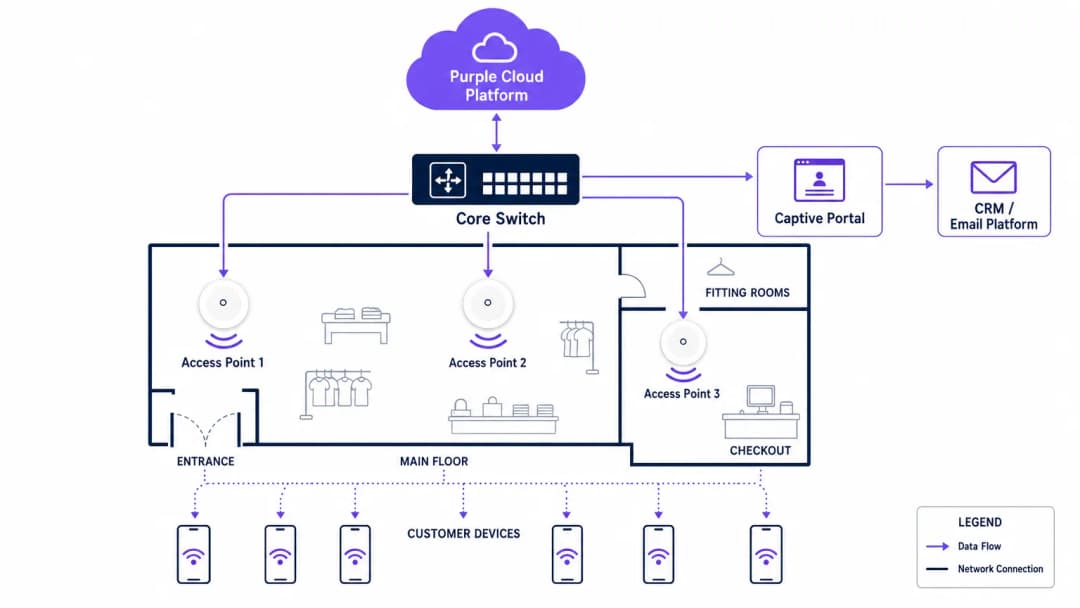
एक्सेस पॉइंट्स को एक मजबूत वायर्ड इंफ्रास्ट्रक्चर से वापस कनेक्ट होना चाहिए। कोर और एज स्विचों को आधुनिक एक्सेस पॉइंट्स का समर्थन करने के लिए पर्याप्त Power over Ethernet (PoE+) के साथ-साथ पर्याप्त अपलिंक क्षमता प्रदान करनी चाहिए। एक मानक मध्यम आकार के रिटेल स्टोर को एज से कोर तक कम से कम 1-Gigabit अपलिंक की आवश्यकता होती है, जबकि उच्च-घनत्व वाले वातावरण या फ्लैगशिप स्टोर्स को 10-Gigabit स्पीड पर एकत्रित होना चाहिए।
बाहरी इंटरनेट सर्किट अक्सर एक उपेक्षित बाधा होता है। वेन्यू ऑपरेटरों को समर्पित, सममित कनेक्शन को प्राथमिकता देनी चाहिए। जैसा कि हमारे गाइड What Is a Leased Line? Dedicated Business Internet में विस्तार से बताया गया है, एक समर्पित सर्किट अतिथि सेवाओं और महत्वपूर्ण रिटेल ऑपरेशन्स दोनों के लिए अपटाइम की गारंटी देने के लिए आवश्यक Service Level Agreements (SLAs) प्रदान करता है।
ऑथेंटिकेशन और Captive Portal
Captive Portal वह महत्वपूर्ण इंटरफ़ेस है जहाँ तकनीकी इंफ्रास्ट्रक्चर व्यावसायिक रणनीति से मिलता है। जब कोई यूजर अतिथि नेटवर्क से कनेक्ट होता है, तो उन्हें इंटरसेप्ट किया जाता है और एक ब्रांडेड पोर्टल पर रीडायरेक्ट किया जाता है जिसके लिए ऑथेंटिकेशन की आवश्यकता होती है। यह फर्स्ट-पार्टी डेटा कैप्चर करने का तंत्र है।
ऑथेंटिकेशन विधियों में आमतौर पर ईमेल, SMS, या सोशल लॉगिन शामिल होते हैं, हालांकि दीर्घकालिक CRM एकीकरण के लिए ईमेल सबसे मजबूत बना हुआ है। ट्रांजिट में यूजर क्रेडेंशियल्स को सुरक्षित करने के लिए पोर्टल को HTTPS पर काम करना चाहिए। इसके अलावा, डिवाइस के MAC एड्रेस को ऑथेंटिकेटेड यूजर प्रोफाइल के साथ जोड़ने के लिए ऑथेंटिकेशन प्रक्रिया को WiFi Analytics बैकएंड के साथ सहजता से एकीकृत होना चाहिए, जिससे बाद में व्यावहारिक ट्रैकिंग सक्षम हो सके।
सुरक्षा और अनुपालन
रिटेल WiFi वातावरण में सुरक्षा दोहरी है: कॉर्पोरेट नेटवर्क की रक्षा करना और अतिथि की रक्षा करना।
- नेटवर्क सेगमेंटेशन: Virtual Local Area Networks (VLANs) का उपयोग करके अतिथि ट्रैफ़िक को कॉर्पोरेट और POS ट्रैफ़िक से तार्किक रूप से अलग किया जाना चाहिए। PCI-DSS अनुपालन के लिए यह एक अनिवार्य आवश्यकता है। एक ही सबनेट पर अतिथि और भुगतान ट्रैफ़िक को मिलाने से तत्काल ऑडिट विफलता होगी।
- एन्क्रिप्शन मानक: हालांकि Captive Portal वाले ओपन नेटवर्क आम बने हुए हैं, उद्योग WPA3 एन्क्रिप्शन की ओर बढ़ रहा है। WPA3-SAE (Simultaneous Authentication of Equals) फॉरवर्ड गोपनीयता प्रदान करता है, जिससे पासवर्ड से समझौता होने पर भी पिछले सत्र सुरक्षित रहते हैं। एंटरप्राइज डिवाइसेज के लिए, 802.1X ऑथेंटिकेशन को कड़ाई से लागू किया जाना चाहिए।
- डेटा गोपनीयता (GDPR): Captive Portal के माध्यम से फर्स्ट-पार्टी डेटा का संग्रह क्षेत्रीय गोपनीयता नियमों, जैसे कि यूरोप में GDPR के अनुरूप होना चाहिए। सहमति स्पष्ट रूप से दी जानी चाहिए, विशिष्ट होनी चाहिए और सामान्य नियमों और शर्तों से अलग होनी चाहिए। WiFi प्लेटफॉर्म प्रदाता को एक अनुपालन डेटा प्रोसेसर के रूप में कार्य करना चाहिए।
अपने विशिष्ट सेटअप को लेकर कोई सवाल हैं?
हमारी टीम 80,000 से अधिक वेन्यू में वेन्यू ऑपरेटरों, IT मैनेजरों और नेटवर्क इंजीनियरों के साथ काम करती है। 20 मिनट का कॉल बुक करें और हम आपको दिखाएंगे कि आपके जैसे अन्य लोगों ने इसे कैसे हल किया।
कार्यान्वयन गाइड
व्यावसायिक स्तर के WiFi नेटवर्क को तैनात करने के लिए तकनीकी प्रदर्शन और व्यावसायिक तालमेल दोनों सुनिश्चित करने के लिए एक व्यवस्थित दृष्टिकोण की आवश्यकता होती है।
चरण 1: आवश्यकताएं एकत्र करना और हितधारकों के साथ तालमेल
IT को अलग-थलग होकर काम नहीं करना चाहिए। हार्डवेयर का चयन करने से पहले, IT आर्किटेक्ट्स को व्यावसायिक उद्देश्यों को परिभाषित करने के लिए मार्केटिंग और ऑपरेशंस निर्देशकों के साथ तालमेल बिठाना चाहिए। Captive Portal के लिए आवश्यक डेटा कैप्चर फ़ील्ड, मौजूदा CRM सिस्टम के साथ एकीकरण बिंदु और आवश्यक विशिष्ट एनालिटिक्स (जैसे, ड्वेल टाइम, ज़ोन फ्लो) निर्धारित करें।
चरण 2: RF साइट सर्वे और प्रेडिक्टिव मॉडलिंग
एक पेशेवर रेडियो फ्रीक्वेंसी (RF) साइट सर्वे अत्यंत आवश्यक है। एक्सेस पॉइंट प्लेसमेंट का अनुमान लगाने के लिए केवल फ्लोर प्लान पर भरोसा करने से अक्सर फिटिंग रूम या चेकआउट कतारों जैसे महत्वपूर्ण क्षेत्रों में कवरेज गैप हो जाते हैं।
इंजीनियरों को शेल्विंग, इन्वेंट्री और आर्किटेक्चरल विशेषताओं के कारण होने वाले एटेन्यूएशन (सिग्नल की कमी) को ध्यान में रखने के लिए प्रेडिक्टिव मॉडलिंग सॉफ्टवेयर का उपयोग करना चाहिए, और इसके बाद एक सक्रिय ऑन-साइट सर्वे करना चाहिए। एक सामान्य नियम प्रति 150 - 200 वर्ग मीटर में एक एक्सेस पॉइंट है, लेकिन हाई-डेंसिटी वाले ज़ोन के लिए केवल कवरेज प्लानिंग के बजाय विशिष्ट क्षमता प्लानिंग की आवश्यकता होती है।
चरण 3: इंफ्रास्ट्रक्चर परिनियोजन और कॉन्फ़िगरेशन
भौतिक इंस्टॉलेशन के दौरान, यह सुनिश्चित करें कि भविष्य के मल्टी-गीगाबिट एक्सेस पॉइंट्स का समर्थन करने के लिए सभी केबलिंग Cat6a मानकों को पूरा करती हो। गेस्ट VLAN पर क्लाइंट आइसोलेशन लागू करने के लिए नेटवर्क कंट्रोलर को कॉन्फ़िगर करें, जिससे कनेक्टेड डिवाइसों के बीच पीयर-टू-पीयर संचार को रोका जा सके। गेस्ट बैंडविड्थ को नियंत्रित करने के लिए Quality of Service (QoS) नीतियां लागू करें, जिससे यह सुनिश्चित हो सके कि महत्वपूर्ण रिटेल संचालन (जैसे कि इन्वेंट्री स्कैनर और POS टर्मिनल) को प्राथमिकता मिले।
चरण 4: Captive Portal और CRM एकीकरण
रुकावटों को कम करते हुए ब्रांड की पहचान को दर्शाने के लिए Captive Portal को डिज़ाइन करें। कन्वर्श़न रेट को अधिकतम करने के लिए डेटा कैप्चर फ़ील्ड को न्यूनतम रखें - आमतौर पर नाम और ईमेल पता। API के माध्यम से पोर्टल को ब्रांड के CRM या मार्केटिंग ऑटोमेशन प्लेटफॉर्म के साथ एकीकृत करें। यह सुनिश्चित करता है कि जब कोई ग्राहक प्रमाणित करता है, तो उनकी प्रोफ़ाइल तुरंत केंद्रीय डेटाबेस में अपडेट या बन जाती है, जिससे स्वचालित स्वागत वर्कफ़्लो या लॉयल्टी प्रोग्राम एकीकरण ट्रिगर हो जाते हैं।
चरण 5: एनालिटिक्स अंशांकन (कैलिब्रेशन) और समीक्षा
एक बार नेटवर्क लाइव हो जाने के बाद, स्टोर के भीतर विशिष्ट भौतिक ज़ोन (जैसे, 'मेन्सवियर', 'एंट्रेंस', 'चेकआउट') को परिभाषित करने के लिए एनालिटिक्स प्लेटफ़ॉर्म को कैलिब्रेट करें। एक मासिक समीक्षा चक्र स्थापित करें जहाँ IT और मार्केटिंग टीमें नेटवर्क कॉन्फ़िगरेशन और स्टोर लेआउट दोनों को बेहतर बनाने के लिए फुटफॉल ट्रेंड, ड्वेल टाइम और नेटवर्क प्रदर्शन मेट्रिक्स का विश्लेषण करें।

सर्वोत्तम प्रथाएं
रिटेल WiFi के ROI को अधिकतम करने के लिए, निम्नलिखित उद्योग सर्वोत्तम प्रथाओं का पालन करें:
- First-Party Data को प्राथमिकता दें: थर्ड-पार्टी कुकीज़ के बंद होने के साथ, इन-स्टोर WiFi, first-party data के सबसे विश्वसनीय स्रोतों में से एक है। सुनिश्चित करें कि आपकी captive portal रणनीति सहमति-आधारित डेटा कैप्चर के लिए ऑप्टिमाइज़्ड है।
- प्रोफ़ाइल-आधारित ऑथेंटिकेशन लागू करें: सहज, सुरक्षित ऑथेंटिकेशन विधियों, जैसे कि Passpoint (Hotspot 2.0) की ओर बढ़ने से यूज़र्स बिना बार-बार captive portals पर नेविगेट किए विभिन्न स्थानों पर ऑटोमैटिक रूप से कनेक्ट हो सकते हैं, जिससे यूज़र अनुभव और डेटा निरंतरता में काफी सुधार होता है।
- लोकेशन एनालिटिक्स का लाभ उठाएं: ग्राहक प्रवाह को समझने के लिए कनेक्टेड डिवाइसेस द्वारा जनरेट किए गए प्रेजेंस डेटा का उपयोग करें। जैसा कि Retail वातावरण में देखा गया है, यह विश्लेषण करना कि किन गलियारों में सबसे अधिक ट्रैफ़िक आता है, मर्चेंडाइजिंग और स्टाफिंग निर्णयों को सूचित कर सकता है।
- Vendor Neutrality सुनिश्चित करें: एक एनालिटिक्स और captive portal ओवरले चुनें, जैसे कि Purple, जो हार्डवेयर-अज्ञेयवादी (hardware-agnostic) हो। यह इंफ्रास्ट्रक्चर लेयर पर वेंडर लॉक-इन को रोकता है और मिश्रित-हार्डवेयर वाले एस्टेट में मानकीकृत एनालिटिक्स की अनुमति देता है।
ट्रबलशूटिंग और जोखिम शमन
बेहतर ढंग से डिज़ाइन किए गए नेटवर्क में भी समस्याएं आती हैं। सेवा की निरंतरता बनाए रखने के लिए सामान्य विफलता मोड को समझना आवश्यक है।
| विफलता मोड | लक्षण | मूल कारण और शमन |
|---|---|---|
| Captive Portal विफलता | यूज़र्स SSID से कनेक्ट होते हैं लेकिन कोई इंटरनेट एक्सेस और कोई लॉगिन प्रॉम्प्ट नहीं मिलता है। | कारण: DNS रीडायरेक्शन विफलता या पोर्टल कंट्रोलर पर SSL सर्टिफिकेट त्रुटियां। शमन: सुनिश्चित करें कि Walled Garden कॉन्फ़िगरेशन ऑथेंटिकेशन से पहले DNS रिज़ॉल्यूशन और पोर्टल के IP/होस्टनेम तक पहुंच की अनुमति देता है। सत्यापित करें कि SSL सर्टिफिकेट वैध और विश्वसनीय हैं। |
| हाई-डेंसिटी डिग्रेडेशन | पीक ट्रेडिंग घंटों के दौरान धीमा थ्रूपुट और बार-बार डिस्कनेक्ट होना। | कारण: को-चैनल व्यवधान या अपर्याप्त AP क्षमता (प्रति रेडियो बहुत अधिक क्लाइंट)। शमन: डायनेमिक चैनल असाइनमेंट लागू करें। WiFi 6 एक्सेस पॉइंट्स पर अपग्रेड करें। सेल के आकार को छोटा करने और कम भीड़भाड़ वाले APs पर रोमिंग को बढ़ावा देने के लिए ट्रांसमिट पावर को कम करें। |
| रॉग एक्सेस पॉइंट्स | समान SSIDs (इविल ट्विन हमलों) के साथ दिखने वाले अनधिकृत नेटवर्क। | कारण: गेस्ट क्रेडेंशियल्स को इंटरसेप्ट करने का प्रयास करने वाले दुर्भावनापूर्ण तत्व। शमन: रॉग APs का ऑटोमैटिक रूप से पता लगाने और उन्हें दबाने के लिए नेटवर्क कंट्रोलर पर वायरलेस इंट्रूज़न प्रिवेंशन सिस्टम (WIPS) सक्षम करें। |
| VLAN लीकेज | गेस्ट डिवाइसेस कॉर्पोरेट IP एड्रेस को पिंग कर सकते हैं। | कारण: कोर राउटर पर गलत तरीके से कॉन्फ़िगर किए गए स्विच पोर्ट या अनुपलब्ध एक्सेस कंट्रोल लिस्ट (ACLs)। शमन: नियमित पेनेट्रेशन टेस्टिंग करें। क्लाइंट आइसोलेशन को सख्ती से लागू करें और सत्यापित करें कि ACLs गेस्ट VLAN से सभी RFC 1918 प्राइवेट एड्रेस स्पेस को ब्लॉक करते हैं। |
ROI और व्यावसायिक प्रभाव
एक रिटेल WiFi परिनियोजन का अंतिम पैमाना व्यवसाय के मुनाफे पर इसका प्रभाव है। IT लीडर्स को इस वैल्यू को व्यापक व्यवसाय के सामने स्पष्ट रूप से प्रस्तुत करना चाहिए।
- अधिक ड्वेल टाइम (ठहरने का समय): विश्वसनीय WiFi ग्राहकों को स्टोर में अधिक समय बिताने के लिए प्रोत्साहित करता है, जो सीधे तौर पर बास्केट साइज में वृद्धि से जुड़ा है।
- मार्केटिंग एट्रिब्यूशन: डिवाइस के MAC एड्रेस को ट्रैक करके, रिटेलर्स ऑनलाइन अभियानों के ऑफलाइन प्रभाव को माप सकते हैं। यदि किसी ग्राहक को एक प्रमोशनल ईमेल मिलता है और वह तीन दिन बाद स्टोर पर आता है, तो WiFi नेटवर्क एट्रिब्यूशन डेटा प्रदान करता है।
- लॉयल्टी एक्विजिशन: लॉयल्टी कार्यक्रमों के लिए Captive Portal एक उच्च-रूपांतरण (हाई-कनवर्जन) एक्विजिशन चैनल है। लॉयल्टी रजिस्ट्रेशन के बदले हाई-स्पीड एक्सेस की पेशकश करने से कार्यक्रम के यूजर बेस का तेजी से विस्तार होता है।
- परिचालन दक्षता (ऑपरेशनल एफिशिएंसी): फुटफॉल एनालिटिक्स डायनेमिक स्टाफिंग मॉडल को सक्षम बनाता है, जिससे पीक आवर्स के दौरान पर्याप्त कवरेज सुनिश्चित होती है और शांत समय के दौरान वेतन लागत कम होती है।
इन-स्टोर WiFi को एक डूबी हुई लागत (संक कॉस्ट) के बजाय एक रणनीतिक संपत्ति के रूप में मानकर, रिटेल उद्यम एक ऐसा नेटवर्क बना सकते हैं जो न केवल डिवाइसों को जोड़ता है बल्कि मौलिक रूप से बिक्री, लॉयल्टी और परिचालन बुद्धिमत्ता को भी संचालित करता है।
मुख्य परिभाषाएं
Captive Portal
एक वेब पेज जिसे सार्वजनिक एक्सेस नेटवर्क के उपयोगकर्ता को एक्सेस दिए जाने से पहले देखने और उसके साथ इंटरैक्ट करने के लिए बाध्य होना पड़ता है। यह प्रमाणीकरण, सेवा की शर्तों की स्वीकृति और डेटा कैप्चर के लिए प्राथमिक तंत्र है।
IT टीमें नेटवर्क को सुरक्षित करने और कानूनी अनुपालन सुनिश्चित करने के लिए Captive Portals तैनात करती हैं, जबकि मार्केटिंग टीमें ग्राहक डेटा प्राप्त करने और वफादारी कार्यक्रम साइन-अप को बढ़ावा देने के लिए उनका उपयोग करती हैं।
MAC एड्रेस (मीडिया एक्सेस कंट्रोल)
नेटवर्क सेगमेंट के भीतर संचार में नेटवर्क एड्रेस के रूप में उपयोग के लिए नेटवर्क इंटरफेस कंट्रोलर (NIC) को असाइन किया गया एक विशिष्ट पहचानकर्ता।
रिटेल WiFi एनालिटिक्स में, MAC एड्रेस का उपयोग स्टोर में डिवाइस की गतिविधि को गुमनाम रूप से ट्रैक करने के लिए किया जाता है, जिससे ड्वेल टाइम और बार-बार आने के बारे में डेटा मिलता है, भले ही उपयोगकर्ता ने प्रमाणीकरण न किया हो।
WiFi 6 (802.11ax)
WiFi मानक की छठी पीढ़ी, जिसे विशेष रूप से OFDMA और BSS कलरिंग जैसी तकनीकों के माध्यम से उच्च-घनत्व वाले वातावरण में प्रदर्शन को बेहतर बनाने के लिए डिज़ाइन किया गया है।
रिटेल बुनियादी ढांचे को अपग्रेड करते समय, IT मैनेजर WiFi 6 निर्दिष्ट करते हैं ताकि यह सुनिश्चित किया जा सके कि नेटवर्क प्रदर्शन को प्रभावित किए बिना सैकड़ों एक साथ आने वाले खरीदारों को संभाल सके।
VLAN (वर्चुअल लोकल एरिया नेटवर्क)
एक लॉजिकल सबनेटवर्क जो विभिन्न भौतिक LAN से जुड़े उपकरणों के समूह को एक साथ लाता है। यह नेटवर्क एडमिनिस्ट्रेटर को अपने सिस्टम की कार्यात्मक और सुरक्षा आवश्यकताओं से मेल खाने के लिए एक सिंगल स्विच्ड नेटवर्क को विभाजित करने की अनुमति देता है।
रिटेल में VLAN अत्यंत महत्वपूर्ण हैं ताकि असुरक्षित अतिथि WiFi ट्रैफिक को अत्यधिक संवेदनशील पॉइंट-ऑफ-सेल (POS) ट्रैफिक से अलग किया जा सके, जिससे PCI-DSS अनुपालन सुनिश्चित हो सके।
प्रथम-पक्ष डेटा (First-Party Data)
वह जानकारी जिसे कोई कंपनी सीधे अपने ग्राहकों से एकत्र करती है और पूरी तरह से उसकी मालिक होती है, जैसे ईमेल पते, खरीदारी का इतिहास और WiFi सेशन डेटा।
थर्ड-पार्टी ट्रैकिंग कुकीज़ के पतन के साथ, रिटेल मार्केटर्स लक्षित अभियानों के लिए फर्स्ट-पक्ष डेटा कैप्चर करने के लिए अतिथि WiFi नेटवर्क पर बहुत अधिक निर्भर करते हैं।
वॉल्ड गार्डन (Walled Garden)
एक नेटवर्क कॉन्फ़िगरेशन जो अनऑथेंटिकेटेड उपयोगकर्ताओं को विशिष्ट वेबसाइटों या IP पतों के सीमित सेट तक पहुँचने की अनुमति देता है, जबकि अन्य सभी इंटरनेट पहुँच को ब्लॉक कर देता है।
IT टीमें वॉल्ड गार्डन कॉन्फ़िगर करती हैं ताकि उपयोगकर्ता नेटवर्क पर पूरी तरह से अधिकृत होने से पहले Captive Portal लॉगिन पेज और आवश्यक ऑथेंटिकेशन सेवाओं (जैसे सोशल मीडिया API) तक पहुँच सकें।
ड्वेल टाइम (Dwell Time)
कोई ग्राहक स्टोर के किसी विशिष्ट क्षेत्र में कितना समय बिताता है, जिसे WiFi एक्सेस पॉइंट्स पर उनके डिवाइस के कनेक्शन या प्रोब रिक्वेस्ट को ट्रैक करके मापा जाता है।
ऑपरेशन्स डायरेक्टर्स स्टोर लेआउट, विंडो डिस्प्ले और प्रमोशनल एंडकैप्स की प्रभावशीलता का मूल्यांकन करने के लिए ड्वेल टाइम एनालिटिक्स का उपयोग करते हैं।
PCI-DSS (पेमेंट कार्ड इंडस्ट्री डेटा सिक्योरिटी स्टैंडर्ड)
प्रमुख कार्ड योजनाओं के ब्रांडेड क्रेडिट कार्ड को संभालने वाले संगठनों के लिए एक सूचना सुरक्षा मानक।
IT आर्किटेक्ट्स को रिटेल नेटवर्क को इस तरह से डिज़ाइन करना चाहिए जिससे यह सुनिश्चित हो सके कि अतिथि WiFi एक्सेस भुगतान बुनियादी ढांचे की सुरक्षा से समझौता न करे, जिससे गंभीर वित्तीय दंड से बचा जा सके।
हल किए गए उदाहरण
50 स्थानों वाली एक राष्ट्रीय रिटेल श्रृंखला अपने वर्तमान गेस्ट WiFi नेटवर्क पर कम मार्केटिंग ऑप्ट-इन दरों (5% से कम) का अनुभव कर रही है, जो एक सामान्य, अनब्रांडेड स्पलैश पेज का उपयोग करता है। CTO को एक नई ओमनीचैनल वफादारी पहल का समर्थन करने के लिए डेटा कैप्चर बढ़ाने की आवश्यकता है।
IT टीम सभी 50 स्थानों पर एक केंद्रीकृत, हार्डवेयर-स्वतंत्र Captive Portal समाधान तैनात करती है। वे सामान्य स्पलैश पेज को एक ब्रांडेड, रिस्पॉन्सिव पोर्टल से बदलते हैं जो मूल्य विनिमय को स्पष्ट रूप से व्यक्त करता है: 'मुफ्त हाई-स्पीड WiFi और तत्काल 10% छूट कोड के लिए लॉग इन करें'। पोर्टल को केवल नाम और ईमेल कैप्चर करने के लिए कॉन्फ़िगर किया गया है, जिससे बाधा कम होती है। महत्वपूर्ण रूप से, प्लेटफॉर्म को API के माध्यम से रिटेलर के CRM के साथ एकीकृत किया गया है। जब कोई उपयोगकर्ता प्रमाणित होता है, तो उनके विवरण CRM में भेज दिए जाते हैं, जिससे छूट कोड वाला एक स्वचालित ईमेल ट्रिगर होता है। नेटवर्क को डिवाइस के MAC एड्रेस को याद रखने के लिए भी कॉन्फ़िगर किया गया है, जिससे 50 स्थानों में से किसी पर भी बाद की यात्राओं पर निर्बाध प्रमाणीकरण की अनुमति मिलती है।
एक बड़ा डिपार्टमेंटल स्टोर सप्ताहांत पर गंभीर नेटवर्क कंजेशन से पीड़ित रहता है। ग्राहक शिकायत करते हैं कि गेस्ट WiFi अनुपयोगी है, और स्टोर मैनेजर रिपोर्ट करता है कि POS टर्मिनल (जो भौतिक नेटवर्क बुनियादी ढांचे को साझा करते हैं) कभी-कभी कनेक्शन खो रहे हैं।
नेटवर्क आर्किटेक्ट एक RF स्पेक्ट्रम विश्लेषण करता है और गंभीर को-चैनल हस्तक्षेप और AP संतृप्ति की पहचान करता है। समाधान योजना में तीन चरण शामिल हैं: 1) OFDMA का लाभ उठाने के लिए उच्चतम-घनत्व वाले क्षेत्रों (फूड कोर्ट, मुख्य प्रवेश द्वार) को WiFi 6 एक्सेस पॉइंट्स पर अपग्रेड करना। 2) कोर राउटर पर सख्त QoS नीतियां लागू करना, POS VLAN के लिए बैंडविड्थ की गारंटी देना और गेस्ट VLAN ट्रैफ़िक को प्रति क्लाइंट 5 Mbps तक सीमित करना। 3) डायनेमिक चैनल असाइनमेंट को सक्षम करना और एक्सेस पॉइंट्स की ट्रांसमिट पावर को कम करना ताकि सेल के आकार को छोटा किया जा सके, जिससे क्लाइंट डिवाइस अधिक कुशलता से रोम करने के लिए प्रोत्साहित हों और ओवरलैप कम हो।
अभ्यास प्रश्न
Q1. आपका रिटेल क्लाइंट ग्राहकों के ईमेल कैप्चर करने के लिए एक अतिथि WiFi नेटवर्क लागू करना चाहता है। वे अपने मौजूदा फ्लैट नेटवर्क आर्किटेक्चर का उपयोग करने की योजना बना रहे हैं, जिससे नए अतिथि एक्सेस पॉइंट्स सीधे उसी स्विच से जुड़ेंगे जो POS टर्मिनलों को संभालता है, बिना किसी VLAN सेगमेंटेशन के। इस दृष्टिकोण का प्राथमिक जोखिम क्या है?
संकेत: भुगतान प्रोसेसिंग के लिए आवश्यक सुरक्षा मानकों पर विचार करें।
मॉडल उत्तर देखें
प्राथमिक जोखिम PCI-DSS अनुपालन का गंभीर उल्लंघन है। एक फ्लैट नेटवर्क असुरक्षित अतिथि उपकरणों को संभावित रूप से POS टर्मिनलों के साथ संवाद करने या उनके ट्रैफिक को इंटरसेप्ट करने की अनुमति देता है। कार्डधारक डेटा वातावरण को अतिथि नेटवर्क से अलग करने के लिए नेटवर्क को VLAN का उपयोग करके विभाजित किया जाना चाहिए।
Q2. एक वेन्यू ऑपरेटर देखता है कि स्टोर में ग्राहकों की संख्या अधिक होने के बावजूद, Captive Portal पर कैप्चर रेट 2% से कम है। पोर्टल वर्तमान में पहला नाम, अंतिम नाम, ईमेल, फोन नंबर, जन्म तिथि और पोस्टकोड मांगता है। IT और मार्केटिंग टीमों को इसे कैसे हल करना चाहिए?
संकेत: ऑथेंटिकेशन प्रक्रिया में होने वाली बाधाओं (फ्रिक्शन) पर विचार करें।
मॉडल उत्तर देखें
कम कैप्चर रेट का कारण ऑथेंटिकेशन प्रक्रिया में अत्यधिक बाधाएं हैं। टीमों को केवल न्यूनतम आवश्यक जानकारी - आमतौर पर केवल नाम और ईमेल मांगने के लिए Captive Portal को फिर से डिज़ाइन करना चाहिए, या सोशल लॉगिन का विकल्प देना चाहिए। एक बार प्रारंभिक संबंध स्थापित हो जाने के बाद अधिक विवरण एकत्र करने के लिए प्रोग्रेसिव प्रोफाइलिंग का उपयोग किया जा सकता है।
Q3. एक व्यस्त शॉपिंग सेंटर में नया तैनात किया गया WiFi 6 नेटवर्क खराब प्रदर्शन का सामना कर रहा है। IT मैनेजर ने नोट किया कि सभी एक्सेस पॉइंट्स 2.4GHz बैंड पर अधिकतम पावर पर ट्रांसमिट कर रहे हैं। किस कॉन्फ़िगरेशन बदलाव की आवश्यकता है?
संकेत: इस बात पर विचार करें कि घने वातावरण में RF सिग्नल कैसे परस्पर क्रिया करते हैं।
मॉडल उत्तर देखें
एक्सेस पॉइंट्स संभवतः गंभीर को-चैनल इंटरफेरेंस (co-channel interference) पैदा कर रहे हैं क्योंकि उनके सेल का आकार बहुत बड़ा है और वे आपस में ओवरलैप हो रहे हैं। IT मैनेजर को सेल के आकार को छोटा करने के लिए एक्सेस पॉइंट्स पर, विशेष रूप से 2.4GHz बैंड पर, ट्रांसमिट पावर को कम करना चाहिए। उन्हें यह भी सुनिश्चित करना चाहिए कि डायनेमिक चैनल असाइनमेंट सक्षम हो और जहाँ संभव हो ग्राहकों को 5GHz बैंड की ओर बढ़ने के लिए प्रोत्साहित करना चाहिए।
इस श्रृंखला में आगे पढ़ें
एक Probe Request क्या है? यह समझना कि डिवाइस नेटवर्क की खोज कैसे करते हैं
यह तकनीकी संदर्भ गाइड IEEE 802.11 probe requests, सक्रिय बनाम निष्क्रिय स्कैनिंग, और स्थान एनालिटिक्स पर MAC randomisation के प्रभाव का गहन विश्लेषण प्रदान करती है। यह नेटवर्क आर्किटेक्ट्स के लिए उच्च-घनत्व वाले डिप्लॉयमेंट को अनुकूलित करने, probe storms को कम करने, और प्रमाणित पहचान परतों का उपयोग करके सटीक, GDPR-अनुरूप डेटा संग्रह सुनिश्चित करने के लिए व्यावहारिक कार्यान्वयन रणनीतियाँ प्रदान करती है।
चिड़ियाघर और थीम पार्क WiFi: अत्यधिक भीड़भाड़ वाले स्थानों के लिए कनेक्टिविटी गाइड
यह गाइड IT लीडर्स और नेटवर्क आर्किटेक्ट्स को चिड़ियाघरों और थीम पार्कों में उच्च प्रदर्शन वाले WiFi को तैनात करने के लिए एक व्यापक ढांचा प्रदान करती है। इसमें आउटडोर RF प्लानिंग, कैप्टिव पोर्टल परिनियोजन, परिवार-सुरक्षित कंटेंट फ़िल्टरिंग, और कनेक्टिविटी को व्यावहारिक परिचालन एनालिटिक्स में बदलने की रणनीतियाँ शामिल हैं।
रिटेल WiFi: ट्रैफ़िक एनालिटिक्स से लेकर व्यक्तिगत इन-स्टोर अनुभवों तक
यह तकनीकी संदर्भ गाइड रिटेल वातावरण में पारंपरिक गेस्ट WiFi से इंटेलिजेंट एज प्लेटफॉर्म में आर्किटेक्चरल बदलाव का विवरण देती है। यह IT लीडर्स को पहचान-संचालित नेटवर्क तैनात करने, CRM सिस्टम के साथ एनालिटिक्स को एकीकृत करने और व्यक्तिगत इन-स्टोर अनुभवों के माध्यम से मापने योग्य ROI प्राप्त करने पर व्यावहारिक मार्गदर्शन प्रदान करती है। RF डिज़ाइन और कैप्टिव पोर्टल अनुकूलन से लेकर क्लाइंटेलिंग एकीकरण और GDPR अनुपालन तक, यह गाइड संपूर्ण एंड-टू-एंड परिनियोजन जीवनचक्र को कवर करती है।
अपने विशिष्ट सेटअप को लेकर कोई सवाल हैं?
हमारी टीम 80,000 से अधिक वेन्यू में वेन्यू ऑपरेटरों, IT मैनेजरों और नेटवर्क इंजीनियरों के साथ काम करती है। 20 मिनट का कॉल बुक करें और हम आपको दिखाएंगे कि आपके जैसे अन्य लोगों ने इसे कैसे हल किया।