
चिड़ियाघर और थीम पार्क WiFi: अत्यधिक भीड़भाड़ वाले स्थानों के लिए कनेक्टिविटी गाइड
यह गाइड IT लीडर्स और नेटवर्क आर्किटेक्ट्स को चिड़ियाघरों और थीम पार्कों में उच्च प्रदर्शन वाले WiFi को तैनात करने के लिए एक व्यापक ढांचा प्रदान करती है। इसमें आउटडोर RF प्लानिंग, कैप्टिव पोर्टल परिनियोजन, परिवार-सुरक्षित कंटेंट फ़िल्टरिंग, और कनेक्टिविटी को व्यावहारिक परिचालन एनालिटिक्स में बदलने की रणनीतियाँ शामिल हैं।
इस गाइड को सुनें
पॉडकास्ट ट्रांसक्रिप्ट देखें
हमारी मुख्य श्रृंखला का हिस्सा: WiFi Analytics Guide →
कार्यकारी सारांश
चिड़ियाघर और थीम पार्क जैसे बड़े पैमाने के मनोरंजन स्थलों के लिए, विश्वसनीय Guest WiFi तैनात करना अब कोई विलासिता नहीं है—यह एक बुनियादी परिचालन आवश्यकता है। आगंतुक डिजिटल मानचित्रों तक पहुँचने, राइड का समय बुक करने और सोशल मीडिया पर अपने अनुभव साझा करने के लिए निर्बाध कनेक्टिविटी की उम्मीद करते हैं। इसके साथ ही, स्थल संचालक पॉइंट-ऑफ-सेल (POS) सिस्टम, मोबाइल टिकटिंग और रीयल-टाइम भीड़ प्रबंधन को संचालित करने के लिए इस बुनियादी ढांचे पर भरोसा करते हैं।
हालांकि, बाहरी (आउटडोर) परिनियोजन अनूठी इंजीनियरिंग चुनौतियाँ पेश करते हैं। भीड़ का अप्रत्याशित घनत्व, पानी और पेड़-पौधों से जुड़े जटिल RF वातावरण, और मजबूत कंटेंट फ़िल्टरिंग की आवश्यकता के लिए नेटवर्क डिज़ाइन के प्रति एक रणनीतिक दृष्टिकोण की आवश्यकता होती है। यह गाइड IT प्रबंधकों, नेटवर्क आर्किटेक्ट्स और CTOs को अत्यधिक भीड़भाड़ वाले बाहरी वातावरण में हाई-डेंसिटी वायरलेस नेटवर्क को डिजाइन करने के लिए व्यावहारिक, वेंडर-न्यूट्रल सिफारिशें प्रदान करती है। हम एक्सेस पॉइंट चयन, बैकहॉल रणनीतियों, कैप्टिव पोर्टल अनुकूलन, और वास्तविक ROI प्राप्त करने के लिए WiFi Analytics का लाभ उठाने के तरीकों का पता लगाएंगे।
तकनीकी गहन विश्लेषण
आउटडोर RF प्लानिंग और एक्सेस पॉइंट चयन
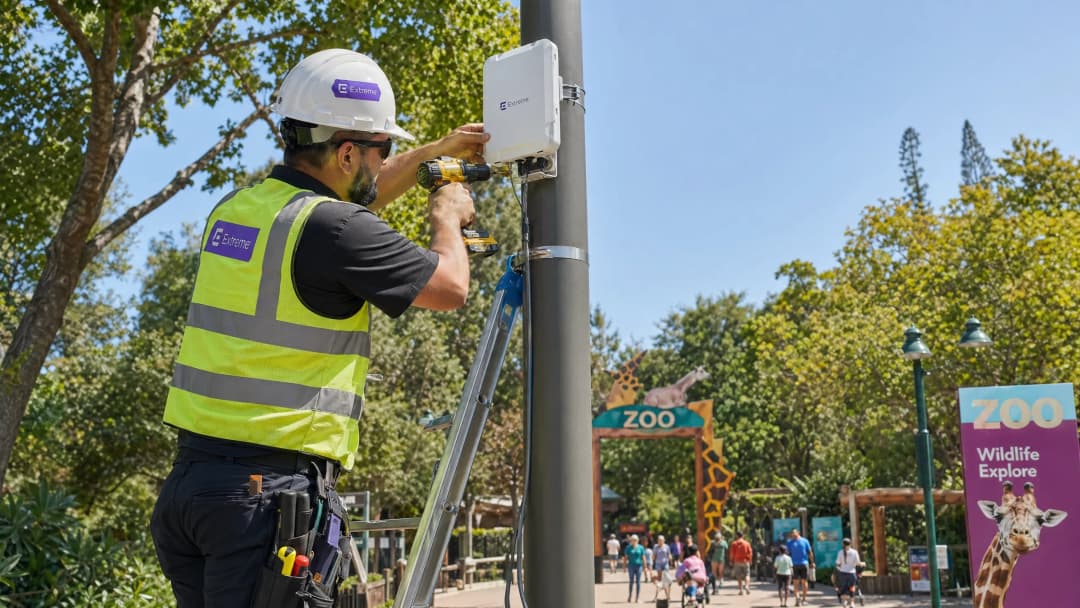
विस्तृत बाहरी क्षेत्रों में वायरलेस बुनियादी ढांचे को तैनात करने के लिए कठोर परिस्थितियों के लिए इंजीनियर किए गए हार्डवेयर की आवश्यकता होती है। इनडोर एक्सेस पॉइंट (APs) नमी, तापमान के उतार-चढ़ाव और UV विकिरण के संपर्क में आने पर तेजी से विफल हो जाएंगे।
बाहरी क्षेत्रों के लिए, IT टीमों को IP66 या IP67 रेटिंग वाले APs को निर्दिष्ट करना चाहिए, जो धूल के प्रवेश और उच्च दबाव वाले पानी के जेट से पूर्ण सुरक्षा सुनिश्चित करते हैं। इसके अलावा, हार्डवेयर को स्थानीय जलवायु के लिए उपयुक्त ऑपरेटिंग तापमान रेंज का समर्थन करना चाहिए, जो आमतौर पर -20°C से +60°C होती है। सार्वजनिक रूप से सुलभ क्षेत्रों में, जैसे कि कतार की लाइनों या कम ऊंचाई वाले ढांचों में, निवेश की सुरक्षा के लिए वैंडल-रेसिस्टेंट (तोड़फोड़-रोधी) एनक्लोजर अनिवार्य हैं।
प्रोटोकॉल के दृष्टिकोण से, IEEE 802.11ax (WiFi 6) नए परिनियोजन के लिए आधारभूत मानक है। अत्यधिक भीड़भाड़ वाले वातावरण में WiFi 6 का महत्वपूर्ण लाभ ऑर्थोगोनल फ्रीक्वेंसी डिवीजन मल्टीपल एक्सेस (OFDMA) है। OFDMA एक एकल AP चैनल को छोटी संसाधन इकाइयों (रिसोर्स यूनिट्स) में विभाजित करने की अनुमति देता है, जिससे कई क्लाइंट्स को एक साथ ट्रांसमिशन सक्षम होता है। यह फूड कोर्ट या पशु प्रदर्शनियों जैसे घने क्षेत्रों में लेटेंसी को काफी कम करता है और दक्षता में सुधार करता है, जहां सैकड़ों डिवाइस एयरटाइम के लिए प्रतिस्पर्धा कर सकते हैं। जबकि WiFi 6E 6 GHz बैंड पेश करता है, अधिकांश बाहरी स्थल परिनियोजन के लिए वर्तमान में अतिरिक्त हार्डवेयर लागत को सही ठहराना मुश्किल है, जिससे प्रदर्शन और बजट को संतुलित करने के लिए WiFi 6 व्यावहारिक विकल्प बन जाता है।
बैकहॉल आर्किटेक्चर और रिडंडेंसी
एक मजबूत RF डिज़ाइन का कोई महत्व नहीं है यदि बैकहॉल बुनियादी ढांचा कुल थ्रूपुट का समर्थन नहीं कर सकता है। चिड़ियाघर और थीम पार्क अक्सर दर्जनों या सैकड़ों एकड़ में फैले होते हैं, जिससे एज स्विच को वापस कोर से जोड़ने के लिए पारंपरिक तांबे की केबलिंग अव्यावहारिक हो जाती है।
आमतौर पर एक हाइब्रिड बैकहॉल दृष्टिकोण की आवश्यकता होती है:
- फाइबर ऑप्टिक रिंग्स: पूरे स्थल पर डिस्ट्रीब्यूशन स्विच को जोड़ने के लिए सिंगल-मोड फाइबर रिंग्स तैनात करें। यह उच्च बैंडविड्थ और लचीलापन प्रदान करता है; यदि एक मार्ग कट जाता है (जैसे, खुदाई के दौरान), तो ट्रैफ़िक विपरीत दिशा में जा सकता है।
- पॉइंट-टू-पॉइंट वायरलेस: उन क्षेत्रों में जहां फाइबर बिछाना पर्यावरणीय रूप से संवेदनशील या अत्यधिक महंगा है (जैसे, किसी झील के पार या घने जंगल की प्रदर्शनी के माध्यम से), उच्च क्षमता वाले पॉइंट-टू-पॉइंट या पॉइंट-टू-मल्टीपॉइंट वायरलेस ब्रिज विश्वसनीय कनेक्टिविटी प्रदान करते हैं।
- Power over Ethernet (PoE): डिस्ट्रीब्यूशन स्विच से, व्यक्तिगत APs को डेटा और पावर दोनों प्रदान करने के लिए Cat6A केबल चलाएं, यह सुनिश्चित करते हुए कि केबल की लंबाई 100-मीटर के मानक से अधिक न हो।
प्राथमिक इंटरनेट अपलिंक के लिए, उपभोक्ता ब्रॉडबैंड अपर्याप्त है। सममित (सिमेट्रिक) बैंडविड्थ और सख्त सर्विस लेवल एग्रीमेंट्स (SLAs) की गारंटी के लिए स्थलों को एक समर्पित लीज्ड लाइन खरीदनी चाहिए, जैसा कि हमारे गाइड What Is a Leased Line? Dedicated Business Internet में विस्तार से बताया गया है।
नेटवर्क सेगमेंटेशन और सुरक्षा
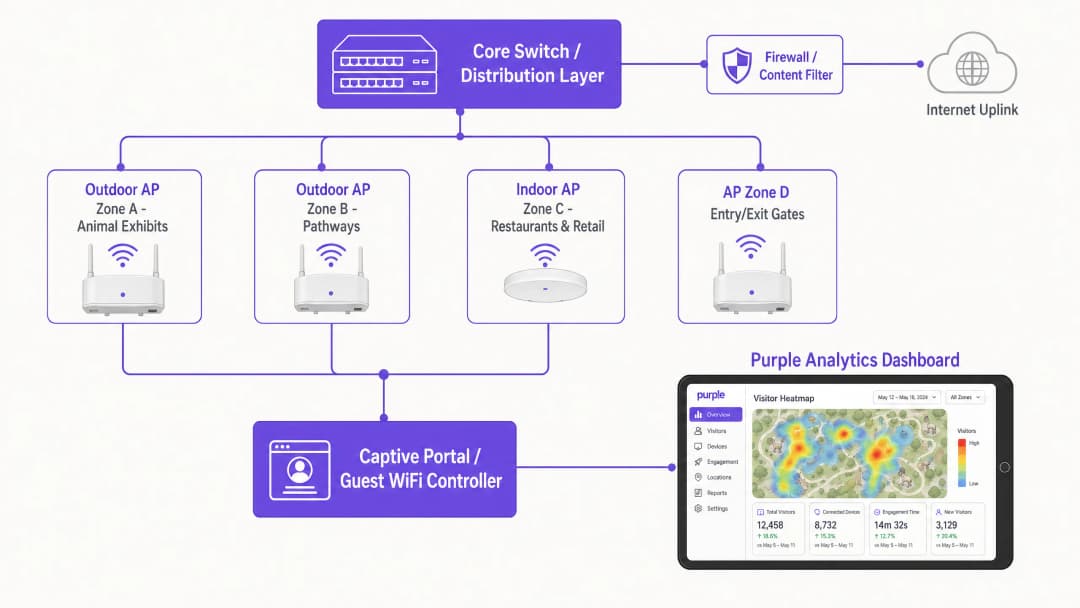
सार्वजनिक अतिथि पहुंच को महत्वपूर्ण स्थल संचालन के साथ मिलाते समय सुरक्षा सर्वोपरि है। नेटवर्क को Virtual Local Area Networks (VLANs) का उपयोग करके तार्किक रूप से विभाजित किया जाना चाहिए।
- अतिथि नेटवर्क: WPA3-Personal (या पुराने डिवाइस समर्थन के लिए WPA2/WPA3 मिश्रित मोड) के साथ कॉन्फ़िगर किया गया और सभी आंतरिक संसाधनों से पूरी तरह से अलग किया गया। अतिथि उपकरणों को एक-दूसरे के साथ संचार करने से रोकने के लिए AP स्तर पर क्लाइंट आइसोलेशन सक्षम किया जाना चाहिए।
- परिचालन नेटवर्क: पॉइंट-ऑफ-सेल (POS) टर्मिनलों, डिजिटल साइनेज और IoT उपकरणों के लिए समर्पित VLANs। यह सुनिश्चित करने के लिए कि केवल कॉर्पोरेट-स्वामित्व वाले डिवाइस ही कनेक्ट हो सकें, सर्टिफिकेट-आधारित प्रमाणीकरण के साथ IEEE 802.1X का उपयोग करके पहुंच सुरक्षित की जानी चाहिए।
स्थल के बुनियादी ढांचे को सुरक्षित करने के बारे में अधिक जानकारी के लिए, हमारा लेख देखें: Protect Your Network with Strong DNS and Security।
अपने विशिष्ट सेटअप को लेकर कोई सवाल हैं?
हमारी टीम 80,000 से अधिक वेन्यू में वेन्यू ऑपरेटरों, IT मैनेजरों और नेटवर्क इंजीनियरों के साथ काम करती है। 20 मिनट का कॉल बुक करें और हम आपको दिखाएंगे कि आपके जैसे अन्य लोगों ने इसे कैसे हल किया।
कार्यान्वयन गाइड
चरण 1: व्यापक साइट सर्वेक्षण
बाहरी वातावरण के लिए कभी भी केवल प्रेडिक्टिव मॉडलिंग पर भरोसा न करें। स्पेक्ट्रम विश्लेषण टूल का उपयोग करके एक सक्रिय RF साइट सर्वेक्षण करें। पेड़, पानी की विशेषताएं और धातु के बाड़े (जैसे पिंजरे या राइड के ढांचे) अप्रत्याशित रूप से RF संकेतों को अवशोषित और परावर्तित करते हैं। सर्वेक्षण में ज़ोन दर ज़ोन कवरेज आवश्यकताओं का मानचित्रण होना चाहिए, जिसमें हस्तक्षेप के स्रोतों और इष्टतम AP माउंटिंग स्थानों की पहचान की गई हो।
चरण 2: कैप्टिव पोर्टल और प्रमाणीकरण प्रवाह
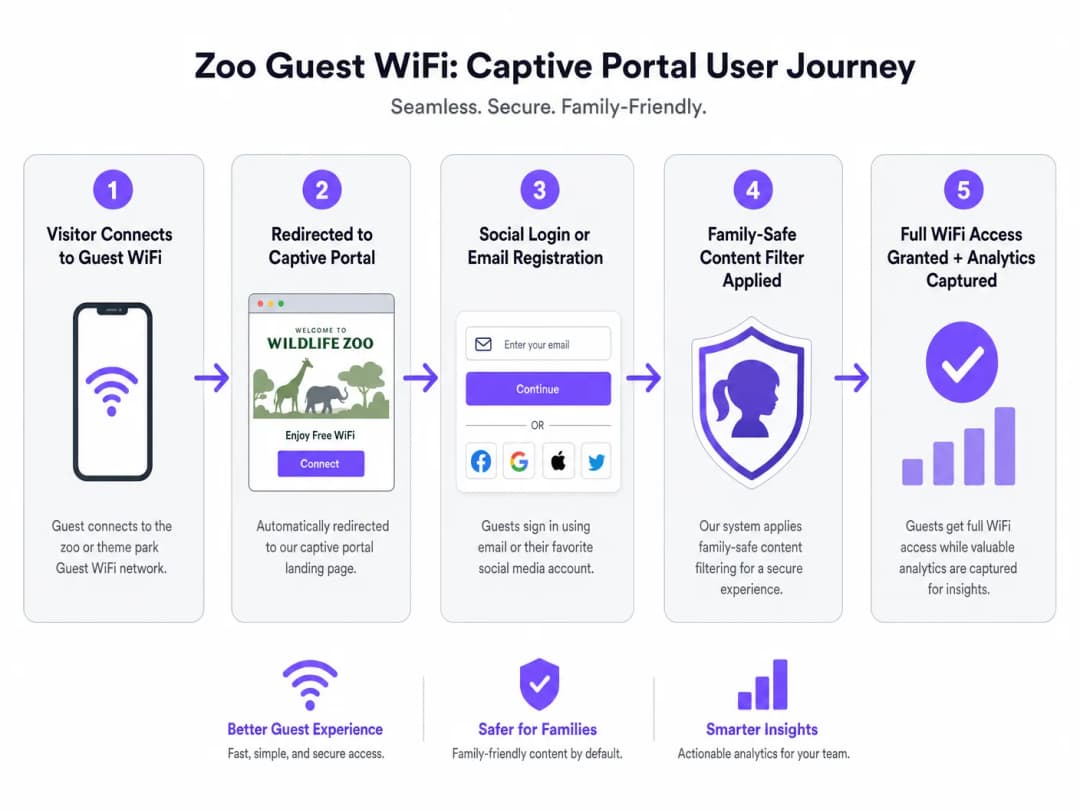
कैप्टिव पोर्टल अतिथि नेटवर्क का प्रवेश द्वार है और डेटा कैप्चर करने का प्राथमिक तंत्र है। कनेक्शन दरों को अधिकतम करने के लिए एक निर्बाध ऑनबोर्डिंग अनुभव महत्वपूर्ण है।
- प्रमाणीकरण विकल्प: पारंपरिक ईमेल पंजीकरण के साथ सोशल लॉगिन (Facebook, Google, Apple) की पेशकश करें। सोशल लॉगिन की पेशकश करने वाले स्थलों में आमतौर पर केवल फॉर्म भरने वाले स्थलों की तुलना में 30-40% अधिक कनेक्शन दरें देखी जाती हैं।
- अनुपालन: सुनिश्चित करें कि पोर्टल डेटा प्रोसेसिंग और मार्केटिंग संचार के लिए स्पष्ट रूप से सहमति प्राप्त करता है, जो GDPR या स्थानीय गोपनीयता नियमों का कड़ाई से पालन करता है।
- बाधा रहित पुन: प्रमाणीकरण: लौटने वाले आगंतुकों को फिर से कैप्टिव पोर्टल प्रवाह को पूरा करने की आवश्यकता के बिना स्वचालित रूप से फिर से जोड़ने के लिए MAC एड्रेस कैशिंग या OpenRoaming जैसे प्लेटफॉर्म का उपयोग करें।
चरण 3: परिवार-सुरक्षित कंटेंट फ़िल्टरिंग लागू करना
चिड़ियाघरों और थीम पार्कों का एक सुरक्षित डिजिटल वातावरण प्रदान करने का कर्तव्य है। इसे बड़े पैमाने पर प्राप्त करने के लिए DNS-आधारित कंटेंट फ़िल्टरिंग सबसे कुशल तरीका है। DNS अनुरोधों को रोककर और वयस्क सामग्री, जुआ या हिंसा के रूप में वर्गीकृत डोमेन के रिज़ॉल्यूशन को ब्लॉक करके, स्थल डीप पैकेट इंस्पेक्शन (DPI) द्वारा उत्पन्न लेटेंसी के बिना स्वीकार्य उपयोग नीतियों को लागू कर सकते हैं। यह फ़िल्टरिंग डिफ़ॉल्ट रूप से अतिथि SSID पर लागू की जानी चाहिए।
सर्वोत्तम प्रथाएं
- औसत के बजाय पीक डेंसिटी के लिए डिज़ाइन करें: स्थल अक्सर पीक अवधि (जैसे, बैंक की छुट्टियां) के दौरान डिवाइस की संख्या को कम आंकते हैं। प्रति आगंतुक 2-3 डिवाइस (स्मार्टफोन, स्मार्टवॉच, टैबलेट) मानकर चलें और उसी के अनुसार AP घनत्व तैयार करें। एक सामान्य नियम यह है कि उच्च-घनत्व वाले क्षेत्रों (फूड कोर्ट, शो एरेना) में प्रति 500 वर्ग मीटर में एक AP और कम-घनत्व वाले पारगमन क्षेत्रों में प्रति 1,000 वर्ग मीटर में एक AP होना चाहिए।
- उपयोगकर्ता यात्रा को प्राथमिकता दें: कैप्टिव पोर्टल मोबाइल-अनुकूलित होना चाहिए और तेजी से लोड होना चाहिए। पोर्टल को रेंडर करने में किसी भी देरी से उपयोगकर्ता इसे छोड़ सकते हैं।
- मौजूदा बुनियादी ढांचे का लाभ उठाएं: बाहरी APs को माउंट करते समय, स्थापना लागत और दृश्य प्रभाव को कम करने के लिए मौजूदा लाइटिंग कॉलम, CCTV पोल या भवन के अग्रभाग का उपयोग करें।
समस्या निवारण और जोखिम शमन
| विफलता का प्रकार | मूल कारण | शमन रणनीति |
|---|---|---|
| लोड के तहत नेटवर्क का ठप होना | अपर्याप्त AP घनत्व; OFDMA समर्थन की कमी। | WiFi 6 बुनियादी ढांचे में अपग्रेड करें; पीक समवर्ती उपयोगकर्ता अनुमानों के आधार पर कवरेज मानचित्रों को फिर से डिज़ाइन करें। |
| कैप्टिव पोर्टल लोड होने में विफल | DNS गलत कॉन्फ़िगरेशन; आक्रामक मोबाइल OS सुरक्षा सेटिंग्स। | सुनिश्चित करें कि वॉल्ड गार्डन में सोशल लॉगिन APIs और कैप्टिव पोर्टल डिटेक्शन URLs (जैसे, captive.apple.com) के लिए सभी आवश्यक डोमेन शामिल हों। |
| खराब रोमिंग प्रदर्शन | AP ट्रांसमिट पावर बहुत अधिक सेट होना, जिससे क्लाइंट दूर के APs से "चिपके" रहते हैं। | डायनेमिक रेडियो प्रबंधन लागू करें; क्लाइंट उपकरणों को नजदीकी APs पर रोम करने के लिए प्रोत्साहित करने के लिए TX पावर कम करें; 802.11k/v/r सक्षम करें। |
ROI और व्यावसायिक प्रभाव
उच्च प्रदर्शन वाले WiFi को तैनात करने का व्यावसायिक मामला बुनियादी कनेक्टिविटी से कहीं आगे तक जाता है। जब इसे एक मजबूत एनालिटिक्स प्लेटफॉर्म के साथ एकीकृत किया जाता है, तो नेटवर्क एक रणनीतिक संपत्ति बन जाता Jasper है।
- परिचालन इंटेलिजेंस: MAC पतों (भले ही वे अनाम हों) को ट्रैक करके, स्थल हीटमैप उत्पन्न कर सकते हैं और आगंतुकों के प्रवाह का विश्लेषण कर सकते हैं। यह डेटा भीड़भाड़ वाले बिंदुओं की पहचान करता है, विशिष्ट प्रदर्शनियों में ठहरने के समय (ड्वेल टाइम) को मापता है, और स्टाफिंग और सुरक्षा तैनाती की जानकारी देता है।
- मार्केटिंग और राजस्व सृजन: कैप्टिव पोर्टल के माध्यम से कैप्चर किया गया फर्स्ट-पार्टी डेटा सीधे स्थल के CRM में जाता है। यह लक्षित पोस्ट-विज़िट ईमेल अभियानों, लॉयल्टी कार्यक्रम नामांकन और व्यक्तिगत ऑफ़र को सक्षम बनाता है, जिससे बार-बार आने वाले आगंतुकों को बढ़ावा मिलता है और लाइफटाइम वैल्यू बढ़ती है।
- बेहतर अतिथि अनुभव: विश्वसनीय कनेक्टिविटी वेफाइंडिंग, मोबाइल फूड ऑर्डरिंग और वर्चुअल कतार के लिए स्थल-विशिष्ट मोबाइल अनुप्रयोगों के उपयोग को सक्षम बनाती है, जिससे सीधे तौर पर अतिथि संतुष्टि स्कोर में सुधार होता है और परिचालन संबंधी बाधाएं कम होती हैं।
जैसा कि Hospitality और Retail क्षेत्रों में इसी तरह के परिनियोजनों में देखा गया है, कनेक्टिविटी और एनालिटिक्स का एकीकरण IT बुनियादी ढांचे को एक लागत केंद्र से राजस्व-सक्षम प्लेटफॉर्म में बदल देता है। अस्थायी परिनियोजन पर अधिक पढ़ने के लिए, Event WiFi: Planning and Deploying Temporary Wireless Networks पर हमारा गाइड देखें।
मुख्य परिभाषाएं
कैप्टिव पोर्टल
एक वेब पेज जो सार्वजनिक नेटवर्क पर उपयोगकर्ता के शुरुआती HTTP अनुरोध को रोकता है, इंटरनेट एक्सेस देने से पहले प्रमाणीकरण या शर्तों की स्वीकृति की आवश्यकता होती है।
स्थल परिनियोजन में आगंतुक डेटा कैप्चर करने और स्वीकार्य उपयोग नीतियों को लागू करने का प्राथमिक तंत्र।
OFDMA (ऑर्थोगोनल फ्रीक्वेंसी डिवीजन मल्टीपल एक्सेस)
WiFi 6 की एक विशेषता जो एक AP को वायरलेस चैनल को छोटे उप-चैनलों (संसाधन इकाइयों) में विभाजित करने की अनुमति देती है, जिससे कई उपकरणों में एक साथ डेटा ट्रांसमिशन सक्षम होता है।
लेटेंसी और ओवरहेड को कम करके कतारों और फूड कोर्ट जैसे उच्च-घनत्व वाले क्षेत्रों में नेटवर्क प्रदर्शन बनाए रखने के लिए महत्वपूर्ण।
IP67 रेटिंग
एक प्रवेश सुरक्षा (इंग्रेस प्रोटेक्शन) मानक जो दर्शाता है कि एक उपकरण धूल से पूरी तरह से सुरक्षित है और पानी में अस्थायी रूप से डूबने का सामना कर सकता है।
बाहरी चिड़ियाघर और थीम पार्क के वातावरण में तैनात हार्डवेयर के लिए न्यूनतम आवश्यक पर्यावरण सुरक्षा रेटिंग।
Walled Garden
एक सीमित वातावरण जो पूर्ण प्रमाणीकरण से पहले वेब सामग्री और सेवाओं तक उपयोगकर्ता की पहुंच को नियंत्रित करता है।
अतिथि के पूरी तरह से कनेक्ट होने से पहले सोशल मीडिया लॉगिन APIs और कैप्टिव पोर्टल डिटेक्शन URLs तक पहुंच की अनुमति देने के लिए कॉन्फ़िगर किया जाना चाहिए।
DNS-आधारित कंटेंट फ़िल्टरिंग
एक सुरक्षा तकनीक जो डोमेन नेम सिस्टम (DNS) को प्रतिबंधित URLs को IP पतों में हल करने से रोककर अनुपयुक्त वेबसाइटों तक पहुंच को ब्लॉक करती है।
प्रदर्शन को प्रभावित किए बिना स्थल के अतिथि नेटवर्क पर परिवार-सुरक्षित ब्राउज़िंग सुनिश्चित करने का मानक तरीका।
क्लाइंट आइसोलेशन
एक वायरलेस सुरक्षा विशेषता जो एक ही AP या VLAN से जुड़े उपकरणों को एक-दूसरे के साथ सीधे संवाद करने से रोकती है।
मैलवेयर के पार्श्व संचलन (लेटरल मूवमेंट) को रोकने और आगंतुक उपकरणों को अनधिकृत पहुंच से बचाने के लिए अतिथि नेटवर्क पर अनिवार्य।
VLAN (Virtual Local Area Network)
नेटवर्क उपकरणों का एक तार्किक समूह जो इस तरह व्यवहार करता है जैसे कि वे एक ही भौतिक नेटवर्क पर हों, चाहे उनका वास्तविक स्थान कुछ भी हो।
महत्वपूर्ण परिचालन प्रणालियों (जैसे, पॉइंट-ऑफ-सेल, CCTV) से अतिथि ट्रैफ़िक को सुरक्षित रूप से विभाजित करने के लिए उपयोग किया जाता है।
MAC कैशिंग
एक विशेषता जो पहले से प्रमाणित डिवाइस के मीडिया एक्सेस कंट्रोल (MAC) पते को याद रखती है, जिससे यह बाद की यात्राओं में कैप्टिव पोर्टल को बायपास कर सकता है।
लौटने वाले आगंतुकों के लिए बाधा रहित कनेक्टिविटी प्रदान करके अतिथि अनुभव में काफी सुधार करता है।
हल किए गए उदाहरण
40 एकड़ में फैला एक क्षेत्रीय चिड़ियाघर अपने पुराने WiFi 4 नेटवर्क को अपग्रेड कर रहा है। IT निदेशक का कहना है कि गर्मियों की छुट्टियों के दौरान, मुख्य फूड कोर्ट (एक 2,000 वर्ग मीटर का आउटडोर प्लाजा) में नेटवर्क पूरी तरह से ठप हो जाता है, जिससे मेहमान कैप्टिव पोर्टल लोड करने में असमर्थ होते हैं। टीम को फूड कोर्ट कवरेज को कैसे डिजाइन करना चाहिए?
- उच्च-घनत्व वाले क्लाइंट को संभालने के लिए OFDMA का लाभ उठाने के लिए IP67 रेटिंग वाले WiFi 6 (802.11ax) APs में अपग्रेड करें।
- छोटे, केंद्रित RF सेल बनाने के लिए सर्वदिशात्मक (ओम्नीडायरेक्शनल) एंटेना के बजाय उच्च-घनत्व वाले दिशात्मक एंटेना (पैच एंटेना) तैनात करें। यह को-चैनल हस्तक्षेप को कम करता है।
- फूड कोर्ट की परिधि के चारों ओर 4-6 APs स्थापित करें, जो अंदर की ओर इशारा करते हों, यह सुनिश्चित करते हुए कि रोमिंग को प्रोत्साहित करने और सेल ओवरलैप को रोकने के लिए ट्रांसमिट पावर को कम किया जाए।
- सुनिश्चित करें कि इस ज़ोन का समर्थन करने वाले बैकहॉल स्विच में कुल ट्रैफ़िक को संभालने के लिए कोर के लिए कम से कम 10Gbps अपलिंक हो।
एक थीम पार्क की मार्केटिंग टीम अतिथि WiFi के माध्यम से कैप्चर किए गए ईमेल पतों की संख्या बढ़ाना चाहती है। वर्तमान में, आगंतुकों को 5-फ़ील्ड वाला फ़ॉर्म (नाम, ईमेल, फ़ोन, पोस्टकोड, जन्म तिथि) भरना होता है। कनेक्शन दर केवल 12% है। कौन से तकनीकी और रणनीतिक बदलाव लागू किए जाने चाहिए?
- वन-क्लिक प्रमाणीकरण विकल्प प्रदान करने के लिए कैप्टिव पोर्टल पर सोशल लॉगिन (Facebook, Google, Apple) लागू करें।
- उन उपयोगकर्ताओं के लिए मैन्युअल फ़ॉर्म फ़ील्ड को केवल नाम और ईमेल तक सीमित करें जो सोशल लॉगिन का उपयोग नहीं करना चाहते हैं।
- 'Seamless Mac Authentication' (MAC कैशिंग) सक्षम करें ताकि लौटने वाले आगंतुक पोर्टल को दोबारा देखे बिना स्वचालित रूप से फिर से जुड़ जाएं, जिससे उपयोगकर्ता अनुभव में सुधार हो।
- सुनिश्चित करें कि उपयोगकर्ता के पूरी तरह से अधिकृत होने से पहले वॉल्ड गार्डन कॉन्फ़िगरेशन सोशल नेटवर्क प्रमाणीकरण APIs के ट्रैफ़िक की अनुमति देता है।
अभ्यास प्रश्न
Q1. आप एक नए 5-एकड़ के बाहरी प्राइमेट बाड़े के लिए WiFi कवरेज डिज़ाइन कर रहे हैं। लैंडस्केप आर्किटेक्ट ने घने पेड़ लगाने और एक बड़ी केंद्रीय पानी की विशेषता निर्दिष्ट की है। प्राथमिक RF विचार क्या हैं, और आपको APs को कैसे स्थापित करना चाहिए?
संकेत: विचार करें कि पानी और पेड़-पौधे RF संकेतों के साथ कैसे परस्पर क्रिया करते हैं, विशेष रूप से 5GHz पर।
मॉडल उत्तर देखें
पेड़-पौधे (जिसमें पानी होता है) और केंद्रीय पानी की विशेषता RF संकेतों को भारी मात्रा में अवशोषित और परावर्तित करेंगे, विशेष रूप से 5GHz बैंड में। यहाँ प्रेडिक्टिव मॉडलिंग गलत होगी। आपको एक सक्रिय साइट सर्वेक्षण करना होगा। केंद्र में सर्वदिशात्मक APs पर भरोसा करने के बजाय, पेड़-पौधों को भेदने के लिए दिशात्मक एंटेना का उपयोग करके परिधि पर अंदर की ओर उन्मुख APs को स्थापित किया जाना चाहिए। बाहरी वातावरण के कारण सुनिश्चित करें कि सभी हार्डवेयर IP67 रेटेड हों।
Q2. एक व्यस्त बैंक हॉलिडे वीकेंड के दौरान, IT हेल्पडेस्क को रिपोर्ट मिलती है कि मुख्य प्लाजा में मेहमान WiFi नेटवर्क से जुड़ सकते हैं लेकिन इंटरनेट तक नहीं पहुँच सकते। कैप्टिव पोर्टल लोड नहीं होता है। APs उच्च उपयोग दिखाते हैं लेकिन ऑनलाइन हैं। सबसे संभावित कारण क्या है, और आप इसे कैसे हल करते हैं?
संकेत: डिवाइस के कैप्टिव पोर्टल तक पहुँचने से पहले IP एड्रेसिंग प्रक्रिया के बारे में सोचें।
मॉडल उत्तर देखें
सबसे संभावित कारण DHCP पूल का समाप्त होना है। उपकरणों की भारी संख्या (जिसमें केवल गुजरने वाले और नेटवर्क की जांच करने वाले उपकरण भी शामिल हैं) ने अतिथि VLAN में सभी उपलब्ध IP पतों का उपभोग कर लिया है। इसका समाधान DHCP लीज समय को कम करना (जैसे, 30 मिनट या 1 घंटे तक) है ताकि उस क्षेत्र से चले गए उपकरणों से IP पते जल्दी से वापस लिए जा सकें, और अतिथि VLAN के लिए सबनेट आकार का विस्तार किया जा सके (एक मानक /24 के बजाय /22 या /21)।
Q3. स्थल के संचालन निदेशक स्टाफिंग को अनुकूलित करने के लिए विभिन्न प्रदर्शनियों में आगंतुकों के ठहरने के समय (ड्वेल टाइम) को ट्रैक करने के लिए WiFi एनालिटिक्स का उपयोग करना चाहते हैं। हालांकि, वे GDPR अनुपालन को लेकर चिंतित हैं, क्योंकि वे MAC पतों को ट्रैक कर रहे हैं। अनुपालन बनाए रखते हुए एनालिटिक्स प्रदान करने के लिए आप समाधान को कैसे डिज़ाइन करते हैं?
संकेत: अनाम स्थान डेटा और व्यक्तिगत रूप से पहचान योग्य जानकारी (PII) के बीच अंतर पर विचार करें।
मॉडल उत्तर देखें
अनुपालन बनाए रखने के लिए, यदि उपयोगकर्ता ने प्रमाणित नहीं किया है, तो WiFi एनालिटिक्स प्लेटफॉर्म को संग्रह के तुरंत बाद MAC पतों को अनाम या छद्म नाम (जैसे, क्रिप्टोग्राफिक हैशिंग के माध्यम से) देना चाहिए। जो उपयोगकर्ता कैप्टिव पोर्टल के माध्यम से प्रमाणित करते हैं, उनके स्थान डेटा को उनके PII (ईमेल/सोशल प्रोफाइल) से जोड़ने के लिए स्पष्ट सहमति प्राप्त की जानी चाहिए। गोपनीयता नीति में स्पष्ट रूप से उल्लेख होना चाहिए कि स्थान एनालिटिक्स एकत्र किए जा रहे हैं और ऑप्ट-आउट तंत्र प्रदान किया जाना चाहिए।
इस श्रृंखला में आगे पढ़ें
Probe Request क्या है? समझें कि डिवाइस नेटवर्क कैसे खोजते हैं
यह तकनीकी संदर्भ गाइड IEEE 802.11 probe requests, एक्टिव बनाम पैसिव स्कैनिंग, और वेन्यू एनालिटिक्स पर MAC रैंडमाइज़ेशन के प्रभाव के बारे में गहराई से जानकारी प्रदान करती है। यह नेटवर्क आर्किटेक्ट्स के लिए हाई-डेंसिटी डिप्लॉयमेंट को अनुकूलित करने, probe storms को कम करने और ऑथेंटिकेटेड आइडेंटिटी लेयर्स का उपयोग करके सटीक, GDPR-अनुपालक डेटा संग्रह सुनिश्चित करने के लिए एक्शनेबल कार्यान्वयन रणनीतियाँ प्रदान करती है।
Retail WiFi: इन-स्टोर WiFi बिक्री, वफादारी और फुटफॉल को कैसे बढ़ाता है
यह आधिकारिक तकनीकी संदर्भ गाइड विवरण देती है कि कैसे एंटरप्राइज़ IT और संचालन टीमें रिटेल WiFi को एक रणनीतिक व्यावसायिक संपत्ति के रूप में तैनात कर सकती हैं। इसमें फर्स्ट-पार्टी डेटा कैप्चर, फुटफॉल एनालिटिक्स और सुरक्षित, हाई-डेंसिटी नेटवर्क आर्किटेक्चर के माध्यम से बुनियादी कनेक्टिविटी से राजस्व-उत्पन्न करने वाले बुनियादी ढांचे में बदलाव को शामिल किया गया है।
रिटेल WiFi: ट्रैफ़िक एनालिटिक्स से लेकर व्यक्तिगत इन-स्टोर अनुभवों तक
यह तकनीकी संदर्भ गाइड रिटेल वातावरण में पारंपरिक गेस्ट WiFi से इंटेलिजेंट एज प्लेटफॉर्म में आर्किटेक्चरल बदलाव का विवरण देती है। यह IT लीडर्स को पहचान-संचालित नेटवर्क तैनात करने, CRM सिस्टम के साथ एनालिटिक्स को एकीकृत करने और व्यक्तिगत इन-स्टोर अनुभवों के माध्यम से मापने योग्य ROI प्राप्त करने पर व्यावहारिक मार्गदर्शन प्रदान करती है। RF डिज़ाइन और कैप्टिव पोर्टल अनुकूलन से लेकर क्लाइंटेलिंग एकीकरण और GDPR अनुपालन तक, यह गाइड संपूर्ण एंड-टू-एंड परिनियोजन जीवनचक्र को कवर करती है।
अपने विशिष्ट सेटअप को लेकर कोई सवाल हैं?
हमारी टीम 80,000 से अधिक वेन्यू में वेन्यू ऑपरेटरों, IT मैनेजरों और नेटवर्क इंजीनियरों के साथ काम करती है। 20 मिनट का कॉल बुक करें और हम आपको दिखाएंगे कि आपके जैसे अन्य लोगों ने इसे कैसे हल किया।