
Retail WiFi: इन-स्टोअर WiFi मुळे विक्री, निष्ठा आणि ग्राहकांची गर्दी (Footfall) कशी वाढते
हे अधिकृत तांत्रिक संदर्भ मार्गदर्शक एंटरप्राइझ IT आणि ऑपरेशन्स टीम्स रिटेल WiFi चा एक धोरणात्मक व्यावसायिक मालमत्ता म्हणून कसा वापर करू शकतात याबद्दल तपशीलवार माहिती देते. यामध्ये बेसिक कनेक्टिव्हिटीपासून ते थेट पहिल्या-पक्षाच्या डेटा कॅप्चर, फूटफॉल विश्लेषण आणि सुरक्षित, हाय-डेन्सिटी नेटवर्क आर्किटेक्चरद्वारे महसूल देणाऱ्या इन्फ्रास्ट्रक्चरमधील बदलांचा समावेश आहे.
हे मार्गदर्शक ऐका
पॉडकास्ट ट्रान्सक्रिप्ट पहा
आमच्या मुख्य मालिकेचा भाग: WiFi Analytics Guide →

कार्यकारी सारांश (Executive Summary)
आधुनिक स्थळ चालक आणि किरकोळ विक्री (retail) उद्योगांसाठी, स्टोअरमध्ये WiFi देणे ही आता केवळ एक सोय राहिलेली नाही; तर तो एक महत्त्वपूर्ण व्यावसायिक पायाभूत सुविधा स्तर बनला आहे. जेव्हा IT आर्किटेक्ट आणि मार्केटिंग लीडर्स नेटवर्कच्या अंमलबजावणीवर एकत्र काम करतात, तेव्हा रिटेल स्टोअर WiFi हे फर्स्ट-पार्टी डेटा संकलन, पादचारी संख्या विश्लेषण (footfall analytics), आणि वैयक्तिकृत ग्राहक संवादासाठी एक शक्तिशाली इंजिन बनते.
हे मार्गदर्शक वरिष्ठ IT मॅनेजर्स, CTOs आणि नेटवर्क आर्किटेक्ट्सना किरकोळ विक्री स्टोअर्समध्ये हाय-डेन्सिटी WiFi तैनात करण्यासाठी एक धोरणात्मक फ्रेमवर्क प्रदान करते. हे केवळ इंटरनेट ॲक्सेस देण्याच्या पलीकडे जाऊन, मोजता येण्याजोगा रिटर्न ऑन इन्व्हेस्टमेंट (ROI) मिळवण्यासाठी नेटवर्क ॲक्सेस लेयर, Captive Portals, आणि ॲनालिटिक्स इंटिग्रेशन्स कसे एकत्र काम करतात हे शोधते. आम्ही शेकडो समकालीन कनेक्शन्स सुरक्षितपणे हाताळण्यासाठी आवश्यक असलेले तांत्रिक आर्किटेक्चर, डेटा संकलनाचे नियमन करणारे अनुपालन आदेश (compliance mandates), आणि निष्ठा व विक्री वाढवण्यासाठी Purple च्या Guest WiFi सारख्या प्लॅटफॉर्मच्या एकत्रीकरणाचे परीक्षण करू. तुम्ही एखाद्या एका फ्लॅगशिप लोकेशनची श्रेणी सुधारत असाल किंवा जागतिक स्तरावरील रिटेल चेनमध्ये पायाभूत सुविधांचे प्रमाणीकरण करत असाल, हे संदर्भ पुस्तक वापरकर्ते आणि व्यवसाय दोघांनाही फायदेशीर ठरेल असे नेटवर्क तयार करण्यासाठी आवश्यक असलेल्या व्हेंडर-न्यूट्रल सर्वोत्तम पद्धती आणि आर्किटेक्चरल निर्णय दर्शवते.
तांत्रिक सखोल विश्लेषण: आर्किटेक्चर आणि मानके
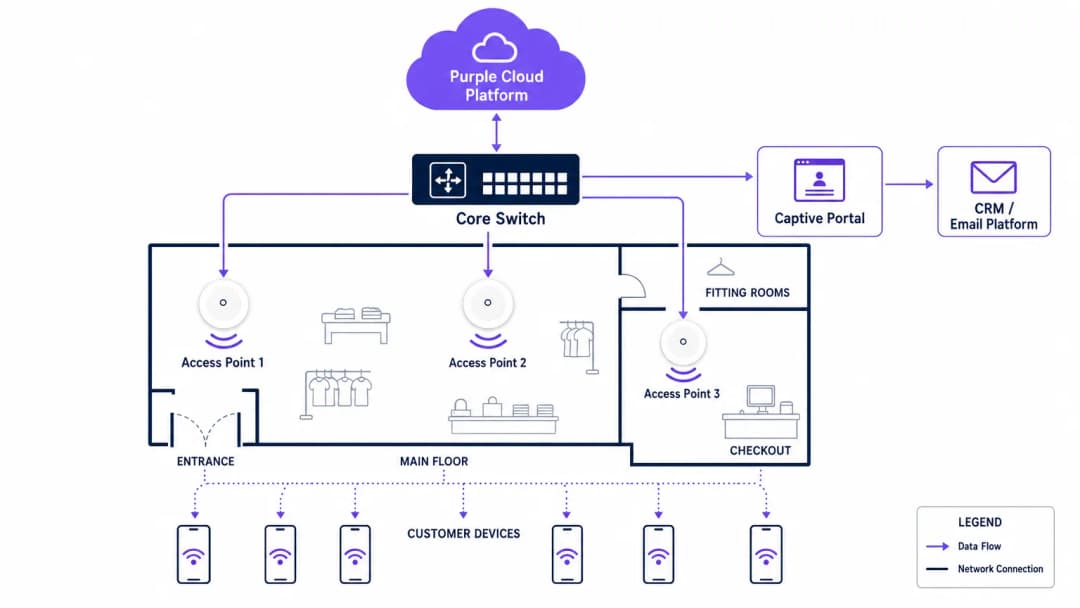
विश्वासार्हता, सुरक्षा आणि डेटा संकलन क्षमता सुनिश्चित करण्यासाठी मजबूत रिटेल WiFi तैनातीसाठी एक संरचित, बहु-स्तरीय आर्किटेक्चर आवश्यक आहे. पायाभूत सुविधांनी अतिथी ट्रॅफिक आणि कॉर्पोरेट किंवा पॉइंट-ऑफ-सेल (POS) सिस्टीम दरम्यान कडक विलगीकरण राखून उच्च ग्राहक घनतेला (client density) सपोर्ट केला पाहिजे.
रेडिओ ॲक्सेस लेयर (The Radio Access Layer)
कोणत्याही आधुनिक रिटेल तैनातीचा पाया रेडिओ ॲक्सेस लेयर आहे, जो IEEE 802.11ax मानकावर तयार केला गेला पाहिजे, ज्याला व्यावसायिकरित्या WiFi 6 म्हणून ओळखले जाते. WiFi असलेल्या रिटेल स्टोअर्समधील कोणत्याही नवीन तैनातीसाठी, WiFi 6 ही अनिवार्य पायाभूत पातळी आहे. रिटेल वातावरणात त्याचा प्राथमिक फायदा केवळ उच्च थ्रूपुट हा नसून, ऑर्थोगोनल फ्रिक्वेन्सी-डिव्हिजन मल्टिपल ॲक्सेस (OFDMA) आणि बेसिक सर्व्हिस सेट (BSS) कलरिंगद्वारे उच्च ग्राहक घनता कार्यक्षमतेने हाताळण्याची त्याची क्षमता आहे.
OFDMA एकाच वायरलेस चॅनेलला लहान उप-चॅनेलमध्ये विभागण्याची परवानगी देते, ज्यामुळे ॲक्सेस पॉईंटला एकाच वेळी अनेक क्लायंट उपकरणांशी संवाद साधता येतो. गर्दीच्या रिटेल वातावरणात, जसे की खरेदीच्या पीक काळात एखाद्या डिपार्टमेंटल स्टोअरमध्ये, हे नेटवर्क खराब होण्यापासून रोखते जे जुन्या WiFi 5 तैनातींमध्ये घडत असे. BSS कलरिंग हे सह-चॅनेल हस्तक्षेप कमी करते, जे विशेषतः मल्टी-टेनंट रिटेल पार्क्समध्ये गंभीर असते जेथे शेजारील नेटवर्क्स अनेकदा एकमेकांवर ओव्हरलॅप होतात.
नेटवर्क पायाभूत सुविधा आणि स्विचिंग
अॅक्सेस पॉईंट्स एका लवचिक वायर्ड पायाभूत सुविधांशी जोडलेले असले पाहिजेत. कोअर आणि एज स्विचेसने आधुनिक अॅक्सेस पॉईंट्सना सपोर्ट करण्यासाठी पुरेशी Power over Ethernet (PoE+) आणि त्यासोबतच पुरेशी अपलिंक क्षमता प्रदान केली पाहिजे. एका सामान्य मध्यम आकाराच्या रिटेल स्टोअरला एज ते कोअर दरम्यान किमान 1-Gigabit अपलिंकची आवश्यकता असते, तर हाय-डेन्सिटी वातावरण किंवा फ्लॅगशिप स्टोअर्सनी 10-Gigabit वेगाने एकत्र जोडणे आवश्यक आहे.
बाह्य इंटरनेट सर्किटकडे वारंवार दुर्लक्ष केले जाणारा अडथळा ठरतो. वेन्यू ऑपरेटर्सनी समर्पित, सममितीय कनेक्शनला प्राधान्य दिले पाहिजे. आमच्या भाडेपट्ट्यावरील लाईन म्हणजे काय? समर्पित व्यावसायिक इंटरनेट या मार्गदर्शिकेत तपशीलवार वर्णन केल्याप्रमाणे, एक समर्पित सर्किट अतिथी सेवा आणि गंभीर रिटेल ऑपरेशन्स या दोन्हीसाठी अपटाइमची हमी देण्यासाठी आवश्यक असणारे सेवा पातळी करार (SLAs) प्रदान करते.
ऑथेंटिकेशन आणि Captive Portal
Captive Portal हा असा महत्त्वाचा इंटरफेस आहे जिथे तांत्रिक पायाभूत सुविधा व्यावसायिक धोरणाला मिळतात. जेव्हा एखादा युझर अतिथी नेटवर्कशी कनेक्ट होतो, तेव्हा त्याला अडवले जाते आणि ऑथेंटिकेशन आवश्यक असलेल्या ब्रँडेड पोर्टलवर रीडायरेक्ट केले जाते. फर्स्ट-पार्टी डेटा कॅप्चर करण्यासाठी ही एक मुख्य यंत्रणा आहे.
ऑथेंटिकेशन पद्धतींमध्ये सामान्यतः ईमेल, SMS किंवा सोशल लॉगिन समाविष्ट असते, जरी दीर्घकालीन CRM इंटिग्रेशनसाठी ईमेल सर्वात मजबूत पर्याय राहिला आहे. ट्रान्झिटमध्ये युझर क्रेडेंशियल्स सुरक्षित ठेवण्यासाठी पोर्टल HTTPS वर ऑपरेट झाले पाहिजे. याशिवाय, ऑथेंटिकेशन प्रक्रिया डिव्हाइसच्या MAC अॅड्रेसला ऑथेंटिकेटेड युझर प्रोफाईलशी जोडण्यासाठी एका WiFi Analytics बॅकएंडसह अखंडपणे इंटिग्रेट केली पाहिजे, ज्यामुळे नंतरच्या वर्तनाचा मागोवा घेणे शक्य होते.
सुरक्षा आणि अनुपालन
रिटेल WiFi वातावरणातील सुरक्षा दुहेरी आहे: कॉर्पोरेट नेटवर्कचे रक्षण करणे आणि अतिथींचे रक्षण करणे.
- नेटवर्क सेगमेंटेशन: Virtual Local Area Networks (VLANs) चा वापर करून अतिथी ट्रॅफिक कॉर्पोरेट आणि POS ट्रॅफिकपासून तार्किकदृष्ट्या वेगळे केले पाहिजे. Payment Card Industry Data Security Standard (PCI DSS) चे पालन करण्यासाठी ही एक अनिवार्य आवश्यकता आहे. एकाच सबनेटवर अतिथी आणि पेमेंट ट्रॅफिक एकत्र केल्यास तातडीने ऑडिट अपयश येईल.
- इन्क्रिप्शन मानके: Captive Portal असलेली खुली नेटवर्क्स सामान्य असली तरी, आता उद्योग WPA3 इन्क्रिप्शनकडे वळत आहे. WPA3-SAE (Simultaneous Authentication of Equals) फॉरवर्ड गुप्तता प्रदान करते, ज्यामुळे पासवर्ड धोक्यात आला असला तरीही मागील सेशन्स सुरक्षित राहतात. एंटरप्राइझ उपकरणांसाठी, 802.1X ऑथेंटिकेशन सक्तीने लागू केले पाहिजे.
- डेटा गोपनीयता (GDPR): Captive Portal द्वारे फर्स्ट-पार्टी डेटाचे संकलन युरोपमधील GDPR सारख्या प्रादेशिक गोपनीयता नियमांचे पालन करणारे असले पाहिजे. संमती स्पष्टपणे दिलेली, विशिष्ट आणि सामान्य अटी व शर्तींपासून वेगळी असली पाहिजे. WiFi प्लॅटफॉर्म प्रदात्याने अनुपालन करणारा डेटा प्रोसेसर म्हणून काम केले पाहिजे.
तुमच्या विशिष्ट सेटअपबद्दल काही प्रश्न आहेत का?
आमची टीम ८०,००० हून अधिक वेन्यूजमधील वेन्यू ऑपरेटर्स, IT मॅनेजर्स आणि नेटवर्क इंजिनिअर्ससोबत काम करते. २० मिनिटांचा कॉल बुक करा आणि तुमच्यासारख्या इतरांनी ही समस्या कशी सोडवली हे आम्ही तुम्हाला दाखवू.
अंमलबजावणी मार्गदर्शिका
व्यावसायिक-दर्जाचे WiFi नेटवर्क तैनात करण्यासाठी तांत्रिक कामगिरी आणि व्यवसाय संरेखन दोन्ही सुनिश्चित करण्यासाठी एक पद्धतशीर दृष्टीकोन आवश्यक आहे.
पायरी १: आवश्यकता गोळा करणे आणि भागधारक संरेखन
IT ने स्वतंत्रपणे काम करू नये. हार्डवेअर निवडण्यापूर्वी, IT आर्किटेक्ट्सनी व्यावसायिक उद्दिष्टे परिभाषित करण्यासाठी विपणन आणि ऑपरेशन्स संचालकांशी संरेखित केले पाहिजे. Captive Portal साठी आवश्यक डेटा कॅप्चर फील्ड, विद्यमान CRM प्रणालींसह एकत्रीकरण बिंदू आणि आवश्यक विशिष्ट विश्लेषणे (उदा. ड्वेल टाईम, झोन फ्लो) निश्चित करा.
पायरी २: RF साईट सर्व्हे आणि प्रेडिक्टिव मॉडेलिंग
व्यावसायिक रेडिओ फ्रिक्वेन्सी (RF) साईट सर्व्हे करणे बंधनकारक आहे. ॲक्सेस पॉईंटच्या प्लेसमेंटचा अंदाज लावण्यासाठी फक्त फ्लोअर प्लॅन्सवर अवलंबून राहिल्याने बऱ्याचदा फिटिंग रूम्स किंवा चेकआउट रांगा यांसारख्या गंभीर क्षेत्रांमध्ये कव्हरेज गॅप्स निर्माण होतात.
शेल्व्हिंग, इन्व्हेंटरी आणि आर्किटेक्चरल वैशिष्ट्यांमुळे होणाऱ्या ॲटेन्युएशनचा अंदाज घेण्यासाठी अभियंत्यांनी प्रेडिक्टिव मॉडेलिंग सॉफ्टवेअर आणि त्यानंतर थेट ऑन-साईट सर्व्हेचा वापर केला पाहिजे. सामान्य नियम म्हणजे प्रति १५० - २०० चौरस मीटरसाठी एक ॲक्सेस पॉईंट, परंतु हाय-डेन्सिटी झोनसाठी केवळ कव्हरेज प्लॅनिंगऐवजी विशिष्ट क्षमता प्लॅनिंगची आवश्यकता असते.
पायरी ३: इन्फ्रास्ट्रक्चर डिप्लॉयमेंट आणि कॉन्फिगरेशन
फिजिकल इन्स्टॉलेशन दरम्यान, भविष्यातील मल्टी-गीगाबीट ॲक्सेस पॉईंट्सना सपोर्ट करण्यासाठी सर्व केबलिंग Cat6a मानकांनुसार असल्याची खात्री करा. गेस्ट VLAN वर क्लायंट आयसोलेशन लागू करण्यासाठी नेटवर्क कंट्रोलर्स कॉन्फिगर करा, ज्यामुळे कनेक्ट केलेल्या डिव्हाइसेसमधील पीअर-टू-पीअर कम्युनिकेशनला प्रतिबंध होतो. गेस्ट बँडविड्थ मर्यादित करण्यासाठी क्वालिटी ऑफ सर्व्हिस (QoS) पॉलिसी लागू करा, ज्यामुळे गंभीर रिटेल ऑपरेशन्सना (जसे की इन्व्हेंटरी स्कॅनर्स आणि POS टर्मिनल्स) प्राधान्य मिळेल याची खात्री होते.
पायरी ४: Captive Portal आणि CRM एकत्रीकरण
घर्षण कमी करत ब्रँडची ओळख प्रतिबिंबित करण्यासाठी captive portal डिझाइन करा. कन्व्हर्जन रेट वाढवण्यासाठी डेटा कॅप्चर फील्ड किमान ठेवा - सामान्यतः नाव आणि ईमेल पत्ता. API द्वारे ब्रँडच्या CRM किंवा मार्केटिंग ऑटोमेशन प्लॅटफॉर्मसह पोर्टल एकत्रित करा. हे सुनिश्चित करते की जेव्हा एखादा ग्राहक ऑथेंटिकेट करतो, तेव्हा त्यांचे प्रोफाईल त्वरित केंद्रीय डेटाबेसमध्ये अपडेट किंवा तयार केले जाते, ज्यामुळे ऑटोमेटेड वेलकम वर्कफ्लो किंवा लॉयल्टी प्रोग्राम इंटिग्रेशन्स सुरू होतात.
पायरी ५: ॲनालिटिक्स कॅलिब्रेशन आणि पुनरावलोकन
एकदा नेटवर्क लाइव्ह झाल्यावर, स्टोअरमधील विशिष्ट भौतिक झोन (उदा., 'मेन्सवेअर', 'एंट्रन्स', 'चेकआउट') परिभाषित करण्यासाठी ॲनालिटिक्स प्लॅटफॉर्म कॅलिब्रेट करा. नेटवर्क कॉन्फिगरेशन आणि स्टोअर लेआउट दोन्ही सुधारण्यासाठी IT आणि विपणन टीम फूटफॉल ट्रेंड, ड्वेल टाईम आणि नेटवर्क परफॉर्मन्स मॅट्रिक्सचे विश्लेषण करतात अशा मासिक पुनरावलोकनाचा क्रम स्थापित करा.

सर्वोत्तम पद्धती
रिटेल WiFi च्या ROI ला जास्तीत जास्त वाढवण्यासाठी, खालील उद्योग सर्वोत्तम पद्धतींचे पालन करा:
- First-Party डेटाला प्राधान्य द्या: थर्ड-पार्टी कुकीज बंद होत असल्याने, इन-स्टोअर WiFi हा first-party डेटाचा सर्वात विश्वसनीय स्त्रोत आहे. तुमची captive portal रणनीती संमती-आधारित डेटा कॅप्चरसाठी ऑप्टिमाइझ केलेली असल्याची खात्री करा.
- प्रोफाइल-आधारित ऑथेंटिकेशन लागू करा: Passpoint (Hotspot 2.0) सारख्या अखंड, सुरक्षित ऑथेंटिकेशन पद्धतींकडे वळल्याने युजर्सना वारंवार captive portals चा वापर न करता वेगवेगळ्या ठिकाणी आपोआप कनेक्ट होण्याची परवानगी मिळते, ज्यामुळे युजर अनुभव आणि डेटा सातत्य लक्षणीयरीत्या सुधारते.
- लोकेशन अॅनालिटिक्सचा लाभ घ्या: ग्राहकांचा फ्लो समजून घेण्यासाठी कनेक्ट केलेल्या डिव्हाइसेसद्वारे व्युत्पन्न केलेला प्रेझेन्स डेटा वापरा. Retail वातावरणात पाहिल्याप्रमाणे, कोणत्या ऐल्समध्ये (aisles) सर्वात जास्त ट्रॅफिक आहे याचे विश्लेषण करून मर्चेंडायझिंग आणि कर्मचारी नियोजनाचे निर्णय घेता येतात.
- व्हेंडर तटस्थता (Vendor Neutrality) सुनिश्चित करा: Purple सारखे अॅनालिटिक्स आणि captive portal ओव्हरले निवडा जे हार्डवेअर-अज्ञेयवादी (hardware-agnostic) आहे. हे इन्फ्रास्ट्रक्चर लेयरवर व्हेंडर लॉक-इन टाळते आणि मिश्र-हार्डवेअर इस्टेटमध्ये प्रमाणित अॅनालिटिक्ससाठी अनुमती देते.
ट्रबलशूटिंग आणि जोखीम कमी करणे
उत्कृष्टपणे डिझाइन केलेल्या नेटवर्कमध्ये देखील समस्या उद्भवू शकतात. सेवा सातत्य राखण्यासाठी सामान्य बिघाड समजून घेणे आवश्यक आहे.
| बिघाड | लक्षण | मूळ कारण आणि उपाय |
|---|---|---|
| Captive Portal बिघाड | युजर्स SSID शी कनेक्ट होतात परंतु त्यांना इंटरनेट अॅक्सेस मिळत नाही आणि कोणतीही लॉगिन सूचना दिसत नाही. | कारण: DNS रिडायरेक्शन अपयश किंवा पोर्टल कंट्रोलरवरील SSL सर्टिफिकेट त्रुटी. उपाय: Walled Garden कॉन्फिगरेशन ऑथेंटिकेशनपूर्वी DNS रिझोल्यूशन आणि पोर्टलच्या IP/होस्टनेममध्ये प्रवेश करण्यास अनुमती देते याची खात्री करा. SSL सर्टिफिकेट्स वैध आणि विश्वसनीय असल्याचे तपासा. |
| हाय-डेन्सिटी डिग्रेडेशन | गर्दीच्या वेळेत कमी थ्रूपुट (slow throughput) आणि वारंवार डिस्कनेक्ट होणे. | कारण: को-चॅनेल इंटरफरन्स किंवा अपुरी AP क्षमता (प्रति रेडिओ खूप जास्त क्लायंट). उपाय: डायनॅमिक चॅनेल असाइनमेंट लागू करा. WiFi 6 अॅक्सेस पॉइंट्सवर अपग्रेड करा. सेलचा आकार कमी करण्यासाठी ट्रान्समिट पॉवर कमी करा आणि कमी गर्दी असलेल्या AP कडे रोमिंगला प्रोत्साहन द्या. |
| रॉग अॅक्सेस पॉइंट्स (Rogue Access Points) | तत्सम SSIDs सह अनधिकृत नेटवर्क्स दिसणे (Evil Twin हल्ले). | कारण: गेस्ट क्रेडेंशियल्स चोरण्याचा प्रयत्न करणारे दुर्भावनायुक्त घटक. उपाय: रॉग APs स्वयंचलितपणे शोधण्यासाठी आणि दाबण्यासाठी नेटवर्क कंट्रोलरवर वायरलेस इंट्रूजन प्रिव्हेंशन सिस्टम्स (WIPS) सक्षम करा. |
| VLAN लीकेज | गेस्ट डिव्हाइसेस कॉर्पोरेट IP पत्त्यांना पिंग करू शकतात. | कारण: चुकीचे कॉन्फिगर केलेले स्विच पोर्ट्स किंवा कोअर राउटरवर नसलेल्या अॅक्सेस कंट्रोल लिस्ट्स (ACLs). उपाय: नियमित पेनिट्रेशन टेस्टिंग करा. क्लायंट आयसोलेशन काटेकोरपणे लागू करा आणि ACLs गेस्ट VLAN कडून सर्व RFC 1918 खाजगी अॅड्रेस स्पेस ब्लॉक करत असल्याचे तपासा. |
ROI आणि व्यावसायिक प्रभाव
रिटेल WiFi उपयोजनाचे अंतिम मोजमाप हे त्याच्या नफ्यावरील प्रभावावरून होते. IT नेत्यांनी हे मूल्य विस्तृत व्यवसायासाठी स्पष्टपणे मांडले पाहिजे.
- वाढलेला ड्वेल टाइम (Dwell Time): विश्वसनीय WiFi ग्राहकांना स्टोअरमध्ये अधिक वेळ घालवण्यास प्रोत्साहित करते, ज्याचा थेट संबंध खरेदीच्या वाढलेल्या आकाराशी असतो.
- मार्केटिंग ॲट्रिब्युशन (Marketing Attribution): डिव्हाइसच्या MAC ॲड्रेसचा मागोवा घेऊन, किरकोळ विक्रेते ऑनलाइन मोहिमांच्या ऑफलाइन प्रभावाचे मोजमाप करू शकतात. जर एखाद्या ग्राहकाला प्रमोशनल ईमेल मिळाला आणि त्याने तीन दिवसांनंतर स्टोअरला भेट दिली, तर WiFi नेटवर्क ॲट्रिब्युशन डेटा प्रदान करते.
- लॉयल्टी एक्विझिशन (Loyalty Acquisition): कॅप्टिव्ह पोर्टल (captive portal) हे लॉयल्टी प्रोग्राम्ससाठी उच्च-रूपांतरण (high-conversion) मिळवणारे चॅनेल आहे. लॉयल्टी नोंदणीच्या बदल्यात हाय-स्पीड ॲक्सेस ऑफर केल्याने प्रोग्रामचा वापरकर्ता बेस वेगाने वाढतो.
- कार्यात्मक कार्यक्षमता: फूटफॉल विश्लेषण डायनॅमिक स्टाफिंग मॉडेल सक्षम करते, ज्यामुळे पीक अवधीत पुरेसे कर्मचारी उपलब्ध राहतील आणि शांत वेळेत मजुरीचा खर्च कमी होईल याची खात्री होते.
इन-स्टोअर WiFi कडे बुडलेल्या खर्चाऐवजी एक धोरणात्मक मालमत्ता म्हणून पाहून, रिटेल उपक्रम असे नेटवर्क तयार करू शकतात जे केवळ डिव्हाइसेस कनेक्ट करत नाही तर मूलभूतपणे विक्री, निष्ठा आणि कार्यात्मक बुद्धिमत्ता वाढवते.
महत्वाच्या व्याख्या
Captive Portal
एक वेब पेज जे सार्वजनिक ऍक्सेस नेटवर्कच्या युझरला ऍक्सेस मिळण्यापूर्वी पाहणे आणि त्यावर संवाद साधणे बंधनकारक असते. ऑथेंटिकेशन, सेवा अटींची स्वीकृती आणि डेटा कॅप्चर करण्यासाठी ही प्राथमिक यंत्रणा आहे.
नेटवर्क सुरक्षित करण्यासाठी आणि कायदेशीर अनुपालन सुनिश्चित करण्यासाठी IT टीम्स Captive Portal तैनात करतात, तर मार्केटिंग टीम्स ग्राहकांचा डेटा मिळवण्यासाठी आणि लॉयल्टी प्रोग्रामच्या साइन-अप्सना प्रोत्साहन देण्यासाठी त्यांचा वापर करतात.
MAC Address (Media Access Control)
नेटवर्क विभागामधील संप्रेषणात नेटवर्क पत्ता म्हणून वापरण्यासाठी नेटवर्क इंटरफेस कंट्रोलर (NIC) ला नियुक्त केलेला एक अनन्य आयडेंटिफायर.
रिटेल WiFi विश्लेषणामध्ये, स्टोअरमधील डिव्हाइसच्या हालचालींचा निनावीपणे मागोवा घेण्यासाठी MAC address चा वापर केला जातो, युझरने ऑथेंटिकेट केले नसले तरीही भेट देण्याची वेळ आणि पुन्हा येणाऱ्या भेटींचा डेटा यातून मिळतो.
WiFi 6 (802.11ax)
WiFi मानकाची सहावी पिढी, जी विशेषतः OFDMA आणि BSS Colouring सारख्या तंत्रज्ञानाद्वारे जास्त गर्दीच्या वातावरणात कामगिरी सुधारण्यासाठी डिझाइन केली आहे.
रिटेल इन्फ्रास्ट्रक्चर अपग्रेड करताना, कार्यक्षमतेत घट न होता नेटवर्क शेकडो एकाच वेळी असणाऱ्या ग्राहकांना हाताळू शकेल याची खात्री करण्यासाठी IT मॅनेजर्स WiFi 6 निवडतात.
VLAN (Virtual Local Area Network)
एक लॉजिकल सबनेटवर्क जे वेगवेगळ्या फिजिकल LAN मधील उपकरणांचा समूह एकत्र आणते. हे नेटवर्क प्रशासकांना त्यांच्या प्रणालींच्या कार्यात्मक आणि सुरक्षा आवश्यकतांशी जुळण्यासाठी एकाच स्विच्ड नेटवर्कचे विभाजन करण्याची परवानगी देते.
किरकोळ विक्री (रिटेल) क्षेत्रात VLAN अत्यंत महत्त्वाचे आहेत, जेणेकरून असुरक्षित गेस्ट WiFi ट्रॅफिक अत्यंत संवेदनशील पॉईंट - ऑफ - सेल (POS) ट्रॅफिकपासून वेगळे केले जाऊ शकते आणि PCI DSS चे पालन सुनिश्चित होते.
फर्स्ट - पार्टी डेटा
कंपनीने थेट तिच्या ग्राहकांकडून गोळा केलेली आणि पूर्ण मालकी असलेली माहिती, जसे की ईमेल पत्ते, खरेदीचा इतिहास आणि WiFi सेशन डेटा.
थर्ड - पार्टी ट्रॅकिंग कुकीजच्या कमतरतेमुळे, रिटेल मार्केटर्स लक्ष्यित मोहिमांसाठी फर्स्ट - पार्टी डेटा मिळवण्यासाठी प्रामुख्याने गेस्ट WiFi नेटवर्कवर अवलंबून असतात.
Walled Garden
एक नेटवर्क कॉन्फिगरेशन जे अनऑथेंटिकेटेड युझर्सना विशिष्ट वेबसाईट किंवा IP ॲड्रेसच्या मर्यादित संचाचा वापर करण्याची परवानगी देते, तर इतर सर्व इंटरनेट ॲक्सेस ब्लॉक करते.
IT टीम्स walled gardens कॉन्फिगर करतात जेणेकरून युझर्स नेटवर्कवर पूर्णपणे ऑथराइज्ड होण्यापूर्वी Captive Portal लॉगिन पेज आणि आवश्यक ऑथेंटिकेशन सेवांचा (जसे की सोशल मीडिया APIs) वापर करू शकतील.
ड्वेल टाईम (Dwell Time)
ग्राहकाने स्टोअरच्या एका विशिष्ट भागात घालवलेला वेळ, जो त्यांच्या डिव्हाइसचे WiFi ॲक्सेस पॉईंट्सशी असणारे कनेक्शन किंवा प्रोब रिक्वेस्ट ट्रॅक करून मोजला जातो.
ऑपरेशन्स डायरेक्टर्स स्टोअरचे लेआउट, विंडो डिस्प्ले आणि प्रमोशनल एंडकॅप्सच्या प्रभावीतेचे मूल्यमापन करण्यासाठी ड्वेल टाईम ॲनालिटिक्सचा वापर करतात.
PCI DSS (Payment Card Industry Data Security Standard)
प्रमुख कार्ड योजनांमधील ब्रँडेड क्रेडिट कार्ड्स हाताळणाऱ्या संस्थांसाठी एक माहिती सुरक्षा मानक.
IT आर्किटेक्ट्सनी रिटेल नेटवर्कची रचना अशा प्रकारे केली पाहिजे जेणेकरून गेस्ट WiFi ॲक्सेसमुळे पेमेंट इन्फ्रास्ट्रक्चरच्या सुरक्षेशी तडजोड होणार नाही आणि मोठे आर्थिक दंड टळतील.
सोडवलेली उदाहरणे
५० ठिकाणे असणाऱ्या एका राष्ट्रीय रिटेल साखळीला त्यांच्या सध्याच्या गेस्ट WiFi नेटवर्कवर कमी मार्केटिंग ऑप्ट-इन दर (५% पेक्षा कमी) मिळत आहे, जे एक जेनेरिक, विना-ब्रँडचे स्प्लॅश पेज वापरते. नवीन ओम्नीचॅनल लॉयल्टी उपक्रमाला पाठबळ देण्यासाठी CTO ला डेटा कॅप्चर वाढवणे आवश्यक आहे.
IT टीम सर्व ५० ठिकाणांवर केंद्रीकृत, हार्डवेअर-स्वतंत्र Captive Portal सोल्यूशन तैनात करते. ते जेनेरिक स्प्लॅश पेजऐवजी एका ब्रँडेड, रिस्पॉन्सिव्ह पोर्टलचा वापर करतात जे मूल्याची देवाणघेवाण स्पष्टपणे मांडते: 'मोफत हाय-स्पीड WiFi आणि तात्काळ १०% सवलत कोड मिळवण्यासाठी लॉग इन करा'. हे पोर्टल केवळ नाव आणि ईमेल कॅप्चर करण्यासाठी कॉन्फिगर केले आहे, ज्यामुळे ग्राहकांना सोपे जाते. महत्त्वाचे म्हणजे, हे प्लॅटफॉर्म API द्वारे रिटेलरच्या CRM शी जोडले गेले आहे. जेव्हा एखादा युझर ऑथेंटिकेट करतो, तेव्हा त्यांचे तपशील CRM कडे पाठवले जातात, ज्यामुळे सवलत कोड असलेला एक स्वयंचलित ईमेल ट्रिगर होतो. हे नेटवर्क डिव्हाइसचा MAC address लक्षात ठेवण्यासाठी देखील कॉन्फिगर केले आहे, ज्यामुळे ५० पैकी कोणत्याही ठिकाणी पुढील भेटीदरम्यान विनासायास ऑथेंटिकेशन शक्य होते.
एका मोठ्या डिपार्टमेंटल स्टोअरला वीकेंडला गंभीर नेटवर्क गर्दीचा सामना करावा लागत आहे. ग्राहकांच्या तक्रारी आहेत की गेस्ट WiFi वापरण्यायोग्य नाही आणि स्टोअर मॅनेजरच्या मते POS टर्मिनल्स (जे फिजिकल नेटवर्क इन्फ्रास्ट्रक्चर सामायिक करतात) काही वेळा कनेक्शन गमावत आहेत.
नेटवर्क आर्किटेक्ट RF स्पेक्ट्रम विश्लेषण करतात आणि गंभीर सह-चॅनेल हस्तक्षेप आणि AP सॅच्युरेशन ओळखतात. निवारण योजनेमध्ये तीन पायऱ्या समाविष्ट आहेत: १) OFDMA चा लाभ घेण्यासाठी सर्वाधिक गर्दीचे झोन (फूड कोर्ट, मुख्य प्रवेशद्वार) WiFi ६ ऍक्सेस पॉईंट्सवर अपग्रेड करणे. २) कोअर राउटरवर कडक QoS पॉलिसी लागू करणे, POS VLAN साठी बँडविड्थची हमी देणे आणि गेस्ट VLAN ट्रॅफिक प्रति क्लायंट ५ Mbps पर्यंत मर्यादित करणे. ३) डायनॅमिक चॅनेल असाइनमेंट सक्षम करणे आणि ऍक्सेस पॉईंट्सची ट्रान्समिट पॉवर कमी करणे जेणेकरून सेलचा आकार मर्यादित होईल, ज्यामुळे क्लायंट डिव्हाइसेस अधिक कार्यक्षमतेने रोमिंग करू शकतील आणि ओव्हरलॅप कमी होईल.
सराव प्रश्न
Q1. तुमच्या रिटेल क्लायंटला ग्राहकांचे ईमेल मिळवण्यासाठी गेस्ट WiFi नेटवर्क सुरू करायचे आहे. ते त्यांच्या सध्याच्या फ्लॅट नेटवर्क आर्किटेक्चरचा वापर करण्याचे नियोजन करत आहेत, ज्यामध्ये VLAN सेगमेंटेशनशिवाय नवीन गेस्ट ॲक्सेस पॉईंट्स थेट त्याच स्विचला जोडले जातील जो POS टर्मिनल्स हाताळतो. या दृष्टिकोनाचा मुख्य धोका कोणता आहे?
टीप: पेमेंट प्रक्रियेसाठी आवश्यक असलेल्या सुरक्षा मानकांचा विचार करा.
नमुना उत्तर पहा
मुख्य धोका म्हणजे PCI DSS चे गंभीर उल्लंघन होय. फ्लॅट नेटवर्कमुळे असुरक्षित गेस्ट डिव्हाइसेस POS टर्मिनल्सशी संवाद साधू शकतात किंवा त्यामधील ट्रॅफिक चोरू शकतात. कार्डधारक डेटाचे वातावरण गेस्ट नेटवर्कपासून पूर्णपणे वेगळे ठेवण्यासाठी VLAN चा वापर करून नेटवर्कचे सेगमेंटेशन करणे आवश्यक आहे.
Q2. एका वेन्यू ऑपरेटरच्या निदर्शनास आले आहे की स्टोअरमधील ग्राहकांची संख्या जास्त असूनही, Captive Portal वरील डेटा मिळवण्याचा दर २% पेक्षा कमी आहे. पोर्टल सध्या नाव, आडनाव, ईमेल, फोन नंबर, जन्मतारीख आणि पिनकोड विचारते. IT आणि मार्केटिंग टीम्सनी याचे निवारण कसे करावे?
टीप: ऑथेंटिकेशन प्रक्रियेत येणाऱ्या अडचणींचा विचार करा.
नमुना उत्तर पहा
कमी डेटा मिळण्याचे मुख्य कारण ऑथेंटिकेशन प्रक्रियेतील गुंतागुंत हे आहे. टीम्सनी Captive Portal ची पुनर्रचना करून फक्त किमान आवश्यक माहिती - सामान्यतः फक्त नाव आणि ईमेल मागितले पाहिजे, किंवा सोशल लॉगिनचा पर्याय दिला पाहिजे. एकदा सुरुवातीचा संबंध प्रस्थापित झाल्यावर अधिक तपशील गोळा करण्यासाठी प्रोग्रेसिव्ह प्रोफाइलिंगचा वापर केला जाऊ शकतो.
Q3. एका गजबजलेल्या शॉपिंग सेंटरमध्ये नुकतेच सुरू केलेल्या WiFi 6 नेटवर्कची कामगिरी खराब होत आहे. IT मॅनेजरच्या लक्षात आले आहे कि सर्व ॲक्सेस पॉईंट्स २.४GHz बँडवर जास्तीत जास्त पॉवरने ट्रान्समिट करत आहेत. यासाठी कोणते कॉन्फिगरेशन बदलणे आवश्यक आहे?
टीप: दाट लोकवस्तीच्या वातावरणात RF सिग्नल्स कसे काम करतात याचा विचार करा.
नमुना उत्तर पहा
ॲक्सेस पॉईंट्सच्या कव्हरेज क्षेत्राचा आकार खूप मोठा आणि एकमेकांवर ओव्हरलॅप होत असल्यामुळे गंभीर को - चॅनल इंटरफेरियन्स (हस्तक्षेप) होत असण्याची शक्यता आहे. IT मॅनेजरने ॲक्सेस पॉईंट्सची ट्रान्समिट पॉवर, विशेषतः २.४GHz बँडवर कमी केली पाहिजे जेणेकरून कव्हरेज क्षेत्र मर्यादित होईल. त्यांनी डायनॅमिक चॅनल असाइनमेंट सुरू असल्याचे देखील सुनिश्चित केले पाहिजे आणि ग्राहकांना शक्य तिथे ५GHz बँडकडे वळण्यासाठी प्रोत्साहित केले पाहिजे.
या मालिकेमध्ये पुढे वाचा
Probe Request म्हणजे काय? डिव्हाइसेस नेटवर्कचा शोध कसा घेतात हे समजून घेणे
हे तांत्रिक संदर्भ मार्गदर्शक IEEE 802.11 probe requests, ऍक्टिव्ह विरुद्ध पॅसिव्ह स्कॅनिंग आणि ठिकाणच्या ॲनालिटिक्सवर MAC randomisation च्या प्रभावाचा सखोल अभ्यास प्रदान करते. हे नेटवर्क आर्किटेक्ट्सना उच्च - घनतेच्या तैनाती ऑप्टिमाइझ करण्यासाठी, probe storms कमी करण्यासाठी आणि ऑथेंटिकेटेड आयडेंटिटी लेयर्सचा वापर करून अचूक, GDPR - सुसंगत डेटा संकलन सुनिश्चित करण्यासाठी ठोस अंमलबजावणी धोरणे देते.
प्राणीसंग्रहालय आणि थीम पार्क WiFi: गर्दीच्या ठिकाणांसाठी कनेक्टिव्हिटी मार्गदर्शक
हे मार्गदर्शक IT लीडर्स आणि नेटवर्क आर्किटेक्ट्सना प्राणीसंग्रहालय आणि थीम पार्क्समध्ये हाय-परफॉर्मन्स WiFi तैनात करण्यासाठी एक सर्वसमावेशक फ्रेमवर्क प्रदान करते. यामध्ये आउटडोअर RF नियोजन, कॅप्टिव्ह पोर्टल उपयोजन, फॅमिली-सेफ कंटेंट फिल्टरिंग आणि कनेक्टिव्हिटीचे उपयुक्त कार्यात्मक विश्लेषणामध्ये रूपांतर करण्याच्या धोरणांचा समावेश आहे.
रिटेल WiFi: ट्रॅफिक ॲनालिटिक्सपासून ते वैयक्तिकृत इन-स्टोअर अनुभवांपर्यंत
हा तांत्रिक संदर्भ मार्गदर्शक रिटेल वातावरणात जुन्या गेस्ट WiFi वरून इंटेलिजेंट एज प्लॅटफॉर्मवर होणाऱ्या आर्केटेक्चरल बदलाचे तपशील देतो. हे IT लीडर्सना ओळख-आधारित नेटवर्क तैनात करणे, CRM सिस्टीमसह ॲनालिटिक्स समाकलित करणे आणि वैयक्तिकृत इन-स्टोअर अनुभवांद्वारे मोजता येण्याजोगा ROI मिळवणे यावर कृतीयोग्य मार्गदर्शन प्रदान करते. RF डिझाइन आणि कॅप्टिव्ह पोर्टल ऑप्टिमायझेशनपासून ते क्लायंटेलिंग इंटिग्रेशन आणि GDPR अनुपालनापर्यंत, हा मार्गदर्शक संपूर्ण एंड-टू-एंड डिप्लॉयमेंट लाइफसायकल कव्हर करतो.
तुमच्या विशिष्ट सेटअपबद्दल काही प्रश्न आहेत का?
आमची टीम ८०,००० हून अधिक वेन्यूजमधील वेन्यू ऑपरेटर्स, IT मॅनेजर्स आणि नेटवर्क इंजिनिअर्ससोबत काम करते. २० मिनिटांचा कॉल बुक करा आणि तुमच्यासारख्या इतरांनी ही समस्या कशी सोडवली हे आम्ही तुम्हाला दाखवू.