
PCI DSS 4.0.1 for hotel WiFi: what the 2025 deadline means for your guest and POS networks
This guide breaks down the mandatory PCI DSS v4.0.1 requirements for hotel WiFi networks, focusing on the March 2025 deadline. It provides actionable guidance for IT leaders on network segmentation, software patching, and wireless scanning to ensure compliance during 2026 assessments.
Video overview
Part of our core series: The Ultimate Guide to Captive Portals →
Executive Summary
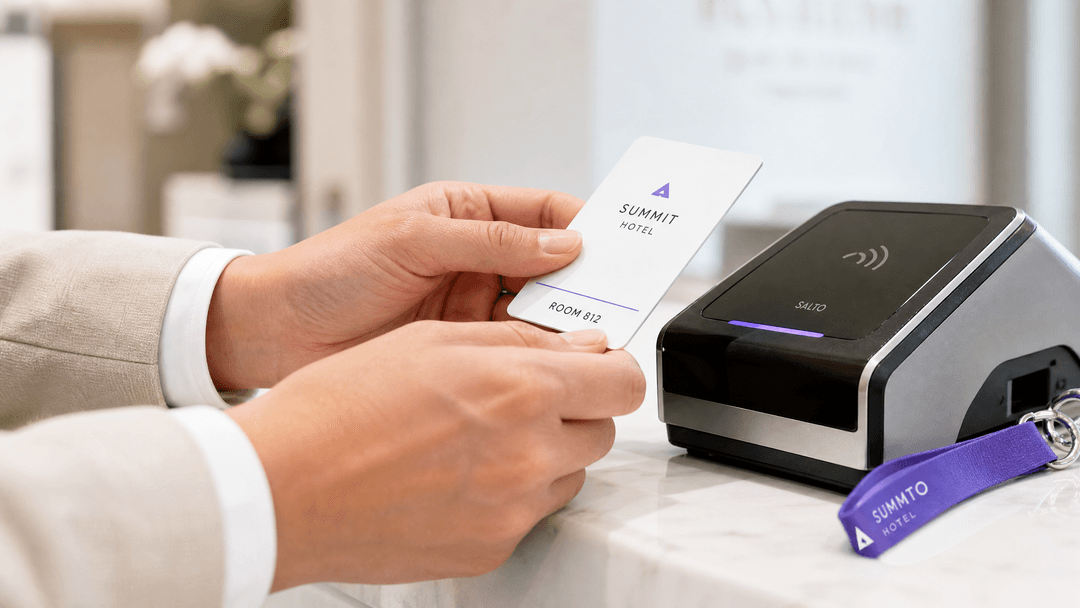
For hotel IT leaders, the grace period is over. As of March 31, 2025, all 51 future-dated requirements in PCI DSS v4.0.1 became fully mandatory [1]. This means any hotel undergoing a Qualified Security Assessor (QSA) assessment in 2026 faces the complete, unmitigated requirement set for the first time. The days of treating guest WiFi as a low-priority, unmanaged network are gone.
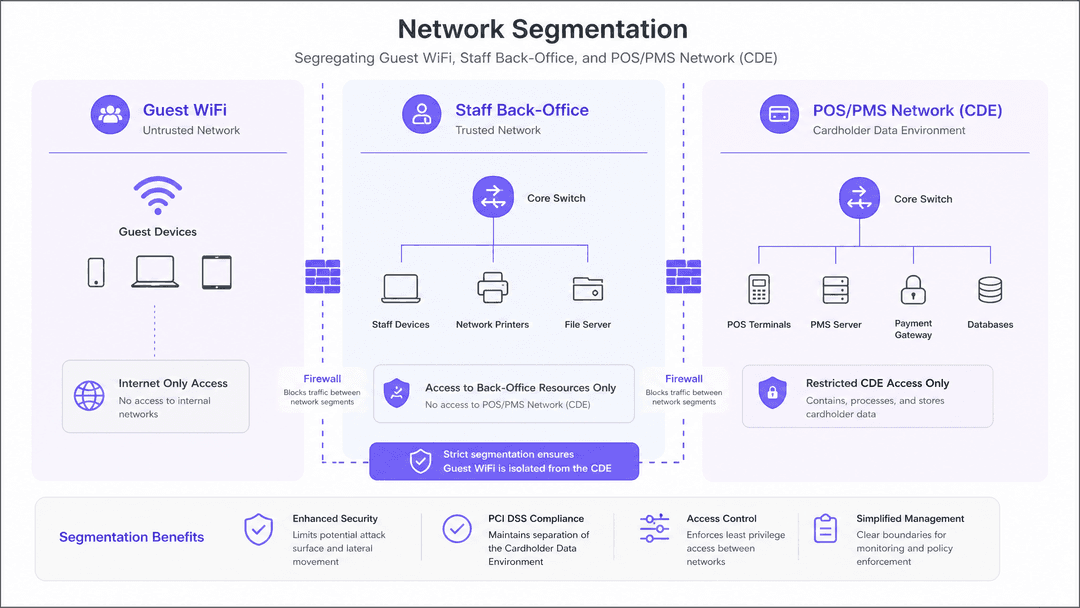
A QSA will scrutinise three critical network segments: your guest WiFi network, the POS/Property Management System (PMS) network which forms your Cardholder Data Environment (CDE), and the staff back-office WiFi. The central challenge is proving that these segments are isolated. If your guest WiFi or staff network can communicate with the CDE, they fall into scope, exponentially increasing your compliance burden. This guide details the specific requirements that cause the most friction in hospitality—specifically Requirements 1.3.1, 6.3.3, 11.2, and 12.3.2—and explains how deploying a modern captive portal, like Purple, establishes the necessary boundaries to keep your guest network out of scope.
Technical Deep-Dive: The QSA's View of Your Network
When an assessor evaluates a hotel property, they assume all connected systems are in scope for PCI DSS until proven otherwise [2]. Network segmentation is not strictly required by PCI DSS, but it is the only practical method to reduce scope. Without it, every device connecting to your guest WiFi must comply with the full standard.
Requirement 1.3.1: The Network Boundary
Requirement 1.3.1 mandates that inbound and outbound traffic to and from the CDE is restricted to only what is necessary [3]. This means you must implement Network Security Controls (NSCs) to explicitly block traffic between the untrusted guest WiFi and the trusted CDE.
This is where the captive portal acts as the critical enforcement boundary. By placing guest traffic on a dedicated, managed guest VLAN and routing it directly to the internet, you demonstrate to the QSA that the guest network has no path to the PMS or POS terminals. Purple's hardware-agnostic cloud overlay integrates with Cisco Meraki, HPE Aruba, Ruckus, Juniper Mist, Ubiquiti UniFi, Cambium, Extreme, and Fortinet to enforce this Layer 2/Layer 3 separation seamlessly.
Requirement 6.3.3: Software Patching
Requirement 6.3.3 states that all software components must be at the current patch level to protect against known vulnerabilities [4]. Critical security patches must be installed within one month of release.
For hotels running legacy, on-premise captive portal software, this is a significant operational burden. If that software sits on a server that touches the CDE, unpatched vulnerabilities can fail an assessment. By shifting to a cloud-managed captive portal, the responsibility for patching the portal infrastructure shifts to the provider. Purple's platform is automatically updated and continuously patched, satisfying this requirement without requiring manual intervention from hotel IT staff.
Requirement 11.2: Rogue AP Scanning
Requirement 11.2 is often a stumbling block. It requires organisations to detect and identify all authorised and unauthorised wireless access points at least quarterly [5]. You cannot simply rely on a policy that forbids rogue APs; you must actively scan for them.
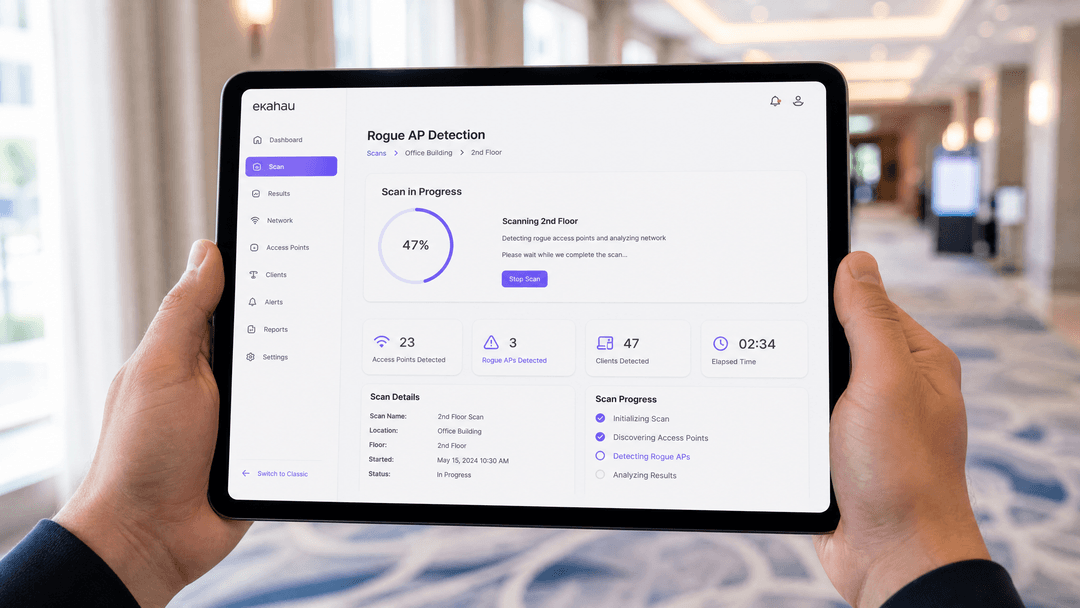
In a hotel environment, guests or staff might plug in a travel router, creating an unauthorised bridge. Integrating your Wireless Intrusion Detection System (WIDS) with your core network management platform is essential. The QSA will ask for the scan reports and the documented procedure for investigating unknown SSIDs.
Requirement 12.3.2: Targeted Risk Analysis
If you use a customised approach to meet any PCI DSS requirement, Requirement 12.3.2 mandates a documented Targeted Risk Analysis (TRA) [6]. You must justify the deviation and prove that your custom control provides equivalent protection. For standard hotel deployments, sticking to the defined requirements and using proven segmentation architectures is far less risky and costly than attempting a customised approach.
Got questions about your specific setup?
Our team works with venue operators, IT managers, and network engineers across 80,000 venues. Book a 20-minute call and we will show you how others like you solved it.
Implementation Guide: Securing the Boundary
To prepare for a 2026 assessment, follow these vendor-neutral steps to isolate your guest WiFi:
- Define the CDE Scope: Identify every device that stores, processes, or transmits cardholder data (e.g., check-in terminals, restaurant POS, spa booking systems). Document their IP addresses and physical locations.
- Implement VLAN Segmentation: Configure your core switches and access points to place guest WiFi traffic on a completely separate VLAN from the CDE and the staff back-office network.
- Deploy Strict Firewall Rules: Configure your firewall to drop all traffic routing between the guest VLAN and the CDE VLAN. Only allow the guest VLAN to route to the WAN (Internet).
- Implement a Cloud Captive Portal: Deploy a cloud-native captive portal to handle guest authentication. This keeps the authentication infrastructure out of your local CDE and ensures it remains fully patched (Requirement 6.3.3).
- Automate WIDS Scanning: Enable rogue AP detection on your wireless controller and schedule automated quarterly reports. Assign an engineer to review and sign off on these reports to satisfy Requirement 11.2.
Best Practices for Hotel WiFi Compliance
- Never bridge staff and guest networks. Staff often want the faster guest WiFi on their personal phones, but allowing staff devices to bridge both networks creates a massive security vulnerability.
- Document everything. A QSA needs evidence. Maintain up-to-date network diagrams showing the flow of cardholder data and the specific firewalls enforcing segmentation.
- Use Identity-Based Networks for Staff. Instead of a shared pre-shared key (PSK) for staff WiFi, use 802.1X or iPSK tied to a directory service like Microsoft Entra ID. This ensures you can revoke access immediately when an employee leaves.
Troubleshooting & Risk Mitigation
Common Failure Mode: The Flat Network Many older hotels operate a flat network where the guest WiFi, back-office PCs, and POS terminals share the same IP subnet. This guarantees an assessment failure under v4.0.1. Mitigation: Immediately engage a network architect to implement VLANs and firewall rules before the QSA arrives.
Common Failure Mode: Unpatched On-Premise Portals Hotels running a captive portal off a local server in the comms room often forget to patch the underlying OS or the portal software. Mitigation: Migrate to a cloud-hosted captive portal service to eliminate the local patching burden.
ROI & Business Impact
The primary ROI of proper network segmentation is risk avoidance. Failing a PCI DSS assessment can result in significant fines from acquiring banks, increased transaction fees, and in severe cases, the revocation of the ability to process credit cards.
By deploying a secure, cloud-managed captive portal and strictly segmenting the guest network, you reduce the scope of the CDE. This translates directly to fewer systems to audit, fewer penetration tests to commission, and a faster, cheaper QSA assessment process. Furthermore, an enterprise-grade captive portal improves the guest experience by offering seamless onboarding, directly supporting the hotel's brand reputation.
Listen to our technical briefing podcast for a deeper dive into these requirements:
For more information on setting up your portal, see our Ultimate Guide to Captive Portals and compare these requirements with our Retail WiFi Compliance Guide.
References
[1] PCI Security Standards Council. "PCI DSS v4.0.1." https://www.middlebury.edu/sites/default/files/2025-01/PCI-DSS-v4_0_1.pdf [2] Elisity. "PCI DSS 4.0 Network Segmentation Requirements Explained." https://www.elisity.com/blog/pci-dss-4-0-network-segmentation-requirements [3] Securious. "PCI DSS Requirement 1 – Explained." https://securious.co.uk/pci-dss-requirement-1-explained/ [4] TrustedSec. "PCI DSS Vulnerability Management: The Most Misunderstood Requirement." https://trustedsec.com/blog/pci-dss-vulnerability-management-the-most-misunderstood-requirement-part-3 [5] Copla. "PCI DSS Requirement 11 Explained." https://copla.com/blog/compliance-regulations/pci-dss-requirement-11-explained/ [6] Drata. "PCI DSS v4.0.1 Targeted Risk Analysis (TRA)." https://help.drata.com/en/articles/11327376-pci-dss-v4-0-1-targeted-risk-analysis-tra
Key Definitions
Cardholder Data Environment (CDE)
The people, processes, and technology that store, process, or transmit cardholder data or sensitive authentication data.
In a hotel, this is typically the network segment containing the Property Management System (PMS) and Point of Sale (POS) terminals.
Network Security Controls (NSCs)
Technologies and processes (like firewalls and VLANs) designed to control traffic into and out of environments where cardholder data is stored.
Required under PCI DSS 1.3.1 to enforce the boundary between the guest WiFi and the CDE.
Captive Portal
A web page that the user of a public-access network is obliged to view and interact with before access is granted.
Acts as the enforcement boundary on the guest WiFi network, authenticating users before they reach the internet.
VLAN (Virtual Local Area Network)
A logical subnetwork that groups a collection of devices from different physical LANs.
Used to logically separate guest traffic from staff and payment traffic on the same physical switches and access points.
Rogue AP
An unauthorised wireless access point that has been installed on a secure network without explicit authorisation.
Requirement 11.2 mandates quarterly scanning to ensure guests or staff haven't plugged in devices that bridge network segments.
Targeted Risk Analysis (TRA)
A documented assessment required when an entity uses a customised approach to meet a PCI DSS requirement.
Required under 12.3.2 if a hotel deviates from standard segmentation or patching controls.
Qualified Security Assessor (QSA)
An independent security organisation qualified by the PCI Security Standards Council to validate an entity's adherence to PCI DSS.
The auditor who will review your network architecture and scan reports to certify compliance.
WIDS (Wireless Intrusion Detection System)
A system that monitors the radio spectrum for the presence of unauthorised, rogue access points.
The technology used to satisfy the quarterly wireless scanning mandate in Requirement 11.2.
Worked Examples
A 150-room boutique hotel currently runs its guest WiFi, staff back-office PCs, and lobby cafe POS terminals on a single flat network (192.168.1.0/24). They are facing their first PCI DSS v4.0.1 assessment in 2026. What is the immediate required action?
The hotel must implement strict network segmentation to reduce the scope of the Cardholder Data Environment (CDE). They need to reconfigure their core switch to create three distinct VLANs: VLAN 10 for Guest WiFi, VLAN 20 for Staff Back-Office, and VLAN 30 for the POS/PMS (the CDE). They must then configure their firewall to explicitly deny all traffic routing between VLAN 10/20 and VLAN 30. Finally, they should deploy a cloud-managed captive portal on VLAN 10 to handle guest authentication off-site.
A hotel group IT manager notices that their legacy, on-premise captive portal server has not received a security patch in 14 months. How does this impact their PCI DSS v4.0.1 compliance?
This is a direct violation of Requirement 6.3.3, which mandates that all software components be kept at the current patch level, with critical patches installed within one month of release. The manager must immediately patch the server. Long-term, they should migrate to a cloud-managed captive portal platform, which shifts the patching responsibility to the vendor and ensures continuous compliance.
Practice Questions
Q1. During an internal audit, you discover that the hotel's on-premise captive portal server is running an operating system version that reached end-of-life six months ago. The vendor no longer provides security patches. What is the compliance impact and the recommended action?
Hint: Consider Requirement 6.3.3 regarding software patching.
View model answer
This is a failure under Requirement 6.3.3. Unpatched, unsupported software cannot be used in or near the CDE. The recommended action is to immediately migrate the captive portal service to a cloud-managed provider (like Purple) to ensure continuous, automated patching and remove the vulnerable server from the local network.
Q2. A hotel general manager argues that since the guest WiFi network does not process credit cards, it does not need to be included in the PCI DSS assessment scope. How should the IT director respond?
Hint: Recall the rule: 'Assume in scope until proven isolated.'
View model answer
The IT director must explain that under PCI DSS scoping rules, all networks are assumed to be in scope unless there is proven, documented network segmentation (Requirement 1.3.1). If the guest WiFi is on a flat network and can technically route traffic to the POS systems, it is in scope. To remove it from scope, they must implement and document strict firewall rules and VLAN segmentation.
Q3. To save money, a hotel decides to manually walk the property once a year with a laptop to check for rogue WiFi networks, rather than investing in a WIDS solution. Will this satisfy the QSA?
Hint: Check the required frequency for wireless scanning under Requirement 11.2.
View model answer
No, this will not satisfy the QSA. Requirement 11.2 explicitly mandates that rogue wireless detection must be performed at least quarterly. A once-a-year manual check fails the frequency requirement. The hotel must automate this process via a WIDS or commit to documented, quarterly manual scans.
Continue reading in this series
Ubiquiti UniFi guest portal not redirecting: causes and fixes
This guide isolates a UniFi guest portal redirect failure by following the guest state, redirect, pre-authorisation route and controller authorisation in sequence. It gives venue IT teams a sourced method to address guest-network versus Hotspot confusion, external portal hand-offs, current UniFi OS account requirements and DNS isolation testing.
Cisco Meraki splash page not working: a troubleshooting flowchart
This practical day-two guide isolates where a Cisco Meraki splash flow has failed: client authorisation, HTTP redirect initiation, walled-garden reachability or RADIUS sign-on. It gives venue IT teams a controlled evidence path, so they can restore Guest WiFi without making broad changes to a live estate.
Enterprise Guest WiFi Setup Guide: VLAN Segmentation, Security, and Captive Portals
This technical guide shows IT teams how to set up Guest WiFi as a controlled internet-access service, using VLAN segmentation, firewall policy and a captive portal. It also explains how Purple's registration forms and onboarding controls support a proportionate visitor experience without weakening the boundary around staff, payment and operational systems.
Got questions about your specific setup?
Our team works with venue operators, IT managers, and network engineers across 80,000 venues. Book a 20-minute call and we will show you how others like you solved it.