Bandwidth management is the process of measuring, controlling, and shaping network traffic to ensure that business-critical applications maintain reliable internet connectivity. In commercial venues, office buildings, and public spaces, unmanaged WiFi networks frequently suffer from severe performance bottlenecks when guest devices compete for available airtime.
Without active bandwidth control, bandwidth-heavy activities—such as 4K video streaming, background cloud backups, or large file downloads—can saturate the connection. This leads to latency spikes, dropped VoIP calls, and slow credit card processing at point-of-sale terminals.
How bandwidth management affects network performance
In unmanaged wireless environments, every connected device competes equally for access to the access point radio. Because wireless spectrum is a shared medium, a small number of heavy users can consume up to 80% of total network capacity.
Effective bandwidth management introduces policies that govern data packet queues. By prioritizing real-time operational data over bulk downloads, network administrators maintain high quality of experience (QoE) across both operational infrastructure and guest WiFi networks .
Comparing bandwidth management techniques
Different network management techniques operate at various layers of the OSI model to regulate traffic flow and enforce fair usage policies across connected devices:
Key techniques for bandwidth monitoring and control
- Quality of Service (QoS) and 802.11e WMM: Wireless Multimedia (WMM) extensions classify wireless frames into Voice, Video, Best Effort, and Background access categories, ensuring latency-sensitive data receives priority access to the RF medium.
- Traffic shaping and policing: Traffic shaping buffers incoming packet spikes to maintain smooth throughput, whereas policing drops non-conforming packets that exceed pre-configured bandwidth thresholds.
- Deep Packet Inspection (DPI): Modern wireless controllers and firewalls analyze packet headers and payloads to classify traffic by application type, enabling granular policies like throttling streaming media while allowing productivity apps.
- Dynamic rate limiting: Automatically adjusts per-user bandwidth caps based on real-time overall network utilization, granting higher speeds during quiet hours and tightening caps when total venue traffic spikes.
Strategies to eliminate bandwidth congestion
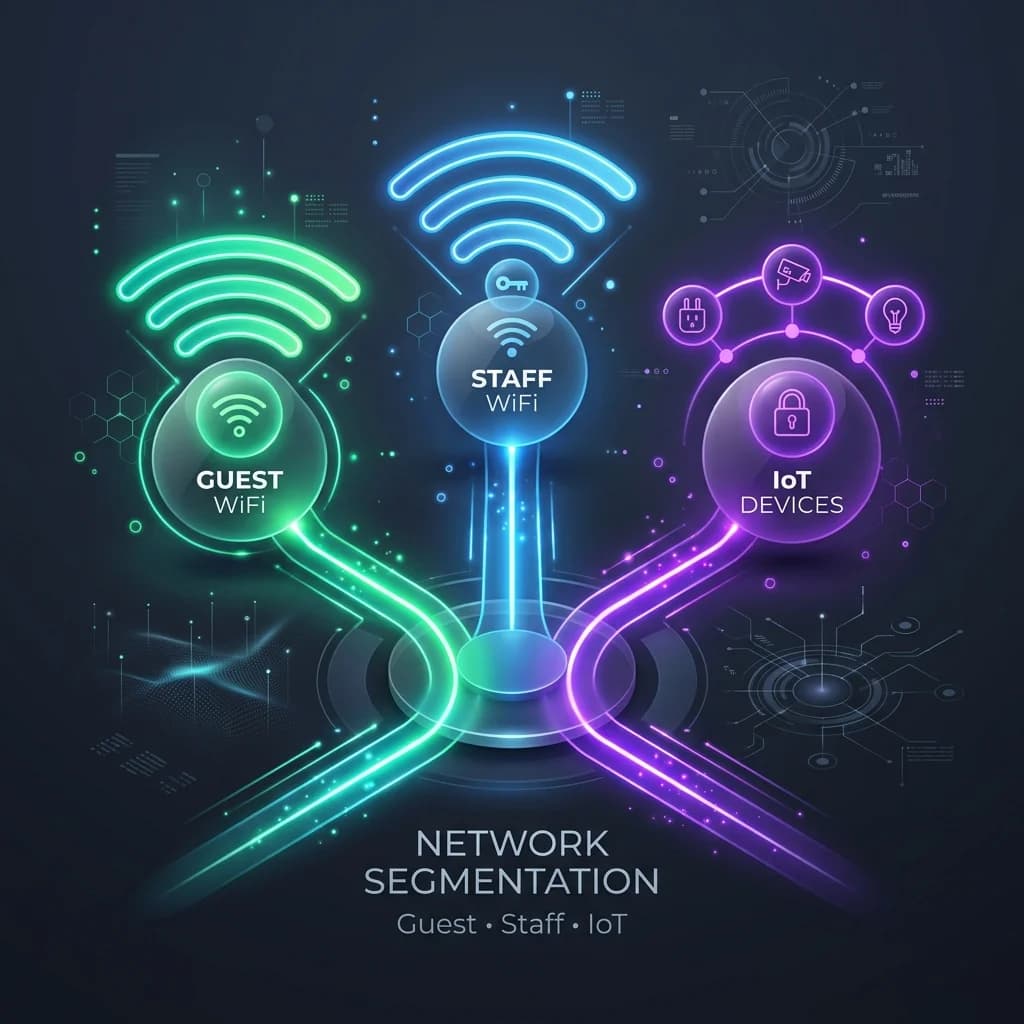
- Isolate business and guest traffic via VLANs: Configure separate Virtual Local Area Networks (VLANs) for corporate staff, POS terminals, and guest WiFi users to isolate broadcast domains and apply independent QoS profiles.
- Implement tiered bandwidth policies: Assign basic bandwidth caps (e.g. 3-5 Mbps) for free guest WiFi access, which is sufficient for web browsing and email while preventing 4K streaming from hogging capacity.
- Utilize client airtime fairness: Enable airtime fairness on dual-band and tri-band access points to prevent older legacy clients (802.11b/g/n) from consuming excessive radio time compared to modern Wi-Fi 6/6E clients.
- Schedule high-bandwidth updates: Configure corporate laptops and IoT devices to defer large operating system updates and cloud backups to off-peak hours.
Monetizing guest WiFi with Purple Paid WiFi
Providing unmanaged unlimited bandwidth on public WiFi networks strains infrastructure and increases operational costs. Purple Paid WiFi enables venue operators to convert bandwidth management into a revenue stream through flexible service tiers:
- Free Complimentary Tier: Offer visitors baseline connectivity (e.g. 3 Mbps) for social media, web browsing, and messaging.
- Paid Premium Tier: Allow power users, business travelers, and conference attendees to purchase high-speed bandwidth passes (e.g. 25-50 Mbps) for video conferencing and large file transfers.
- Operational Prioritization: Safeguard critical venue operations by reserving dedicated bandwidth channels for point-of-sale systems, digital signage, and staff operations.
Frequently asked questions about bandwidth management
What is the difference between bandwidth throttling and traffic shaping?
Bandwidth throttling strictly limits the maximum data transfer rate (e.g. capping a connection at 5 Mbps), whereas traffic shaping delays specific non-essential data packets to smooth out overall traffic flow without necessarily reducing maximum connection speed.
How much bandwidth should I allocate per guest WiFi user?
For standard venue guest WiFi, allocating 3 Mbps to 5 Mbps download per user provides a fast experience for web browsing, email, and social media while protecting the network from saturation. For HD video streaming or remote work, 15 Mbps to 25 Mbps is recommended.
Can bandwidth management protect business POS systems?
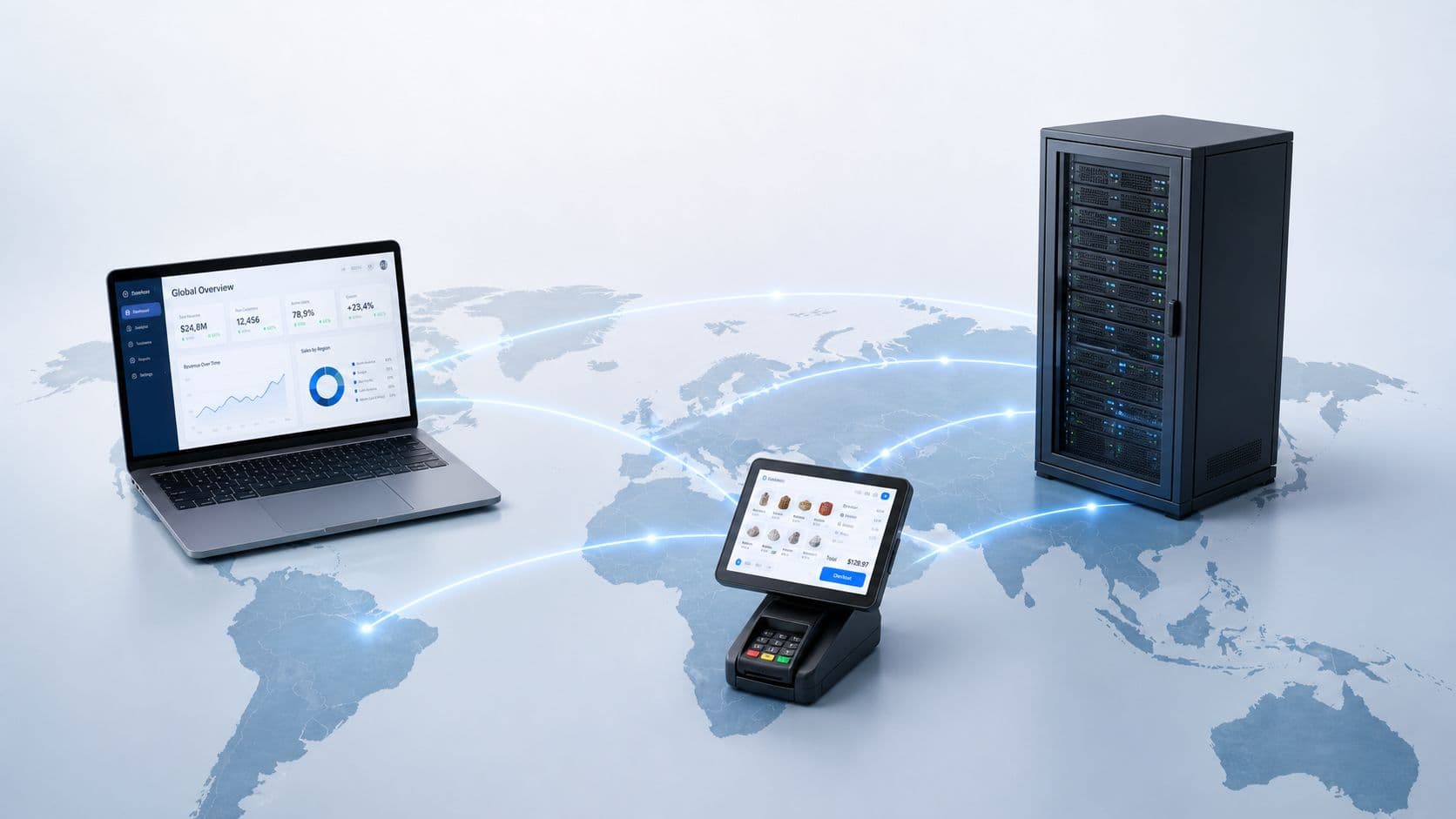
Yes. By implementing Quality of Service (QoS) rules and separate VLANs, credit card processing and POS systems receive top-priority queueing, ensuring fast transaction approvals even when guest WiFi is experiencing peak usage.
Does Purple support tiered guest WiFi bandwidth limits?
Yes. Purple integrates with enterprise hardware from Cisco Meraki, HPE Aruba, Ruckus, and Ubiquiti UniFi to enforce per-user rate limits, custom session limits, and paid premium bandwidth access.
Optimize your venue bandwidth with Purple
Eliminate network congestion, protect POS reliability, and unlock new revenue streams with Purple's cloud-managed bandwidth control and guest WiFi solutions.