
Cisco ISE vs. Purple WiFi: How They Compare and Work Together
This guide explains how Cisco ISE and Purple WiFi serve distinct but complementary roles in enterprise networks. It details how to use Cisco ISE for secure 802.1X corporate access while leveraging Purple for GDPR-compliant guest WiFi, marketing analytics, and CRM integration.
Listen to this guide
View podcast transcript

নির্বাহী সারাংশ
এন্টারপ্রাইজ নেটওয়ার্ক আর্কিটেকচার কর্পোরেট নিরাপত্তা এবং বাণিজ্যিক অতিথি যুক্ততার মধ্যে উদ্বেগের একটি স্পষ্ট বিভাজনের দাবি রাখে। যখন cisco ise বনাম purple wifi মূল্যায়ন করা হয়, তখন অনেক আইটি লিডার যে ভুলটি করেন তা হলো এগুলোকে প্রতিদ্বন্দ্বী প্ল্যাটফর্ম হিসেবে দেখা। তারা তা নয়। Cisco Identity Services Engine (ISE) হলো সুরক্ষিত কর্মী এবং কর্পোরেট ডিভাইসের জন্য একটি নির্ভরযোগ্য Network Access Control (NAC) এবং 802.1X পলিসি ইঞ্জিন। Purple হলো একটি ক্লাউড-ভিত্তিক ওভারলে প্ল্যাটফর্ম যা গেস্ট Captive Portals, ভিজিটর মার্কেটিং সম্মতি এবং অপারেশনাল অ্যানালিটিক্স পরিচালনা করে।
বাণিজ্যিক মার্কেটিংয়ের জন্য Cisco ISE-কে একটি cisco ise guest portal alternative হিসেবে কাজ করতে বাধ্য করার চেষ্টা অপ্রয়োজনীয় জটিলতা তৈরি করে এবং কার্যকর ডেটা প্রদান করতে ব্যর্থ হয়। বিপরীতভাবে, Cisco ISE-এর পাশাপাশি Purple WiFi স্থাপন করা হলে প্রতিটি প্ল্যাটফর্মকে তাদের নিজস্ব সেরা কাজটি করতে দেয়। মূল এন্টারপ্রাইজ নিরাপত্তা নীতিগুলো Cisco ISE-এর ওপর রেখে, জটিল গেস্ট এক্সপেরিয়েন্স লজিক অফলোড করতে Purple নেটিভভাবে Cisco ইনফ্রাস্ট্রাকচারের সাথে একীভূত হয়। এই নির্দেশিকায় আলোচনা করা হয়েছে কীভাবে তারা একটি আধুনিক এন্টারপ্রাইজ নেটওয়ার্ক টপোলজিতে সহাবস্থান করে, যা খুচরা ব্যবসা , আতিথেয়তা এবং বড় পাবলিক ভেন্যুগুলোর জন্য বাস্তবায়নযোগ্য স্থাপনা কৌশল প্রদান করে।
টেকনিক্যাল ডিপ-ডাইভ
Cisco ISE-এর ভূমিকা: কর্পোরেট নেটওয়ার্ক অ্যাক্সেস কন্ট্রোল
এন্টারপ্রাইজ NAC-এর জন্য Cisco ISE হলো গোল্ড স্ট্যান্ডার্ড। এর প্রাথমিক কাজ হলো কর্পোরেট নেটওয়ার্কের সাথে সংযুক্ত পরিচিত ডিভাইস এবং ব্যবহারকারীদের প্রমাণীকরণ (authenticate) এবং অনুমোদন (authorise) করা। এটি মূলত পোর্ট-ভিত্তিক নেটওয়ার্ক অ্যাক্সেস কন্ট্রোল স্ট্যান্ডার্ড IEEE 802.1X-এর ওপর নির্ভর করে।
যখন একটি কর্পোরেট ল্যাপটপ কোনো সুইচ পোর্ট বা কোনো কর্পোরেট SSID-এর সাথে সংযোগ স্থাপন করে, তখন ISE একটি RADIUS সার্ভার হিসেবে কাজ করে। এটি Active Directory বা Microsoft Entra ID-এর বিপরীতে EAP-TLS-এর মাধ্যমে ডিভাইসের সার্টিফিকেট অথবা PEAP-এর মাধ্যমে ব্যবহারকারীর শংসাপত্র যাচাই করে। এরপর ISE ডিভাইসের সিকিউরিটি পশ্চার (security posture) মূল্যায়ন করে। ডিভাইসটি নিয়ম মেনে চললে, ISE এটিকে সঠিক VLAN-এ বরাদ্দ করে এবং উপযুক্ত সিকিউরিটি গ্রুপ ট্যাগ (SGT) প্রয়োগ করে। যদি ডিভাইসটি পশ্চার মূল্যায়নে ব্যর্থ হয়, তবে ISE RADIUS Change of Authorisation (CoA) ব্যবহার করে এটিকে কোয়ারেন্টাইন করতে পারে। ক্লায়েন্ট কনফিগারেশন সম্পর্কে আরও বিশদ ধারণার জন্য, আমাদের 802.1X Supplicant কী? ক্লায়েন্ট ধরণ এবং ডিভাইস কনফিগারেশন নির্দেশিকাটি পর্যালোচনা করুন। ISE এছাড়াও Bring Your Own Device (BYOD) অনবোর্ডিং পরিচালনা করে, যেখানে নিরাপদ এবং পাসওয়ার্ড-মুক্ত অ্যাক্সেসের জন্য সার্টিফিকেট সহ ব্যক্তিগত ডিভাইসগুলি নথিভুক্ত করা হয়। উপরন্তু, এটি Cisco-এর pxGrid ফ্রেমওয়ার্কের সাথে সংহত হয়, যা ফায়ারওয়াল এবং SIEM প্ল্যাটফর্মগুলিকে রিয়েল-টাইম আইডেন্টিটি কনটেক্সট ব্যবহার করতে দেয়। ISE তিনটি স্তরে লাইসেন্সপ্রাপ্ত: Essentials, Advantage, এবং Premier, যা বেসিক 802.1X থেকে অ্যাডভান্সড থ্রেট ইন্টিগ্রেশন পর্যন্ত স্কেল করে।
Purple-এর ভূমিকা: গেস্ট এক্সপেরিয়েন্স এবং অ্যানালিটিক্স
যদিও ISE কর্পোরেট অ্যাসেটগুলি সুরক্ষিত করতে পারদর্শী, তবে এর বিল্ট-ইন গেস্ট পোর্টালটি বাণিজ্যিক ব্যবহারের চেয়ে কেবল কার্যকারিতার দিক থেকেই বেশি উপযোগী। এটি ঠিকাদারদের জন্য বেসিক ইন্টারনেট অ্যাক্সেস প্রদান করতে পারে, কিন্তু এটি GDPR-সম্মত মার্কেটিং সম্মতি ক্যাপচার করতে পারে না, সোশ্যাল লগইন সহ ব্র্যান্ডেড স্প্ল্যাশ পেজ চালাতে পারে না, অথবা Salesforce-এর মতো CRM প্ল্যাটফর্মগুলিতে ভিজিটর ডেটা পাঠাতে পারে না। Purple ঠিক এই শূন্যতাটুকুই পূরণ করে।
Purple হলো একটি হার্ডওয়্যার-অ্যাগনস্টিক ক্লাউড ওভারলে। এটি আপনার বিদ্যমান WiFi অবকাঠামোর উপরে কাজ করে, যার মধ্যে রয়েছে Cisco Meraki, HPE Aruba, Ruckus, Juniper Mist, Ubiquiti UniFi, Cambium, Extreme এবং Fortinet। Purple মূলত গেস্ট এক্সপেরিয়েন্স লেয়ারটি পরিচালনা করে। যখন কোনো ভিজিটর আপনার গেস্ট SSID-এর সাথে সংযুক্ত হয়, তখন Purple একটি ব্র্যান্ডেড Captive Portal প্রদর্শন করে। এই পোর্টালটি Facebook, Google বা LinkedIn-এর মাধ্যমে সোশ্যাল লগইন, কাস্টম ডেটা ক্যাপচার ফর্ম এবং Passpoint-এর মতো সহজ বিকল্পগুলি অফার করে।
প্রতিটি লগইনে স্পষ্ট ও সচেতন-পছন্দের অপ্ট-ইন সহ ফার্স্ট-পার্টি ডেটা ক্যাপচার করা হয়। Purple তার অ্যানালিটিক্স ইঞ্জিনের মাধ্যমে এই ডেটা প্রসেস করে, ফুটফল হিটম্যাপ এবং ভিজিটর ডেমোগ্রাফিক্স তৈরি করে এবং তারপর এটি সরাসরি আপনার মার্কেটিং স্ট্যাকে প্রেরণ করে। Purple ৮০,০০০+ লাইভ ভেন্যুতে কাজ করে এবং ২০২৪ সালে ৪৪০ মিলিয়ন লগইন প্রসেস করেছে। আমাদের ISO 27001 সার্টিফিকেশন রয়েছে এবং আমরা GDPR ও CCPA মেনে চলি, যা ৯৯.৯৯৯% আপটাইম সহ এন্টারপ্রাইজ-গ্রেড স্থিতিশীলতা নিশ্চিত করে। বাণিজ্যিক সুবিধাগুলি সম্পর্কে আরও বিস্তারিত জানতে, আমাদের WiFi Analytics প্ল্যাটফর্ম ওভারভিউ দেখুন।
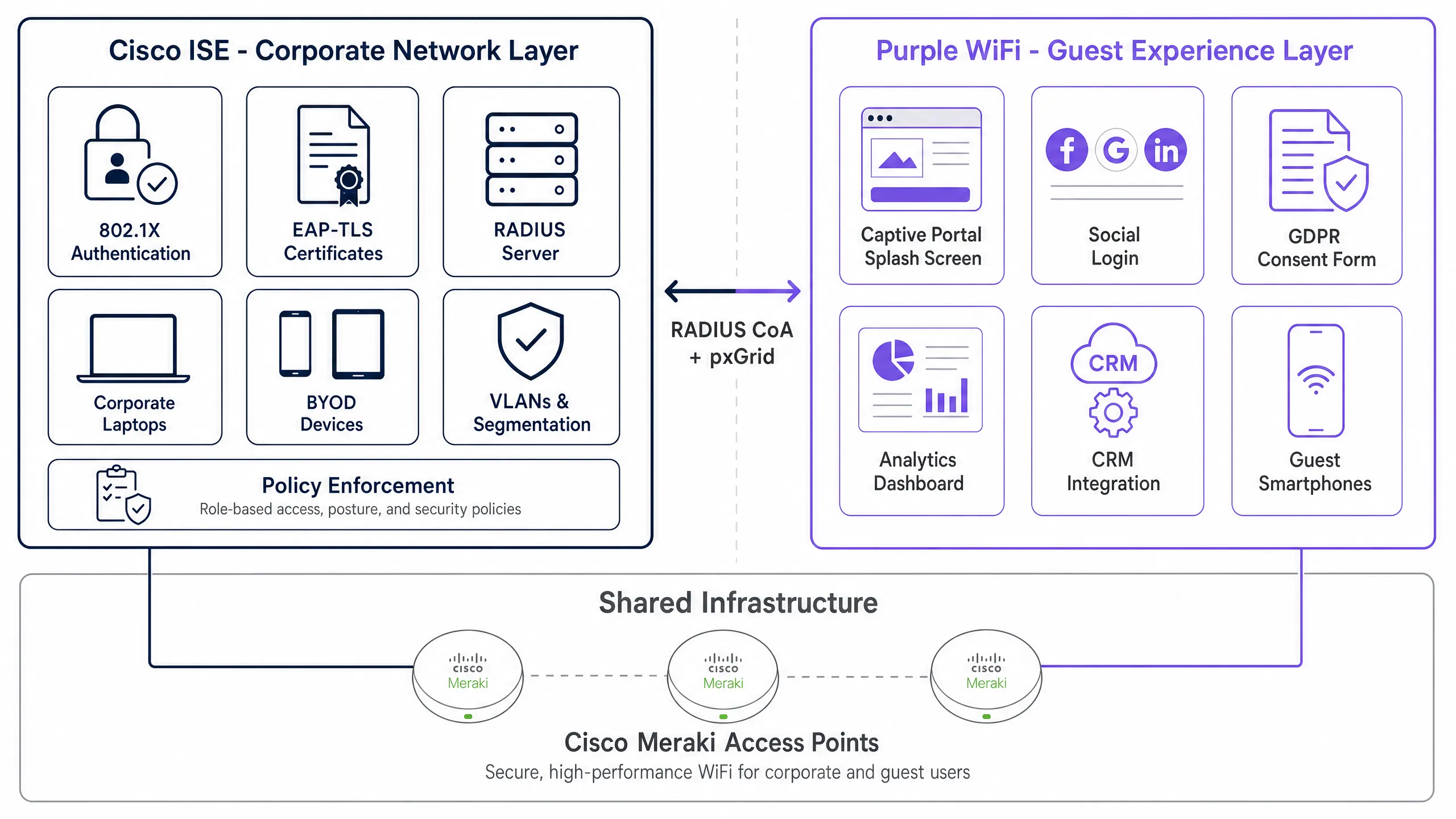
আর্কিটেকচারাল সহাবস্থান
আপনি যখন SSID গুলিকে আলাদা করবেন, তখন আর্কিটেকচারটি অত্যন্ত সহজ হয়ে যায়। আপনি একই অ্যাক্সেস পয়েন্টে দুটি বা তিনটি SSID চালান। এই ডিজাইনের বিস্তারিত বিশ্লেষণের জন্য, Three SSIDs to rule them all: guest, Passpoint, and IoT WiFi পড়ুন।
কর্পোরেট SSID-টি 802.1X সহ WPA3-Enterprise ব্যবহার করে এবং ISE হলো RADIUS সার্ভার। ISE ডিভাইসটিকে সঠিক VLAN-এ অ্যাসাইন করে এবং পলিসি প্রয়োগ করে। এখানে Purple-এর কোনো ভূমিকা নেই।
গেস্ট SSID-টি প্রাথমিক অ্যাসোসিয়েশনের জন্য একটি ওপেন নেটওয়ার্ক বা প্রি-শেয়ার্ড কী সহ WPA3-Personal ব্যবহার করে। ট্রাফিক Purple-এর ক্লাউড পোর্টালে রিডাইরেক্ট করা হয়। Purple অথেন্টিকেশন, সম্মতি ক্যাপচার এবং অ্যানালিটিক্স পরিচালনা করে। Purple অথরাইজেশন সিগন্যাল না দেওয়া পর্যন্ত অ্যাক্সেস পয়েন্টটি একটি ওয়াল্ড গার্ডেন প্রয়োগ করে, তারপর ইন্টারনেট অ্যাক্সেস চালু করে। এখানে ISE-এর কোনো ভূমিকা নেই।
পয়েন্ট-অফ-সেল টার্মিনালের মতো ভেন্যু IoT ডিভাইসগুলির জন্য, Purple-এর SecurePass ফিচারটি আইডেন্টিটি প্রি-শেয়ার্ড কী (iPSK) পরিচালনা করতে পারে, অথবা ISE কর্পোরেট IoT পরিচালনা করতে পারে।
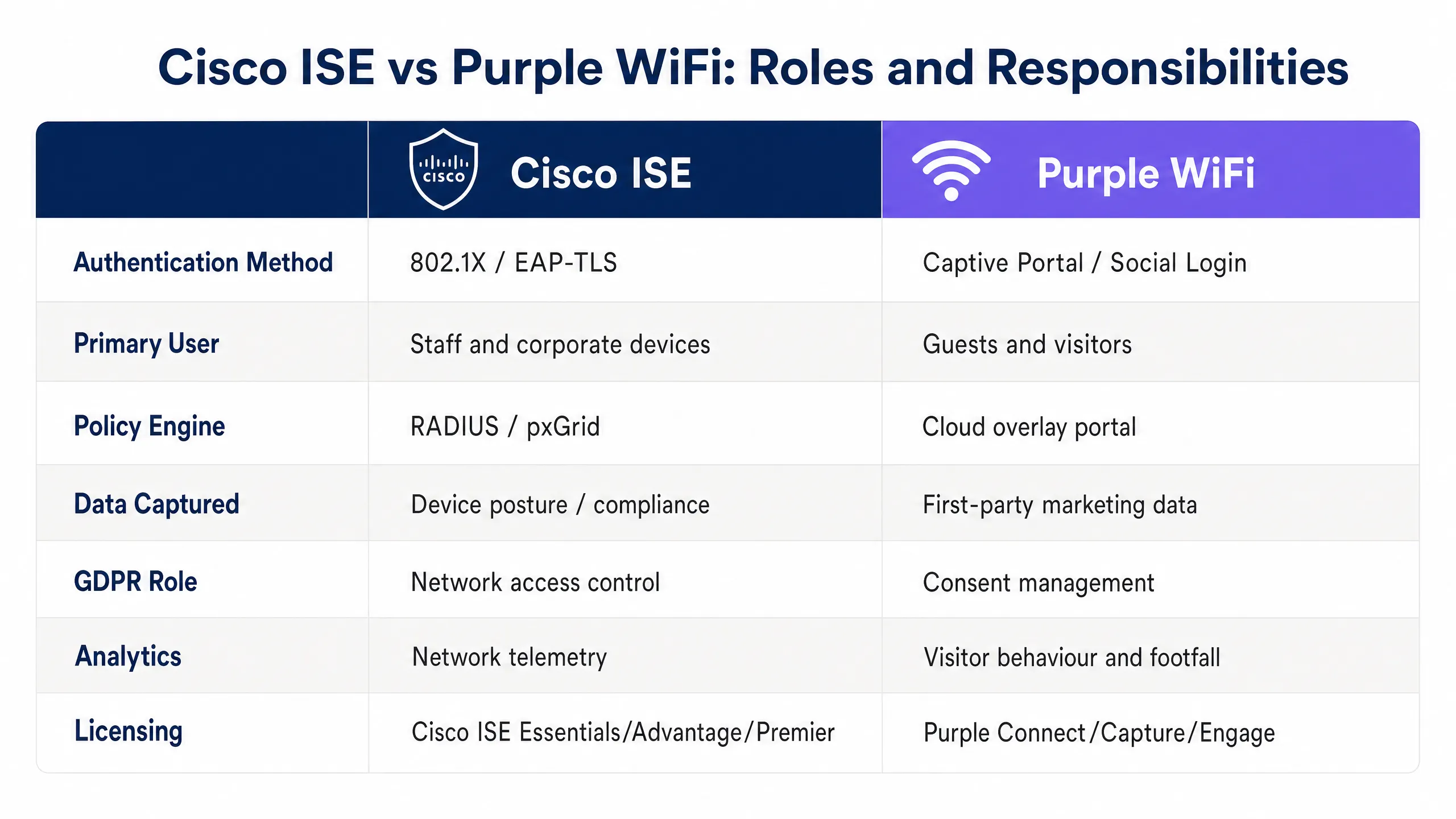
ইমপ্লিমেন্টেশন গাইড
Cisco ISE-এর পাশাপাশি Purple স্থাপন করতে আপনার ওয়্যারলেস LAN কন্ট্রোলার বা ক্লাউড ড্যাশবোর্ডগুলির যত্নশীল কনফিগারেশন প্রয়োজন।
ধাপ ১: SSID সেগমেন্টেশন
কর্পোরেট এবং গেস্ট ট্রাফিকের জন্য আলাদা SSID তৈরি করুন। কর্পোরেট SSID-কে WPA3-Enterprise-এর জন্য কনফিগার করুন এবং RADIUS অথেন্টিকেশন আপনার Cisco ISE নোডগুলিতে নির্দেশ করুন। গেস্ট SSID-কে MAC ফিল্টারিং বা WPA3-Personal সহ ওপেন অ্যাক্সেসের জন্য কনফিগার করুন।
ধাপ ২: VLAN আইসোলেশন
লেয়ার টু-তে গেস্ট ট্রাফিক যাতে কর্পোরেট ট্রাফিক থেকে আইসোলেটেড থাকে তা নিশ্চিত করুন। গেস্ট SSID-কে অবশ্যই একটি ডেডিকেটেড VLAN-এ ম্যাপ করতে হবে যা অভ্যন্তরীণ রাউটিং টেবিলকে বাইপাস করে সরাসরি ইন্টারনেট ফায়ারওয়ালে রাউট করে। ISE পলিসির ওপর ভিত্তি করে কর্পোরেট SSID-এর জন্য VLAN অ্যাসাইনমেন্ট কার্যকর করে।
ধাপ ৩: Walled Garden কনফিগারেশন
গেস্ট SSID-এর জন্য, Captive Portal রিডাইরেক্টিকে Purple-এর ক্লাউড ইনফ্রাস্ট্রাকচারের দিকে নির্দেশ করতে কনফিগার করুন। DNS এবং HTTP/HTTPS ট্রাফিককে Purple-এর প্রয়োজনীয় IP রেঞ্জ এবং ডোমেনগুলিতে অ্যাক্সেস দেওয়ার জন্য আপনাকে অবশ্যই আপনার অ্যাক্সেস পয়েন্টগুলিতে walled garden (প্রি-অথেন্টিকেশন ACL) কনফিগার করতে হবে। walled garden যদি খুব বেশি সীমাবদ্ধ হয়, তবে Captive Portal লোড হতে ব্যর্থ হবে।
ধাপ ৪: গেস্ট WiFi-এর জন্য RADIUS ইন্টিগ্রেশন
গেস্ট SSID-এর জন্য Purple-এর RADIUS সার্ভারগুলি ব্যবহার করতে আপনার ওয়্যারলেস কন্ট্রোলারটি কনফিগার করুন। এটি Purple-কে ব্যবহারকারীকে অথেন্টিকেট করতে এবং সেশনের সময়কাল ও ব্যান্ডউইথ ব্যবহার ট্র্যাক করতে সাহায্য করে।
সেরা অনুশীলনসমূহ
১. একই SSID-তে গেস্ট এবং কর্পোরেট ট্রাফিক কখনও মিশ্রিত করবেন না। এটি উল্লেখযোগ্য নিরাপত্তা এবং কমপ্লায়েন্স ঝুঁকি তৈরি করে। সর্বদা আইসোলেটেড VLAN-এ ম্যাপ করা ডেডিকেটেড SSID ব্যবহার করুন। ২. কমার্শিয়াল গেস্ট অ্যাক্সেসের জন্য Purple ব্যবহার করুন। আপনার যদি মার্কেটিং অ্যানালিটিক্স, CRM ইন্টিগ্রেশন বা ব্র্যান্ডেড সোশ্যাল লগইন-এর প্রয়োজন হয়, তবে ISE-এর বিল্ট-ইন গেস্ট পোর্টাল ব্যবহার করবেন না। ৩. টায়ার্ড ব্যান্ডউইথ প্রয়োগ করুন। গেস্ট SSID-এ একটি ফ্রি, বেসলাইন পরিষেবা অফার করুন, এবং Purple-এর Connect, Capture, বা Engage প্ল্যান ব্যবহার করে উচ্চতর গতির জন্য একটি প্রিমিয়াম, পেইড অপশন অফার করুন। ৪. Passpoint-এর সুবিধা নিন। বারবার Captive Portal না দেখেই ফিরে আসা গেস্টদের স্বয়ংক্রিয়ভাবে এবং নিরাপদে কানেক্ট করার অনুমতি দিতে Purple-এর মাধ্যমে Passpoint (Hotspot 2.0) ব্যবহার করুন।
ট্রাবলশুটিং ও ঝুঁকি প্রশমন
- Captive Portal লোড হতে ব্যর্থ হচ্ছে: এটি প্রায় সব সময়ই একটি walled garden সংক্রান্ত সমস্যা। আপনার Cisco হার্ডওয়্যারের প্রি-অথেন্টিকেশন ACL-এ সমস্ত প্রয়োজনীয় Purple ডোমেন এবং IP অ্যাড্রেস অনুমোদিত কিনা তা যাচাই করুন।
- গেস্ট ডিভাইসগুলি অভ্যন্তরীণ রিসোর্স অ্যাক্সেস করছে: এটি VLAN আইসোলেশনের ব্যর্থতা নির্দেশ করে। গেস্ট VLAN যাতে ফায়ারওয়াল বা কোর সুইচ লেয়ারে কর্পোরেট সাবনেটগুলিতে রাউট করতে না পারে তা যাচাই করুন।
- RADIUS টাইমআউট: ওয়্যারলেস কন্ট্রোলার যদি Purple-এর RADIUS সার্ভারগুলিতে পৌঁছাতে না পারে, তবে গেস্ট অথেন্টিকেশন ব্যর্থ হবে। আপনার ফায়ারওয়াল যাতে Purple-এর ইনফ্রাস্ট্রাকচারে আউটবাউন্ড UDP পোর্ট ১৮১২ এবং ১৮১৩ অনুমোদন করে তা নিশ্চিত করুন।
ROI এবং ব্যবসায়িক প্রভাব
guest experience management থেকে network access control cisco ise-কে আলাদা করার ব্যবসায়িক প্রভাব অত্যন্ত তাৎপর্যপূর্ণ। Purple-এ গেস্ট WiFi-এর দায়িত্ব হস্তান্তর করার মাধ্যমে, IT টিমগুলো অস্থায়ী অ্যাকাউন্ট পরিচালনা এবং পোর্টালের সমস্যা সমাধানের অপারেশনাল চাপ কমাতে পারে।
আরও গুরুত্বপূর্ণভাবে, Purple গেস্ট নেটওয়ার্ককে একটি রাজস্ব-উৎপাদনকারী সম্পদে পরিণত করে। ফার্স্ট-পার্টি ডেটা সংগ্রহ করে এবং এটিকে CRM প্ল্যাটফর্মের সাথে একীভূত করে, ভেন্যুগুলো অত্যন্ত লক্ষ্যযুক্ত মার্কেটিং ক্যাম্পেইন পরিচালনা করতে পারে। উদাহরণস্বরূপ, Harrods তাদের লয়্যালটি প্রোগ্রামের সাইন-আপ বাড়াতে তাদের স্প্ল্যাশ পেজে একটি সাধারণ প্রশ্ন ব্যবহার করেছিল, যা সরাসরি শুধুমাত্র সেই দল থেকেই ৩ গুণ ROI অর্জনে অবদান রেখেছিল। AGS Airports স্তরভিত্তিক ব্যান্ডউইথ প্রয়োগ করে ৮৪২% return on investment দেখতে পেয়েছে। সুরক্ষার জন্য Cisco ISE এবং এনগেজমেন্টের জন্য Purple-এর সমন্বয় মনের শান্তি এবং পরিমাপযোগ্য বাণিজ্যিক মূল্য উভয়ই প্রদান করে।
Key Definitions
Network Access Control (NAC)
A security architecture that restricts network availability to compliant and authenticated endpoint devices. Cisco ISE is a NAC platform.
IT teams use NAC to prevent unauthorised devices from accessing corporate data.
IEEE 802.1X
An IEEE standard for port-based network access control, providing an authentication mechanism to devices wishing to attach to a LAN or WLAN.
Used by Cisco ISE to secure corporate SSIDs using certificates or credentials rather than shared passwords.
Captive Portal
A web page that the user of a public-access network is obliged to view and interact with before access is granted.
Purple provides highly customisable captive portals to capture marketing consent and first-party data.
VLAN (Virtual Local Area Network)
A logical subnetwork that groups a collection of devices from different physical LANs.
Crucial for separating guest traffic (managed by Purple) from corporate traffic (managed by ISE).
Walled Garden
A restricted environment that controls a user's access to web content and services before they have fully authenticated.
Must be configured correctly on Cisco hardware to allow devices to reach Purple's servers to load the captive portal.
RADIUS
Remote Authentication Dial-In User Service. A networking protocol that provides centralized Authentication, Authorization, and Accounting management.
Both ISE and Purple use RADIUS, but for different purposes: ISE for 802.1X corporate access, Purple for guest session accounting.
Passpoint (Hotspot 2.0)
A standard that enables mobile devices to automatically discover and connect to Wi-Fi networks securely without user intervention.
Purple supports Passpoint to provide a frictionless, cellular-like roaming experience for returning guests.
pxGrid
Platform Exchange Grid. A Cisco framework that enables multivendor, cross-platform network system collaboration.
Allows Purple to share guest session context with the Cisco ISE ecosystem for unified security visibility.
Worked Examples
A 200-room hotel needs to provide secure WiFi for back-of-house staff (housekeeping, management) and a branded, data-capturing WiFi experience for hotel guests. They currently use Cisco Catalyst access points.
Deploy two SSIDs. 'Hotel_Corp' uses WPA3-Enterprise. Cisco ISE acts as the RADIUS server, authenticating staff devices via EAP-TLS certificates and assigning them to the management VLAN. 'Hotel_Guest' uses an open SSID redirected to Purple. Purple presents a branded captive portal offering social login or PMS integration. The guest traffic is placed on an isolated VLAN routed directly to the internet.
A large retail chain wants to track shopper footfall and dwell time across 50 stores using their existing Cisco Meraki infrastructure, without compromising their internal point-of-sale (POS) network security.
The POS terminals connect to a hidden SSID secured by WPA3-Enterprise and Cisco ISE. A public 'Free_Store_WiFi' SSID is broadcast for shoppers. The Meraki dashboard is configured to integrate with Purple via API. Purple captures anonymised presence data from probing devices to generate heatmaps, and captures explicit first-party data when shoppers log in to the captive portal.
Practice Questions
Q1. Your marketing director wants to capture email addresses and demographics from visitors using the guest WiFi in your retail stores. The network engineering team suggests enabling the guest portal feature built into your existing Cisco ISE deployment. Is this the correct approach?
Hint: Consider the commercial capabilities of the ISE guest portal versus a dedicated overlay platform.
View model answer
No. The Cisco ISE guest portal is designed for functional access (e.g., contractors), not commercial marketing. It lacks native CRM integrations, GDPR consent management workflows, and detailed visitor analytics. The correct approach is to implement Purple on the guest SSID to handle the data capture and analytics, while leaving ISE to manage the corporate network.
Q2. A guest connects to the Purple-managed SSID but their browser displays a timeout error instead of the captive portal splash page. Corporate users on the ISE-managed SSID are unaffected. What is the most likely cause?
Hint: Think about what must happen before authentication is complete on a captive portal network.
View model answer
The most likely cause is an incorrectly configured walled garden (pre-authentication ACL) on the wireless access point or controller. The device is being blocked from reaching Purple's cloud infrastructure to load the portal. You must ensure the specific Purple domains and IP ranges are whitelisted.
Q3. You are designing a network for a new corporate headquarters. You need to support staff laptops, staff personal phones (BYOD), and visiting clients. How should you architect the SSIDs and authentication?
Hint: Separate the populations based on device ownership and required access levels.
View model answer
Deploy two SSIDs. The corporate SSID uses WPA3-Enterprise. Cisco ISE handles 802.1X authentication for staff laptops and manages certificate enrollment for staff BYOD devices, assigning them to internal VLANs. The guest SSID is open and redirected to Purple. Purple handles captive portal authentication for visiting clients, placing them on an isolated internet-only VLAN.
Continue reading in this series
Server RADIUS: a comprehensive guide for businesses
This guide provides IT managers, network architects, and CTOs with a definitive technical reference on server RADIUS authentication for enterprise WiFi. It covers the AAA framework, 802.1X architecture, EAP method selection, cloud versus on-premises deployment trade-offs, and dynamic VLAN assignment. Venue operators across hospitality, retail, events, and the public sector will find actionable implementation guidance, real-world case studies, and the decision frameworks needed to migrate from insecure pre-shared keys to a secure, identity-driven network access control architecture.
Server RADIUS: a comprehensive guide for businesses
This guide provides IT managers, network architects, and CTOs with a definitive technical reference on server RADIUS authentication for enterprise WiFi. It covers the AAA framework, 802.1X architecture, EAP method selection, cloud versus on-premises deployment trade-offs, and dynamic VLAN assignment. Venue operators across hospitality, retail, events, and the public sector will find actionable implementation guidance, real-world case studies, and the decision frameworks needed to migrate from insecure pre-shared keys to a secure, identity-driven network access control architecture.
Aruba ClearPass vs. Purple WiFi: Comparing Features and Co-deployment
A comprehensive technical guide detailing the co-deployment architecture of Aruba ClearPass and Purple WiFi. It covers RADIUS proxy configuration, dynamic VLAN assignment, and best practices for delivering secure, analytics-driven guest networks alongside enterprise NAC.