
How to leverage tools for SMS marketing to increase return visits
This technical guide details how to implement tools for SMS marketing using Guest WiFi data capture to drive measurable return visits. It covers deployment architecture, compliance requirements, platform integrations, and real-world case studies for venue operators.
Listen to this guide
View podcast transcript
Executive Summary
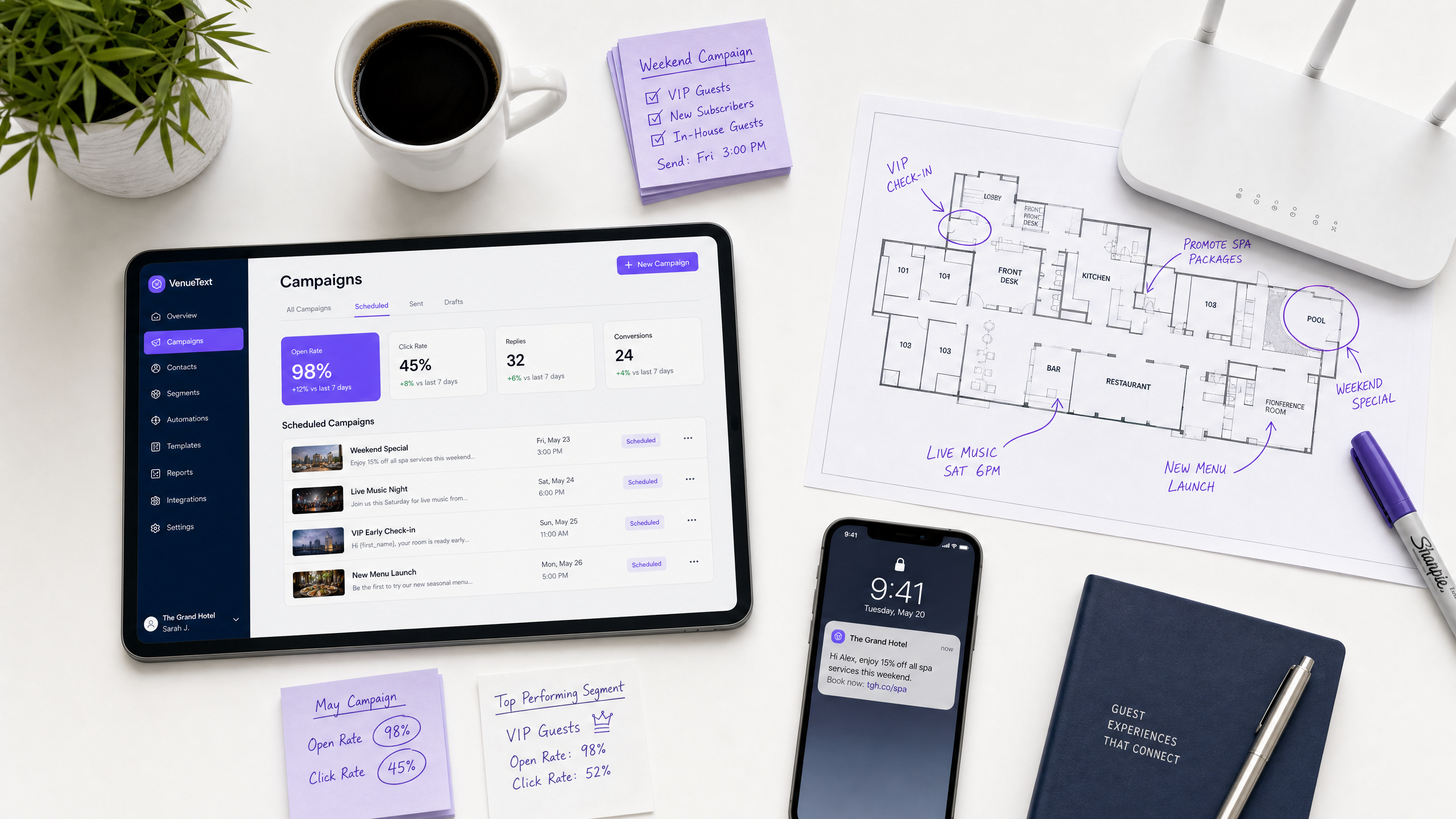
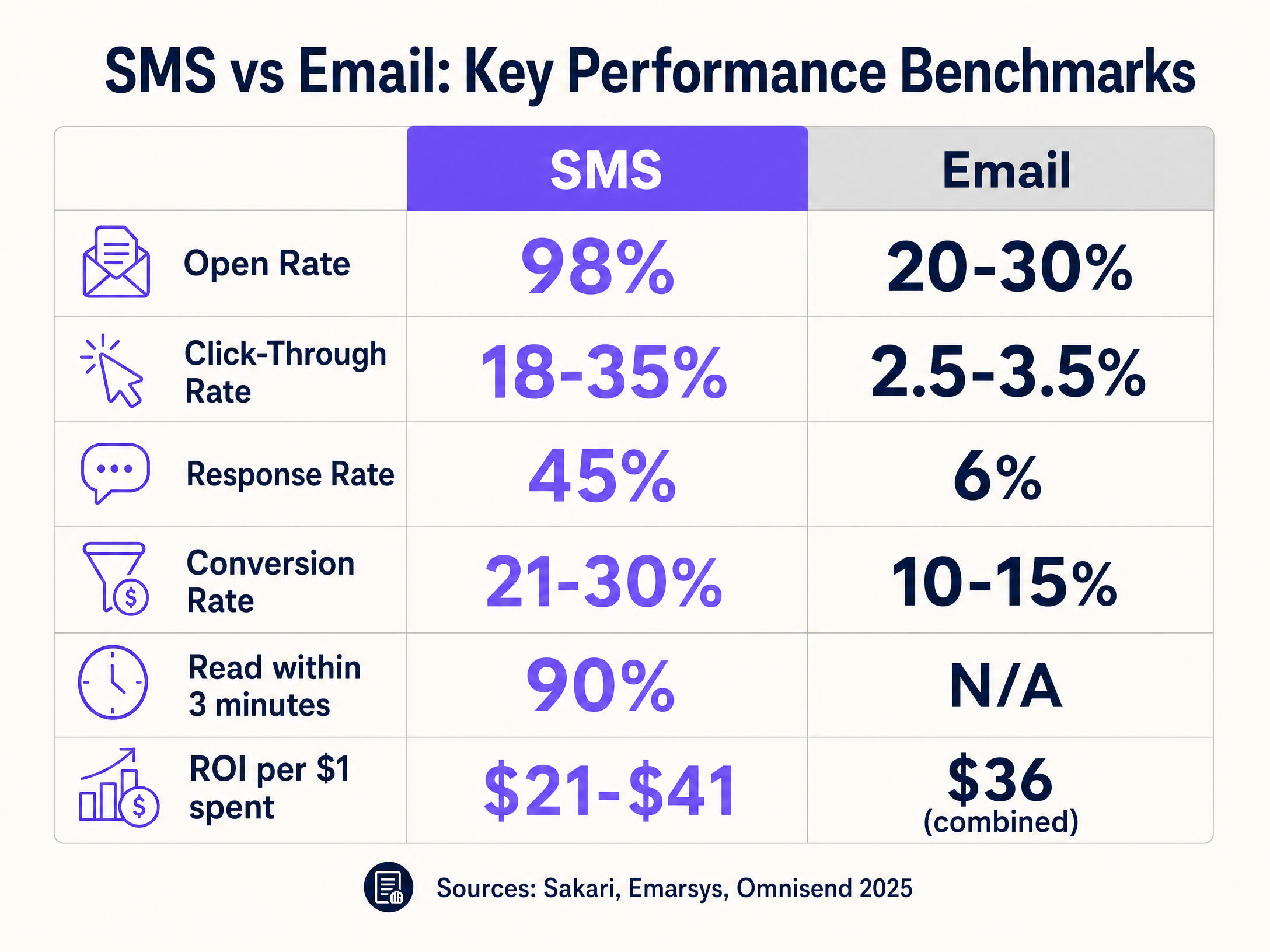
Venue operators need reliable channels to drive return visits. Email marketing yields a 20% open rate. SMS marketing delivers a 98% open rate, with 90% of messages read within three minutes. The ROI for SMS campaigns sits between £21 and £41 for every £1 spent. This guide details how to architect and deploy tools for SMS marketing across physical venues. We cover how to capture verified first-party data via Guest WiFi, integrate with enterprise SMS platforms like Twilio and Klaviyo, and automate behaviour-driven campaigns that increase return visits while maintaining strict GDPR and PECR compliance.
Technical Deep-Dive: Data Capture Architecture
The foundation of any SMS marketing programme is first-party data. Purchasing lists or relying on unverified web forms leads to high bounce rates and compliance failures. The most reliable mechanism for capturing verified mobile numbers at scale is your existing Guest WiFi network.
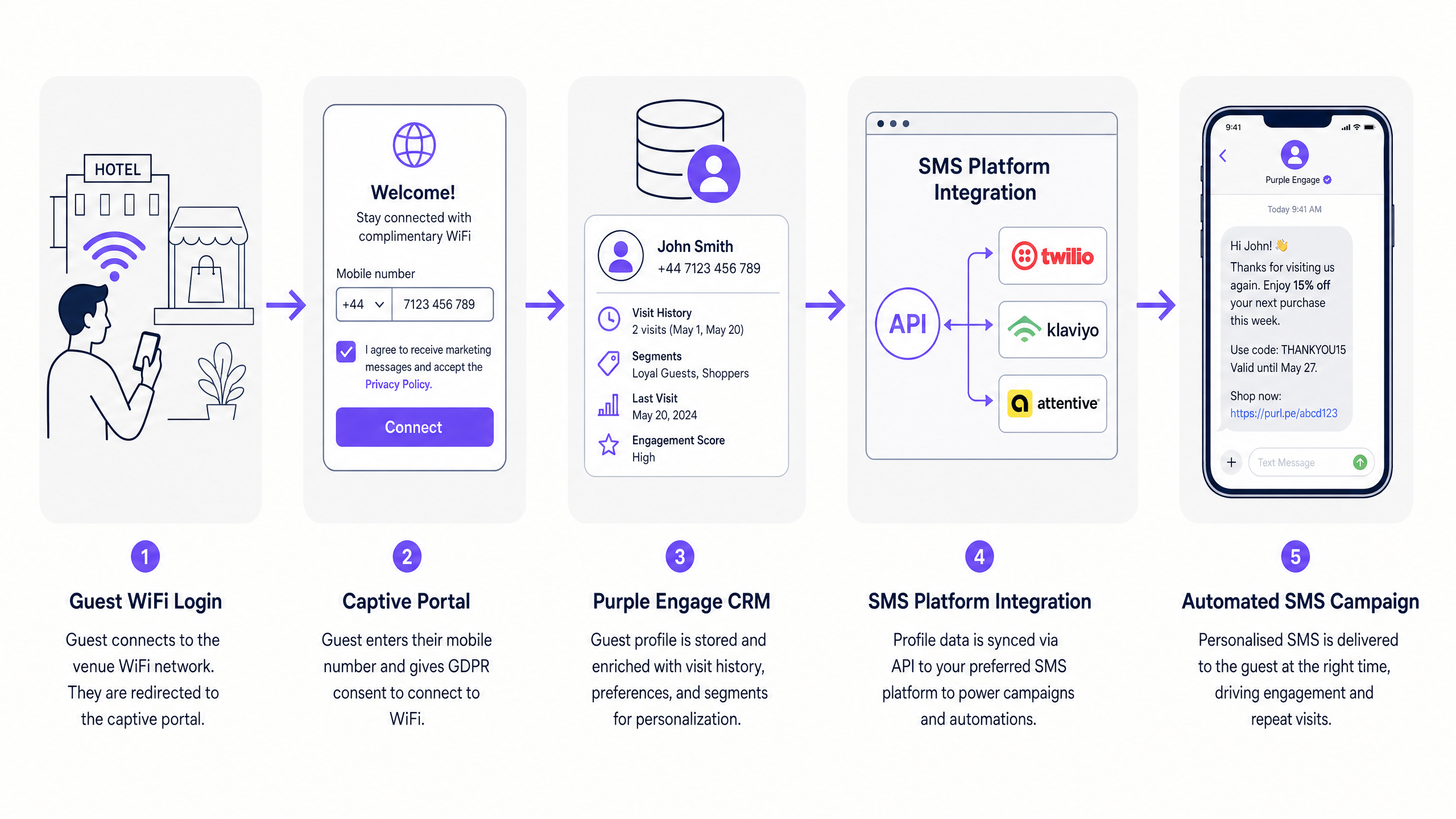
When a visitor connects to the venue WiFi, they are redirected to a captive portal. This login screen presents a structured opportunity to capture data. Purple Engage handles this process across 80,000+ live venues, capturing verified phone numbers and associating them with MAC addresses to track visit frequency, dwell time, and location history.
The Unbundled Opt-In Requirement
Under GDPR and the UK's PECR, WiFi access cannot be conditional on accepting marketing messages. The captive portal must present an "unbundled" opt-in mechanism. The user must actively select a separate checkbox to receive SMS communications. Purple stores these consent records with precise timestamps at the point of login, ensuring full auditability.
Platform Integration
Once data is captured, it must be routed to an SMS platform. Purple Engage pushes enriched guest profiles via API to your chosen marketing tool. The canonical hardware list for this data layer includes Cisco Meraki, HPE Aruba, Ruckus, Juniper Mist, Ubiquiti UniFi, Cambium, Extreme, and Fortinet.
The SMS platform landscape breaks down into three main categories:
- API-First Infrastructure (Twilio): Best for organisations with internal development teams. You build the logic, segmentation, and automation triggers yourself.
- Unified Email and SMS (Klaviyo): The dominant choice for retail and hospitality. It provides native segmentation and pre-built automation flows.
- Dedicated Conversational SMS (Attentive): Strong for high-volume retail environments requiring two-way conversational flows and advanced segmentation.
Implementation Guide: Building Automation Triggers
Batch-and-blast SMS campaigns yield poor results and high opt-out rates. The most effective strategy is event-driven automation based on physical visit behaviour.
Step 1: Audit Data Capture
Review your current captive portal flow. Ensure you have a clear, unbundled SMS opt-in checkbox. If you are using Purple Engage, configure the portal to require mobile number verification via a one-time passcode to ensure data hygiene.
Step 2: Configure the API Integration
Connect Purple Engage to your SMS platform. Map the data fields: mobile number, first name, last visit date, visit count, and primary location. This unified guest profile allows your SMS tool to segment users accurately.
Step 3: Deploy Core Automation Triggers
Build three foundational automated campaigns:
- The Welcome Message: Triggered 24 hours after a guest's first visit. "Hi [Name], thanks for visiting [Venue]. Show this text on your next visit for 10% off your order."
- The Win-Back Campaign: Triggered when a guest has not visited for 60 days. "We miss you at [Venue]. Here is a 15% discount code for your next visit: RETURN15."
- The Loyalty Reward: Triggered after a guest completes their third visit in a month. "Thanks for your loyalty. Your next coffee is on us."
Best Practices for Venue Operators
When deploying tools for SMS marketing, adhere to these operational standards:
- Frequency Limits: Send a maximum of two promotional messages per month. Exceeding this threshold pushes opt-out rates above the 3.5% industry standard.
- Time-Zone Awareness: Never send SMS messages before 09:00 or after 20:00 local time. Purple's automation engine respects these sending windows by default.
- Clear Attribution: Every campaign must include a unique discount code or a UTM-tagged URL. Track redemptions and revenue per message sent, rather than relying solely on click-through rates.
- Unified Profiles: For multi-site operators, maintain a single guest profile across the entire estate. A shopper visiting your London and Manchester locations is one record, not two.
Troubleshooting & Risk Mitigation
The primary risk in SMS marketing is compliance failure. Fines for unsolicited text messages are severe.
Risk: High Opt-Out Rates If your unsubscribe rate exceeds 3.5%, your frequency is too high or your content is irrelevant. Segment your list and ensure offers are tailored to visit history. Do not send a generic 5% discount to a VIP guest who visits weekly.
Risk: Carrier Filtering (10DLC) In the US, carriers filter unregistered A2P (Application-to-Person) traffic. Ensure your business is registered under the 10DLC (10-Digit Long Code) framework. Your SMS platform provider will handle this registration process.
Risk: Data Silos If your CRM, WiFi platform, and SMS tool do not sync, you will send conflicting messages. Integrate the data layer using Purple Engage to ensure a single source of truth.
ROI & Business Impact
SMS marketing delivers measurable financial impact. The baseline expectation is an ROI of £21 for every £1 spent.
To measure success, track the following metrics:
- Redemption Rate: The percentage of recipients who use the unique code provided in the SMS.
- Return Visit Frequency: The reduction in days between visits for opted-in guests compared to non-opted-in guests.
- Revenue per Message: Total attributed revenue divided by the volume of messages sent.
Key Definitions
Captive Portal
The web page that a user must view and interact with before accessing a public Guest WiFi network.
This is the primary data capture point where venue operators collect phone numbers and secure GDPR-compliant SMS opt-ins.
First-Party Data
Information collected directly from your audience or customers, rather than purchased from external sources.
First-party mobile numbers captured via Guest WiFi yield significantly higher engagement and lower unsubscribe rates.
Unbundled Consent
The legal requirement under GDPR to separate the agreement to terms of service from the consent to receive marketing communications.
Venue operators must provide a standalone checkbox for SMS marketing; it cannot be tied to the provision of internet access.
Event-Driven Automation
Marketing messages triggered automatically by specific user actions or behaviours.
Sending a 'win-back' SMS exactly 60 days after a guest's last physical visit to a venue.
10DLC (10-Digit Long Code)
A standard in the US that requires businesses to register their local phone numbers to send Application-to-Person (A2P) SMS messages.
Failure to register for 10DLC results in heavy carrier filtering and blocked SMS campaigns.
MAC Address
A unique identifier assigned to a network interface controller for use as a network address.
Purple uses MAC addresses to track physical visit frequency and dwell time, enriching the guest profile for SMS segmentation.
Suppression List
A database of phone numbers that have opted out of receiving communications.
SMS platforms must automatically add users to a suppression list when they reply 'STOP' to ensure compliance.
Attribution
The process of identifying which marketing channel contributed to a specific sale or conversion.
Using unique discount codes in SMS campaigns allows operators to measure exact revenue generated per message.
Worked Examples
A retail chain with 40 locations wants to increase return visit frequency among shoppers who visit once but do not return. How should they deploy SMS marketing to solve this?
The retailer deploys Purple Engage across their estate on HPE Aruba hardware. The captive portal is configured to capture phone numbers with an explicit, unbundled SMS opt-in. Within 90 days, they capture 85,000 verified, first-party numbers. They integrate this data with Klaviyo via API. The marketing team segments the database by 'last visit date' and builds an automated win-back campaign. Any shopper who has not visited in 45 days receives an SMS offering a 10% discount valid for two weeks, using a unique tracking code.
A conference centre runs a series of events and wants to build a database of attendees to promote future ticket sales. How can they automate this process?
The venue configures their Guest WiFi to require an SMS opt-in for marketing communications. At each event, attendees connect to the network. Purple Engage captures the data and syncs it to Twilio. An automated trigger is set: 48 hours after an event concludes, attendees receive an SMS stating, 'Thanks for attending. Early-bird tickets for our next event on the 15th are available for 72 hours.'
Practice Questions
Q1. A stadium venue operator wants to send a promotional SMS to 40,000 fans who attended a match last season. They plan to export a CSV from their ticketing system and send a batch message at 21:00 on a Friday. Identify the technical and compliance flaws in this approach.
Hint: Consider consent mechanisms, sending windows, and segmentation.
View model answer
This approach fails on three fronts. First, ticketing data does not guarantee explicit SMS marketing consent; sending without unbundled opt-in violates GDPR/PECR. Second, sending at 21:00 violates standard time-zone sending windows, which mandate pausing communications after 20:00. Third, a batch-and-blast to 40,000 users lacks segmentation, guaranteeing high opt-out rates. The correct approach is to capture verified, opted-in numbers via Guest WiFi at the venue, segment by attendance frequency, and trigger automated messages during approved hours.
Q2. Your hotel group is experiencing a 6% unsubscribe rate on your monthly SMS campaigns. You are currently sending three messages per month featuring generic 5% discounts. How do you resolve this?
Hint: Evaluate frequency thresholds and the value of the offer.
View model answer
A 6% unsubscribe rate indicates severe list fatigue (the threshold is 3.5%). To resolve this, immediately reduce frequency to a maximum of one to two messages per month. Furthermore, generic 5% discounts lack value. Use Purple Engage data to segment the audience and send targeted offers based on visit history—for example, offering a complimentary spa treatment to guests who have previously booked spa services.
Q3. You need to integrate Purple Engage with a new SMS platform. The marketing director wants to know if they should choose Twilio or Klaviyo. The venue lacks internal developers and wants pre-built workflows. Which do you recommend?
Hint: Consider the technical resources required to operate an API-first platform versus a unified marketing tool.
View model answer
Recommend Klaviyo. Twilio is an API-first infrastructure that requires internal development resources to build logic, segmentation, and automation triggers. Klaviyo provides a unified interface with pre-built automation flows and native segmentation, making it the correct choice for a team lacking developer support.