

अपने WiFi प्लेटफॉर्म का उपयोग करके ग्राहक सर्वेक्षण कैसे बनाएं
यह मार्गदर्शिका IT लीडर्स, नेटवर्क आर्किटेक्ट्स और वेन्यू ऑपरेशंस डायरेक्टर्स को एंटरप्राइज़ WiFi नेटवर्क के माध्यम से विज़िट के बाद ग्राहक सर्वेक्षणों को तैनात करने के लिए कार्रवाई योग्य कदम प्रदान करती है। इसमें पूर्ण तकनीकी आर्किटेक्चर शामिल है — Captive Portal प्रमाणीकरण और ठहरने के समय की सीमा से लेकर सर्वेक्षण मीट्रिक चयन (NPS बनाम CSAT) और API-संचालित CRM एकीकरण तक। WiFi प्लेटफॉर्म के माध्यम से सर्वेक्षणों को तैनात करना मौजूदा नेटवर्क इन्फ्रास्ट्रक्चर को एक वास्तविक समय ग्राहक इंटेलिजेंस इंजन में बदल देता है, जो पारंपरिक विज़िट के बाद के ईमेल अभियानों की तुलना में तीन से पांच गुना अधिक प्रतिक्रिया दर प्रदान करता है।
🎧 इस गाइड को सुनें
ट्रांसक्रिप्ट देखें
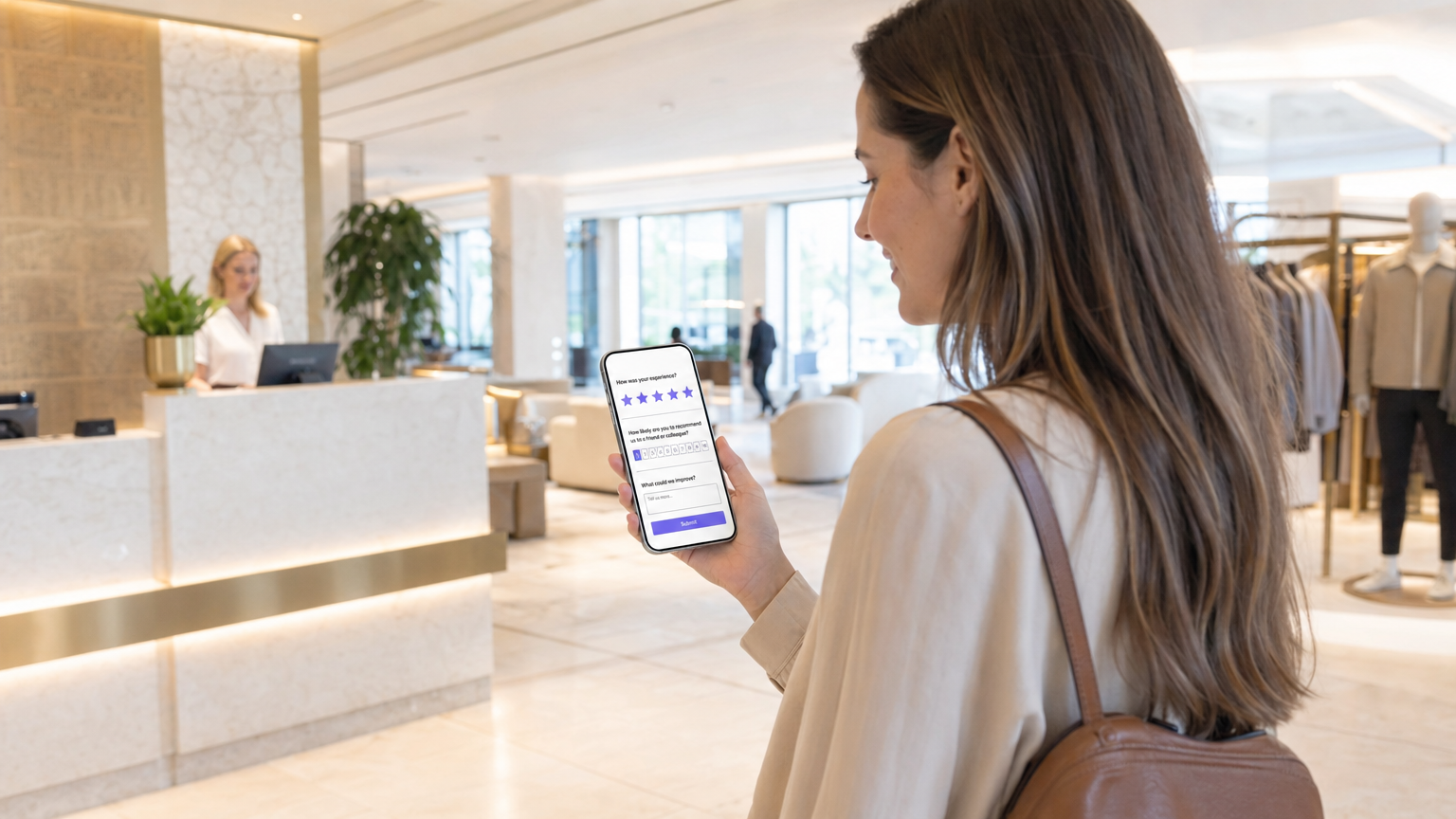
कार्यकारी सारांश
एंटरप्राइज़ स्थानों के लिए — रिटेल वातावरण से लेकर हॉस्पिटैलिटी संपत्तियों तक — अतिथि WiFi नेटवर्क प्रौद्योगिकी स्टैक में सबसे कम उपयोग की जाने वाली डेटा संपत्तियों में से एक है। जबकि पारंपरिक फीडबैक तंत्र मैन्युअल डेटा प्रविष्टि या बैच-एंड-ब्लास्ट ईमेल अभियानों पर निर्भर करते हैं, ग्राहक संतुष्टि सर्वेक्षणों को सीधे WiFi अनुभव में एकीकृत करने से बड़े पैमाने पर उच्च-रूपांतरण, प्रासंगिक फीडबैक सक्षम होता है। यह मार्गदर्शिका बताती है कि Purple के गेस्ट WiFi और WiFi एनालिटिक्स समाधानों का उपयोग करके WiFi-ट्रिगर किए गए सर्वेक्षण प्रणाली का आर्किटेक्चर कैसे बनाया जाए। हम परिनियोजन यांत्रिकी, विज़िट के बाद के ट्रिगर्स के लिए समय एल्गोरिदम, NPS और CSAT कार्यान्वयन के बीच तकनीकी अंतर, और आपके CRM या एनालिटिक्स प्लेटफॉर्म में प्रतिक्रिया डेटा को पाइप करने के लिए आवश्यक API एकीकरण को कवर करते हैं। परिणाम एक फीडबैक लूप है जो स्वचालित, अनुपालनशील और सीधे भौतिक अतिथि यात्रा से जुड़ा है।
तकनीकी गहन-विश्लेषण
सार्वजनिक या एंटरप्राइज़ WiFi नेटवर्क पर एक मजबूत सर्वेक्षण प्रणाली बनाने के लिए Captive Portal से कहीं अधिक की आवश्यकता होती है। इसके लिए एक परिष्कृत आर्किटेक्चर की आवश्यकता होती है जो उपयोगकर्ता की गोपनीयता का सम्मान करता है, GDPR और CCPA सहमति फ्रेमवर्क का पालन करता है, और प्राथमिक नेटवर्क अनुभव को खराब किए बिना उच्च थ्रूपुट सुनिश्चित करता है।
आर्किटेक्चर और डेटा प्रवाह
जब कोई अतिथि नेटवर्क से जुड़ता है, तो सिस्टम सत्र को लॉग करता है और Captive Portal के माध्यम से उपयोगकर्ता को प्रमाणित करता है, अक्सर OpenRoaming जैसे घर्षण-रहित पहचान प्रदाता मॉडल का उपयोग करके। महत्वपूर्ण घटक एनालिटिक्स इंजन है जो वास्तविक समय में ठहरने के समय की निगरानी करता है। एक बार जब ठहरने के समय की सीमा पूरी हो जाती है और उपयोगकर्ता डिस्कनेक्ट हो जाता है या जियोफेन्स्ड क्षेत्र छोड़ देता है, तो एक वेबहुक या API कॉल सर्वेक्षण वितरण तंत्र को ट्रिगर करता है — आमतौर पर SMS या ईमेल।
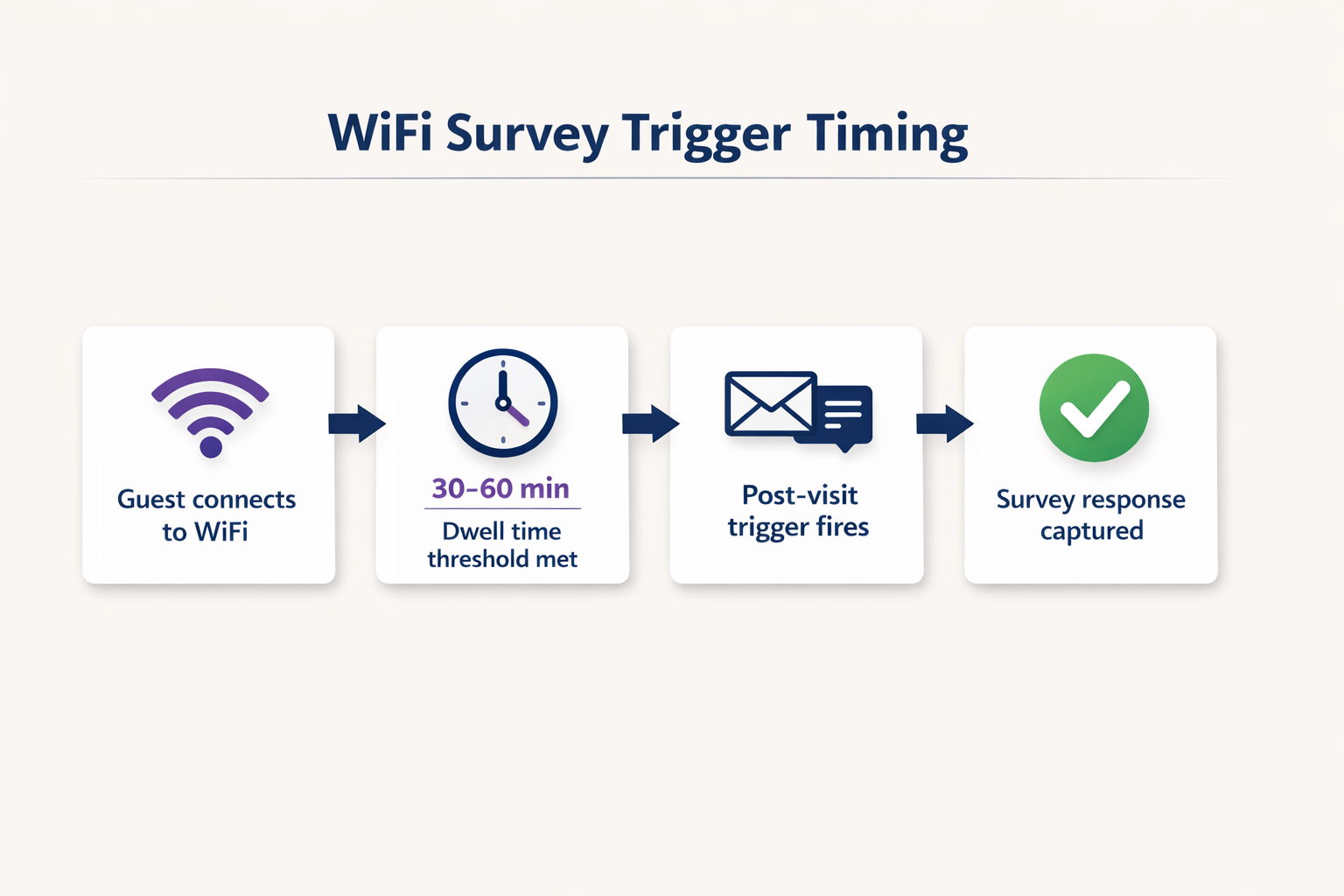
इस आर्किटेक्चर के लिए एक्सेस पॉइंट्स (APs), नेटवर्क कंट्रोलर और क्लाउड एनालिटिक्स प्लेटफॉर्म के बीच मजबूत एकीकरण की आवश्यकता होती है। अंतर्निहित इन्फ्रास्ट्रक्चर पैटर्न पर अधिक जानकारी के लिए, इंटरनेट ऑफ थिंग्स आर्किटेक्चर: एक पूर्ण मार्गदर्शिका पर हमारी मार्गदर्शिका देखें। डेटा प्रवाह को संक्षेप में इस प्रकार प्रस्तुत किया जा सकता है: AP लेयर सत्र को कैप्चर करती है; एनालिटिक्स लेयर इसे ठहरने के समय और ज़ोन डेटा से समृद्ध करती है; एकीकरण लेयर वेबहुक को फायर करती है; और CRM लेयर सर्वेक्षण प्रतिक्रिया प्राप्त करती है और उस पर कार्रवाई करती है।
सर्वेक्षण मीट्रिक चयन: NPS बनाम CSAT बनाम CES
सर्वेक्षण मीट्रिक का चुनाव एक रणनीतिक निर्णय है, तकनीकी नहीं — लेकिन इसका सीधा असर इस बात पर पड़ता है कि आप ट्रिगर को कैसे कॉन्फ़िगर करते हैं और आप प्रतिक्रिया डेटा को कैसे संग्रहीत और विश्लेषण करते हैं।
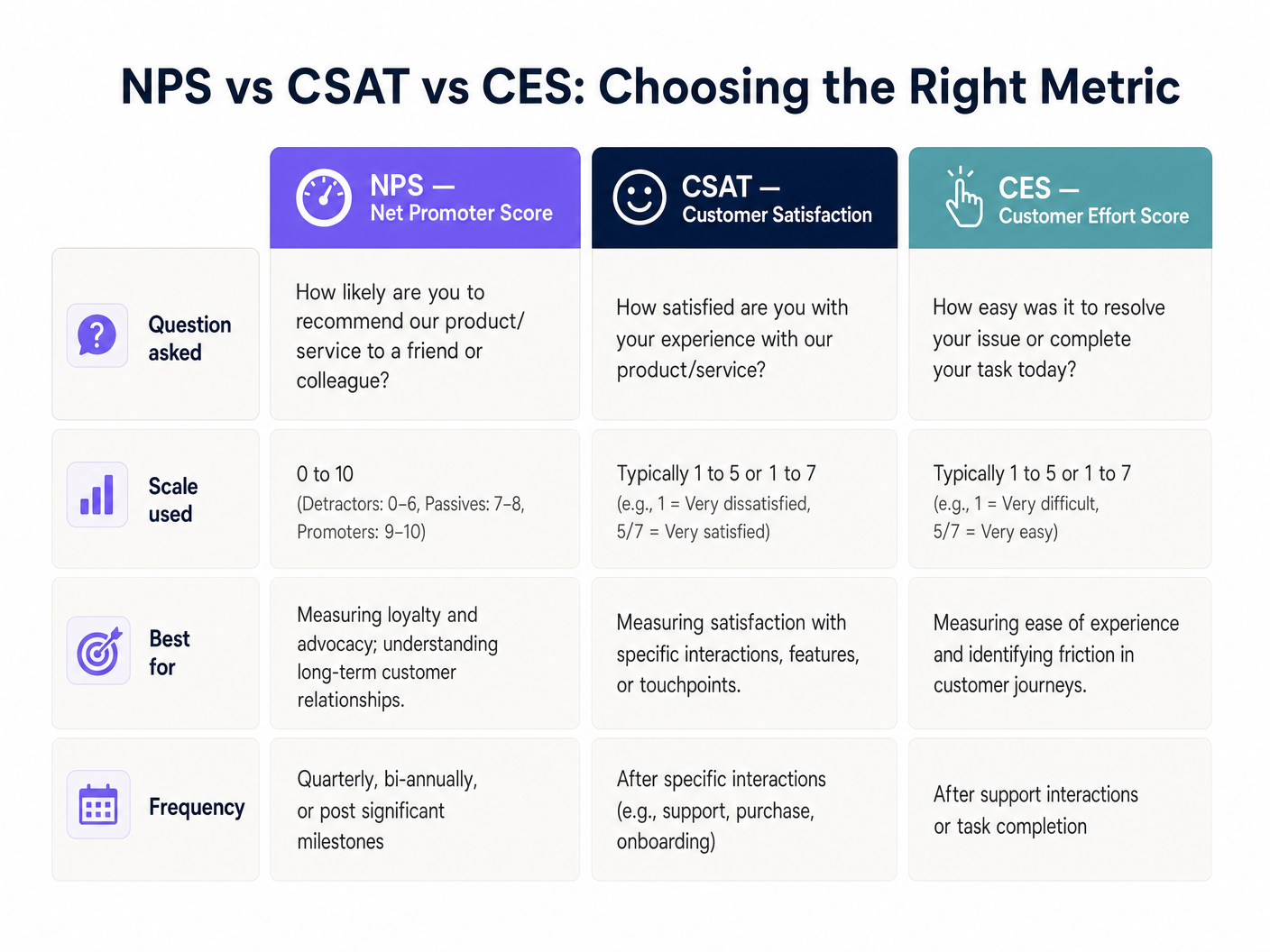
नेट प्रमोटर स्कोर (NPS) शून्य से दस के पैमाने पर एक ही प्रश्न पूछता है और समग्र ब्रांड निष्ठा को मापने के लिए सबसे उपयुक्त है। ग्राहक संतुष्टि (CSAT) एक से पांच या एक से सात के पैमाने का उपयोग करती है और किसी विशिष्ट इंटरैक्शन या टचपॉइंट के साथ संतुष्टि को मापने के लिए आदर्श है। ग्राहक प्रयास स्कोर (CES) मापता है कि ग्राहक के लिए अपना लक्ष्य प्राप्त करना कितना आसान था, जो विशेष रूप से हेल्थकेयर या ट्रांसपोर्ट वातावरण में प्रासंगिक है जहां सेवा यात्रा में घर्षण एक प्राथमिक परिचालन चिंता है।
सुरक्षा और अनुपालन
डेटा संग्रह को GDPR, CCPA, और जहां लागू हो, PCI DSS मानकों का कड़ाई से पालन करना चाहिए। आधुनिक मोबाइल ऑपरेटिंग सिस्टम में MAC रैंडमाइजेशन — iOS 14 और Android 10 के बाद की एक मानक सुविधा — के लिए उन्नत पहचान समाधान तकनीकों की आवश्यकता होती है। सिस्टम को हार्डवेयर MAC एड्रेस पर निर्भर रहने के बजाय प्रारंभिक Captive Portal लॉगिन के दौरान कैप्चर किए गए सत्यापित ईमेल या फ़ोन नंबर से सत्र को लिंक करना चाहिए। इस संदर्भ में डेटा सुरक्षा प्रोटोकॉल के विस्तृत उपचार के लिए, WiFi के माध्यम से एकत्र किए गए ग्राहक डेटा की सुरक्षा कैसे करें देखें।
कार्यान्वयन मार्गदर्शिका
WiFi-ट्रिगर किए गए सर्वेक्षण प्रणाली को तैनात करने में पांच ठोस कार्यान्वयन चरण शामिल हैं।
चरण 1 — Captive Portal कॉन्फ़िगर करें। मुफ्त WiFi एक्सेस के बदले आवश्यक संपर्क जानकारी (ईमेल या फ़ोन नंबर) कैप्चर करने के लिए प्रारंभिक स्प्लैश पेज सेट करें। नियम और शर्तों में स्पष्ट रूप से कहा जाना चाहिए कि इस डेटा का उपयोग फीडबैक उद्देश्यों के लिए किया जा सकता है। यह पूरी प्रणाली की कानूनी नींव है।
चरण 2 — ठहरने के समय की सीमाएं परिभाषित करें। हर कनेक्शन को सर्वेक्षण की आवश्यकता नहीं होती है। किसी स्थान से गुजरने वाला उपयोगकर्ता दो मिनट के लिए कनेक्ट हो सकता है। स्थान के प्रकार के लिए उपयुक्त न्यूनतम ठहरने का समय निर्धारित करें: त्वरित-सेवा वाले रेस्तरां के लिए 15 मिनट, खुदरा स्टोर के लिए 30 से 45 मिनट, होटल के लिए 2 घंटे, और स्टेडियम या सम्मेलन केंद्र के लिए 45 मिनट।
चरण 3 — सर्वेक्षण डिज़ाइन करें। इसे एक ही प्राथमिक प्रश्न तक सीमित रखें। एक NPS प्रश्न जिसके बाद एक वैकल्पिक ओपन-टेक्स्ट फ़ील्ड होता है, लगातार उच्चतम पूर्णता दर प्रदान करता है। विज़िट के बाद के WiFi ट्रिगर्स के लिए बहु-पृष्ठ सर्वेक्षणों से बचें; संदर्भ विंडो छोटी होती है और उपयोगकर्ता का ध्यान सीमित होता है।
चरण 4 — ट्रिगर तंत्र कॉन्फ़िगर करें। उपयोगकर्ता का सत्र समाप्त होने पर एक इवेंट फायर करने के लिए एनालिटिक्स प्लेटफॉर्म सेट करें। इस इवेंट को प्रस्थान के एक से दो घंटे के भीतर सर्वेक्षण लिंक वाले एक स्वचालित ईमेल या SMS को ट्रिगर करना चाहिए। दो घंटे से अधिक की देरी से प्रतिक्रिया दरों में मापने योग्य गिरावट आती है।
चरण 5 — CRM के साथ एकीकृत करें। सर्वेक्षण प्रतिक्रियाओं को सीधे भेजने के लिए RESTful APIs का उपयोग करेंसीधे आपके CRM (जैसे, Salesforce, HubSpot) या एनालिटिक्स प्लेटफॉर्म में। स्वचालित वर्कफ़्लो कॉन्फ़िगर करें: यदि कोई डिट्रैक्टर स्कोर (NPS 0 से 6) प्राप्त होता है, तो वास्तविक समय सेवा रिकवरी के लिए ड्यूटी मैनेजर को तत्काल अलर्ट ट्रिगर करें।
सर्वोत्तम अभ्यास
WiFi सर्वेक्षण परिनियोजन में समय सबसे महत्वपूर्ण चर है। मेहमान के स्थान छोड़ने के एक से दो घंटे के भीतर सर्वेक्षण भेजने से लगातार 15 से 30 प्रतिशत के बीच प्रतिक्रिया दर प्राप्त होती है। 24 घंटे इंतजार करने से अधिकांश स्थान श्रेणियों में यह 5 प्रतिशत से नीचे गिर जाता है।
जटिल लेआउट वाले स्थानों के लिए स्थानिक विभाजन एक महत्वपूर्ण अंतर है। यदि आपका बुनियादी ढाँचा इसका समर्थन करता है, तो सर्वेक्षण को उस विशिष्ट क्षेत्र के अनुरूप बनाने के लिए एक्सेस पॉइंट ज़ोन मैपिंग — या अधिक बारीकी से, Indoor Positioning System: UWB, BLE, & WiFi Guide — का उपयोग करें जहाँ मेहमान ने दौरा किया था। एक होटल अतिथि जिसने स्पा में तीन घंटे बिताए, उसे उस अतिथि से अलग सर्वेक्षण प्राप्त होना चाहिए जिसने केवल बिज़नेस लाउंज का उपयोग किया था।
मोबाइल ऑप्टिमाइज़ेशन गैर-परक्राम्य है। इन सर्वेक्षणों में से 85 प्रतिशत से अधिक स्मार्टफोन पर सूचना प्राप्त होने के कुछ ही मिनटों में पूरे हो जाएंगे। सर्वेक्षण UI पूरी तरह से प्रतिक्रियाशील होना चाहिए, दो सेकंड से कम समय में लोड होना चाहिए, और प्राथमिक प्रश्न को पूरा करने के लिए दो से अधिक टैप की आवश्यकता नहीं होनी चाहिए।
व्यापक एंटरप्राइज़ WiFi परिनियोजन संदर्भ के लिए, जिसमें यह भी शामिल है कि सर्वेक्षण बुनियादी ढाँचा एक बड़ी कनेक्टेड वेन्यू रणनीति में कैसे फिट बैठता है, देखें Wi Fi in Auto: The Complete 2026 Enterprise Guide ।
समस्या निवारण और जोखिम न्यूनीकरण
कम प्रतिक्रिया दरें आमतौर पर सर्वेक्षण बहुत देर से भेजे जाने या पूरा करने के लिए बहुत अधिक इंटरैक्शन की आवश्यकता के कारण होती हैं। सत्र समाप्ति और सर्वेक्षण वितरण के बीच औसत समय डेल्टा की जाँच करके निदान करें। यदि यह दो घंटे से अधिक हो जाता है, तो ट्रिगर को पुन: कॉन्फ़िगर करें। यह भी सत्यापित करें कि पहला प्रश्न सीधे ईमेल बॉडी में एम्बेडेड है, बजाय इसके कि उपयोगकर्ता को एक अलग पृष्ठ पर क्लिक करने की आवश्यकता हो।
MAC Randomization Issues वापसी करने वाले आगंतुकों को नए मेहमानों के रूप में मानने के रूप में प्रकट होते हैं, जिससे अनुदैर्ध्य विश्लेषण टूट जाता है। समाधान वास्तुशिल्प है: सुनिश्चित करें कि आपका captive portal प्राथमिक कुंजी के रूप में उपयोगकर्ता-प्रमाणित पहचानकर्ताओं (ईमेल या फोन) पर निर्भर करता है, न कि डिवाइस MAC पते पर। यह एनालिटिक्स प्लेटफॉर्म में एक कॉन्फ़िगरेशन परिवर्तन है, न कि नेटवर्क-स्तरीय समाधान।
Spam Filter Failures आपकी प्रतिक्रिया दर को चुपचाप मार देंगे। सुनिश्चित करें कि आपके भेजने वाले डोमेन में वैध SPF, DKIM, और DMARC रिकॉर्ड हैं। सर्वेक्षण ईमेल के लिए एक समर्पित सबडोमेन का उपयोग करें (जैसे, surveys.yourdomain.com) ताकि आपके प्राथमिक मार्केटिंग डोमेन से आपके लेनदेन संबंधी भेजने वाले बुनियादी ढांचे की प्रतिष्ठा को अलग किया जा सके।
Consent and Compliance Gaps उच्चतम जोखिम वाले विफलता मोड का प्रतिनिधित्व करते हैं। यदि captive portal की शर्तें प्रतिक्रिया उद्देश्यों के लिए संपर्क डेटा के उपयोग को स्पष्ट रूप से कवर नहीं करती हैं, तो आप GDPR अनुच्छेद 6 के वैध आधार आवश्यकताओं के बाहर काम कर रहे हैं। अपने डेटा प्रोसेसिंग रजिस्टर के विरुद्ध अपने captive portal की सहमति भाषा का त्रैमासिक ऑडिट करें।
ROI और व्यावसायिक प्रभाव
WiFi-ट्रिगर किए गए सर्वेक्षणों के लिए व्यावसायिक मामला सीधा है। इस दृष्टिकोण को तैनात करने वाले स्थान पारंपरिक पोस्ट-विज़िट ईमेल अभियानों की तुलना में लगातार तीन से पांच गुना अधिक प्रतिक्रिया दर रिपोर्ट करते हैं, मुख्य रूप से क्योंकि सर्वेक्षण तब आता है जब अनुभव अभी भी ताज़ा और भावनात्मक रूप से प्रासंगिक होता है।
हालांकि, अधिक महत्वपूर्ण ROI चालक वास्तविक समय सेवा रिकवरी है। API के माध्यम से CRM के साथ सर्वेक्षण प्रतिक्रियाओं को एकीकृत करके, एक डिट्रैक्टर स्कोर सबमिशन के कुछ ही सेकंड के भीतर फ्रंट-ऑफ-हाउस कर्मचारियों को तत्काल अलर्ट ट्रिगर कर सकता है। आतिथ्य वातावरण में, यह टीम को मेहमान के चेक आउट करने से पहले हस्तक्षेप करने की अनुमति देता है, जिससे एक संभावित एक-स्टार समीक्षा एक हल की गई शिकायत में बदल जाती है। उस हस्तक्षेप की लागत एक बनाए गए मेहमान के आजीवन मूल्य या एक नकारात्मक सार्वजनिक समीक्षा की प्रतिष्ठा लागत की तुलना में नगण्य है।
मल्टी-साइट ऑपरेटरों — खुदरा श्रृंखलाओं, होटल समूहों, स्टेडियम ऑपरेटरों — के लिए, एकत्रित डेटा एक बेंचमार्किंग क्षमता प्रदान करता है जिसे किसी अन्य चैनल के माध्यम से दोहराना वास्तव में मुश्किल है। आप स्थान के अनुसार, सप्ताह के दिन के अनुसार, ज़ोन के अनुसार, और जनसांख्यिकीय खंड के अनुसार NPS की तुलना कर सकते हैं, यह सब dwell time और footfall डेटा से समृद्ध होता है जिसे WiFi एनालिटिक्स प्लेटफॉर्म पहले से ही कैप्चर करता है। यह सर्वेक्षण को एक साधारण फीडबैक टूल से एक रणनीतिक खुफिया संपत्ति में बदल देता है।
मुख्य शब्द और परिभाषाएं
Captive Portal
A web page that a user of a public-access network is obliged to view and interact with before network access is granted. It serves as the primary identity and consent collection point.
This is the architectural foundation of the entire survey system. Without a functioning captive portal that captures a verified email or phone number and explicit consent, no post-visit survey can be legally or technically delivered.
Dwell Time
The total duration a specific device remains connected to or within range of the WiFi network, measured from first association to final disconnection.
Used as the primary filtering metric to ensure surveys are only sent to patrons who spent enough time at the venue to have a meaningful experience. Configuring this threshold correctly is the most important operational decision in the deployment.
MAC Randomization
A privacy feature in modern operating systems (iOS 14+, Android 10+) where the device broadcasts a randomized MAC address when probing for or connecting to networks, rather than the hardware-assigned address.
IT teams must account for this by relying on authenticated user data (email or phone number captured at the portal) rather than hardware addresses to track return visits and build longitudinal profiles.
Webhook
An HTTP callback that sends real-time data from one application to another when a specific event occurs, without requiring the receiving application to poll for updates.
Used to instantly transmit the session-ended event from the WiFi analytics platform to the survey delivery system, enabling the sub-two-hour trigger timing that maximises response rates.
NPS (Net Promoter Score)
A customer loyalty metric based on a single question: 'How likely are you to recommend us to a friend or colleague?' scored on a zero-to-ten scale. Respondents are classified as Detractors (0-6), Passives (7-8), or Promoters (9-10). NPS = % Promoters minus % Detractors.
The most widely adopted brand-level satisfaction metric. Used by venue operators to track loyalty trends over time and benchmark against industry averages.
CSAT (Customer Satisfaction Score)
A metric measuring how satisfied a customer is with a specific product, service, or interaction, typically scored on a one-to-five or one-to-seven scale.
Deployed when operations directors need granular feedback on a specific facility or touchpoint, such as a newly renovated hotel restaurant or a stadium concourse.
OpenRoaming
A roaming federation standard that enables automatic and secure WiFi authentication across different operator networks without requiring the user to manually connect or enter credentials.
Reduces friction for the user connecting to the network, increasing the volume of authenticated sessions available for survey targeting while maintaining a secure, standards-compliant connection.
Service Recovery
The set of actions a service provider takes in response to a service failure to return the customer to a state of satisfaction and prevent churn.
The primary ROI driver for real-time WiFi surveys. An API integration that alerts staff immediately when a low score is submitted allows the team to intervene before the guest leaves, converting a potential negative review into a resolved complaint.
Geofencing
The use of GPS, WiFi signal strength, or Bluetooth beacons to define a virtual perimeter around a physical location, triggering actions when a device enters or exits that boundary.
Used in WiFi survey deployments to detect when a guest has physically left the venue, triggering the post-visit survey webhook without relying solely on network disconnection events.
केस स्टडीज
A 200-room hotel wants to measure guest satisfaction specifically for their new on-site restaurant, but they do not want to survey guests who only used the rooms and did not visit the restaurant.
The IT team configures the WiFi analytics platform to segment users based on Access Point (AP) location. They define a 'Restaurant Zone' comprising the four APs covering the dining area. A trigger rule is created: if a device connects to any AP in the Restaurant Zone for a continuous dwell time of more than 45 minutes, it becomes eligible for a CSAT survey. The trigger fires 30 minutes after the device disconnects from the Restaurant Zone, sending a five-question CSAT survey via email. The survey asks: overall satisfaction with the meal (1-5), food quality (1-5), service speed (1-5), staff friendliness (1-5), and an optional open-text field. Responses are piped via API into the hotel's Salesforce CRM, where a workflow alerts the F&B manager if any score falls below 3.
A large retail chain with 150 stores is experiencing a high bounce rate on their captive portal — only 12% of connecting devices are completing authentication — meaning they are not capturing the contact information needed to send post-visit surveys.
The network architect audits the captive portal flow and identifies that the registration form requires five fields: full name, email, phone number, postcode, and date of birth. The redesign reduces this to two mandatory fields (email address and checkbox consent) and adds a social login option via Google or Apple ID. The captive portal is also redesigned to load within 1.5 seconds on a 4G connection, addressing a secondary drop-off cause. Post-deployment, the authentication completion rate increases from 12% to 47% within 30 days, expanding the eligible survey population by approximately 4x without any changes to the network infrastructure.
परिदृश्य विश्लेषण
Q1. A retail client wants to send a survey to every single person whose phone pings their WiFi network, including passersby on the pavement outside the store. As the solutions architect, what is your recommendation and why?
💡 संकेत:Consider the difference between a network probe and an authenticated session, and the legal basis required under GDPR to send a marketing communication.
अनुशंसित दृष्टिकोण दिखाएं
Advise strongly against this approach on both legal and data quality grounds. First, a device probing the network has not authenticated through the captive portal, meaning no contact information has been captured and no consent has been obtained. Sending a survey to a device that has merely probed the network is technically impossible without additional tracking infrastructure, and any attempt to do so without explicit consent would breach GDPR Article 6. Second, surveying passersby who never entered the store would pollute the dataset with irrelevant responses. The correct approach is to implement a captive portal with a minimum dwell time threshold of at least 15 minutes, ensuring only actual shoppers who have authenticated and opted in are included in the survey pool.
Q2. Your deployment at a 5,000-capacity conference centre is successfully capturing authenticated emails, but the survey response rate is consistently below 1.5%. The current configuration sends the survey 24 hours after the event ends. How do you diagnose and resolve this?
💡 संकेत:Consider both the timing of the trigger and the format of the survey delivery itself.
अनुशंसित दृष्टिकोण दिखाएं
The primary issue is timing. A 24-hour delay means the emotional context of the conference experience has largely faded, and the survey competes with the respondent's return-to-work inbox. Reconfigure the webhook trigger to fire within one to two hours of the network detecting session end. Additionally, audit the survey delivery format: if the email requires the recipient to click through to a separate page before seeing the first question, add friction that kills conversion. Embed the NPS zero-to-ten scale directly in the email body as clickable numbers, so the respondent can answer with a single tap without leaving their email client. These two changes — trigger timing and embedded question format — typically increase response rates from below 2% to between 15 and 25%.
Q3. A stadium IT director wants to use the WiFi survey data to trigger real-time alerts to cleaning staff if a specific concourse area receives negative feedback about facilities. How would you architect this end-to-end?
💡 संकेत:Think about spatial resolution at the AP zone level, the survey question design, and the API integration layer between the survey platform and the facilities management system.
अनुशंसित दृष्टिकोण दिखाएं
The architecture requires three layers working in concert. First, configure the WiFi analytics platform to segment users by AP zone, defining distinct zones for each concourse section. Set a dwell time threshold of 20 minutes for the concourse zones to filter out transit traffic. Second, design the survey to include a zone-specific CSAT question: 'How would you rate the facilities in your area today?' on a one-to-five scale. The survey metadata must include the zone identifier from the session data. Third, integrate the survey platform's response API with the stadium's facilities management software (e.g., ServiceMax or a custom ticketing system). Configure a rule: if a CSAT score of 1 or 2 is received from a specific concourse zone, generate an automated webhook alert to the cleaning team's mobile devices, including the zone name and timestamp. This creates a closed-loop system where negative feedback triggers an operational response within minutes, before the majority of the crowd has left the venue.




