
Enterprise और Homelabs के लिए सबसे बेहतरीन WiFi Access Points
यह तकनीकी गाइड 2025 - 2026 के लिए सबसे बेहतरीन enterprise WiFi access points का मूल्यांकन करती है, जिसमें उच्च-घनत्व वाले आतिथ्य, रिटेल और सार्वजनिक स्थल परिनियोजन में Cisco, HPE Aruba, Ruckus, Juniper Mist, और Ubiquiti के WiFi 6E और WiFi 7 हार्डवेयर शामिल हैं। यह अगली पीढ़ी के वायरलेस नेटवर्क बनाने वाले IT लीडर्स के लिए व्यावहारिक आर्किटेक्चर रणनीतियाँ, विक्रेता तुलना, सुरक्षा ढांचे और ROI मेट्रिक्स प्रदान करता है। Purple का हार्डवेयर-स्वतंत्र गेस्ट WiFi और एनालिटिक्स प्लेटफॉर्म पूरे नेटवर्क इंफ्रास्ट्रक्चर को फर्स्ट-पार्टी डेटा एसेट में बदलने वाले इंटेलिजेंस लेयर के रूप में मैप किया गया है।
इस गाइड को सुनें
पॉडकास्ट ट्रांसक्रिप्ट देखें
हमारी मुख्य श्रृंखला का हिस्सा: Guest WiFi Guide →
कार्यकारी सारांश (Executive Summary)
उच्च घनत्व वाले वातावरणों - स्टेडियम के गलियारों से लेकर बड़े अस्पताल परिसरों तक - का प्रबंधन करने वाले CTO और IT निदेशकों के लिए, सबसे अच्छे एक्सेस पॉइंट का चयन अब केवल शुद्ध थ्रूपुट का मामला नहीं रह गया है। WiFi 6E और उभरते हुए WiFi 7 (IEEE 802.11be) मानक के संक्रमण ने उद्यम नेटवर्क परिदृश्य को मौलिक रूप से बदल दिया है। आधुनिक एक्सेस पॉइंट्स को अत्यधिक डिवाइस घनत्व को संभालना चाहिए, निर्बाध रोमिंग का समर्थन करना चाहिए, परिष्कृत विश्लेषणात्मक प्लेटफार्मों के साथ एकीकृत होना चाहिए और WPA3-Enterprise और IEEE 802.1X सहित सख्त सुरक्षा प्रोटोकॉल बनाए रखना चाहिए।
यह गाइड Cisco, HPE Aruba Networking, Ruckus, Juniper Mist और Ubiquiti के उच्च-स्तरीय उद्यम एक्सेस पॉइंट्स का एक कठोर तकनीकी मूल्यांकन प्रदान करती है। हम वास्तुकला संबंधी विचारों, मल्टी-लिंक ऑपरेशन (MLO) क्षमताओं, PoE++ ऊर्जा बजट और सुविधा प्रबंधन के लिए व्यावहारिक तैनाती रणनीतियों का पता लगाते हैं। हम यह भी जांचते हैं कि एक बुद्धिमान Guest WiFi ओवरले के साथ इन हार्डवेयर समाधानों का एकीकरण कैसे नेटवर्क बुनियादी ढांचे को एक निश्चित लागत से राजस्व उत्पन्न करने वाले संसाधन में बदल सकता है।
तकनीकी गहन विश्लेषण: WiFi 6E बनाम WiFi 7 वास्तुकला
उद्यम वायरलेस एक्सेस पॉइंट बाजार वर्तमान में दो प्रमुख मानकों के बीच में है: परिपक्व और व्यापक रूप से अपनाया गया WiFi 6E (6 GHz बैंड में काम करने वाला IEEE 802.11ax) और तेजी से गति पकड़ता हुआ WiFi 7 (IEEE 802.11be)। 3 - 5 साल के क्षितिज के साथ हार्डवेयर अपग्रेड चक्र की योजना बनाने वाले नेटवर्क आर्किटेक्ट्स के लिए तकनीकी अंतर को समझना महत्वपूर्ण है।
मल्टी-लिंक ऑपरेशन (MLO) और थ्रूपुट
WiFi 7 मल्टी-लिंक ऑपरेशन (MLO) पेश करता है, जो क्लाइंट डिवाइसों के एक्सेस पॉइंट्स के साथ बातचीत करने के तरीके में एक आदर्श बदलाव है। पिछले मानकों के विपरीत जहां एक क्लाइंट एकल बैंड - 2.4 GHz, 5 GHz या 6 GHz - से जुड़ता है, MLO एक साथ कई बैंडों पर समवर्ती संचरण और स्वागत की अनुमति देता है। यह विलंबता को महत्वपूर्ण रूप से कम करता है और समग्र थ्रूपुट को बढ़ाता है, जिससे यह कन्वेंशन सेंटरों और खेल के मैदानों जैसे उच्च घनत्व वाले वातावरणों के लिए आवश्यक हो जाता है।इसके अतिरिक्त, WiFi 7 6 GHz स्पेक्ट्रम में 320 MHz की विस्तृत चैनल चौड़ाई और 4K-QAM (क्वाड्रेचर एंप्लीट्यूड मॉड्यूलेशन) का समर्थन करता है, जो WiFi 6 के 1024-QAM मॉड्यूलेशन की तुलना में पीक डेटा दरों में 20% तक की वृद्धि प्रदान करता है। यह ध्यान रखना महत्वपूर्ण है कि 4K-QAM मॉड्यूलेशन को काम करने के लिए बहुत उच्च सिग्नल - टू - नॉइज़ अनुपात (SNR) की आवश्यकता होती है; शोर वाले और उच्च व्यवधान वाले वातावरण में, मॉड्यूलेशन दर स्वचालित रूप से कम हो जाएगी। सैद्धांतिक पीक थ्रूपुट डेटा पर अपनी क्षमता की योजना न बनाएं।
वेंडर अवलोकन और हार्डवेयर विशिष्टताएं
जब शीर्ष एक्सेस पॉइंट हार्डवेयर की तुलना की जाती है, तो भौतिक एंटीना एरे, रेडियो आर्किटेक्चर और प्रोसेसिंग क्षमताएं नॉमिनल थ्रूपुट डेटा की तुलना में वास्तविक प्रदर्शन को बहुत अधिक निर्धारित करती हैं।

Cisco Catalyst 9136 Series WiFi 6E उद्योग में एक पावरहाउस है, जिसमें 5 GHz बैंड पर एक मजबूत 8x8 MIMO कॉन्फ़िगरेशन है, जो इसे उच्च घनत्व वाले व्याख्यान कक्षों या सभागारों के लिए असाधारण रूप से उपयुक्त बनाता है। यह ट्राई - बैंड (2.4/5/6 GHz) संचालन का समर्थन करता है और ऑन - प्रिमाइसेस प्रबंधन के लिए Cisco Catalyst Center (पूर्व में DNA Center) या क्लाउड - प्रबंधित परिनियोजन के लिए Cisco Meraki के साथ मूल रूप से एकीकृत होता है। सभी रेडियो को पूर्ण क्षमता पर संचालित करने के लिए इसे 802.3bt (PoE++) मानक की आवश्यकता होती है।
HPE Aruba Networking AP-735 एक अत्याधुनिक WiFi 7 विकल्प है, जो डुअल 5 Gbps ईथरनेट अपलिंक पोर्ट के साथ एक ट्राई - रेडियो 2x2 MIMO सिस्टम प्रदान करता है। Aruba का मालिकाना अल्ट्रा ट्राई - बैंड (UTB) फ़िल्टरिंग 5 GHz और 6 GHz बैंड के बीच व्यवधान को कम करने में अत्यधिक प्रभावी है, जो उच्च घनत्व वाले परिनियोजन में एक आम समस्या है। AP-735 को Aruba Central के माध्यम से प्रबंधित किया जाता है, जो अंतर्निहित AIOps के साथ एक क्लाउड - नेटिव प्लेटफ़ॉर्म है।
Ruckus R760 गंभीर RF व्यवधान वाले वातावरण में उत्कृष्ट प्रदर्शन करता है। R760 (WiFi 6E) Ruckus की मालिकाना BeamFlex+ अनुकूली एंटीना तकनीक का लाभ उठाता है, जो क्लाइंट्स की ओर संकेतों को गतिशील रूप से निर्देशित करता है और को - चैनल व्यवधान को कम करता है। यह इसे अक्सर चुनौतीपूर्ण भौतिक वातावरण जैसे गोदामों, कंक्रीट की मोटी दीवारों वाले पुराने होटलों या महत्वपूर्ण मल्टीपाथ रिफ्लेक्शन वाले स्थानों के लिए सबसे अच्छा एक्सेस पॉइंट बनाता है। यह 10 GbE अपलिंक का समर्थन करता है और इसे Ruckus One (क्लाउड) या SmartZone (ऑन - प्रिमाइसेस) के माध्यम से प्रबंधित किया जाता है।
Juniper Mist AP45 कृत्रिम बुद्धिमत्ता (AI) द्वारा संचालित Juniper का प्रमुख मॉडल है। AP45 (WiFi 6E) में सुरक्षा स्कैनिंग के लिए समर्पित एक चौथी रेडियो और इनडोर लोकेशन सेवाओं के लिए एक Bluetooth Low Energy (BLE) ऐरे शामिल है, जो इन्हें Mist AI क्लाउड प्रबंधन प्लेटफॉर्म के साथ सहजता से एकीकृत करता है। AIOps इंजन प्रेडिक्टिव एनालिटिक्स, प्रोएक्टिव विसंगति का पता लगाने और स्वचालित मूल कारण विश्लेषण (root-cause analysis) प्रदान करता है, जिससे समाधान के औसत समय (MTTR) में महत्वपूर्ण कमी आती है।
Ubiquiti UniFi U7 Pro बेहद प्रतिस्पर्धी मूल्य पर WiFi 7 क्षमताएं प्रदान करता है, जो इसे लागत के प्रति संवेदनशील व्यवसायों या परिष्कृत होमलैब के लिए सबसे अच्छा एक्सेस पॉइंट बनाता है। हालांकि यह Cisco या Aruba के स्तर का एंटरप्राइज सपोर्ट SLA प्रदान नहीं करता है, फिर भी इसका 2.5 GbE अपलिंक और व्यापक 6 GHz सपोर्ट इसे कुशल इन-हाउस IT टीमों द्वारा प्रबंधित मध्यम बाजार के सेटअप के लिए अत्यधिक आकर्षक बनाता है।
प्रबंधन मॉडल के विस्तृत विश्लेषण के लिए, हमारी इस गाइड को देखें: कंट्रोलर-बेस्ड बनाम क्लाउड-मैनेज्ड एक्सेस पॉइंट्स की तुलना।
अपने विशिष्ट सेटअप को लेकर कोई सवाल हैं?
हमारी टीम 80,000 से अधिक वेन्यू में वेन्यू ऑपरेटरों, IT मैनेजरों और नेटवर्क इंजीनियरों के साथ काम करती है। 20 मिनट का कॉल बुक करें और हम आपको दिखाएंगे कि आपके जैसे अन्य लोगों ने इसे कैसे हल किया।
कार्यान्वयन गाइड: हाई-डेंसिटी परिनियोजन
एंटरप्राइज एक्सेस पॉइंट्स को स्थापित करने के लिए सावधानीपूर्वक योजना बनाने की आवश्यकता होती है। एक आम और महंगी गलती "जितना अधिक, उतना बेहतर" का दृष्टिकोण अपनाना है, जिससे सह-चैनल (co-channel) हस्तक्षेप बहुत बढ़ जाता है और कम AP वाले बेहतर तरीके से डिज़ाइन किए गए नेटवर्क की तुलना में खराब प्रदर्शन मिलता है।
1. क्षमता की योजना और डेंसिटी की गणना
केवल कवरेज के लिए डिज़ाइन न करें; क्षमता के लिए डिज़ाइन करें। हाई-डेंसिटी वाले Retail परिवेश में, प्रति उपयोगकर्ता 2-3 डिवाइस मानकर एक साथ सक्रिय रहने वाले संभावित डिवाइसों की संख्या की गणना करें।
एक सामान्य नियम के रूप में: मानक एंटरप्राइज इंस्टॉलेशन के लिए, प्रति रेडियो 30-50 सक्रिय क्लाइंट्स का लक्ष्य रखें। एडवांस्ड OFDMA शेड्यूलिंग वाले WiFi 6E/7 AP का उपयोग करने वाले हाई-डेंसिटी परिवेशों में, यह संख्या प्रति AP 75-100 क्लाइंट्स तक जा सकती है, बशर्ते कि अपलिंक और PoE बजट पर्याप्त हों। हार्डवेयर ऑर्डर करने से पहले हमेशा Ekahau या Hamina जैसे टूल्स का उपयोग करके प्रेडिक्टिव RF साइट सर्वे के साथ इन आंकड़ों की पुष्टि करें।
2. नेटवर्क इन्फ्रास्ट्रक्चर अपग्रेड
लेगेसी स्विचिंग इन्फ्रास्ट्रक्चर पर WiFi 7 एक्सेस पॉइंट्स को इंस्टॉल करने से गंभीर बाधाएं उत्पन्न होती हैं जो हार्डवेयर निवेश को पूरी तरह से व्यर्थ कर देती हैं।
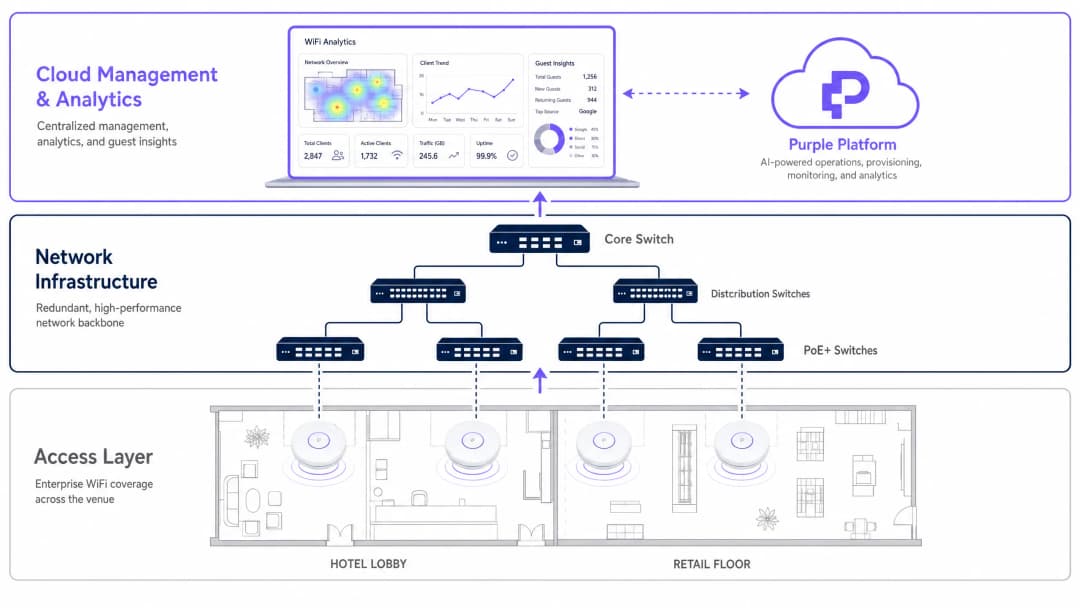 Aruba AP-735 या Cisco 9136 जैसे एक्सेस पॉइंट्स को एक्सेस लेयर पर प्रति पोर्ट 2.5 Gbps, 5 Gbps या 10 Gbps का समर्थन करने वाले मल्टी-गीगाबिट (mGig) स्विच की आवश्यकता होती है। बिजली की आपूर्ति के लिए, आधुनिक ट्राई-बैंड APs महत्वपूर्ण मात्रा में बिजली (वॉट) की खपत करते हैं। सुनिश्चित करें कि एक्सेस स्विच PoE++ (802.3bt, जो प्रति पोर्ट 60W टाइप 3 या 90W टाइप 4 तक प्रदान करता है) का समर्थन करते हैं। इन APs को मानक PoE+ (802.3at, अधिकतम 30W) पर चलाने से रेडियो बंद हो जाएंगे, CPU प्रदर्शन सीमित हो जाएगा और प्रबंधन डैशबोर्ड में डिग्रेडेड मोड की चेतावनियाँ दिखाई देंगी।
3. पहचान और एक्सेस प्रबंधन
उद्यम सुरक्षा के लिए मजबूत प्रमाणीकरण अनिवार्य है। उद्यम उपकरणों के लिए 802.1X/RADIUS के साथ WPA3-Enterprise मानक है, जो प्रति-उपयोगकर्ता एन्क्रिप्शन कुंजियाँ और केंद्रीकृत नीति प्रवर्तन प्रदान करता है। अतिथि पहुंच के लिए एक अलग दृष्टिकोण की आवश्यकता होती है जो न्यूनतम घर्षण के साथ सुरक्षा को संतुलित करे।
WiFi Analytics प्लेटफॉर्म के साथ एकीकृत एक Captive Portal को लागू करने से वेन्यू सुरक्षित पहुंच प्रदान कर सकते हैं और साथ ही मार्केटिंग के लिए मूल्यवान फर्स्ट-पार्टी डेटा भी प्राप्त कर सकते हैं। और भी आसान अनुभव के लिए, OpenRoaming को लागू करने पर विचार करें। जैसा कि How a wi fi assistant Enables Passwordless Access in 2026 में विस्तार से बताया गया है, Purple Connect लाइसेंस के साथ OpenRoaming के लिए एक मुफ्त पहचान प्रदाता के रूप में कार्य करता है, जिससे उपकरण पोर्टल के साथ मैन्युअल बातचीत के बिना स्वचालित रूप से और सुरक्षित रूप से प्रमाणित हो जाते हैं।
Transport और सार्वजनिक क्षेत्रों में, यह घर्षण-रहित प्रमाणीकरण मॉडल अस्थायी उपयोगकर्ताओं के उच्च पारगमन को प्रबंधित करने के लिए विशेष रूप से मूल्यवान है।
सर्वोत्तम प्रथाएँ और उद्योग मानक
RF साइट सर्वेक्षण: हमेशा इंस्टॉलेशन से पहले एक पूर्वानुमानित सर्वेक्षण और इंस्टॉलेशन के बाद एक सक्रिय सत्यापन सर्वेक्षण दोनों का संचालन करें। दीवारों, कांच और मानव शरीरों के कारण होने वाले क्षीणन (एटेन्यूएशन) को ध्यान में रखें - लोगों की भीड़ RF ऊर्जा को महत्वपूर्ण रूप से अवशोषित करती है, यही कारण है कि एक स्टेडियम जो सर्वेक्षण के दौरान अच्छा प्रदर्शन करता है, वह खचाखच भरे कार्यक्रम के दौरान पूरी तरह से विफल हो सकता है।
चैनल योजना: 5 GHz और 6 GHz बैंड में, उद्यम परिनियोजन के लिए 40 MHz या 80 MHz चैनल चौड़ाई का उपयोग करें, ताकि थ्रूपुट और चैनल की उपलब्धता के बीच संतुलन बना रहे। जब तक आप पूरी तरह से अलग-थलग वातावरण में न हों, तब तक 160 MHz या 320 MHz चौड़ाई से बचें, क्योंकि वे गैर-ओवरलैपिंग चैनलों की संख्या को अत्यधिक सीमित करते हैं और सह-चैनल हस्तक्षेप की संभावना को बढ़ाते हैं।Conformità (अनुपालन): सुनिश्चित करें कि आपका नेटवर्क आर्किटेक्चर प्रासंगिक मानकों के अनुकूल है। PCI-DSS 4.0 मानक WiFi के माध्यम से कार्ड से भुगतान संसाधित करने वाले किसी भी सिस्टम के लिए नेटवर्क सेगमेंटेशन को अनिवार्य करता है। Healthcare परिवेशों में, HIPAA डेटा ट्रांसमिशन पर सख्त नियंत्रण की मांग करता है। GDPR सभी उद्योगों में अतिथि WiFi पोर्टल्स के माध्यम से कैप्चर किए गए सभी व्यक्तिगत डेटा पर लागू होता है।
फर्मवेयर प्रबंधन: फर्मवेयर पैचिंग के लिए एक सख्त शेड्यूल स्थापित करें। एंटरप्राइज AP विक्रेता सुरक्षा कमजोरियों को ठीक करने के लिए नियमित रूप से सुरक्षा पैच जारी करते हैं। क्लाउड-प्रबंधित प्लेटफॉर्म (Aruba Central, Mist AI, Meraki) कॉन्फ़िगर करने योग्य रखरखाव विंडो के साथ इस प्रक्रिया को स्वचालित कर सकते हैं।
समस्या निवारण और जोखिम न्यूनीकरण
Sticky Clients: एक आम समस्या जहां एक डिवाइस नजदीकी एक्सेस पॉइंट पर रोमिंग करने से इनकार कर देता है, जिससे समग्र सेल का प्रदर्शन धीमा हो जाता है। क्लाइंट्स को बेहतर रोमिंग निर्णय लेने में मदद करने के लिए IEEE 802.11k (रेडियो रिसोर्स मेजरमेंट) और IEEE 802.11v (BSS ट्रांज़िशन मैनेजमेंट) मानकों को लागू करके इसे कम करें। प्रत्येक SSID पर न्यूनतम अनिवार्य डेटा दरें निर्धारित करें ताकि सिग्नल एक उपयोगी सीमा (आमतौर पर 5 GHz पर 12 Mbps) से नीचे गिरने पर क्लाइंट्स को जबरन डिस्कनेक्ट किया जा सके।
असममित रूटिंग: एक्सेस पॉइंट मोबाइल क्लाइंट की ट्रांसमिशन क्षमता से अधिक दूरी तक ट्रांसमिट कर सकता है, जिसके परिणामस्वरूप क्लाइंट को अधिकतम सिग्नल शक्ति तो दिखाई देती है लेकिन थ्रूपुट लगभग शून्य मिलता है। इसका समाधान सरल है: एक्सेस पॉइंट्स को अधिकतम ट्रांसमिशन पावर पर न चलाएं। AP की Tx पावर को औसत मोबाइल उपकरणों की क्षमता (आमतौर पर 12 - 15 dBm) से मिलाएं। यह आस-पास के AP के बीच को-चैनल हस्तक्षेप को भी कम करता है।
PoE बजट की कमी: बड़े इंस्टॉलेशन में, स्विच चेसिस के कुल PoE पावर बजट को पार करना आसान होता है, भले ही व्यक्तिगत पोर्ट बजट पर्याप्त लगें। हमेशा स्विच के कुल PoE पावर बजट के मुकाबले सभी जुड़े हुए AP की कुल बिजली खपत की गणना करें, न कि केवल व्यक्तिगत पोर्ट सीमाओं की।
SSID का प्रसार: प्रत्येक SSID प्रबंधन ओवरहेड (बीकन फ्रेम) उत्पन्न करता है जो एयरटाइम की खपत करता है। प्रति AP अधिकतम 3 - 4 SSID तक सीमित रखें। व्यक्तिगत विभाग के लिए अलग नेटवर्क बनाने के बजाय IoT, कॉर्पोरेट और अतिथि के लिए SSID को समेकित करें।
ROI और व्यावसायिक और प्रभाव (ROI and Business Impact)
सर्वश्रेष्ठ हार्डवेयर एक्सेस पॉइंट पर अपग्रेड करने का व्यावसायिक मामला IT परफॉर्मेंस मेट्रिक्स से कहीं आगे जाता है। Hospitality क्षेत्र में, विश्वसनीय WiFi को लगातार मेहमानों की संतुष्टि के स्कोर में शीर्ष कारकों में स्थान दिया गया है। एक बड़े सम्मेलन कार्यक्रम के दौरान नेटवर्क की विफलता सीधे री-बुकिंग दरों और ब्रांड प्रतिष्ठा को प्रभावित कर सकती है।
हार्डवेयर पर एक उन्नत एनालिटिक्स प्लेटफ़ॉर्म को एकीकृत करके, IT टीमें व्यवसाय को प्रत्यक्ष ROI प्रदर्शित कर सकती हैं। नेटवर्क पैदल यातायात के पैटर्न, ठहरने के समय, उपयोग के पीक समय और ग्राहकों के जनसांख्यिकीय डेटा को समझने का एक साधन बन जाता है। यह डेटा सीधे परिचालन निर्णयों को सूचित करता है - कर्मचारियों के स्तर से लेकर रिटेल आउटलेट्स में मर्चेंडाइज की स्थिति तक।
होटल के संदर्भ में इस डेटा का लाभ उठाने के व्यावहारिक मार्गदर्शन के लिए, How To Improve Guest Satisfaction: The Ultimate Playbook देखें। सार्वजनिक क्षेत्र में, एक मजबूत और समावेशी वायरलेस बुनियादी ढांचा डिजिटल समावेशन रणनीतियों के लिए तेजी से केंद्रीय होता जा रहा है, जैसा कि Purple Appoints Iain Fox as VP Growth – Public Sector to Drive Digital Inclusion and Smart City Innovation में रेखांकित किया गया है।
एकीकृत एनालिटिक्स के साथ अच्छी तरह से निष्पादित उद्यम WiFi परिनियोजन के मापने योग्य परिणामों में आमतौर पर शामिल हैं: कनेक्टिविटी से संबंधित मेहमानों की शिकायतों में 15 - 25% की कमी, केवल ईमेल वाले फॉर्म की तुलना में सोशल लॉगिन का उपयोग करते समय Captive Portal रूपांतरण दरों में 30 - 40% की वृद्धि, और एक प्रमाणित फर्स्ट-पार्टी डेटा एसेट जो पोस्ट-कुकी परिवेश में थर्ड-पार्टी डेटा प्रदाताओं पर निर्भरता को कम करता है।
मुख्य परिभाषाएं
Multi-Link Operation (MLO)
एक Wi-Fi 7 (802.11be) सुविधा जो उपकरणों को एक साथ कई फ़्रीक्वेंसी बैंड - उदाहरण के लिए, एक साथ 5 GHz और 6 GHz पर डेटा संचारित और प्राप्त करने की अनुमति देती है।
सघन एंटरप्राइज़ वातावरण में लेटेंसी को कम करने और थ्रूपुट बढ़ाने के लिए महत्वपूर्ण है। कार्य करने के लिए AP और क्लाइंट डिवाइस दोनों को Wi-Fi 7 का समर्थन करना आवश्यक है।
4K-QAM (Quadrature Amplitude Modulation)
Wi-Fi 7 में उपयोग की जाने वाली एक मॉड्यूलेशन योजना जो प्रति सिंबल 12 बिट्स को एनकोड करती है, जबकि Wi-Fi 6 का 1024-QAM (प्रति सिंबल 10 बिट्स) है, जो लगभग 20% उच्च चरम थ्रूपुट प्रदान करती है।
प्रभावी ढंग से काम करने के लिए बहुत उच्च सिग्नल-टू-नॉइज़ रेशियो (SNR) की आवश्यकता होती है। शोर वाले वातावरण में, AP स्वचालित रूप से कम मॉड्यूलेशन दरों पर वापस आ जाता है। क्षमता नियोजन को 4K-QAM के चरम आंकड़ों पर आधारित न करें।
Spatial Streams (MIMO)
मल्टीपल-इनपुट मल्टीपल-आउटपुट तकनीक स्वतंत्र डेटा स्ट्रीम को एक साथ प्रसारित करने के लिए कई एंटेना का उपयोग करती है। इसे 2x2, 4x4, या 8x8 (प्रसारित x प्राप्त एंटेना) के रूप में दर्शाया जाता है।
अधिक स्थानिक स्ट्रीम एक AP को अधिक समवर्ती क्लाइंट कनेक्शनों को संभालने की अनुमति देती हैं और उच्च कुल थ्रूपुट प्रदान करती हैं। Cisco 9136 जैसा 8x8 AP 2x2 AP की तुलना में काफी अधिक समवर्ती क्लाइंट्स की सेवा कर सकता है।
802.3bt (PoE++)
पावर ओवर इथरनेट मानक जो ट्विस्टेड-पेयर इथरनेट केबलों पर संचालित उपकरणों को 60W (टाइप 3) या 90W (टाइप 4) तक की DC पावर देने में सक्षम है।
बिना कार्यक्षमता से समझौता किए आधुनिक, उच्च-प्रदर्शन वाले ट्राई-बैंड एंटरप्राइज़ एक्सेस पॉइंट्स को बिजली देने के लिए अनिवार्य है। 802.3at (PoE+, 30W) स्विचों पर ट्राई-बैंड APs को तैनात करने के परिणामस्वरूप प्रदर्शन में गिरावट आएगी या रेडियो अक्षम हो जाएंगे।
OpenRoaming
एक Wi-Fi Alliance फ़ेडरेशन मानक जो उपयोगकर्ताओं को पहले से तैयार क्रेडेंशियल प्रोफ़ाइल का उपयोग करके, Captive Portals या मैन्युअल पासवर्ड प्रविष्टि के बिना, भाग लेने वाले अतिथि WiFi नेटवर्क से स्वचालित रूप से और सुरक्षित रूप से कनेक्ट होने की अनुमति देता है।
Purple, Connect लाइसेंस के तहत OpenRoaming के लिए एक निःशुल्क पहचान प्रदाता के रूप में कार्य करता है, जिससे स्थान निर्बाध, सुरक्षित अतिथि प्रमाणीकरण की पेशकश करने में सक्षम होते हैं। परिवहन केंद्रों और बड़ी संख्या में अस्थायी उपयोगकर्ताओं वाले सार्वजनिक क्षेत्र के स्थानों में विशेष रूप से मूल्यवान है।
BSS Transition Management (802.11v)
एक IEEE मानक जो नेटवर्क इंफ्रास्ट्रक्चर को क्लाइंट डिवाइसेज को सलाह संदेश भेजने की अनुमति देता है, जिसमें सिग्नल की शक्ति और लोड के आधार पर कनेक्ट करने के लिए एक बेहतर एक्सेस पॉइंट की सिफारिश की जाती है।
आईटी एडमिन द्वारा 'स्टिकी क्लाइंट्स' की समस्या को कम करने और वायरलेस नेटवर्क पर लोड बैलेंसिंग सुनिश्चित करने के लिए उपयोग किया जाता है। क्लाइंट्स को एपी की एक संभावित सूची प्रदान करने के लिए यह 802.11k (रेडियो रिसोर्स मेजरमेंट) के साथ मिलकर काम करता है।
Co-Channel Interference (CCI)
हस्तक्षेप (इंटरफेरेंस) तब होता है जब दो या दो से अधिक एक्सेस पॉइंट बिल्कुल एक ही फ्रीक्वेंसी चैनल पर काम करते हैं और एक-दूसरे की सीमा के भीतर होते हैं, जिससे उन्हें CSMA/CA प्रोटोकॉल के माध्यम से बारी-बारी से ट्रांसमिट करने के लिए मजबूर होना पड़ता है।
CCI अत्यधिक रूप से तैनात एंटरप्राइज नेटवर्क्स में परफॉर्मेंस में गिरावट का प्राथमिक कारण है। इसे सावधानीपूर्वक चैनल प्लानिंग, ट्रांसमिट पावर को कम करके और व्यापक 6 GHz बैंड का उपयोग करके कम किया जाता है जो अधिक नॉन-ओवरलैपिंग चैनल प्रदान करता है।
OFDMA (Orthogonal Frequency-Division Multiple Access)
Wi-Fi 6 में पेश किया गया OFDM का एक मल्टी-यूज़र संस्करण जो एक चैनल को छोटे रिसोर्स यूनिट्स (सब-कैरियर्स) में विभाजित करता है, जिससे एक एपी एक ही ट्रांसमिशन विंडो के भीतर एक साथ कई क्लाइंट्स के साथ संवाद कर सकता है।
यह कई छोटे-पैकेट ट्रांसमिशन वाले उच्च-घनत्व वाले वातावरण में दक्षता में भारी सुधार करता है, जैसे कि IoT डिवाइसेज या मोबाइल एप्लिकेशन जो लगातार कम डेटा भेजते हैं। यह लेटेंसी को कम करता है और एयरटाइम दक्षता में सुधार करता है।
BeamFlex+ (Ruckus Proprietary)
Ruckus Networks की एडेप्टिव एंटीना तकनीक जो गतिशील रूप से प्रत्येक व्यक्तिगत क्लाइंट ट्रांसमिशन के लिए इष्टतम एंटीना पैटर्न का चयन करती है, जिससे SNR को अधिकतम करने और हस्तक्षेप को कम करने के लिए सिग्नल को निर्देशित किया जा सके।
चुनौतीपूर्ण RF वातावरणों में विशेष रूप से प्रभावी है जैसे कि धातु की रैकिंग वाले वेयरहाउस या महत्वपूर्ण मल्टीपाथ रिफ्लेक्शंस वाले स्थान। इन परिदृश्यों में मानक ओमनीडायरेक्शनल एंटेना की तुलना में एक मापने योग्य परफॉर्मेंस लाभ प्रदान करता है।
हल किए गए उदाहरण
एक 400 कमरों वाले लग्जरी होटल में शाम के व्यस्त समय के दौरान लॉबी और कॉन्फ्रेंस क्षेत्रों में WiFi प्रदर्शन को लेकर मेहमानों की गंभीर शिकायतें आ रही हैं। वर्तमान इंफ्रास्ट्रक्चर गलियारों में तैनात WiFi 5 (802.11ac) access points का उपयोग करता है। IT डायरेक्टर को एक पूर्ण नए डिज़ाइन की आवश्यकता है। अनुशंसित दृष्टिकोण क्या है?
चरण 1 - कवरेज मॉडल से कैपेसिटी मॉडल पर स्विच करें। गलियारों से APs हटाएँ, जो मेहमानों के कमरों और गलियारे के बीच आवाजाही करने पर "sticky client" की समस्या पैदा करते हैं। इनके स्थान पर इन-रूम वॉल-प्लेट APs (जैसे, Cisco 9105AXW या Aruba AP-303H) का उपयोग करें ताकि प्रत्येक कमरे के भीतर RF डोमेन वाले माइक्रो-सेल्स बनाए जा सकें।
चरण 2 - उच्च-घनत्व वाली लॉबी और कॉन्फ्रेंस क्षेत्रों में, यदि छत की ऊँचाई 8 मीटर से अधिक है, तो दिशात्मक एंटेना का उपयोग करके WiFi 6E या WiFi 7 access points (जैसे, Aruba AP-735 या Cisco 9136) तैनात करें। लॉबी में प्रति 75 - 100 वर्ग मीटर में एक AP और कॉन्फ्रेंस रूम में प्रति 50 उपस्थित लोगों पर एक AP का लक्ष्य रखें।
चरण 3 - नए ट्राई-बैंड APs को बिना डिग्रेडेड मोड के बिजली देने के लिए mGig (2.5/5 Gbps) और PoE++ (802.3bt) का समर्थन करने के लिए एज स्विच को अपग्रेड करें।
चरण 4 - प्रति उपयोगकर्ता बैंडविड्थ आवंटन को प्रबंधित करने, GDPR-अनुपालन डेटा कैप्चर को लागू करने और कॉन्फ्रेंस में उपस्थित लोगों के ठहरने के समय और दोबारा आने की दरों पर एनालिटिक्स एकत्र करने के लिए Purple के गेस्ट WiFi Captive Portal को लागू करें।
चरण 5 - बिना सेशन ड्रॉप के लॉबी APs और कॉन्फ्रेंस रूम APs के बीच सहज रोमिंग सुनिश्चित करने के लिए 802.11k/v/r (Fast BSS Transition) सक्षम करें।
एक बड़ी रिटेल चेन को एक साथ 50 नए स्टोर्स में WiFi तैनात करने की आवश्यकता है। उन्हें हैंडहेल्ड इन्वेंट्री स्कैनर और POS टर्मिनलों के लिए उच्च विश्वसनीयता की आवश्यकता है (PCI-DSS अनुपालन अनिवार्य है), लेकिन वे फर्स्ट-पार्टी मार्केटिंग डेटा कैप्चर करने के लिए खरीदारों को गेस्ट WiFi भी देना चाहते हैं। बजट सीमित है। अनुशंसित आर्किटेक्चर क्या है?
चरण 1 - लागत और प्रदर्शन को संतुलित करने के लिए मध्यम-श्रेणी के Wi-Fi 6E एक्सेस पॉइंट्स (जैसे, Juniper Mist AP45 या Ruckus R560) को तैनात करें। Mist AI प्लेटफॉर्म की AIOps क्षमताएं 50 साइटों पर चल रहे IT प्रबंधन के ओवरहेड को कम करती हैं, जो एक महत्वपूर्ण परिचालन लागत बचत है।
चरण 2 - VLANs और अलग SSIDs का उपयोग करके नेटवर्क को खंडित करें: कॉर्पोरेट उपकरणों और POS टर्मिनलों के लिए 802.1X प्रमाणीकरण के साथ एक WPA3-Enterprise SSID (अतिथि ट्रैफ़िक के लिए कोई इंटर-VLAN राउटिंग न होने के साथ एक समर्पित VLAN पर अलग किया गया), और मेहमानों के लिए क्लाइंट अलगाव के साथ एक अलग खुला SSID।
चरण 3 - अतिथि नेटवर्क के लिए, Purple के Captive Portal को लागू करें। पोर्टल को इस तरह से कॉन्फ़िगर करें कि एक्सेस के बदले में सोशल लॉगिन या ईमेल पते की आवश्यकता हो, जिससे मार्केटिंग टीम प्रथम-पक्ष CRM डेटाबेस का निर्माण कर सके। किसी भी एकल उपयोगकर्ता को अपलिंक को संतृप्त करने से रोकने के लिए प्रति क्लाइंट बैंडविड्थ सीमाएं (जैसे, 10 Mbps डाउन / 5 Mbps अप) लागू करें।
चरण 4 - इन्वेंट्री स्कैनर संपत्ति स्थानों को ट्रैक करने और मर्चेंडाइजिंग अनुकूलन के लिए खरीदार फुट ट्रैफ़िक पैटर्न का विश्लेषण करने के लिए APs की BLE क्षमताओं का उपयोग करें।
चरण 5 - Mist AI ज़ीरो-टच प्रोविज़निंग वर्कफ़्लो का उपयोग करके सभी 50 साइटों पर कॉन्फ़िगरेशन टेम्पलेट को मानकीकृत करें, जिससे प्रति-साइट परिनियोजन समय दिनों से घटकर घंटों में रह जाता है।
अभ्यास प्रश्न
Q1. आप 300 छात्रों की बैठने की क्षमता वाले एक उच्च-घनत्व वाले विश्वविद्यालय के लेक्चर थिएटर के लिए WiFi नेटवर्क डिजाइन कर रहे हैं। आप तीन WiFi 6E एक्सेस पॉइंट्स तैनात करने की योजना बना रहे हैं। परफॉर्मेंस में गिरावट को रोकने के लिए सबसे महत्वपूर्ण एकल RF डिजाइन विचार क्या है, और आप इसका समाधान कैसे करेंगे?
संकेत: विचार करें कि क्या होता है जब एक ही भौतिक स्थान में कई एपी होते हैं और वे एक ही फ्रीक्वेंसी चैनल पर एयरटाइम कैसे साझा करते हैं।
मॉडल उत्तर देखें
सबसे महत्वपूर्ण विचार Co-Channel Interference (CCI) को कम करना है। एक ही भौतिक स्थान में तीन एपी के साथ, आपको यह सुनिश्चित करना होगा कि वे नॉन-ओवरलैपिंग चैनलों पर कॉन्फ़िगर किए गए हों - विशेष रूप से 5 GHz और 6 GHz बैंड पर। 6 GHz बैंड में, 59 तक नॉन-ओवरलैपिंग 20 MHz चैनल हैं, जो 5 GHz की तुलना में काफी अधिक लचीलापन प्रदान करते हैं। इसके अतिरिक्त, आपको प्रत्येक एपी की ट्रांसमिट (Tx) पावर को काफी कम करना चाहिए ताकि उनके सेल साइज अत्यधिक ओवरलैप न हों। यदि दो एपी एक ही चैनल पर एक-दूसरे को स्पष्ट रूप से सुन सकते हैं, तो वे CSMA/CA के माध्यम से ट्रांसमिशन को टाल देंगे, जिससे प्रभावी रूप से तीन एपी की क्षमता घटकर एक एकल एपी के बराबर रह जाएगी। एक अन्य विचार ओमनीडायरेक्शनल एंटेना के बजाय बैठने की जगह की ओर नीचे की ओर लक्षित डायरेक्शनल एंटेना का उपयोग करना है, ताकि RF डोमेन को कमरे के भीतर ही सीमित रखा जा सके।
Q2. एक क्लाइंट अपने वेयरहाउस WiFi को नए ऑटोमेटेड गाइडेड व्हीकल्स (AGVs) का समर्थन करने के लिए अपग्रेड करना चाहता है, जिसके लिए sub-50ms लेटेंसी और लगातार रोमिंग की आवश्यकता होती है। वेयरहाउस में ऊंची धातु की रैकिंग और गंभीर मल्टीपाथ हस्तक्षेप है। वे लागत बचाने के लिए Ubiquiti UniFi U7 Pro पर विचार कर रहे हैं। आपकी क्या सिफारिश और तर्क है?
संकेत: मूल्यांकन करें कि क्या हार्डवेयर की एंटीना तकनीक विशिष्ट RF वातावरण के अनुकूल है, और AGVs की रोमिंग आवश्यकताओं पर विचार करें।
मॉडल उत्तर देखें
हालांकि U7 Pro लागत प्रभावी है, लेकिन यह इस माहौल के लिए सही विकल्प नहीं है। मेटल रैकिंग गंभीर मल्टीपाथ व्यवधान पैदा करती है जिससे निपटने में मानक सर्वदिशात्मक (omnidirectional) एंटेना असमर्थ होते हैं। मैं विशेष रूप से इसकी BeamFlex+ एडेप्टिव एंटीना तकनीक के लिए Ruckus R760 या इसके समकक्ष की अनुशंसा करता हूँ, जो भौतिक बाधाओं के आसपास सिग्नलों को संचालित करने और मल्टीपाथ प्रतिबिंबों को कम करने के लिए एंटीना पैटर्न को गतिशील रूप से समायोजित करता है। AGV रोमिंग आवश्यकता के लिए, APs के बीच sub-50ms रोमिंग हैंडऑफ़ सक्षम करने के लिए 802.11r (Fast BSS Transition) लागू करें - यह गोदाम में गति से चलने वाले AGVs के लिए महत्वपूर्ण है। Ruckus प्लेटफॉर्म AGV क्लाइंट्स को रोमिंग शुरू करने से पहले इष्टतम AP की पहचान करने में सहायता करने के लिए 802.11k/v का भी समर्थन करता है।
Q3. आपकी टीम ने एक कॉर्पोरेट कैंपस में नए ट्राई-बैंड WiFi 7 एक्सेस पॉइंट्स तैनात किए हैं। पायलट चरण के दौरान, 6 GHz रेडियो प्रसारण नहीं कर रहे हैं और APs क्लाउड मैनेजमेंट डैशबोर्ड में 'degraded mode' रिपोर्ट कर रहे हैं। APs मौजूदा PoE+ स्विच से जुड़े हैं। इसका मूल कारण क्या है और इसके समाधान का रास्ता क्या है?
संकेत: आधुनिक, उच्च-प्रदर्शन वाले ट्राई-बैंड एक्सेस पॉइंट्स को पावर देने के लिए भौतिक बुनियादी ढांचे की आवश्यकताओं की समीक्षा करें।
मॉडल उत्तर देखें
इसका मूल कारण अपर्याप्त Power over Ethernet बजट है। मौजूदा PoE+ स्विच (802.3at) प्रति पोर्ट अधिकतम 30W प्रदान करते हैं। आधुनिक ट्राई-बैंड WiFi 7 APs को आमतौर पर पूर्ण क्षमता पर एक साथ तीनों रेडियो संचालित करने के लिए 802.3bt (PoE++) - प्रति पोर्ट 60W या 90W तक - की आवश्यकता होती है। जब AP अपर्याप्त पावर का पता लगाता है, तो यह स्वचालित रूप से एक डिग्रेडेड मोड में चला जाता है, जिससे सबसे अधिक पावर खपत करने वाले घटकों को सबसे पहले अक्षम कर दिया जाता है, जो आमतौर पर 6 GHz रेडियो और सेकेंडरी ईथरनेट पोर्ट होते हैं। समाधान का रास्ता एक्सेस लेयर स्विच को 802.3bt-सक्षम मॉडल से बदलना है। एक अंतरिम उपाय के रूप में, कुछ APs PoE+ स्विच आउटपुट के पूरक के लिए एक पावर इंजेक्टर (midspan) का समर्थन करते हैं, लेकिन यह एक स्केलेबल दीर्घकालिक समाधान नहीं है।
Q4. एक कॉन्फ्रेंस सेंटर एक ही हॉल में 2,000 तक एक साथ आने वाले उपस्थित लोगों के लिए कार्यक्रमों की मेजबानी करता है। हाल ही के एक कार्यक्रम के दौरान, सेटअप के दौरान WiFi ने अच्छा प्रदर्शन किया लेकिन हॉल के पूरी तरह भर जाने के बाद प्रदर्शन गंभीर रूप से गिर गया। RF साइट सर्वेक्षण खाली हॉल के साथ किया गया था। क्या गलत हुआ और आप भविष्य की तैनाती में इसे कैसे रोकेंगे?
संकेत: विचार करें कि एक खाली हॉल और एक भरे हुए हॉल के बीच भौतिक वातावरण कैसे बदलता है, और RF प्रसार पर इसका क्या प्रभाव पड़ता है।
मॉडल उत्तर देखें
समस्या यह है कि मानव शरीर RF ऊर्जा को महत्वपूर्ण रूप से अवशोषित करते हैं - विशेष रूप से 5 GHz और 6 GHz आवृत्तियों पर। 2,000 लोगों से भरा हॉल एक खाली हॉल की तुलना में नाटकीय रूप से भिन्न RF वातावरण बनाता है। खाली हॉल में किए गए भविष्य कहने वाले साइट सर्वेक्षण में इस क्षीणन (attenuation) पर ध्यान नहीं दिया गया था। इसका परिणाम यह है कि जिन APs का खाली हॉल में पर्याप्त कवरेज दिखाई दे रहा था, अब उनकी प्रभावी रेंज कम हो गई है, जिससे प्रति AP क्लाइंट की संख्या बढ़ गई है, पुनः प्रयास दरें (retry rates) बढ़ गई हैं, और थ्रूपुट कम हो गया है। रोकथाम के लिए आवश्यक है: (1) हॉल की पूरी या लगभग पूरी क्षमता पर एक लोडेड साइट सर्वेक्षण करना, या ऐसे सिमुलेशन टूल का उपयोग करना जो मानव शरीर के क्षीणन को मॉडल करते हैं; (2) खाली-हॉल सर्वेक्षण के सुझाव से अधिक AP घनत्व बढ़ाना; (3) AP और क्लाइंट के बीच की दूरी को कम करने के लिए APs को कम ऊंचाई पर (जैसे, सीट के नीचे या बालकनी के नीचे माउंट करना) तैनात करना, जिससे शरीर के क्षीणन की भरपाई हो सके।
इस श्रृंखला में आगे पढ़ें
WLC (Wireless LAN Controller) क्या है और क्या आपको अभी भी इसकी आवश्यकता है?
यह व्यापक गाइड Wireless LAN Controllers (WLCs) के विकास का पता लगाती है और 2026 में सही आर्किटेक्चर निर्धारित करने के लिए एक तकनीकी ढांचा प्रदान करती है। इसमें पारंपरिक हार्डवेयर, क्लाउड-मैनेज्ड और कंट्रोलर-लेस मॉडल शामिल हैं, जो अनुपालन, स्केलेबिलिटी और गेस्ट अनुभव पर उनके प्रभाव का विवरण देते हैं।
Access Points के लिए Power over Ethernet (PoE): एक कार्यान्वयन गाइड
यह गाइड इंफ्रास्ट्रक्चर तकनीशियनों, नेटवर्क आर्किटेक्ट्स और IT निर्णयकर्ताओं को होटल, रिटेल एस्टेट, स्टेडियम और सार्वजनिक क्षेत्र की सुविधाओं सहित एंटरप्राइज परिसरों में Power over Ethernet (PoE) access points को तैनात करने के लिए एक निश्चित तकनीकी संदर्भ प्रदान करती है। इसमें 802.3af से लेकर 802.3bt तक के IEEE मानक, पावर बजट गणना, केबलिंग आवश्यकताएं, VLAN सेगमेंटेशन और सुरक्षा अनुपालन शामिल हैं, जिसमें ठोस कार्यान्वयन परिदृश्य और मापने योग्य ROI बेंचमार्क शामिल हैं। PoE आर्किटेक्चर को समझना किसी भी [Guest WiFi](/guest-wifi) या [WiFi Analytics](/guest-wifi-marketing-analytics-platform) परिनियोजन के लिए बुनियादी है, क्योंकि फिजिकल लेयर की विश्वसनीयता सीधे डेटा कैप्चर की गुणवत्ता, उपयोगकर्ता अनुभव और परिचालन अपटाइम को निर्धारित करती है।
Mesh Network बनाम Access Points: बड़े स्थानों के लिए कौन सा बेहतर है?
यह तकनीकी गाइड बड़े पैमाने के स्थानों के लिए मेश नेटवर्क और पारंपरिक वायर्ड एक्सेस पॉइंट्स के बीच एक निश्चित तुलना प्रदान करती है, जिसमें आर्किटेक्चर, प्रदर्शन ट्रेड-ऑफ और तैनाती रणनीति शामिल है। यह IT प्रबंधकों, नेटवर्क आर्किटेक्ट्स और CTOs को हॉस्पिटैलिटी, रिटेल, इवेंट्स और सार्वजनिक क्षेत्र के वातावरण के लिए उच्च-प्रदर्शन, अनुपालन वाले WiFi बुनियादी ढांचे को डिजाइन करने के लिए व्यावहारिक रूपरेखा से लैस करती है। यह गाइड इन आर्किटेक्चरल निर्णयों को Purple के हार्डवेयर-अज्ञेयवादी गेस्ट WiFi और एनालिटिक्स प्लेटफॉर्म पर भी मैप करती है, जो यह प्रदर्शित करता है कि कैसे सही बुनियादी ढांचे का चयन मापने योग्य व्यावसायिक परिणामों को संचालित करता है।
अपने विशिष्ट सेटअप को लेकर कोई सवाल हैं?
हमारी टीम 80,000 से अधिक वेन्यू में वेन्यू ऑपरेटरों, IT मैनेजरों और नेटवर्क इंजीनियरों के साथ काम करती है। 20 मिनट का कॉल बुक करें और हम आपको दिखाएंगे कि आपके जैसे अन्य लोगों ने इसे कैसे हल किया।