
Shopping Centre WiFi: एक प्रॉपर्टी मैनेजर की गाइड
यह गाइड शॉपिंग सेंटर में पूरे परिसर में WiFi को तैनात करने के लिए एक व्यापक तकनीकी और व्यावसायिक खाका प्रदान करती है। इसमें थ्री-टियर नेटवर्क आर्किटेक्चर, हाई-डेंसिटी RF डिज़ाइन, GDPR-अनुपालन डेटा कैप्चर और रिटेल मीडिया मॉनेटाइजेशन रणनीतियां शामिल हैं। प्रॉपर्टी मैनेजरों, IT टीमों और CTOs को गेस्ट कनेक्टिविटी को फर्स्ट-पार्टी डेटा एसेट में बदलने के लिए एक स्पष्ट ROI फ्रेमवर्क के साथ व्यावहारिक परिनियोजन मार्गदर्शन मिलेगा।
इस गाइड को सुनें
पॉडकास्ट ट्रांसक्रिप्ट देखें
हमारी मुख्य श्रृंखला का हिस्सा: Multi-Tenant WiFi Guide →

कार्यकारी सारांश
रिटेल प्रॉपर्टी में पूरे एस्टेट में WiFi तैनात करना अब केवल एक परिचालन लागत या सामान्य गेस्ट सुविधा नहीं रह गया है। आधुनिक शॉपिंग सेंटर के लिए, एक मजबूत, हाई-डेंसिटी वायरलेस नेटवर्क डेटा-संचालित व्यावसायिक रणनीति की नींव बनाता है। एक अच्छी तरह से आर्किटेक्ट किए गए नेटवर्क को लागू करके, प्रॉपर्टी मैनेजर और IT लीडर अनाम फुटफॉल को उपयोगी फर्स्ट-पार्टी डेटा में बदल सकते हैं, जिससे परिचालन दक्षता में सुधार होता है और रिटेल मीडिया मॉनेटाइजेशन के माध्यम से नए राजस्व स्रोत बनते हैं।
यह गाइड रिटेल वातावरण में एंटरप्राइज-ग्रेड Guest WiFi के लिए तकनीकी आर्किटेक्चर, परिनियोजन विचारों और व्यावसायिक मामलों की रूपरेखा तैयार करती है। यह जटिल नेटवर्क इंजीनियरिंग और ठोस व्यावसायिक परिणामों के बीच की दूरी को पाटता है, जिससे IT प्रबंधकों, नेटवर्क आर्किटेक्ट्स और CTO को एक लचीला, स्केलेबल और सुरक्षित कनेक्टिविटी समाधान प्रदान करने का ब्लूप्रिंट मिलता है जो गेस्ट एक्सेस और परिचालन आवश्यकताओं दोनों का समर्थन करता है। यही सिद्धांत संबंधित क्षेत्रों पर भी लागू होते हैं, जिनमें retail, hospitality और बड़े सार्वजनिक स्थल शामिल हैं।
तकनीकी गहनता
नेटवर्क आर्किटेक्चर और टोपोलॉजी
शॉपिंग सेंटर WiFi नेटवर्क के आर्किटेक्चर को बड़े पैमाने, उच्च क्लाइंट डेंसिटी और एक जटिल रेडियो फ्रीक्वेंसी वातावरण को ध्यान में रखना चाहिए। इस आकार के किसी भी परिनियोजन के लिए, मानक तीन-स्तरीय पदानुक्रमित मॉडल आवश्यक है।
 Core Layer हाई-स्पीड बैकबोन बनाती है, जो रिडंडेंट राउटिंग, फ़ायरवॉल सेवाएं और इंटरनेट अपलिंक प्रदान करती है। बाधाओं को पैदा किए बिना पीक ट्रैफिक लोड को संभालने के लिए इस लेयर को उच्च थ्रूपुट का समर्थन करना चाहिए। Distribution Layer एक्सेस लेयर से ट्रैफिक को एकत्रित करती है, QoS (Quality of Service) नीतियां लागू करती है और ट्रैफिक को कोर की ओर रूट करती है। यह आमतौर पर प्रमाणीकरण के लिए RADIUS/AAA सर्वर और गेस्ट ऑनबोर्डिंग के लिए कैप्टिव पोर्टल सर्वर को होस्ट करती है। Access Layer नेटवर्क एज है जहां क्लाइंट कनेक्ट होते हैं, जिसमें Power over Ethernet (PoE) स्विच और रिटेल क्षेत्रों, फूड कोर्ट और कार पार्क में वितरित हाई-डेंसिटी WiFi एक्सेस पॉइंट शामिल हैं।
वायरलेस मानक और फ्रीक्वेंसी
आधुनिक परिनियोजन को WiFi 6 (802.11ax) या WiFi 6E पर मानकीकृत होना चाहिए, जो OFDMA (Orthogonal Frequency-Division Multiple Access) और MU-MIMO जैसी तकनीकों के माध्यम से हाई-डेंसिटी वाले वातावरण में महत्वपूर्ण सुधार प्रदान करते हैं। ये मानक APs को एक साथ कई उपकरणों के साथ संचार करने की अनुमति देते हैं, जिससे फूड कोर्ट जैसे भीड़भाड़ वाले क्षेत्रों में लेटेंसी काफी कम हो जाती है।
ड्यूल-बैंड (2.4 GHz और 5 GHz) या ट्राई-बैंड (6 GHz को जोड़कर) APs की आवश्यकता होती है। हालांकि 2.4 GHz दीवारों को बेहतर तरीके से पार करता है और अधिक दूरी तय करता है, लेकिन इसमें भारी भीड़ (कंजेशन) होती है। 5 GHz और 6 GHz व्यापक चैनल और उच्च थ्रूपुट प्रदान करते हैं लेकिन इसके लिए अधिक घने AP प्लेसमेंट की आवश्यकता होती है। एक अच्छी तरह से डिज़ाइन किया गया नेटवर्क कुल स्पेक्ट्रम उपयोग को अनुकूलित करने के लिए सक्रिय रूप से ड्युअल-बैंड-सक्षम क्लाइंट्स को 5 GHz या 6 GHz बैंड (बैंड स्टीयरिंग) पर निर्देशित करेगा।
सुरक्षा और अनुपालन
सुरक्षा सर्वोपरि है, विशेष रूप से तब जब गेस्ट डेटा को संभाला जा रहा हो और संभावित रूप से POS सिस्टम या ऑपरेशनल टेक्नोलॉजी (OT) को एकीकृत किया जा रहा हो।
गेस्ट एक्सेस के लिए, ऑनबोर्डिंग के लिए एक सुरक्षित Captive Portal लागू करें। जहां समर्थित हो वहां WPA3-Personal (SAE) का उपयोग करें, या घर्षण रहित पहुंच के लिए Open/Enhanced Open (OWE) का उपयोग करें। महत्वपूर्ण रूप से, गेस्ट डिवाइसेस के बीच पीयर-टू-पीयर संचार को रोकने के लिए AP स्तर पर क्लाइंट आइसोलेशन सक्षम होना चाहिए। डेटा गोपनीयता के लिए, डेटा संग्रह तंत्र को GDPR, CCPA या स्थानीय डेटा सुरक्षा नियमों का अनुपालन करना चाहिए। एक मजबूत Guest WiFi प्लेटफॉर्म ऑनबोर्डिंग प्रक्रिया के दौरान स्पष्ट रूप से सहमति का प्रबंधन करेगा। कॉरपोरेट/OT एक्सेस के लिए, ऑपरेशनल ट्रैफ़िक (उदाहरण के लिए HVAC सेंसर, सुरक्षा कैमरे, POS) को समर्पित VLANs पर अलग करें और इसे 802.1X प्रमाणीकरण (WPA3-Enterprise) के साथ सुरक्षित करें।
-
अपने विशिष्ट सेटअप को लेकर कोई सवाल हैं?
हमारी टीम 80,000 से अधिक वेन्यू में वेन्यू ऑपरेटरों, IT मैनेजरों और नेटवर्क इंजीनियरों के साथ काम करती है। 20 मिनट का कॉल बुक करें और हम आपको दिखाएंगे कि आपके जैसे अन्य लोगों ने इसे कैसे हल किया।
कार्यान्वयन गाइड
चरण 1: साइट सर्वे और RF प्लानिंग
प्रेडिक्टिव और एक्टिव साइट सर्वे महत्वपूर्ण पहला कदम हैं। रिटेल वातावरण गतिशील होते हैं; दुकानों के लेआउट बदलते हैं, और मौसमी प्रदर्शन RF प्रोपेगेशन को महत्वपूर्ण रूप से बदल सकते हैं।
एक प्रेडिक्टिव सर्वे फ्लोर प्लान और निर्माण सामग्री के आधार पर वातावरण को मॉडल करने के लिए सॉफ्टवेयर टूल का उपयोग करता है, जो AP की संख्या और प्लेसमेंट का प्रारंभिक अनुमान प्रदान करता है। एक एक्टिव सर्वे (AP-on-a-stick) साइट पर AP कवरेज और व्यवधान का भौतिक रूप से परीक्षण करता है। शॉपिंग सेंटरों में कांच के स्टोरफ्रंट, मेटल फिक्स्चर और मौजूदा टेनेंट WiFi नेटवर्क जैसे वेरिएबल्स को ध्यान में रखने के लिए यह आवश्यक है, जो सभी को-चैनल व्यवधान का कारण बनते हैं।
चरण 2: इन्फ्रास्ट्रक्चर प्रोविजनिंग
सुनिश्चित करें कि वायर्ड इन्फ्रास्ट्रक्चर वायरलेस मांगों का समर्थन कर सकता है। मल्टी-गीगाबिट थ्रूपुट और उच्च PoE बजट (PoE+ या PoE++) का समर्थन करने के लिए सभी AP स्थानों पर Cat6A केबलिंग चलाएं। सभी AP को एक साथ बिजली देने के लिए पर्याप्त PoE बजट वाले एक्सेस स्विच का चयन करें, जो बिजली की अधिक खपत करने वाले WiFi 6/6E APs को तैनात करते समय विशेष रूप से महत्वपूर्ण है। एक स्थिर इंटरनेट कनेक्शन आवश्यक है; गारंटीकृत बैंडविड्थ और SLAs के लिए एक समर्पित लीज्ड लाइन पर विचार करें। अधिक जानकारी के लिए, हमारी गाइड देखें: लीज्ड लाइन क्या है? समर्पित व्यावसायिक इंटरनेट।
चरण 3: AP प्लेसमेंट और कॉन्फ़िगरेशन
फ़ूड कोर्ट या इवेंट स्पेस जैसे high-density areas में, छोटे और केंद्रित माइक्रो-सेल्स बनाने के लिए डायरेक्शनल-एंटीना APs का उपयोग करें, जिससे बिना को-चैनल इंटरफेरेंस बढ़ाए क्षमता बढ़ाई जा सके। कॉरिडोर और वॉकवे में, रोमिंग क्लाइंट्स को निरंतर कवरेज प्रदान करने के लिए AP प्लेसमेंट को स्टैगर करें। ट्रांसमिट पावर लेवल को ध्यान से ट्यून करें; APs को अधिकतम पावर पर ब्रॉडकास्ट नहीं करना चाहिए, क्योंकि इससे स्टिकी क्लाइंट्स - यानी ऐसे डिवाइस जो किसी करीबी AP पर रोम करने से मना कर देते हैं - बनते हैं और इंटरफेरेंस बढ़ता है।
चरण 4: Captive Portal और एनालिटिक्स इंटीग्रेशन
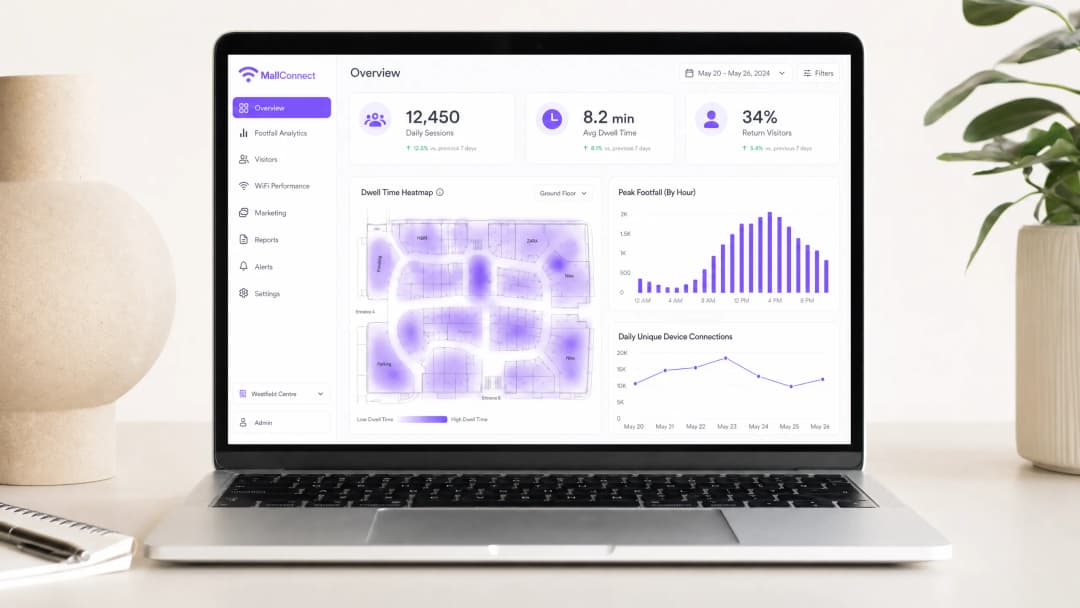
नेटवर्क को एक मजबूत एनालिटिक्स प्लेटफॉर्म के साथ इंटीग्रेट करें। Captive Portal डेटा कलेक्शन का प्रवेश द्वार है। सोशल लॉगिन, ईमेल रजिस्ट्रेशन या OpenRoaming जैसे सहज ऑथेंटिकेशन की पेशकश करके ऑनबोर्डिंग प्रक्रिया को घर्षण रहित (frictionless) रखें। एक बार कनेक्ट होने के बाद, प्लेटफॉर्म को लोकेशन डेटा, ड्वेल टाइम और रिटर्न विजिट फ्रीक्वेंसी को एग्रीगेट करना शुरू कर देना चाहिए। यह नेटवर्क को कॉस्ट सेंटर से एक मार्केटिंग एसेट में बदल देता है। एक व्यापक WiFi Analytics समाधान की क्षमताओं का पता लगाएं।
सर्वश्रेष्ठ प्रथाएं (Best Practices)
गेस्ट और कॉर्पोरेट ट्रैफ़िक को अलग करें: गेस्ट ट्रैफ़िक को कॉर्पोरेट और ऑपरेशनल डेटा से लॉजिकली अलग करने के लिए हमेशा VLANs का उपयोग करें। यह एक मौलिक सुरक्षा आवश्यकता है, विशेष रूप से उन एनवायरनमेंट्स में जो PCI-DSS अनुपालन के अधीन हैं जहां भुगतान कार्ड डेटा नेटवर्क से गुजर सकता है।
Band Steering लागू करें: ड्यूल-बैंड-सक्षम क्लाइंट्स को सक्रिय रूप से 5 GHz या 6 GHz बैंड पर ले जाएं, जिससे लेगेसी डिवाइसेज और IoT सेंसर्स के लिए कंजस्टेड 2.4 GHz स्पेक्ट्रम खाली हो सके।
DHCP और DNS को ऑप्टिमाइज़ करें: शॉपिंग सेंटर्स जैसे हाई-टर्नओवर वाले एनवायरनमेंट्स DHCP एड्रेस पूल को तेजी से समाप्त कर देते हैं। IP एड्रेस को कुशलतापूर्वक रीसायकल करने के लिए DHCP लीज टाइम को कम करें (उदाहरण के लिए, 1 या 2 घंटे)। हाई क्वेरी वॉल्यूम को संभालने के लिए मजबूत DNS इंफ्रास्ट्रक्चर सुनिश्चित करें। इसके बारे में अधिक जानें कि कैसे अपने नेटवर्क को मजबूत DNS और सुरक्षा के साथ सुरक्षित रखें।
लगातार मॉनिटर करें: RF एनवायरनमेंट लगातार बदल रहा है। क्लाइंट हेल्थ, AP स्टेटस और इंटरफेरेंस लेवल में रियल-टाइम विजिबिलिटी प्रदान करने के लिए एक Wireless Management System (WMS) का उपयोग करें।
ट्रबलशूटिंग और जोखिम शमन
सामान्य विफलता मोड (Common Failure Modes)
Co-Channel Interference (CCI) तब होता है जब कई APs एक ही चैनल पर काम करते हैं और एक-दूसरे को सुन सकते हैं, जिससे डिवाइसेज को खाली एयरटाइम के लिए इंतजार करना पड़ता है और थ्रूपुट काफी कम हो जाता है। सावधानीपूर्वक चैनल प्लानिंग, डायनेमिक Radio Resource Management (RRM) और कम AP ट्रांसमिट पावर के माध्यम से इसे कम करें।
स्टिकी क्लाइंट्स (Sticky clients) वे डिवाइस होते हैं जो किसी AP से जुड़े रहते हैं, भले ही मजबूत सिग्नल वाला कोई करीबी AP उपलब्ध हो। कमजोर-सिग्नल वाले क्लाइंट्स को धीरे से डिस्कनेक्ट करने के लिए एक न्यूनतम RSSI थ्रेशोल्ड लागू करें, जिससे वे बेहतर सिग्नल वाले AP पर रोम करने के लिए मजबूर हों।DHCP pool exhaustion उपयोगकर्ताओं को कनेक्ट होने से रोकता है क्योंकि नेटवर्क में IP पते समाप्त हो जाते हैं। गेस्ट नेटवर्क के लिए बड़े सबनेट का उपयोग करें (उदाहरण के लिए, /22 या /21) और DHCP लीज समय को कम करें।
Rogue APs नेटवर्क से जुड़े अनधिकृत एक्सेस पॉइंट हैं, जो एक गंभीर सुरक्षा जोखिम पैदा करते हैं। दुष्ट उपकरणों का स्वचालित रूप से पता लगाने और उन्हें रोकने के लिए एक Wireless Intrusion Prevention System (WIPS) सक्षम करें।
ROI और व्यावसायिक प्रभाव
डेटा संग्रह और एनालिटिक्स
एक ठीक से कॉन्फ़िगर किया गया नेटवर्क पैसिव एनालिटिक्स (फुटफॉल, ठहरने का समय, मूवमेंट पैटर्न) और एक्टिव एनालिटिक्स (डेमोग्राफिक जानकारी और Captive Portal के माध्यम से प्राप्त संपर्क विवरण) दोनों को कैप्चर करता है। यह डेटा वेन्यू ऑपरेटरों को खरीदार के व्यवहार में विस्तृत अंतर्दृष्टि प्रदान करता है, जिससे किरायेदार प्लेसमेंट, किराया मूल्यांकन और मार्केटिंग प्रभावशीलता पर डेटा-संचालित निर्णय सक्षम होते हैं। हमारे Zoo and Theme Park WiFi: A High-Footfall Venue Connectivity Guide में विस्तृत वही डेटा-संचालित दृष्टिकोण उच्च-ट्रैफ़िक वाले स्थानों में भी समान रूप से प्रभावी है।
रिटेल मीडिया मुद्रीकरण
Captive Portal अपने आप में एक प्रमुख डिजिटल रियल एस्टेट है। प्रॉपर्टी मैनेजर ऑनबोर्डिंग प्रक्रिया के दौरान रिटेल किरायेदारों या तीसरे पक्ष के ब्रांडों से लक्षित विज्ञापन या प्रायोजन दिखाकर इसका मुद्रीकरण कर सकते हैं। यह WiFi नेटवर्क को सीधे राजस्व उत्पन्न करने वाले चैनल में बदल देता है।
बेहतर ग्राहक अनुभव
निर्बाध कनेक्टिविटी इनडोर वेफाइंडिंग, स्थान-आधारित ऑफ़र और व्यक्तिगत संचार को सक्षम बनाती है। WiFi डेटा को मौजूदा CRM या लॉयल्टी प्रोग्राम के साथ एकीकृत करके, वेन्यू अत्यधिक लक्षित, संदर्भ-जागरूक अनुभव प्रदान कर सकते हैं जो जुड़ाव बढ़ाते हैं और प्रति विज़िट खर्च को बढ़ावा देते हैं।
मुख्य परिभाषाएं
Co-Channel Interference (CCI)
यह तब होता है जब कई एक्सेस पॉइंट एक ही फ़्रीक्वेंसी चैनल पर ट्रांसमिट करते हैं और एक-दूसरे को 'सुन' सकते हैं। चूंकि WiFi एक हाफ-डुप्लेक्स माध्यम है (एक चैनल पर एक समय में केवल एक ही डिवाइस बात कर सकता है), इसलिए CCI डिवाइसों को प्रतीक्षा करने के लिए मजबूर करता है, जिससे नेटवर्क के प्रदर्शन और थ्रूपुट में भारी गिरावट आती है।
सघन रिटेल वातावरण में खराब WiFi प्रदर्शन का एक प्राथमिक कारण जहां उचित चैनल योजना या पावर प्रबंधन के बिना बहुत सारे APs तैनात किए जाते हैं।
Band Steering
एक नेटवर्क सुविधा जो ड्यूल-बैंड सक्षम क्लाइंट्स का पता लगाती है और उन्हें भीड़भाड़ वाले 2.4 GHz बैंड के बजाय कम भीड़भाड़ वाले 5 GHz या 6 GHz बैंड से जुड़ने के लिए सक्रिय रूप से प्रोत्साहित या मजबूर करती है।
शॉपिंग सेंटर के फूड कोर्ट जैसे उच्च-घनत्व वाले क्षेत्रों में थ्रूपुट और क्षमता को अधिकतम करने के लिए आवश्यक है जहां 2.4 GHz बैंड संतृप्त होता है।
Captive Portal
एक वेब पेज जिसे सार्वजनिक-एक्सेस नेटवर्क के उपयोगकर्ता को इंटरनेट एक्सेस मिलने से पहले देखने और इंटरैक्ट करने के लिए बाध्य किया जाता है। आमतौर पर प्रमाणीकरण, सेवा की शर्तों को स्वीकार करने और मार्केटिंग डेटा कैप्चर के लिए उपयोग किया जाता है।
अनाम फुटफॉल को ज्ञात संपर्कों में बदलने और मार्केटिंग और एनालिटिक्स उद्देश्यों के लिए फर्स्ट-पार्टी डेटा एकत्र करने का प्राथमिक तंत्र।
Client Isolation
एक्सेस पॉइंट पर कॉन्फ़िगर की गई एक सुरक्षा सुविधा जो जुड़े हुए वायरलेस क्लाइंट्स को स्थानीय नेटवर्क पर एक-दूसरे के साथ सीधे संवाद करने से रोकती है।
शॉपर्स के डिवाइसों के बीच पीयर-टू-पीयर हमलों और मैलवेयर फैलने को रोकने के लिए सार्वजनिक गेस्ट नेटवर्क के लिए एक अनिवार्य सुरक्षा नियंत्रण।
Dwell Time
एक विजिटर द्वारा स्थल के एक विशिष्ट परिभाषित क्षेत्र (जोन) के भीतर बिताया गया समय, जिसकी गणना उनके WiFi-सक्षम डिवाइस की उपस्थिति के आधार पर की जाती है जैसा कि एक्सेस पॉइंट इन्फ्रास्ट्रक्चर द्वारा पता लगाया जाता है।
स्थल ऑपरेटरों के लिए शॉपर जुड़ाव को समझने, विभिन्न रिटेल जोन का मूल्यांकन करने और मार्केटिंग अभियानों और स्टोर लेआउट की प्रभावशीलता को मापने के लिए एक प्रमुख मीट्रिक।
RSSI (Received Signal Strength Indicator)
एक प्राप्त रेडियो सिग्नल में मौजूद शक्ति का माप, जिसे dBm (एक मिलीवाट के सापेक्ष डेसिबल) में व्यक्त किया जाता है। यह इंगित करता है कि एक डिवाइस एक्सेस पॉइंट को कितनी अच्छी तरह 'सुन' सकता है।
एक्सेस पॉइंट प्लेसमेंट निर्धारित करने के लिए नेटवर्क डिज़ाइन में उपयोग किया जाता है और स्टिकी क्लाइंट्स को एक मजबूत एक्सेस पॉइंट पर रोम करने के लिए मजबूर करने के लिए न्यूनतम RSSI सीमाओं में कॉन्फ़िगर किया जाता है।
OpenRoaming
WiFi नेटवर्क का एक संघ जो उपयोगकर्ताओं को बार-बार लॉग इन करने या Captive Portal का उपयोग करने की आवश्यकता के बिना विभिन्न स्थलों पर स्वचालित रूप से निर्बाध और सुरक्षित रूप से कनेक्ट होने की अनुमति देता है। Passpoint (802.11u) मानक पर आधारित।
घर्षण रहित कनेक्टिविटी का एक आधुनिक दृष्टिकोण जो उपयोगकर्ता अनुभव को बेहतर बनाता है और साथ ही स्थलों को सुरक्षित, प्रमाणित कनेक्शन बनाए रखने और एनालिटिक्स डेटा कैप्चर करने की अनुमति देता है।
Power over Ethernet (PoE)
IEEE 802.3af, 802.3at (PoE+), और 802.3bt (PoE++) में मानकीकृत एक तकनीक जो ट्विस्टेड पेयर ईथरनेट केबलिंग पर डेटा के साथ विद्युत शक्ति भेजती है, जिससे एक एकल केबल वायरलेस एक्सेस पॉइंट जैसे डिवाइसों को डेटा कनेक्शन और पावर दोनों प्रदान करने की अनुमति देती है।
एक बड़े रिटेल एस्टेट में एपी तैनात करने के लिए महत्वपूर्ण है, क्योंकि यह प्रत्येक एपी स्थान पर अलग से बिजली के आउटलेट स्थापित करने की आवश्यकता को समाप्त करता है, जिससे स्थापना लागत और जटिलता काफी कम हो जाती है।
VLAN (Virtual Local Area Network)
एक भौतिक नेटवर्क का एक तार्किक उपखंड जो डिवाइसों को उनके भौतिक स्थान की परवाह किए बिना एक साथ समूहित करता है। VLAN के बीच ट्रैफ़िक को लेयर 3 डिवाइस के माध्यम से रूटिंग की आवश्यकता होती है, जो नेटवर्क सेगमेंट के बीच तार्किक अलगाव प्रदान करता है।
एक रिटेल वातावरण में कॉर्पोरेट, पीओएस और परिचालन प्रौद्योगिकी नेटवर्क से गेस्ट WiFi ट्रैफ़िक को अलग करने का मूल तंत्र।
हल किए गए उदाहरण
एक क्षेत्रीय शॉपिंग सेंटर (लगभग 50,000 वर्ग मीटर) पीक लंच आवर्स के दौरान अपने केंद्रीय फ़ूड कोर्ट में गंभीर कनेक्टिविटी समस्याओं का सामना कर रहा है। उपयोगकर्ता रिपोर्ट करते हैं कि वे WiFi से जुड़े हैं लेकिन वेब पेज लोड करने में असमर्थ हैं। वर्तमान सेटअप में 10 मीटर ऊंची छत पर लगे 4 मानक ओमनी-डायरेक्शनल APs का उपयोग किया गया है।
- को-चैनल इंटरफेरेंस (CCI) और क्षमता समाप्ति की पुष्टि करने के लिए एक सक्रिय RF सर्वे करें। सत्यापित करें कि सभी APs एक ही या ओवरलैपिंग चैनलों पर काम कर रहे हैं, और पीक आवर्स के दौरान समवर्ती क्लाइंट काउंट को मापें।
- 4 ओमनी-डायरेक्शनल APs को डायरेक्शनल (पैच) एंटेना का उपयोग करने वाले 8-10 हाई-डेंसिटी APs से बदलें। जहां संभव हो उन्हें नीचे माउंट करें, या विशिष्ट बैठने वाले क्षेत्रों पर केंद्रित माइक्रो-सेल्स बनाने के लिए उन्हें एंगुलर करें।
- सभी सक्षम क्लाइंट्स के लिए 5GHz/6GHz कनेक्शन को बाध्य करने के लिए सख्त बैंड स्टीयरिंग लागू करें।
- सेल ओवरलैप को कम करने और CCI को कम करने के लिए फ़ूड कोर्ट के सभी APs पर ट्रांसमिट पावर कम करें।
- DHCP पूल आकार को सत्यापित करें और पूल समाप्ति को रोकने के लिए इस विशिष्ट ज़ोन के लिए लीज़ समय को घटाकर 30 मिनट करें।
- डिस्ट्रीब्यूशन स्विच से कोर तक बैकहॉल क्षमता को सत्यापित करें ताकि यह सुनिश्चित हो सके कि वायर्ड नेटवर्क कोई बाधा नहीं है।
एक लग्जरी रिटेल आउटलेट विलेज खरीदारों की जनसांख्यिकी को एकत्र करने और एक मार्केटिंग डेटाबेस बनाने के लिए एक गेस्ट WiFi नेटवर्क लागू करना चाहता है। हालांकि, IT टीम GDPR अनुपालन और टेनेंट POS नेटवर्क की सुरक्षा को लेकर चिंतित है।
- नेटवर्क सेग्मेंटेशन: कॉर्पोरेट और POS VLANs से पूरी तरह से अलग, विशेष रूप से गेस्ट WiFi ट्रैफ़िक के लिए एक समर्पित, पृथक VLAN बनाएं। इस गेस्ट VLAN को सीधे इंटरनेट फ़ायरवॉल पर रूट करें, जिससे सभी आंतरिक नेटवर्क बायपास हो जाएं।
- क्लाइंट आइसोलेशन: उपकरणों को एक-दूसरे से संवाद करने से रोकने के लिए सभी गेस्ट APs पर लेयर 2 क्लाइंट आइसोलेशन सक्षम करें।
- Captive Portal कॉन्फ़िगरेशन: Purple जैसे अनुपालन वाले गेस्ट WiFi प्लेटफ़ॉर्म के साथ एकीकृत एक Captive Portal लागू करें।
- सहमति प्रबंधन: पोर्टल को मार्केटिंग संचार और डेटा प्रोसेसिंग के लिए स्पष्ट, ऑप्ट-इन सहमति की आवश्यकता के लिए कॉन्फ़िगर करें, और एक्सेस देने से पहले गोपनीयता नीति से स्पष्ट रूप से लिंक करें। मार्केटिंग सहमति टिक बॉक्स को अनिवार्य सेवा की शर्तों (Terms of Service) की स्वीकृति से अलग रखें।
- ऑथेंटिकेशन: सत्यापित जनसांख्यिकीय डेटा कैप्चर करने के लिए सोशल लॉगिन या ईमेल पंजीकरण की पेशकश करें, और सुनिश्चित करें कि सभी डेटा को GDPR आर्टिकल 6 (प्रोसेसिंग के लिए कानूनी आधार) के अनुपालन में प्रोसेस और स्टोर किया जाता है।
अभ्यास प्रश्न
Q1. आपकी मार्केटिंग टीम एक नया ऑगमेंटेड रियलिटी (AR) इनडोर नेविगेशन ऐप लागू करना चाहती है जो काफी हद तक गेस्ट WiFi नेटवर्क पर निर्भर करता है। वर्तमान नेटवर्क को तीन साल पहले मुख्य रूप से बुनियादी वेब ब्राउज़िंग के लिए डिज़ाइन किया गया था। ऐप लॉन्च करने से पहले आपको सबसे महत्वपूर्ण तकनीकी मूल्यांकन क्या करना चाहिए, और आपको किन विशिष्ट मीट्रिक को मापना चाहिए?
संकेत: कवरेज के लिए डिज़ाइन किए गए नेटवर्क और उच्च थ्रूपुट, कम लेटेंसी और सटीक स्थान सटीकता के लिए डिज़ाइन किए गए नेटवर्क के बीच अंतर पर विचार करें।
मॉडल उत्तर देखें
आपको एक कैपेसिटी एनालिसिस और एक्टिव साइट सर्वे करना चाहिए। मौजूदा नेटवर्क को शायद कवरेज (बेसिक कनेक्टिविटी) के लिए डिज़ाइन किया गया था। AR ऐप्स के लिए हाई थ्रूपुट (कम से कम 10 - 25 Mbps प्रति एक्टिव यूजर), लो लेटेंसी (20ms से कम), और सटीक लोकेशन ट्राइएंगुलेशन के लिए पर्याप्त AP डेंसिटी (आमतौर पर प्रत्येक यूजर के 10 - 15 मीटर के भीतर APs) की आवश्यकता होती है। प्रति AP कनकंरेंट क्लाइंट काउंट, प्रति यूजर एवरेज और पीक थ्रूपुट, पूरे परिसर में RSSI वेरिएंस, और रोमिंग इवेंट की फ्रीक्वेंसी को मापें। यदि नेटवर्क इन थ्रेशोल्ड को पूरा नहीं कर सकता है, तो ऐप लॉन्च करने से पहले एक AP डेंसिफिकेशन प्रोजेक्ट और WiFi 6 में अपग्रेड करना आवश्यक होगा।
Q2. शॉपिंग सेंटर का एक किराएदार शिकायत करता है कि उनके वायरलेस पॉइंट-ऑफ-सेल (POS) टर्मिनल्स के कनेक्शन अक्सर टूट जाते हैं, खासकर व्यस्त वीकेंड के घंटों के दौरान। आप देखते हैं कि किराएदार का AP 2.4GHz बैंड पर चैनल 6 पर काम कर रहा है, और पास के कई मॉल गेस्ट APs भी चैनल 6 पर ब्रॉडकास्ट कर रहे हैं। तत्काल अनुशंसित कार्रवाई क्या है, और किस दीर्घकालिक आर्किटेक्चरल बदलाव पर विचार किया जाना चाहिए?
संकेत: इस बारे में सोचें कि कैसे WiFi डिवाइसेज एक ही फ्रीक्वेंसी पर एयरटाइम साझा करते हैं, और POS सिस्टम के गेस्ट डिवाइसेज के समान नेटवर्क पर होने के क्या प्रभाव होते हैं।
मॉडल उत्तर देखें
तत्काल कार्रवाई Co-Channel Interference को कम करना है। एक चैनल प्लान तैयार करें: यदि POS टर्मिनल्स 5GHz को सपोर्ट करते हैं, तो किराएदार के AP को तुरंत 5GHz बैंड पर माइग्रेट करें। यदि 2.4GHz की आवश्यकता है, तो सुनिश्चित करें कि किराएदार का AP और आस-पास के मॉल APs नॉन-ओवरलैपिंग चैनलों (1, 6, या 11) का उपयोग करें, जिसमें एक ही चैनल पर कोई भी आस-पास का AP न हो। दीर्घकालिक आर्किटेक्चरल बदलाव यह सुनिश्चित करना है कि POS सिस्टम एक डेडिकेटेड, आइसोलेटेड VLAN पर एक अलग SSID के साथ हों, जो गेस्ट नेटवर्क से पूरी तरह से अलग हो। यह कार्डधारक डेटा वातावरण के लिए PCI DSS अनुपालन आवश्यकताओं को भी पूरा करता है।
Q3. प्रॉपर्टी मैनेजमेंट टीम कैप्टिव पोर्टल पर लक्षित विज्ञापन बेचकर गेस्ट WiFi को मॉनेटाइज करना चाहती है। लीगल टीम ने GDPR संबंधी चिंताओं को हरी झंडी दिखाई है। कमर्शियल आवश्यकता और कानूनी अनुपालन दोनों को पूरा करने के लिए नेटवर्क आर्किटेक्चर और ऑनबोर्डिंग फ्लो को कैसे डिज़ाइन किया जाना चाहिए?
संकेत: सहमति के लिए विशिष्ट GDPR आवश्यकताओं पर ध्यान केंद्रित करें, और सहमति को स्वतंत्र रूप से दी गई, विशिष्ट, सूचित और स्पष्ट बनाने के लिए कैप्टिव पोर्टल फ्लो को कैसे संरचित किया जाना चाहिए।
मॉडल उत्तर देखें
ऑनबोर्डिंग फ्लो में टू-स्टेज सहमति मॉडल लागू होना चाहिए। पहले चरण में अनिवार्य सेवा की शर्तें (नेटवर्क एक्सेस के लिए आवश्यक) प्रस्तुत की जाती हैं। दूसरे चरण में मार्केटिंग कम्युनिकेशंस और लक्षित विज्ञापनों के लिए डेटा प्रोसेसिंग के लिए एक स्पष्ट रूप से अलग, वैकल्पिक ऑप्ट-इन चेकबॉक्स प्रस्तुत किया जाता है। ये पहले से टिक किए हुए नहीं होने चाहिए और एक-दूसरे से स्वतंत्र होने चाहिए। प्लेटफॉर्म को प्रत्येक यूजर के लिए टाइमस्टैम्प, IP एड्रेस और दी गई विशिष्ट सहमति को लॉग करना चाहिए। यूजर्स एक सेल्फ-सर्विस पोर्टल के माध्यम से किसी भी समय सहमति तक पहुंचने, उसमें संशोधन करने या उसे वापस लेने में सक्षम होने चाहिए। आर्किटेक्चरल रूप से, सभी यूजर डेटा को GDPR-अनुरूप डेटा स्टोर (आदर्श रूप से EEA के भीतर) में संग्रहीत किया जाना चाहिए, और कैप्टिव पोर्टल प्लेटफॉर्म को एक डेटा प्रोसेसिंग एग्रीमेंट (DPA) प्रदान करना चाहिए। केवल उन यूजर्स को लक्षित विज्ञापन दिखाए जाने चाहिए जिन्होंने स्पष्ट रूप से ऑप्ट-इन किया है।
इस श्रृंखला में आगे पढ़ें
Cisco Meraki, HPE Aruba और Ruckus पर iPSK को कैसे डिप्लॉय करें
यह व्यावहारिक गाइड दिखाती है कि Cisco Meraki पर iPSK, HPE Aruba Central पर MPSK और Ruckus SmartZone पर DPSK को कैसे डिप्लॉय किया जाए, जिसमें एक संक्षिप्त UniFi PPSK परिशिष्ट शामिल है। यह की (key) जारी करने, VLAN या पॉलिसी प्लेसमेंट, RADIUS निर्णय प्रवाह और निरसन (revocation) परीक्षणों पर केंद्रित है जो यह प्रमाणित करते हैं कि एक लाइव वेन्यू में डिप्लॉयमेंट काम कर रहा है।
Bulk internet agreement बनाम managed WiFi: आपकी बिल्डिंग के लिए कौन सा मॉडल सही है
प्रॉपर्टी, IT और ऑपरेशन्स लीडर्स के लिए एक व्यावहारिक खरीद संदर्भ जो रेजिडेंट-पेड रिटेल ब्रॉडबैंड, bulk internet agreement और managed WiFi की तुलना करता है। यह US bulk-internet फ्रेमिंग और UK समकक्षों का उपयोग करके स्वामित्व, रेजिडेंट मूव-इन, सुरक्षा, लागत दायरे और कॉन्ट्रैक्ट एग्जिट को स्पष्ट करता है।
अपार्टमेंट WiFi समाधान: व्यवसायों के लिए एक व्यापक गाइड
यह गाइड Build to Rent और multi-dwelling unit संपत्तियों में अपार्टमेंट WiFi समाधानों के लिए आर्किटेक्चर, परिनियोजन और व्यावसायिक मामले को कवर करती है। यह बताती है कि कैसे Identity Pre-Shared Key (iPSK) तकनीक स्मार्ट उपकरणों और IoT का समर्थन करते हुए प्रत्येक निवासी के लिए सुरक्षित, पृथक नेटवर्क बबल बनाती है। प्रॉपर्टी डेवलपर्स, मकान मालिकों और BTR ऑपरेटरों को व्यावहारिक परिनियोजन मार्गदर्शन, ROI डेटा और व्यावहारिक कार्यान्वयन परिदृश्य मिलेंगे।
अपने विशिष्ट सेटअप को लेकर कोई सवाल हैं?
हमारी टीम 80,000 से अधिक वेन्यू में वेन्यू ऑपरेटरों, IT मैनेजरों और नेटवर्क इंजीनियरों के साथ काम करती है। 20 मिनट का कॉल बुक करें और हम आपको दिखाएंगे कि आपके जैसे अन्य लोगों ने इसे कैसे हल किया।