
Gestione del WiFi per gli ospiti degli hotel: integrazione di PMS, portali e standard di marca
Questa guida tecnica illustra in dettaglio come progettare reti WiFi per hotel di livello enterprise, concentrandosi sulla segmentazione VLAN, sull'integrazione del PMS per la gestione automatizzata delle sessioni e sull'ottimizzazione del Captive Portal per l'acquisizione dei dati conforme al GDPR.
Video overview
Ascolta questa guida
Visualizza trascrizione del podcast
Parte della nostra serie principale: Guida al WiFi per gli ospiti →
Executive Summary
Il WiFi per gli ospiti degli hotel non è più un semplice servizio accessorio; è un sistema operativo critico e un canale primario per l'acquisizione di dati di prima parte. Questa guida di riferimento tecnica descrive in dettaglio come progettare, implementare e gestire un sistema WiFi di livello enterprise negli ambienti dell'ospitalità. Copre la segmentazione della rete, l'integrazione con il Property Management System (PMS), l'ottimizzazione del Captive Portal e l'applicazione degli standard di brand a livello di catena. Per i direttori IT, gli architetti di rete e i direttori delle operazioni della struttura, l'obiettivo è chiaro: fornire una connessione rapida e sicura che si integri perfettamente con la vostra infrastruttura di Guest WiFi e che al contempo acquisisca dati conformi per alimentare la vostra piattaforma di WiFi Analytics.
Sia che gestiate un boutique hotel o un portfolio globale di 500 proprietà, i requisiti tecnici sono i medesimi: isolare il traffico, automatizzare la gestione delle sessioni tramite il PMS e applicare policy di sicurezza coerenti. Purple fornisce l'overlay cloud indipendente dall'hardware che rende possibile tutto questo su distribuzioni Cisco Meraki, HPE Aruba, Ruckus, Juniper Mist, Ubiquiti UniFi, Cambium, Extreme e Fortinet.
Approfondimento Tecnico
Segmentazione della Rete e Architettura VLAN
Una rete piatta in un ambiente alberghiero rappresenta una grave vulnerabilità di sicurezza e un fallimento della conformità. Una rete alberghiera deve servire popolazioni distinte: ospiti, personale, sistemi di gestione dell'edificio e dispositivi IoT. La base di un WiFi sicuro per hotel è la segmentazione logica tramite reti locali virtuali (VLAN) come definito dallo standard IEEE 802.1Q.
È necessario assegnare una VLAN dedicata a ciascuna classe di traffico. Una distribuzione standard richiede almeno quattro VLAN: Guest WiFi, Staff, IoT/Sistemi dell'edificio e una rete in ambito PCI per i terminali di pagamento. Il firewall deve applicare una policy default-deny tra questi segmenti. Il traffico degli ospiti deve essere instradato direttamente verso internet, completamente isolato dal property management system, dai terminali point-of-sale (POS) e dalle comunicazioni dello staff.
Per l'edge wireless, ogni Service Set Identifier (SSID) è mappato su una VLAN specifica. Sull'SSID per gli ospiti, è necessario abilitare l'isolamento dei client. L'isolamento dei client impedisce ai dispositivi sullo stesso SSID di comunicare direttamente tra loro, mitigando il rischio che un dispositivo compromesso esegua scansioni sugli altri ospiti.
Integrazione PMS e Gestione Automatizzata delle Sessioni
L'integrazione tra la vostra piattaforma di gestione WiFi e il vostro Property Management System (PMS) - come Oracle OPERA, Mews o Protel - è il fulcro di una moderna rete per l'ospitalità. Il PMS conserva la verità assoluta in merito all'identità degli ospiti, all'assegnazione delle camere, allo stato del check-in e al livello di fedeltà.
Quando un ospite effettua il check-in, il PMS invia una chiamata API o un webhook alla piattaforma WiFi. La piattaforma pre-configura la sessione dell'ospite, applicando la corretta policy di larghezza di banda in base al suo livello di fedeltà. Quando l'ospite si connette, l'autenticazione è fluida. Aspetto cruciale: quando l'ospite effettua il check-out, il PMS segnala alla piattaforma WiFi di revocare immediatamente l'accesso. Questo elimina il rischio di sicurezza legato a credenziali residue e impedisce agli ex ospiti di consumare larghezza di banda.
Captive Portal e acquisizione di dati di prima parte
Il captive portal è il gateway in cui l'investimento infrastrutturale si converte in valore commerciale. Non si tratta di un semplice meccanismo di controllo degli accessi; è il motore principale per l'acquisizione di dati di prima parte.
Gli ospiti si autenticano tramite email, social login o verifica SMS. In questo modo si acquisisce un'identità verificata, che viene poi collegata all'indirizzo MAC del dispositivo, al timestamp della visita e al tempo di permanenza. Questi dati confluiscono direttamente nel CRM, consentendo l'invio di email mirate prima del soggiorno, sondaggi post-soggiorno e offerte basate sulla posizione.
La conformità non è negoziabile. Un captive portal conforme al GDPR deve presentare un'informativa sulla privacy chiara e acquisire un consenso esplicito e disaggregato per le comunicazioni di marketing. Il consenso per l'accesso al WiFi non deve essere vincolato al consenso per la ricezione di comunicazioni di marketing. Purple gestisce questo aspetto in modo nativo, mantenendo registri di audit dettagliati per ogni profilo utente.
Hai domande sulla tua configurazione specifica?
Il nostro team collabora con gestori di sedi, responsabili IT e ingegneri di rete in 80.000 sedi. Prenota una chiamata di 20 minuti e ti mostreremo come altri professionisti come te hanno risolto il problema.
Guida all'implementazione
Fase 1: Ispezione del sito e pianificazione della capacità
Prima di configurare qualsiasi hardware, esegui un'ispezione RF approfondita del sito utilizzando strumenti di modellazione predittiva. Per gli ambienti alberghieri, l'obiettivo è la copertura in camera. Distribuisci un access point (AP) per camera, o al minimo un AP ogni due camere. Evita il posizionamento nei corridoi, che crea zone d'ombra nella copertura e riduce le prestazioni. Dimensiona il collegamento Internet per l'utilizzo simultaneo di picco. Pianifica da 5 a 10 Mbps per camera; una struttura da 200 camere richiede una linea dedicata garantita da 800 Mbps a 1.6 Gbps.
Fase 2: Architettura e progettazione delle policy
Mappa ogni tipo di dispositivo su una VLAN dedicata. Documenta le regole di routing inter-VLAN e le policy firewall di negazione predefinita. Determina i tuoi standard di autenticazione: WPA3-Enterprise con IEEE 802.1X per le reti del personale, e WPA3-Personal o una rete aperta con applicazione di HTTPS e isolamento dei client per gli ospiti.
Fase 3: Integrazione di PMS e portale
Configura la connessione API tra il tuo PMS e la piattaforma WiFi. Progetta il captive portal per allinearlo agli standard del brand. Testa l'esperienza dell'utente finale su dispositivi iOS, Android e Windows. Verifica che la revoca della sessione si attivi correttamente al check-out nel PMS.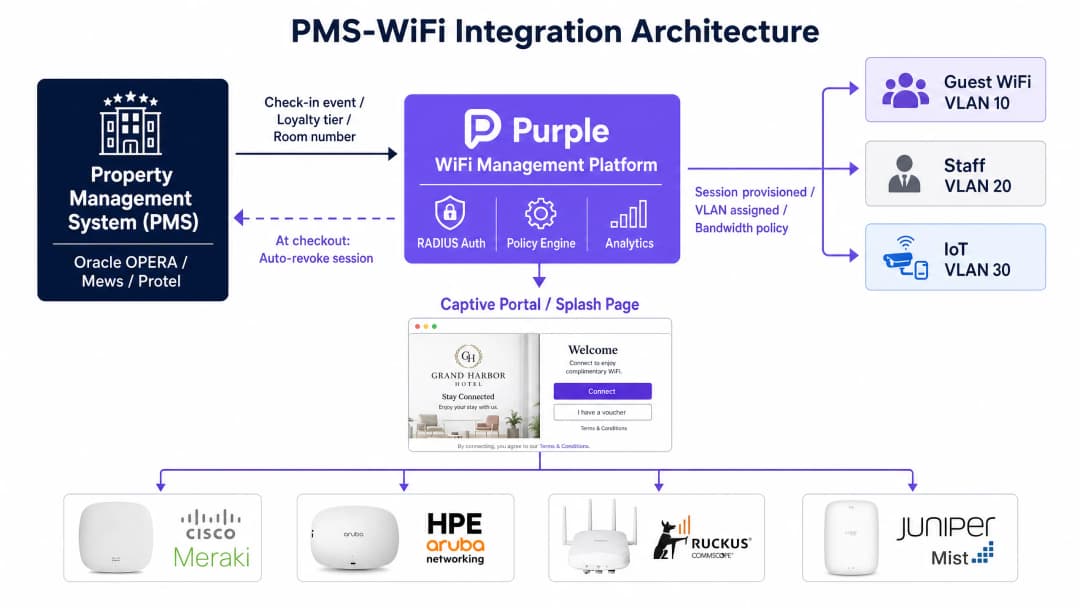
Best Practice
- Applicare il Client Isolation: Abilitare sempre il client isolation sugli SSID destinati agli ospiti per prevenire spostamenti laterali tra i dispositivi.
- Automatizzare l'Accesso Basato sui Ruoli: Utilizzare l'autenticazione IEEE 802.1X e RADIUS per le reti del personale. Integrare con Microsoft Entra ID, Okta o Google Workspace per assegnare VLAN e criteri QoS in modo dinamico in base ai ruoli degli utenti.
- Centralizzare gli Standard del Brand: Utilizzare una piattaforma gestita in cloud con un motore di policy gerarchico. Definire SSID, protocolli di sicurezza e branding del Captive Portal a livello di sede centrale, consentendo l'ereditarietà a livello regionale o di singola proprietà senza violare gli standard del brand.
- Separare il Traffico IoT: Isolare smart TV, termostati e assistenti vocali su una VLAN IoT dedicata con un filtraggio rigoroso del traffico in uscita.

Risoluzione dei Problemi e Mitigazione dei Rischi
- Velocità Ridotta: La causa più comune di una rete WiFi lenta negli hotel è un uplink WAN sottodimensionato, non l'interferenza RF. Monitorare l'utilizzo del circuito internet. Se l'uplink è saturo, l'aggiornamento degli access point non migliorerà l'esperienza degli ospiti.
- Errore di Segmentazione: Le porte trunk degli switch configurate in modo errato possono unificare più VLAN in un unico dominio di broadcast, interrompendo silenziosamente la segmentazione. Verificare regolarmente le configurazioni degli switch.
- Attrito nell'Autenticazione: Un Captive Portal che richiede un inserimento eccessivo di dati spingerà gli ospiti ad abbandonare il processo di connessione. Mantenere il modulo conciso.
ROI e Impatto Aziendale
Una rete WiFi alberghiera progettata correttamente offre ritorni misurabili. Riduce i ticket di supporto IT relativi a problemi di connettività, aumentando l'efficienza operativa. Migliora i punteggi di soddisfazione degli ospiti, che correlano direttamente con il RevPAR. Aspetto ancora più importante, genera un database conforme e di prima parte di ospiti verificati, riducendo la dipendenza dalle agenzie di viaggio online (OTA) e alimentando campagne di marketing per la prenotazione diretta.
Definizioni chiave
VLAN (Virtual Local Area Network)
Una sottorete logica che raggruppa una serie di dispositivi provenienti da diverse LAN fisiche. Essenziale per isolare il traffico degli ospiti dai sistemi operativi.
Utilizzata per separare il WiFi degli ospiti, i dispositivi del personale, l'hardware IoT e i terminali di pagamento in domini di trasmissione isolati per ragioni di sicurezza e conformità PCI.
PMS (Property Management System)
La piattaforma software centrale utilizzata dagli hotel per gestire prenotazioni, check-in, fatturazione e stato delle camere.
L'integrazione del PMS con la piattaforma WiFi consente la fornitura automatizzata delle sessioni, l'allocazione della larghezza di banda in base al livello fedeltà e la revoca immediata dell'accesso al checkout.
Captive Portal
Una pagina web che gli utenti devono visualizzare e con cui devono interagire prima che venga concesso l'accesso a una rete WiFi pubblica.
Utilizzato nel settore alberghiero per autenticare gli ospiti, presentare i termini di servizio e acquisire dati di marketing di prima parte.
Isolamento dei client
Una funzionalità di sicurezza della rete wireless che impedisce ai dispositivi connessi di comunicare direttamente tra loro.
Obbligatorio sugli SSID degli ospiti per impedire a un dispositivo compromesso di scansionare o attaccare altri ospiti sulla stessa rete.
IEEE 802.1X
Uno standard IEEE per il controllo dell'accesso alla rete basato su porte, che fornisce un meccanismo di autenticazione ai dispositivi che desiderano collegarsi a una LAN o WLAN.
Il gold standard per l'autenticazione della rete del personale, che consente l'assegnazione dinamica delle VLAN in base al ruolo dell'utente definito in un provider di identità come Microsoft Entra ID.
RADIUS (Remote Authentication Dial-In User Service)
Un protocollo di rete che fornisce una gestione centralizzata di autenticazione, autorizzazione e tracciamento (Accounting) per gli utenti che si connettono e utilizzano un servizio di rete.
Utilizzato in combinazione con 802.1X per verificare le credenziali del personale e applicare policy di rete specifiche.
SSID (Service Set Identifier)
Il nome pubblico di una rete wireless.
Gli hotel trasmettono in genere più SSID (ad esempio, "WiFi Ospiti", "Rete Staff"), ciascuno mappato su una specifica VLAN.
WPA3-Enterprise
Il livello più elevato di sicurezza WiFi, che richiede a ciascun utente di autenticarsi con credenziali univoche anziché con una password condivisa.
Richiesto per le reti del personale e operative per garantire la responsabilità individuale e consentire l'applicazione dinamica delle policy.
Esempi pratici
Un boutique hotel di 150 camere che utilizza Oracle OPERA richiede un'installazione WiFi sicura che differenzi la larghezza di banda per i membri del programma fedeltà e revochi automaticamente l'accesso al momento del checkout.
Distribuisci un access point WiFi 6 per camera. Configura quattro VLAN: Guest (VLAN 10), Staff (VLAN 20), IoT (VLAN 30) e POS (VLAN 40). Integra la piattaforma Purple con Oracle OPERA tramite API. Quando un ospite effettua il check-in, OPERA invia il livello fedeltà a Purple. Purple configura la sessione, applicando una policy da 50 Mbps per gli ospiti standard e una policy da 100 Mbps per i membri premium. Al checkout, OPERA attiva una chiamata API che revoca immediatamente la sessione dell'indirizzo MAC in Purple.
Un marchio alberghiero globale con 400 strutture deve garantire un branding uniforme del Captive Portal e la conformità al GDPR in tutte le sedi, nonostante l'uso di diversi ISP locali e fornitori di hardware (Cisco Meraki, HPE Aruba e Ruckus).
Implementa una piattaforma overlay basata su cloud come Purple sopra il livello hardware eterogeneo. Definisci un modello di policy globale presso la sede del brand che stabilisca il nome dell'SSID, il design del Captive Portal e le caselle di controllo specifiche per il consenso GDPR. Applica questo modello gerarchicamente a tutte le 400 strutture. I team IT locali possono gestire i propri AP e switch specifici, ma non possono modificare il flusso del Captive Portal o i requisiti di acquisizione dati.
Domande di esercitazione
Q1. Un hotel sta aggiornando la propria rete per supportare il check-in mobile e le chiavi digitali per le camere. Il team IT prevede di inserire le serrature elettroniche delle porte sulla stessa VLAN del WiFi per gli ospiti per semplificare il routing. Qual è il rischio principale di questo approccio?
Suggerimento: Considera il principio della segmentazione logica e del movimento laterale.
Visualizza risposta modello
Il posizionamento di dispositivi IoT come le serrature elettroniche sulla VLAN degli ospiti espone le infrastrutture critiche dell'edificio a dispositivi non attendibili. Uno smartphone ospite compromesso potrebbe tentare di sondare o attaccare le serrature. L'approccio corretto consiste nel collocare le serrature su una VLAN IoT dedicata (es. VLAN 30) con un filtraggio rigoroso del traffico in ingresso/uscita, completamente isolata dalla VLAN ospiti.
Q2. Un regional manager segnala che il WiFi in una struttura da 300 camere è "troppo lento", nonostante i recenti aggiornamenti agli access point WiFi 6 nei corridoi. Quali sono le due cause architetturali più probabili di queste scarse prestazioni?
Suggerimento: Considera sia la capacità WAN sia i principi di propagazione RF.
Visualizza risposta modello
In primo luogo, il collegamento internet uplink è probabilmente sottodimensionato. Una struttura con 300 camere richiede una linea dedicata di almeno 1,5 Gbps per gestire i picchi di streaming simultanei. In secondo luogo, il posizionamento degli AP nei corridoi è un design errato; il segnale RF si degrada notevolmente quando attraversa porte tagliafuoco pesanti e impianti idraulici dei bagni. Gli AP dovrebbero essere riposizionati all'interno delle camere degli ospiti.
Q3. Il team di marketing desidera assegnare automaticamente gli ospiti che ritornano a una fascia di larghezza di banda superiore per premiare la fedeltà. In che modo dovrebbe essere progettata l'architettura di rete per supportare questo requisito?
Suggerimento: Quale sistema rappresenta la fonte di verità per l'identità dell'ospite e come comunica con la rete?
Visualizza risposta modello
L'architettura richiede un'integrazione API tra il Property Management System (PMS) e la piattaforma di gestione WiFi. Quando l'ospite si connette, la piattaforma WiFi interroga il PMS utilizzando l'indirizzo MAC del dispositivo o l'e-mail autenticata. Il PMS restituisce lo stato di fedeltà dell'ospite e la piattaforma WiFi applica in modo dinamico una policy QoS per allocare una maggiore larghezza di banda.
Continua a leggere questa serie
Staff WiFi vs. Guest WiFi: Best Practices for Corporate Network Segmentation
Una guida tecnica completa per i leader IT sulla segmentazione delle reti WiFi per il personale e gli ospiti. Copre l'architettura VLAN, l'autenticazione 802.1X, le policy dei firewall e l'impatto aziendale di una progettazione di rete sicura.
Come configurare il WiFi ospiti: Guida alla configurazione aziendale sicura
Questa guida autorevole fornisce ai responsabili IT e ai network architect un piano d'azione definitivo per implementare un WiFi ospiti aziendale sicuro. Copre l'architettura essenziale, la migrazione a WPA3, la segmentazione VLAN e l'integrazione del Captive Portal per proteggere i sistemi interni e acquisire dati di prima parte conformi.
Come Risolvere i Problemi di WiFi Lento Senza Potenziare il Piano Internet
Una guida tecnica di riferimento completa per IT manager e architetti di rete sull'ottimizzazione delle prestazioni WiFi aziendali senza aumentare la larghezza di banda dell'ISP. Copre l'ottimizzazione RF, la gestione della densità dei client, l'implementazione di QoS e l'uso di strumenti di WiFi analytics per diagnosticare e risolvere i colli di bottiglia.
Hai domande sulla tua configurazione specifica?
Il nostro team collabora con gestori di sedi, responsabili IT e ingegneri di rete in 80.000 sedi. Prenota una chiamata di 20 minuti e ti mostreremo come altri professionisti come te hanno risolto il problema.