Resumo executivo
O WiFi marketing transforma o acesso passivo à internet de visitantes em um mecanismo de dados de first-party em conformidade com o GDPR e em um canal de receita para locais corporativos. Ao exigir um login em um Captive Portal personalizado, os operadores dos locais capturam dados de contato verificados, constroem perfis de clientes detalhados e disparam campanhas multicanais automatizadas. Locais que implementam WiFi para visitantes gerenciado em nuvem obtêm um aumento de até 15% na frequência de visitas repetidas, coletam milhares de perfis de clientes com opt-in mensalmente e obtêm inteligência de fluxo de visitantes em tempo real em todas as instalações físicas.
Este guia técnico e estratégico detalha os 5 principais benefícios do marketing por WiFi, compara a captura de dados de WiFi com a publicidade tradicional, explica como a análise de visitantes se integra ao seu CRM e descreve as etapas imediatas para maximizar o ROI de marketing em redes sem fio corporativas.
O que é marketing de WiFi?
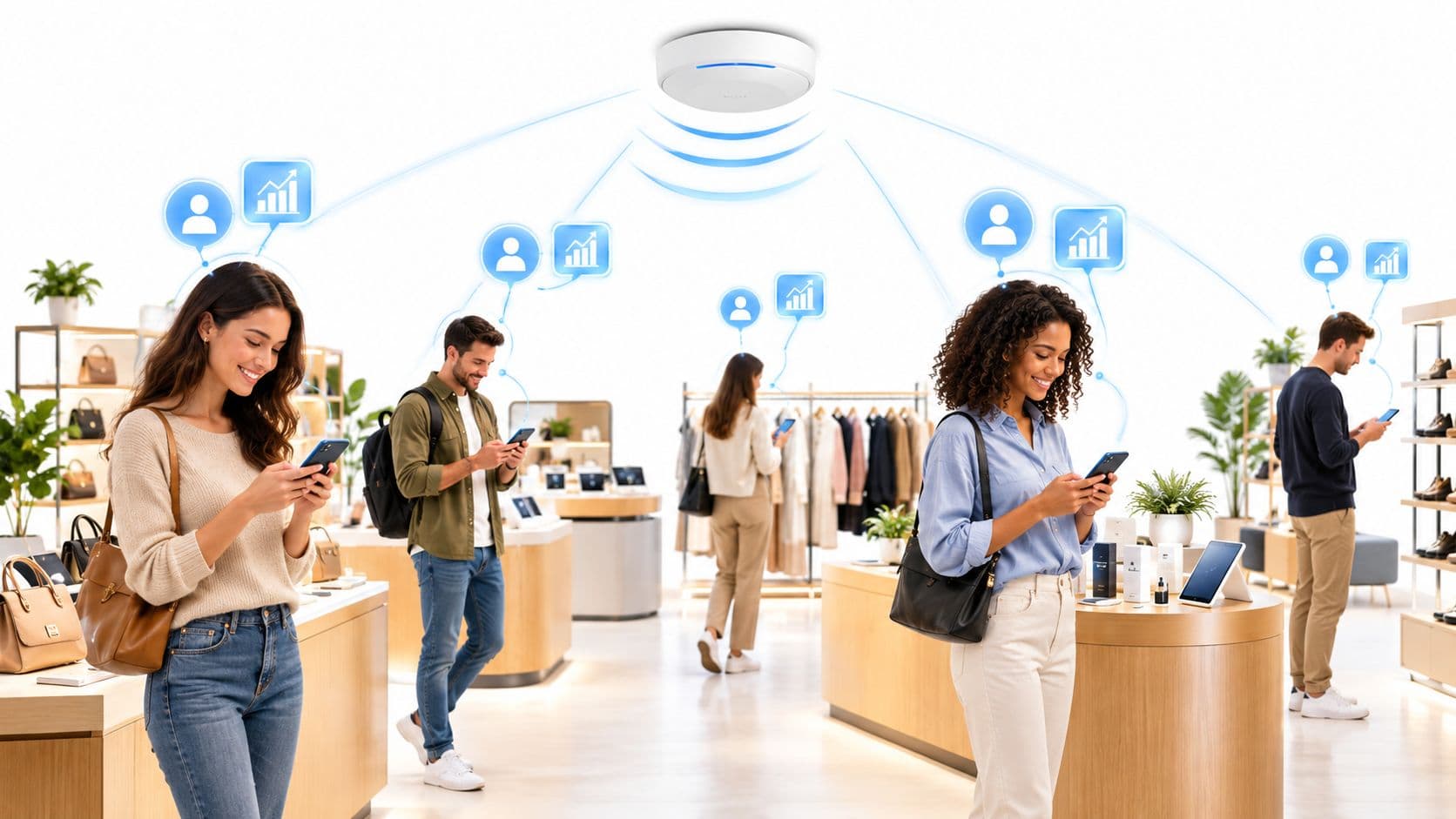
O marketing de WiFi é a prática estratégica de fornecer acesso gratuito à internet para visitantes de alta velocidade em troca de dados de clientes com consentimento, engajamento com a marca e interações automatizadas de marketing. Quando os visitantes tentam se conectar à rede sem fio de um local, eles visualizam uma página de login personalizada do Captive Portal.
Por meio deste Captive Portal, os visitantes fazem login usando seu endereço de e-mail, número de telefone celular ou credenciais de redes sociais. Uma vez autenticado, a plataforma de marketing de WiFi armazena com segurança o perfil do visitante, registra métricas de presença e permite o engajamento pós-visita automatizado por e-mail, SMS e promoções direcionadas.
5 principais benefícios do WiFi marketing para locais corporativos
A implementação de uma plataforma unificada de marketing por WiFi oferece vantagens operacionais e financeiras mensuráveis nos setores de varejo, hospitalidade, saúde, transporte e entretenimento.
1. Coleta automatizada de dados primários em escala
Com a depreciação dos cookies de rastreamento de terceiros nos navegadores modernos, os locais físicos exigem a coleta direta de dados de clientes orientada pelo consentimento. O marketing de WiFi captura detalhes de contato limpos e verificados diretamente dos visitantes no ponto de experiência. Cada login é registrado com consentimento explícito de aceitação, garantindo total conformidade com o GDPR, CCPA e padrões globais de privacidade.
2. Aumento de visitas recorrentes e retenção de clientes
As plataformas de marketing de WiFi permitem que os locais automatizem o engajamento personalizado com base no comportamento do cliente no mundo real. Por exemplo, uma rede de restaurantes pode disparar automaticamente um cupom de desconto especial via SMS ou e-mail 7 dias após a visita inicial de um cliente, incentivando uma nova reserva. Gatilhos de fidelidade automatizados reduzem drasticamente a rotatividade e aumentam o valor do ciclo de vida do cliente (LTV).
3. Análises acionáveis de fluxo de pessoas e espaciais
O marketing de WiFi vai além das listas de contato, fornecendo inteligência em tempo real sobre o local. As análises de rede rastreiam métricas como fluxo total de pessoas, tempo de permanência, horários de pico de visitação, proporção de visitantes novos versus recorrentes e mapas de calor espaciais. As equipes de operações dos locais utilizam esses insights para otimizar a escala de funcionários, refinar o layout dos espaços e avaliar o impacto das exibições de marketing físico.
4. Segmentação direcionada e campanhas personalizadas
Em vez de enviar e-mails de transmissão genéricos, o marketing de WiFi integra dados demográficos e comportamentais para criar segmentos de público-alvo direcionados. Os profissionais de marketing podem segmentar os públicos por frequência de visita (por exemplo, clientes frequentes semanais versus visitantes mensais), duração total da permanência ou localização específica do local. Mensagens personalizadas geram taxas de abertura mais altas, taxas de clique superiores e ganhos de conversão mensuráveis.
5. Retorno sobre o investimento (ROI) direto para o local e conectividade de visitantes monetizada
O WiFi para visitantes deixa de ser um centro de custo para se tornar um gerador de lucro. Os locais monetizam a conectividade por meio de ofertas promovidas na página de destino, campanhas de parceiros patrocinados, planos de alta largura de banda pagos para usuários premium e geração direta de avaliações online. Solicitações de avaliação automatizadas enviadas após a visita aumentam consistentemente as classificações no Google Maps e TripAdvisor para locais físicos.
Marketing por WiFi vs canais de publicidade tradicionais
A comparação do marketing por WiFi com a publicidade digital e impressa padrão destaca sua eficiência superior de conversão e precisão de dados para locais físicos.
| Canal de Marketing | Tipo de Coleta de Dados | Qualidade do Consentimento Opt-in | Custo por Lead | Atribuição de Fluxo de Visitantes |
|---|---|---|---|---|
| WiFi Marketing | First-Party Físico Verificado com Opt-in | Alta (Explícito de acordo com GDPR / CCPA) | Extremamente Baixo (Infraestrutura de Local Fixa) | 100% de Verificação Física Direta |
| Anúncios de Redes Sociais | Dados de Third-Party Deduzidos | Média (Controlada pela Plataforma) | Alto e Variável (Custo por clique) | Deduzido / Probabilístico |
| Newsletters por E-mail | First-Party Digital com Opt-in | Alta | Baixo | Nenhuma (Apenas Digital) |
| Mídia Impressa e Out-of-Home Local | Nenhuma (Impressão Ampla) | Zero | Alto (Custo Fixo de Impressão) | Imensurável |
Como o WiFi analytics transforma dados de visitantes em receita
Conectar a identidade do visitante com análises de rede física possibilita três fluxos de trabalho principais de geração de receita:
- Otimização do Tempo de Permanência: Identifique zonas onde os visitantes passam mais tempo e envie promoções direcionadas no Captive Portal para aumentar o valor médio do pedido durante os períodos de pico.
- Campanhas de Recuperação de Visitantes Inativos: Configure gatilhos automáticos para enviar um incentivo exclusivo quando um visitante anteriormente frequente não se conectar ao WiFi do local por 30 dias consecutivos.
- Solicitações de Avaliação Automatizadas: Incentive visitantes satisfeitos a deixar uma avaliação online positiva dentro de 15 minutos após se desconectarem da rede do local, impulsionando o ranking orgânico de busca local.
Integração de martech corporativa e compatibilidade com AP
Uma plataforma corporativa de marketing por WiFi conecta-se perfeitamente com sua infraestrutura de hardware existente e sua pilha de tecnologia de marketing.
Implantação independente de hardware
O Purple integra-se nativamente com os principais hardwares de pontos de acesso sem fio corporativos, incluindo Cisco Meraki, HPE Aruba, Ruckus Wireless, Ubiquiti UniFi e Mist Systems. Nenhum controlador de hardware adicional ou dispositivo local é necessário.
Sincronização perfeita com CRM e marketing por e-mail
Os perfis de visitantes capturados no Captive Portal sincronizam automaticamente via API ou webhook com plataformas de martech corporativas, incluindo Salesforce, HubSpot, Mailchimp, Klaviyo e Sistemas de Gestão de Propriedades (PMS) do local. Leads recém-adquiridos entram em seus fluxos de nutrição automatizados em tempo real.
Impacto no mundo real: Como marcas globais usam o Purple
O Purple gerencia mais de 440 milhões de logins de visitantes anualmente em mais de 80.000 locais ativos em todo o mundo. Operadores corporativos confiam no Purple para segurança certificada ISO 27001, conformidade global de privacidade de dados e ROI comprovado:
- PizzaExpress: Acelerou a coleta de dados de visitantes e o engajamento de fidelidade do cliente em centenas de restaurantes no Reino Unido.
- Premier Inn: Entregou conectividade WiFi de alta densidade perfeita para visitantes e páginas de login personalizadas em propriedades hoteleiras.
Próximos passos para líderes de marketing e TI
Transformar a infraestrutura sem fio do seu local em um ativo ativo de marketing e inteligência requer o parceiro de engajamento de visitantes certo.
Para explorar como a conectividade de visitantes potencializa a estratégia do seu local, leia nosso WiFi Marketing Guide completo, revise nosso Guest WiFi Guide, analise insights espaciais em nosso WiFi Analytics Guide e saiba mais sobre estratégias pós-cookie em First-Party Data para Locais. Para ver uma demonstração personalizada do Purple para sua rede, Fale com um Especialista hoje mesmo.