
Como Melhorar o ROI de Marketing Usando Dados de WiFi
Um guia prático e tático para gerentes de TI e profissionais de marketing sobre a integração de análises de WiFi no stack de marketing existente. Ele detalha como aproveitar os dados de primeira parte do local para reduzir o CPA, melhorar o ROAS e gerar receita mensurável por meio da atribuição de ciclo fechado.
Ouça este guia
Ver transcrição do podcast
Executive Summary
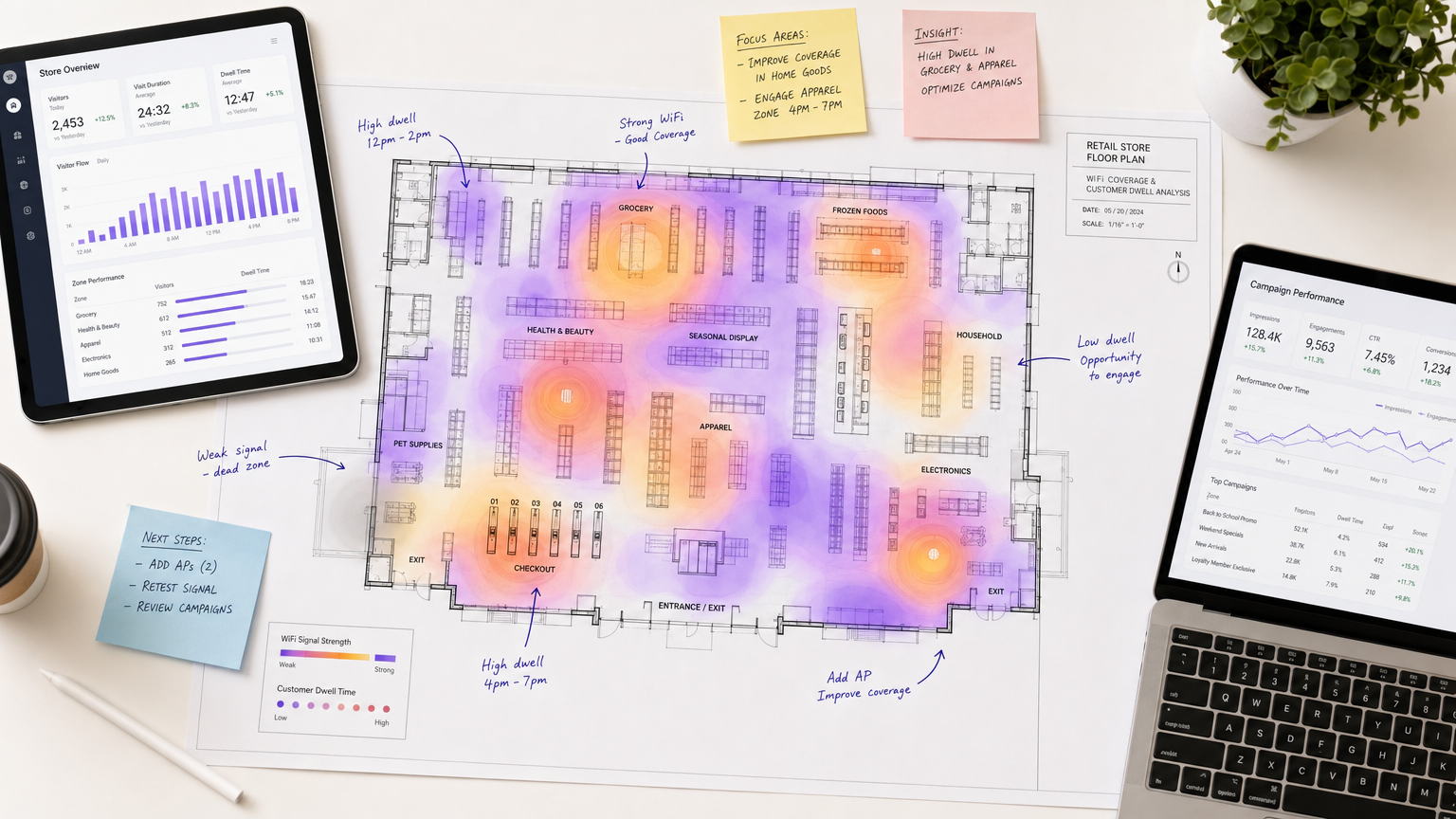
एंटरप्राइज़ स्थानों के लिए—चाहे वह रिटेल में हों, हॉस्पिटैलिटी , हेल्थकेयर , या परिवहन में—भौतिक स्थान सबसे बड़ा अप्रयुक्त डेटा एसेट है। जबकि डिजिटल मार्केटिंग टीमें कुकी डेटा और ऑनलाइन ट्रैकिंग का उपयोग करके अभियानों को अनुकूलित करती हैं, वे अक्सर वास्तविक दुनिया में ग्राहकों के व्यवहार को देखने में असमर्थ रहती हैं। यह गाइड विवरण देती है कि आपके मौजूदा नेटवर्क इंफ्रास्ट्रक्चर को फर्स्ट-पार्टी डेटा इंजन में बदलकर इस अंतर को कैसे पाटा जाए। अपने Guest WiFi नेटवर्क पर एक मजबूत WiFi एनालिटिक्स समाधान तैनात करके, IT टीमें मार्केटिंग को वह सटीक, सहमति-अनुपालन (consent-compliant) डेटा प्रदान कर सकती हैं जो कॉस्ट पर एक्विजिशन (CPA) को कम करने, रिटर्न ऑन एड स्पेंड (ROAS) को बढ़ाने और वास्तविक क्लोज्ड-लूप एट्रिब्यूशन को लागू करने के लिए आवश्यक है। यह इंफ्रास्ट्रक्चर को उखाड़ने और बदलने के बारे में नहीं है; यह उस डेटा को सक्रिय करने के बारे में है जो आपके एक्सेस पॉइंट पहले से ही जनरेट कर रहे हैं।
Technical Deep-Dive
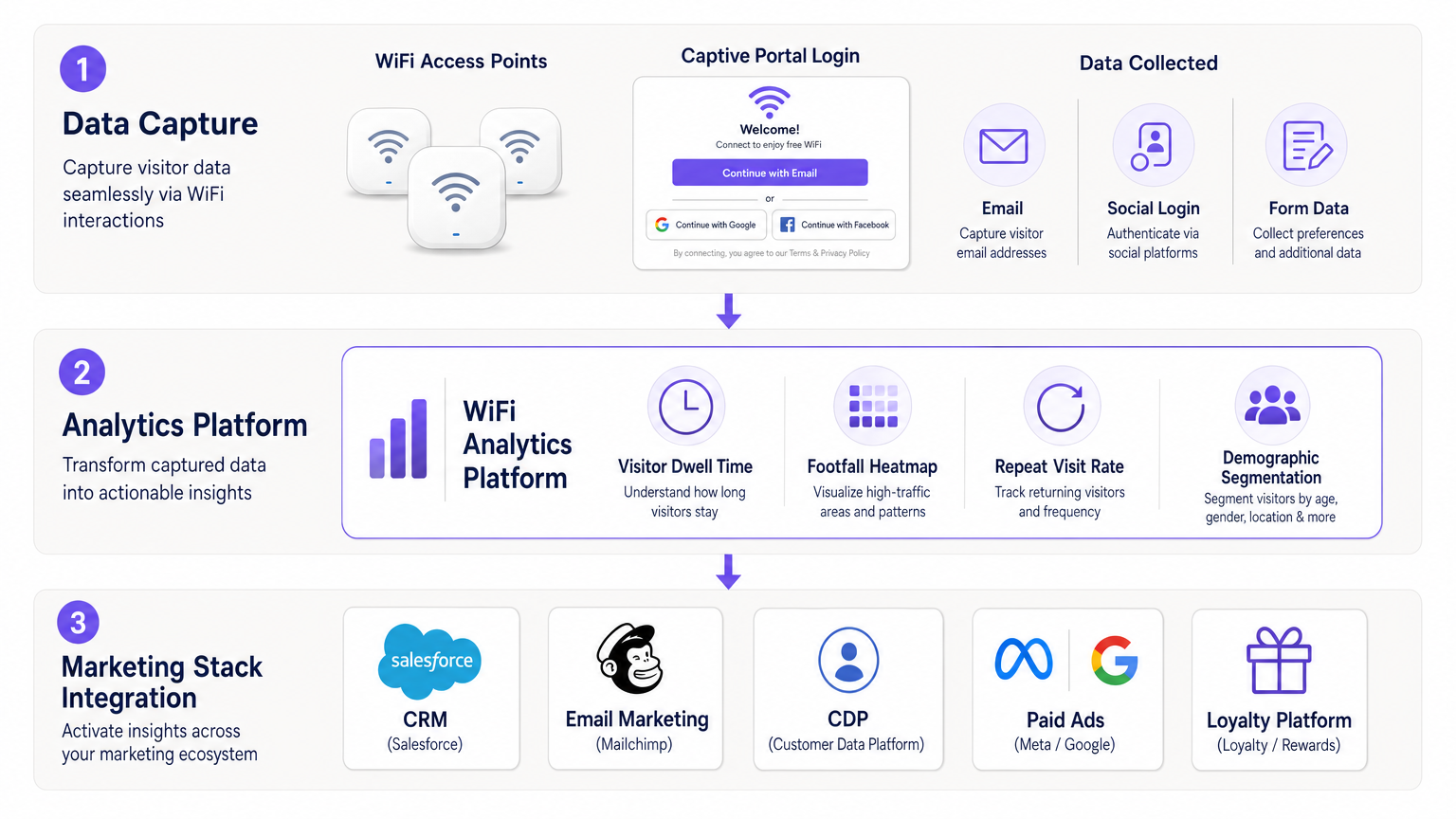
WiFi डेटा का उपयोग करके मार्केटिंग ROI को बेहतर बनाने के लिए आवश्यक आर्किटेक्चर तीन अलग-अलग परतों पर निर्भर करता है: पैसिव कैप्चर, एक्टिव ऑथेंटिकेशन और डेटा सिंडिकेशन।
1. The Capture Layer
आधुनिक एंटरप्राइज़ एक्सेस पॉइंट (APs) लगातार 802.11 प्रोब अनुरोधों की निगरानी करते हैं। यह नेटवर्क को डिवाइस के MAC एड्रेस (अक्सर आधुनिक OS कार्यान्वयन द्वारा रैंडमाइज़ किए जाते हैं, लेकिन फिर भी सेशन-स्तरीय एनालिटिक्स के लिए उपयोगी होते हैं), सिग्नल स्ट्रेंथ (RSSI), और टाइमस्टैम्प डेटा को पैसिव रूप से ट्रैक करने की अनुमति देता है। यह पैसिव डेटा बेसलाइन मेट्रिक्स प्रदान करता है: कुल फुटफॉल, ज़ोन-स्तरीय ड्वेल टाइम, और फिजिकल जर्नी मैपिंग। स्थानिक ट्रैकिंग में गहराई से जाने के लिए, हमारे इंडोर पोजिशनिंग सिस्टम: UWB, BLE, और WiFi गाइड को देखें।
2. The Authentication Layer
गुमनाम फुटफॉल से एक्शन योग्य मार्केटिंग डेटा में परिवर्तन Captive Portal पर होता है। जब कोई उपयोगकर्ता Guest WiFi के माध्यम से ऑथेंटिकेट करता है, तो वे पहचान डेटा—आमतौर पर एक ईमेल पता, फोन नंबर, या सोशल लॉगिन प्रोफाइल के साथ स्पष्ट सहमति (GDPR/CCPA अनुपालन) प्रदान करते हैं। इस चरण में, प्लेटफॉर्म भौतिक MAC एड्रेस सेशन को एक ज्ञात उपयोगकर्ता पहचान के साथ जोड़ता है। यह वह जगह है जहां प्रोफाइल-आधारित ऑथेंटिकेशन, जैसे कि OpenRoaming, एक महत्वपूर्ण लाभ बन जाता है, जिससे लौटने वाले आगंतुकों के लिए घर्षण कम हो जाता है।
3. The Syndication Layer
केवल WiFi प्लेटफॉर्म में रहने वाले डेटा का ROI सीमित होता है। IT के लिए तकनीकी आवश्यकता WiFi प्लेटफॉर्म से मार्केटिंग स्टैक (CRM, CDP, ESP) में निर्बाध API इंटीग्रेशन या वेबहुक बनाना है। उदाहरण के लिए, जब Purple बनाम Cisco Spaces (DNA Spaces): प्रत्येक को कब चुनें जैसे प्लेटफॉर्म का मूल्यांकन किया जाता है, तो एक मुख्य विचार यह होता है कि प्लेटफॉर्म कितनी आसानी से सेल्सफोर्स या मेलचिम्प जैसे डाउनस्ट्रीम सिस्टम में साफ, संरचित डेटा को सिंडिकेट करता है।
Implementation Guide
मार्केटिंग-केंद्रित WiFi आर्किटेक्चर को तैनात करने के लिए नेटवर्क ऑपरेशन्स और मार्केटिंग के बीच कड़े तालमेल की आवश्यकता होती है। इन तैनाती चरणों का पालन करें:
Phase 1: Network Optimization for Location Accuracy सुनिश्चित करें कि आपकी AP डेंसिटी और प्लेसमेंट सटीक स्थान एनालिटिक्स का समर्थन करते हैं। हालांकि बुनियादी उपस्थिति एनालिटिक्स के लिए केवल कुछ AP की आवश्यकता होती है, ज़ोन-स्तरीय ड्वेल टाइम के लिए उच्च डेंसिटी तैनाती और RSSI थ्रेसहोल्ड के उचित अंशांकन की आवश्यकता होती है। (उन्नत तैनाती परिदृश्यों के लिए Wi Fi in Auto: द कम्प्लीट 2026 एंटरप्राइज़ गाइड देखें)।
Phase 2: Captive Portal Configuration & Compliance उपयोगकर्ता अनुभव को प्रभावित किए बिना डेटा कैप्चर को अधिकतम करने के लिए Captive Portal को डिज़ाइन करें। CRM में खराब डेटा को प्रवेश करने से रोकने के लिए रीयल-टाइम ईमेल वैलिडेशन API लागू करें। सुनिश्चित करें कि गोपनीयता नीति स्पष्ट रूप से हैशेड ईमेल मिलान के माध्यम से तीसरे पक्ष के विज्ञापन प्लेटफॉर्म (Meta, Google) के साथ डेटा साझा करने को कवर करती है।
Phase 3: Stack Integration
यदि बचा जा सके तो पॉइंट-टू-पॉइंट इंटीग्रेशन न बनाएं। WiFi डेटा (पहचान + व्यवहार संबंधी इवेंट जैसे zone_entered या dwell_exceeded) को एक केंद्रीय कस्टमर डेटा प्लेटफॉर्म (CDP) या डेटा वेयरहाउस में रूट करें। इसके बाद CDP, CRM रिकॉर्ड को अपडेट करने और ईमेल वर्कफ़्लो को ट्रिगर करने के लॉजिक को संभालता है।
Best Practices
- Value Exchange: ऑथेंटिकेशन के लिए ठोस मूल्य प्रदान करें। लॉगिन करने पर तुरंत दिया जाने वाला 10% का डिस्काउंट कोड मानक मुफ्त एक्सेस की तुलना में काफी अधिक कन्वर्शन रेट प्रदान करता है।
- Real-Time Triggers: WiFi डेटा का मूल्य तेजी से घटता है। ग्राहक के स्थान छोड़ने के 2 घंटे के भीतर विज़िट के बाद के सर्वेक्षण या व्यक्तिगत ऑफ़र ट्रिगर करें।
- Hashed Audiences: पेड मीडिया के लिए, Meta और Google में कस्टम ऑडियंस बनाने के लिए SHA-256 हैशेड ईमेल का उपयोग करें। यह आपको कच्चे PII को उजागर किए बिना भौतिक आगंतुकों को रीटार्गेट करने की अनुमति देता है।
Troubleshooting & Risk Mitigation
Risk: MAC Randomization आधुनिक iOS और Android डिवाइस ट्रैकिंग को रोकने के लिए MAC एड्रेस को रैंडमाइज़ करते हैं। Mitigation: दीर्घकालिक ग्राहक पहचान के लिए पैसिव MAC ट्रैकिंग के बजाय एक्टिव ऑथेंटिकेशन (Captive Portal लॉगिन) पर भरोसा करें। एक बार ऑथेंटिकेट होने के बाद, सेशन पहचान से जुड़ जाता है, जिससे MAC रैंडमाइजेशन की समस्या से बचा जा सकता है।
Risk: CRM Data Pollution
फर्जी ईमेल (जैसे, test@test.com) दर्ज करने वाले उपयोगकर्ता आपके ईमेल डिलिवरेबिलिटी स्कोर को खराब कर देंगे।
Mitigation: Captive Portal पर इनलाइन ईमेल वेरिफिकेशन लागू करें। सेशन की अनुमति देने से पहले अमान्य डोमेन या सिंटैक्स त्रुटियों को अस्वीकार करें।
ROI & Business Impact
अंतिम लक्ष्य मार्केटिंग को प्रोबेबिलिस्टिक (संभावित) टारगेटिंग से डिटरमिनिस्टिक (सटीक) टारगेटिंग पर स्थानांतरित करना है। WiFi डेटा का उपयोग करके, स्थान अत्यधिक विशिष्ट ऑडियंस सेगमेंट बना सकते हैं (जैसे, "वे ग्राहक जिन्होंने >15 मिनट तक परिधान अनुभाग का दौरा किया लेकिन 30 दिनों में वापस नहीं आए")।
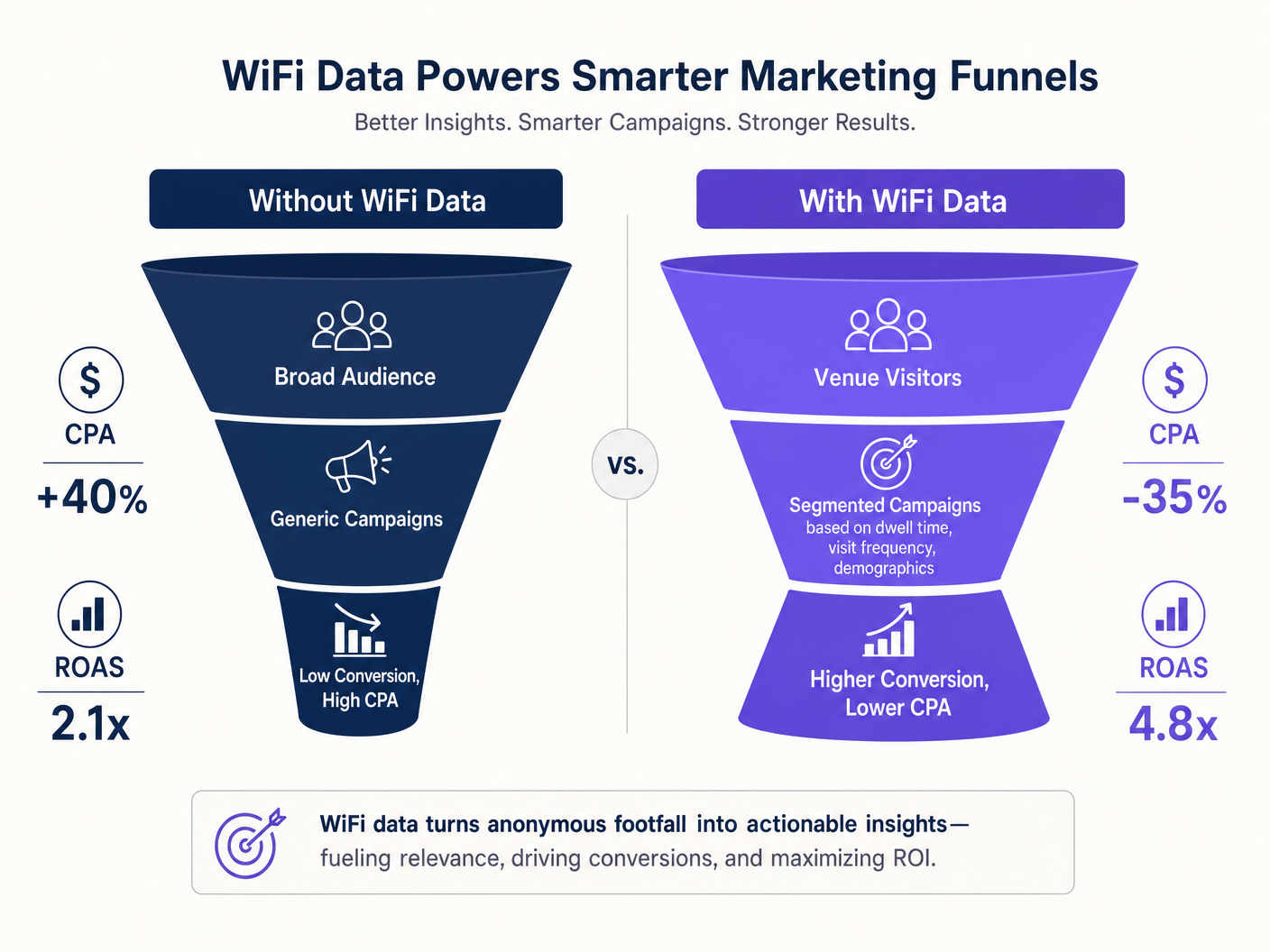
सही ढंग से एकीकृत होने पर, हम आमतौर पर देखते हैं:
- CPA Reduction: पेड सोशल पर 30-40% कम कॉस्ट पर एक्विजिशन (CPA), जो उच्च मैच रेट और इरादे-आधारित टारगेटिंग द्वारा संचालित होता है।
- ROAS Improvement: रीटार्गेटिंग अभियानों के लिए विज्ञापन खर्च पर 2x से 4x अधिक रिटर्न (ROAS)।
- Closed-Loop Attribution: यह साबित करने की क्षमता कि एक विशिष्ट ईमेल अभियान के परिणामस्वरूप 7 दिनों की अवधि के भीतर भौतिक स्थान पर विज़िट हुई।
इस विषय पर हमारी गहन जानकारी सुनें: > [!TIP] > यदि आप अपने विशिष्ट स्थान के लिए वित्तीय प्रभाव का मॉडल तैयार करना चाहते हैं, तो डेटाबेस की वृद्धि और प्रत्यक्ष कैंपेन रिटर्न का अनुमान लगाने के लिए हमारे इंटरैक्टिव WiFi मार्केटिंग ROI कैलकुलेटर में अपने आंकड़े दर्ज करें।
Definições principais
Captive Portal
A web page that users must view and interact with before access is granted to a public WiFi network. It is the primary mechanism for capturing first-party identity data and consent.
IT teams configure this to ensure legal compliance and data capture, while marketing teams design the UX to maximize conversion rates.
MAC Randomization
A privacy feature in modern mobile operating systems that periodically changes the device's MAC address to prevent long-term passive tracking.
This requires venues to rely on active authentication (logins) rather than passive tracking to build long-term customer profiles.
Dwell Time
The duration a connected device remains within the coverage area of a specific access point or zone.
Marketing uses this metric to segment audiences—for example, targeting users with high dwell times in specific retail departments.
Closed-Loop Attribution
A measurement model that tracks a customer's journey from an initial marketing touchpoint (e.g., an email) to a final physical action (e.g., a venue visit).
WiFi data provides the 'physical visit' data point required to close the loop and prove campaign ROI to the business.
First-Party Data
Information a company collects directly from its customers with their consent, rather than purchasing it from data brokers.
Guest WiFi is one of the most scalable methods for brick-and-mortar venues to acquire high-quality first-party data.
Hashed Audience
A list of customer identifiers (usually emails) that have been cryptographically scrambled (e.g., using SHA-256) before being uploaded to an ad platform.
This allows IT to securely share customer lists with Meta or Google for retargeting without exposing raw Personally Identifiable Information (PII).
RSSI (Received Signal Strength Indicator)
A measurement of the power present in a received radio signal. Used to estimate the distance between a device and an access point.
IT uses RSSI thresholds to define physical 'zones' within a venue for location-based marketing triggers.
Data Syndication
The automated process of pushing structured data from one platform (e.g., WiFi Analytics) to downstream systems (e.g., CRM, CDP).
Without syndication, WiFi data remains siloed and cannot generate marketing ROI.
Exemplos práticos
A 200-location retail chain wants to reduce their Facebook Ads CPA. Currently, they target broad demographic lookalike audiences, resulting in a high CPA and low conversion rate. How should the IT and Marketing teams collaborate to solve this using existing network infrastructure?
- IT configures the Guest WiFi captive portal across all 200 locations to require an email address for access, incorporating real-time validation and GDPR-compliant consent for marketing.
- IT sets up an API integration to push authenticated user emails and their associated 'Last Visit Date' to the company's CDP.
- The CDP automatically hashes the emails (SHA-256) and syncs them to Meta Ads Manager as a Custom Audience.
- Marketing runs a targeted 'Welcome Back' campaign specifically to users who visited a physical store in the last 90 days but haven't purchased online.
A large stadium operator needs to increase food and beverage (F&B) revenue during the 45 minutes before kickoff. How can WiFi analytics drive this?
- IT calibrates the APs in the concourse zones to accurately measure dwell time.
- The WiFi Analytics platform is configured with a webhook that triggers when a known (authenticated) user dwells in a specific concourse zone for more than 10 minutes.
- The webhook payload (User ID, Zone ID) is sent to the stadium's marketing automation platform.
- The platform instantly triggers an SMS or push notification to the user with a time-limited 15% discount for the nearest F&B concession stand.
Questões práticas
Q1. A hospitality group wants to retarget past guests on Facebook. They export a CSV of emails from the WiFi platform and upload it manually to Meta Ads Manager every month. What are the two primary technical and business risks with this approach?
Dica: Consider data security (PII) and the timeliness of the data.
Ver resposta modelo
- Security/Compliance Risk: Uploading raw, unhashed CSVs of PII manually exposes the data to interception or mishandling, violating best practices and potentially GDPR/CCPA. 2. Business Risk: A monthly manual sync means the data is stale. A guest who visited on day 1 won't be retargeted until day 30, missing the critical post-visit engagement window. The solution is an automated API integration that syncs hashed emails in real-time.
Q2. During a network audit, the IT manager notices that while total connection counts are high, the marketing team is reporting very low CRM match rates. What is the most likely configuration issue at the capture layer?
Dica: Think about what happens between the device connecting to the AP and the data entering the CRM.
Ver resposta modelo
The captive portal is likely lacking real-time validation, allowing users to input fake or malformed email addresses (e.g., ' a@a.com ') to bypass the login screen. IT needs to implement an inline email verification API to ensure only valid data passes through to the CRM.
Q3. A retail venue has dense AP coverage but the marketing team reports that 'zone dwell time' metrics are inaccurate, showing users jumping between opposite ends of the store instantly. How should the network architect address this?
Dica: Consider how APs determine device location and what physical factors affect this.
Ver resposta modelo
The architect needs to recalibrate the RSSI (Received Signal Strength Indicator) thresholds and review the AP placement. The 'jumping' indicates that devices are associating with APs further away due to line-of-sight propagation or signal reflection, rather than the closest AP. Tuning the transmit power and adjusting the location analytics algorithm to require multiple AP triangulations will stabilize the zone data.
Continue a ler esta série
Privacidade desde a Concepção: Anonimizando Dados WiFi para Conformidade com a GDPR
Este guia autorizado detalha a arquitetura técnica e as estratégias de implementação para anonimizar dados WiFi, garantindo a conformidade com a GDPR. Ele fornece a líderes de TI e arquitetos de rede estruturas acionáveis para equilibrar análises robustas de locais com requisitos rigorosos de privacidade de dados.
Heatmapping vs Presence Analytics: Diferenças Técnicas
Este guia técnico e autoritário detalha as diferenças arquitetônicas e operacionais críticas entre WiFi heatmapping e presence analytics para operadores de locais empresariais. Ele fornece a líderes de TI, arquitetos de rede e diretores de operações estruturas de implantação acionáveis, cenários de implementação reais e melhores práticas neutras em relação a fornecedores para extrair o ROI máximo de sua infraestrutura sem fio existente.
Como Calcular o Tempo de Permanência Usando Análise de Localização WiFi
Este guia oferece uma referência técnica abrangente para calcular o tempo de permanência WiFi usando análise de localização WiFi, cobrindo a arquitetura completa, desde a captura de solicitações de sondagem 802.11, passando pela trilateração baseada em RSSI, até a análise de zonas geocercadas. Ele é projetado para gerentes de TI, arquitetos de rede e diretores de operações de locais que precisam implantar inteligência de localização precisa e escalável em ambientes de varejo, hotelaria, saúde e setor público. Os leitores obterão orientação de implementação acionável, estudos de caso reais e uma estrutura clara para traduzir dados espaciais brutos em resultados de negócios mensuráveis.