
Como Configurar a Autenticação WeChat OAuth para Captive Portals
Este guia técnico explica como configurar a autenticação WeChat OAuth para captive portals. Detalha os registos de plataforma necessários, o fluxo do OAuth 2.0, a seleção de âmbito e os mecanismos de aplicação de rede necessários para recolher dados primários de visitantes chineses de forma segura.
Ouça este guia
Ver transcrição do podcast
Parte da nossa série principal: Captive Portal Guide →
Resumo Executivo
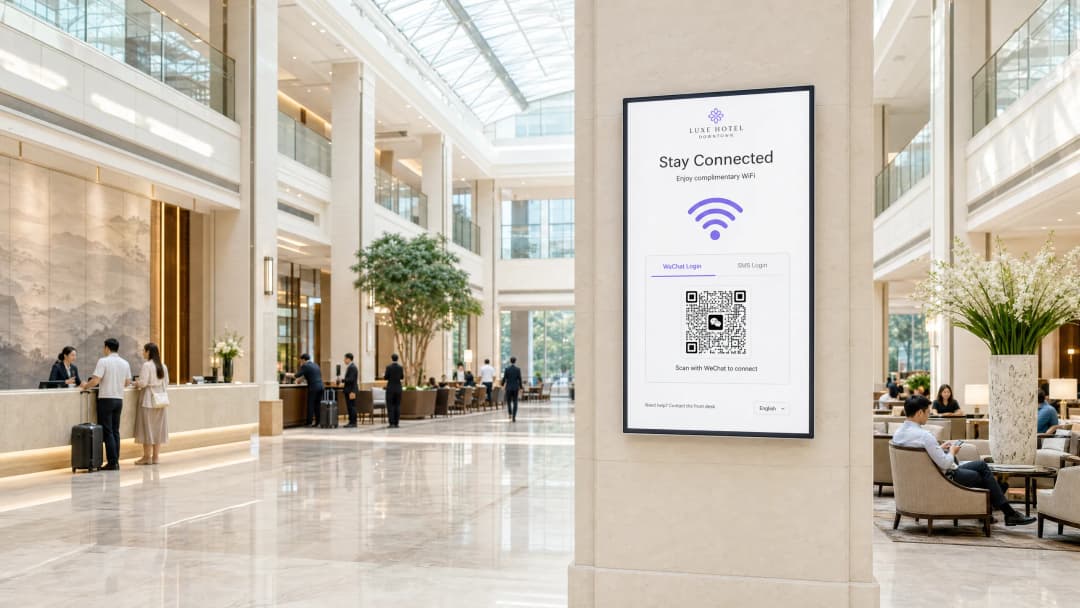
Quando os visitantes chineses se ligam ao seu WiFi, apresentar um splash page apenas com opções de início de sessão por e-mail ou Facebook cria uma barreira imediata à entrada. Com 13,8 mil milhões de utilizadores ativos mensais, a configuração do WeChat como fornecedor de identidade elimina este atrito. Este guia demonstra como implementar a autenticação WeChat OAuth 2.0 para Captive Portals, detalhando os registos necessários na plataforma, os fluxos de OAuth e os mecanismos de aplicação de rede exigidos para traduzir um início de sessão bem-sucedido em acesso à rede. Iremos abordar a implementação técnica para hardware de nível empresarial, juntamente com os requisitos de conformidade ao abrigo do GDPR e PIPL.
Arquitetura Técnica
O Captive Portal intercepta o tráfego HTTP de dispositivos não autenticados e redireciona-os para um splash page alojado num servidor de portal. Ao integrar o WeChat OAuth, insere um fornecedor de identidade externo neste fluxo.
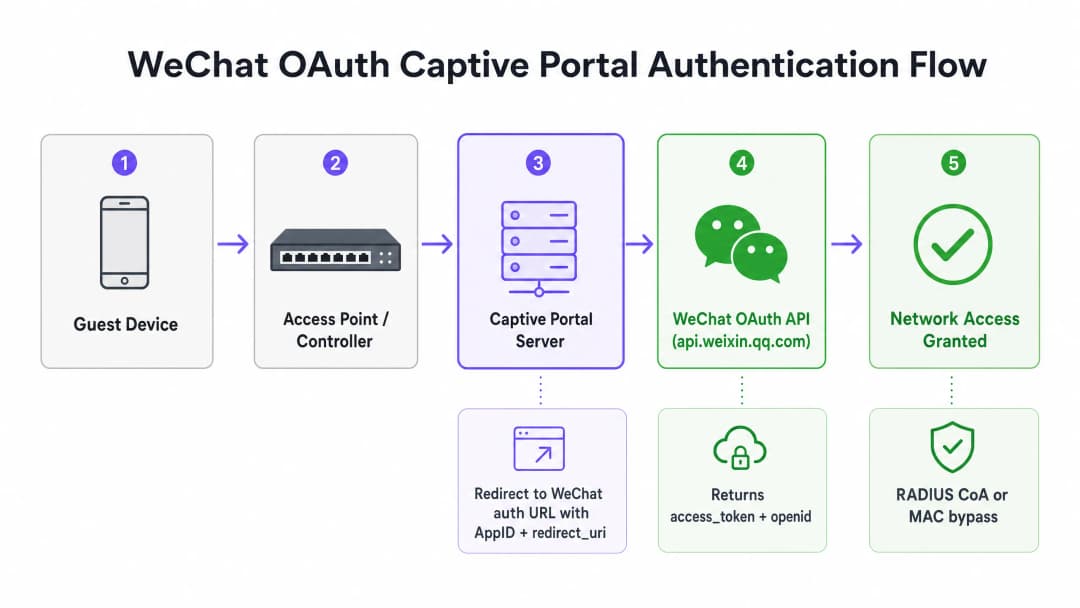
Eis a interação exata passo a passo:
- O visitante liga-se ao SSID.
- O Access Point (AP) sem fios ou o controlador sem fios deteta a ausência de uma sessão autenticada e redireciona o tráfego HTTP para o URL do Captive Portal.
- O visitante seleciona o Início de Sessão WeChat.
- O servidor do portal redireciona o navegador para o endpoint de autorização do WeChat (
open.weixin.qq.com), transmitindo oAppID,redirect_uri,response_type=codeescope. - O WeChat trata da autenticação. Se o visitante estiver dentro do navegador na aplicação do WeChat a utilizar o scope
snsapi_base, isto acontece de forma silenciosa. - O WeChat redireciona de volta para o
redirect_urido portal com um código de autorização temporário. - O servidor do portal troca este código por um token de acesso ao chamar
api.weixin.qq.com/sns/oauth2/access_token. - O WeChat devolve o
access_token,refresh_tokene oopeniddo utilizador.
Requisitos de Registo na Plataforma
A implementação do início de sessão WeChat requer o registo na plataforma de programadores correta. O WeChat opera duas plataformas distintas, e selecionar a errada resultará numa falha de integração.
Plataforma de Contas Oficiais do WeChat
Para Captive Portals disponibilizados dentro do navegador integrado da WeChat, necessita de uma Conta de Serviço registada na WeChat Official Accounts Platform (mp.weixin.qq.com). As Contas de Subscrição carecem das permissões de autorização necessárias para a página web OAuth. As Contas de Serviço suportam ambos os âmbitos snsapi_base e snsapi_userinfo.
WeChat Open Platform
Para Captive Portals acedidos a partir de navegadores móveis padrão fora da WeChat (por exemplo, Chrome no Android ou Safari no iOS), necessita de uma Website Application registada na Open Platform (open.weixin.qq.com). Isto utiliza o âmbito snsapi_login e apresenta um código QR para o utilizador digitalizar com a respetiva aplicação WeChat.
A maioria das implementações empresariais exige ambos os registos para cobrir todos os caminhos de acesso.
Tem dúvidas sobre a sua configuração específica?
A nossa equipa trabalha com operadores de espaços, gestores de TI e engenheiros de rede em 80.000 espaços. Agende uma chamada de 20 minutos e mostraremos como outros profissionais na sua área o resolveram.
Seleção de Âmbito e Recolha de Dados
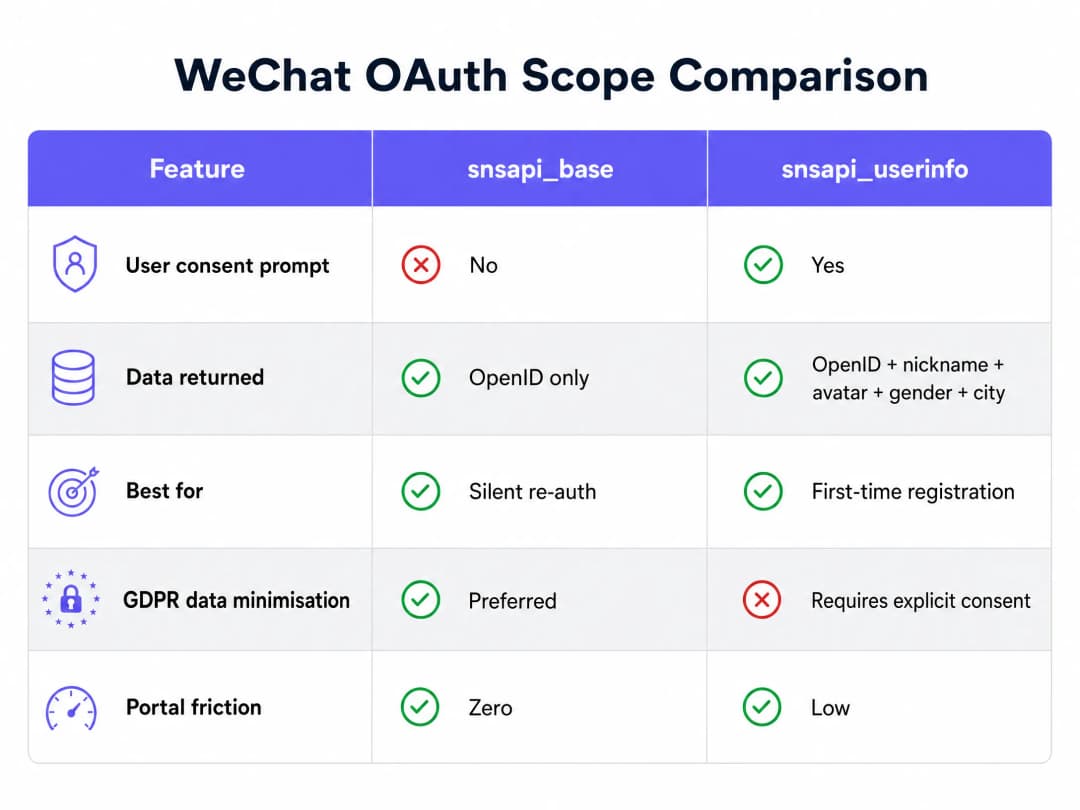
O parâmetro de âmbito determina quais os dados que a WeChat devolve ao servidor do seu portal. Esta decisão tem impacto tanto na fricção do utilizador como na conformidade com a privacidade dos dados.
snsapi_base
Este âmbito devolve apenas o OpenID, o identificador exclusivo do utilizador na sua Conta Oficial. Não requer qualquer solicitação de autorização do utilizador, tornando a autenticação silenciosa. Isto é ideal para visitantes recorrentes para os quais já possui um perfil, ou para locais que priorizam a ausência de fricção em detrimento da recolha de novos dados.
snsapi_userinfo
Este âmbito devolve o OpenID juntamente com a alcunha do utilizador na WeChat, imagem de perfil, género, definições de idioma e cidade. Requer uma página de autorização explícita, introduzindo fricção. Utilize isto para o registo de visitantes pela primeira vez sempre que seja necessário estabelecer um perfil, emparelhado com uma camada de consentimento em conformidade com o GDPR.
Integração da Imposição de Rede
A aquisição de um token OAuth comprova a identidade, mas não abre a rede. Deve traduzir a autenticação bem-sucedida em acesso à rede utilizando protocolos padrão.
RADIUS Change of Authorization (CoA)
Definido em IEEE 802.1X e RFC 3576, o RADIUS CoA permite que o servidor do portal envie um pedido ao controlador de rede após um OAuth bem-sucedido. O controlador move então o dispositivo de uma VLAN não autenticada para uma VLAN de convidados. Este é o padrão para hardware de nível empresarial, incluindo Cisco Meraki, HPE Aruba, Ruckus e Juniper Mist.
MAC Address Bypass
Em alternativa, o servidor do portal regista o endereço MAC do dispositivo como um cliente autorizado, e o controlador permite o acesso. Embora seja mais simples de implementar, é menos seguro, uma vez que os endereços MAC podem ser falsificados.
A tecnologia de sobreposição na nuvem da Purple automatiza esta transferência, enviando os sinais apropriados para o hardware subjacente (incluindo Ubiquiti UniFi, Cambium, Extreme e Fortinet) assim que o OAuth da WeChat estiver concluído.
Considerações de Segurança e Conformidade
Alinhamento com o GDPR e a PIPL
Se serve visitantes europeus, o GDPR aplica-se aos dados recolhidos através do WeChat OAuth. Se serve visitantes chineses, aplica-se a Lei de Proteção de Informações Pessoais (PIPL) da China. Ambos os enquadramentos exigem que o processamento tenha uma base legal, limitação explícita de finalidade e minimização de dados. Comparado com o âmbito snsapi_userinfo, o âmbito snsapi_base é mais fácil de alinhar com os princípios de minimização de dados.
Proteção CSRF
O parâmetro state nos pedidos OAuth previne a falsificação de pedidos entre sites (Cross-Site Request Forgery). Deve gerar um valor de estado criptograficamente aleatório, armazená-lo na sessão do utilizador e validá-lo quando o WeChat redirecionar de volta.
Validação de URI de Redirecionamento
O WeChat valida o redirect_uri em relação ao domínio autorizado registado na plataforma. Se o seu servidor do portal utilizar um subdomínio ou caminho diferente, ou utilizar HTTP em vez de HTTPS, o fluxo OAuth falhará com o erro 40029.
Para mais informações sobre como proteger a sua rede, consulte o nosso Segurança de WiFi Empresarial: Um Guia Completo para 2026.
Definições Principais
snsapi_base
Um âmbito de WeChat OAuth que devolve apenas o OpenID do utilizador sem exibir um pedido de consentimento.
Utilizado quando as equipas de TI precisam de autenticar visitantes frequentes de forma silenciosa, sem causar fricção no início de sessão.
snsapi_userinfo
Um âmbito de WeChat OAuth que devolve o OpenID juntamente com dados demográficos (alcunha, género, cidade) e que requer o consentimento explícito do utilizador.
Utilizado durante o primeiro registo quando as equipas de marketing precisam de construir um perfil de visitante.
OpenID
Um identificador exclusivo para um utilizador específico numa WeChat Official Account específica.
Utilizado como a chave primária na base de dados do portal para monitorizar o comportamento dos visitantes e as visitas de retorno.
RADIUS CoA
Change of Authorisation. Um mecanismo definido na RFC 3576 que permite a um servidor modificar o estado de autorização de uma sessão ativa.
Utilizado pelo servidor do portal para indicar ao controlador sem fios que conceda acesso à rede após uma autenticação WeChat bem-sucedida.
PIPL
Personal Information Protection Law. A regulamentação abrangente de privacidade de dados da China.
Deve ser considerado juntamente com o GDPR ao desenhar o fluxo de consentimento para visitantes chineses que utilizem o início de sessão do WeChat.
AppID e AppSecret
As credenciais fornecidas pelo WeChat para identificar e autenticar a sua aplicação.
O AppSecret deve permanecer de forma segura no servidor do portal e nunca ser exposto no código do lado do cliente.
State Parameter
Uma string criptograficamente aleatória transmitida no pedido OAuth e validada no retorno.
Essencial para prevenir ataques de Cross-Site Request Forgery (CSRF) no captive portal.
MAC Address Bypass
Um método de concessão de acesso à rede através da autorização do endereço de hardware do dispositivo, em vez de exigir a autenticação 802.1X.
Uma alternativa ao RADIUS CoA para configurações de rede mais simples, embora menos segura.
Exemplos Práticos
Uma marca de retalho de luxo em Londres pretende disponibilizar o início de sessão via WeChat para compradores chineses. Pretendem recolher dados demográficos para compreender a sua base de clientes, mas estão preocupados com a conformidade com o GDPR e as elevadas taxas de abandono no portal.
O retalhista deve registar uma Service Account na WeChat Official Accounts Platform. Deve configurar o portal para utilizar o âmbito snsapi_userinfo para ligações de primeira vez para recolher dados demográficos (alcunha, género, cidade). Para garantir a conformidade com o GDPR, a página do portal deve exibir um consentimento claro e de escolha consciente antes do redirecionamento do WeChat, explicando exatamente quais os dados que são recolhidos e porquê. Para os compradores frequentes, o portal deve detetar o endereço MAC e utilizar o snsapi_base para uma autenticação silenciosa, minimizando a fricção.
Um estádio implementa uma nova rede WiFi utilizando controladores HPE Aruba. Configuraram o WeChat OAuth e o portal recebe com sucesso o token de acesso, mas o dispositivo do visitante permanece na página do captive portal e não consegue aceder à internet.
A integração carece de um mecanismo de aplicação de rede. O servidor do portal verificou a identidade do utilizador junto do WeChat, mas não instruiu o controlador HPE Aruba a conceder acesso. O servidor do portal deve ser configurado para enviar uma mensagem RADIUS Change of Authorisation (CoA) para o controlador, instruindo-o a transitar o endereço MAC do utilizador do perfil de pré-autenticação para o perfil de convidado autenticado.
Perguntas de Prática
Q1. Está a implementar um Captive Portal numa cadeia de retalho. Os testes mostram que os utilizadores que abrem o portal no Safari em iOS recebem um erro ao selecionar o início de sessão do WeChat, mas os utilizadores que abrem o portal a partir de um link de mensagem do WeChat autenticam-se com sucesso. Qual é a causa provável?
Dica: Considere a diferença entre o browser integrado do WeChat e os browsers móveis padrão.
Ver resposta modelo
A implementação está provavelmente a depender apenas de uma Conta de Serviço registada na Official Accounts Platform, que apenas suporta OAuth dentro do browser integrado do WeChat. Para suportar o Safari em iOS, também deve registar uma Website Application na WeChat Open Platform e implementar a deteção de user agent para encaminhar os utilizadores do Safari para o fluxo de código QR.
Q2. Os registos do servidor do seu portal mostram erros frequentes 40029 "invalid code" retornados pela API do WeChat durante a troca de access token. Que configuração deve verificar primeiro?
Dica: Pense em como o WeChat valida a origem do pedido de autenticação.
Ver resposta modelo
Deve verificar a configuração do redirect_uri. O WeChat valida rigorosamente o URI de redirecionamento em relação ao domínio autorizado registado na consola do programador. Se o portal estiver a utilizar um subdomínio diferente, ou se perder o HTTPS, o WeChat rejeitará a troca de código.
Q3. O operador de um espaço pretende recolher dados dos visitantes, mas insiste em atrito zero durante o processo de início de sessão. Solicitam que configure o início de sessão do WeChat para recolher o nome de utilizador e a cidade do visitante sem apresentar uma mensagem de consentimento. Como responde?
Dica: Reveja as capacidades dos diferentes âmbitos OAuth.
Ver resposta modelo
Deve informar o operador de que tal é tecnicamente impossível. A recolha de dados demográficos, como o nome de utilizador e a cidade, requer o âmbito snsapi_userinfo, o qual aciona obrigatoriamente um pedido de consentimento do WeChat. Para obter atrito zero, deve utilizar o snsapi_base, que funciona de forma silenciosa, mas apenas devolve o OpenID.
Continue a ler esta série
Portal de convidados Ubiquiti UniFi não redireciona: causas e correções
Este guia isola uma falha de redirecionamento do portal de convidados UniFi ao seguir sequencialmente o estado do convidado, o redirecionamento, a rota de pré-autorização e a autorização do controlador. Oferece às equipas de TI dos recintos um método fundamentado para resolver a confusão entre rede de convidados e Hotspot, transições de portais externos, requisitos atuais de conta do UniFi OS e testes de isolamento de DNS.
Cisco Meraki splash page não funciona: um fluxograma de resolução de problemas
Este guia prático de segundo dia isola onde falhou um fluxo de splash do Cisco Meraki: autorização do cliente, início de redirecionamento HTTP, acessibilidade do walled garden ou início de sessão RADIUS. Oferece às equipas de TI dos locais um caminho de evidências controlado, para que possam restaurar o Guest WiFi sem efetuar alterações amplas numa infraestrutura ativa.
Guia de Configuração de WiFi para Visitantes Empresariais: Segmentação de VLAN, Segurança e Portais Cativos
Este guia técnico mostra às equipas de TI como configurar o WiFi para Visitantes como um serviço controlado de acesso à internet, utilizando segmentação de VLAN, política de firewall e um captive portal. Também explica como os formulários de registo e controlos de adesão do Purple apoiam uma experiência de visitante proporcional sem enfraquecer o limite em torno dos sistemas operacionais, de pagamento e dos funcionários.
Tem dúvidas sobre a sua configuração específica?
A nossa equipa trabalha com operadores de espaços, gestores de TI e engenheiros de rede em 80.000 espaços. Agende uma chamada de 20 minutos e mostraremos como outros profissionais na sua área o resolveram.