
Konfiguration von RADIUS-Richtlinien für eine präzise Netzwerk-Zugriffskontrolle
Dieser maßgebliche Leitfaden bietet IT-Managern, Netzwerkarchitekten und Leitern des Standortbetriebs ein vollständiges technisches Konzept für die Konfiguration von RADIUS-Richtlinien zur Erzielung einer präzisen Netzwerk-Zugriffskontrolle. Er behandelt die 802.1X-Architektur, die dynamische VLAN-Zuweisung, die Auswahl von EAP-Methoden sowie phasenweise Bereitstellungsstrategien. Praxisnahe Implementierungsszenarien aus dem Gastgewerbe und dem Einzelhandel zeigen, wie diese Techniken messbare Compliance, Sicherheit und betriebliche Rentabilität (ROI) liefern.
Diesen Leitfaden anhören
Podcast-Transkript ansehen
📚 Teil unserer Kernserie: Enterprise WiFi Security Guide →

कार्यकारी सारांश
एंटरप्राइज़ वेन्यू के लिए — बड़े रिटेल कॉम्प्लेक्स से लेकर हाई-डेंसिटी स्टेडियम तक — नेटवर्क सिक्योरिटी और यूज़र एक्सपीरियंस एक-दूसरे से गहराई से जुड़े हुए हैं। फाइन-ग्रेन्ड नेटवर्क एक्सेस कंट्रोल के लिए RADIUS पॉलिसी कॉन्फ़िगर करना ट्रैफ़िक को डायनामिक रूप से सेगमेंट करने का मैकेनिज़्म प्रदान करता है, जिससे यह सुनिश्चित होता है कि कॉर्पोरेट एसेट गेस्ट नेटवर्क और कमज़ोर IoT डिवाइस से अलग रहें। यह अब कोई ऐच्छिक अपग्रेड नहीं है; यह PCI DSS और GDPR सहित कंप्लायंस मैंडेट द्वारा संचालित एक बुनियादी आवश्यकता है。
यह गाइड RADIUS-आधारित एक्सेस कंट्रोल को डिप्लॉय करने के लिए एक डीप-डाइव टेक्निकल ब्लूप्रिंट प्रदान करती है। हम IEEE 802.1X ऑथेंटिकेशन के आर्किटेक्चर, वेंडर-स्पेसिफिक एट्रिब्यूट्स (VSAs) के माध्यम से डायनामिक VLAN असाइनमेंट के मैकेनिज़्म, और Active Directory, Entra ID, और Purple के OpenRoaming आइडेंटिटी प्रोवाइडर सहित आइडेंटिटी प्रोवाइडर्स के इंटीग्रेशन का परीक्षण करते हैं। बेसिक प्री-शेयर्ड कीज़ (PSKs) से आगे बढ़कर कॉन्टेक्स्ट-अवेयर पॉलिसी एन्फोर्समेंट की ओर बढ़ने से, IT लीडर्स जोखिम को कम कर सकते हैं, ऑपरेशन्स को सुव्यवस्थित कर सकते हैं, और गेस्ट WiFi को कॉस्ट सेंटर से एक रणनीतिक एसेट में बदलने के लिए Purple जैसे प्लेटफ़ॉर्म का लाभ उठा सकते हैं। इसमें मुख्य रूप से एक्शनेबल, वेंडर-न्यूट्रल रणनीतियों पर ध्यान केंद्रित किया गया है जो मापने योग्य ROI और ऑपरेशनल रेज़िलिएंस प्रदान करती हैं।
टेक्निकल डीप-डाइव
कॉन्टेक्स्ट-अवेयर एक्सेस का आर्किटेक्चर
मूल रूप से, फाइन-ग्रेन्ड नेटवर्क एक्सेस कंट्रोल के लिए RADIUS पॉलिसी कॉन्फ़िगर करना IEEE 802.1X स्टैंडर्ड पर निर्भर करता है। यह फ्रेमवर्क पोर्ट-आधारित नेटवर्क एक्सेस कंट्रोल की सुविधा देता है, यह सुनिश्चित करते हुए कि केवल ऑथेंटिकेटेड और ऑथराइज़्ड डिवाइस ही विशिष्ट नेटवर्क सेगमेंट में प्रवेश प्राप्त करें। इस आर्किटेक्चर में तीन प्राथमिक घटक होते हैं: सप्लिकेंट (क्लाइंट डिवाइस), ऑथेंटिकेटर (वायरलेस एक्सेस पॉइंट या स्विच), और ऑथेंटिकेशन सर्वर (RADIUS)।
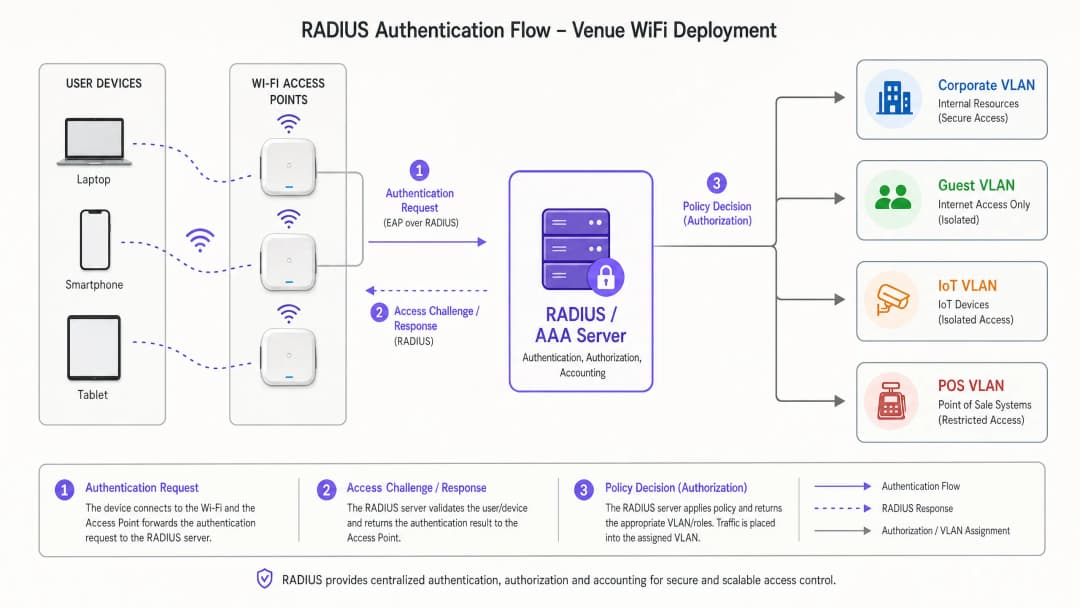
जब कोई डिवाइस कनेक्ट होता है, तो ऑथेंटिकेटर एक्सटेंसिबल ऑथेंटिकेशन प्रोटोकॉल (EAP) मैसेज को एनकैप्सुलेट करता है और उन्हें RADIUS सर्वर पर फॉरवर्ड करता है। RADIUS सर्वर एक आइडेंटिटी स्टोर — जैसे Active Directory, LDAP, या क्लाउड-आधारित आइडेंटिटी प्रोवाइडर के विरुद्ध क्रेडेंशियल्स का मूल्यांकन करता है। महत्वपूर्ण रूप से, आधुनिक RADIUS इम्प्लीमेंटेशन केवल Access-Accept या Access-Reject मैसेज वापस नहीं करते हैं। वे वेंडर-स्पेसिफिक एट्रिब्यूट्स (VSAs) वापस करते हैं जो यूज़र के नेटवर्क कॉन्टेक्स्ट को निर्धारित करते हैं: VLAN असाइनमेंट, एक्सेस कंट्रोल लिस्ट (ACL) एप्लीकेशन, और बैंडविड्थ थ्रॉटलिंग पैरामीटर।
एंटरप्राइज़ डिप्लॉयमेंट के लिए, Wi-Fi फ़्रीक्वेंसी: 2026 में Wi-Fi फ़्रीक्वेंसी के लिए एक गाइड को समझना आवश्यक है, क्योंकि फिजिकल लेयर की विशेषताएं हाई-डेंसिटी वाले वातावरण में ऑथेंटिकेशन हैंडशेक की परफॉरमेंस को सीधे प्रभावित करती हैं।
डायनामिक VLAN असाइनमेंट और माइक्रो-सेगमेंटेशन
RADIUS पॉलिसी का सबसे शक्तिशाली एप्लीकेशन डायनामिक VLAN असाइनमेंट है। विभिन्न यूज़र ग्रुप्स के लिए कई SSIDs ब्रॉडकास्ट करने के बजाय — जो बीकन ओवरहेड के कारण RF परफॉरमेंस को कम करता है — एक सिंगल 802.1X-सक्षम SSID सभी कॉर्पोरेट यूज़र्स को सेवा दे सकता है। RADIUS सर्वर यूज़र की ग्रुप मेंबरशिप और कॉन्टेक्चुअल फैक्टर्स के आधार पर उपयुक्त VLAN निर्धारित करता है।
उदाहरण के लिए, जब फाइनेंस टीम का कोई सदस्य ऑथेंटिकेट करता है, तो RADIUS सर्वर एक्सेस पॉइंट को उनके ट्रैफ़िक को VLAN 10 पर रखने का निर्देश देता है। जब कोई IoT डिवाइस MAC ऑथेंटिकेशन बायपास (MAB) के माध्यम से ऑथेंटिकेट करता है, तो उसे सख्त ACLs के साथ एक आइसोलेटेड VLAN 40 पर रखा जाता है। यह दृष्टिकोण अटैक सरफेस को काफी कम कर देता है और साथ ही RF वातावरण को सरल बनाता है। विशिष्ट वेंडर इम्प्लीमेंटेशन के लिए, Cisco Meraki में VLAN स्टीयरिंग के लिए NAC पॉलिसी कैसे कॉन्फ़िगर करें देखें।

EAP मेथड का चयन
EAP मेथड के चयन का सिक्योरिटी पोस्चर और ऑपरेशनल जटिलता दोनों पर महत्वपूर्ण प्रभाव पड़ता है। नीचे दी गई टेबल प्रमुख विकल्पों का सारांश देती है:
| EAP मेथड | ऑथेंटिकेशन मैकेनिज़्म | अनुशंसित यूज़ केस | सिक्योरिटी लेवल |
|---|---|---|---|
| EAP-TLS | म्यूचुअल सर्टिफिकेट-आधारित | MDM के साथ कॉर्पोरेट मैनेज्ड डिवाइस | उच्चतम |
| PEAP-MSCHAPv2 | सर्वर सर्ट + यूज़रनेम/पासवर्ड | BYOD, स्टाफ डिवाइस | उच्च |
| EAP-TTLS | सर्वर सर्ट + इनर क्रेडेंशियल्स | मिक्स्ड वातावरण | उच्च |
| MAB | क्रेडेंशियल के रूप में MAC एड्रेस | हेडलेस IoT, लिगेसी डिवाइस | निम्न (सख्त ACLs के साथ उपयोग करें) |
LEAP और EAP-MD5 जैसे लिगेसी प्रोटोकॉल से पूरी तरह बचें; वे क्रिप्टोग्राफ़िक रूप से कमज़ोर हैं और किसी भी आधुनिक डिप्लॉयमेंट में दिखाई नहीं देने चाहिए।
Haben Sie Fragen zu Ihrem spezifischen Setup?
Unser Team arbeitet mit Standortbetreibern, IT-Managern und Netzwerktechnikern an über 80.000 Standorten zusammen. Buchen Sie ein 20-minütiges Gespräch und wir zeigen Ihnen, wie andere diese Herausforderungen gelöst haben.
इम्प्लीमेंटेशन गाइड
एक मज़बूत RADIUS इंफ्रास्ट्रक्चर को डिप्लॉय करने के लिए सावधानीपूर्वक प्लानिंग और चरणबद्ध निष्पादन की आवश्यकता होती है। निम्नलिखित चरण फाइन-ग्रेन्ड नेटवर्क एक्सेस कंट्रोल के लिए RADIUS पॉलिसी कॉन्फ़िगर करने के लिए एक वेंडर-न्यूट्रल दृष्टिकोण की रूपरेखा तैयार करते हैं।
चरण 1: आइडेंटिटी सोर्स इंटीग्रेशन
किसी भी पॉलिसी की नींव एक क्लीन, अच्छी तरह से स्ट्रक्चर्ड आइडेंटिटी डायरेक्टरी होती है। चाहे ऑन-प्रिमाइसेस Active Directory का उपयोग कर रहे हों या Entra ID या Okta जैसे क्लाउड-नेटिव सॉल्यूशंस का, डायरेक्टरी ग्रुप्स को सीधे आपके इच्छित नेटवर्क सेगमेंट से मैप होना चाहिए।
- मौजूदा ग्रुप्स का ऑडिट करें: सुनिश्चित करें कि यूज़र ग्रुप्स लॉजिकल हैं और जहां संभव हो वहां परस्पर अनन्य (mutually exclusive) हैं। पुराने अकाउंट्स को हटा दें और ओवरलैपिंग ग्रुप्स को समेकित करें।
- एक्सेस टियर्स को परिभाषित करें: स्पष्ट टियर्स स्थापित करें — एग्जीक्यूटिव, स्टाफ, कॉन्ट्रैक्टर, गेस्ट, IoT — जिनमें से प्रत्येक के लिए डॉक्यूमेंटेड एक्सेस अधिकार हों।
- Purple को एक आइडेंटिटी प्रोवाइडर के रूप में इंटीग्रेट करें: पब्लिक-फेसिंग नेटवर्क के लिए, Purple कनेक्ट लाइसेंस के तहत OpenRoaming जैसी सेवाओं के लिए एक मुफ़्त आइडेंटिटी प्रोवाइडर के रूप में कार्य करता है। यह पब्लिक Guest WiFi एक्सेस और सुरक्षित ऑथेंटिकेशन फ्रेमवर्क के बीच की खाई को सहजता से पाटता है, जिससे लौटने वाले यूज़र्स के लिए पारंपरिक Captive Portal की आवश्यकता समाप्त हो जाती है।
चरण 2: पॉलिसी कॉन्फ़िगरेशन और एट्रिब्यूट मैपिंग
RADIUS सर्वर को केवल क्रेडेंशियल्स के बजाय कई कॉन्टेक्चुअल फैक्टर्स के आधार पर आने वाली रिक्वेस्ट्स का मूल्यांकन करने के लिए कॉन्फ़िगर करें。
- ऑथेंटिकेशन प्रोटोकॉल: कॉर्पोरेट डिवाइस के लिए EAP-TLS अनिवार्य करें। BYOD के लिए PEAP-MSCHAPv2 डिप्लॉय करें। कमज़ोर तरीकों का प्रयास करने वाले कनेक्शन्स को रिजेक्ट करते हुए, इन्हें RADIUS पॉलिसी के माध्यम से लागू करें।
- कंडीशन मैचिंग: ऐसी पॉलिसी बनाएं जो
NAS-IP-Address(ऑथेंटिकेटर का IP),Called-Station-Id(SSID), और दिन के समय का मूल्यांकन करें। 02:00 बजे किसी कॉन्ट्रैक्टर का एक्सेस प्रोफ़ाइल 09:00 बजे उनके प्रोफ़ाइल से भौतिक रूप से भिन्न होना चाहिए। - एन्फोर्समेंट प्रोफ़ाइल: वापस किए जाने वाले RADIUS एट्रिब्यूट्स को परिभाषित करें। स्टैंडर्ड VLAN असाइनमेंट एट्रिब्यूट्स हैं:
Tunnel-Type=VLAN,Tunnel-Medium-Type=802, औरTunnel-Private-Group-Id=[VLAN_ID]।
चरण 3: चरणबद्ध रोलआउट और मॉनिटरिंग
कभी भी पूरे एंटरप्राइज़ में एक साथ 802.1X एन्फोर्समेंट डिप्लॉय न करें।
- मॉनिटर मोड: पॉलिसी को मॉनिटर या ऑडिट मोड में डिप्लॉय करें जहां ऑथेंटिकेशन विफलताओं को लॉग किया जाता है लेकिन एक्सेस अभी भी प्रदान किया जाता है। यह एन्फोर्समेंट शुरू होने से पहले मिसकॉन्फ़िगर किए गए सप्लिकेंट्स और लिगेसी डिवाइस की पहचान करता है。
- लक्षित एन्फोर्समेंट: स्कोप का विस्तार करने से पहले समस्याओं को हल करते हुए, प्रति-लोकेशन या प्रति-डिपार्टमेंट के आधार पर एन्फोर्समेंट सक्षम करें।
- एनालिटिक्स इंटीग्रेशन: ऑथेंटिकेशन सफलता दर, सेशन अवधि, और रोमिंग व्यवहार की मॉनिटरिंग करने के लिए Purple के WiFi Analytics जैसे प्लेटफ़ॉर्म का लाभ उठाएं। यह डेटा कवरेज गैप और ऑथेंटिकेशन बॉटलनेक की पहचान करने के लिए महत्वपूर्ण है।
बेस्ट प्रैक्टिस
फाइन-ग्रेन्ड नेटवर्क एक्सेस कंट्रोल के लिए RADIUS पॉलिसी कॉन्फ़िगर करते समय, इंडस्ट्री स्टैंडर्ड्स का पालन दीर्घकालिक स्थिरता और सुरक्षा सुनिश्चित करता है।
सर्टिफिकेट-आधारित ऑथेंटिकेशन (EAP-TLS): जहां भी संभव हो, EAP-TLS डिप्लॉय करें। यह क्रेडेंशियल चोरी और पासवर्ड फटीग से जुड़े जोखिमों को पूरी तरह समाप्त कर देता है। मोबाइल डिवाइस मैनेजमेंट (MDM) प्लेटफ़ॉर्म बड़े पैमाने पर सर्टिफिकेट प्रोविज़निंग को ऑटोमेट कर सकते हैं।
MAC रैंडमाइज़ेशन मिटिगेशन लागू करें: आधुनिक मोबाइल ऑपरेटिंग सिस्टम यूज़र की प्राइवेसी की सुरक्षा के लिए MAC एड्रेस रैंडमाइज़ेशन का उपयोग करते हैं। Guest WiFi डिप्लॉयमेंट के लिए, सुनिश्चित करें कि आपका Captive Portal और RADIUS अकाउंटिंग सिस्टम बदलते MAC एड्रेस को सुचारू रूप से हैंडल करते हैं — उदाहरण के लिए, शुरुआती ऑनबोर्डिंग के दौरान जनरेट किए गए सेशन टोकन या पर्सिस्टेंट डिवाइस प्रोफ़ाइल पर निर्भर रहकर।
रिडंडेंसी और फेलओवर: RADIUS एक महत्वपूर्ण इंफ्रास्ट्रक्चर घटक है। भौगोलिक रूप से विविध लोकेशन्स पर अत्यधिक उपलब्ध क्लस्टर्स में RADIUS सर्वर डिप्लॉय करें। ऑथेंटिकेटर्स को प्राइमरी और सेकेंडरी सर्वर IPs के साथ कॉन्फ़िगर करें, और फेलओवर इवेंट्स के दौरान ऑथेंटिकेशन में देरी को कम करने के लिए एग्रेसिव टाइमआउट और रिट्राई वैल्यूज़ स्थापित करें।
कॉन्टेक्चुअल डेटा का लाभ उठाएं: पॉलिसी निर्णयों में लोकेशन डेटा को शामिल करें। किसी कॉन्ट्रैक्टर को इंजीनियरिंग ब्लॉक में AP से कनेक्ट होने पर इंटरनल रिसोर्सेज तक एक्सेस दिया जा सकता है, लेकिन कैफेटेरिया में कनेक्ट होने पर केवल इंटरनेट एक्सेस तक सीमित किया जा सकता है। एंटरप्राइज़ के लिए BLE लो एनर्जी की व्याख्या में चर्चा की गई तकनीकें इस लोकेशन कॉन्टेक्स्ट को सटीक पोज़िशनिंग डेटा के साथ बढ़ा सकती हैं।
ट्रबलशूटिंग और रिस्क मिटिगेशन
802.1X डिप्लॉयमेंट की जटिलता विशिष्ट फेलियर मोड्स पेश करती है। अपटाइम बनाए रखने के लिए प्रोएक्टिव रिस्क मिटिगेशन आवश्यक है।
सामान्य फेलियर मोड्स
| फेलियर मोड | मूल कारण | मिटिगेशन |
|---|---|---|
| मास ऑथेंटिकेशन फेलियर | एक्सपायर हो चुका RADIUS सर्वर या रूट CA सर्टिफिकेट | 90/60/30 दिनों पर ऑटोमेटेड अलर्ट के साथ सर्टिफिकेट लाइफसाइकिल मैनेजमेंट |
| व्यक्तिगत डिवाइस फेलियर | सप्लिकेंट मिसकॉन्फ़िगरेशन या मिसिंग रूट CA | सही ट्रस्ट स्टोर के साथ MDM-पुश्ड वायरलेस प्रोफ़ाइल |
| EAP टाइमआउट | सेंट्रलाइज़्ड RADIUS के लिए उच्च WAN लेटेंसी | WAN पाथ को ऑप्टिमाइज़ करें; डिस्ट्रीब्यूटेड RADIUS या RADIUS प्रॉक्सी पर विचार करें |
| IoT डिवाइस फेलियर | डिवाइस 802.1X को सपोर्ट नहीं करता है | सख्त VLAN आइसोलेशन और ACLs के साथ MAB डिप्लॉय करें |
डिस्ट्रीब्यूटेड एंटरप्राइज़ के लिए, SD WAN बनाम MPLS: 2026 एंटरप्राइज़ नेटवर्क गाइड में चर्चा किया गया आर्किटेक्चर कई साइट्स पर सेंट्रलाइज़्ड AAA सेवाओं के लिए लो-लेटेंसी कनेक्टिविटी सुनिश्चित करने के लिए सीधे तौर पर प्रासंगिक है।
ROI और बिज़नेस इम्पैक्ट
फाइन-ग्रेन्ड नेटवर्क एक्सेस कंट्रोल के लिए RADIUS पॉलिसी कॉन्फ़िगर करने के लिए आवश्यक इंजीनियरिंग प्रयास का निवेश करने से कई आयामों में पर्याप्त, मापने योग्य रिटर्न मिलता है।
कम ऑपरेशनल ओवरहेड: डायनामिक VLAN असाइनमेंट के साथ कई SSIDs को एक सिंगल 802.1X नेटवर्क में समेकित करने से RF इंटरफेरेंस कम होता है, उपलब्ध एयरटाइम में सुधार होता है, और चल रहे मैनेजमेंट को सरल बनाता है। एक बार स्थिर 802.1X डिप्लॉयमेंट लागू हो जाने के बाद टीमें WiFi कनेक्टिविटी से संबंधित हेल्पडेस्क टिकटों में उल्लेखनीय कमी की रिपोर्ट करती हैं।
बेहतर कंप्लायंस पोस्चर: रिटेल और हेल्थकेयर जैसे सेक्टर्स के लिए, सख्त नेटवर्क सेगमेंटेशन एक रेगुलेटरी आवश्यकता है — क्रमशः PCI DSS और HIPAA। RADIUS पॉलिसी कंप्लायंस ऑडिट पास करने और भारी वित्तीय दंड से बचने के लिए आवश्यक वेरिफ़िएबल, ऑडिबल कंट्रोल प्रदान करती हैं। पब्लिक-सेक्टर के संगठनों के लिए, डेटा सेग्रीगेशन के इर्द-गिर्द GDPR दायित्वों को भी इसी तरह संबोधित किया जाता है।
बेहतर यूज़र एक्सपीरियंस: निर्बाध, सुरक्षित ऑथेंटिकेशन — विशेष रूप से EAP-TLS या OpenRoaming के माध्यम से — लौटने वाले कॉर्पोरेट यूज़र्स और VIP गेस्ट्स के लिए Captive Portal के घर्षण को समाप्त करता है। हॉस्पिटैलिटी और ट्रांसपोर्ट वेन्यू में, यह सीधे तौर पर संतुष्टि मेट्रिक्स और रिपीट एंगेजमेंट को प्रभावित करता है।
Schlüsseldefinitionen
RADIUS (Remote Authentication Dial-In User Service)
Ein Netzwerkprotokoll, das eine zentrale Verwaltung von Authentifizierung, Autorisierung und Abrechnung (AAA) für Benutzer bietet, die sich mit einem Netzwerkdienst verbinden und diesen nutzen. Definiert in RFC 2865.
Die Kernkomponente für die Netzwerkzugriffskontrolle in Unternehmen. Sie bestimmt, wer auf das Netzwerk zugreifen darf, worauf zugegriffen werden kann, und protokolliert die Aktivitäten für Audit-Zwecke.
IEEE 802.1X
Ein IEEE-Standard für die portbasierte Netzwerkzugriffskontrolle (PNAC). Er bietet einen Authentifizierungsmechanismus für Geräte, die sich mit einem LAN oder WLAN verbinden möchten, und blockiert den gesamten Datenverkehr, bis die Authentifizierung abgeschlossen ist.
Der Standard, der ein Gerät dazu zwingt, seine Identität nachzuweisen, bevor es Datenverkehr über das Netzwerk senden darf. Der Durchsetzungsmechanismus, der RADIUS-Richtlinien handlungsfähig macht.
EAP (Extensible Authentication Protocol)
Ein Authentifizierungs-Framework, das häufig in drahtlosen Netzwerken und Point-to-Point-Verbindungen verwendet wird. Es bietet eine Transportschicht für Authentifizierungsmethoden (EAP-Methoden) wie TLS oder MSCHAPv2.
Der Umschlag, der die tatsächlichen Authentifizierungsdaten zwischen dem Client und dem RADIUS-Server transportiert. Die Wahl der EAP-Methode bestimmt das Sicherheitsniveau des Authentifizierungsaustauschs.
VSA (Vendor-Specific Attribute)
Attribute innerhalb einer RADIUS-Nachricht, die es Herstellern ermöglichen, erweiterte Attribute zu unterstützen, die nicht in den Basis-RADIUS-RFCs definiert sind. Wird verwendet, um Richtlinienanweisungen vom RADIUS-Server an den Authenticator zu übermitteln.
Der Mechanismus, mit dem RADIUS die Netzwerkhardware anweist, einen Benutzer einem bestimmten VLAN zuzuweisen, eine Firewall-Rolle anzuwenden oder Bandbreitenbegrenzungen durchzusetzen. Ohne VSAs kann RADIUS den Zugriff nur erlauben oder verweigern.
Dynamic VLAN Assignment
Der Prozess, bei dem ein RADIUS-Server einen Access Point oder Switch anweist, den Datenverkehr eines Benutzers basierend auf dessen Identität, Gruppenmitgliedschaft oder kontextuellen Attributen in ein bestimmtes virtuelles LAN (VLAN) zu leiten.
Die Schlüsseltechnologie für die Netzwerkmikrosegmentierung. Ermöglicht es einer einzigen physischen Infrastruktur, mehrere verschiedene Benutzergruppen sicher zu unterstützen, ohne mehrere SSIDs auszustrahlen.
Supplicant
Der Software-Client auf einem Endgerät (Laptop, Smartphone, IoT-Gerät), der den 802.1X-Authentifizierungsaustausch mit dem Netzwerk-Authenticator initiiert und verhandelt.
In moderne Betriebssysteme (Windows, macOS, iOS, Android) integriert. Falsch konfigurierte Supplicants – insbesondere fehlerhafte Einstellungen für das Zertifikatsvertrauen – sind die häufigste Ursache für 802.1X-Verbindungsprobleme.
Authenticator
Das Netzwerkgerät (Wireless Access Point oder Ethernet-Switch), das als Durchsetzungspunkt in einer 802.1X-Bereitstellung fungiert. Es leitet EAP-Nachrichten zwischen dem Supplicant und dem RADIUS-Server weiter und setzt die Richtlinienentscheidung durch.
Der Gatekeeper. Der Authenticator blockiert den gesamten Datenverkehr von einem Port oder einer drahtlosen Verbindung, bis der RADIUS-Server eine Access-Accept-Nachricht zurückgibt. An diesem Punkt wendet er die zurückgegebenen VSAs an.
MAB (MAC Authentication Bypass)
Eine Fallback-Authentifizierungsmethode, bei der die MAC-Adresse des Netzwerkgeräts als Anmeldedaten an den RADIUS-Server übermittelt wird. Wird für Geräte verwendet, die keine 802.1X-Supplicants unterstützen.
Ein notwendiges operatives Werkzeug für ältere und bildschirmlose IoT-Geräte, aber von Natur aus weniger sicher als eine kryptografische Authentifizierung. Sollte immer mit einer strengen VLAN-Isolierung und ACLs kombiniert werden.
EAP-TLS (EAP Transport Layer Security)
Eine zertifikatsbasierte EAP-Methode, die eine gegenseitige Authentifizierung zwischen dem Client und dem RADIUS-Server mithilfe von X.509-Zertifikaten ermöglicht. Gilt als die sicherste verfügbare EAP-Methode.
Die empfohlene Authentifizierungsmethode für vom Unternehmen verwaltete Geräte. Eliminiert passwortbasierte Risiken vollständig. Erfordert eine PKI-Infrastruktur und MDM für die Zertifikatsbereitstellung.
Ausgearbeitete Beispiele
Ein großes Konferenzzentrum muss einen sicheren, segmentierten WiFi-Zugang für Event-Mitarbeiter, Aussteller und allgemeine Besucher bereitstellen. Derzeit werden drei separate SSIDs ausgestrahlt, was zu erheblichen Gleichkanal-Interferenzen und schlechter Leistung in den dicht besetzten Messehallen führt.
Der Veranstaltungsort stellt auf eine einzige, 802.1X-fähige SSID namens „Conference_Secure“ um. Es wird ein RADIUS-Server implementiert, der in die Event-Management-Datenbank integriert ist.
- Event-Mitarbeiter authentifizieren sich mit ihren Unternehmens-Anmeldedaten über PEAP-MSCHAPv2. Die RADIUS-Richtlinie gleicht ihre Active Directory-Gruppe ab und gibt Tunnel-Private-Group-Id=10 (Mitarbeiter-VLAN) zurück, was den Zugriff auf interne AV-Managementsysteme ermöglicht.
- Aussteller erhalten eindeutige, zeitlich begrenzte Anmeldedaten, die an ihre Standbuchung gekoppelt sind. Nach der Authentifizierung gibt der RADIUS-Server Tunnel-Private-Group-Id=20 (Aussteller-VLAN) zurück, das über ACLs verfügt, die den Zugriff auf bestimmte Präsentationsserver und den Internet-Ausgang erlauben.
- Allgemeine Besucher nutzen eine separate, offene SSID mit einem Captive Portal, das in Purple integriert ist, um Marketingdaten zu erfassen, Einwilligungen zu verwalten und einen einfachen Internetzugang bereitzustellen.
Das Ergebnis ist eine Reduzierung des Overheads für Management-Frames um 40 %, ein messbar verbesserter Durchsatz in den Messehallen und ein klarer Audit-Trail für Compliance-Zwecke.
Eine Einzelhandelskette muss Tausende von drahtlosen Point-of-Sale-Terminals (POS) an 500 Standorten absichern. Derzeit wird WPA2-PSK verwendet, und die IT-Abteilung ist besorgt über das betriebliche Risiko bei der Rotation des Pre-Shared Keys über 500 Standorte hinweg sowie über die Ergebnisse von PCI-DSS-Audits.
Das IT-Team stellt eine zentralisierte RADIUS-Infrastruktur bereit und konfiguriert die POS-Terminals für die EAP-TLS-Authentifizierung.
- Eine MDM-Lösung überträgt während der Bereitstellung ein eindeutiges Client-Zertifikat auf jedes POS-Terminal.
- Die Wireless Access Points in den einzelnen Filialen sind so konfiguriert, dass sie Authentifizierungsanfragen über die SD-WAN-Struktur an die zentralen RADIUS-Server weiterleiten.
- Die RADIUS-Richtlinie überprüft das Client-Zertifikat mit der internen PKI und gibt Attribute zurück, um das Gerät im isolierten POS-VLAN (VLAN 50) zu platzieren, wodurch die Anforderungen der PCI-DSS-Netzwerksegmentierung erfüllt werden.
- Es wird eine Zertifikatssperrliste (CRL) geführt, die es der IT-Abteilung ermöglicht, ein verlorenes oder gestohlenes Terminal sofort unter Quarantäne zu stellen, indem sein Zertifikat widerrufen wird — ohne Auswirkungen auf andere Geräte.
Übungsfragen
Q1. Ein Krankenhaus muss neue drahtlose Infusionspumpen in drei Stationen bereitstellen. Diese Geräte unterstützen keine 802.1X-Supplicants. Der CISO fordert, dass diese Geräte vollständig vom Unternehmensnetzwerk isoliert werden und nur mit dem spezifischen klinischen Management-Server unter 10.5.1.20 kommunizieren können. Wie sollten Sie die Richtlinie zur Netzwerkzugriffskontrolle konfigurieren?
Hinweis: Überlegen Sie, wie Geräte ohne 802.1X-Funktionen identifiziert werden können und wie das Prinzip der minimalen Rechtevergabe bei der Definition der ACL anzuwenden ist.
Musterlösung anzeigen
Implementieren Sie MAC Authentication Bypass (MAB). Registrieren Sie die MAC-Adressen aller Infusionspumpen während des Bereitstellungsprozesses in der RADIUS-Datenbank. Erstellen Sie eine spezifische RADIUS-Richtlinie, die mit diesen MAC-Adressen übereinstimmt und VSAs zurückgibt, die sie einem isolierten IoT-VLAN (z. B. VLAN 60) zuweisen. Wenden Sie strenge ACLs auf dieses VLAN an, die ausgehenden Datenverkehr nur an 10.5.1.20 auf den erforderlichen klinischen Management-Ports zulassen und den gesamten anderen Inter-VLAN- und Internet-Datenverkehr blockieren. Konfigurieren Sie zusätzlich DHCP-Snooping und Dynamic ARP Inspection auf dem IoT-VLAN, um Spoofing-Angriffe zu verhindern.
Q2. Nach einer kürzlichen Übernahme verfügt ein Unternehmen nun über zwei unterschiedliche Active Directory-Domänen: corp.acme.com und corp.legacy.com. Es soll erreicht werden, dass alle Mitarbeiter beider Unternehmen dieselbe SSID "ACME_Corporate" nutzen, ohne die Legacy-Domäne zu migrieren. Wie kann RADIUS dies ermöglichen?
Hinweis: Denken Sie daran, wie RADIUS das Authentifizierungs-Routing basierend auf dem Identity-Realm handhabt und wie Richtlinienserver Anfragen an verschiedene Backend-Verzeichnisse weiterleiten können.
Musterlösung anzeigen
Konfigurieren Sie die RADIUS-Infrastruktur (unter Verwendung eines Richtlinienservers wie Cisco ISE, Aruba ClearPass oder eines RADIUS-Proxys) so, dass das in der EAP-Identität des Benutzers angegebene Realm-Suffix ausgewertet wird — beispielsweise user@corp.acme.com im Vergleich zu user@corp.legacy.com . Erstellen Sie Routing-Richtlinien, die Authentifizierungsanfragen basierend auf dem Realm an die entsprechende Backend-Active Directory-Domäne weiterleiten. Definieren Sie standardisierte Durchsetzungsprofile, die unabhängig von der Backend-Domäne konsistente VLAN-VSAs zurückgeben, um sicherzustellen, dass Benutzer beider Unternehmen die richtige Netzwerkplatzierung erhalten. Dieser Ansatz vermeidet eine störende Verzeichnismigration und sorgt gleichzeitig für eine einheitliche Benutzererfahrung.
Q3. Sie entwerfen das WiFi für ein Stadion mit 60.000 Sitzplätzen. Das aktuelle Design des Kunden sieht 8 separate SSIDs für verschiedene Mitarbeiterfunktionen vor: Ticketing, Security, Concessions, Medical, Media, Operations, VIP und Maintenance. Was ist Ihre Empfehlung und warum?
Hinweis: Berücksichtigen Sie die Auswirkungen des Overheads von Management-Frames auf die Wireless-Leistung in einer RF-Umgebung mit hoher Dichte.
Musterlösung anzeigen
Raten Sie dringend davon ab, 8 SSIDs auszustrahlen. In einer Umgebung mit hoher Dichte erzeugt jede SSID in regelmäßigen Abständen Beacon-Frames auf jedem Access Point, was erhebliche Sendezeit verbraucht und die für den tatsächlichen Datenverkehr verfügbare Kapazität verringert. Die Empfehlung lautet, alle Mitarbeiterfunktionen auf einer einzigen 802.1X-fähigen SSID zusammenzufassen. Nutzen Sie die dynamische VLAN-Zuweisung von RADIUS, um den Datenverkehr im Backend zu segmentieren — wenn sich ein Ticketing-Gerät authentifiziert, weist RADIUS es dem Ticketing-VLAN zu; wenn sich ein medizinisches Gerät authentifiziert, kommt es mit den entsprechenden ACLs in das Medical-VLAN. Dies sorgt für die erforderliche logische Trennung bei gleichzeitiger Optimierung der physischen RF-Umgebung. Eine separate offene SSID mit einem Captive Portal kann den allgemeinen öffentlichen Zugang abdecken.
Weiterlesen in dieser Reihe
PPSK WPA3: Vergleich von Funktionen und Bereitstellungsmodellen
Dieser technische Leitfaden vergleicht PPSK und WPA3-SAE und erläutert deren architektonische Unterschiede sowie Bereitstellungsmodelle für Multi-Tenant-Umgebungen. Er bietet IT-Managern und Projektentwicklern praktische Anleitungen zur Einrichtung sicherer, isolierter WiFi-Netzwerke mithilfe der identitätsbasierten Lösungen von Purple.
PPSK WiFi: Vergleich von Funktionen und Bereitstellungsmodellen
Dieses technische Referenzhandbuch vergleicht die Private Pre-Shared Key (PPSK) WiFi Architektur mit herkömmlichen 802.1X und Standard-PSK-Bereitstellungen. Es bietet Netzwerkarchitekten und IT-Managern herstellerunabhängige Implementierungsstrategien für mandantenfähige Wohngebäude, IoT und BTR-Umgebungen.
So reduzieren Sie die Anzahl der WiFi SSIDs mit Per-Device PSK (iPSK, DPSK, MPSK)
Dieser maßgebliche technische Referenzleitfaden erklärt, wie IT-Teams die durch den SSID-Beacon-Overhead verursachte WiFi-Leistungsbeeinträchtigung eliminieren können, indem sie mehrere zweckgebundene Netzwerke mithilfe von Per-Device PSK (xPSK) in einer einzigen SSID zusammenfassen. Er deckt die Herstellerlandschaft mit Cisco iPSK, HPE Aruba MPSK, Ruckus DPSK, Juniper Mist PPSK und Ubiquiti UniFi PPSK ab und bietet praktische Implementierungshinweise zur dynamischen VLAN-Zuweisung, zum IoT-Onboarding und zur PCI-DSS-Compliance. Betreiber von Veranstaltungsorten in der Hotellerie, im Einzelhandel, in Stadien und in Organisationen des öffentlichen Sektors finden hier umsetzbare Architekturrichtlinien und praxisnahe Beispiele.
Haben Sie Fragen zu Ihrem spezifischen Setup?
Unser Team arbeitet mit Standortbetreibern, IT-Managern und Netzwerktechnikern an über 80.000 Standorten zusammen. Buchen Sie ein 20-minütiges Gespräch und wir zeigen Ihnen, wie andere diese Herausforderungen gelöst haben.