
Retail WiFi procurement checklist: guest access, filtering and footfall analytics
Use this checklist to score retail guest WiFi vendors on five areas: guest access, content filtering, footfall reporting, security and compliance, and estate fit. You will know what groundwork to complete before tender, which questions to ask, what a pass looks like, and how to prove the shortlisted platform works in a three to five store pilot.
Video overview
Part of our core series: WiFi Analytics Guide →
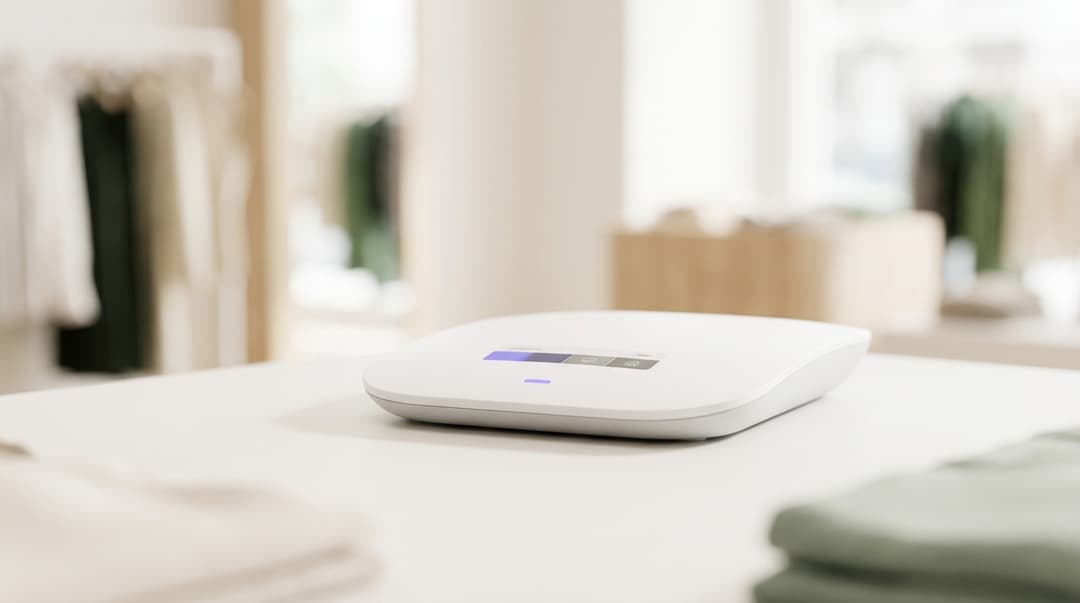
A retail WiFi procurement checklist should test five things. Guest access must capture consented first-party data and filtering must cover every store. Footfall reports must compare stores like for like. The guest network must be segmented out of PCI DSS scope. The platform must run on the access points you own, such as Cisco Meraki, HPE Aruba or Ruckus.
What should a retail WiFi procurement checklist cover?
Retail guest WiFi serves three internal buyers. A tender that scores only one of them leaves the other two buying their own tools.
- IT wants a secure network that runs on the hardware already in the ceiling.
- Marketing wants consented contacts it can use.
- Operations wants footfall reporting to staff stores and compare formats.
This checklist is built around those three asks. It covers five areas:
- Guest access: how shoppers connect, what you capture and how you record consent.
- Content filtering: what is blocked, where the policy is enforced and how you prove it.
- Footfall reporting: which visitor metrics you get, how accurate they are and how they reach operations.
- Security and compliance: PCI DSS segmentation, encryption, GDPR and certifications.
- Estate fit: hardware support, multi-site management and integrations.
Purple runs Guest WiFi across 80,000+ live venues in over 90 countries. The platform handled 440 million logins in 2024 (Purple master deck, 2026). The questions below reflect what multi-site Retail buyers ask in tenders, and what you should ask any vendor you shortlist.
What do you need before you go to tender?
Four pieces of groundwork turn a vague requirement into one you can score. Skip them and every vendor's answer sounds equally good.
An estate inventory
List every store with its access point vendor, model, controller or cloud dashboard, and broadband line. Acquisitions and franchise models often leave a chain running two or three vendors at once. Note where you do not own the network, such as concessions inside department stores or units in a landlord-run shopping centre.
The inventory tells you whether a platform must work across mixed hardware. It also shows whether a refresh is genuinely due, or whether a cloud overlay on existing access points will do. Why your next WiFi upgrade doesn't need new hardware sets out that test.
Named owners for each area
Give each of the five areas an owner who signs off the score:
- IT owns security and estate fit.
- Marketing or CRM owns guest access and data capture.
- The head of operations owns footfall reporting.
- Your data protection officer reviews all three before contract.
Data protection groundwork
Guest WiFi collects personal data. Presence-based footfall counting can also involve device identifiers. Under UK GDPR and EU GDPR you need a lawful basis for each purpose.
Article 35 requires a data protection impact assessment (DPIA) where processing is likely to be high risk. The ICO's list of high-risk processing includes monitoring a person's location or behaviour. Email and SMS marketing in the UK also falls under the Privacy and Electronic Communications Regulations (PECR). Draft the DPIA before tender, so vendors answer against your actual risk register.
A baseline
Record what you measure today:
- daily connections per store
- login completion
- marketing opt-in rate
- door counter totals
Without a baseline, you cannot prove the new platform improved anything. If you have no guest WiFi data yet, door counter or till transaction counts give you a starting point.
How do you work through the checklist, area by area?
Score each area separately, then weight it to your priorities. A grocer may weight footfall reporting above data capture. A luxury brand may reverse that.
Guest access: how shoppers connect
The access method decides how much data you capture and how much friction shoppers feel. The captive portal is the splash page a device shows before it reaches the internet. It is where you capture details and record consent. Ask to see it live on iOS and Android, because both open captive portals in a restricted mini-browser.
Passpoint, also called Hotspot 2.0, lets a device join a network automatically using stored credentials. OpenRoaming is a roaming federation run by the Wireless Broadband Alliance. It is built on Passpoint and lets one sign-in work across participating venues.
| Access method | What you capture | Shopper effort | Consent record | Who it suits |
|---|---|---|---|---|
| Click-through terms | Device and session data only | One tap | Terms acceptance, no marketing consent | Convenience stores and forecourts that want access, not data |
| Email or form registration | Name, email, optional profile fields | One short form on first visit | Separate, unticked marketing opt-in | Fashion, beauty and department stores building a CRM base |
| Social login | Profile fields the social network releases | Two to three taps | Separate opt-in plus the network's permission screen | Brands with a younger, social-first audience |
| SMS verification | Verified mobile number | Enter a code from a text | Separate SMS marketing opt-in under PECR | Retailers that run SMS campaigns |
| OpenRoaming or Passpoint | Identity from the roaming provider | None after first setup | Captured at enrolment, not each visit | Shopping centres and high-footfall estates wanting automatic reconnection |
Ask every vendor:
- Is marketing consent a separate, unticked choice? GDPR requires a clear affirmative act, and Recital 32 rules out pre-ticked boxes. Purple calls this approach conscious-choice opt-ins.
- Can one splash page design run across all stores, with regional or per-store variations?
- Do returning shoppers reconnect without registering again, and for how long?
- Can you export consent records with the timestamp and the exact wording each shopper saw?
Content filtering: what is blocked and where
Retail guest networks are public spaces, often used by children. Filtering protects your brand and stops your connection being used to reach illegal content.
In the UK, Friendly WiFi is a voluntary accreditation for public WiFi. It requires blocking of pornography and of child sexual abuse content on the Internet Watch Foundation (IWF) list. Ask whether filtering comes from the platform, your in-store hardware or a third-party DNS service, and who maintains the category lists.
| Where filtering runs | How it works | Strength | Limitation | Who it suits |
|---|---|---|---|---|
| DNS filtering service | Blocks domains when a device looks them up | One policy across mixed hardware | Sees domains, not full URLs on HTTPS sites | Mixed-vendor estates wanting one rulebook |
| Store firewall or gateway | Category filtering on an appliance such as Cisco Meraki MX or Fortinet FortiGate | Filters applications as well as domains | Mixed estates run one rulebook per vendor | Single-vendor estates with security appliances in store |
| TLS inspection | Decrypts HTTPS traffic to read full URLs | Most granular control | Needs a certificate installed on each device | Staff networks, never guest networks |
| No filtering | Open internet | Nothing to configure | Brand and safeguarding exposure, fails Friendly WiFi | Not suitable for public retail space |
Ask every vendor:
- Where is the policy enforced, and does it apply identically on every hardware vendor you run?
- Which categories are blocked by default, and can you change them per site?
- How do you prove filtering is on during an audit or accreditation check?
- Can you allow-list services your stores depend on, such as your own app or click-and-collect pages?
Do not accept "yes, we filter" without a named enforcement point.
Footfall reporting: what operations actually asks for
Heads of operations ask four questions:
- How many people came in?
- How long did they stay?
- How many came back?
- How does this store compare with the others?
Guest WiFi answers them from two data sources. Connected data comes from shoppers who join the network. Presence data comes from nearby devices with WiFi switched on, even if they never connect.
| Metric | Data source | Who uses it | What to check |
|---|---|---|---|
| Visitors by hour and day | Presence and connected | Store and area managers planning rotas | Reconcile against door counters in the pilot |
| Dwell time | Presence and connected | Operations and space planning | Exclude staff devices and set a minimum dwell threshold |
| Capture rate (walk-ins as a share of passers-by) | Presence | Property and window display teams | Needs access point coverage near the entrance |
| Return-visit rate | Connected, logged-in shoppers | CRM and operations | Randomised MAC addresses break presence-based return counts |
| Store comparison table | Presence and connected | Regional and head office operations | Normalise for store size and access point count |
Device privacy changes matter here. iOS 14 and Android 10 onwards use a private, randomised MAC address for each network by default, and newer versions can rotate it. Reports that count devices by MAC address will overcount visitors and undercount returns. Return-visit figures are reliable only when they come from logged-in shoppers. Ask each vendor for their written method.
The ICO's guidance on WiFi location analytics treats device MAC addresses as personal data where they can single out an individual. To meet that standard:
- Display clear signage at store entrances.
- Pseudonymise identifiers.
- Set a retention period.
Purple's WiFi Analytics brings visitor and connection data from every venue into one view. Operations can then compare stores on the same measures. Confirm that any platform can export to your business intelligence (BI) tools by API or scheduled file.
Security and compliance
If guest WiFi shares a network with card terminals, the guest network can fall inside PCI DSS scope. PCI DSS treats segmentation as the way to reduce scope.
Isolate guest traffic from the cardholder data environment with firewall rules and a separate VLAN, a virtual LAN that keeps traffic logically apart. Turn on client isolation so guest devices cannot see each other. Confirm card terminals never join the guest SSID, the network name shoppers see.
Open guest networks send traffic unencrypted over the air. Enhanced Open, based on Opportunistic Wireless Encryption (OWE, RFC 8110), encrypts each device's connection without a password. WPA3 makes Protected Management Frames (IEEE 802.11w) mandatory. Protected Management Frames: A Practical Guide for 2026 covers the device compatibility checks.
Ask for certificates, not statements. Purple holds ISO 27001 and Cyber Essentials certification, is a certified B Corp, and is GDPR and CCPA compliant. Ask every vendor where shopper data is hosted and which sub-processors handle it.
Many stores still share one staff WiFi password, and the same tender can replace it. IEEE 802.1X is the standard for authenticating each device individually against an identity source. Purple's Identity-Based Networks give each colleague their own credential from Microsoft Entra ID, Okta or Google Workspace. Purple revokes access automatically when a colleague leaves.
Estate fit: hardware, management and integrations
A multi-site retailer rarely runs one hardware vendor. Purple is hardware-agnostic and runs as a cloud overlay on Cisco Meraki, HPE Aruba, Ruckus, Juniper Mist, Ubiquiti UniFi, Cambium, Extreme and Fortinet. You keep your access points. What changes is where the splash page, authentication and reporting come from.
Ask every vendor:
- Can head office push one change to every store from a single pane of glass?
- Can store managers see their own store without editing the others?
- Does the platform integrate with your CRM and marketing platforms?
- What are the support hours, and do they cover your trading hours?
For wider design guidance, see Network Best Practices for Venues and Enterprises in 2026.
The master checklist
| Area | Question to ask every vendor | What a pass looks like |
|---|---|---|
| Guest access | Is marketing consent a separate, unticked choice? | Shown on the live splash page, with wording stored against each record |
| Guest access | Do returning shoppers reconnect automatically? | Reconnection without a form for a period you set |
| Content filtering | Where is the filter enforced? | Named enforcement point, same policy on every vendor you run |
| Content filtering | Can you prove it to an auditor? | Blocked-category tests pass in the pilot, with a policy export |
| Footfall reporting | How do reports handle MAC randomisation? | Written method, with return visits based on logged-in shoppers |
| Footfall reporting | Can operations compare stores? | One exportable report ranking all stores on visitors, dwell and returns |
| Security | Is guest traffic segmented from card terminals? | Separate VLAN, firewall rules and client isolation documented per site |
| Security | Which certifications are current? | Certificates supplied, such as ISO 27001 and Cyber Essentials |
| Estate fit | Does it run on every access point vendor you own? | Live reference on each vendor in your inventory |
| Estate fit | Can head office push one change to every store? | Template change applied to all pilot stores from one dashboard |
| Data rights | Can you export and delete a shopper's data on request? | Access and erasure requests completed during the pilot |
Got questions about your specific setup?
Our team works with venue operators, IT managers, and network engineers across 80,000 venues. Book a 20-minute call and we will show you how others like you solved it.
How do you check a shortlisted platform works?
Pilot in three to five stores that cover your formats, such as a flagship, a high street store, a retail park unit and a concession. Run these seven tests and record the results against the master checklist.
- Connection: on current iOS and Android devices, the captive portal appears, completes and reaches the internet.
- Consent: register test accounts with opt-in on and off. Confirm your CRM receives only the opted-in records.
- Filtering: try to reach test pages in each blocked category. Confirm your own app and allow-listed pages still load.
- Footfall: compare daily visitor counts against door counters. Expect a consistent gap, but the daily trends should move together.
- Segmentation: from a guest device, try to reach payment and back-office subnets. The test passes only if every attempt fails.
- Data rights: submit an access request and an erasure request, and time the response.
- Coverage: walk the shop floor, fitting rooms and tills. Weak signal often traces to channel planning, covered in The Ultimate Guide to WiFi Channels: 2.4GHz vs 5GHz Explained.
The same pilot discipline applies in transport. Airport WiFi platform providers: what to require in the RFP shows how it adapts to passengers.
What does this look like across a real estate?
The two scenarios below are illustrative. They show the method, and the figures are worked assumptions, not reported results.
Scenario 1: a 160-store fashion chain after an acquisition
Situation. A fashion chain runs 120 stores on Cisco Meraki and has just acquired a 40-store brand on HPE Aruba. It holds two guest WiFi contracts and two consent formats. Door counters cover only 70 stores, so operations cannot compare the whole estate.
What was done. The retailer weighted estate fit at 30% and scored every vendor on the master checklist. It chose a hardware-agnostic cloud overlay and migrated store by store outside trading hours. Before switching, it exported both sets of consent records. One splash page now runs everywhere, and return visits come from logged-in shoppers only.
Measurable outcome. The planned refresh of 160 access points across the acquired stores, four per store, came out of the budget. Consent records now sit in one format. Operations compares all 160 stores in one report, up from 70 with door counters alone.
Scenario 2: a landlord-run shopping centre with 85 units
Situation. The asset manager wants dwell time by zone to support leasing conversations. The centre draws a family audience, so management wants Friendly WiFi accreditation.
What was done. Access points were mapped to four zones. DNS filtering applied the IWF list and the pornography category across the whole centre. OpenRoaming let repeat visitors reconnect without a splash page. Signage at every entrance explained the data collected and linked to the privacy notice.
Measurable outcome. The leasing team now quotes monthly dwell time for each of the four zones. It could not produce that figure before. Filtering is documented and testable for the accreditation check.
What goes wrong in retail WiFi procurement, and how do you fix it?
The tender scores features nobody owns
Long feature lists reward vendors who tick boxes, not ones that fit your estate. Fix it by naming an owner for each area before tender. Score only requirements an owner will use in the first year.
Return-visit numbers collapse after launch
MAC randomisation makes the same phone look like a new device. Fix it by reporting returns from logged-in shoppers. Treat presence data as a visitor count, not a loyalty measure.
The splash page fails on some phones
Captive portal mini-browsers block some scripts and pop-ups. The walled garden is the list of domains a device can reach before login. Social login fails if those providers' domains are missing from it. Fix it by testing on current iOS and Android builds and keeping the walled garden in the vendor's checklist.
Filtering blocks something you need
A category filter can catch your own app, a payment page or click-and-collect. Fix it by building an allow-list during the pilot and reviewing it after each app release.
Card terminals end up on the guest network
A store manager connects a temporary terminal to the only network they know the password for. Fix it by giving terminals their own segmented network and documenting it per site. Repeat the segmentation test whenever a store changes layout.
Consent records are lost in migration
Switching provider without exporting consent leaves contacts you cannot prove consent for. Fix it by exporting every record with its timestamp and wording before cut-over.
Concessions sit on someone else's network
Department stores and shopping centres often own the network your concession uses. Fix it with a contract clause that covers guest access, filtering and data ownership.
What does retail guest WiFi cost, and what do you get back?
Model the full cost, not only the licence.
| Cost line | What drives it | How to reduce it |
|---|---|---|
| Platform licence | Number of venues, plan and term | Match the plan to each store format; Purple offers Connect, Capture and Engage |
| Access point hardware | Replacement versus reuse | Run a cloud overlay on the access points you own |
| Broadband | Bandwidth per store | Cap guest bandwidth per session |
| Content filtering | DNS service or appliance licence | Reuse firewall filtering licences in single-vendor estates |
| Implementation | Sites, vendors and integrations | Roll out from templates, store by store |
| Internal time | IT, marketing and data protection hours | Name owners before tender so scoring is fast |
Return comes from four lines. Use your own figures in each formula.
- Avoided hardware: access points you do not replace, multiplied by your unit and installation cost.
- Consented contacts: new opt-ins per month, multiplied by revenue per marketable contact from your CRM.
- Labour planning: hours moved from quiet periods to visitor peaks, multiplied by your hourly labour cost.
- Staff WiFi support: password-related tickets eliminated, multiplied by your cost per ticket.
Ask every shortlisted vendor to price per venue, per plan, over the full term. Ask them to show hardware, filtering and implementation as separate lines so you compare like with like.
Frequently asked questions
Does Purple work with the access points we already own?
Yes, Purple runs as a cloud overlay on the access points in your stores today. It supports Cisco Meraki, HPE Aruba, Ruckus, Juniper Mist, Ubiquiti UniFi, Cambium, Extreme and Fortinet. A chain running two vendors after an acquisition can use one platform across both. You change where the splash page, authentication and reporting come from, not the hardware in the ceiling, so no rip and replace is required.
Can we switch guest WiFi provider without closing stores?
Yes, you can migrate store by store outside trading hours. On enterprise hardware, switching provider means repointing the guest network's splash page and authentication settings in your controller or cloud dashboard. Build a template first, then apply it site by site. Before you switch, export your consent records with timestamps and the wording shoppers agreed to. GDPR requires you to demonstrate consent for every marketing contact you keep.
Is collecting footfall data through guest WiFi GDPR compliant?
Yes, provided you have a lawful basis and are open with shoppers about it. Display signage at entrances, pseudonymise device identifiers and set a retention period. Complete a data protection impact assessment, which UK GDPR Article 35 requires for high-risk processing such as location monitoring. Marketing consent must be a separate, unticked choice. Purple is ISO 27001 certified and GDPR compliant, and uses conscious-choice opt-ins for every marketing contact.
Will guest WiFi bring our stores into PCI DSS scope?
No, not if you segment it correctly. PCI DSS treats network segmentation as the way to keep systems out of scope. Isolate guest traffic from the cardholder data environment with a separate VLAN and firewall rules, and turn on client isolation. Card terminals must never join the guest network. In your pilot, try to reach payment and back-office subnets from a guest device. The test passes only if every attempt fails.
Do retailers need content filtering on guest WiFi?
Yes, treat it as a requirement even where the law does not demand it. Your guest network is a public space used by families, and unfiltered access exposes your brand. In the UK, Friendly WiFi accreditation requires blocking pornography and child sexual abuse content on the Internet Watch Foundation list. Ask every vendor to name where filtering is enforced. Confirm the policy applies identically on every hardware vendor in your estate.
How does WiFi footfall reporting compare with door counters?
WiFi reporting complements door counters rather than replacing them. A beam or camera counter at the entrance gives the most direct count of entries. WiFi adds dwell time, return visits from logged-in shoppers, capture rate from passers-by and a like-for-like comparison across every store with WiFi. Run both during your pilot. Expect the daily trends to move together, even where the absolute counts differ.
How should we compare retail guest WiFi pricing?
Compare price per venue, per plan, over the full contract term. Purple offers three plans, Connect, Capture and Engage, so you can match features to each store format rather than buying the top tier everywhere. Ask every shortlisted vendor to show hardware, content filtering and implementation as separate lines. Then add broadband and internal time, so the total reflects what each store actually costs to run.
Key Definitions
Captive portal
The splash page a device shows before it reaches the internet, opened on iOS and Android in a restricted mini-browser. It is where details are captured and consent is recorded under GDPR.
You meet it in every guest access demo. Test it live on current iOS and Android builds, because mini-browsers block some scripts and pop-ups.
Walled garden
The list of domains a device can reach before it completes captive portal login.
Social login fails if the social providers' domains are missing from it, so keep it in the vendor's checklist and test it in the pilot.
Passpoint (Hotspot 2.0)
A specification that lets a device join a WiFi network automatically using stored credentials, without a splash page on each visit.
It removes shopper effort after first setup, with consent captured at enrolment rather than each visit. Suited to shopping centres and high-footfall estates.
OpenRoaming
A roaming federation run by the Wireless Broadband Alliance, built on Passpoint, that lets one sign-in work across participating venues.
Used in Scenario 2 so repeat visitors to a shopping centre reconnect without a splash page.
Enhanced Open (OWE)
Opportunistic Wireless Encryption, specified in RFC 8110, which encrypts each device's connection to an open network without a password.
Open guest networks otherwise send traffic unencrypted over the air. Ask whether the platform and your access points support it.
Protected Management Frames (IEEE 802.11w)
The IEEE 802.11w amendment that protects WiFi management frames. WPA3 makes it mandatory.
Relevant when you enable WPA3 on store networks. Check device compatibility before you switch it on across the estate.
IEEE 802.1X
The IEEE standard for authenticating each device individually against an identity source, rather than with a shared password.
The same tender can replace a shared staff WiFi password. Purple's Identity-Based Networks issue each colleague a credential from Microsoft Entra ID, Okta or Google Workspace and revoke it when they leave.
PCI DSS segmentation
The Payment Card Industry Data Security Standard treats network segmentation as the way to keep systems out of scope of the cardholder data environment.
If guest WiFi shares a network with card terminals, it can fall inside PCI DSS scope. A separate VLAN, firewall rules and client isolation keep it out.
VLAN
A virtual LAN that keeps traffic logically apart on shared network infrastructure.
Isolates guest traffic from payment and back-office subnets. Document it per site and retest whenever a store changes layout.
MAC address randomisation
Since iOS 14 and Android 10, devices use a private, randomised MAC address for each network by default, and newer versions can rotate it.
Reports that count devices by MAC address overcount visitors and undercount returns. Ask each vendor for a written method and base returns on logged-in shoppers.
Data protection impact assessment (DPIA)
An assessment required by UK GDPR and EU GDPR Article 35 where processing is likely to be high risk. The ICO's high-risk list includes monitoring a person's location or behaviour.
Presence-based footfall counting can involve device identifiers. Draft the DPIA before tender so vendors answer against your risk register.
Friendly WiFi
A voluntary UK accreditation for public WiFi that requires blocking pornography and child sexual abuse content on the Internet Watch Foundation (IWF) list.
A practical bar for filtering on retail guest networks used by families. An unfiltered network fails it.
Worked Examples
A fashion chain runs 120 stores on Cisco Meraki and has acquired a 40-store brand on HPE Aruba. It holds two guest WiFi contracts and two consent formats, and door counters cover only 70 stores. How should it procure? (Illustrative scenario with worked assumptions.)
The retailer weighted estate fit at 30% and scored every vendor on the master checklist. It chose a hardware-agnostic cloud overlay, so both vendors' access points stayed in place. Before switching, it exported both sets of consent records with timestamps and wording. It then migrated store by store outside trading hours. One splash page now runs everywhere, and return visits come from logged-in shoppers only. The planned refresh of 160 access points across the acquired stores, four per store, came out of the budget. Operations now compares all 160 stores in one report, up from 70 with door counters alone.
A landlord-run shopping centre with 85 units wants dwell time by zone to support leasing conversations. It draws a family audience and wants Friendly WiFi accreditation. What should the deployment look like? (Illustrative scenario with worked assumptions.)
Access points were mapped to four zones, so dwell time could be reported per zone. DNS filtering applied the IWF list and the pornography category across the whole centre. That gave one policy regardless of the hardware in each unit. OpenRoaming let repeat visitors reconnect without a splash page. Signage at every entrance explained the data collected and linked to the privacy notice, meeting the ICO's expectations on WiFi location analytics. The leasing team now quotes monthly dwell time for each of the four zones, a figure it could not produce before. Filtering is documented and testable for the accreditation check.
Frequently asked questions
Does Purple work with the access points we already own?
Yes, Purple runs as a cloud overlay on the access points in your stores today. It supports Cisco Meraki, HPE Aruba, Ruckus, Juniper Mist, Ubiquiti UniFi, Cambium, Extreme and Fortinet. A chain running two vendors after an acquisition can use one platform across both. You change where the splash page, authentication and reporting come from, not the hardware in the ceiling, so no rip and replace is required.
Can we switch guest WiFi provider without closing stores?
Yes, you can migrate store by store outside trading hours. On enterprise hardware, switching provider means repointing the guest network's splash page and authentication settings in your controller or cloud dashboard. Build a template first, then apply it site by site. Before you switch, export your consent records with timestamps and the wording shoppers agreed to. GDPR requires you to demonstrate consent for every marketing contact you keep.
Is collecting footfall data through guest WiFi GDPR compliant?
Yes, provided you have a lawful basis and are open with shoppers about it. Display signage at entrances, pseudonymise device identifiers and set a retention period. Complete a data protection impact assessment, which UK GDPR Article 35 requires for high-risk processing such as location monitoring. Marketing consent must be a separate, unticked choice. Purple is ISO 27001 certified and GDPR compliant, and uses conscious-choice opt-ins for every marketing contact.
Will guest WiFi bring our stores into PCI DSS scope?
No, not if you segment it correctly. PCI DSS treats network segmentation as the way to keep systems out of scope. Isolate guest traffic from the cardholder data environment with a separate VLAN and firewall rules, and turn on client isolation. Card terminals must never join the guest network. In your pilot, try to reach payment and back-office subnets from a guest device. The test passes only if every attempt fails.
Do retailers need content filtering on guest WiFi?
Yes, treat it as a requirement even where the law does not demand it. Your guest network is a public space used by families, and unfiltered access exposes your brand. In the UK, Friendly WiFi accreditation requires blocking pornography and child sexual abuse content on the Internet Watch Foundation list. Ask every vendor to name where filtering is enforced. Confirm the policy applies identically on every hardware vendor in your estate.
How does WiFi footfall reporting compare with door counters?
WiFi reporting complements door counters rather than replacing them. A beam or camera counter at the entrance gives the most direct count of entries. WiFi adds dwell time, return visits from logged-in shoppers, capture rate from passers-by and a like-for-like comparison across every store with WiFi. Run both during your pilot. Expect the daily trends to move together, even where the absolute counts differ.
How should we compare retail guest WiFi pricing?
Compare price per venue, per plan, over the full contract term. Purple offers three plans, Connect, Capture and Engage, so you can match features to each store format rather than buying the top tier everywhere. Ask every shortlisted vendor to show hardware, content filtering and implementation as separate lines. Then add broadband and internal time, so the total reflects what each store actually costs to run.
Continue reading in this series
Staff presence analytics: who is in the building, how often, and for how long
Use this guide to decide whether your existing WiFi authentication can measure who is on site, how often they attend and how long they stay. You will be able to set up 802.1X or iPSK identities, turn on RADIUS accounting, agree session rules, complete a DPIA, and report staff presence as a count while keeping guest figures as a trend.
Cisco Meraki location analytics: what you get built in and where it stops
You will be able to decide which Meraki presence questions the built-in dashboard can answer, when to stream raw observations through the scanning API, and when you need a captive portal for identified visitors. You will also know why loyalty figures mislead, and which figures you can safely put in front of your board.
Footfall analytics for shopping centres: WiFi, cameras and sensors compared
You will be able to decide which footfall method your shopping centre needs first: entrance counters for a defensible door count, WiFi presence analytics for dwell and zone movement, or mobile data panels for catchment. You can also cost each option per entrance, meet UK GDPR duties and benchmark against national footfall series.
Got questions about your specific setup?
Our team works with venue operators, IT managers, and network engineers across 80,000 venues. Book a 20-minute call and we will show you how others like you solved it.