
Multi-site guest WiFi for franchises: central control with local branding
You will be able to choose an operating model for guest WiFi across your franchise estate and decide who controls guest data under the TCPA and CAN-SPAM. You can then lock brand and consent centrally, give franchisees venue-scoped access and plan a vendor-grouped rollout. The approach runs as a cloud overlay on mixed Cisco Meraki, HPE Aruba, Ruckus and Ubiquiti UniFi hardware.
Video overview
Part of our core series: Guest WiFi Guide →
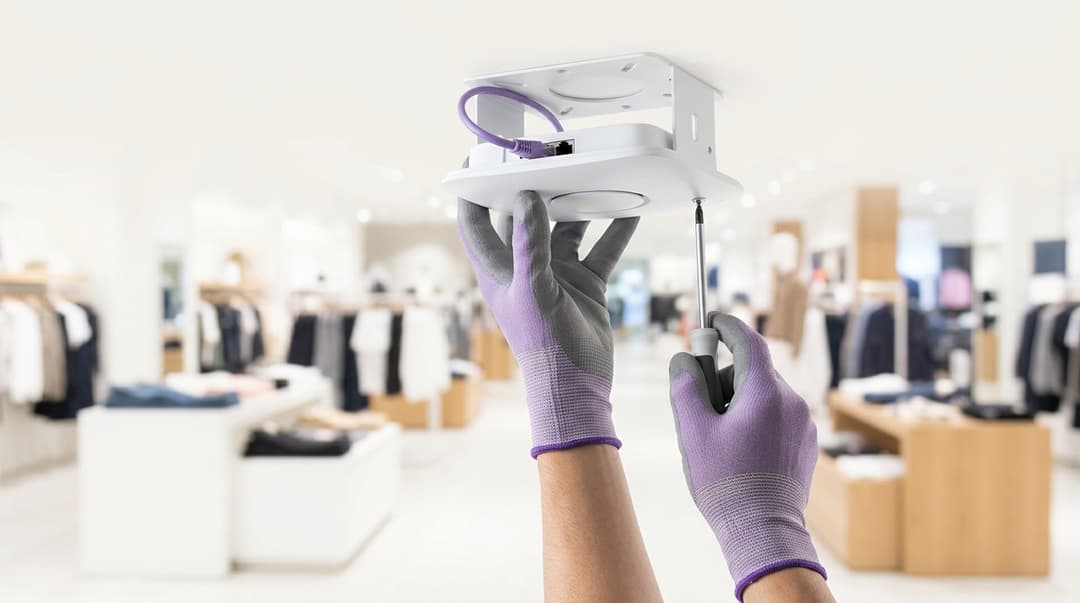
Franchises run guest WiFi across hundreds of locations from one cloud platform. The franchisor locks the brand template, consent wording and network rules. Each franchisee edits approved local fields and sees only their own venues. A hardware-agnostic overlay covers mixed Cisco Meraki, HPE Aruba and Ubiquiti UniFi estates. The franchise agreement fixes who owns guest data.
Which operating model should your franchise choose?
You have three ways to run guest WiFi across a franchise estate:
- Central platform: the franchisor runs one platform and allows local overrides.
- Franchisee-led: each franchisee buys from their own provider.
- Built-in controller portal: each site uses the captive portal built into its access point controller. A captive portal is the web page a guest sees before the network lets them online.
The model you pick decides three things. It sets who controls the brand, who holds the consent records and whether you can report across the estate.
| Axis | Central platform, local overrides | Franchisee-led, own provider | Built-in controller portal |
|---|---|---|---|
| Splash page control | Franchisor template, franchisee edits unlocked fields | Each franchisee, no brand checks | Each site, per controller |
| Brand consistency | Logo, colors and legal text locked estate-wide | Drifts site by site | Basic logo and text only |
| Consent records | One register, one wording | One register per franchisee | Rarely captured |
| Guest data ownership | Defined once in the franchise agreement | Sits with each franchisee | No marketing data held |
| Mixed hardware | One overlay across all major vendors | Each provider's own vendor list | One vendor per site |
| Estate-wide reporting | Single dashboard, venue to estate | Manual merge of exports | None |
| New site go-live | Clone template, assign venue | New contract and splash page build | Configure each controller |
| Suits | 20+ sites under one brand standard | License-only networks | Single sites, no data goals |
For most brand-led franchises, the central model wins on consent and reporting alone. The rest of this guide covers how to run it, and when it is the wrong choice.
Where central control and local branding genuinely differ
Central control and local branding pull in opposite directions. The franchisor needs one legal standard and one data model. The franchisee needs a splash page that feels like their venue. A good platform separates the two field by field, not site by site.
The brand template and its local overrides
Build one master template per brand. Lock the elements that carry legal or brand risk:
- Logo, color palette and typography
- Privacy notice, terms of use and controller identity
- Consent wording and the order of opt-in boxes
- Data fields collected at login
- Session length and bandwidth rules
Then unlock the fields that make a venue feel local:
- Venue name, address and store hours
- Hero image and local offer
- Links to the venue's own social channels
- Language, where a franchisee operates outside the US
Every franchisee site inherits the template. When you update the privacy notice, every venue picks it up on the next publish. A franchisee cannot edit the consent wording, so no local change can break your CCPA/CPRA position.
Delegated access for franchisees
Delegated access means each person sees only the venues they run. Map roles to your franchise structure before you build anything.
| Role | Scope | Can edit | Cannot edit |
|---|---|---|---|
| Franchisor admin | Whole estate | Templates, consent, integrations, roles | No restrictions |
| Area manager | A group of venues | Local fields and campaigns for their group | Templates, consent wording |
| Franchisee | Their own venues | Local fields, local offers, own reports | Other venues and their data |
| Agency or partner | Named brands, read-only | Nothing | All configuration |
Tie admin accounts to your identity provider where the platform supports SAML single sign-on. SAML (Security Assertion Markup Language) is the standard that lets one login authenticate admins across systems. Microsoft Entra ID, Okta and Google Workspace all support it. Joiners, movers and leavers then follow your HR process. When a franchisee sells up, you revoke their access in one place.
Mixed hardware estates
Franchise estates rarely run one vendor. Early sites carry whatever the franchisor specified years ago. Later franchisees buy what their local installer recommends. A rip-and-replace program is the most expensive way to fix inconsistent branding.
A cloud overlay avoids it. The access points keep handling radio, and the platform handles the splash page, authentication and data. Purple's Guest WiFi runs this way on Cisco Meraki, HPE Aruba, Ruckus, Juniper Mist, Ubiquiti UniFi, Cambium, Extreme and Fortinet. Each controller redirects guests to the hosted splash page and checks access against a cloud RADIUS service. RADIUS (Remote Authentication Dial-In User Service) is the protocol that tells an access point whether to admit a device. Our article on why your next WiFi upgrade doesn't need new hardware covers the economics.
Standardize three things across every vendor:
- The guest SSID name. Use one name at every site.
- The guest VLAN. A VLAN (virtual LAN) is a logical network segment on shared switches.
- Client isolation. This stops guests' devices reaching each other.
PCI DSS v4.0 brings systems connected to the cardholder data environment into scope. Keep guest traffic on a VLAN with no route to point-of-sale systems. For extra privacy on open guest networks, ask whether your hardware supports OWE (Opportunistic Wireless Encryption, RFC 8110). OWE encrypts traffic without a password.
Estate-wide reporting
Central reporting is where the model pays back. With every venue on one platform, you compare like with like:
- Logins
- New versus returning guests
- Dwell time
- Opt-in rate
You can cut each metric by venue, region or brand. WiFi Analytics rolls the venue view up to the estate view without merging exports.
Give franchisees their own venue reports plus an anonymized estate benchmark. A franchisee who sees their opt-in rate below the estate median has a reason to fix a badly placed sign. They never see another franchisee's guest records.
Who owns guest data in a franchise?
The franchise agreement decides, and privacy laws test whether it decided correctly. Under CCPA/CPRA and EU GDPR, the controller is whoever determines the purposes and means of processing. In most franchises, that points to one of two set-ups.
Franchisor as sole controller. The franchisor sets the purposes, owns the list and markets at brand level. Franchisees receive reports, not raw records. This suits tightly run QSR and hotel brands.
Franchisor and franchisee as joint controllers. Both decide why guest data is collected. Privacy regulations then require an arrangement setting out each party's responsibilities. The essence of that arrangement must be available to the guest.
Either way, your WiFi platform provider normally acts as a processor, bound by a data processing contract. Three rules apply whichever model you choose.
- Name the controller at the point of collection. Privacy regulations require the controller's identity and contact details when you collect data. Put them on the splash page, inside the locked template.
- Separate the opt-ins. Use one conscious-choice opt-in for brand marketing and a second for local marketing. A guest can then say yes to the local bar and no to the national brand.
- Prove every consent. Applicable privacy laws require the controller to demonstrate consent. Store the wording shown, the timestamp and the venue against every record. Withdrawing consent must be as easy as giving it.
In the US, the TCPA and CAN-SPAM require clear consent for marketing messages. Federal FTC guidelines enforce strict rules around opt-out mechanisms. A free WiFi login rarely counts as an implicit consent exception, so do not rely on it.
For US franchises, the CCPA requires a notice at collection. Build it into the same locked template.
Agree exit terms up front. The agreement should state what happens to a franchisee's local opt-in list when they leave. The options are transfer, deletion or retention by the franchisor.
When a franchisor-led central platform is the right call
Choose the central model when these conditions hold:
- You operate 20 or more sites under one brand standard.
- Your brand book already governs signage, menus or room design.
- You run, or plan, brand-level CRM and loyalty, and need one consent standard behind it.
- Your hardware is mixed and will stay mixed.
- Your board expects site-by-site performance comparison.
This describes most Hotels groups, QSR brands and managed restaurant groups. It also fits franchised Retail chains where the brand owns the shopper relationship.
When franchisee-led WiFi is the right call
Let franchisees choose their own provider when:
- the agreement is a license to trade under a name, with little operational control.
- the franchisor has no plan to market to guests at brand level.
- sites are few, far apart and run as independent businesses.
Even then, publish a minimum standard. It should cover guest VLAN separation, a compliant privacy notice and logo usage. The built-in controller portal suits only single sites with no data goals. It ties branding to one vendor's page editor and gives you no estate view.
Got questions about your specific setup?
Our team works with venue operators, IT managers, and network engineers across 80,000 venues. Book a 20-minute call and we will show you how others like you solved it.
How do you roll out guest WiFi to hundreds of sites?
Roll out in waves, with a pilot that mirrors your hardware mix. When rolling out across large estates, the pace is set by your installers and franchisees, not the platform.
Stage 1: audit the estate
Build a site register. For each venue, record four things:
- Access point vendor and model
- Controller type
- Broadband line
- Who holds admin credentials
Flag sites running consumer-grade routers, which may lack captive portal redirect or RADIUS support. Commission surveys only where coverage complaints exist. Our practical planning guide to WiFi site surveys explains when one pays back.
Stage 2: build the template and the governance
Agree the controller model with legal before design starts. Then build the master template, lock the fields, define roles and connect your CRM. Write a one-page franchisee guide covering what they can change and how to request more.
Stage 3: pilot five sites across your hardware mix
Pick one site per vendor, plus one awkward site such as a large flagship. Test login on iOS and Android, opt-in capture, CRM sync, franchisee access and reporting. Devices may drop between rooms at a Cisco Meraki flagship. If they do, check the fast-roaming mode: our guide to Cisco Meraki 802.11r adaptive vs enabled covers the fix.
Stage 4: roll out in waves
Group sites by hardware vendor, then by region. Same-vendor waves let your installer reuse one configuration. Start with a wave of 15 to 20 sites. Scale to 30 to 50 per wave once go-live checks pass. Freeze changes before peak trading, such as the holidays.
Stage 5: hand over and run
Move franchisees onto their delegated access. Publish the first property report within a month of the final wave. Review the template quarterly, not each time a franchisee asks.
Worked scenarios
The two scenarios below are worked planning examples built from typical property profiles. They are not named case studies.
A 140-site quick service restaurant franchise
Situation. A QSR franchisor runs 140 restaurants through 38 franchisees. The franchisor specified Cisco Meraki for 90 sites. Local installers chose Ubiquiti UniFi for the other 50. Each franchisee had built their own splash page, which left dozens of consent wordings and no shared guest list.
What was done. A variation to the franchise agreement made the franchisor sole controller. One template went live with locked consent and a single brand opt-in. Franchisees could edit only the local offer and opening hours. The rollout ran in three steps, grouped by vendor:
- A five-site pilot
- A first wave of 15 sites
- Four waves of 30 sites
No access points were replaced.
Outcome. The property network went live in 12 weeks, at two weeks for the pilot and two weeks per wave. A menu campaign now publishes once instead of being re-keyed at 140 sites. Consent sits in one register under one wording, so a deletion request is actioned once. For site-level coverage planning, see our US guide to WiFi coverage and security in restaurants.
A 45-hotel franchised group
Situation. A hotel brand franchises 45 properties to 12 owner-operators across the US. Hardware splits between HPE Aruba and Ruckus. Owners run their own restaurants and spas, and wanted their own marketing lists. The brand wanted one loyalty standard.
What was done. Franchisor and owners signed a joint controller arrangement, summarized on the splash page. The template carries two conscious-choice opt-ins, one for the brand and one for the hotel. Each owner has venue-scoped access and sees only guests who opted in to their hotel. Regional properties reuse the same template with locally edited contact details.
Outcome. The brand's loyalty list draws only on brand opt-ins. Each owner's list draws only on hotel opt-ins. A consumer privacy request is answered from one record set instead of 12 owner systems. Owners benchmark their opt-in rate against the 45-hotel network without seeing each other's guests.
Platform features to require
Put these in your RFP and test each one in the pilot.
| Feature | Why it matters in a franchise | How to test it in the pilot |
|---|---|---|
| Template inheritance with field-level locks | One edit updates every venue | Change the privacy notice once, then check all five sites |
| Venue-scoped roles | Franchisees see only their own guests | Log in as a franchisee and try to open another venue |
| Multi-vendor support | No access point replacement to fix branding | Run one pilot site per vendor you own |
| Per-purpose consent records | Proves consent under CCPA/CPRA | Export a record and check wording, timestamp and venue |
| Separate brand and local opt-ins | Lets joint controllers market independently | Opt in locally only, then confirm the brand list excludes you |
| Estate-to-venue reporting | Compares sites without merging exports | Pull opt-in rate by venue, region and brand |
| CRM integration | Feeds loyalty from first-party data | Confirm a new login reaches your CRM |
| Certified security | Clears franchisee procurement | Request ISO 27001 and Cyber Essentials certificates |
On certification, Purple is ISO 27001 and Cyber Essentials certified, GDPR and CCPA compliant, and a certified B Corp. Purple runs at 80,000+ live venues in over 90 countries. It handled 440 million logins in 2024 (Purple data).
Also ask about OpenRoaming, the Wireless Broadband Alliance federation built on Passpoint (Hotspot 2.0). Passpoint lets a device join a network automatically using stored credentials. OpenRoaming lets returning guests connect at any venue in your estate without a splash page.
What each model costs to run
Compare total running cost, not license price alone.
- Licenses. The central model means one estate agreement. The franchisee-led model means one contract per franchisee and no volume terms.
- Hardware. An overlay needs no new access points on supported gear. An estate view on built-in portals means standardizing vendors first.
- Admin time. A central template change is one edit. Under the franchisee-led model, 38 franchisees repeat the same work.
- Compliance. Every separate consent wording is a separate risk. Each franchisee also handles their own consumer privacy requests.
Purple offers Guest WiFi on three plans: Connect, Capture and Engage. Price your estate against the feature table above.
How to decide for your estate
Match your situation to a recommendation.
| Your situation | Recommendation |
|---|---|
| 20+ sites, one brand standard, brand-level CRM | Central platform, franchisor as sole controller |
| Franchisees market locally alongside the brand | Central platform, joint controllers, two opt-ins |
| Mixed vendors you will not standardize | Cloud overlay on existing access points |
| License-only network, no brand marketing | Franchisee-led, with a published minimum standard |
| Single site, no data goals | Built-in controller portal |
Then take three steps this quarter:
- Build the site register.
- Settle the controller model with legal.
- Book a five-site pilot that covers every vendor you own.
Frequently asked questions
Does Purple work with the access points our franchisees already run?
Yes. Purple's Guest WiFi runs as a cloud overlay on Cisco Meraki, HPE Aruba, Ruckus, Juniper Mist, Ubiquiti UniFi, Cambium, Extreme and Fortinet. Your access points keep handling radio, while Purple hosts the splash page, authentication and guest data. A mixed estate stays mixed. You configure each controller to redirect to the hosted splash page, then manage every site from one dashboard. No rip and replace is required.
Can each franchisee customize their own splash page?
Yes, within the fields the franchisor unlocks. Build one master template per brand, with logo, colors, privacy notice and consent wording locked. Franchisees then edit local fields such as venue name, opening hours, hero image, local offer and language. Every site stays recognisably local. No franchisee can alter the legal text that protects your CCPA/CPRA position.
Who owns guest WiFi data in a franchise?
The franchise agreement decides, and CCPA/CPRA tests it. The controller is whoever determines why and how guest data is processed. That is usually the franchisor alone, or franchisor and franchisee as joint controllers. Your WiFi platform provider acts as a processor under a service provider agreement. Name the controller on the splash page and agree what happens to local lists when a franchisee leaves.
How long does it take to roll out guest WiFi to hundreds of sites?
Installer capacity sets the pace, not the platform. A practical plan runs a five-site pilot, a first wave of 15 to 20 sites, then waves of 30 to 50. Group each wave by hardware vendor. At two weeks per wave, a 140-site estate goes live in about 12 weeks.
Does franchise guest WiFi fall into PCI DSS scope?
Not if you segment it properly. PCI DSS v4.0 brings systems connected to the cardholder data environment into scope. Put guest traffic on its own VLAN with no route to point-of-sale or payment systems. Turn on client isolation so guest devices cannot reach each other. Apply the same rules at every site, whatever the vendor, and record them in your operations manual.
Can franchisees see each other's guest data?
No, provided you scope roles to venues. Give each franchisee their own sites, area managers their region and franchisor admins the full estate. Franchisees can still benchmark opt-in rate or dwell time against an anonymized estate figure. Where the platform supports SAML single sign-on, link admin accounts to Microsoft Entra ID, Okta or Google Workspace. Access then ends when someone leaves.
How is Purple priced for a multi-site franchise estate?
Purple offers Guest WiFi on three plans: Connect, Capture and Engage. Price your estate against the features you need, such as template inheritance, venue-scoped roles, consent records and CRM integration. Purple runs as an overlay on your existing access points, so supported estates need no new hardware. Request a quote based on your site count and hardware mix.
Key Definitions
Captive portal
A web page served to an unauthenticated device by HTTP redirect before the network grants internet access. Controllers from Cisco Meraki, HPE Aruba, Ruckus and others can redirect to an external, hosted splash page instead of their built-in page editor.
The built-in controller portal ties branding to one vendor's page editor and gives no estate view, which is why franchises with mixed hardware move the splash page to a hosted platform.
RADIUS
Remote Authentication Dial-In User Service, specified in IETF RFC 2865. It defines the Access-Request, Access-Accept and Access-Reject exchange that tells an access point or controller whether to admit a device.
In a cloud overlay, each controller checks guest access against a cloud RADIUS service. Sites on consumer-grade routers without RADIUS support should be flagged during the estate audit.
Cloud overlay
An architecture where existing access points keep handling radio while a hosted platform delivers the splash page, authentication and guest data, using captive portal redirect and RADIUS rather than vendor-specific firmware.
It removes the need for a rip-and-replace program to fix inconsistent branding across a franchise estate that runs several hardware vendors.
SAML single sign-on
Security Assertion Markup Language 2.0, an OASIS standard that exchanges signed XML assertions between an identity provider and a service so one login authenticates admins across systems.
Linking franchise admin accounts to Microsoft Entra ID, Okta or Google Workspace means joiners, movers and leavers follow your HR process, and a departing franchisee loses access in one place.
VLAN
A virtual LAN, defined by IEEE 802.1Q, which tags Ethernet frames so one physical switch infrastructure carries several logically separated network segments.
Putting guest traffic on its own VLAN with no route to point-of-sale systems keeps guest WiFi out of PCI DSS scope at every site, whatever the vendor.
Client isolation
An access point or controller setting that blocks traffic between wireless clients on the same SSID, so devices can reach the gateway but not each other.
It is one of three settings to standardize across every vendor in the estate, alongside the guest SSID name and the guest VLAN.
OWE
Opportunistic Wireless Encryption, specified in IETF RFC 8110. It uses a Diffie-Hellman key exchange during association to encrypt traffic on an open network without a password.
It adds privacy on open guest networks. Ask whether each vendor in your estate supports it before you rely on it.
Data controller
Under CCPA/CPRA, the party that determines the purposes and means of processing. Regulations require its identity and contact details at the point of collection, and require it to demonstrate consent.
The franchise agreement decides whether the franchisor is sole controller. That choice shapes the splash page wording, who holds the consent register and who answers subject access requests.
Joint controllers
Privacy regulations apply where two or more controllers jointly determine purposes and means. They must set out their respective responsibilities in an arrangement whose essence is made available to the data subject.
Hotel groups where owner-operators market their own restaurants and spas alongside the brand typically use this model with two separate opt-ins.
Processor
Under privacy regulations, a party processing personal data on behalf of a controller. Formal agreements require a binding contract setting out the subject matter, duration, nature and purpose of processing.
Your WiFi platform provider normally acts as a processor, so the service contract sits alongside the franchise agreement.
PECR soft opt-in
An exception under commercial messaging rules like the TCPA and CAN-SPAM allowing marketing emails without consent where contact details were obtained in the course of a sale or negotiations for a sale.
The FTC and state attorneys general guidance ties the exception to a sale. A free WiFi login rarely counts, so franchises should collect explicit consent rather than rely on it.
OpenRoaming
A Wireless Broadband Alliance federation built on Passpoint (Hotspot 2.0), the WiFi Alliance program based on IEEE 802.11u that lets a device join a network automatically using stored credentials.
It lets returning guests connect at any venue in your estate without seeing a splash page, so it is worth raising in your tender.
Worked Examples
A QSR franchisor runs 140 restaurants through 38 franchisees, with Cisco Meraki at 90 sites and Ubiquiti UniFi at 50. Each franchisee built their own splash page, leaving dozens of consent wordings and no shared guest list. How should the estate be brought under one standard?
A variation to the franchise agreement made the franchisor sole controller. One template went live with locked consent and a single brand opt-in, and franchisees could edit only the local offer and opening hours. The rollout was grouped by vendor: a five-site pilot, a first wave of 15 sites, then four waves of 30. No access points were replaced. The estate went live in 12 weeks, at two weeks for the pilot and two weeks per wave. A menu campaign now publishes once instead of being re-keyed at 140 sites. Consent sits in one register under one wording, so a deletion request is actioned once.
A hotel brand franchises 45 properties to 12 owner-operators across the US, on HPE Aruba and Ruckus hardware. Owners want their own marketing lists for restaurants and spas, while the brand wants one loyalty standard. How do both sides market without sharing each other's guests?
Franchisor and owners signed a CCPA/CPRA joint controller arrangement, summarized on the splash page. The template carries two conscious-choice opt-ins, one for the brand and one for the hotel. Each owner has venue-scoped access and sees only guests who opted in to their hotel. Regional properties reuse the same template with locally edited contact details. The brand's loyalty list draws only on brand opt-ins, and each owner's list only on hotel opt-ins. A subject access request is answered from one record set instead of 12 owner systems. Owners benchmark their opt-in rate against the 45-hotel estate without seeing each other's guests.
During a five-site pilot, devices drop between rooms at a large Cisco Meraki flagship. What should the project team check before the first wave?
The pilot is designed to surface exactly this kind of issue, which is why it includes one site per vendor plus one awkward site such as a large flagship. Alongside login on iOS and Android, opt-in capture, CRM sync, franchisee access and reporting, the team checks the fast-roaming mode on the Meraki network, comparing the 802.11r adaptive and enabled settings. Fixing it at pilot stage means the corrected configuration carries into every same-vendor wave, so the installer reuses one known-good configuration across all Meraki sites rather than troubleshooting venue by venue.
Frequently asked questions
Does Purple work with the access points our franchisees already run?
Yes. Purple's Guest WiFi runs as a cloud overlay on Cisco Meraki, HPE Aruba, Ruckus, Juniper Mist, Ubiquiti UniFi, Cambium, Extreme and Fortinet. Your access points keep handling radio, while Purple hosts the splash page, authentication and guest data. A mixed estate stays mixed. You configure each controller to redirect to the hosted splash page, then manage every site from one dashboard. No rip and replace is required.
Can each franchisee customize their own splash page?
Yes, within the fields the franchisor unlocks. Build one master template per brand, with logo, colors, privacy notice and consent wording locked. Franchisees then edit local fields such as venue name, opening hours, hero image, local offer and language. Every site stays recognizably local. No franchisee can alter the legal text that protects your CCPA/CPRA position.
Who owns guest WiFi data in a franchise?
The franchise agreement decides, and privacy laws test it. The controller is whoever determines why and how guest data is processed. That is usually the franchisor alone, or franchisor and franchisee as joint controllers. Your WiFi platform provider acts as a processor under a data processing contract. Name the controller on the splash page and agree what happens to local lists when a franchisee leaves.
How long does it take to roll out guest WiFi to hundreds of sites?
Installer capacity sets the pace, not the platform. Purple brought 5,119 venues onto its platform in 2024 (Purple data). A practical plan runs a five-site pilot, a first wave of 15 to 20 sites, then waves of 30 to 50. Group each wave by hardware vendor. At two weeks per wave, a 140-site estate goes live in about 12 weeks.
Does franchise guest WiFi fall into PCI DSS scope?
Not if you segment it properly. PCI DSS v4.0 brings systems connected to the cardholder data environment into scope. Put guest traffic on its own VLAN with no route to point-of-sale or payment systems. Turn on client isolation so guest devices cannot reach each other. Apply the same rules at every site, whatever the vendor, and record them in your operations manual.
Can franchisees see each other's guest data?
No, provided you scope roles to venues. Give each franchisee their own sites, area managers their region and franchisor admins the full estate. Franchisees can still benchmark opt-in rate or dwell time against an anonymized estate figure. Where the platform supports SAML single sign-on, link admin accounts to Microsoft Entra ID, Okta or Google Workspace. Access then ends when someone leaves.
How is Purple priced for a multi-site franchise estate?
Purple offers Guest WiFi on three plans: Connect, Capture and Engage. Price your estate against the features you need, such as template inheritance, venue-scoped roles, consent records and CRM integration. Purple runs as an overlay on your existing access points, so supported estates need no new hardware. Request a quote based on your site count and hardware mix.
Continue reading in this series
City council public WiFi providers: procurement routes and what to specify
You will be able to pick the right procurement route for city public WiFi, splitting the cloud platform from the physical build. You will also be able to write a specification bidders can price against and you can test at handover. It covers coverage, peak concurrency, IWF filtering, the ADA and Section 508, a CCPA/CPRA lawful basis and evidence-based supplier scoring.
How Staff WiFi Helps You Meet ISO/IEC 27001: Mapping Annex A Controls to Your Wireless Network
You will be able to decide whether your staff WiFi can evidence 12 ISO/IEC 27001:2022 Annex A controls, including A.5.15, A.8.5 and A.8.22. You will also be able to replace a shared WPA2-PSK key with IEEE 802.1X and dynamic VLANs. Finally, you can assemble the RADIUS logs, segregation tests and supplier records an auditor accepts at stage 2.
DFS radar events on Cisco Meraki, HPE Aruba and Ruckus: a diagnostics checklist for channel changes
Work out whether a DFS radar event caused your 5GHz outage on Cisco Meraki, HPE Aruba or Ruckus. Tell genuine radar from false positives and planner moves. Then decide which channels to exclude, on which APs, without giving up the capacity your venue needs.
Got questions about your specific setup?
Our team works with venue operators, IT managers, and network engineers across 80,000 venues. Book a 20-minute call and we will show you how others like you solved it.