
हॉस्पिटैलिटी WiFi सॉल्यूशंस: एक प्रोवाइडर में क्या देखें
यह आधिकारिक गाइड हॉस्पिटैलिटी WiFi प्रोवाइडर चुनने के लिए महत्वपूर्ण तकनीकी और व्यावसायिक विचारों का विवरण देती है। इसमें नेटवर्क आर्किटेक्चर, सुरक्षा मानक, Captive Portal डिज़ाइन और GDPR-अनुपालन डेटा एनालिटिक्स शामिल हैं ताकि IT लीडर्स को ऐसे सॉल्यूशंस डिप्लॉय करने में मदद मिल सके जो राजस्व और परिचालन दक्षता को बढ़ाते हैं।
इस गाइड को सुनें
पॉडकास्ट ट्रांसक्रिप्ट देखें
हमारी मुख्य श्रृंखला का हिस्सा: Guest WiFi Guide →

कार्यकारी सारांश
आधुनिक वेन्यू ऑपरेटरों के लिए, गेस्ट WiFi अब केवल एक लागत केंद्र (cost centre) नहीं है; यह एक महत्वपूर्ण डेटा एसेट और राजस्व बढ़ाने वाला जरिया है। जैसे-जैसे IT मैनेजर्स, नेटवर्क आर्किटेक्ट्स और CTOs हॉस्पिटैलिटी WiFi सॉल्यूशंस का मूल्यांकन करते हैं, उनका ध्यान बुनियादी कनेक्टिविटी से हटकर एंटरप्राइज-ग्रेड एनालिटिक्स, अनुपालन (compliance) और एकीकरण (integration) पर केंद्रित होना चाहिए। यह गाइड गेस्ट WiFi प्रोवाइडर्स के मूल्यांकन के लिए एक वेंडर-न्यूट्रल ढांचा प्रदान करती है, जिसमें हॉस्पिटैलिटी, रिटेल और सार्वजनिक क्षेत्र के वातावरण में सफल परिनियोजन (deployment) के लिए आवश्यक नेटवर्क आर्किटेक्चर, Captive Portal आवश्यकताओं और डेटा एनालिटिक्स क्षमताओं का विवरण दिया गया है।
एक मजबूत Guest WiFi सॉल्यूशन को डिप्लॉय करने के लिए WPA3 और PCI DSS जैसे कड़े सुरक्षा मानकों के साथ हाई-डेंसिटी परफॉर्मेंस को संतुलित करने की आवश्यकता होती है। इसके अलावा, WiFi Analytics प्लेटफॉर्म के माध्यम से फर्स्ट-पार्टी डेटा कैप्चर करने की क्षमता नेटवर्क को एक मार्केटिंग इंजन में बदल देती है। यह संदर्भ गाइड उन तकनीकी विशिष्टताओं और व्यावसायिक प्रभाव के विचारों को रेखांकित करती है जो एक ऐसे प्रोवाइडर को चुनने के लिए आवश्यक हैं जो सुरक्षित कनेक्टिविटी और एक्शन लेने योग्य इंटेलिजेंस (actionable intelligence) दोनों प्रदान करने में सक्षम हो।
तकनीकी गहन विश्लेषण
नेटवर्क आर्किटेक्चर और रेडियो मानक
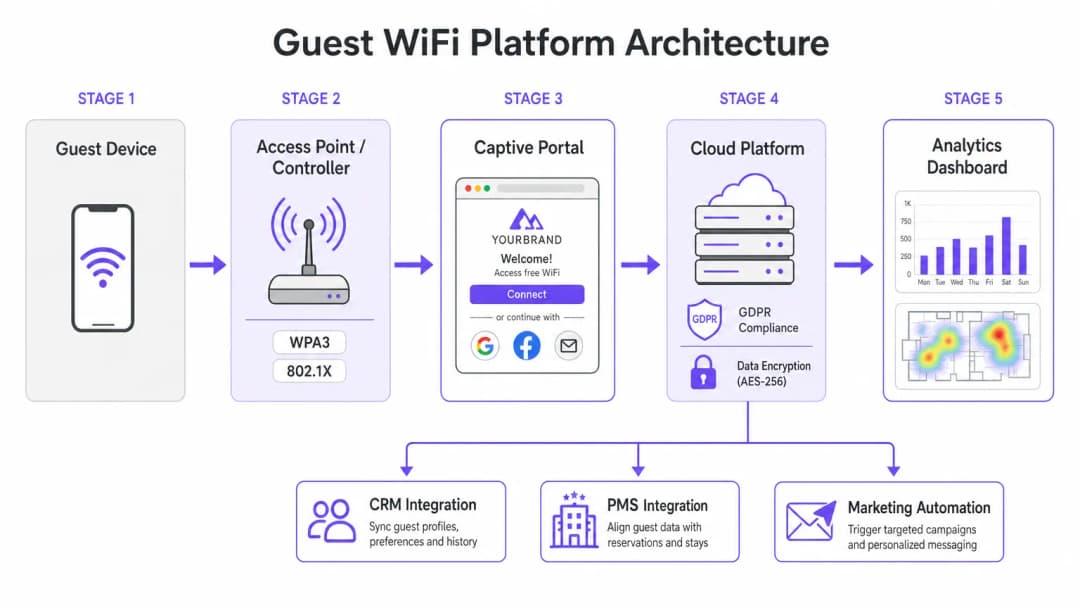
किसी भी एंटरप्राइज WiFi डिप्लॉयमेंट की नींव उसका अंतर्निहित नेटवर्क आर्किटेक्चर होता है। मल्टी-साइट ऑपरेटरों के लिए, क्लाउड-मैनेज्ड आर्किटेक्चर पारंपरिक ऑन-प्रिमाइसेस कंट्रोलर्स की तुलना में कहीं अधिक बेहतर है। क्लाउड मैनेजमेंट स्थानीय IT संसाधनों की आवश्यकता के बिना सैकड़ों स्थानों पर जीरो-टच प्रोविजनिंग, केंद्रीकृत नीति प्रवर्तन (centralised policy enforcement) और निर्बाध फर्मवेयर अपडेट सक्षम बनाता है।
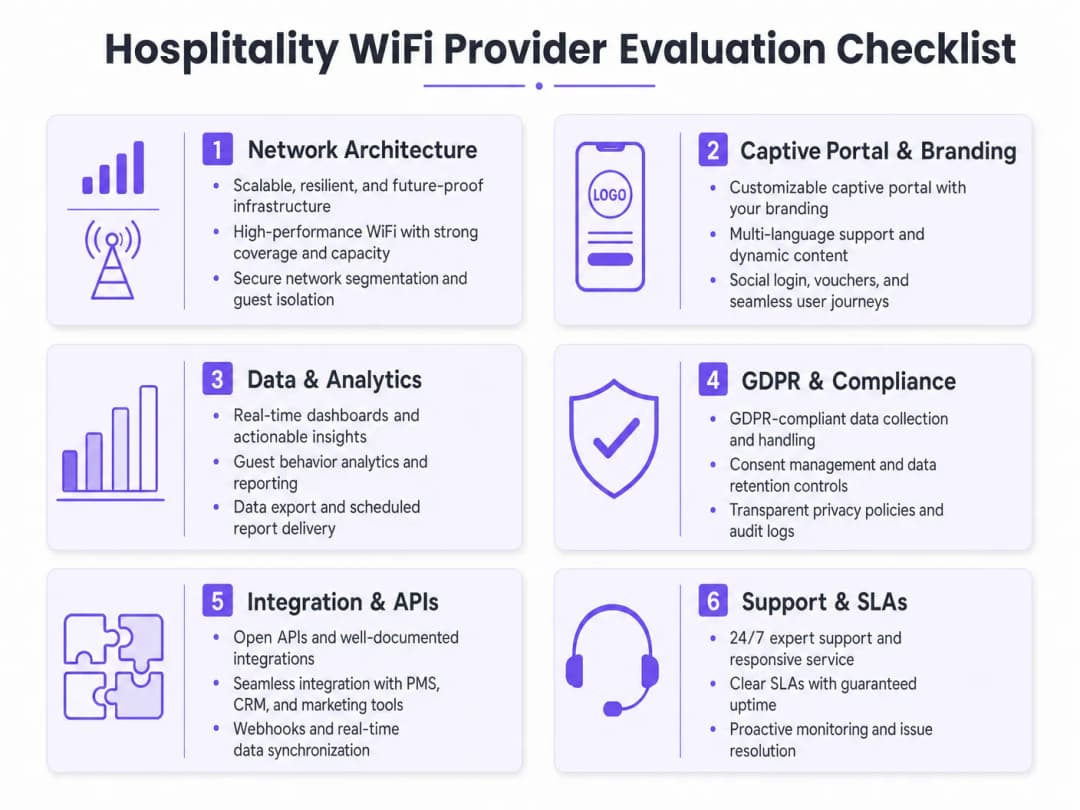
एक्सेस पॉइंट (AP) विशिष्टताओं का मूल्यांकन करते समय, Wi-Fi 6 (802.11ax) को बेसलाइन मानक होना चाहिए। Wi-Fi 6 ऑर्थोगोनल फ्रीक्वेंसी डिवीजन मल्टीपल एक्सेस (OFDMA) पेश करता है, जो एक सिंगल AP को विभिन्न सब-चैनलों पर एक साथ कई क्लाइंट्स के साथ संवाद करने की अनुमति देता है। हाई-डेंसिटी वाले वातावरणों में—जैसे कि कॉन्फ्रेंस सेंटर या स्टेडियम के रास्तों में—यह पुराने Wi-Fi 5 (802.11ac) मानक की तुलना में लेटेंसी को नाटकीय रूप से कम करता है और थ्रूपुट में सुधार करता है। अत्यधिक डिवाइस डेंसिटी की उम्मीद करने वाले वेन्यू के लिए, Wi-Fi 6E इन क्षमताओं को कम भीड़भाड़ वाले 6 GHz स्पेक्ट्रम में विस्तारित करता है।
सुरक्षा और नेटवर्क सेगमेंटेशन
हॉस्पिटैलिटी WiFi में सुरक्षा आर्किटेक्चर को गेस्ट सुरक्षा और कॉर्पोरेट अनुपालन (compliance) दोनों को संबोधित करना चाहिए। नेटवर्क सेगमेंटेशन एक गैर-परक्राम्य (non-negotiable) आवश्यकता है; गेस्ट ट्रैफ़िक को कॉर्पोरेट और पॉइंट-ऑफ-सेल (POS) नेटवर्क से तार्किक रूप से अलग (isolated) किया जाना चाहिए। यह आमतौर पर AP स्तर पर VLAN टैगिंग का उपयोग करके प्राप्त किया जाता है, जिसे गेटवे पर सख्त फ़ायरवॉल नियमों द्वारा लागू किया जाता है। यदि भुगतान टर्मिनल भौतिक नेटवर्क बुनियादी ढांचे को साझा करते हैं, तो यह अलगाव PCI DSS अनुपालन के लिए एक मुख्य आवश्यकता है।
प्रमाणीकरण (Authentication) मानक भी उतने ही महत्वपूर्ण हैं। सभी नए गेस्ट नेटवर्क के लिए WPA3 डिफ़ॉल्ट होना चाहिए, जो WPA2 में निहित कमजोरियों (जैसे KRACK हमलों) को कम करता है। उसी हार्डवेयर पर काम करने वाले आंतरिक स्टाफ नेटवर्क के लिए, RADIUS सर्वर द्वारा समर्थित IEEE 802.1X प्रमाणीकरण मजबूत, सर्टिफिकेट-आधारित सुरक्षा प्रदान करता है जो प्री-शेयर्ड कीज़ (pre-shared keys) की सुरक्षा से कहीं अधिक है।
अपने विशिष्ट सेटअप को लेकर कोई सवाल हैं?
हमारी टीम 80,000 से अधिक वेन्यू में वेन्यू ऑपरेटरों, IT मैनेजरों और नेटवर्क इंजीनियरों के साथ काम करती है। 20 मिनट का कॉल बुक करें और हम आपको दिखाएंगे कि आपके जैसे अन्य लोगों ने इसे कैसे हल किया।
कार्यान्वयन गाइड
Captive Portal और डेटा कैप्चर
Captive Portal एक्सेस पॉइंट और इंटरनेट के बीच गेटवे के रूप में कार्य करता है, जो गेस्ट इंटरैक्शन और डेटा कैप्चर के लिए प्राथमिक इंटरफ़ेस के रूप में काम करता है। एंटरप्राइज डिप्लॉयमेंट के लिए एक बुनियादी स्थिर (static) HTML पेज अपर्याप्त है। ऑपरेटरों को एक गतिशील (dynamic), पूरी तरह से ब्रांडेड पोर्टल की आवश्यकता होती है जो सोशल लॉगिन (Google, Facebook), ईमेल पंजीकरण और SMS सत्यापन सहित कई प्रमाणीकरण विधियों का समर्थन करता हो।
प्रत्येक प्रमाणीकरण विधि अलग-अलग डेटा एसेट प्रदान करती है। सोशल लॉगिन सत्यापित जनसांख्यिकीय (demographic) डेटा प्रदान करता है, जबकि ईमेल पंजीकरण एक मार्केटिंग डेटाबेस बनाने के लिए महत्वपूर्ण है। हालांकि, यह डेटा संग्रह सहमति प्रबंधन (consent management) प्रोटोकॉल द्वारा कड़ाई से शासित होना चाहिए। GDPR के तहत, मार्केटिंग सहमति स्पष्ट, सूचित और स्वतंत्र रूप से दी गई होनी चाहिए। प्रोवाइडर्स को नेटवर्क एक्सेस और मार्केटिंग कम्युनिकेशन्स के लिए अलग-अलग, अन-टिक किए गए चेकबॉक्स का समर्थन करना चाहिए, साथ ही डेटा सब्जेक्ट एक्सेस रिक्वेस्ट (DSARs) के लिए पारदर्शी तंत्र भी प्रदान करना चाहिए।
एकीकरण और एनालिटिक्स
एक आधुनिक हॉस्पिटैलिटी WiFi सॉल्यूशन का वास्तविक मूल्य इसकी एनालिटिक्स क्षमताओं में निहित है। बुनियादी कनेक्शन संख्या अपर्याप्त है; IT और मार्केटिंग टीमों को ड्वेल टाइम (dwell time) विश्लेषण, बार-बार आने वाले आगंतुकों की पहचान और फुटफॉल हीटमैप से प्राप्त एक्शन लेने योग्य अंतर्दृष्टि (actionable insights) की आवश्यकता होती है।
ROI को अधिकतम करने के लिए, WiFi प्लेटफॉर्म को वेन्यू के मौजूदा टेक्नोलॉजी स्टैक के साथ निर्बाध रूप से एकीकृत होना चाहिए। ऐसे प्रोवाइडर्स की तलाश करें जो CRM सिस्टम, मार्केटिंग ऑटोमेशन प्लेटफॉर्म और प्रॉपर्टी मैनेजमेंट सिस्टम (PMS) के साथ रीयल-टाइम डेटा सिंक्रोनाइजेशन के लिए मजबूत APIs और वेबहुक सपोर्ट प्रदान करते हों। यह एकीकरण रीयल-टाइम गेस्ट व्यवहार के आधार पर स्वचालित, लक्षित अभियानों (targeted campaigns) को सक्षम बनाता है।
सर्वोत्तम प्रथाएं
- कठिन RF साइट सर्वे करें: केवल फ्लोर प्लान के आधार पर कभी भी AP प्लेसमेंट का अनुमान न लगाएं। दीवारों, संरचनात्मक स्टील और हाई-डेंसिटी वाले उपयोगकर्ता समूहों से होने वाले व्यवधान (attenuation) को ध्यान में रखने के लिए व्यापक RF साइट सर्वे करें। हाई-डेंसिटी वाले क्षेत्रों के लिए एक सामान्य नियम प्रति 25-30 समवर्ती (concurrent) उपयोगकर्ताओं पर एक AP है।
- पर्याप्त बैकहॉल सुनिश्चित करें: यदि इंटरनेट अपलिंक एक बाधा (bottleneck) है, तो सबसे तेज़ Wi-Fi 6 नेटवर्क भी विफल हो जाएगा। 100 से अधिक समवर्ती उपयोगकर्ताओं का समर्थन करने वाले वेन्यू के लिए, बिना किसी रुकावट के बैंडविड्थ की गारंटी के लिए समर्पित लीज्ड लाइनों (leased lines) में निवेश करें। इस बारे में अधिक जानने के लिए, हमारी गाइड देखें: What Is a Leased Line? Dedicated Business Internet।
- पोर्टल को लगातार ऑप्टिमाइज़ करें: Captive Portal को एक गतिशील (dynamic) मार्केटिंग चैनल के रूप में मानें। जुड़ाव और डेटा कैप्चर दरों को अधिकतम करने के लिए ब्रांडिंग, प्रमोशन और लॉयल्टी संदेशों को मौसमी रूप से अपडेट करें।
समस्या निवारण और जोखिम शमन
सामान्य विफलता के प्रकार
- अपर्याप्त नेटवर्क सेगमेंटेशन: POS सिस्टम से गेस्ट ट्रैफ़िक को अलग करने में विफल रहने से वेन्यू को महत्वपूर्ण PCI DSS अनुपालन जोखिमों और संभावित डेटा उल्लंघनों का सामना करना पड़ता है। डिप्लॉयमेंट के दौरान हमेशा VLAN कॉन्फ़िगरेशन और फ़ायरवॉल नियमों को सत्यापित करें।
- गैर-अनुपालन डेटा कैप्चर: सेवा की शर्तों (Terms of Service) की स्वीकृति को मार्केटिंग सहमति के साथ जोड़ना GDPR का उल्लंघन करता है। नियामक प्रवर्तन (regulatory enforcement) और प्रतिष्ठा को नुकसान से बचाने के लिए सुनिश्चित करें कि Captive Portal स्पष्ट, अलग ऑप्ट-इन तंत्र का उपयोग करता है।
- कम-प्रावधानित (Under-provisioned) AP डेंसिटी: अधिक ट्रैफ़िक वाले क्षेत्रों में बहुत कम एक्सेस पॉइंट डिप्लॉय करने से चैनल विवाद (channel contention), कनेक्शन टूटना और खराब गेस्ट अनुभव होता है। केवल कवरेज के लिए नहीं, बल्कि क्षमता (capacity) के लिए डिज़ाइन करें।
ROI और व्यावसायिक प्रभाव
एक एंटरप्राइज हॉस्पिटैलिटी WiFi सॉल्यूशन के लिए निवेश पर रिटर्न (ROI) बुनियादी कनेक्टिविटी से कहीं आगे तक जाता है। WiFi Analytics प्लेटफॉर्म का लाभ उठाकर, वेन्यू अज्ञात फुट ट्रैफ़िक को ज्ञात ग्राहक प्रोफाइल में बदल सकते हैं। यह फर्स्ट-पार्टी डेटा लक्षित मार्केटिंग अभियानों को संचालित करता है, जिससे बार-बार आने की दर और प्रति गेस्ट औसत खर्च बढ़ता है।
इसके अलावा, केंद्रीकृत क्लाउड मैनेजमेंट और स्वचालित CRM एकीकरण के माध्यम से परिचालन क्षमताएं प्राप्त होती हैं, जिससे IT का बोझ कम होता है। अंततः, एक अच्छी तरह से आर्किटेक्ट किया गया WiFi सॉल्यूशन गेस्ट अनुभव को बढ़ाता है और साथ ही संचालन और मार्केटिंग टीमों को मापने योग्य व्यावसायिक इंटेलिजेंस प्रदान करता है, विशेष रूप से Hospitality और Retail जैसे मुख्य क्षेत्रों में।
मुख्य परिभाषाएं
Wi-Fi 6 (802.11ax)
वायरलेस नेटवर्किंग के लिए वर्तमान मानक जो OFDMA जैसी तकनीकों के माध्यम से हाई-डेंसिटी वाले वातावरण में प्रदर्शन में काफी सुधार करता है।
नेटवर्क की भीड़भाड़ को रोकने के लिए कॉन्फ्रेंस सेंटर और स्टेडियम जैसे बड़ी संख्या में एक साथ उपयोगकर्ताओं वाले वेन्यू के लिए आवश्यक।
OFDMA (Orthogonal Frequency Division Multiple Access)
एक ऐसी तकनीक जो एक सिंगल वायरलेस चैनल को छोटे सब-चैनलों में विभाजित करने की अनुमति देती है, जिससे एक एक्सेस पॉइंट एक साथ कई क्लाइंट्स के साथ संवाद करने में सक्षम होता है।
जब कई गेस्ट एक ही समय में नेटवर्क तक पहुंचने का प्रयास कर रहे हों, तो लेटेंसी को कम करने और थ्रूपुट में सुधार करने के लिए महत्वपूर्ण।
Network Segmentation
प्रदर्शन और सुरक्षा में सुधार के लिए कंप्यूटर नेटवर्क को कई तार्किक सबनेट (VLANs) में विभाजित करने का अभ्यास।
अविश्वसनीय गेस्ट ट्रैफ़िक को संवेदनशील कॉर्पोरेट डेटा और भुगतान प्रसंस्करण प्रणालियों से अलग करने के लिए अनिवार्य।
Captive Portal
एक वेब पेज जिसे सार्वजनिक-पहुंच नेटवर्क के उपयोगकर्ता को एक्सेस दिए जाने से पहले देखने और इंटरैक्ट करने के लिए बाध्य होना पड़ता है।
गेस्ट इंटरैक्शन, ब्रांडिंग और GDPR-अनुपालन डेटा कैप्चर के लिए प्राथमिक टचपॉइंट।
WPA3
नवीनतम Wi-Fi सुरक्षा प्रमाणन कार्यक्रम, जो WPA2 की तुलना में मजबूत एन्क्रिप्शन और ऑफ़लाइन डिक्शनरी हमलों के खिलाफ बेहतर सुरक्षा प्रदान करता है।
बेसलाइन सुरक्षा मानक जिसे सभी नए गेस्ट और कॉर्पोरेट वायरलेस नेटवर्क पर डिप्लॉय किया जाना चाहिए।
PCI DSS (Payment Card Industry Data Security Standard)
प्रमुख कार्ड योजनाओं से ब्रांडेड क्रेडिट कार्ड संभालने वाले संगठनों के लिए एक सूचना सुरक्षा मानक।
तब प्रासंगिक जब कोई वेन्यू भुगतान संसाधित करता है; इसके लिए गेस्ट WiFi नेटवर्क से भुगतान नेटवर्क को पूरी तरह से अलग करने की आवश्यकता होती है।
Webhook
कस्टम कॉलबैक के साथ वेब पेज या वेब एप्लिकेशन के व्यवहार को बढ़ाने या बदलने की एक विधि, जो अनुप्रयोगों के बीच रीयल-टाइम डेटा ट्रांसफर की अनुमति देती है।
WiFi पोर्टल पर कैप्चर किए गए गेस्ट डेटा को वेन्यू के CRM या मार्केटिंग ऑटोमेशन प्लेटफॉर्म के साथ तुरंत सिंक करने के लिए उपयोग किया जाता है।
Dwell Time
किसी विशिष्ट भौतिक स्थान पर आगंतुक द्वारा बिताया गया समय, जिसे उनके मोबाइल डिवाइस के MAC एड्रेस की उपस्थिति को ट्रैक करके मापा जाता है।
वेन्यू के उपयोग को समझने के लिए संचालन टीमों द्वारा और जुड़ाव को मापने के लिए मार्केटिंग टीमों द्वारा उपयोग किया जाने वाला एक प्रमुख एनालिटिक्स मीट्रिक।
हल किए गए उदाहरण
एक 200 कमरों वाले होटल को अपने पुराने Wi-Fi 4 नेटवर्क को अपग्रेड करने की आवश्यकता है ताकि वह हाई-डेंसिटी कॉन्फ्रेंस सुविधाओं और निर्बाध गेस्ट रोमिंग का समर्थन कर सके, साथ ही अपने नए मोबाइल पॉइंट-ऑफ-सेल टर्मिनलों के लिए PCI DSS अनुपालन सुनिश्चित कर सके।
कॉन्फ्रेंस रूम में हाई क्लाइंट डेंसिटी को संभालने के लिए OFDMA के लिए कॉन्फ़िगर किए गए एक्सेस पॉइंट्स के साथ एक क्लाउड-मैनेज्ड Wi-Fi 6 आर्किटेक्चर डिप्लॉय करें। मोबाइल POS उपकरणों से गेस्ट ट्रैफ़िक को अलग करने के लिए VLANs का उपयोग करके सख्त नेटवर्क सेगमेंटेशन लागू करें, गेटवे फ़ायरवॉल पर इस अलगाव को लागू करें। मार्केटिंग डेटा कैप्चर के लिए स्पष्ट GDPR-अनुपालन सहमति की आवश्यकता के लिए Captive Portal को कॉन्फ़िगर करें।
एक राष्ट्रीय पब श्रृंखला अपने 50 स्थानों पर एक मार्केटिंग डेटाबेस बनाने और ग्राहकों के ड्वेल टाइम (dwell times) को समझने के लिए गेस्ट WiFi का उपयोग करना चाहती है।
सोशल लॉगिन और ईमेल पंजीकरण विकल्पों के साथ एक ब्रांडेड Captive Portal की विशेषता वाले एंटरप्राइज गेस्ट WiFi प्लेटफॉर्म को लागू करें। सुनिश्चित करें कि पोर्टल में मार्केटिंग सहमति के लिए अलग, अन-टिक किए गए चेकबॉक्स शामिल हों। ड्वेल टाइम और बार-बार आने की आवृत्ति की गणना करने के लिए MAC एड्रेस (गोपनीयता के लिए हैश किए गए) को ट्रैक करने के लिए प्लेटफॉर्म के एनालिटिक्स डैशबोर्ड का उपयोग करें। सत्यापित ईमेल पतों को सीधे श्रृंखला के CRM सिस्टम में रीयल-टाइम में भेजने के लिए वेबहुक एकीकरण सेट करें।
अभ्यास प्रश्न
Q1. आपका मार्केटिंग डायरेक्टर F&B राजस्व बढ़ाने के लिए WiFi से जुड़ने वाले प्रत्येक गेस्ट को साप्ताहिक प्रमोशनल ईमेल ब्लास्ट में स्वचालित रूप से जोड़ना चाहता है। आप इसका समर्थन करने के लिए Captive Portal को कैसे कॉन्फ़िगर करते हैं?
संकेत: मार्केटिंग कम्युनिकेशन्स के लिए सहमति के संबंध में GDPR आवश्यकताओं पर विचार करें।
मॉडल उत्तर देखें
आप केवल इसलिए गेस्ट्स को मार्केटिंग सूची में स्वचालित रूप से नहीं जोड़ सकते क्योंकि वे WiFi से जुड़े हैं। Captive Portal को एक स्पष्ट गोपनीयता नोटिस और मार्केटिंग कम्युनिकेशन्स के लिए स्पष्ट रूप से सहमति का अनुरोध करने वाले एक अलग, अन-टिक किए गए चेकबॉक्स के साथ कॉन्फ़िगर किया जाना चाहिए। केवल वे गेस्ट जो सक्रिय रूप से इस बॉक्स को चेक करते हैं, उन्हें ईमेल ब्लास्ट के लिए API या वेबहुक के माध्यम से CRM में सिंक किया जा सकता है।
Q2. एक स्टेडियम IT डायरेक्टर एक ऐसे वेंडर का मूल्यांकन कर रहा है जो 802.11ac (Wi-Fi 5) एक्सेस पॉइंट्स को डिप्लॉय करने का प्रस्ताव दे रहा है, यह तर्क देते हुए कि यह पर्याप्त कवरेज प्रदान करते हुए हार्डवेयर लागत पर 30% की बचत करेगा। डायरेक्टर को क्या प्रतिक्रिया देनी चाहिए?
संकेत: स्टेडियम के वातावरण में कवरेज और क्षमता (capacity) के बीच अंतर पर विचार करें।
मॉडल उत्तर देखें
डायरेक्टर को प्रस्ताव को अस्वीकार कर देना चाहिए। हालांकि Wi-Fi 5 पर्याप्त भौतिक कवरेज प्रदान कर सकता है, लेकिन इसमें स्टेडियम के लिए आवश्यक क्षमता प्रबंधन (capacity management) सुविधाओं की कमी है। इस वातावरण में Wi-Fi 6 (802.11ax) आवश्यक है क्योंकि OFDMA एक्सेस पॉइंट्स को कई समवर्ती कनेक्शनों को कुशलतापूर्वक संभालने की अनुमति देता है, जिससे नेटवर्क को हाई क्लाइंट डेंसिटी के तहत ठप होने से बचाया जा सकता है।
Q3. एक रिटेल श्रृंखला में नेटवर्क अपग्रेड के दौरान, डिप्लॉयमेंट टीम IP एड्रेस प्रबंधन को सरल बनाने के लिए नए गेस्ट WiFi और स्टाफ इन्वेंट्री स्कैनर्स को एक ही VLAN पर चलाने का सुझाव देती है। इसमें क्या जोखिम है, और सही दृष्टिकोण क्या है?
संकेत: सुरक्षा सर्वोत्तम प्रथाओं और अनुपालन आवश्यकताओं के बारे में सोचें।
मॉडल उत्तर देखें
एक ही VLAN पर गेस्ट और कॉर्पोरेट ट्रैफ़िक चलाना एक गंभीर सुरक्षा जोखिम है और सर्वोत्तम प्रथाओं का उल्लंघन करता है (और यदि भुगतान डेटा शामिल है तो संभावित रूप से PCI DSS का भी)। यह आंतरिक प्रणालियों को अविश्वसनीय गेस्ट उपकरणों के सामने उजागर करता है। सही दृष्टिकोण सख्त नेटवर्क सेगमेंटेशन है: अलग-अलग VLANs पर मैप किए गए अलग SSIDs कॉन्फ़िगर करें, और गेस्ट VLAN और कॉर्पोरेट VLAN के बीच सभी ट्रैफ़िक को ब्लॉक करने के लिए फ़ायरवॉल नियमों का उपयोग करें।
इस श्रृंखला में आगे पढ़ें
सुरक्षित गेस्ट WiFi कैसे सेटअप करें: एक सुरक्षित एंटरप्राइज कॉन्फ़िगरेशन गाइड
यह आधिकारिक गाइड IT लीडर्स और नेटवर्क आर्किटेक्ट्स को सुरक्षित एंटरप्राइज गेस्ट WiFi को तैनात करने का एक निश्चित खाका प्रदान करती है। इसमें अनुपालन करने वाले फर्स्ट-पार्टी डेटा को कैप्चर करते हुए आंतरिक प्रणालियों की सुरक्षा के लिए आवश्यक आर्किटेक्चर, WPA3 माइग्रेशन, VLAN सेगमेंटेशन और captive portal इंटीग्रेशन शामिल हैं।
अपने इंटरनेट प्लान को अपग्रेड किए बिना स्लो WiFi को कैसे ठीक करें
ISP बैंडविड्थ बढ़ाए बिना एंटरप्राइज WiFi प्रदर्शन को अनुकूलित करने पर IT प्रबंधकों और नेटवर्क आर्किटेक्ट्स के लिए एक व्यापक तकनीकी संदर्भ गाइड। इसमें RF ट्यूनिंग, क्लाइंट डेंसिटी मैनेजमेंट, QoS कार्यान्वयन, और बाधाओं का निदान और समाधान करने के लिए WiFi एनालिटिक्स का लाभ उठाने का तरीका शामिल है।
Campus WiFi नेटवर्क कैसे बनाएं: एक यूनिवर्सिटी IT गाइड
यह तकनीकी गाइड हाई-डेंसिटी campus WiFi नेटवर्क को डिजाइन और तैनात करने के लिए एक व्यापक खाका प्रदान करती है, जिसमें एक्टिव साइट सर्वे और एक्सेस पॉइंट प्लेसमेंट से लेकर कंट्रोलर आर्किटेक्चर, सीमलेस रोमिंग और सुरक्षित गेस्ट ऑनबोर्डिंग तक सब कुछ शामिल है। इसे विश्वविद्यालयों और बड़े स्थानों के IT प्रबंधकों, नेटवर्क आर्किटेक्ट्स और CTOs के लिए लिखा गया है, जिन्हें इस तिमाही में वायरलेस परिनियोजन की योजना बनाने और उसे निष्पादित करने के लिए व्यावहारिक मार्गदर्शन की आवश्यकता है। यह गाइड परिनियोजन जीवनचक्र के भीतर वास्तविक एकीकरण बिंदुओं के लिए Purple के Guest WiFi और एनालिटिक्स प्लेटफॉर्म को भी मैप करती है।
अपने विशिष्ट सेटअप को लेकर कोई सवाल हैं?
हमारी टीम 80,000 से अधिक वेन्यू में वेन्यू ऑपरेटरों, IT मैनेजरों और नेटवर्क इंजीनियरों के साथ काम करती है। 20 मिनट का कॉल बुक करें और हम आपको दिखाएंगे कि आपके जैसे अन्य लोगों ने इसे कैसे हल किया।