
WiFi का उपयोग करके होटलों में ग्राहक अनुभव को कैसे बेहतर बनाएं
यह गाइड IT लीडर्स और वेन्यू ऑपरेटरों को होटल WiFi को एक बुनियादी सुविधा से एक सक्रिय जुड़ाव चैनल में बदलने के लिए एक तकनीकी खाका प्रदान करती है। इसमें व्यक्तिगत अतिथि अनुभव प्रदान करने, कमरा अपग्रेड को बढ़ावा देने और निष्ठा कार्यक्रम अधिग्रहण को बढ़ाने के लिए आवश्यक आर्किटेक्चर, PMS एकीकरण और परिनियोजन रणनीतियों को शामिल किया गया है। कैप्टिव पोर्टल डिज़ाइन और GDPR अनुपालन से लेकर उपस्थिति विश्लेषण और प्रस्थान के बाद सर्वेक्षण स्वचालन तक, यह आतिथ्य IT टीमों के लिए निश्चित परिचालन संदर्भ है।
इस गाइड को सुनें
पॉडकास्ट ट्रांसक्रिप्ट देखें
📚 हमारी मुख्य श्रृंखला का हिस्सा: WiFi Marketing Guide →
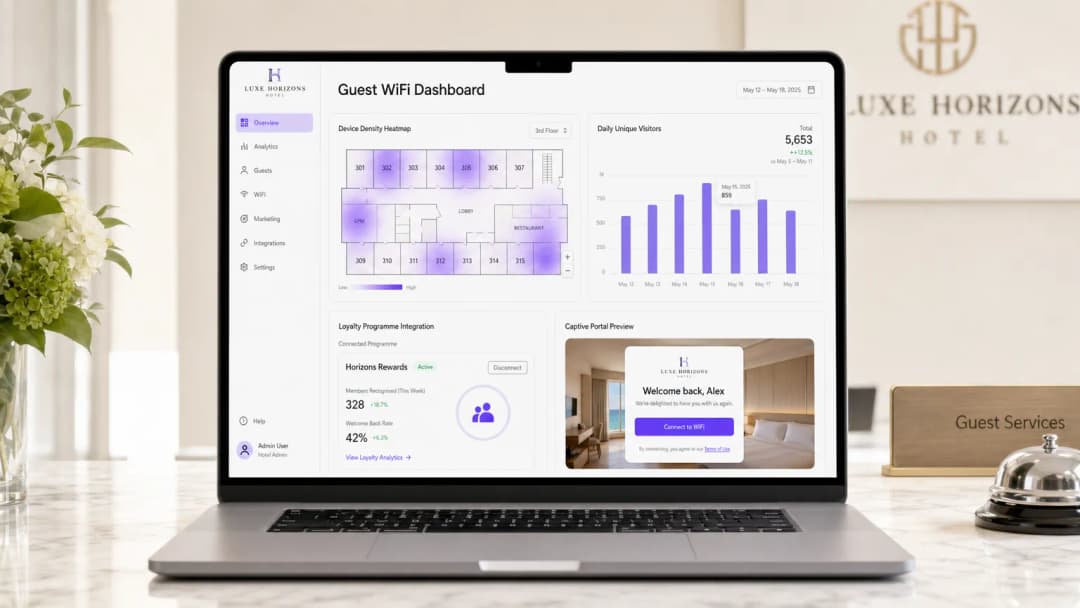
कार्यकारी सारांश
आधुनिक होटल संचालन के लिए, गेस्ट WiFi एक बुनियादी सुविधा से बढ़कर राजस्व, निष्ठा और परिचालन दक्षता को बढ़ावा देने वाले एक महत्वपूर्ण बुनियादी ढांचा स्तर के रूप में विकसित हुआ है। यह गाइड विस्तार से बताती है कि कैसे WiFi के माध्यम से होटल ग्राहक अनुभव को बेहतर बनाया जाए, जिससे निष्क्रिय कनेक्टिविटी को एक सक्रिय जुड़ाव चैनल में बदला जा सके। हम व्यक्तिगत स्वागत, लक्षित कमरा अपग्रेड, निर्बाध निष्ठा कार्यक्रम एकीकरण और स्वचालित प्रस्थान सर्वेक्षणों को प्राप्त करने के लिए आवश्यक तकनीकी संरचना का पता लगाते हैं।
Purple जैसे एंटरप्राइज-ग्रेड प्लेटफॉर्म का लाभ उठाकर, IT लीडर्स साधारण बैंडविड्थ प्रदान करने से आगे बढ़कर मापने योग्य व्यावसायिक मूल्य प्रदान कर सकते हैं। यह संदर्भ आज के जुड़े हुए यात्रियों की जरूरतों को पूरा करने वाले मजबूत Guest WiFi और WiFi Analytics समाधानों को लागू करने के लिए आवश्यक सुरक्षा मानकों, परिनियोजन विचारों और एकीकरण पैटर्न को कवर करता है, साथ ही GDPR और PCI-DSS सहित वैश्विक डेटा सुरक्षा नियमों का अनुपालन सुनिश्चित करता है।
तकनीकी गहन विश्लेषण: व्यक्तिगत संरचना
सार्थक वैयक्तिकरण प्राप्त करने के लिए, WiFi बुनियादी ढांचे को होटल के व्यापक तकनीकी स्टैक के साथ निर्बाध रूप से एकीकृत होना चाहिए, विशेष रूप से प्रॉपर्टी मैनेजमेंट系统 (PMS) और कस्टमर रिलेशनशिप मैनेजमेंट (CRM) प्लेटफॉर्म के साथ। यह खंड मुख्य आर्किटेक्चर घटकों और उनके मिलकर काम करने के तरीके को कवर करेगा।
पहचान परत के रूप में कैप्टिव पोर्टल
कैप्टिव पोर्टल प्राथमिक प्रमाणीकरण और डेटा कैप्चर तंत्र के रूप में कार्य करता है। आधुनिक परिनियोजन अब सामान्य प्री-शेयर्ड की (PSK) का उपयोग नहीं करते हैं, बल्कि परिष्कृत स्प्लैश पेजों का लाभ उठाते हैं जो कई प्रमाणीकरण विधियों का समर्थन करते हैं, जिसमें सोशल लॉगिन (Google, Facebook या Apple के OAuth 2.0 के माध्यम से), ईमेल पंजीकरण और सीधे निष्ठा कार्यक्रम क्रेडेंशियल प्रमाणीकरण शामिल हैं। यह परत उपयोगकर्ताओं की पहचान करने, GDPR के अनुच्छेद 7 के अनुसार आवश्यक सहमति प्राप्त करने और पहचान संदर्भ को डाउनस्ट्रीम एनालिटिक्स इंजन को पास करने के लिए जिम्मेदार है।
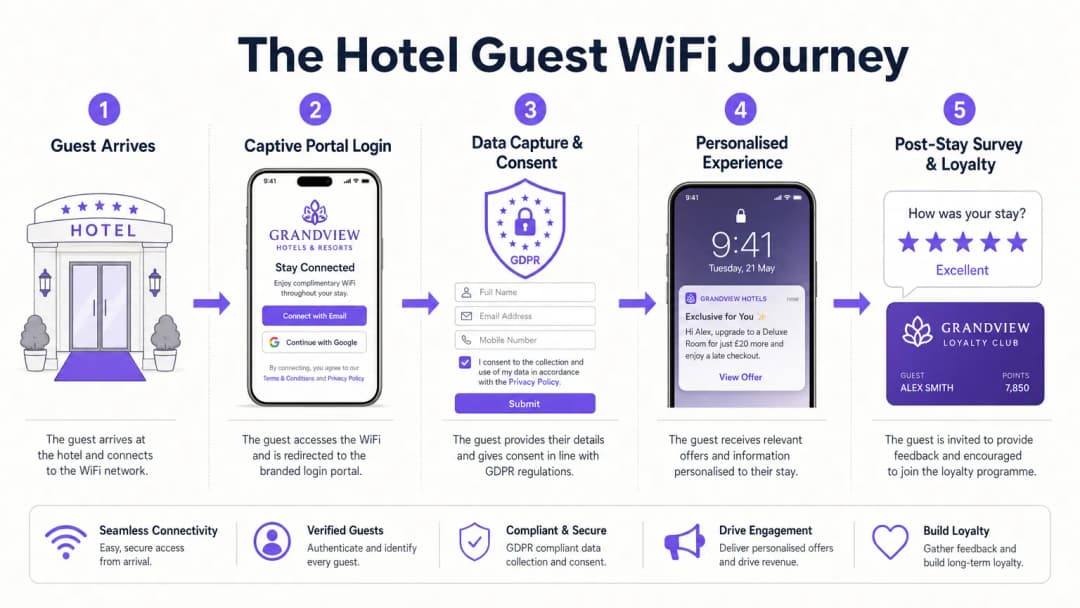
SSID आर्किटेक्चर को चिंताओं के पृथक्करण के लिए डिज़ाइन किया जाना चाहिए। एक गेस्ट-फेसिंग SSID सभी अप्रमाणित ट्रैफ़िक को DNS इंटरसेप्शन के माध्यम से कैप्टिव पोर्टल कंट्रोलर पर रूट करता है। मेहमानों द्वारा लॉगिन प्रक्रिया पूरी करने से पहले सभी आवश्यक बाहरी डोमेन—सोशल लॉगिन प्रदाता, CDN-होस्टेड पोर्टल एसेट और किसी भी तृतीय-पक्ष प्रमाणीकरण सेवाओं तक पहुंच की अनुमति देने के लिए walled garden कॉन्फ़िगरेशन को सावधानीपूर्वक बनाए रखा जाना चाहिए। walled garden को बनाए रखने में विफलता प्रोडक्शन परिनियोजन में कैप्टिव पोर्टल विफलताओं का सबसे आम कारण है。
प्रॉपर्टी मैनेजमेंट सिस्टम के साथ एकीकरण
WiFi Analytics प्लेटफॉर्म का वास्तविक मूल्य तब अनलॉक होता है जब इसे PMS के साथ एकीकृत किया जाता है। जब कोई मेहमान कनेक्ट होता है, तो सिस्टम उनकी प्रमाणित पहचान (ईमेल या निष्ठा संख्या) का उपयोग करके PMS से उनकी वर्तमान बुकिंग स्थिति, कमरा संख्या और निष्ठा स्तर को वास्तविक समय में प्राप्त करने के लिए क्वेरी कर सकता है। यह डेटा एक्सचेंज कैप्टिव पोर्टल को गतिशील रूप से व्यक्तिगत सामग्री प्रस्तुत करने में सक्षम बनाता है: नाम से मेहमानों का स्वागत करने वाला संदेश, वर्तमान निष्ठा अंक शेष, या वर्तमान बुकिंग से संबंधित लक्षित अपग्रेड ऑफ़र।
एकीकरण आमतौर पर सफल प्रमाणीकरण पर WiFi एनालिटिक्स प्लेटफॉर्म से PMS पर REST API कॉल को ट्रिगर करके प्राप्त किया जाता है। फिर, PMS प्रतिक्रिया पेलोड का उपयोग गतिशील टेम्पलेट इंजन को भरने के लिए किया जाता है, जो संबंधित स्प्लैश पेज संस्करण को प्रस्तुत करता है। इस API कॉल की लेटेंसी एक महत्वपूर्ण प्रदर्शन विचार है; उपयोगकर्ता अनुभव को प्रभावित करने से बचने के लिए कॉल को कुछ सौ मिलीसेकंड के भीतर पूरा होना चाहिए।

उपस्थिति विश्लेषण और स्थानिक बुद्धिमत्ता
एक बार प्रमाणित होने के बाद, एनालिटिक्स इंजन उपस्थिति डेटा को संसाधित करना शुरू कर देता है। कई एक्सेस पॉइंट्स से सिग्नल की ताकत (RSSI) का विश्लेषण करके, सिस्टम परिसर के भीतर रहने के समय और आवाजाही के पैटर्न को निर्धारित कर सकता है。 यह स्थानिक बुद्धिमत्ता यह समझने के लिए महत्वपूर्ण है कि मेहमान होटल की सुविधाओं—लॉबी से लेकर रेस्तरां और स्पा तक—का उपयोग कैसे करते हैं। Purple, Connect लाइसेंस के तहत OpenRoaming जैसी सेवाओं के लिए एक मुफ्त पहचान प्रदाता के रूप में, इस प्रक्रिया को और सरल बनाता है, जिससे लौटने वाले मेहमानों को बिना पुन: प्रमाणीकरण के विभिन्न संपत्तियों के बीच सुरक्षित और स्वचालित रूप से लॉग इन करने की अनुमति मिलती है।
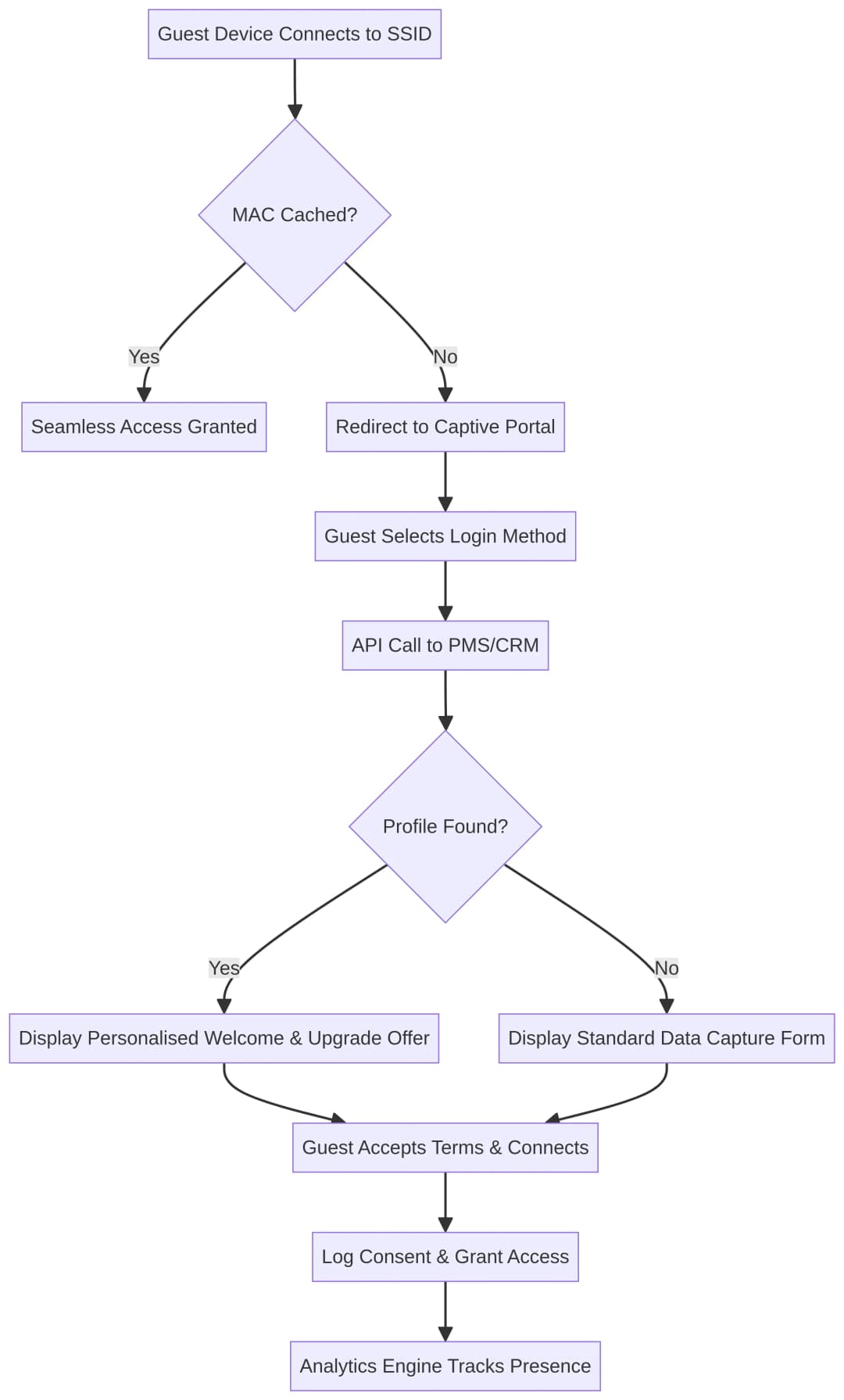
नीचे दिया गया आरेख प्रमाणीकरण और वैयक्तिकरण निर्णय प्रवाह को प्रदर्शित करता है:
कार्यान्वयन गाइड: चरण-दर-चरण परिनियोजन
व्यापक WiFi जुड़ाव समाधान को लागू करने के लिए IT, मार्केटिंग और संचालन टीमों के बीच सावधानीपूर्वक योजना और समन्वय की आवश्यकता होती है। निम्नलिखित चरण एक संरचित परिनियोजन रोडमैप प्रदान करते हैं।
चरण 1: बुनियादी ढांचा तत्परता और नेटवर्क आर्किटेक्चर
कैप्टिव पोर्टल को लागू करने से पहले, सुनिश्चित करें कि अंतर्निहित वायरलेस बुनियादी ढांचा अपेक्षित डिवाइस घनत्व और थ्रूपुट आवश्यकताओं का समर्थन करने में सक्षम है।
| विचार | सिफारिश | मानक |
|---|---|---|
| SSID रणनीति | कैप्टिव पोर्टल के साथ एकल गेस्ट SSID का उपयोग करें; 802.1X के साथ अलग कॉर्पोरेट SSID | IEEE 802.11i |
| नेटवर्क विभाजन | गेस्ट ट्रैफ़िक के लिए समर्पित VLAN, कॉर्पोरेट और POS नेटवर्क से अलग | PCI-DSS आवश्यकता 1 |
| AP घनत्व | RF साइट सर्वेक्षण आयोजित करें; पूरे परिसर में न्यूनतम -65 dBm RSSI का लक्ष्य रखें | IEEE 802.11k/v/r |
| सुरक्षा प्रोटोकॉल | जहां डिवाइस संगतता अनुमति दे, गेस्ट SSID के लिए WPA3-SAE का उपयोग करें | IEEE 802.11ax |
| थ्रूपुट बेसलाइन | उच्च-घनत्व वाले क्षेत्रों में प्रति समवर्ती डिवाइस न्यूनतम 5 Mbps | विक्रेता-तटस्थ सर्वोत्तम अभ्यास |
सुनिश्चित करें कि गेस्ट ट्रैफ़िक को समर्पित VLAN के माध्यम से कॉर्पोरेट और परिचालन नेटवर्क से कड़ाई से अलग किया गया है। यह केवल एक सर्वोत्तम अभ्यास नहीं है; यदि कोई भी भुगतान प्रणाली उसी भौतिक बुनियादी ढांचे पर चलती है, तो PCI-DSS के तहत यह एक अनिवार्य नियंत्रण है।
चरण 2: कैप्टिव पोर्टल कॉन्फ़िगरेशन और ब्रांडिंग
कैप्टिव पोर्टल अक्सर परिसर में मेहमानों का पहला डिजिटल संपर्क बिंदु होता है। इसका डिज़ाइन और प्रदर्शन सीधे होटल ब्रांड के बारे में मेहमानों की धारणा को प्रभावित करता है।
घर्षण और डेटा कैप्चर को संतुलित करने के लिए प्रमाणीकरण विकल्पों को कॉन्फ़िगर करें। ईमेल और सोशल लॉगिन मानक हैं, लेकिन सीधे निष्ठा कार्यक्रम प्रमाणीकरण को एकीकृत करना उच्चतम मूल्य का पहचान डेटा प्रदान करता है। लौटने वाले बनाम नए मेहमान की स्थिति, दिन के समय, या विशिष्ट स्थान जैसे चरों के आधार पर अलग-अलग स्प्लैश पेज प्रदर्शित करने के लिए गतिशील सामग्री नियम लागू करें। उदाहरण के लिए, स्पा में कनेक्ट होने वाले मेहमान को लॉबी में कनेक्ट होने वाले मेहमान की तुलना में एक अलग स्वागत अनुभव दिखना चाहिए।
सभी डेटा कैप्चर को GDPR का अनुपालन करना चाहिए। मार्केटिंग संचार के लिए स्पष्ट, बारीक ऑप्ट-इन चेकबॉक्स लागू करें और सुनिश्चित करें कि सहमति लॉग एक छेड़छाड़-रोधी ऑडिट ट्रेल में लिखे गए हैं। प्रसंस्करण के कानूनी आधार को स्प्लैश पेज पर स्पष्ट रूप से बताया जाना चाहिए।
चरण 3: PMS और CRM एकीकरण
व्यक्तिगत स्वागत और कमरा अपग्रेड प्रदान करने के लिए यह सबसे महत्वपूर्ण कदम है।
WiFi प्लेटफॉर्म और PMS तथा CRM के बीच सुरक्षित API कनेक्शन स्थापित करें। परिभाषित करें कि कैप्टिव पोर्टल के फ़ील्ड CRM में ग्राहक प्रोफाइल से कैसे मैप होते हैं और स्वचालित ट्रिगर सेट करें। उदाहरण के लिए, यदि कोई मेहमान प्रमाणित होता है和 PMS पुष्टि करता है कि वे एक मानक कमरे में रह रहे हैं और सुइट उपलब्ध हैं, तो एक सशुल्क अपग्रेड की पेशकश करने वाला कैप्टिव पोर्टल इंटरस्टिशियल विज्ञापन ट्रिगर करें। रूपांतरण को बढ़ावा देने के लिए इस ऑफ़र के साथ एक स्पष्ट कॉल-टू-एक्शन और सीमित समय का प्रोत्साहन होना चाहिए।
चरण 4: प्रस्थान के बाद सर्वेक्षण स्वचालन
मेहमानों की उपस्थिति की निगरानी के लिए एनालिटिक्स प्लेटफॉर्म को कॉन्फ़िगर करें। जब किसी मेहमान का डिवाइस एक निर्दिष्ट समय अवधि (आमतौर पर 12-24 घंटे, जो चेकआउट का संकेत देता है) के लिए नेटवर्क पर नहीं देखा जाता है, तो ईमेल मार्केटिंग प्लेटफॉर्म पर एक webhook ट्रिगर करें। यह webhook प्रस्थान के बाद NPS या CSAT सर्वेक्षण ईमेल को ट्रिगर करता है, जिससे यह सुनिश्चित होता है कि इसे तब भेजा जाए जब अनुभव अभी भी नया हो, जिससे प्रतिक्रिया दर अधिकतम हो सके।
होटल WiFi परिनियोजन के लिए सर्वोत्तम अभ्यास
निम्नलिखित सिफारिशें होटल उद्योग WiFi परिनियोजन के लिए उद्योग-मानक दृष्टिकोण को दर्शाती हैं और रिटेल , स्वास्थ्य सेवा , और परिवहन सहित कई प्रकार के परिसरों पर लागू होती हैं।
लौटने वाले मेहमानों के लिए घर्षण-मुक्त लॉगिन को प्राथमिकता दें। लौटने वाले मेहमानों को बिना क्रेडेंशियल दोबारा दर्ज किए स्वचालित रूप से प्रमाणित करने के लिए MAC एड्रेस कैशिंग या Passpoint (Hotspot 2.0 / IEEE 802.11u) जैसे मानकों का लाभ उठाएं। तीन रातों के लिए रुकने वाले मेहमान को केवल एक बार कैप्टिव पोर्टल का सामना करना चाहिए।
स्थान-आधारित विश्लेषण का जिम्मेदारी से लाभ उठाएं। उपस्थिति विश्लेषण डेटा शक्तिशाली है, लेकिन इसे सावधानी से संभाला जाना चाहिए। सुनिश्चित करें कि आपकी डेटा प्रतिधारण नीति स्पष्ट रूप से परिभाषित है और मेहमानों को कैप्टिव पोर्टल से जुड़ी गोपनीयता नीति में उपस्थिति ट्रैकिंग के बारे में सूचित किया गया है।
प्रस्थान के बाद के जुड़ाव को स्वचालित करें। सर्वेक्षण ईमेल ट्रिगर करने के लिए मैन्युअल PMS निर्यात पर निर्भर न रहें। समयबद्धता और सटीकता सुनिश्चित करने के लिए नेटवर्क उपस्थिति डेटा का उपयोग ट्रिगर के रूप में करें।
सुनिश्चित करें कि कोई भी भुगतान प्रक्रिया PCI-DSS के अनुरूप हो। यदि कैप्टिव पोर्टल प्रीमियम बैंडविड्थ स्तरों या अपग्रेड खरीद के लिए भुगतान संसाधित करता है, तो पूरी भुगतान प्रक्रिया PCI-DSS के अनुरूप होनी चाहिए। अपने स्वयं के बुनियादी ढांचे पर कार्ड डेटा को संसाधित करने के बजाय प्रमाणित भुगतान गेटवे से टोकनयुक्त होस्ट किए गए भुगतान पृष्ठों का उपयोग करें।
WiFi को निष्ठा रणनीति के साथ संरेखित करें। मेहमानों को अपने निष्ठा क्रेडेंशियल्स का उपयोग करके WiFi प्रमाणित करने की अनुमति दें। यह संपत्ति पर डिजिटल व्यवहार और निष्ठा प्रोफ़ाइल के बीच एक सीधा, स्थायी संबंध बनाता है, जिससे भविष्य के प्रवास में समृद्ध वैयक्तिकरण सक्षम होता है।
एंटरप्राइज नेटवर्क विकास के बारे में अधिक पृष्ठभूमि जानकारी के लिए, होटल WiFi: होटल व्यवसायियों के लिए पूर्ण गाइड और WiFi para Hoteles: La Guía Completa para Hoteleros देखें।
समस्या निवारण और जोखिम शमन
कैप्टिव पोर्टल प्रदर्शित नहीं हो रहा है
लक्षण: मेहमान SSID से जुड़ते हैं लेकिन स्प्लैश पेज दिखाई नहीं देता है, या असामान्य रूप से प्रदर्शित होता है।
मूल कारण: सबसे आम कारण गलत तरीके से कॉन्फ़िगर किया गया walled garden, विफल DNS इंटरसेप्शन, या डिवाइस-स्तरीय सुरक्षा विशेषताएं हैं जो पोर्टल को ट्रिगर करने वाले HTTP रीडायरेक्ट को ब्लॉक करती हैं।
शमन: यह सुनिश्चित करने के लिए कि सभी आवश्यक डोमेन श्वेतसूची में हैं, नियमित रूप से walled garden का ऑडिट करें। फ्रंट डेस्क कर्मचारियों को प्रशिक्षित करें कि वे मेहमानों को गैर-HTTPS URL पर नेविगेट करके मैन्युअल रूप से पोर्टल को ट्रिगर करने के लिए निर्देशित करें। एनालिटिक्स डैशबोर्ड के माध्यम से पोर्टल रेंडरिंग सफलता दर की निगरानी करें और असामान्य गिरावट के लिए अलर्ट सेट करें।
कम मार्केटिंग ऑप्ट-इन दरें
लक्षण: WiFi कनेक्शन दरें उच्च हैं, लेकिन कार्रवाई योग्य ईमेल पते या मार्केटिंग सहमति प्राप्त करने की दर कम है।
मूल कारण: ऑप्ट-इन के लिए मूल्य प्रस्ताव स्पष्ट नहीं है, या फॉर्म बहुत लंबा और बोझिल है।
शमन: प्रोग्रेसिव प्रोफाइलिंग लागू करें। बुनियादी पहुंच के लिए घर्षण-मुक्त वन-क्लिक सोशल लॉगिन प्रदान करें, और फिर विस्तारित प्रोफ़ाइल को पूरा करने के बदले में एक स्पष्ट मूल्य विनिमय—उच्च बैंडविड्थ, मानार्थ पेय, या तत्काल निष्ठा अंक—प्रदान करें।
गलत उपस्थिति विश्लेषण
लक्षण: हीटमैप अस्थिर या अतार्किक मेहमानों की आवाजाही के पैटर्न दिखाते हैं जो वास्तविक अवलोकनों के विपरीत हैं।
मूल कारण: अपर्याप्त AP घनत्व, खराब AP प्लेसमेंट, क्षेत्रों के बीच RF सिग्नल का रिसाव, या एनालिटिक्स प्लेटफॉर्म के अंशांकन की कमी।
शमन: नियमित रूप से RF साइट सर्वेक्षण आयोजित करें। सुनिश्चित करें कि AP परिनियोजन घनत्व कवरेज और स्थान विश्लेषण दोनों आवश्यकताओं को पूरा करता है। सटीक फ्लोर प्लान और भौतिक पैमाने के मापों का उपयोग करके एनालिटिक्स प्लेटफॉर्म को कैलिब्रेट करें।
MAC रैंडमाइजेशन मेहमानों की पहचान को प्रभावित कर रहा है
लक्षण: सिस्टम लौटने वाले मेहमानों को पहचानने में विफल रहता है, जिसके परिणामस्वरूप ज्ञात निष्ठा सदस्यों को एक सामान्य पोर्टल अनुभव मिलता है।
मूल कारण: आधुनिक iOS और Android डिवाइस प्रति-नेटवर्क यादृच्छिक MAC पतों का उपयोग करते हैं, जो यात्राओं के बीच बदल सकते हैं।
शमन: पहचान रणनीति को हार्डवेयर परत (MAC पता) से पहचान परत पर स्थानांतरित करें। मेहमानों को कैप्टिव पोर्टल पर एक स्थायी पहचानकर्ता (ईमेल या निष्ठा संख्या) का उपयोग करके प्रमाणित करने की आवश्यकता है। इस पहचान को CRM में संग्रहीत करें और इसे सभी वैयक्तिकरण तर्क के लिए प्राथमिक कुंजी के रूप में उपयोग करें।
ROI और व्यावसायिक प्रभाव
एक परिष्कृत WiFi एनालिटिक्स प्लेटफॉर्म को लागू करना लागत केंद्र को राजस्व उत्पन्न करने वाली संपत्ति में बदल देता है। व्यावसायिक प्रभाव को कई आयामों में मापा जा सकता है।
| मीट्रिक | विशिष्ट बेंचमार्क | WiFi Analytics प्लेटफॉर्म के साथ | वृद्धि |
|---|---|---|---|
| निष्ठा कार्यक्रम पंजीकरण दर | 5-8% मेहमान (फ्रंट डेस्क) | 20-35% जुड़े हुए मेहमान | 3-4 गुना वृद्धि |
| कमरा अपग्रेड रूपांतरण दर | 2-3% (फ्रंट डेस्क अपसेल) | 8-15% (लक्षित पोर्टल ऑफ़र) | 3-5 गुना वृद्धि |
| प्रस्थान के बाद सर्वेक्षण प्रतिक्रिया दर | 8-12% (देरी से ईमेल) | 25-40% (घंटों के भीतर ट्रिगर) | 2-3 गुना वृद्धि |
| अतिथि संतुष्टि स्कोर (NPS) | बेंचमार्क | +10-15 NPS अंक | मापने योग्य वृद्धि |
ये आंकड़े सांकेतिक हैं और संपत्ति के प्रकार, मेहमानों की जनसांख्यिकी और लागू किए गए वैयक्तिकरण तर्क की गुणवत्ता के आधार पर भिन्न होंगे। ROI का मुख्य चालक PMS और CRM एकीकरण की गुणवत्ता है; एक खराब एकीकृत प्रणाली जो लौटने वाले और नए मेहमानों के बीच अंतर नहीं कर सकती है, काफी कम रिटर्न देगी।
एंटरप्राइज WiFi ROI और परिनियोजन विचारों के बारे में अधिक पृष्ठभूमि जानकारी के लिए, लीज्ड लाइन क्या है? समर्पित व्यावसायिक इंटरनेट और ऑटो में WiFi: 2026 के लिए पूर्ण एंटरप्राइज गाइड देखें।
मुख्य परिभाषाएं
Captive Portal
एक वेब पेज जिसे सार्वजनिक-पहुंच नेटवर्क के उपयोगकर्ता को पूर्ण इंटरनेट एक्सेस दिए जाने से पहले देखने और बातचीत करने के लिए बाध्य किया जाता है। नेटवर्क परत पर DNS इंटरसेप्शन या HTTP रीडायरेक्ट के माध्यम से कार्यान्वित किया जाता है।
यह IT के लिए सेवा की शर्तों को लागू करने, मेहमानों की पहचान का डेटा कैप्चर करने, लक्षित मार्केटिंग संदेश प्रस्तुत करने और GDPR सहमति लॉग करने का प्राथमिक तंत्र है। इसका डिज़ाइन और प्रदर्शन सीधे होटल के बारे में मेहमान की पहली डिजिटल छाप को प्रभावित करता है।
Walled Garden
एक नेटवर्क एक्सेस कंट्रोल तंत्र जो अप्रमाणित उपयोगकर्ताओं को कैप्टिव पोर्टल प्रमाणीकरण प्रवाह को पूरा करने से पहले पूर्व-अनुमोदित डोमेन के सीमित सेट तक प्रतिबंधित करता है।
मेहमान द्वारा प्रमाणित होने से पहले उपकरणों को सोशल लॉगिन प्रदाताओं (Google, Facebook, Apple) और CDN-होस्टेड पोर्टल संपत्तियों तक पहुंचने की अनुमति देने के लिए महत्वपूर्ण है। गलत कॉन्फ़िगरेशन प्रोडक्शन में कैप्टिव पोर्टल विफलताओं का सबसे आम कारण है।
MAC Randomization
आधुनिक ऑपरेटिंग सिस्टम (iOS 14+, Android 10+) में एक गोपनीयता विशेषता जो प्रत्येक WiFi नेटवर्क के लिए एक अद्वितीय, यादृच्छिक MAC पता उत्पन्न करती है जिससे डिवाइस कनेक्ट होता है, जिससे दीर्घकालिक क्रॉस-सेशन डिवाइस ट्रैकिंग को रोका जा सके।
IT टीमों को प्रमाणीकरण प्रवाह डिज़ाइन करना चाहिए जो दीर्घकालिक अतिथि प्रोफाइलिंग और पहचान के लिए स्थायी MAC पतों के बजाय कैप्चर की गई पहचान (ईमेल या निष्ठा ID) पर भरोसा करते हैं।
Passpoint / Hotspot 2.0
एक IEEE 802.11u-आधारित मानक जो उपकरणों को कैप्टिव पोर्टल के साथ मैन्युअल बातचीत की आवश्यकता के बिना, पूर्व-प्रावधानित क्रेडेंशियल्स का उपयोग करके स्वचालित रूप से और सुरक्षित रूप से WiFi नेटवर्क से कनेक्ट करने में सक्षम बनाता है।
लौटने वाले मेहमानों या निष्ठा सदस्यों के लिए एक निर्बाध, सेलुलर-जैसे रोमिंग अनुभव प्रदान करने के लिए उपयोग किया जाता है, जो बाद की यात्राओं और कई संपत्तियों में कैप्टिव पोर्टल घर्षण को समाप्त करता है।
Property Management System (PMS)
आरक्षण, कमरा आवंटन, चेक-इन और चेक-आउट, बिलिंग और अतिथि प्रोफाइल प्रबंधित करने के लिए होटलों द्वारा उपयोग किया जाने वाला मुख्य सॉफ्टवेयर अनुप्रयोग। सामान्य प्लेटफार्मों में Oracle OPERA, Mews और Cloudbeds शामिल हैं।
लाइव आरक्षण डेटा, निष्ठा स्तर और कमरे के प्रकार के आधार पर वास्तविक समय, व्यक्तिगत कैप्टिव पोर्टल अनुभवों को सक्षम करने के लिए REST API के माध्यम से WiFi एनालिटिक्स प्लेटफॉर्म को PMS के साथ एकीकृत करना आवश्यक है।
Presence Analytics
कई एक्सेस पॉइंट्स से RSSI (प्राप्त सिग्नल शक्ति संकेतक) डेटा का विश्लेषण करके एक भौतिक स्थान के भीतर वायरलेस उपकरणों के स्थान और आवाजाही का पता लगाने के लिए WiFi बुनियादी ढांचे का उपयोग। ड्वेल टाइम, फुटफॉल और ज़ोन-टू-ज़ोन मूवमेंट सहित मीट्रिक प्रदान करता है।
स्थल संचालन निदेशकों को इस बारे में कार्रवाई योग्य डेटा प्रदान करता है कि मेहमान होटल की सुविधाओं का उपयोग कैसे करते हैं, स्टाफिंग निर्णयों, स्थान लेआउट अनुकूलन और लक्षित मार्केटिंग संचार के समय की जानकारी देते हैं।
VLAN Segmentation
ट्रैफ़िक प्रवाह को अलग करने और नेटवर्क परत पर एक्सेस कंट्रोल नीतियों को लागू करने के लिए एक एकल भौतिक नेटवर्क को कई तार्किक नेटवर्क (वर्चुअल लोकल एरिया नेटवर्क) में विभाजित करने का अभ्यास।
यह सुनिश्चित करने के लिए एक अनिवार्य सुरक्षा नियंत्रण कि गेस्ट WiFi ट्रैफ़िक कॉर्पोरेट सिस्टम, भुगतान कार्ड नेटवर्क और परिचालन बुनियादी ढांचे से पूरी तरह से अलग है। किसी भी ऐसे वातावरण के लिए PCI-DSS आवश्यकता 1 के तहत आवश्यक है जहां भुगतान प्रणालियां भौतिक नेटवर्क बुनियादी ढांचे को साझा करती हैं।
OpenRoaming
एक वायरलेस ब्रॉडबैंड एलायंस (WBA) फेडरेशन मानक जो उपकरणों को एकल पहचान क्रेडेंशियल का उपयोग करके भाग लेने वाले WiFi नेटवर्क से स्वचालित रूप से और सुरक्षित रूप से कनेक्ट करने में सक्षम बनाता है, जो स्थलों और ऑपरेटरों में एक निर्बाध रोमिंग अनुभव प्रदान करता है।
Connect लाइसेंस के तहत OpenRoaming के लिए एक मुफ्त पहचान प्रदाता के रूप में Purple की भूमिका मेहमानों के लिए कनेक्टिविटी को सरल बनाती है, जिससे कई संपत्तियों या भाग लेने वाले स्थलों पर लॉगिन घर्षण कम होता है। लगातार यात्रा करने वाले व्यावसायिक यात्रियों के लिए विशेष रूप से मूल्यवान।
Progressive Profiling
एक डेटा कैप्चर रणनीति जो एक ही फॉर्म सबमिशन में सभी डेटा फ़ील्ड को पूरा करने की आवश्यकता के बजाय कई इंटरैक्शन में वृद्धिशील रूप से अतिथि जानकारी एकत्र करती है।
समृद्ध अतिथि डेटा के लिए मार्केटिंग की इच्छा और घर्षण-मुक्त ऑनबोर्डिंग के लिए संचालन की आवश्यकता के बीच तनाव को हल करता है। मेहमान पहले कनेक्शन पर बुनियादी जानकारी प्रदान करते हैं और उन्हें ठोस लाभों के बदले समय के साथ अतिरिक्त डेटा प्रदान करने के लिए प्रोत्साहित किया जाता है।
हल किए गए उदाहरण
एक 300 कमरों वाला बिजनेस होटल अपने नए निष्ठा कार्यक्रम के लिए साइन-अप बढ़ाना चाहता है। वर्तमान में, मेहमान एक सामान्य PSK के माध्यम से कनेक्ट होते हैं और फ्रंट डेस्क कर्मचारी व्यस्त चेक-इन अवधि के दौरान साइन-अप लक्ष्यों को पूरा करने के लिए संघर्ष कर रहे हैं। होटल का CRM Salesforce है और PMS Oracle OPERA है।
- PSK को एक ओपन SSID से बदलें और Purple के Guest WiFi प्लेटफॉर्म के माध्यम से एक कैप्टिव पोर्टल तैनात करें।
- टियर बैंडविड्थ की पेशकश करने के लिए कैप्टिव पोर्टल को कॉन्फ़िगर करें: ईमेल लॉगिन के लिए बुनियादी गति (5 Mbps), और सीधे स्प्लैश पेज पर निष्ठा कार्यक्रम में शामिल होने के बदले में प्रीमियम हाई-स्पीड एक्सेस (25 Mbps)।
- नए निष्ठा खाते को स्वचालित रूप से प्रावधानित करने और साइन-अप पर तुरंत मेहमान के पॉइंट बैलेंस के साथ एक स्वागत ईमेल भेजने के लिए WiFi प्लेटफॉर्म के API को Salesforce CRM के साथ एकीकृत करें।
- एक द्वितीयक ट्रिगर कॉन्फ़िगर करें: यदि मेहमान का ईमेल पहले से ही Salesforce में है (लौटने वाला मेहमान), तो साइन-अप फॉर्म को छोड़ दें और इसके बजाय उनके वर्तमान पॉइंट बैलेंस के साथ एक व्यक्तिगत स्वागत प्रस्तुत करें।
- WiFi एनालिटिक्स डैशबोर्ड के माध्यम से रूपांतरण दरों की निगरानी करें और साइन-अप दर को अनुकूलित करने के लिए विभिन्न मूल्य प्रस्तावों (बैंडविड्थ बनाम F&B वाउचर) का A/B परीक्षण करें।
5 संपत्तियों वाला एक लक्जरी रिसॉर्ट प्रस्थान के बाद स्वचालित NPS सर्वेक्षण भेजना चाहता है। उनकी वर्तमान प्रक्रिया PMS से मैन्युअल दैनिक निर्यात पर निर्भर करती है, जिसके परिणामस्वरूप चेकआउट के 3-4 दिन बाद सर्वेक्षण पहुंचते हैं। प्रतिक्रिया दरें 8% से कम हैं। वे 25%+ प्रतिक्रिया दर प्राप्त करना चाहते हैं।
- एक WiFi एनालिटिक्स प्लेटफॉर्म तैनात करें जो सभी 5 संपत्तियों में एक्सेस पॉइंट्स के साथ डिवाइस एसोसिएशन के माध्यम से मेहमानों की उपस्थिति को ट्रैक करता है।
- एनालिटिक्स इंजन के भीतर एक 'चेकआउट ट्रिगर' कॉन्फ़िगर करें: जब किसी मेहमान का डिवाइस 18 घंटे तक नेटवर्क पर नहीं देखा जाता है (दिन के दौरान संपत्ति छोड़ने वाले मेहमानों से गलत ट्रिगर से बचने के लिए कैलिब्रेट की गई सीमा), तो सिस्टम प्रोफ़ाइल को 'चेक आउट' के रूप में फ़्लैग करता है।
- इस घटना को ईमेल मार्केटिंग प्लेटफॉर्म (जैसे, Mailchimp या Braze) पर स्वचालित रूप से पुश करने के लिए एक webhook का उपयोग करें, जिससे अनुमानित प्रस्थान के 2-4 घंटों के भीतर NPS सर्वेक्षण ईमेल ट्रिगर हो सके।
- CRM से प्राप्त मेहमान के नाम, संपत्ति के नाम और ठहरने की तारीखों के साथ सर्वेक्षण ईमेल को व्यक्तिगत बनाएं।
- प्रति संपत्ति और प्रति सर्वेक्षण ट्रिगर देरी की प्रतिक्रिया दरों की निगरानी के लिए एक डैशबोर्ड सेट करें, जिससे ट्रिगर सीमा के निरंतर अनुकूलन की अनुमति मिल सके।
अभ्यास प्रश्न
Q1. आप 10 संपत्तियों वाली एक होटल श्रृंखला के लिए एक नया कैप्टिव पोर्टल तैनात कर रहे हैं। मार्केटिंग टीम हर लॉगिन पर व्यापक अतिथि डेटा कैप्चर करने के लिए 10-फ़ील्ड का फॉर्म शामिल करना चाहती है, जबकि संचालन टीम शिकायतों को कम करने के लिए घर्षण-मुक्त 1-क्लिक लॉगिन चाहती है। आप एक ऐसे समाधान का निर्माण कैसे करते हैं जो किसी भी लक्ष्य से समझौता किए बिना दोनों आवश्यकताओं को पूरा करता है?
संकेत: प्रोग्रेसिव प्रोफाइलिंग और मूल्य विनिमय सिद्धांत पर विचार करें। इस बारे में सोचें कि मेहमान को उनके द्वारा प्रदान किए गए डेटा के प्रत्येक टुकड़े के बदले में क्या मिलता है।
मॉडल उत्तर देखें
टियर एक्सेस के साथ प्रोग्रेसिव प्रोफाइलिंग लागू करें। मानक गति पर बुनियादी, समय-सीमित WiFi पहुंच के लिए घर्षण-मुक्त वन-क्लिक सोशल लॉगिन (Google या Apple) या साधारण ईमेल कैप्चर की पेशकश करने के लिए कैप्टिव पोर्टल को कॉन्फ़िगर करें। विस्तारित 10-फ़ील्ड प्रोफ़ाइल को पूरा करने के बदले में एक स्पष्ट मूल्य विनिमय — प्रीमियम बैंडविड्थ टियर, एक मानार्थ F&B वाउचर, या तत्काल निष्ठा अंक — की पेशकश करने वाली एक अलग, वैकल्पिक 'अपनी प्रोफ़ाइल पूरी करें' स्क्रीन प्रस्तुत करें। यह दृष्टिकोण प्रत्येक कनेक्शन के लिए घर्षण पैदा किए बिना प्रेरित मेहमानों से मार्केटिंग के लिए आवश्यक डेटा कैप्चर करता है। रूपांतरण को कम करने वाले कम-मूल्य वाले डेटा बिंदुओं की पहचान करने और उन्हें हटाने के लिए प्रति फ़ील्ड पूर्णता दरों को ट्रैक करें।
Q2. 250 कमरों वाले होटल में एक पायलट परिनियोजन के दौरान, एनालिटिक्स इंजन रिपोर्ट करता है कि मेहमान लॉबी में औसतन 4 घंटे बिता रहे हैं, जो संचालन टीम द्वारा किए गए भौतिक अवलोकनों के विपरीत है, जो लॉबी में बिताए गए औसत समय का अनुमान 30 मिनट से कम लगाते हैं। सबसे संभावित तकनीकी कारण क्या है और आप इसे कैसे हल करते हैं?
संकेत: इस बारे में सोचें कि सक्रिय रूप से उपयोग में न होने पर डिवाइस कैसे व्यवहार करते हैं, सिस्टम 'उपस्थिति' को कैसे परिभाषित करता है, और जब मेहमान अपने कमरों में जाते हैं तो डिवाइस एसोसिएशन का क्या होता है।
मॉडल उत्तर देखें
सबसे संभावित कारण लॉबी एक्सेस पॉइंट्स से आस-पास के अतिथि कमरों में RF सिग्नल का रिसाव है, साथ ही एनालिटिक्स प्लेटफॉर्म में अत्यधिक उदार 'अंतिम बार देखा गया' टाइमआउट है। लॉबी के ठीक ऊपर या आस-पास के कमरों में मौजूद डिवाइस मजबूत सिग्नल शक्ति के कारण लॉबी AP से जुड़ रहे हैं, और एनालिटिक्स प्लेटफॉर्म उनकी उपस्थिति को लॉबी ज़ोन से जोड़ रहा है। इसे हल करने के लिए: पहला, ऊपरी मंजिलों में सिग्नल रिसाव को सीमित करने के लिए लॉबी AP की ट्रांसमिट पावर को कम करें; दूसरा, सुनिश्चित करें कि अतिथि कमरे के AP पर्याप्त घनत्व के साथ तैनात किए गए हैं ताकि डिवाइस लॉबी AP के बजाय उन्हें प्राथमिकता दें; तीसरा, भौतिक फ्लोर प्लान डेटा का उपयोग करके एनालिटिक्स प्लेटफॉर्म की ज़ोन सीमा RSSI थ्रेसहोल्ड को कैलिब्रेट करें; और चौथा, 'अंतिम बार देखा गया' टाइमआउट को उस मान तक कम करें जो वास्तविक लॉबी ड्वेल पैटर्न को दर्शाता है (जैसे, 15 मिनट)।
Q3. एक होटल कैप्टिव पोर्टल पर लौटने वाले मेहमानों को 'वेलकम बैक' व्यक्तिगत संदेश देना चाहता है। परिनियोजन के बाद, सिस्टम लगभग 65% उन मेहमानों को पहचानने में विफल रहता है जो पहले रुक चुके हैं और CRM में उनकी प्रोफाइल हैं। होटल की IT टीम को संदेह है कि MAC रैंडमाइजेशन इसका कारण है। आप एक स्थायी समाधान का निर्माण कैसे करते हैं जो हार्डवेयर परिवर्तनों की आवश्यकता के बिना इसे हल करता है?
संकेत: यदि हार्डवेयर पहचानकर्ता सत्रों के बीच अविश्वसनीय है, तो कौन सा अन्य पहचानकर्ता एक स्थायी एंकर के रूप में कार्य कर सकता है? प्रमाणीकरण प्रवाह और मेहमान को पहले से क्या पता है, इस पर विचार करें।
मॉडल उत्तर देखें
पहचान रणनीति को पूरी तरह से हार्डवेयर परत (MAC पता) से पहचान परत पर स्थानांतरित करें। समाधान के दो घटक हैं। पहला, कैप्टिव पोर्टल पर, लौटने वाले मेहमानों का पता लगाने के लिए MAC एड्रेस पहचान पर भरोसा करने के बजाय मेहमानों को एक स्थायी पहचानकर्ता — ईमेल पता या निष्ठा कार्यक्रम संख्या — का उपयोग करके प्रमाणित करने की आवश्यकता है। दूसरा, लॉगिन के समय प्रमाणित ईमेल या निष्ठा संख्या का उपयोग करके CRM लुकअप करने के लिए WiFi प्लेटफॉर्म को कॉन्फ़िगर करें। यदि एक मिलान प्रोफ़ाइल मिलती है, तो डिवाइस के MAC पते की परवाह किए बिना व्यक्तिगत 'वेलकम बैक' अनुभव प्रदान करें। MAC पते को केवल वर्तमान प्रवास की अवधि के लिए सत्र-स्तरीय पहचानकर्ता के रूप में रखा जाना चाहिए (प्रवास के दौरान पुन: प्रमाणीकरण से बचने के लिए MAC कैशिंग के लिए), न कि दीर्घकालिक पहचान एंकर के रूप में। यह आर्किटेक्चरल परिवर्तन उन मेहमानों के लिए भी समस्या का समाधान करता है जो अपने प्रवास के दौरान कई उपकरणों का उपयोग करते हैं।
इस श्रृंखला में आगे पढ़ें
रिटर्न विज़िट बढ़ाने के लिए मार्केटिंग में SMS का लाभ कैसे उठाएं
यह तकनीकी संदर्भ मार्गदर्शिका बताती है कि कैसे एंटरप्राइज़ स्थान बार-बार होने वाली विज़िट को बढ़ावा देने के लिए SMS मार्केटिंग इंजन के साथ WiFi एनालिटिक्स को एकीकृत कर सकते हैं। यह रीयल-टाइम उपस्थिति डेटा कैप्चर करने, भौतिक व्यवहार के आधार पर स्वचालित SMS अभियान ट्रिगर करने और रिटर्न दरों पर सीधे प्रभाव को मापने के लिए आवश्यक आर्किटेक्चर का विवरण देता है। मार्केटिंग ऑटोमेशन के साथ नेटवर्क इंफ्रास्ट्रक्चर को संरेखित करके, IT और ऑपरेशन्स टीमें कस्टमर रिटेंशन के लिए एक उच्च-उपज वाला चैनल स्थापित कर सकती हैं।
First-party data मार्केटिंग: व्यवसायों के लिए एक व्यापक मार्गदर्शिका
यह मार्गदर्शिका बताती है कि एंटरप्राइज गेस्ट WiFi नेटवर्क का उपयोग करके एक मजबूत first-party data मार्केटिंग रणनीति कैसे बनाई जाए। इसमें Captive Portal के माध्यम से सुरक्षित डेटा कैप्चर, GDPR-अनुपालन सहमति वर्कफ़्लो, CRM एकीकरण पैटर्न और स्वचालित अभियान परिनियोजन के लिए तकनीकी आर्किटेक्चर शामिल है। आतिथ्य, खुदरा, कार्यक्रम और सार्वजनिक-क्षेत्र के वातावरण के वेन्यू ऑपरेटर निष्क्रिय विज़िटर्स को एक उच्च-गुणवत्ता वाले, अपने खुद के मार्केटिंग दर्शकों में बदलने के लिए व्यावहारिक मार्गदर्शन प्राप्त करेंगे।
कस्टमर डेटा मैनेजमेंट प्लेटफॉर्म: व्यवसायों के लिए एक व्यापक गाइड
यह गाइड बताती है कि वेन्यू ऑपरेटर्स विजिटर के बिखरे हुए डेटा को एकीकृत करने के लिए कस्टमर डेटा मैनेजमेंट प्लेटफॉर्म को कैसे तैनात कर सकते हैं। इसमें टेक्निकल आर्किटेक्चर, इंटीग्रेशन रणनीतियों और फर्स्ट-पार्टी डेटा प्रोफाइल बनाने में Guest WiFi की महत्वपूर्ण भूमिका को शामिल किया गया है।