
GDPR e Guest WiFi: Guida alla conformità per i responsabili marketing e IT delle strutture
Questa guida fornisce ai manager IT e ai gestori delle strutture un framework pratico per garantire che i servizi Guest WiFi siano pienamente conformi al GDPR. Copre l'architettura tecnica, i meccanismi di consenso, la conservazione dei dati e come trasformare la conformità in un asset sicuro di dati di prima parte.
Ascolta questa guida
Visualizza trascrizione del podcast
Sintesi esecutiva
Il Guest WiFi è un endpoint regolamentato per la raccolta dei dati. Ogni hotel, catena retail, stadio e centro congressi che fornisce un accesso alla rete pubblica diventa un Titolare del trattamento (Data Controller) ai sensi del Regolamento generale sulla protezione dei dati (GDPR) nel momento stesso in cui un ospite si connette. L'ICO può imporre sanzioni fino a 20 milioni di euro o al 4% del fatturato annuo globale in caso di non conformità. Marriott International ha ricevuto una proposta di sanzione di 124 milioni di dollari dall'ICO a seguito di una violazione dei dati.
Questa guida fornisce a manager IT, architetti di rete e gestori di strutture un framework pratico e operativo per garantire che i loro servizi Guest WiFi siano pienamente conformi. Esaminiamo le tipologie specifiche di dati raccolti tramite il Guest WiFi, i requisiti legali per il consenso e la gestione dei dati, e le best practice indipendenti dai fornitori per implementare una soluzione conforme. Per il Chief Technology Officer, questo documento illustra come mitigare i rischi legali e finanziari. Per il Direttore delle Operazioni, dimostra come un'implementazione conforme del Guest WiFi possa rafforzare la fiducia dei clienti e fornire una preziosa business intelligence di provenienza etica.
Approfondimento tecnico
La comprensione della conformità al GDPR per il Guest WiFi inizia con una chiara valutazione dei dati trattati. Ai sensi del regolamento, i dati personali sono definiti in modo ampio come qualsiasi informazione relativa a una persona fisica identificata o identificabile. Nel contesto di una rete Guest WiFi, ciò comprende una gamma di punti dati più ampia di quanto molte organizzazioni suppongano.
Categorie di dati nel Guest WiFi
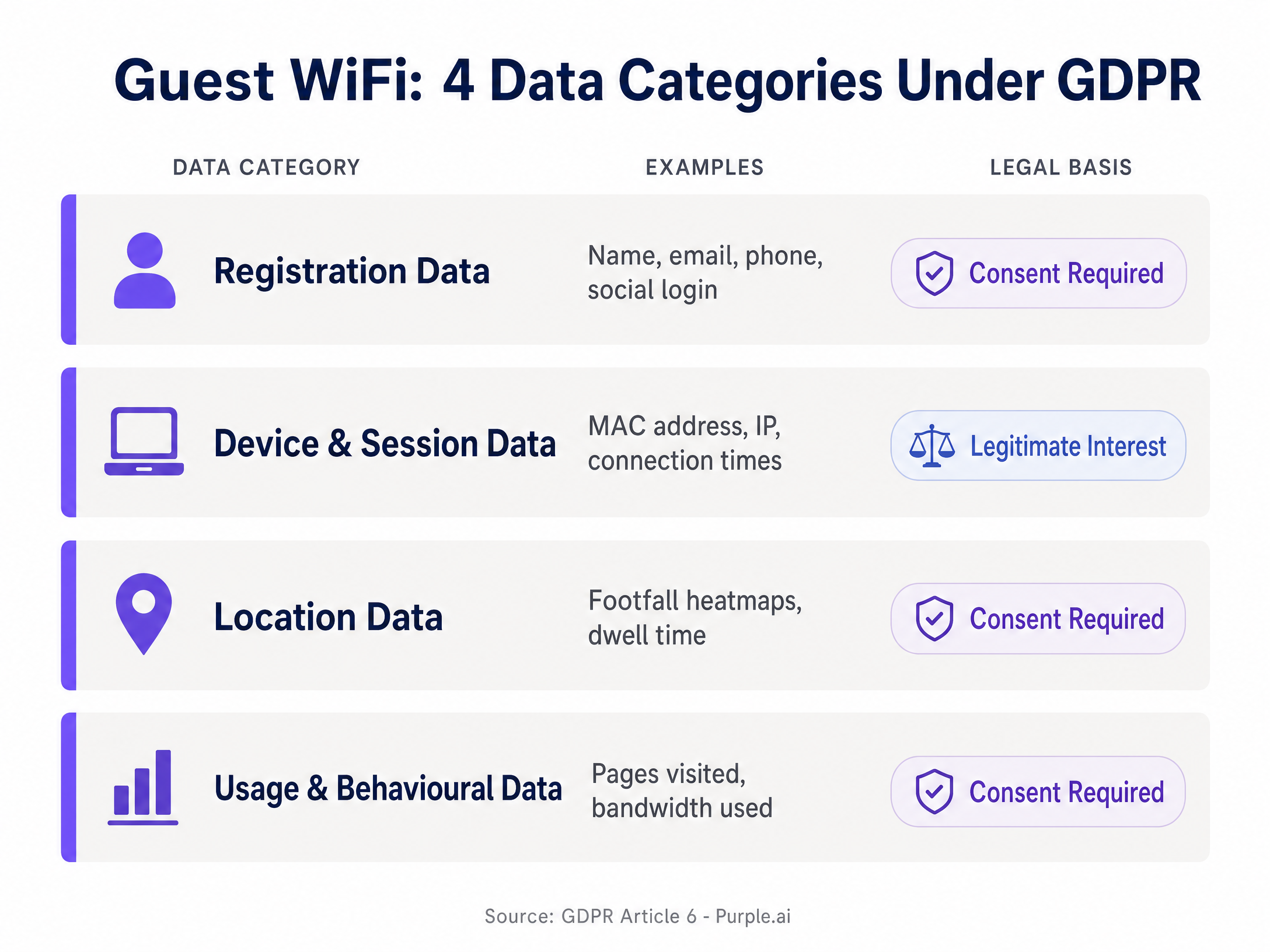
I dati raccolti tramite una rete Guest WiFi possono essere suddivisi in quattro categorie principali. Ciascuna comporta implicazioni distinte per la conformità al GDPR, in particolare per quanto riguarda la base giuridica del trattamento e il periodo di conservazione richiesto.
- Dati di registrazione: nome, indirizzo email, numero di telefono e dati del profilo social. La base giuridica è il Consenso. È necessario ottenere un consenso esplicito per raccogliere questi dati e applicare i principi di minimizzazione dei dati per richiedere solo ciò che è strettamente necessario.
- Dati del dispositivo e della sessione: indirizzo MAC, indirizzo IP, orari di connessione e durata della sessione. La base giuridica è solitamente il Legittimo interesse per la sicurezza della rete e la risoluzione dei problemi, a condizione di condurre e documentare una valutazione del legittimo interesse (LIA).
- Dati di localizzazione: mappe di calore del flusso di visitatori e tracciamento del tempo di permanenza. La base giuridica è il Consenso. Anche se aggregata, la raccolta iniziale da un singolo dispositivo costituisce un dato personale.
- Dati di utilizzo e comportamentali: pagine visitate e larghezza di banda consumata. La base giuridica è il Consenso. È necessario essere specifici su cosa si sta raccogliendo e perché.
Meccanismi di consenso del Captive Portal
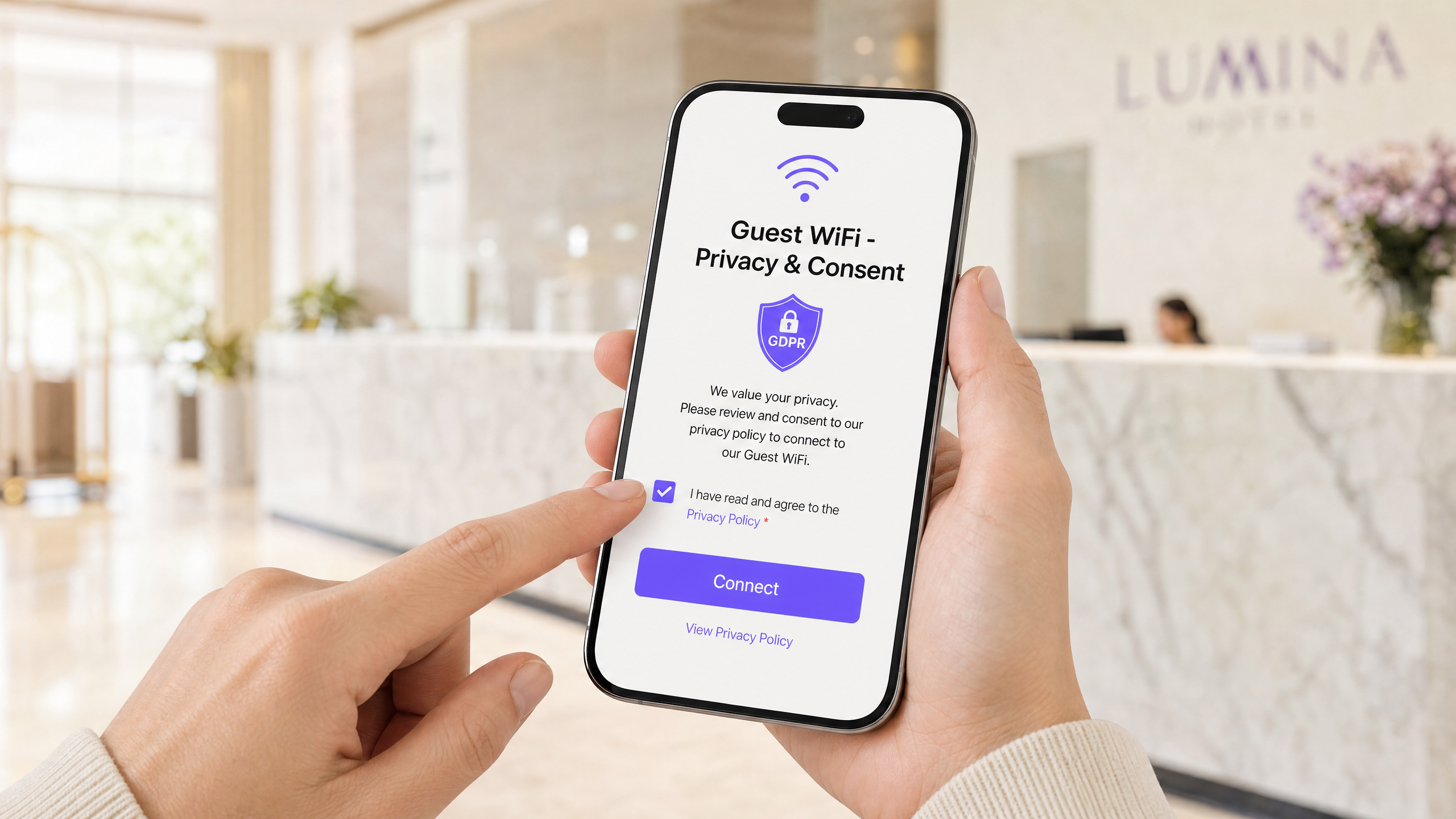
Il Captive Portal è la tua interfaccia di conformità principale. È la splash page che gli ospiti visualizzano prima di accedere a Internet. L'errore di conformità più comune è il bundling (abbinamento forzato), in cui una struttura richiede a un ospite di accettare le email di marketing come condizione per connettersi online. Ai sensi del GDPR, il consenso deve essere prestato liberamente. Se si vincola l'accesso alla rete al consenso per il marketing, il consenso non è valido.
Il tuo Captive Portal deve presentare almeno due elementi di consenso distinti:
- Una casella di controllo obbligatoria per l'accettazione dei termini di servizio per l'accesso alla rete.
- Una casella di controllo opzionale, non preselezionata, per il consenso a ricevere comunicazioni di marketing.
Il Considerando 32 del GDPR vieta esplicitamente le caselle preselezionate. Oltre alla struttura del consenso, il portale deve presentare un'informativa sulla privacy chiara e concisa prima che l'utente invii qualsiasi dato. Deve spiegare quali dati vengono raccolti, perché vengono raccolti, per quanto tempo vengono conservati e con chi vengono condivisi. Il sistema deve registrare ogni evento di consenso: chi ha acconsentito, quando ha acconsentito, a cosa ha acconsentito e l'esatta versione dell'informativa sulla privacy visualizzata. Questo registro di controllo del consenso (consent audit trail) è la tua prova di conformità.
Architettura di rete e sicurezza
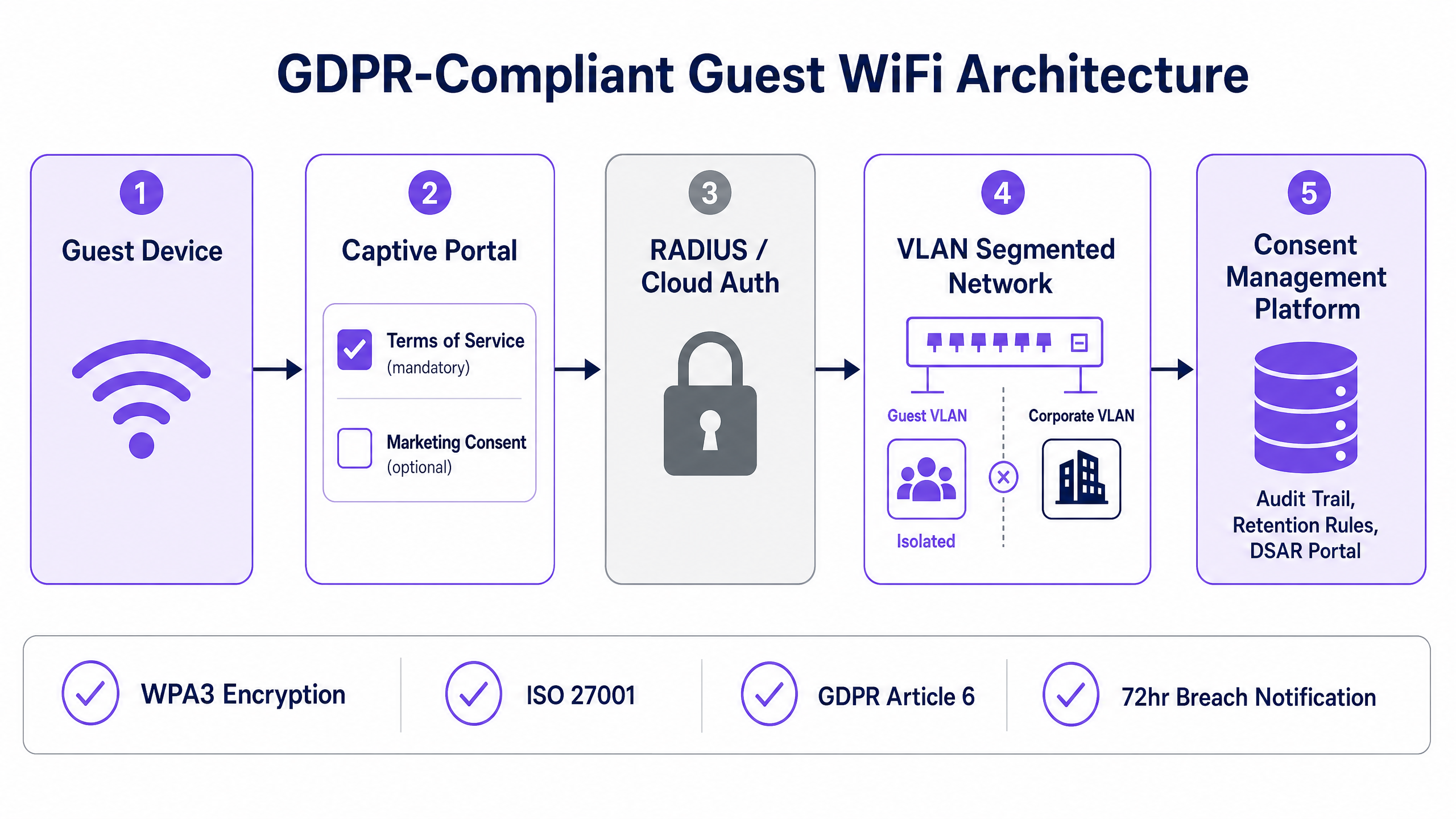
Dal punto di vista dell'architettura di rete, la segmentazione VLAN non è negoziabile. Il traffico Guest WiFi deve essere isolato su una VLAN dedicata, completamente separata dalla rete aziendale. Utilizza le liste di controllo degli accessi (ACL) per impedire ai dispositivi degli ospiti di accedere alle sottoreti interne e abilita l'isolamento dei client in modo che i dispositivi degli ospiti non possano comunicare tra loro. Questo vale sia che si utilizzi Cisco Meraki, HPE Aruba, Ruckus, Juniper Mist o Ubiquiti UniFi.
Per l'autenticazione, integra il controller LAN wireless con un server RADIUS cloud. Quando un utente completa il flusso del Captive Portal, la piattaforma invia un messaggio RADIUS Access-Accept al controller, concedendo l'accesso alla rete. Ciò crea una netta separazione tra il livello di autenticazione e il livello di raccolta dei dati.
Sulla crittografia: implementa WPA3 laddove l'hardware lo supporti. WPA3 utilizza la Simultaneous Authentication of Equals (SAE), che elimina le vulnerabilità dell'handshake a quattro vie di WPA2 e offre una protezione più solida contro gli attacchi a dizionario offline. Come minimo, imponi WPA2 con crittografia AES. Il tuo Captive Portal deve essere erogato tramite HTTPS con un certificato TLS valido. Fornire un modulo che raccoglie dati personali tramite HTTP costituisce una grave falla di sicurezza.
Guida all'implementazione
L'implementazione di una soluzione Guest WiFi conforme richiede un'attenta pianificazione ed esecuzione. I passaggi seguenti delineano un approccio all'implementazione indipendente dai fornitori.
Passaggio 1: Verifica dei flussi di dati attuali
Mappa esattamente quali dati raccoglie la tua attuale rete Guest WiFi. Identifica ogni campo sul tuo Captive Portal, ogni file di log generato dal tuo controller wireless e ogni integrazione di terze parti. Documenta lo scopo di ciascun punto dati. Se non puoi giustificare la raccolta di uno specifico punto dati, eliminalo.
Fase 2: Riprogetta il Captive Portal
Implementa un Captive Portal conforme con caselle di controllo separate e non selezionate per i termini di rete e il consenso al marketing. Assicurati che il linguaggio sia semplice e che lo scambio di valore sia chiaro. Inserisci un link diretto alla tua informativa sulla privacy completa.
Fase 3: Automatizza la conservazione dei dati
Configura criteri di eliminazione automatica nella tua piattaforma di WiFi Analytics . L'eliminazione manuale non è praticabile su larga scala.
- Log di sessione: elimina dopo 30 giorni.
- Log di sicurezza di rete: conserva fino a 12 mesi.
- Record di consenso: conserva per la durata del rapporto di servizio più due anni.
- Profili di marketing: elimina immediatamente quando un utente revoca il consenso.
Fase 4: Metti in sicurezza il perimetro di rete
Segmenta il traffico degli ospiti su una VLAN dedicata. Implementa l'isolamento dei client. Imponi la crittografia WPA3 dove supportata. Assicurati che il tuo Captive Portal sia erogato tramite HTTPS.
Fase 5: Implementa un centro preferenze
Fornisci agli ospiti un centro preferenze self-service dove possono gestire le impostazioni del consenso e inviare richieste di accesso dell'interessato (DSAR). Questo riduce il carico operativo sul tuo team IT e garantisce di poter rispettare i diritti degli interessati in modo efficiente.
Best practice
Per mantenere la conformità e creare una solida strategia di Guest WiFi , attieniti a queste best practice standard del settore:
- Conduci una DPIA: una valutazione d'impatto sulla protezione dei dati è obbligatoria per legge ai sensi dell'articolo 35 del GDPR prima di implementare qualsiasi funzionalità di tracciamento della posizione o profilazione comportamentale su larga scala.
- Firma un DPA: assicurati di avere un addendum sul trattamento dei dati (DPA) firmato con ogni piattaforma di terze parti che elabora i dati degli ospiti per tuo conto.
- Riduci al minimo la raccolta dei dati: richiedi solo i dati di cui hai effettivamente bisogno e che intendi utilizzare. Se gestisci un punto vendita Retail , hai davvero bisogno della data di nascita di un ospite per fornire l'accesso a Internet?
- Preparati alle violazioni: il conto alla rovescia di 72 ore per la notifica inizia nel momento in cui vieni a conoscenza di una violazione. Integra questa tempistica nel tuo piano di risposta agli incidenti e assicurati che il tuo team sappia di dover notificare l'ICO entro 72 ore, anche se l'indagine non è completa.
Risoluzione dei problemi e mitigazione dei rischi
I problemi più comuni nelle distribuzioni di Guest WiFi spesso derivano da un'errata comprensione dei requisiti del GDPR.
Problema comune: affaticamento da consenso Se il tuo portale è troppo complesso, gli ospiti abbandoneranno la connessione o faranno clic alla cieca. Mantieni un linguaggio semplice. Spiega chiaramente lo scambio di valore. Ad esempio: "Fornisci la tua email per un WiFi veloce e gratuito e per ricevere offerte occasionali da parte nostra."
Problema comune: ignorare i diritti degli interessati Ai sensi del GDPR, gli ospiti hanno il diritto di accedere, rettificare ed eliminare i propri dati. Se non disponi di un processo per gestire queste richieste, sei esposto a rischi significativi. Un centro preferenze self-service è la strategia di mitigazione più efficace.
Problema comune: conservazione indefinita dei dati La conservazione indefinita dei dati è una violazione diretta del principio di limitazione della conservazione del GDPR. Se non disponi di criteri di eliminazione automatica, accumuli rischi ogni giorno che passa. Configura le regole di conservazione nella tua piattaforma per eliminare automaticamente i record quando raggiungono la fine del periodo di conservazione.
ROI e impatto aziendale
La conformità al GDPR per il Guest WiFi non è solo un costo; è un fattore abilitante strategico. Una piattaforma conforme mitiga il rischio di sanzioni normative, crea fiducia nei clienti e fornisce una business intelligence ottenuta in modo etico.
Quando un ospite sceglie attivamente di ricevere comunicazioni di marketing tramite un Captive Portal conforme, la qualità di quel contatto è significativamente superiore rispetto a un opt-in cumulativo. Gli ospiti che acconsentono esplicitamente hanno maggiori probabilità di interagire con le comunicazioni successive, generando tassi di conversione più elevati per le tue campagne di marketing.
Inoltre, una piattaforma di Guest WiFi ben progettata fornisce informazioni preziose sul comportamento dei visitatori. Negli ambienti del settore Hospitality , questi dati possono orientare i livelli di personale, ottimizzare il layout e migliorare l'esperienza complessiva degli ospiti. Trattando la conformità come un elemento fondamentale della tua strategia di Guest WiFi, trasformi un requisito normativo in una risorsa aziendale misurabile.
Ascolta il nostro podcast per approfondire questi argomenti:
Definizioni chiave
Data Controller
The entity that determines the purposes and means of processing personal data. When you provide Guest WiFi, you are the Data Controller.
This designation makes the venue legally responsible for compliance, regardless of which vendor supplies the WiFi hardware or software.
Data Processor
The entity that processes personal data on behalf of the Data Controller. Your WiFi analytics vendor is a Data Processor.
A signed Data Processing Addendum (DPA) is legally required before sharing data with a Processor.
MAC Address
Media Access Control address. A unique identifier assigned to a network interface controller for use as a network address in communications within a network segment.
Under GDPR, a MAC address is considered personal data when it can be linked to an identifiable individual.
Captive Portal
A web page that the user of a public-access network is obliged to view and interact with before access is granted.
This is the primary interface for collecting consent and serving privacy notices to guests.
VLAN Segmentation
The practice of dividing a physical network into multiple logical networks.
Guest WiFi traffic must be isolated on a dedicated VLAN to prevent access to the corporate network.
Legitimate Interest
A lawful basis for processing personal data when the processing is necessary for your legitimate interests or the legitimate interests of a third party, unless there is a good reason to protect the individual's personal data which overrides those legitimate interests.
Often used as the basis for basic session logging for network security and troubleshooting.
Data Subject Access Request (DSAR)
A request made by an individual to access the personal data an organisation holds about them.
Venues must have a process to handle DSARs efficiently, often facilitated by a self-service preference centre.
WPA3
Wi-Fi Protected Access 3. The latest security certification program developed by the Wi-Fi Alliance.
Provides stronger encryption and protection against offline dictionary attacks compared to WPA2. Should be deployed where hardware supports it.
Esempi pratici
A 200-room hotel wants to collect guest emails to drive loyalty programme sign-ups. Their current system requires guests to accept marketing to get online.
Deploy a compliant captive portal with separate consent checkboxes. The mandatory checkbox covers terms of service. The optional, unticked checkbox covers marketing consent. The hotel will likely see a lower raw volume of marketing opt-ins compared to the bundled approach, but the quality and legality of the list improves dramatically. Guests who actively opt in are far more likely to engage with subsequent communications. Premier Inn, which uses Purple across its estate, operates exactly this model.
A stadium IT team wants to use WiFi analytics to monitor crowd density and manage safety, but the legal team is concerned that tracking device locations without consent is a GDPR violation.
Update the captive portal privacy notice to explicitly disclose that location data is processed for crowd management and safety purposes. Implement MAC address pseudonymisation at the edge, on the access points themselves, before the data reaches the cloud analytics platform. The analytics system then works with pseudonymous identifiers rather than raw MAC addresses.
Domande di esercitazione
Q1. A retail chain wants to implement WiFi footfall tracking across 50 stores to measure dwell time. The IT Director suggests logging raw MAC addresses centrally for analysis. Is this compliant?
Suggerimento: Consider the definition of personal data and the principle of data minimisation.
Visualizza risposta modello
No, this is high risk. Raw MAC addresses are personal data. The recommended approach is to implement MAC address pseudonymisation at the edge (on the access points) before transmitting the data to the central analytics platform. Additionally, a Data Protection Impact Assessment (DPIA) must be conducted before deployment, and clear signage must inform shoppers that analytics are in operation.
Q2. During an audit, you discover that your captive portal requires users to accept both the network terms of service and marketing emails via a single checkbox to connect to the WiFi. What is the immediate required action?
Suggerimento: Review the requirements for valid consent under GDPR Article 6.
Visualizza risposta modello
Immediately redesign the captive portal to unbundle the consent. Implement two separate checkboxes: a mandatory one for the network terms of service, and an optional, unticked checkbox for marketing consent. The current bundled approach renders all collected marketing consent invalid under GDPR.
Q3. A guest submits a Data Subject Access Request (DSAR) asking for all data your venue holds on them, including WiFi session logs. Your current retention policy is to keep session logs indefinitely. What are the implications?
Suggerimento: Consider the storage limitation principle.
Visualizza risposta modello
Keeping session logs indefinitely violates the GDPR storage limitation principle. You must fulfill the DSAR by providing the requested data, but you must also urgently implement an automated data retention policy. Session logs should typically be purged after 30 days. Holding them indefinitely exposes the venue to significant regulatory risk.
Continua a leggere questa serie
Integrazione dell'autenticazione WeChat con i Captive Portal WiFi per gli ospiti
Questa guida spiega come integrare l'autenticazione WeChat OAuth 2.0 nei Captive Portal WiFi aziendali per gli ospiti. Copre i requisiti di registrazione su doppia piattaforma, la selezione dello scope per l'acquisizione di dati di prima parte, l'applicazione delle policy di rete tramite RADIUS Change of Authorization e la conformità con il GDPR e la PIPL cinese. I gestori di location nei settori hospitality, retail ed eventi troveranno passaggi concreti di implementazione, casi di studio reali e linee guida per il rafforzamento della sicurezza per distribuire il login WeChat su guest WiFi su scala.
Integrazione dell'autenticazione WiFi WeChat: onboarding tramite Captive Portal per i clienti APAC
WeChat conta 1,41 miliardi di utenti attivi mensili, il che lo rende l'identità digitale principale per i consumatori cinesi a livello globale. Questa guida spiega come integrare l'autenticazione WeChat OAuth 2.0 nei Captive Portal aziendali per le sedi APAC, coprendo la registrazione della piattaforma, la selezione dello scope, l'applicazione del RADIUS Change of Authorisation e la conformità al doppio framework con il GDPR e la PIPL cinese. Si rivolge a IT manager, network architect e direttori delle operazioni delle sedi che devono agire in questo trimestre.
Guida alla configurazione SCEP aziendale: autenticazione Wi-Fi basata su certificati per l'istruzione superiore e le grandi reti
Questa guida fornisce un progetto tecnico completo per l'implementazione dell'autenticazione WiFi basata su certificati tramite SCEP. Copre la transizione architetturale dalle chiavi precondivise a EAP-TLS, le sequenze di implementazione sulle piattaforme MDM e le strategie critiche di mitigazione del rischio per le reti su larga scala.