

Come migliorare il ROI del marketing utilizzando i dati WiFi
Una guida pratica e tattica per responsabili IT e marketer sull'integrazione dell'analisi WiFi nello stack di marketing esistente. Dettaglia come sfruttare i dati di prima parte della sede per ridurre il CPA, migliorare il ROAS e generare entrate misurabili tramite l'attribuzione a ciclo chiuso.
🎧 Ascolta questa guida
Visualizza trascrizione
Sintesi Esecutiva
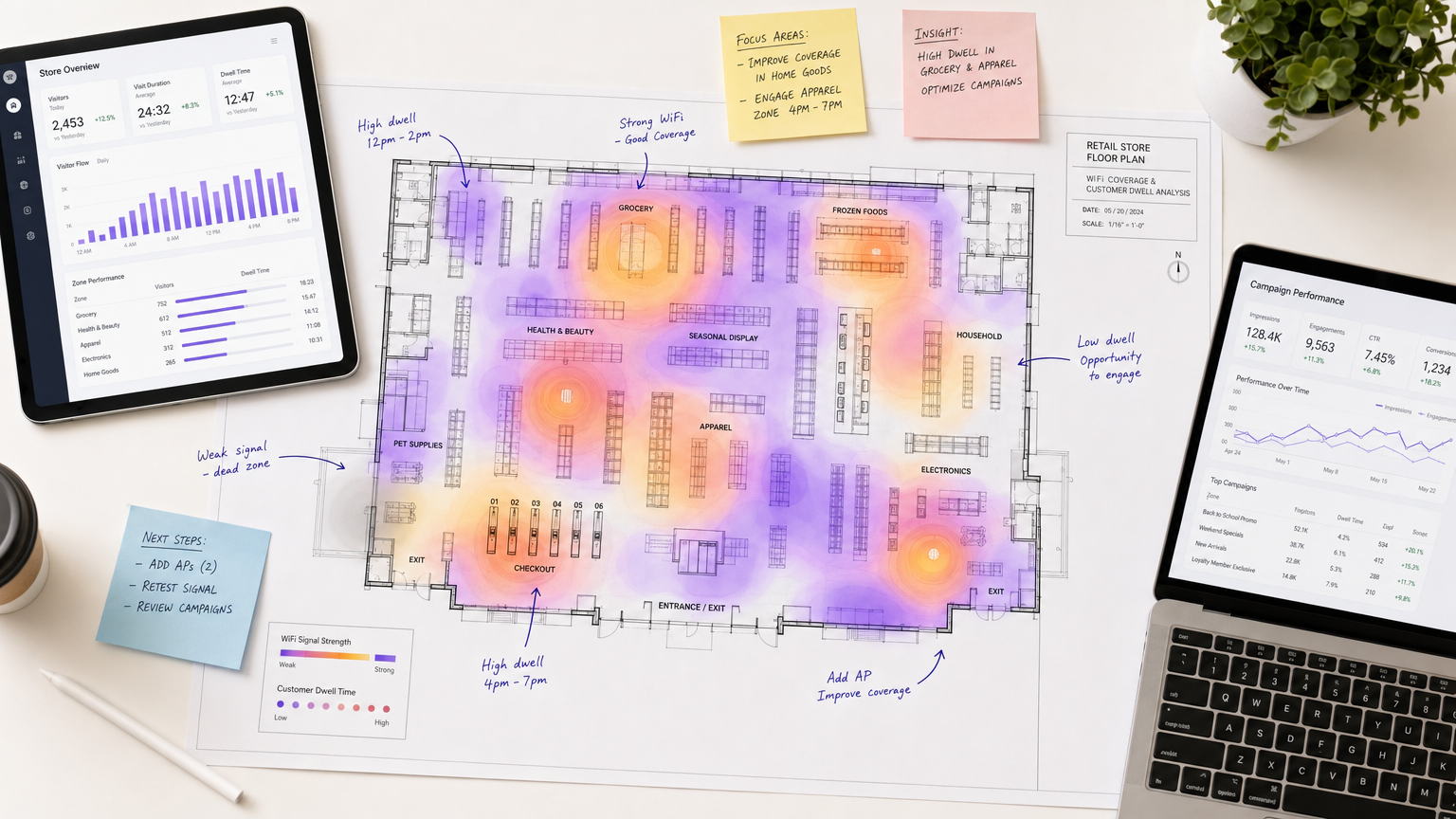
Per le sedi aziendali—che si tratti di Retail , Hospitality , Healthcare o Transport —lo spazio fisico è la più grande risorsa di dati non sfruttata. Mentre i team di marketing digitale ottimizzano le campagne utilizzando i dati dei cookie e il tracciamento online, spesso mancano di visibilità sul comportamento reale dei clienti. Questa guida descrive come colmare questa lacuna trasformando l'infrastruttura di rete esistente in un motore di dati di prima parte. Implementando una robusta soluzione di WiFi Analytics sulla rete Guest WiFi , i team IT possono fornire al marketing i dati deterministici e conformi al consenso necessari per ridurre il Costo per Acquisizione (CPA), aumentare il Ritorno sulla Spesa Pubblicitaria (ROAS) e implementare una vera attribuzione a ciclo chiuso. Non si tratta di smantellare e sostituire l'infrastruttura; si tratta di attivare i dati che i tuoi punti di accesso stanno già generando.
Approfondimento Tecnico
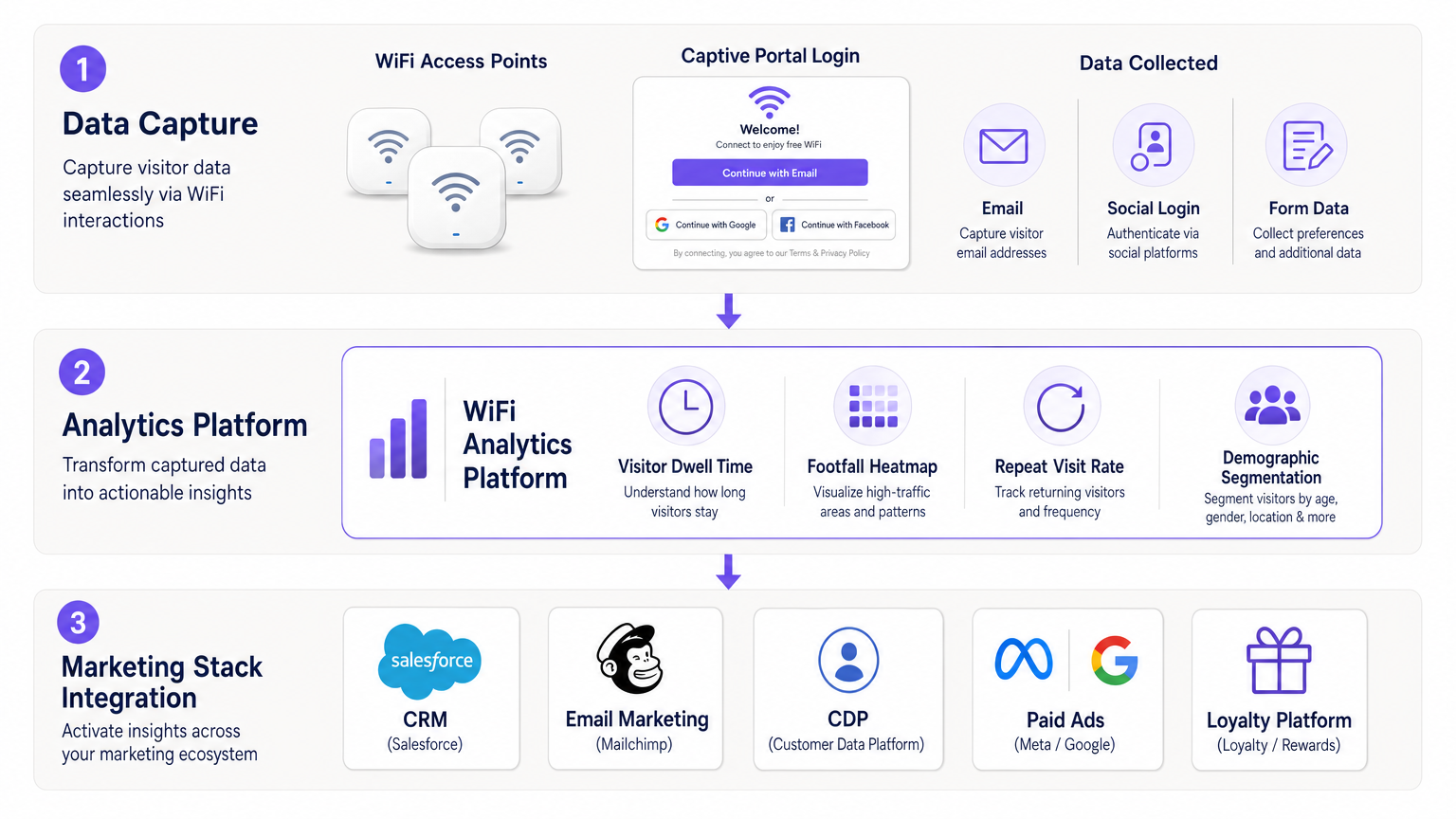
L'architettura necessaria per migliorare il ROI del marketing utilizzando i dati WiFi si basa su tre livelli distinti: acquisizione passiva, autenticazione attiva e sindacazione dei dati.
1. Il Livello di Acquisizione
I moderni punti di accesso (AP) aziendali monitorano continuamente le richieste di probe 802.11. Ciò consente alla rete di tracciare passivamente gli indirizzi MAC dei dispositivi (spesso randomizzati dalle moderne implementazioni del sistema operativo, ma comunque utili per l'analisi a livello di sessione), la potenza del segnale (RSSI) e i dati di timestamp. Questi dati passivi forniscono metriche di base: affluenza totale, tempi di permanenza a livello di zona e mappatura del percorso fisico. Per un approfondimento sul tracciamento spaziale, consulta la nostra Guida al Sistema di Posizionamento Indoor: UWB, BLE e WiFi .
2. Il Livello di Autenticazione
La transizione dall'affluenza anonima a dati di marketing utilizzabili avviene al captive portal. Quando un utente si autentica tramite il Guest WiFi, fornisce il consenso esplicito (conforme a GDPR/CCPA) insieme ai dati di identità—tipicamente un indirizzo email, un numero di telefono o un profilo di social login. A questo punto, la piattaforma associa la sessione dell'indirizzo MAC fisico a un'identità utente nota. È qui che l'autenticazione basata su profilo, come OpenRoaming, diventa un vantaggio significativo, riducendo l'attrito per i visitatori di ritorno.
3. Il Livello di Sindacazione
I dati che risiedono esclusivamente nella piattaforma WiFi hanno un ROI limitato. Il requisito tecnico per l'IT è costruire integrazioni API o webhook senza soluzione di continuità dalla piattaforma WiFi allo stack di marketing (CRM, CDP, ESP). Ad esempio, quando si valutano piattaforme come Purple vs Cisco Spaces (DNA Spaces): Quando scegliere ciascuna , una considerazione chiave è la facilità con cui la piattaforma sindaca dati puliti e strutturati a sistemi a valle come Salesforce o Mailchimp.
Guida all'Implementazione
L'implementazione di un'architettura WiFi orientata al marketing richiede un allineamento stretto tra le Operazioni di Rete e il Marketing. Segui queste fasi di implementazione:
Fase 1: Ottimizzazione della Rete per la Precisione della Posizione Assicurati che la densità e il posizionamento dei tuoi AP supportino analisi di posizione accurate. Mentre l'analisi di presenza di base richiede solo pochi AP, il tempo di permanenza a livello di zona richiede un'implementazione a maggiore densità e una corretta calibrazione delle soglie RSSI. (Vedi Wi Fi in Auto: La Guida Completa per le Aziende 2026 per scenari di implementazione avanzati).
Fase 2: Configurazione e Conformità del Captive Portal Progetta il captive portal per massimizzare l'acquisizione dei dati senza degradare l'esperienza utente. Implementa API di validazione email in tempo reale per impedire che dati errati entrino nel CRM. Assicurati che l'informativa sulla privacy copra esplicitamente la condivisione dei dati con piattaforme pubblicitarie di terze parti (Meta, Google) tramite la corrispondenza di email hashate.
Fase 3: Integrazione dello Stack
Non costruire integrazioni punto-punto se evitabile. Instrada i dati WiFi (identità + eventi comportamentali come zone_entered o dwell_exceeded) in una Piattaforma Dati Cliente (CDP) centrale o in un data warehouse. Il CDP gestisce quindi la logica di aggiornamento dei record CRM e l'attivazione dei flussi di lavoro email.
Best Practice
- Scambio di Valore: Offri un valore tangibile per l'autenticazione. Un codice sconto del 10% consegnato immediatamente dopo il login genera tassi di conversione significativamente più elevati rispetto all'accesso gratuito standard.
- Trigger in Tempo Reale: Il valore dei dati WiFi decade rapidamente. Attiva sondaggi post-visita o offerte personalizzate entro 2 ore dalla partenza del cliente dalla sede.
- Pubblico Hashed: Per i media a pagamento, utilizza email hashate SHA-256 per costruire pubblici personalizzati in Meta e Google. Ciò ti consente di fare retargeting sui visitatori fisici senza esporre PII grezzi.
Risoluzione dei Problemi e Mitigazione dei Rischi
Rischio: Randomizzazione MAC I moderni dispositivi iOS e Android randomizzano gli indirizzi MAC per prevenire il tracciamento. Mitigazione: Affidati all'autenticazione attiva (login tramite captive portal) piuttosto che al tracciamento MAC passivo per l'identificazione a lungo termine del cliente. Una volta autenticata, la sessione è legata all'identità, aggirando il problema della randomizzazione MAC.
Rischio: Inquinamento dei Dati CRM
Gli utenti che inseriscono email false (ad es. test@test.com) degraderanno il tuo punteggio di deliverability delle email.
Mitigazione: Implementa la verifica email inline al captive portal. Rifiuta domini non validi o errori di sintassi prima che la sessione venga concessa.
ROI e Impatto sul Business
L'obiettivo finale è spostare il marketing dal targeting probabilistico al targeting deterministico. Utilizzando i dati WiFi, le sedi possono costruire segmenti di pubblico altamente specifici (ad es., "Clienti che hanno visitato la sezione abbigliamento per >15 minuti ma non sono tornati entro 30 giorni").
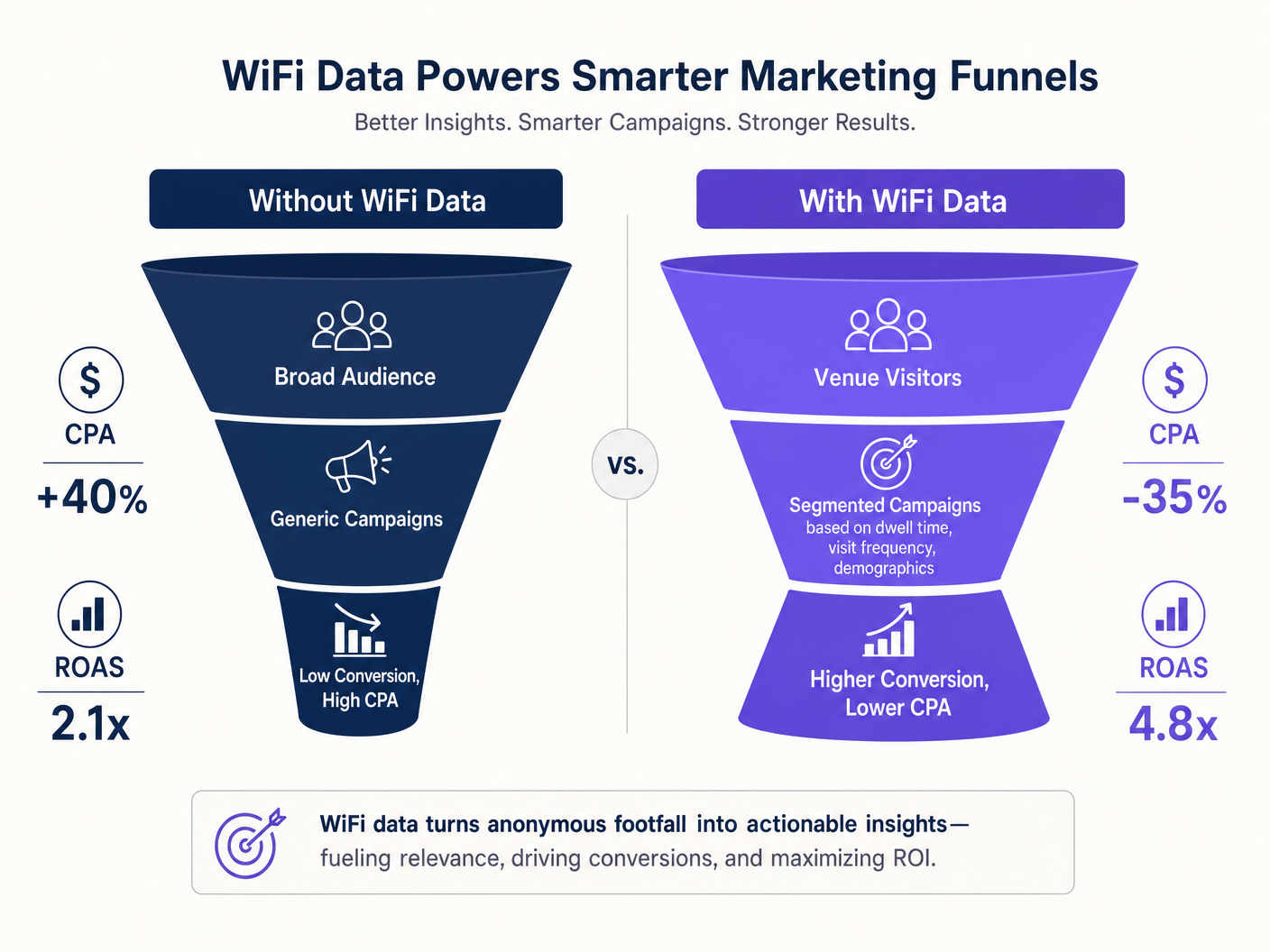
Se integrato correttamente, osserviamo tipicamente:
- Riduzione del CPA: Costo per acquisizione inferiore del 30-40% sui social a pagamento, grazie a tassi di corrispondenza più elevati e targeting basato sull'intento.
- Miglioramento del ROAS: Ritorno sulla spesa pubblicitaria da 2 a 4 volte superiore per le campagne di retargeting.
- Attribuzione a ciclo chiuso: La capacità di dimostrare che una specifica campagna email ha portato a una visita fisica in sede entro un periodo di 7 giorni.
Ascolta il nostro approfondimento su questo argomento:
Termini chiave e definizioni
Captive Portal
A web page that users must view and interact with before access is granted to a public WiFi network. It is the primary mechanism for capturing first-party identity data and consent.
IT teams configure this to ensure legal compliance and data capture, while marketing teams design the UX to maximize conversion rates.
MAC Randomization
A privacy feature in modern mobile operating systems that periodically changes the device's MAC address to prevent long-term passive tracking.
This requires venues to rely on active authentication (logins) rather than passive tracking to build long-term customer profiles.
Dwell Time
The duration a connected device remains within the coverage area of a specific access point or zone.
Marketing uses this metric to segment audiences—for example, targeting users with high dwell times in specific retail departments.
Closed-Loop Attribution
A measurement model that tracks a customer's journey from an initial marketing touchpoint (e.g., an email) to a final physical action (e.g., a venue visit).
WiFi data provides the 'physical visit' data point required to close the loop and prove campaign ROI to the business.
First-Party Data
Information a company collects directly from its customers with their consent, rather than purchasing it from data brokers.
Guest WiFi is one of the most scalable methods for brick-and-mortar venues to acquire high-quality first-party data.
Hashed Audience
A list of customer identifiers (usually emails) that have been cryptographically scrambled (e.g., using SHA-256) before being uploaded to an ad platform.
This allows IT to securely share customer lists with Meta or Google for retargeting without exposing raw Personally Identifiable Information (PII).
RSSI (Received Signal Strength Indicator)
A measurement of the power present in a received radio signal. Used to estimate the distance between a device and an access point.
IT uses RSSI thresholds to define physical 'zones' within a venue for location-based marketing triggers.
Data Syndication
The automated process of pushing structured data from one platform (e.g., WiFi Analytics) to downstream systems (e.g., CRM, CDP).
Without syndication, WiFi data remains siloed and cannot generate marketing ROI.
Casi di studio
A 200-location retail chain wants to reduce their Facebook Ads CPA. Currently, they target broad demographic lookalike audiences, resulting in a high CPA and low conversion rate. How should the IT and Marketing teams collaborate to solve this using existing network infrastructure?
- IT configures the Guest WiFi captive portal across all 200 locations to require an email address for access, incorporating real-time validation and GDPR-compliant consent for marketing.
- IT sets up an API integration to push authenticated user emails and their associated 'Last Visit Date' to the company's CDP.
- The CDP automatically hashes the emails (SHA-256) and syncs them to Meta Ads Manager as a Custom Audience.
- Marketing runs a targeted 'Welcome Back' campaign specifically to users who visited a physical store in the last 90 days but haven't purchased online.
A large stadium operator needs to increase food and beverage (F&B) revenue during the 45 minutes before kickoff. How can WiFi analytics drive this?
- IT calibrates the APs in the concourse zones to accurately measure dwell time.
- The WiFi Analytics platform is configured with a webhook that triggers when a known (authenticated) user dwells in a specific concourse zone for more than 10 minutes.
- The webhook payload (User ID, Zone ID) is sent to the stadium's marketing automation platform.
- The platform instantly triggers an SMS or push notification to the user with a time-limited 15% discount for the nearest F&B concession stand.
Analisi degli scenari
Q1. A hospitality group wants to retarget past guests on Facebook. They export a CSV of emails from the WiFi platform and upload it manually to Meta Ads Manager every month. What are the two primary technical and business risks with this approach?
💡 Suggerimento:Consider data security (PII) and the timeliness of the data.
Mostra l'approccio consigliato
- Security/Compliance Risk: Uploading raw, unhashed CSVs of PII manually exposes the data to interception or mishandling, violating best practices and potentially GDPR/CCPA. 2. Business Risk: A monthly manual sync means the data is stale. A guest who visited on day 1 won't be retargeted until day 30, missing the critical post-visit engagement window. The solution is an automated API integration that syncs hashed emails in real-time.
Q2. During a network audit, the IT manager notices that while total connection counts are high, the marketing team is reporting very low CRM match rates. What is the most likely configuration issue at the capture layer?
💡 Suggerimento:Think about what happens between the device connecting to the AP and the data entering the CRM.
Mostra l'approccio consigliato
The captive portal is likely lacking real-time validation, allowing users to input fake or malformed email addresses (e.g., ' a@a.com ') to bypass the login screen. IT needs to implement an inline email verification API to ensure only valid data passes through to the CRM.
Q3. A retail venue has dense AP coverage but the marketing team reports that 'zone dwell time' metrics are inaccurate, showing users jumping between opposite ends of the store instantly. How should the network architect address this?
💡 Suggerimento:Consider how APs determine device location and what physical factors affect this.
Mostra l'approccio consigliato
The architect needs to recalibrate the RSSI (Received Signal Strength Indicator) thresholds and review the AP placement. The 'jumping' indicates that devices are associating with APs further away due to line-of-sight propagation or signal reflection, rather than the closest AP. Tuning the transmit power and adjusting the location analytics algorithm to require multiple AP triangulations will stabilize the zone data.




