跳至主要内容

电子邮件的语言

作者:Richard Ellor
10 May 2014
1 分钟阅读
The language of email
Interactive research toolKruger & Epley benchmark

Email tone and clarity advisor

In Kruger & Epley's (2005) experiments, recipients correctly identified whether an email was sarcastic or serious only about 56% of the time, so roughly 44% were misread. Use this tool to estimate how that baseline shifts for your audience and format, then apply the rewrite patterns below.

Total outbound team, marketing, and client messages per month.
Colleagues often rely on informal shorthand, which increases ambiguity when emotional cues and vocal inflection are absent.
1 = Ambiguous shorthand; 5 = Explicit context, bulleted action items, defined deadlines.
1 = Blunt and clipped; 5 = Cordial greeting, conversational context, gratitude.
Communication risk estimateElevated risk
Estimated misinterpretation rate:
51%(Benchmark: 44%)
Misread emails / month:~1,275
Lost productivity hours:~255 hrs
Sentiment alignment index:41 / 100
Add explicit intent tags (e.g. [FYI] or [Action Needed by 3 PM]) and state emotional valence openly.
Citation: Kruger, J., Epley, N., Parker, J., & Ng, Z. W. (2005). Egocentrism over e-mail: Can people communicate as well as they think? Journal of Personality and Social Psychology, 89(6), 925-936. Method: the 44% baseline is adjusted by illustrative multipliers for recipient (1.0-1.35x) and format (0.95-1.15x), minus 6 points per clarity level and 4 points per warmth level above 3, clamped to 12-65%. Each misread email is costed at 12 minutes of clarification. The multipliers are editorial estimates, not study findings.
Power high-converting guest engagement through WiFiLearn how leading venues capture verified customer emails and automate personalised campaigns in our WiFi marketing guide.
Useful? Link to this tool

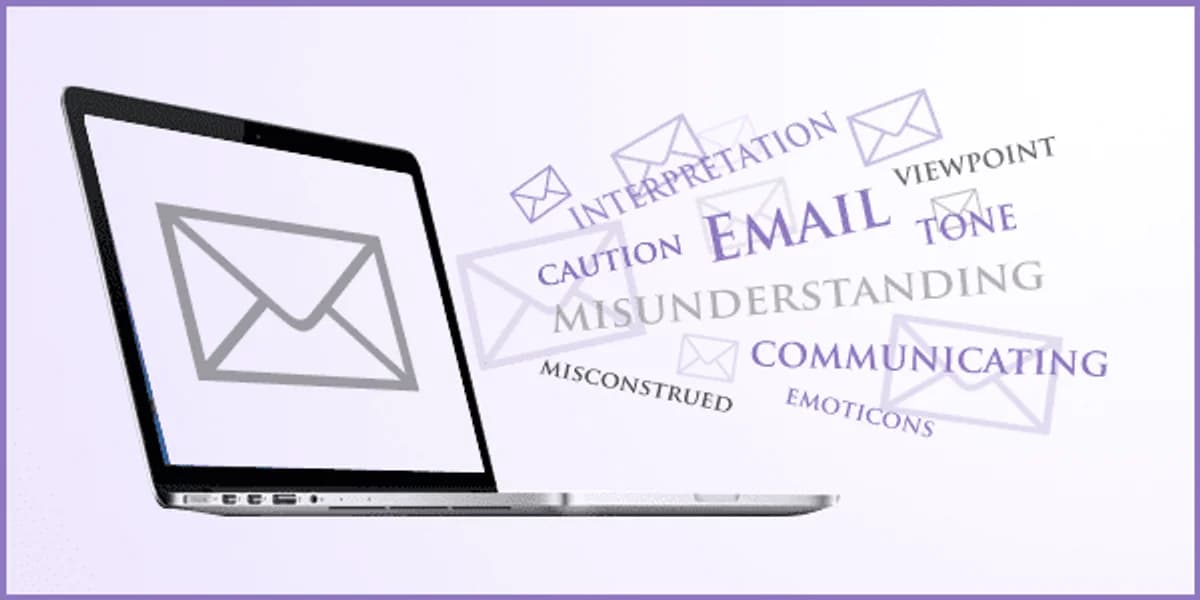
电子邮件 - 我们的沟通真的像我们想象的那么顺畅吗?

您是想幽默一下?是习惯冷嘲热讽?还是在发送电子邮件时非常严肃?

《人格与社会心理学杂志》的一份报告发现,人们极大地高估了自己通过电子邮件传达语气的能力。您收到的回复也可能会被误解。他们确实知道您只是在开玩笑……对吧?

人类天生倾向于自我中心,无法跳出自己的视角去理解他人。我们常常认为大多数人“当然”会和我们以同样的方式思考。这正是问题的一部分。

沟通误解十分常见。

通过任何书面沟通,我们都无法听到对方声音中的语气,看不到面部表情(尽管我们可以使用表情符号),也看不到手势或强调等其他线索。与写信相比,电子邮件的输入和发送往往更快,投入的思考也更少。

那么,我们在回复电子邮件时是否应该保持谨慎?

美国心理学学会引用的 Kruger 和 Epley 的研究对比了口头信息解读和电子邮件信息解读。他们发现,通过电话,预期的语气有四分之三的时间能被正确识别,而通过电子邮件则只有 56% 的时间能被正确识别,这仅比正确猜测的概率高出一点点。有趣的是,当被问及是否认为自己正确解读了信息时,90% 的人都坚信自己做到了。显然,收件人几乎从未怀疑过其中 10% 的电子邮件沟通解读。

Kruger 解释说,当您写一封电子邮件时,您在脑海中能够“听到”自己想要传达的语气,但却忘记了邮件的接收者无法获得这样的信息。

电子邮件沟通的局限性可能被严重低估了,人们往往认为自己的沟通效率比实际情况要高。

因此,以下是我们为您提供的避免电子邮件沟通误解的小贴士。您还能想到其他的吗?

  1. 正面的电子邮件可能会显得中性,而中性的电子邮件可能会显得消极。因此,请确保您的电子邮件格外友善。
  2. 在使用表情符号表达情感时要多加注意,因为您无法通过添加表情符号来消除可能被视为不尊重的邮件内容。此外,在职场中,这可能会给业务合作伙伴留下不专业的印象。
  3. 从收件人的角度来审视电子邮件。发件人往往会高估自己传达情感的有效性,而认为自己能够准确理解的收件人也是如此。收件人眼中的玩笑话通常没有发件人想象的那么好笑。
  4. 写电子邮件时不要急躁;简短的信息可能会被解读为无礼。
  5. 但也尽量不要写得太长。只说需要说的话,这样被误解的空间就会减少。
  6. 尽量去了解与您进行电子邮件往来的人。微小的分歧可能会演变成麻烦,因此请试着更好地了解您的联系人。

好消息是,随着您对电子邮件联系人越来越熟悉,您的信息被误解的几率就会降低。因此,去了解电子邮件地址背后的人是非常值得的!
准备好开始了吗?

预约专家演示,了解 Purple 如何助力您实现业务目标。

联系专家