Wie Personalisierung Kundenbindung und Umsatz steigert

Dieser technische Leitfaden beschreibt die architektonischen Anforderungen und den geschäftlichen Nutzen der Nutzung von WiFi-Analysen für die Kundenpersonalisierung im großen Maßstab. Er bietet umsetzbare Implementierungsanleitungen für IT-Manager, Netzwerkarchitekten und Betriebsleiter von Veranstaltungsorten, um die bestehende Gastzugangsinfrastruktur in eine primäre Datenerfassungsschicht umzuwandeln, die messbare Kundenbindung und Umsatzsteigerungen fördert. Dieser Leitfaden behandelt Datenmodellierung, CRM-Integration, GDPR-Konformität und Fallstudien aus den Bereichen Gastgewerbe, Einzelhandel und Veranstaltungen und stattet technische Teams mit den notwendigen Frameworks aus, um ein Netzwerk zu entwerfen, das aktiv zum Unternehmenserfolg beiträgt.

📖 6 Min. Lesezeit📝 1,481 Wörter🔧 2 Beispiele3 Fragen📚 9 Schlüsselbegriffe

🎧 Diesen Leitfaden anhören

Transkript anzeigen
Welcome to the Enterprise Architecture Briefing. Today we're tackling a critical shift in how we view venue infrastructure. For years, Guest WiFi has been treated as a necessary evil — a cost centre managed by IT, largely ignored by the business until it stops working. But today, we're discussing how modern edge platforms have transformed the access point into a primary data ingestion layer, and specifically, how that data powers personalisation strategies that drive measurable customer loyalty and sales. Let's start with the business case. Why is this transition so critical right now? The urgency comes down to expectations and outcomes. Consumers now expect tailored experiences, and the data backs this up. Epsilon research shows that 80% of consumers are more likely to purchase when brands offer personalised experiences. More importantly, McKinsey data demonstrates that robust personalisation most often drives a 10 to 15 percent revenue lift. If your network infrastructure isn't actively contributing to that uplift, you're leaving money on the table. So, how do we bridge the gap between a wireless access point and a 15% revenue increase? What does the technical deep-dive look like? It's all about moving from isolated network silos to an integrated data ecosystem. When a user authenticates via the Guest WiFi, the network captures high-fidelity telemetry. We're talking device MAC addresses, dwell times, zone transitions, and authentication payloads. The challenge for IT is normalising that data. Right, because raw RADIUS accounting packets aren't very useful to a marketing director. Exactly. The analytics overlay acts as the ingestion engine. It parses those packets and HTTP redirect payloads into structured JSON objects. We're combining deterministic data — like the email address captured on the captive portal — with probabilistic data, like behavioural patterns inferred from access point triangulation. This creates a unified schema that can be fed into the venue's CRM. Let's talk about that integration architecture. How does the data actually move? Successful deployments rely on robust RESTful APIs and webhooks. We need bidirectional data flows. For instance, in a retail environment, the network controller detects a device. The analytics platform associates that MAC address with a known profile and triggers a webhook to the CRM. The CRM evaluates the purchase history and pushes a personalised offer back to the captive portal or the brand's app in real-time. That sounds powerful, but also complex to implement. What's the step-by-step deployment guidance for an IT team looking to roll this out? We break it down into three phases. Phase one is the Infrastructure Assessment. You have to ensure your existing wireless LAN controllers and access points support the necessary protocols like RADIUS and Syslog, and can handle the processing overhead of continuous telemetry reporting. And Phase two? Phase two is Captive Portal Configuration. This is where IT and Marketing must collaborate. You need to design the portal to balance user friction with data acquisition. The key here is progressive profiling — request minimal information initially, and build the profile over subsequent visits. And the final phase? Phase three is System Integration. Establishing those API connections between the WiFi analytics platform, the CRM, and perhaps a Property Management System if you're in hospitality. For complex setups, a Customer Data Platform often serves as the central repository. Let's pivot to troubleshooting and risk mitigation. What are the common failure modes you see in these deployments? A major one is API Rate Limiting. In high-density environments like stadiums, the volume of telemetry data can easily overwhelm downstream APIs. You have to implement intelligent filtering and batching at the edge. Don't send every single roaming event to the CRM; only trigger webhooks for significant state changes. What about privacy and tracking? MAC randomization is a huge topic right now. It is. Modern mobile operating systems use MAC randomization, which breaks probabilistic tracking. The mitigation strategy is to rely on deterministic authentication. Encourage users to authenticate via the captive portal or use persistent credentials like Passpoint or OpenRoaming. Time for a rapid-fire section. Here's a scenario: a hotel wants to trigger a spa offer when a guest walks near the wellness centre, but the CRM is too slow to respond in real-time. Move the logic closer to the edge. Cache the active guest profiles and campaign rules within the local analytics overlay so the trigger happens instantly based on the zone transition, rather than waiting for a round-trip to the cloud CRM. The marketing team wants 10 fields of data on the captive portal login. Push back. Enforce progressive profiling. Ask for email and consent today, ask for their birthday next week. High friction kills network adoption. Excellent. Let's wrap up with a summary of the ROI and business impact. How do we measure success? You have to establish clear Key Performance Indicators. We look at Repeat Visit Rate, Dwell Time, and Campaign Conversion Rates. By analysing these metrics, you transition from qualitative assumptions to quantitative performance. When you can prove that the network infrastructure directly influenced a 15% increase in food and beverage capture rate, the network is no longer a cost centre — it's a revenue generator. A powerful paradigm shift. For our listeners, the key takeaway is clear: architecting for personalisation requires a unified data ecosystem, robust API integrations, and a strategic approach to data capture. Until next time, keep building smarter networks.

header_image.png

Zusammenfassung für Führungskräfte

Betreiber von Veranstaltungsorten im Gastgewerbe, Einzelhandel und öffentlichen Sektor stehen vor einer anhaltenden Herausforderung: die Umwandlung anonymer Besucherströme in messbare Kundenbindung und Umsatz. Während ältere Netzwerkinfrastrukturen den Gastzugang als Kostenfaktor betrachteten, haben moderne Edge-Plattformen den Access Point in eine primäre Datenerfassungsschicht verwandelt.

Dieser technische Leitfaden untersucht den architektonischen Wandel, der für die Implementierung von Personalisierung im großen Maßstab erforderlich ist. Durch die Integration der Captive Portal-Authentifizierung mit Customer Relationship Management (CRM)-Systemen und Marketing-Automatisierung können IT- und Marketingteams kontextbezogene Erlebnisse bieten, die nachweislich Geschäftsergebnisse verbessern. Branchendaten zeigen, dass robuste Personalisierungsstrategien eine Umsatzsteigerung von 10 % bis 15 % erzielen, während 80 % der Verbraucher eine höhere Kaufbereitschaft bei Marken angeben, die maßgeschneiderte Erlebnisse bieten.

Für IT-Manager und Netzwerkarchitekten erfordert der Übergang von grundlegender Konnektivität zu einem intelligenten Analyse-Overlay eine sorgfältige Berücksichtigung von Datenschemata, API-Integrationen und Compliance-Frameworks. Dieser Leitfaden bietet umsetzbare Bereitstellungsmethoden, architektonische Blaupausen und Fallstudien aus der Praxis, die zeigen, wie ein Netzwerk aufgebaut werden kann, das aktiv zum Unternehmenserfolg beiträgt.

Technischer Einblick

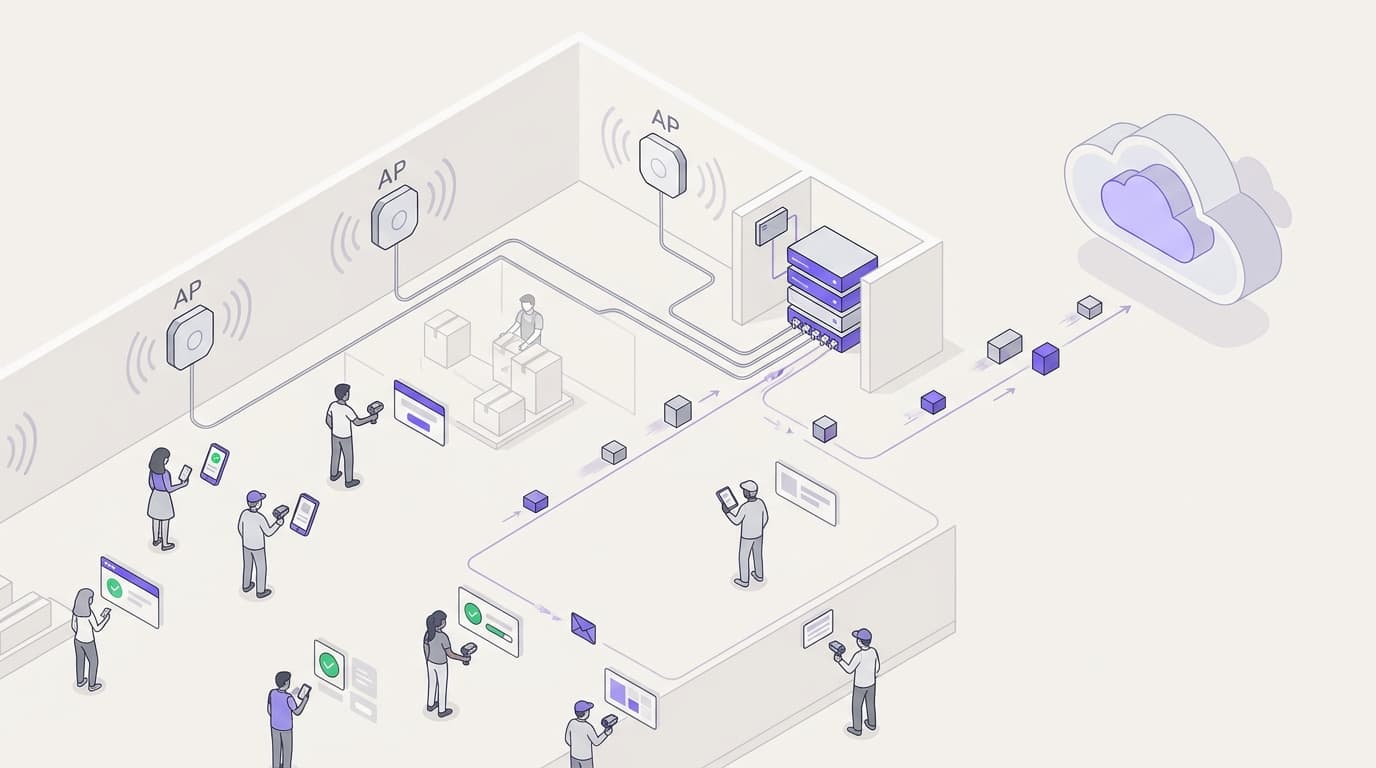
Die Grundlage skalierbarer Personalisierung liegt im Übergang von isolierten Netzwerksilos zu einem integrierten Datenökosystem. Wenn sich ein Benutzer über Guest WiFi authentifiziert, erfasst das Netzwerk hochpräzise Telemetriedaten – einschließlich Geräte-MAC-Adressen, Verweildauern, Zonenübergängen und Authentifizierungs-Payloads.

Datenerfassung und Schema-Mapping

Um diese Telemetriedaten zu nutzen, muss das Analyse-Overlay die Daten in einem einheitlichen Schema normalisieren. Dieser Prozess umfasst die Erfassung sowohl deterministischer Daten (z. B. E-Mail-Adressen und demografische Details, die während des Captive Portal-Logins angegeben werden) als auch probabilistischer Daten (z. B. Verhaltensmuster, die aus AP-Triangulation und RSSI-Werten abgeleitet werden).

Der resultierende Data Lake speist direkt die CRM- und Marketing-Automatisierungsplattformen des Veranstaltungsortes. Die WiFi Analytics -Plattform von Purple fungiert als zentrale Erfassungs-Engine, die rohe RADIUS-Accounting-Pakete und HTTP-Redirect-Payloads in strukturierte JSON-Objekte umwandelt, die für die weitere Verarbeitung geeignet sind.

personalisation_data_funnel.png

Integrationsarchitektur

Erfolgreiche Implementierungen basieren auf robusten API-Architekturen zur Synchronisierung von Netzwerk-Telemetriedaten mit externen Systemen. RESTful APIs ermöglichen die Echtzeit-Datenübertragung und ermöglichen ausgelöste Workflows, wie das Senden einer Willkommens-E-Mail in dem Moment, in dem sich ein hochwertiger Kunde im Netzwerk authentifiziert.

Stellen Sie sich ein Szenario vor, in dem ein Kunde eine Einzelhandelsumgebung betritt. Der Netzwerk-Controller erkennt die Geräte-Probe-Anfragen und ordnet die MAC-Adresse einem bekannten Kundenprofil zu. Die Analyseplattform löst dann einen Webhook an das CRM aus, das die Kaufhistorie des Kunden bewertet und ein personalisiertes Angebot an das Captive Portal oder die mobile Anwendung der Marke sendet.

Bei Implementierungen im Gastgewerbe ermöglicht dieselbe Architektur die Integration von Property Management Systemen (PMS). Wenn ein wiederkehrender Gast eincheckt und sich mit dem Hotel-WiFi verbindet, gleicht das System sein Profil mit historischen Aufenthaltsdaten ab und sendet eine personalisierte Willkommensnachricht an das Captive Portal, zusammen mit einem gezielten Upsell für Zimmer-Upgrades oder F&B-Aktionen.

Datentyp Quelle Weiterverwendung
E-Mail-Adresse Captive Portal Login CRM-Profilerstellung, E-Mail-Kampagnen
MAC-Adresse Netzwerkzuordnung Verfolgung der Besuchsfrequenz, Verweildaueranalyse
Verweildauer in Zone AP-Triangulation Kontextbezogene Trigger-Angebote
Besuchsfrequenz RADIUS Accounting Zuweisung von Loyalitätsstufen
Demografie Progressives Profiling Zielgruppensegmentierung

Implementierungsleitfaden

Die Bereitstellung einer personalisierungszentrierten Netzwerkarchitektur erfordert einen strukturierten Ansatz, um Datenintegrität, Systeminteroperabilität und regulatorische Konformität zu gewährleisten.

Phase 1: Infrastrukturbewertung

Vor der Bereitstellung eines Analyse-Overlays ist die bestehende WLAN-Infrastruktur zu bewerten. Stellen Sie sicher, dass die Wireless Controller und Access Points die erforderlichen Protokolle – RADIUS, SNMP und Syslog – unterstützen und den erhöhten Verarbeitungsaufwand bewältigen können, der mit der kontinuierlichen Telemetrieberichterstattung verbunden ist. Die Plattform von Purple ist hardwareunabhängig und lässt sich in bestehende Infrastrukturen von Cisco, Juniper, Ruckus und anderen führenden Anbietern integrieren, was die für die Bereitstellung erforderlichen Investitionskosten erheblich senkt.

Phase 2: Captive Portal-Konfiguration

Gestalten Sie das Captive Portal so, dass es ein Gleichgewicht zwischen Benutzerfreundlichkeit und Datenerfassung herstellt. Implementieren Sie progressive Profiling-Techniken, bei denen beim ersten Login nur minimale Informationen angefordert und das Kundenprofil bei nachfolgenden Besuchen schrittweise aufgebaut wird. Stellen Sie sicher, dass das Portaldesign den Markenrichtlinien des Unternehmens entspricht und nahtlose Authentifizierungsmethoden wie Social Login oder OpenRoaming-Integrationen bietet. Alle Datenerfassung muss durch explizite, GDPR-konforme Zustimmungsmechanismen untermauert werden.

Phase 3: Systemintegration

Richten Sie bidirektionale Datenflüsse zwischen der WiFi-Analyseplattform und den CRM-, Marketing-Automatisierungs- und Property-Management-Systemen des Veranstaltungsortes ein. Nutzen Sie robuste Middleware oder direct API-Integrationen, um Datenkonsistenz zu gewährleisten. Für komplexe Umgebungen sollte die Implementierung einer Customer Data Platform (CDP) in Betracht gezogen werden, die als zentrales Repository für alle Kundeninteraktionen dient. Dies ist besonders relevant für Transport -Drehkreuze und Einzelhandelsketten mit mehreren Standorten, wo Kundenreisen mehrere physische Orte umfassen.

Phase 4: Kampagnenlogik und Automatisierung

Nachdem die Datenpipeline eingerichtet ist, konfigurieren Sie die Marketing-Automatisierungsregeln, die Netzwerkereignisse in Kundenaktionen umwandeln. Definieren Sie Auslösebedingungen (z. B. erster Besuch, fünfter Besuch, Verweildauer von mehr als 30 Minuten in einer bestimmten Zone) und ordnen Sie diese den entsprechenden Kampagnenaktionen zu. Etablieren Sie A/B-Test-Frameworks, um die Angebotsrelevanz und Konversionsraten kontinuierlich zu optimieren.

Best Practices

Um die Wirkung von Personalisierungsinitiativen zu maximieren, sollten IT- und Marketingteams die folgenden herstellerneutralen Best Practices befolgen.

Datenqualität priorisieren. Implementieren Sie Datenvalidierungsregeln am Eingabepunkt, um zu verhindern, dass fehlerhafte oder ungenaue Daten das CRM verunreinigen. Überprüfen und bereinigen Sie die Datenbank regelmäßig, um eine hohe Datentreue zu gewährleisten. Ein einziger, maßgeblicher Kundendatensatz ist mehr wert als zehn duplizierte, unvollständige Profile.

Einen datenschutzorientierten Ansatz verfolgen. Stellen Sie sicher, dass alle Datenerfassungspraktiken den regionalen Vorschriften wie GDPR und CCPA entsprechen. Implementieren Sie klare, transparente Zustimmungsmechanismen innerhalb des Captive Portal und stellen Sie den Benutzern zugängliche Tools zur Verwaltung ihrer Datenpräferenzen zur Verfügung. Nichteinhaltung birgt erhebliche finanzielle und reputative Risiken.

Kontextbezogene Auslöser implementieren. Nutzen Sie Echtzeit-Standortdaten, um hochrelevante Nachrichten zu übermitteln. In einem Gastgewerbe lösen Sie eine Spa-Promotion aus, wenn ein Gast sich mit einem AP in der Nähe des Wellnesszentrums verbindet. Im Einzelhandel lösen Sie ein Angebot zur Anprobehilfe aus, wenn ein Kunde länger als 10 Minuten in der Bekleidungszone verweilt.

IT- und Marketingziele abstimmen. Fördern Sie die funktionsübergreifende Zusammenarbeit zwischen IT- und Marketingabteilungen. Die IT muss sicherstellen, dass die Infrastruktur die erforderliche Telemetrie zuverlässig liefern kann, während das Marketing die Geschäftsregeln und die Kampagnenlogik definieren muss. Eine Fehlausrichtung zwischen diesen Teams ist die häufigste Ursache für fehlgeschlagene Implementierungen.

Für Organisationen, die eine umfassendere Customer Experience-Strategie aufbauen, bieten die Leitfäden Como Construir uma Estratégia de Experiência do Cliente und Cómo construir una estrategia de experiencia del cliente ergänzende Frameworks.

Fehlerbehebung & Risikominderung

Die Bereitstellung eines intelligenten Netzwerk-Overlays führt zu neuen Komplexitäten und potenziellen Fehlerbereichen. Eine proaktive Risikominderung ist unerlässlich, um die Serviceverfügbarkeit und Datenintegrität zu gewährleisten.

API Rate Limiting. Umgebungen mit hoher Dichte, wie Verkehrsknotenpunkte oder Stadien, können massive Mengen an Telemetriedaten erzeugen, die potenziell die Ratenbegrenzungen nachgeschalteter APIs überschreiten. Implementieren Sie intelligente Warteschlangen- und Batching-Mechanismen, um den Datenabfluss zu verwalten. Filtern Sie Ereignisse mit geringem Wert (z. B. vorübergehendes Roaming) heraus und lösen Sie Webhooks nur bei signifikanten Zustandsänderungen aus.

MAC Randomization. Moderne mobile Betriebssysteme verwenden MAC Randomization, um die Privatsphäre der Benutzer zu schützen, was die probabilistische Geräteverfolgung über Sitzungen hinweg unterbricht. Um eine genaue Verfolgung aufrechtzuerhalten, ermutigen Sie Benutzer, sich über das Captive Portal zu authentifizieren oder die mobile Anwendung des Veranstaltungsortes herunterzuladen, die deterministische Identifikatoren verwenden kann. Die zertifikatbasierte Authentifizierung über Passpoint oder OpenRoaming bietet die robusteste langfristige Lösung.

Netzwerküberlastung. Kontinuierliche Telemetrieberichte können auf eingeschränkten Backhaul-Verbindungen erhebliche Bandbreite verbrauchen. Optimieren Sie die Berichtsintervalle und nutzen Sie, wo immer möglich, Edge-Verarbeitung, um die Last auf dem Kernnetzwerk zu reduzieren. Für Veranstaltungsorte mit hohen Durchsatzanforderungen sollte eine dedizierte Standleitung in Betracht gezogen werden, um eine konsistente Backhaul-Leistung zu gewährleisten.

Datenkonsistenzfehler. Bidirektionale API-Integrationen bergen das Risiko von Dateninkonsistenzen, wenn ein System vorübergehend nicht verfügbar ist. Implementieren Sie idempotente API-Aufrufe und eine robuste Wiederholungslogik, um sicherzustellen, dass keine Kundenereignisse während kurzer Ausfälle verloren gehen.

ROI & Geschäftsauswirkungen

Das ultimative Ziel einer Personalisierungsstrategie ist es, messbaren Geschäftswert zu schaffen. Durch die Nutzung von Netzwerkanalysen können Betreiber von Veranstaltungsorten von qualitativen Annahmen zu quantitativen Leistungsmetriken übergehen.

roi_comparison_chart.png

Erfolg messen

Legen Sie klare Key Performance Indicators (KPIs) fest, um die Auswirkungen der Implementierung zu bewerten. Die folgende Tabelle zeigt die primären Metriken und ihre erwarteten Benchmarks basierend auf Branchenimplementierungen.

KPI Basiswert (vor der Implementierung) Ziel (nach der Implementierung) Messmethode
Wiederholungsbesuchsrate 23% 35%+ WiFi Analytics / CRM
Durchschnittlicher Transaktionswert Basiswert +15% bis +25% POS Integration
E-Mail-Kampagnen-Öffnungsrate 12% 28%+ Marketing Automation
F&B Capture Rate (Stadien) 18% 30%+ POS / WiFi Korrelation
Customer Lifetime Value Basiswert +20% CRM Analytics

Durch die kontinuierliche Analyse dieser Metriken und die Verfeinerung der Personalisierungsalgorithmen können Organisationen den ROI ihrer Netzwerkinfrastruktur maximieren. Die Plattform von Purple meldet einen durchschnittlichen ROI von 873% über ihre mehr als 80.000 Veranstaltungsort-Implementierungen hinweg, was das transformative kommerzielle Potenzial demonstriert, das Netzwerk als strategisches Geschäftsgut und nicht als bloße Dienstleistung zu behandeln.

Schlüsselbegriffe & Definitionen

Captive Portal

A web page that a user of a public-access network is obliged to view and interact with before access is granted. It serves as the primary ingestion point for deterministic customer data.

IT teams configure captive portals to enforce acceptable use policies, capture marketing consent, and authenticate users against a backend database. The design of the captive portal directly impacts data quality and network adoption rates.

Progressive Profiling

The technique of gradually gathering customer information across multiple interactions rather than demanding a comprehensive form completion during the first encounter.

Used to minimise authentication friction and improve the user experience while still building robust customer profiles over time. Critical for maintaining high network adoption rates in consumer-facing venues.

MAC Randomisation

A privacy feature implemented by modern mobile operating systems (iOS 14+, Android 10+) that generates a temporary, random Media Access Control (MAC) address when scanning for or connecting to wireless networks.

This feature complicates probabilistic device tracking across sessions, making deterministic authentication via a captive portal or Passpoint/OpenRoaming essential for accurate long-term analytics.

Telemetry

The automated communications process by which measurements and other data are collected at remote or inaccessible points and transmitted to receiving equipment for monitoring and analysis.

In WiFi analytics, telemetry includes data points such as signal strength (RSSI), association states, roaming events, and dwell times generated by the access points and wireless controllers.

Webhook

A method of augmenting or altering the behaviour of a web application with custom HTTP callbacks, triggered by specific events in a source system and sent to a destination URL in real-time.

Webhooks are heavily utilised to push real-time event data — such as a customer logging into the WiFi — from the analytics platform to external CRM or marketing automation systems.

Customer Data Platform (CDP)

A type of packaged software that creates a persistent, unified customer database accessible to other systems, by pulling data from multiple sources, cleaning it, and combining it into a single customer profile.

Advanced enterprise deployments utilise CDPs to aggregate WiFi telemetry with POS data, loyalty program metrics, and e-commerce interactions into a single, actionable customer view.

Dwell Time

The duration of time a device remains associated with the network or within a specific physical zone, as measured by the WiFi analytics platform.

A critical metric for assessing venue performance and customer engagement. Increased dwell time is a strong indicator of engagement and often correlates directly with higher revenue per visit.

Omnichannel Attribution

The process of tracking and valuing all customer touchpoints across various channels — physical store, website, mobile app — that contribute to a desired outcome such as a purchase.

WiFi analytics provides the crucial physical-world data stream required to build accurate omnichannel attribution models, bridging the gap between online and offline customer behaviour.

RADIUS (Remote Authentication Dial-In User Service)

A client/server networking protocol that provides centralised Authentication, Authorisation, and Accounting (AAA) management for users who connect and use a network service.

RADIUS accounting packets are the primary source of raw telemetry data in enterprise WiFi deployments, capturing session start/stop events, data usage, and device identifiers.

Fallstudien

A 200-room boutique hotel chain wants to increase F&B revenue by targeting guests who frequently use the lobby lounge but rarely dine in the main restaurant. How should the IT team architect the network to support this objective?

The IT team should configure the access points in the lobby lounge and main restaurant into distinct zones within the WiFi analytics platform. They must implement an API integration between the analytics platform and the hotel's Property Management System (PMS) and marketing automation tool. When a guest authenticates via the captive portal, the system cross-references their profile. If the analytics engine detects high dwell time in the lobby zone but no recent POS transactions in the restaurant zone, it triggers a webhook to the marketing platform, which immediately dispatches a personalised, time-sensitive dining discount via email or SMS. The campaign logic should include a 30-minute expiry window to create urgency and ensure the offer is redeemed during the current visit rather than deferred.

Implementierungshinweise: This approach effectively bridges the gap between physical behaviour (zone dwell time) and digital engagement. The critical success factor is the low-latency API integration; the offer must be delivered while the guest is still on-site to influence their immediate dining decision. The 30-minute expiry window is a deliberate design choice to drive in-session conversion rather than deferred redemption, which has a significantly lower commercial impact.

A large retail chain is experiencing a high volume of 'window shoppers' who browse the physical store but ultimately purchase online from competitors. How can the network architecture be optimised to capture this lost revenue?

The network architects should deploy a progressive profiling strategy on the captive portal, offering a high-value incentive (e.g., a 15% discount code) in exchange for authentication. The analytics platform must be integrated with the retailer's e-commerce platform and CRM. By analysing the customer's in-store dwell time in specific departments and cross-referencing it with their online browsing history, the CRM can generate highly targeted, personalised follow-up campaigns. Furthermore, if the customer adds an item to their online cart while connected to the in-store WiFi but fails to checkout, the system can trigger an immediate 'abandoned cart' notification with a tailored incentive to complete the purchase at the physical POS.

Implementierungshinweise: This scenario demonstrates the power of omnichannel attribution. By unifying the physical and digital data streams, the retailer can intercept the customer journey at a critical decision point. The technical challenge lies in ensuring accurate device tracking and seamless data synchronisation between the physical network and the cloud-based e-commerce platform. The abandoned cart trigger is particularly high-value as it targets customers who have already demonstrated strong purchase intent.

Szenarioanalyse

Q1. Your organisation is deploying a new WiFi analytics overlay across 50 retail locations. The marketing director wants to capture 15 different data points (including physical address, phone number, and detailed preferences) during the initial captive portal login to immediately populate the CRM. As the IT architect, what is your recommendation?

💡 Hinweis:Consider the impact of user friction on network adoption rates and the concept of progressive profiling.

Empfohlenen Ansatz anzeigen

Advise against requesting 15 data points during the initial login. This level of friction will severely depress network adoption rates, resulting in a smaller overall data pool and undermining the entire personalisation strategy. Instead, implement a progressive profiling strategy. Capture only the essential deterministic data — email address and marketing consent — during the first visit. On subsequent visits, the captive portal can dynamically request one or two additional data points. This approach balances the marketing team's need for rich data with the IT requirement for a seamless user experience, and will ultimately yield a larger, higher-quality dataset.

Q2. A stadium client is experiencing significant latency when attempting to trigger real-time, in-seat F&B offers based on WiFi connection events. The analytics platform is currently configured to send individual API calls to the CRM for every single association and roaming event generated by the 80,000 capacity crowd. How do you resolve this architectural bottleneck?

💡 Hinweis:Evaluate the difference between raw telemetry and actionable business events, and consider data egress strategies.

Empfohlenen Ansatz anzeigen

The current architecture is overwhelming the CRM API with raw, low-value telemetry. Implement edge filtering and batching within the WiFi analytics platform. First, filter out transient roaming events and only trigger webhooks for significant state changes — specifically initial authentication or prolonged dwell time in a specific concession zone. Second, for non-time-sensitive data, transition from real-time API calls to asynchronous batch processing, transmitting aggregated data payloads at scheduled intervals. This reduces the API load by an estimated 90% while ensuring the marketing platform still receives the necessary contextual triggers for real-time offer delivery.

Q3. Following a recent iOS update that aggressively utilises MAC randomisation, the marketing team reports a sharp decline in their ability to track repeat visitors across your venue's network. What technical strategy should you deploy to restore tracking fidelity?

💡 Hinweis:Contrast probabilistic tracking methods with deterministic authentication.

Empfohlenen Ansatz anzeigen

Shift reliance from probabilistic tracking (using MAC addresses) to deterministic authentication. Configure the network to require captive portal re-authentication more frequently by reducing the session timeout duration. Strongly incentivise users to authenticate using persistent credentials, such as a social login or a loyalty program ID. If the venue has a mobile app, integrate an SDK that utilises a stable, app-specific identifier. For the most robust long-term solution, implement certificate-based authentication via Passpoint or OpenRoaming, which bypasses MAC randomisation entirely by using a persistent, device-bound credential.